Na fabricação moderna, peças de material único raramente atendem a todas as demandas de desempenho, estética, e funcionalidade.
Os produtos de hoje devem ser duráveis, mas confortáveis, impermeável mas respirável, e complexo, mas fácil de montar.
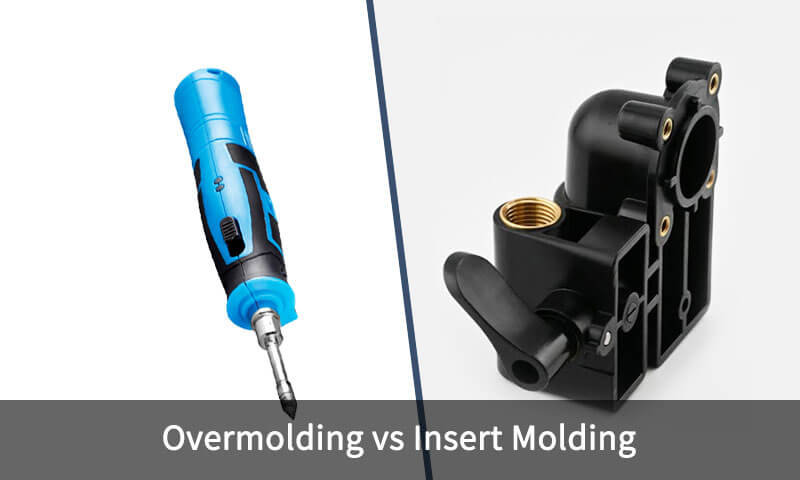
Isto impulsionou a adoção generalizada de processos de fabricação multimateriais. Entre estes, sobremoldagem e moldagem por inserção são duas das técnicas mais importantes e frequentemente comparadas.
Embora os dois termos sejam por vezes usados de forma intercambiável, eles descrevem diferentes abordagens de fabricação e resolvem diferentes problemas de engenharia.
A sobremoldagem geralmente envolve moldar um segundo material sobre um substrato existente para criar um componente multimaterial.
Inserir moldagem, por contraste, coloca uma inserção pré-formada - geralmente de metal - dentro de um molde de injeção e o encapsula ou envolve parcialmente com plástico.
Este artigo fornece um abrangente, comparação lado a lado entre sobremoldagem e moldagem por inserção.
1. O que é sobremoldagem?
Sobremoldagem é um processo de moldagem por injeção no qual um material é moldado sobre um substrato existente ou componente previamente moldado para criar uma peça multimaterial integrada..
O primeiro componente é comumente chamado de substrato, enquanto o material aplicado durante a operação de moldagem secundária é o material sobremoldado.
Dependendo do design do produto, o substrato pode ser um termoplástico rígido, elastômero, componente metálico, ou outra peça pré-formada adequada.
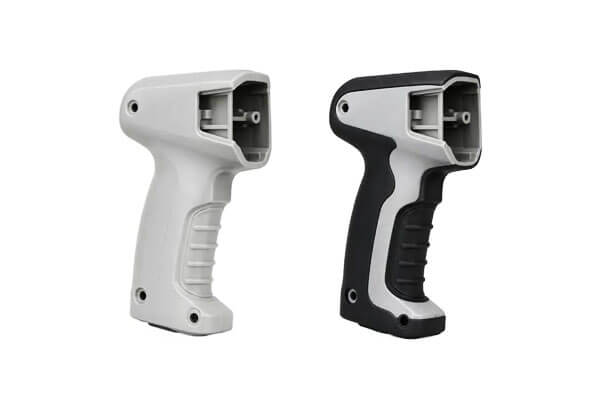
Um componente sobremoldado típico pode combinar um material estrutural rígido com um material mais macio.
Por exemplo, uma carcaça rígida em ABS pode receber um revestimento TPE para proporcionar uma aderência confortável, melhorar a vedação, ou crie uma superfície externa protetora.
O objetivo não é simplesmente colocar um material em cima do outro. A interface entre os dois materiais deve fornecer adesão adequada, retenção mecânica, ou uma combinação de ambos para suportar as resistências mecânicas esperadas do produto, térmico, químico, e condições ambientais.
Como funciona a sobremoldagem
O processo de sobremoldagem geralmente começa com a produção do substrato.
Isto pode envolver uma operação separada de moldagem por injeção, processo de usinagem, operação de estampagem, processo de fundição de matriz, ou outro método de fabricação.
Depois que o substrato for inspecionado, está posicionado dentro de um segundo molde. O molde é projetado para expor as áreas que precisam receber o material sobremoldado, ao mesmo tempo em que localiza e suporta com precisão o substrato.
O material secundário é então aquecido até a temperatura de processamento apropriada e injetado na cavidade do molde.
Ele flui em torno das superfícies designadas do substrato e forma a geometria externa necessária.
Depois de encher e embalar, o material esfria e solidifica antes que o componente completo seja ejetado.
Um fluxo de trabalho típico é:
Produção de substrato → inspeção de substrato → carregamento do molde → posicionamento → injeção de material secundário → embalagem → resfriamento → ejeção → inspeção
A qualidade do produto final depende muito do design da interface. Se a adesão química for necessária, o substrato e o material moldado devem ter compatibilidade suficiente.
Se a retenção mecânica for o mecanismo primário, o substrato pode exigir ranhuras, costelas, buracos, Undercuts, ou outros recursos que permitem que o segundo material trave na posição.
A contaminação da superfície é outra consideração importante. Óleo, pó, agentes desmoldantes, oxidação, umidade, ou outros contaminantes podem interferir na adesão e levar à delaminação ou separação prematura.
Materiais de sobremoldagem comuns
A sobremoldagem pode usar uma ampla gama de materiais termoplásticos e elastoméricos, mas nem toda combinação de materiais é inerentemente compatível.
A seleção do material deve considerar a temperatura de fusão, Compatibilidade química, encolhimento, coeficiente de expansão térmica, dureza, flexibilidade, características de superfície, e condições de serviço esperadas.
Combinações comuns incluem:
| Material do substrato | Material sobremoldado | Finalidade Típica |
| Abs | TPE | Caixas e punhos de toque suave |
| PC | TPE | Produtos resistentes a impactos com superfícies ergonômicas |
| Nylon | TPE/TPU | Punhos industriais e interfaces flexíveis |
| PP | TPE | Produtos de consumo e selos |
| PC/ABS | TPU | Superfícies protetoras e ergonômicas |
| Termoplástico rígido | LSR | Vedação e componentes flexíveis especializados |
Aplicações típicas de sobremoldagem
A sobremoldagem é particularmente útil quando o produto deve combinar desempenho estrutural com suavidade, flexibilidade, vedação, isolamento, ou ergonomia melhorada.
A sobremoldagem é comumente usada para:
- Punhos para ferramentas manuais
- Interruptores e controles automotivos
- Caixas de eletrônicos de consumo
- Componentes de dispositivos médicos
- Dispositivos vestíveis
- Proteção de cabos e fios
- Componentes de vedação
- Alças e interfaces ergonômicas
- Capas protetoras
- Controles de equipamentos industriais
2. O que é moldagem por inserção?
Inserir moldagem é um processo de moldagem por injeção no qual um componente pré-formado, conhecido como um inserir, é posicionado dentro de um molde de injeção e então parcialmente ou completamente encapsulado por plástico fundido.
A inserção geralmente é feita de metal, embora plástico, cerâmica, eletrônico, e outros componentes pré-formados também podem ser usados.
Ao contrário da moldagem por injeção convencional de material único, a moldagem por inserção combina um componente fabricado de forma independente com plástico injetado durante uma operação de moldagem.
O plástico solidifica ao redor da inserção, produzindo uma peça integrada que pode eliminar operações de montagem subsequentes.
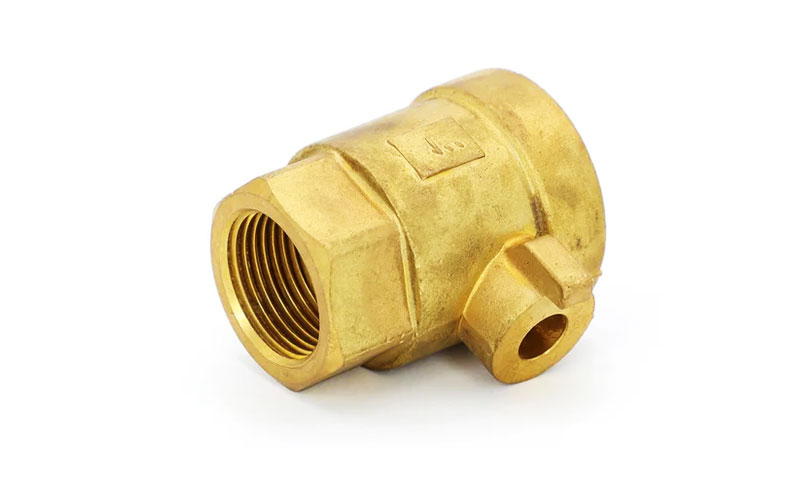
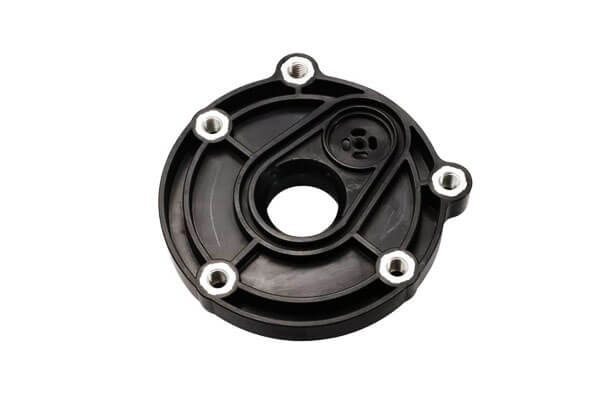
Por exemplo, uma inserção roscada de latão pode ser posicionada dentro de um molde e cercada por náilon.
Após a moldagem, o componente resultante contém uma interface de metal rosqueada permanente sem a necessidade de instalação posterior do inserto rosqueado.
Como funciona a moldagem por inserção
A moldagem da pastilha começa com a fabricação e inspeção da pastilha. A precisão dimensional é particularmente importante porque a pastilha deve se encaixar corretamente no molde e manter sua posição especificada durante a injeção.
A inserção é então colocada no molde manualmente, semiautomático, ou através de um sistema de carregamento automatizado.
Jogos dedicados, pinos, cáries, ou recursos de retenção podem ser usados para evitar movimento.
Assim que o molde fechar, plástico fundido é injetado ao redor da inserção. A pressão de injeção pode ser substancial, portanto, o molde deve fornecer suporte suficiente para evitar que a inserção se desloque, deformando, ou ficar desalinhado.
O plástico então esfria e solidifica ao redor da inserção. Após a ejeção, o componente acabado é inspecionado quanto à precisão dimensional, posição de inserção, clarão, vazios, rachaduras, e outros defeitos.
A sequência básica é:
Fabricação de pastilhas → inspeção de pastilhas → carregamento de pastilhas → posicionamento e retenção → fechamento do molde → injeção de plástico → resfriamento → ejeção → inspeção
Para fabricação de alto volume, o carregamento automatizado de insertos pode ser integrado à célula de moldagem. Isso pode melhorar a consistência do ciclo e, ao mesmo tempo, reduzir o manuseio manual.
Materiais de inserção comuns
O metal é o material de inserção mais amplamente reconhecido porque fornece propriedades que os plásticos geralmente não conseguem reproduzir, como alta condutividade elétrica, durabilidade da linha, rigidez, resistência ao desgaste, ou resistência mecânica localizada.
Os materiais de inserção comuns incluem:
- Latão
- Aço inoxidável
- Aço carbono
- Alumínio
- Cobre e ligas de cobre
- Plásticos de engenharia
- Cerâmica
- Componentes eletrônicos
Aplicações típicas de moldagem por inserção
A moldagem por inserção é comumente usada quando um produto requer que um metal ou outro componente pré-formado seja permanentemente integrado em um corpo de plástico.
As aplicações típicas incluem:
- Chefes encadeados
- Conectores elétricos
- Terminais automotivos
- Altas do sensor
- Trocar componentes
- Instrumentos médicos
- Componentes de reforço estrutural
- Conectores de cabo
- Conjuntos eletrônicos
- Componentes mecânicos de precisão
3. Sobremoldagem vs Moldagem por Inserção: Qual é a diferença?
Embora ambas as tecnologias integrem múltiplos materiais ou componentes, sua lógica de fabricação é diferente.
A distinção mais simples é:
A sobremoldagem adiciona um novo material sobre um substrato existente, enquanto a moldagem por inserção encapsula ou envolve uma inserção pré-formada com plástico moldado por injeção.
No entanto, a terminologia pode se sobrepor. Em alguns contextos de fabricação, a moldagem por inserção pode ser discutida como uma forma mais ampla de sobremoldagem porque ambas envolvem moldagem de material em torno de um componente pré-existente.
Para comunicação de engenharia, no entanto, é útil distingui-los com base na função do componente preexistente.
Comparação entre sobremoldagem e moldagem por inserção
| Fator | Sobremoldagem | Inserir Moldagem |
| Objetivo principal | Combine diferentes propriedades de materiais | Integre uma inserção pré-formada em plástico |
| Componente pré-existente | Substrato | Inserir |
| Substrato/inserção comum | Plástico, elastômero, metal | Metal, plástico, cerâmica, componente eletrônico |
| Combinação típica | Plástico rígido + elastômero | Plástico + metal |
| Mecanismo de interface principal | Adesão, intertravamento mecânico, ou ambos | Encapsulamento, retenção mecânica, adesão em alguns casos |
| Principal preocupação de design | Compatibilidade do material | Posicionamento e retenção da inserção |
| Aplicação típica | Aperto de toque suave | Inserção metálica roscada |
| Função de superfície | Pegada, selo, almofada, proteção | Elétrica, mecânico, estrutural, fixação |
| Automação | Altamente automatizável | Altamente automatizável, mas o carregamento da inserção é crítico |
| Grande risco | Delaminação ou má ligação | Inserir movimento ou desalinhamento |
4. Sobremoldagem vs Moldagem por Inserção: Considerações de design
Os requisitos de projeto para sobremoldagem e moldagem por inserção diferem principalmente porque os dois processos gerenciam interfaces diferentes.
A sobremoldagem se concentra na criação de uma interface confiável entre o substrato e o material sobremoldado, enquanto a moldagem por inserção se concentra no posicionamento preciso e no encapsulamento seguro de uma inserção pré-formada.
| Consideração de projeto | Sobremoldagem | Inserir Moldagem |
| Compatibilidade do material | Selecione substrato compatível e materiais de sobremoldagem com base na adesão, temperatura de fusão, encolhimento, dureza, e expansão térmica. | Certifique-se de que a pastilha possa suportar a temperatura e pressão de moldagem sem deformação ou instabilidade dimensional. |
| Geometria & Espessura da parede | Mantenha a espessura uniforme do molde e forneça área de colagem suficiente. Evite mudanças bruscas de espessura que podem causar encolhimento, Vareira, ou ligação fraca. | Forneça espessura plástica suficiente ao redor da pastilha para maior resistência e use ranhuras, grunhidos, buracos, ou ombros quando é necessária retenção adicional. |
| União & Retenção | Projete a interface para adesão química, intertravamento mecânico, ou ambos, dependendo da compatibilidade do material. | Projetar recursos mecânicos de retenção e encapsulamento para resistir ao arrancamento e à rotação. |
| Portão & Fluxo de materiais | Posicione as portas para obter um enchimento equilibrado e minimizar as linhas de solda, aprisionamento de ar, e estresse excessivo na interface. | Controle o fluxo de material cuidadosamente para evitar o deslocamento da pastilha, encapsulamento incompleto, ou pressão excessiva na inserção. |
Inserir / Posicionamento do substrato |
O substrato deve ser localizado com precisão e segurado com segurança durante a injeção. | O posicionamento preciso da pastilha é fundamental; pinos de localização, bolsos, acessórios, ou o posicionamento automatizado pode ser necessário. |
| Encolhimento & Expansão térmica | Considere as diferenças no encolhimento e na expansão térmica entre o substrato e o sobremoldado para evitar empenamento, estresse residual, e delaminação. | Considere as diferenças de expansão térmica entre a pastilha e o polímero, particularmente em aplicações de metal para plástico, para evitar variação dimensional e tensão interna. |
| Rascunho & Ejeção | Fornece tiragem adequada e ejetores devidamente posicionados para liberar a peça sem danificar o molde ou a interface. | Projete a inclinação e a ejeção com cuidado para evitar o movimento da pastilha, deformação, ou afrouxamento durante a desmoldagem. |
Tolerâncias |
Considere as dimensões do substrato, espessura de sobremoldagem, encolhimento do material, e possível movimento da interface. | Conta para dimensões de inserção, precisão de posicionamento, encolhimento do polímero, e localização final da inserção. |
| Dfm & Fluxo do Molde | Avalie a área de colagem, fluxo de materiais, espessura da parede, localização do portão, e contração diferencial antes do ferramental. | Avalie a retenção da pastilha, posicionamento, fluxo de polímero, comportamento térmico, e deslocamento potencial da pastilha antes da ferramenta. |
| Controle de qualidade | Concentre-se na força da ligação, espessura de sobremoldagem, clarão, Delaminação, Vareira, e precisão dimensional. | Concentre-se na posição da inserção, força de retenção, encapsulamento, clarão, vazios, e precisão dimensional. |
5. Serviços personalizados de sobremoldagem e moldagem por inserção da indústria LangHe
Indústria de Langhe fornece soluções personalizadas de moldagem por injeção para aplicações que exigem sobremoldagem, inserir moldagem, e outras tecnologias de moldagem integradas.
Nossa abordagem de fabricação pode apoiar projetos desde o desenvolvimento inicial de produtos e ferramentas até a produção e inspeção de qualidade.
| Capacidade | Detalhes |
| Tipos de sobremoldagem | Dois tiros (2K) sobremolamento, sobremoldagem pick-and-place. |
| Inserir Moldagem | Inserções metálicas (latão, aço, cobre), inserções de cerâmica, inserções eletrônicas (PCBs, sensores). |
| Materiais (Substrato) | Abs, PC, Nylon (PA6, PA66), PP, PBT. |
| Materiais (Sobremoldado) | TPE, TPU, LSR, CUBA, silicone. |
| Ferramentas | Projeto e fabricação interna de ferramentas. |
| Qualidade | ISO 9001:2015 certificado; 100% Inspeção. |
| Tempo de espera | 2–4 semanas para protótipos; 4–8 semanas para ferramentas de produção. |
6. Conclusão
Sobremoldagem vs moldagem por inserção não é uma questão de determinar qual processo é universalmente melhor. Ambas são tecnologias de moldagem por injeção altamente eficazes, mas eles atendem a diferentes requisitos de desenvolvimento de produtos.
A sobremoldagem é adequada principalmente para produtos que precisam combinar diferentes características de materiais em um componente integrado..
É particularmente valioso para superfícies de toque suave, punhos ergonômicos, selos flexíveis, amortecedor, isolamento, e camadas protetoras.
Seu sucesso depende muito da compatibilidade dos materiais, design de interface, adesão, intertravamento mecânico, e controle de encolhimento diferencial.
Inserir moldagem, em contraste, é especialmente eficaz quando um componente pré-formado – geralmente uma inserção de metal – deve ser permanentemente integrado a uma estrutura plástica.
É amplamente adequado para interfaces encadeadas, terminais elétricos, componentes de reforço, sensores, conectores, e outras aplicações onde o plástico e outro material desempenham funções complementares.
Em última análise, a seleção do processo deve ser baseada em todo o sistema de fabricação, incluindo comportamento material, geometria do produto, ferramentas, estratégia de ligação ou retenção, volume de produção, automação, Inspeção, e custo do ciclo de vida.
Perguntas frequentes
Qual é a diferença entre moldagem por inserção e moldagem em dois disparos?
A moldagem por inserção usa um inserção pré-formada que é colocado no molde antes da injeção plástica.
A moldagem de dois disparos normalmente produz dois materiais sequencialmente usando ferramentas especializadas e vários estágios de injeção, muitas vezes sem carregar manualmente um substrato fabricado separadamente entre as tomadas.
Qual processo é mais rápido: sobremoldagem ou moldagem por inserção?
A moldagem por inserção é geralmente mais rápida porque usa um único disparo de injeção. A sobremoldagem requer dois disparos ou um processo de várias etapas.
Qual processo tem custos de ferramentas mais baixos?
A moldagem por inserção tem custos de ferramenta mais baixos porque requer apenas uma única cavidade de molde. A sobremoldagem requer dois moldes separados ou um molde complexo de duas injeções.
Quando devo usar sobremoldagem?
Use sobremoldagem quando precisar de alças de toque suave, vedação à prova d'água, amortecimento da vibração, ou estética melhorada.
Quando devo usar moldagem por inserção?
Use moldagem por inserção quando precisar de conexões roscadas de alta resistência, condutividade elétrica, ou reforço estrutural em peças plásticas.
A sobremoldagem e a moldagem por inserção podem ser usadas juntas?
Sim. Algumas partes complexas combinam ambos os processos – por exemplo, uma rosca de metal moldada por inserção com um punho de toque suave sobremoldado no mesmo componente.
A moldagem por inserção é um tipo de sobremoldagem??
A terminologia pode se sobrepor porque ambos os processos moldam o material em torno de um componente preexistente.
No entanto, na terminologia prática de fabricação, sobremolamento geralmente enfatiza a adição de outra camada de material ou sistema de material, enquanto inserir moldagem enfatiza especificamente a incorporação de uma inserção pré-formada no componente moldado.
O metal pode ser usado na sobremoldagem?
Sim. Substratos metálicos podem ser moldados com plásticos ou elastômeros adequados.
No entanto, o processo deve levar em conta a preparação da superfície, Expansão térmica, adesão, retenção mecânica, e encolhimento diferencial.