

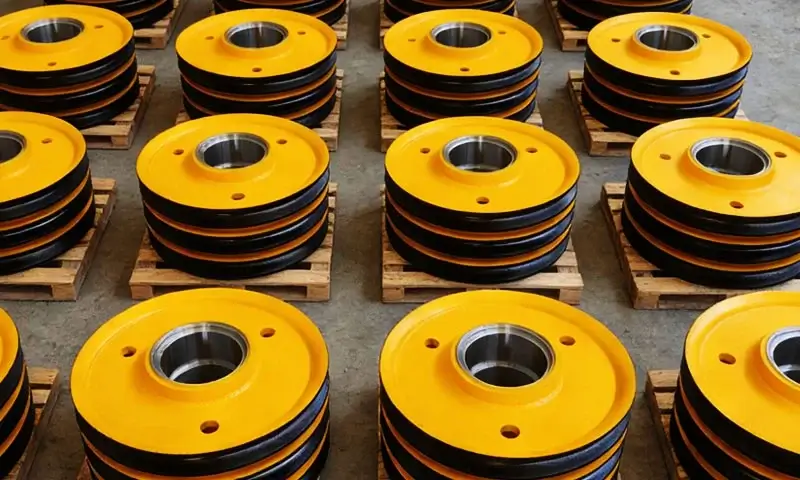
Precisiegieten biedt een effectieve productieroute voor op maat gemaakte kraanschijven, omdat het relatief complexe metaalgeometrieën kan reproduceren terwijl de gecontroleerde maatconsistentie behouden blijft en een vrijwel netto-vorm-startpunt biedt voor daaropvolgende bewerking.
In combinatie met de juiste legeringskeuze, gecontroleerde warmtebehandeling, CNC -bewerking, en niet-destructieve inspectie, precisiegieten kan schijven produceren die zijn afgestemd op specifieke staalkabelsystemen en hijstoepassingen.
Het technische doel is niet eenvoudigweg het produceren van een schijf die in een samenstel past.
Het doel is om een onderdeel te vervaardigen waarvan de gietintegriteit intact is, mechanische eigenschappen, groefgeometrie, dimensionale nauwkeurigheid, en de toestand van het oppervlak blijven geschikt gedurende herhaalde onderhoudscycli.
Dit artikel onderzoekt precisiegegoten kraanschijven vanuit het perspectief van componentontwerp, materiaal techniek, productie van gieterijen, bewerking, kwaliteitscontrole, en applicatieprestaties.
1. Wat is een kraanschijf?
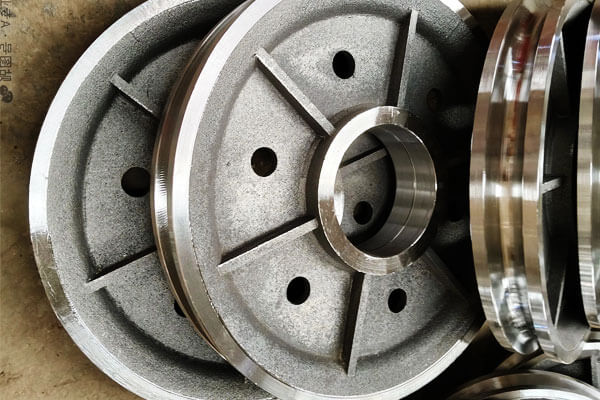
A kraan schijf is een gegroefd wiel dat wordt gebruikt om te geleiden, omleiden, steun, of verdeel een staalkabel binnen een kraan of ander hefmechanisme.
De staalkabel loopt rond de omtrek van de schijf, terwijl de schijf rond een as draait, pin, of gelagerde naaf.
Afhankelijk van de kraanconfiguratie, In een schijfblok kunnen één of meerdere schijven worden geïnstalleerd, inscheringssysteem, boem kop, montage van karretjes, of ander hefmechanisme.
Het fundamentele doel van een schijf is eenvoudig: het verandert de richting van de staalkabel en zorgt ervoor dat de kabel onder belasting kan bewegen met verminderde wrijving en gecontroleerde buiging.
De werkelijke mechanische functie, Echter, is aanzienlijk veeleisender.
Wanneer een geladen staalkabel over een schijf gaat, het touw wordt herhaaldelijk gebogen en ongebogen. De katrolgroef ondersteunt het touw en verdeelt de contactkrachten over een bepaald gebied.
Tegelijkertijd, de schijf zelf moet bestand zijn tegen de krachten die door het touw worden overgebracht zonder overmatige vervorming, krakend, dragen, of verlies van uitlijning.
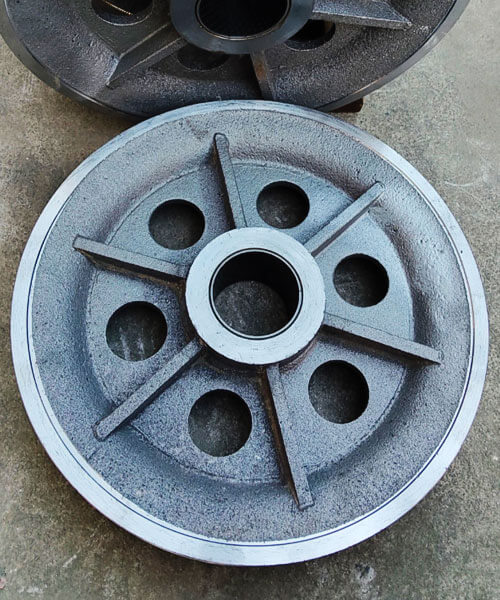
Basisstructuur van de kraanschijf
Een conventionele kraanschijf bestaat doorgaans uit meerdere functionele gebieden:
| Onderdeel | Primaire functie | Belangrijke technische overwegingen |
| Schijflichaam | Ondersteunt het touw en brengt de belasting over | Kracht, stijfheid, integriteit van het gieten |
| Touw Groef | Ontvangt en geleidt de staalkabel | Radius, diepte, profiel, oppervlakte -afwerking |
| Middelpunt | Verbindt de schijf met de roterende steun | Belastingoverdracht, wanddikte |
| Vervelen | Geschikt voor as- of lageropstelling | Diameter, tolerantie, concentriciteit |
| Flenzen | Helpt de staalkabel vast te houden | Hoogte, stijfheid, klaring |
| Lagerzitting | Ondersteunt het lager waar van toepassing | Dimensionale nauwkeurigheid, oppervlakte -afwerking |
| Spiebaan / Montage-eigenschappen | Brengt koppel over of zet de montage vast | Positie, geometrie, uitlijning |
2. Gemeenschappelijke materialen voor kraanschijven
Materiaalkeuze is een van de belangrijkste beslissingen bij de productie van kraanschijven op maat, omdat het materiaal de sterkte beïnvloedt, taaiheid, Draag weerstand, vermoeidheid gedrag, corrosieweerstand, machinaliteit, reactie op warmtebehandeling, en gietprestaties.
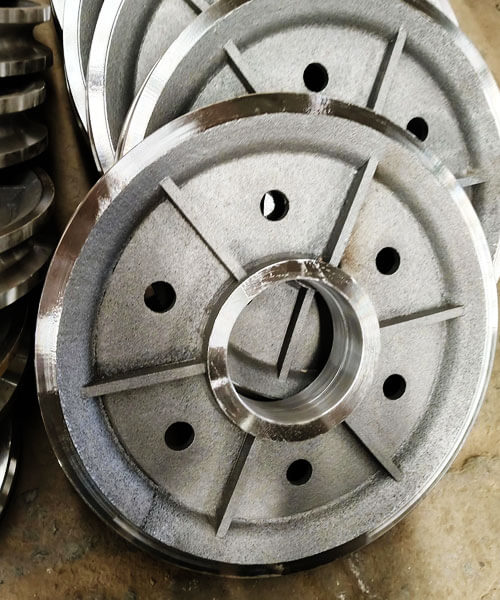
Koolstofstalen gietstukken
Koolstofstaal is breed toepasbaar voor algemene industriële componenten omdat het een nuttige combinatie van sterkte biedt, taaiheid, machinaliteit, lasbaarheid, en kostenefficiëntie.
Voor kraanschijven, koolstofstaal kan geschikt zijn wanneer de gebruiksomstandigheden de verhoogde sterkte niet vereisen, Hardheid, of corrosieweerstand geassocieerd met hoger gelegeerde materialen.
De exacte staalsoort moet worden gekozen op basis van de vereiste mechanische eigenschappen, grootte van het gietgedeelte, warmtebehandelingstoestand, operationele omgeving, en toepasselijke technische specificatie.
Gelegeerd staal gietstukken
Gelegeerd staal wordt aantrekkelijk wanneer de schijf wordt onderworpen aan veeleisendere belastingen of wanneer de hardbaarheid toeneemt, taaiheid, kracht, of slijtvastheid is vereist.
Legeringselementen zoals mangaan, chroom, molybdeum, en nikkel kunnen in verschillende combinaties worden gebruikt om de reactie van het materiaal op warmtebehandeling en belasting te wijzigen.
Voor zware kraanschijven, Het voordeel van gelegeerd staal is niet alleen een hogere sterkte. Een correct legeringsontwerp kan helpen een evenwichtiger combinatie te bereiken:
Kracht + taaiheid + vermoeidheid weerstand + Hardheid + Draag weerstand
Dit evenwicht is vooral belangrijk wanneer de schijf relatief dikke secties bevat waar een uniforme warmtebehandelingsreactie moeilijker kan worden.
Roestvrij staal
Roestvast staal kan worden overwogen voor gespecialiseerde kraanschijven die worden blootgesteld aan corrosieve omstandigheden, inclusief marine, kust, offshore, chemisch, of washdown-omgevingen.
Echter, roestvrij staal mag niet automatisch als de beste optie worden beschouwd, simpelweg omdat het een superieure corrosieweerstand heeft.
Bij de materiaalkeuze moet rekening worden gehouden met mechanische belasting, slijtage gedrag, kosten, bewerkingsvereisten, en de feitelijke corrosiviteit van het milieu.
Voor veel zware hijstoepassingen, een goed ontworpen koolstof- of gelegeerd staal met een geschikt beschermingssysteem kan praktischer zijn dan roestvrij staal.
Ductiel ijzer
Nodulair gietijzer kan aantrekkelijke gieteigenschappen en nuttige sterkte bieden, taaiheid, Draag weerstand, trillingsdemping, en dimensionale stabiliteit.
De toepasbaarheid ervan hangt sterk af van het ontwerp en de belastingseisen.
Het mag niet alleen worden geselecteerd omdat de gietbaarheid ervan gunstig is; de volledige mechanische belasting- en faalgevolgen van de toepassing moeten worden geëvalueerd.
3. Precisiegietproces voor kraanschijven
Precisiegieten is een effectieve productiemethode voor het produceren van kraanschijven met complexe profielen, geïntegreerde hubs, structurele transities, en andere geometrieën die duur of inefficiënt zouden zijn om volledig machinaal te vervaardigen.
Voor kraanschijven op maat, Investeringsuitgifte (Lost-wax casting) is bijzonder waardevol omdat het proces ingewikkelde geometrieën kan reproduceren met relatief nauwe giettoleranties en een bijna-netvormige structuur, terwijl daaropvolgende CNC-bewerkingen de kritische functionele afmetingen bepalen.
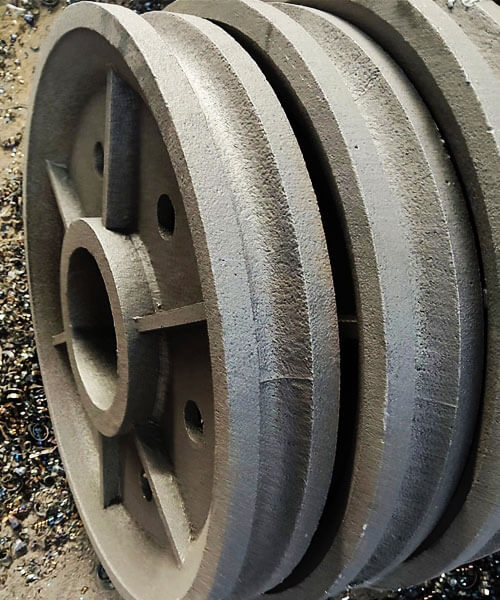
Investeringsuitgifte (Lost-wax casting) Proces
| Fase | Processtap | Beschrijving | Belangrijkste bedieningselementen |
| 1. Engineering & Gereedschap | DFM-analyse | De 2D-tekening of het 3D CAD-model wordt beoordeeld op haalbaarheid van het gieten, wanddikte, overgangen, krimp, Bewerkingstoeslagen, en poortvereisten. | Casting-simulatie; Dimensionale vereisten; voorlopige versie; straal van de filet; bewerkingstoeslag |
| 2. Patroonproductie | Wasinjectie | Was wordt in een precisiegereedschap geïnjecteerd om een nauwkeurig opofferingspatroon te produceren dat de geometrie van de kraanschijf vertegenwoordigt. | Was temperatuur; injectie druk; Houd druk; fietstijd; patroon afmetingen |
| Patrooninspectie | Waspatronen worden gecontroleerd op vervorming, onvolledige vulling, flash, dimensionale variatie, en oppervlaktefouten. | Patroon afmetingen; visuele inspectie; dimensionale consistentie | |
| 3. Patroonassemblage | Boom montage | Individuele waspatronen zijn bevestigd aan een centraal spruwsysteem met lopers en poorten die zijn ontworpen om een gecontroleerde metaalstroom te bieden. | Poortindeling; patroon oriëntatie; afstand; afmetingen loper |
| 4. Shell -gebouw | Slurry-coating | Het wassamenstel wordt herhaaldelijk in keramische slurry gedompeld en bedekt met vuurvast stucwerk om een meerlaagse keramische schaal te creëren. | Slurry viscositeit; laagdikte; droogtijd; vochtigheid; deeltjesgrootte van stucwerk |
| Schaalversterking | Er worden extra keramische lagen aangebracht totdat de schaal voldoende sterkte en doorlaatbaarheid heeft voor het gieten van metaal. | Schaaldikte; droogomstandigheden; integriteit van de schaal | |
5. Ontwricht |
Autoclaaf / snel ontwassen | De gemonteerde schaal wordt verwarmd om het waspatroon te verwijderen en een schone keramische holte achter te laten. | Temperatuur; stoom druk; verwarmingssnelheid; ontwaxing tijd |
| 6. Shell Fireing | Keramisch bakken | De keramische schaal wordt bij verhoogde temperatuur gebakken om achtergebleven was te verwijderen, versterk de mal, en thermische stabiliteit tot stand brengen. | Oven temperatuur; verwarmingssnelheid; tijd vasthouden; schaal temperatuur |
| 7. Smeltend | Inductie smelten | De geselecteerde legering wordt in een gecontroleerde oven gesmolten en op de vereiste chemische samenstelling en gietconditie gebracht. | Legering chemie; Smelt de temperatuur; tijd vasthouden; smelt reinheid |
| 8. Metaalverificatie | Chemische analyse | Het gesmolten metaal wordt vóór het gieten geanalyseerd om te verifiëren dat de samenstelling ervan voldoet aan de gespecificeerde legeringskwaliteit. | Spectrometrische analyse; lading-materiaal controle; warmtenummer |
9. Gieten |
Zwaartekracht / gecontroleerd gieten | Gesmolten metaal wordt via het speciaal ontworpen poortsysteem in de voorverwarmde keramische schaal gebracht. | Giettemperatuur; gietpercentage; vorm voorverwarmen; stabiliteit van het vullen |
| 10. Stolling | Gecontroleerde koeling | Het gietstuk stolt in de keramische mal. De toevoer en directionele stolling worden gecontroleerd om krimp en andere interne discontinuïteiten te minimaliseren. | Thermische gradiënten; efficiëntie van de stijgbuis; koelingspercentage; sectiedikte |
| 11. Knock-out | Verwijdering van de schaal | Na voldoende afkoeling, de keramische schaal wordt mechanisch verwijderd van het metalen gietstuk. | Trillingsintensiteit; methode voor het verwijderen van de schaal; werpbescherming |
| 12. Afsnijden | Verwijdering van poort en stijgleiding | Spruw, lopers wierners, poorten, en stijgbuizen zijn gescheiden van het kraanschijfgietwerk. | Snijlocatie; schuurzaagparameters; afhandeling van onderdelen |
13. Afwerking gieten |
Slijpen / schot schieten | Resterende poorten, vinnen, flash, en vastzittend keramiek worden verwijderd en het oppervlak wordt voorbereid voor verdere verwerking. | Schurende soort; explosiedruk; slijpvergoeding; oppervlakte conditie |
| 14. Warmtebehandeling | Normaal / Q&T / stressverlichting | Het gietstuk wordt met warmte behandeld, afhankelijk van de legering en de vereiste mechanische eigenschappen. | Oven temperatuur; week tijd; koelingspercentage; hardheid |
| 15. CNC -bewerking | Omdraaiend / saai / groef bewerking | Functionele kenmerken zoals de boring, middelpunt, dragende zitting, touw groef, en montageoppervlakken worden machinaal bewerkt tot de uiteindelijke afmetingen. | Dimensionale tolerantie; concentriciteit; uitloop; oppervlakteruwheid |
| 16. Eindinspectie | Dimensionale en NDT-inspectie | De voltooide schijf wordt geïnspecteerd om de geometrie te verifiëren, mechanische eigenschappen, oppervlakte conditie, En, waar gespecificeerd, interne integriteit. | CMM; hardheid; UT/MT/PT/RT, indien van toepassing; visuele inspectie |
4. Bewerking van touwgroeven en oppervlakteafwerking
De kabelgroef is een van de belangrijkste functionele kenmerken van een kraanschijf, omdat deze bepaalt hoe de staalkabel wordt ondersteund, begeleid, en gebogen tijdens gebruik.
Zelfs als het gietlichaam een uitstekende metallurgische integriteit heeft, een verkeerd bewerkte groef kan de slijtage van het touw versnellen, lokale contactstress verhogen, ongelijkmatige belasting bevorderen, en verkort de levensduur van zowel het touw als de schijf.
Groefbewerking na het gieten
Investeringsgieten of andere precisiegietprocessen kunnen een schijf met een bijna netvormige vorm produceren, maar de uiteindelijke kabelgroef vereist normaal gesproken bewerking wanneer een gecontroleerde geometrie en oppervlakteafwerking van cruciaal belang zijn.
De bewerkingsvolgorde kan omvatten::
Gietinspectie → vaststelling van het referentiepunt → voordraaien → groefbewerking → nadraaien → maatverificatie
De schijf wordt eerst veilig gelokaliseerd met behulp van geschikte referenties. De bewerkingsreferentie moet worden vastgesteld op basis van de functionele middellijn van het onderdeel en niet op een willekeurig gegoten oppervlak.
Dit is vooral belangrijk voor grote of asymmetrische schijven, omdat gietvariaties anders direct in de uiteindelijke groefpositie kunnen worden overgebracht.
Groefconcentriciteit en slingering
De relatie tussen de kabelgroef en de boring van de schijf is van cruciaal belang.
Als de groef niet concentrisch is met de boring, het touw kan een veranderende radiale positie ervaren terwijl de schijf draait.
Overmatige slingering kan resulteren in cyclische variaties in het touwcontact en de belasting en kan bijdragen aan trillingen of versnelde slijtage van componenten.
Voor precisiekraanschijven, Fabrikanten moeten daarom inspectiecriteria opstellen:
- Concentriciteit van groef tot boring
- Radiale uitloop
- Axiale uitloop
- Boring diameter
- Groefdiameter
- Groef profiel
- Afmetingen flens
De toegestane waarden moeten afkomstig zijn uit de technische tekening of de toepasselijke specificatie en mogen niet universeel worden toegewezen.
Oppervlakteafwerking van de touwgroef
De oppervlakteafwerking moet voldoende gecontroleerd worden om onnodige slijtage van de staalkabel te voorkomen, terwijl de beoogde contactgeometrie behouden blijft.
Een ruwe, stuk, poreus, of onjuist geslepen groef kunnen plaatselijke oneffenheden veroorzaken die fungeren als spanningsconcentraties of schurende punten.
Omgekeerd, oppervlakteafwerking mag niet worden gebruikt om een onjuist groefprofiel te compenseren.
De volgorde van oppervlaktevoorbereiding kan inhouden:
- Ruwe bewerking
- Bewerking van halffabrikaten
- Afwerking bewerken
- Ontbranding
- Gecontroleerd polijsten of slijpen waar gespecificeerd
- Eindschoonmaak
De vereiste oppervlakteruwheid moet worden gedefinieerd volgens de kabel- en schijfspecificatie.
Een enkele numerieke Ra-waarde mag niet als universeel toepasbaar worden beschouwd, omdat verschillende touwconstructies en gebruiksomstandigheden verschillende oppervlaktecriteria kunnen vereisen.
5. Warmtebehandeling van gegoten kraanschijven
Warmtebehandeling is een kritische fase bij de vervaardiging van gegoten kraanschijven, vooral wanneer koolstofstaal of gelegeerd staal wordt gebruikt.
Gieten bepaalt de basisgeometrie van het onderdeel, maar de gegoten microstructuur is niet noodzakelijkerwijs de optimale structuur voor veeleisende mechanische toepassingen.
Een goed gecontroleerd warmtebehandelingsproces kan de microstructuur wijzigen en de vereiste combinatie verbeteren kracht, hardheid, taaiheid, vermoeidheid weerstand, en dimensionale stabiliteit.
De juiste warmtebehandelingsroute hangt af van de legeringschemie, grootte van het gietgedeelte, vereiste mechanische eigenschappen, en klantspecificatie.
Gemeenschappelijke warmtebehandelingsprocessen
Normaal
Normaliseren houdt in dat het staal wordt verwarmd tot een geschikt temperatuurbereik boven de transformatietemperatuur, houd het voldoende lang vast, en vervolgens afkoelen in de lucht.
Voor gietstaal, normaliseren kan helpen bij het verfijnen en homogeniseren van de microstructuur en het verminderen van een deel van de niet-uniformiteit die met gieten gepaard gaat.
Het kan worden gebruikt wanneer matige tot hoge sterkte gecombineerd met redelijke taaiheid en maatvastheid vereist is.
Glans
Gloeien omvat doorgaans verwarming gevolgd door gecontroleerde koeling.
Het kan de hardheid verminderen, de bewerkbaarheid verbeteren, Verlicht interne spanningen, en zachter produceren, stabielere metallurgische toestand.
Gloeien kan nuttig zijn als tussenproces waarbij de daaropvolgende bewerkingseisen bijzonder veeleisend zijn.
Blussen en temperen
Voor geschikt gelegeerd en koolstofstaal, blussen en temperen (Q&T) behandeling kan worden gebruikt om aanzienlijk verhoogde sterkte en hardheid te verkrijgen, samen met gecontroleerde taaiheid.
Het basisproces is:
Austenitiseren → Afschrikken → Temperen
De afschrikstap produceert een hardere microstructuur, terwijl temperen overmatige broosheid vermindert en de uiteindelijke balans tussen sterkte en taaiheid aanpast.
Voor zwaarbelaste kraanonderdelen, de tempereerfase is bijzonder belangrijk omdat maximale hardheid niet noodzakelijkerwijs gelijk staat aan optimale serviceprestaties.
Stress verlicht
Warmtebehandeling met spanningsverlichting kan worden gebruikt om restspanningen die tijdens het gieten ontstaan, te verminderen, las, Uitgebreide bewerking, of eerdere thermische verwerking.
Dit kan met name handig zijn voor grote schijven waarbij maatvastheid belangrijk is.
6. Veelvoorkomende gietfouten bij kraanschijven en hun hoofdoorzaken
Gietfouten kunnen de structurele betrouwbaarheid van kraanschijven aanzienlijk beïnvloeden.
Omdat een schijf een cyclisch belast onderdeel is, interne discontinuïteiten die kunnen worden getolereerd bij decoratief gieten met lage spanning, kunnen belangrijk worden wanneer het onderdeel wordt onderworpen aan herhaalde hijsbelastingen.
| Defect | Beschrijving | Oorzaak | Preventieve maatregelen |
| Krimp porositeit | Interne holtes | Onvoldoende voeding tijdens het stollen. | Optimaliseer het stijgbuisontwerp; gebruik koude rillingen; simulatie. |
| Gasporositeit | Kleine ronde holtes | Gasbevang; opgeloste gassen in de smelt. | Branden om te smelten; het verbeteren van de gietpraktijk; schone lading. |
| Hete tranen | Scheuren | Trekspanning tijdens stolling. | Verlaag de giettemperatuur; Verbeter de inklapbaarheid van de schaal. |
| Zandinsluitsels | Ingebed zand | Erosie van de keramische schaal. | Verbeter de sterkte van de schaal; Verminder turbulentie. |
Egypte |
Onvolledige vulling | Lage giettemperatuur; onvoldoende metaal. | Verhoog de giettemperatuur; poort verbeteren. |
| Koude sluitingen | Oppervlakte ronden | Twee stromen ontmoeten elkaar zonder fusie. | Verhoog de giettemperatuur; poort verbeteren. |
| Dimensionale variatie | Afmetingen die buiten de tolerantie vallen | Patroon slijtage; uitbreiding van de schaal. | Gereedschap onderhouden; controle shell-proces. |
| Slechte oppervlakteafwerking | Ruw oppervlak | Grof keramiek; schaaldefecten. | Gebruik een fijnere schaal; shell-proces verbeteren. |
7. Toepassingen van precisiegietkraanschijven
Precisiegietende kraanschijven worden gebruikt in hijssystemen waar staalkabels moeten worden omgeleid, ondersteund, of ingeschoren terwijl gecontroleerd touwcontact en mechanische betrouwbaarheid behouden blijven.
Bovenloop- en EOT-kranen
Bovenloopkranen en elektrisch bovenloopwerk (EOT) kranen gebruiken gewoonlijk schijven in het haakblok, hijsmechanisme, en inscheringssysteem.
Deze toepassingen vereisen doorgaans:
- Hoge weerstand tegen herhaalde belasting
- Nauwkeurige touw-groefgeometrie
- Goede rotatiebalans
- Betrouwbare lagerinterfaces
- Gecontroleerde rondloop tussen boring en groef
- Voldoende weerstand tegen vermoeidheid
Voor veelgebruikte productiekranen, De duurzaamheid van de schijf kan een directe invloed hebben op de onderhoudsintervallen, omdat groefslijtage en kabelmoeheid nauw met elkaar verbonden zijn.
Op maat gemaakte gegoten schijven zijn vooral handig wanneer de kraanfabrikant afmetingen nodig heeft die geoptimaliseerd zijn voor een bepaalde trommel, haak blok, draad touw, of installatie-envelop.
Portaal- en portaalkranen
Portaal- en portaalkranen worden veel gebruikt voor containeroverslag, scheepswerven, industriële werven, staalfabrieken, en het hanteren van zwaar materiaal.
Hun schijven kunnen relatief hoge kabelspanningen en dynamische belasting ervaren.
In aanvulling, Bij installaties buitenshuis worden onderdelen blootgesteld aan regen, vochtigheid, stof, temperatuurschommelingen, en potentieel corrosieve atmosferische omstandigheden.
Materiaalkeuze wordt daardoor een belangrijk onderdeel van het ontwerp.
Koolstof- of gelegeerd gietstaal kan geschikt zijn voor algemene zware toepassingen, terwijl corrosiebestendige legeringen of beschermende afwerkingssystemen relevanter kunnen worden in maritieme omgevingen.
Voor grote portaalkranen, dimensionale stabiliteit en structurele gietintegriteit zijn bijzonder belangrijk omdat de afmetingen van de schijf aanzienlijk kunnen worden.
Torenkranen
Torenkranen gebruiken schijven bij het hijsen, karren, en beweegmechanismen. Beperkingen in de ruimte, kabelgeleiding, en relatief hoge bedrijfscycli maken dimensionale optimalisatie belangrijk.
Een op maat gemaakte schijf moet mogelijk aan verschillende concurrerende eisen voldoen:
Groot genoeg om ernstig buigen van het touw te verminderen, maar toch compact genoeg om binnen het mechanische bereik van de kraan te passen.
Het groefprofiel moet ook overeenkomen met de geselecteerde staalkabel, terwijl de naaf- en lageropstelling moeten worden geïntegreerd met de bestaande componenten van de kraan.
Precisiegieten kan flexibiliteit bieden bij het ontwikkelen van complexe naaf- en flensconfiguraties zonder dat het hele onderdeel uit een grote knuppel hoeft te worden bewerkt.
Haven, Haven, en containerkranen
Havenkranen opereren onder veeleisende combinaties van:
- Hoge hijslasten
- Hoge benutting
- Continu of semi-continu bedrijf
- Zoutrijke atmosferen
- Dynamisch laden
- Strenge onderhoudseisen
De in deze systemen gebruikte schijven kunnen daarom een combinatie van mechanische sterkte vereisen, Draag weerstand, vermoeidheid weerstand, corrosiebescherming, en nauwkeurige bewerking.
Waar corrosie ernstig is, Voor bepaalde componenten kunnen roestvrijstalen of duplex roestvrijstalen gietstukken worden overwogen, hoewel de selectie gebaseerd moet zijn op de volledige mechanische en omgevingseisen en niet alleen op corrosiebestendigheid.
Scheepsbouw en scheepskranen
Zeekranen werken doorgaans in vochtige omgevingen, zoutwaterhoudende omgevingen waar corrosie de levensduur van componenten aanzienlijk kan beïnvloeden.
Er kunnen precisiegegoten kraanschijven worden gebruikt:
- Hefsystemen aan boord
- Scheepswerfkranen
- Dekkranen
- Maritieme handlingsystemen
- Offshore-ondersteuningsapparatuur
Voor deze toepassingen, de fabrikant moet niet alleen rekening houden met het bulkmateriaal, maar ook met de toestand van de bewerkte oppervlakken, bevestigingsmiddelen, lagers, beschermende coatings, afwatering, en onderhoud.
Gelokaliseerde corrosie in de groef, middelpunt, of lagerinterface kan bijzonder ongewenst zijn omdat deze gebieden functioneel kritisch zijn.
Offshore-kranen
Offshore-hijssystemen stellen bijzonder veeleisende gebruiksomstandigheden omdat ze hoge mechanische belastingen combineren met maritieme corrosie, door de wind veroorzaakte beweging, trilling, en potentieel ernstige dynamische effecten.
Voor offshore-werkzaamheden kan een precisiegegoten kraanschijf nodig zijn:
- Hoge breuktoon
- Gecontroleerde chemische samenstelling
- Gekwalificeerde warmtebehandeling
- Corrosiebestendig materiaal of coating
- Uitgebreide NDT
- Traceerbare materiaalcertificering
- Strakke dimensionale controle
Voor dergelijke toepassingen, de technische specificatie moet de vereiste inspectie- en acceptatiecriteria in detail definiëren. Materiaalkwaliteit alleen is niet voldoende om de geschiktheid vast te stellen.
Mijnbouw en zware industriële kranen
Mijnbouwfaciliteiten, staalfabrieken, gieterijen, krachtplanten, en bij zware productieactiviteiten worden vaak kranen gebruikt in omgevingen die worden gekenmerkt door stof, trilling, verhoogde temperaturen, hoge benutting, en zware lasten.
Schoven voor deze toepassingen kunnen een verhoogde weerstand vereisen:
- Cyclische vermoeidheid
- Mechanische impact
- Groef slijtage
- Verontreiniging
- Verhoogde bedrijfstemperaturen
- Schurende omgevingen
Gietstukken van gelegeerd staal met de juiste warmtebehandeling kunnen een sterke combinatie van mechanische eigenschappen bieden waar zware prestaties vereist zijn.
Bouw- en materiaalbehandelingsapparatuur
Bouwkranen, takels, lieren, en materiaalbehandelingssystemen maken ook gebruik van schijven om staalkabels om te leiden en gecontroleerd inscheren te handhaven.
De eisen lopen nogal uiteen. Bij een relatief kleine hijsschijf kunnen kosten en compactheid prioriteit krijgen, terwijl een bouwkraan met een hoge capaciteit mogelijk hoogontwikkelde groef- en lagerinterfaces nodig heeft.
Deze diversiteit aan toepassingen is één van de redenen waarom een capabele fabrikant op maat meerdere materiaal- en productieroutes zou moeten kunnen ondersteunen in plaats van elke toepassing in één standaardontwerp te dwingen..
8. Voordelen van precisiegieten voor kraanschijven
| Voordeel | Technische waarde |
| Near-net-shape-mogelijkheid | Vermindert onnodige bewerkingen |
| Complexe geometrie | Ondersteunt geoptimaliseerde hub, flens, en structurele kenmerken |
| Materiële flexibiliteit | Maakt toepassingsspecifieke legeringsselectie mogelijk |
| Geïntegreerde productie | Gieten en CNC-bewerking kunnen samen worden ontworpen |
| Herhaalbaarheid | Handig voor OEM- en vervangingsonderdelenproductie |
| Verminderd materiaalverspilling | Minder afname dan verspaning uit grote voorraad |
| Ontwerp maatwerk | Ondersteunt toepassingsspecifieke geometrie |
| Schaalbare productie | Geschikt voor herhalingsproductie wanneer gereedschap gerechtvaardigd is |
9. Precisie gegoten kraanschijven vs. Gesmede en gefabriceerde schijven
De keuze tussen Precisie gieten, smeden, en fabricage moet gebaseerd zijn op de werkelijke technische vereisten van de kraanschijf, in plaats van op de veronderstelling dat één productieproces universeel superieur is.
Elke methode creëert een ander evenwicht in de geometrie, materiaalgebruik, mechanische eigenschappen, productieflexibiliteit, bewerkingsvereisten, en kosten.
Voor kraanschijven op maat, de centrale vraag is dus niet simpelweg “Welk proces is sterker?” maar eerder:
Welk productieproces kan het benodigde draagvermogen het meest efficiënt leveren, vermoeidheidsprestaties, nauwkeurigheid van de touwgroef, structurele integriteit, afmetingen, productievolume, en servicebetrouwbaarheid?
De volgende vergelijking richt zich op de belangrijkste technische verschillen die van belang zijn bij het selecteren van een productieroute voor kraanschijven.
| Belangrijkste verschil | Precisie gegoten kraanschijven | Gesmede kraanschijven | Vervaardigd / Gelaste schijven |
| Beste pasvorm | Complex, op maat gemaakte schijven die een bijna-netvormige geometrie en herhaalde productie vereisen | Toepassingen met hoge sterkte en vermoeidheidskritiek | Erg groot, lage volume, of sterk op maat gemaakte schijven |
| Geometrie & Ontwerp vrijheid | Uitstekend voor complexe knooppunten, flenzen, ribben, en overgangen | Gematigd; geometrie moet compatibel zijn met smeden | Uitstekend door een meerdelige constructie |
| Mechanische prestaties | Uitstekend als de gietkwaliteit en de warmtebehandeling goed worden gecontroleerd | Uitstekend, vooral voor toepassingen die hoge sterkte en vermoeidheid vereisen | Goed, maar sterk afhankelijk van het lasontwerp en de kwaliteit |
| Materiële efficiëntie | Hoog, met relatief weinig overtollig materiaal | Gematigd; bewerkingstoeslag is over het algemeen vereist | Variabel; hangt af van plaat, ring, en componentenindeling |
| Bewerkingsvereiste | Gematigd; voornamelijk kritische functionele oppervlakken | Matig tot hoog | Matig tot hoog |
| Mogelijkheid tot grote diameter | Goed, maar hangt af van de gietapparatuur en het proces | Beperkt door smeedcapaciteit en gereedschap | Uitstekend geschikt voor zeer grote constructies |
Productievolume |
Zeer geschikt om OEM-productie te herhalen | Meest geschikt voor herhaalde productie waarbij gereedschap gerechtvaardigd is | Zeer geschikt voor productie in kleine volumes of op projectbasis |
| Gereedschapskosten | Gematigd | Hoog | Relatief laag |
| Belangrijkste kwaliteitszorg | Gietfouten zoals krimp, porositeit, en insluitsels | Materiële kwaliteit, integriteit smeden, en warmtebehandelingscontrole | Lasdefecten, restspanning, en vervorming |
| Belangrijkste voordeel | Complexe geometrie + aanpassing + bijna-netvorm | Hoge mechanische prestaties | Groot formaat + structurele flexibiliteit |
| Belangrijkste beperking | Vereist strikte gieterij- en NDT-controle | Hogere gereedschaps- en verwerkingskosten | Meer uitdagingen op het gebied van lassen en dimensionele controle |
10. Waarom kiezen voor LangHe Industry voor op maat gemaakte precisiegietkraanschijven?
Het selecteren van een leverancier van kraanschijven moet verder gaan dan het vergelijken van gietprijzen.
Omdat het onderdeel structureel gieten combineert, warmtebehandeling, Precisiebewerking, touwcontactgeometrie, en inspectie, Het vermogen van de leverancier om de volledige productieketen te beheersen is vaak belangrijker dan het nominale gietproces zelf.
Langhe -industrie kan op maat gemaakte, nauwkeurig gegoten kraanschijven benaderen als een geïntegreerd productieproject, verbindende technische beoordeling, ontwikkeling van het gieten, bewerking, afwerking, en kwaliteitsinspectie.
| Vermogen | Details |
| Materialen | Koolstofstaal (WCB), staal gegoten, ductiel ijzer (60-40-18, 65-45-12, 80-55-06), roestvrij staal (CF-8, CF-8M, 17-4PH), legeringsstaal (4140, 4340) |
| Gietproces | Investeringsgieten, zandgieten. |
| Gedeeltelijk gewicht | 0.5 kg tot 500 kg. |
| Toleranties | ± 0,1-0,3 mm (CT5-CT7 volgens ISO 8062). |
| Kwaliteit | ISO 9001:2015 gecertificeerd; 100% inspectie; CMM; oppervlakte profielmeter; NDT (Röntgenfoto, kleurstoffen). |
| Doorlooptijd | 6–12 weken voor gereedschap; 2–4 weken voor nabestellingen. |
11. Conclusie
Een kraanschijf is een relatief eenvoudig ogend onderdeel met een veeleisende mechanische functie. Het moet de staalkabel herhaaldelijk geleiden en buigen terwijl de belasting door de naaf wordt overgebracht, lagers, en ondersteunende structuur.
Vervolgens, groefgeometrie, Materiële integriteit, warmtebehandelingstoestand, nauwkeurigheid van de bewerking, concentriciteit, en oppervlaktekwaliteit dragen allemaal bij aan de prestaties van de schijf in de echte wereld.
Precisiegieten biedt een aantrekkelijke productieroute voor op maat gemaakte kraanschijven met een complexe geometrie, bijna-netvormige productie, Materiële flexibiliteit, en herhaalbaarheid zijn belangrijk.
Het kan onnodige bewerkingen verminderen, terwijl ingenieurs hubs kunnen integreren, flenzen, ribben, overgangen, en andere structurele kenmerken in het gietstuk.
LangHe Industry biedt een op maat gemaakte productieaanpak voor nauwkeurig gegoten kraanschijven, het combineren van giettechniek, materiële selectie, CNC -bewerking, warmtebehandeling, afwerking, en inspectie ter ondersteuning van toepassingsspecifieke OEM-vereisten.
FAQ
Wat is een precisiegietkraanschijf?
Een precisiegietkraanschijf is een staalkabelschijf die is vervaardigd via een gecontroleerd gietproces, gewoonlijk een investering of een andere precisiegerichte gietmethode, gevolgd door het bewerken van kritische functionele oppervlakken.
Door het gieten ontstaat de primaire geometrie, terwijl CNC-bewerking kenmerken zoals de touwgroef tot stand brengt, boring, en lagerzittingen.
Waarom precisiegieten gebruiken in plaats van een kraanschijf uit massief staal te bewerken??
Precisiegieten kan een groot deel van de uiteindelijke geometrie produceren vóór de bewerking.
Dit kan de materiaalverwijdering verminderen, bewerkingstijd, en materiaalverspilling, terwijl complexe hubs meer vrijheid krijgen, flenzen, ribben, en structurele transities.
Is een gegoten kraanschijf zo sterk als een gesmede schijf?
Er is geen universeel antwoord. Een goed ontworpen en verwerkte katrolschijf uit gegoten staal kan uitstekende mechanische prestaties leveren,
maar smeden kan voordelen bieden in toepassingen waarbij een sterk geconsolideerde smeedstructuur en specifieke vermoeiingseigenschappen vereist zijn.
Geschiktheid is afhankelijk van het materiaal, geometrie, Sectiegrootte, warmtebehandeling, laden, en keuringseisen.
Wat is de belangrijkste kwaliteitsfactor voor een kraanschijf?
Er is niet één parameter die de kwaliteit bepaalt. Integriteit van het gieten, mechanische eigenschappen, groefgeometrie, uitlijning van de boring, oppervlakte conditie, en maatnauwkeurigheid moeten samenwerken.
Voor veiligheidskritische toepassingen, deze kenmerken moeten worden geverifieerd aan de hand van de goedgekeurde technische specificatie en het inspectieplan.
Hoe kan de levensduur van de kraanschijf worden verbeterd??
De levensduur kan worden verbeterd door de juiste maatvoering tussen schijf en kabel, passende groefgeometrie, geschikte materiaalkeuze, juiste smering en onderhoud,
nauwkeurige uitlijning, gecontroleerde productiekwaliteit, en tijdige vervanging wanneer slijtage van de groeven of andere schade de gespecificeerde limiet overschrijdt.

