Injap pengalih adalah komponen penting dalam sistem pengendalian bendalir, membolehkan pengalihan aliran dari satu laluan ke laluan yang lain.
Injap ini digunakan secara meluas dalam paip, pemanasan, pengudaraan, penghawa dingin (HVAC), rawatan air, dan pemprosesan industri.
Antara pelbagai bahan yang digunakan untuk injap diverter, tembaga menonjol sebagai pilihan pilihan kerana kebolehmesinan yang sangat baik, Rintangan kakisan, sifat antimikrob, dan rayuan estetik.
Pembuatan injap pengalih loyang berkualiti tinggi memerlukan gabungan tuangan ketepatan dan pemesinan CNC termaju.
Lost Lilt Casting (Pelaburan Pelaburan) adalah kaedah yang ideal untuk menghasilkan laluan dalaman yang kompleks dan geometri rumit badan injap pengalih.
Apabila digabungkan dengan pemesinan CNC ketepatan, proses ini memberikan injap dengan ketepatan dimensi yang luar biasa, Permukaan halus selesai, dan prestasi yang boleh dipercayai.
1. Apa Itu Injap Pengalih Loyang?
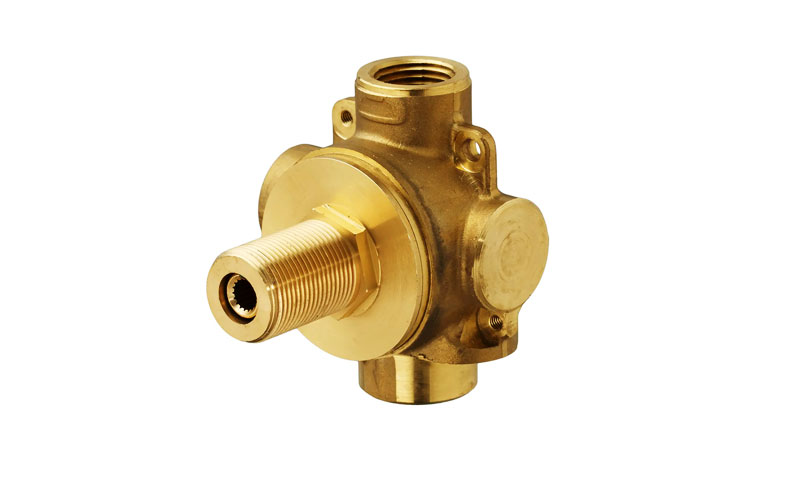
A injap pengalih loyang ialah peranti kawalan bendalir berbilang port yang direka untuk mengubah hala, pilih, atau mengagihkan aliran bendalir antara laluan aliran yang berbeza.
Tidak seperti injap tutup dua port konvensional, injap pengalih menggunakan berbilang port dan elemen boleh alih dalaman untuk menentukan laluan mana yang disambungkan pada kedudukan operasi tertentu.
Badan injap biasanya merupakan komponen yang mengandungi tekanan. Ia menggabungkan port masuk dan keluar, laluan aliran dalaman, ruang injap, antara muka pengedap, dan ciri sambungan.
Unsur dalaman—biasanya bola, palam, kartrij, atau mekanisme kendalian gelendong—menukar laluan aliran apabila injap diputar atau digerakkan.
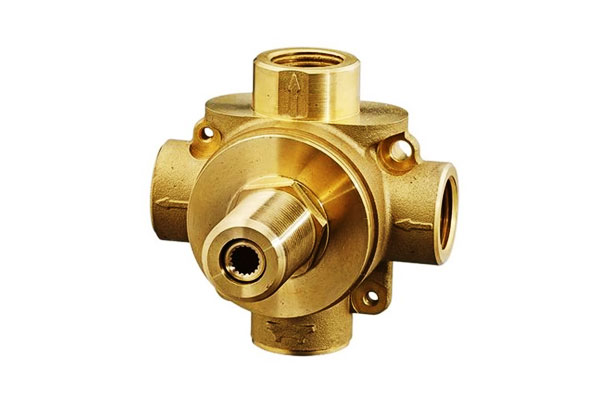
Injap pengalih tiga port biasa, contohnya, boleh beroperasi dalam dua kedudukan asas:
Jawatan A: Salur masuk → Salur keluar A
Kedudukan B: Salur masuk → Salur keluar B
Konfigurasi yang lebih canggih boleh menggabungkan atau mengasingkan laluan aliran bergantung pada keperluan proses.
Prestasi injap pengalih loyang bergantung pada lebih daripada keupayaannya untuk menukar aliran.
Injap mesti mengekalkan integriti tekanan, rintangan aliran terkawal, penutupan yang boleh dipercayai, kestabilan dimensi, dan pengedap berulang sepanjang hayat perkhidmatan yang dimaksudkan.
Jenis Injap Pengalih
| Jenis | Penerangan | Aplikasi biasa |
| 3-Injap Pengalih Cara | Satu salur masuk, dua outlet (atau sebaliknya). | Sistem pancuran mandian, injap pencampuran, HVAC, kawalan proses. |
| 4-Injap Pengalih Cara | Dua salur masuk, dua outlet. | Sistem pemanasan, pam haba, aplikasi aliran terbalik. |
| Injap Pengalih Putar | Elemen berputar mengalihkan aliran antara port. | Pengangkutan pneumatik, pengendalian serbuk, pemprosesan perindustrian. |
| Injap Pengalih Slaid | Plat gelongsor mengubah hala aliran. | Pengendalian bahan pukal, pengumpulan habuk. |
| Injap Pengalih Bola | Bola dengan berbilang petikan berputar ke arah aliran. | Paip, pemprosesan kimia, pengagihan gas. |
2. Aloi Loyang Biasa untuk Tuangan Injap Penukar
Memilih yang betul tembaga aloi adalah asas kepada integriti tekanan, Rintangan kakisan, kebolehkerjaan, kestabilan dimensi, dan hayat perkhidmatan injap pengalih.
Loyang bukan bahan tunggal tetapi satu keluarga luas aloi berasaskan tembaga dengan komposisi dan ciri prestasi yang berbeza dengan ketara..
Untuk injap pengalih tuangan ketepatan, pemilihan aloi harus mempertimbangkan lebih daripada kekuatan mekanikal.
Pengilang juga mesti menilai tingkah laku pemutus, keperluan tekanan dalaman, kimia bendalir, rintangan penyahzinan, keperluan pemesinan, suhu, pendedahan alam sekitar, dan sekatan peraturan ke atas juzuk aloi.
Khususnya, injap yang dimaksudkan untuk air boleh diminum atau aplikasi sentuhan bendalir terkawal lain mungkin memerlukan aloi plumbum rendah atau bebas plumbum yang layak khusus untuk perkhidmatan tersebut.
Therefore, aloi loyang "terbaik" adalah bergantung pada aplikasi dan bukannya universal.
Aloi Loyang Yang Biasa Digunakan untuk Tuangan Injap Penukar
| Aloi (Kita) | Sifat utama | Aplikasi Injap Biasa |
| C84400 | Kebolehtuangan dan kebolehmesinan yang baik; loyang separa merah berplumbum tradisional | Badan injap tuang, Kelengkapan paip, komponen kawalan bendalir am |
| C85700 | Loyang tentera laut berplumbum; kebolehmesinan yang baik dan rintangan kakisan | Komponen yang mengandungi tekanan tuang, kelengkapan berorientasikan marin |
| C87610 | Aloi tembaga-silikon dengan kekuatan yang baik dan rintangan kakisan; plumbum rendah | Komponen perkhidmatan air dan tuangan kalis kakisan jika dinyatakan |
| C87800 | Loyang silikon; kebolehpercayaan yang baik, kekuatan, Rintangan kakisan, dan ciri-ciri plumbum rendah | Badan injap perkhidmatan air, Kelengkapan paip, Komponen Perindustrian |
C87850 |
Loyang silikon dengan kebolehmesinan yang baik, sesak tekanan, dan rintangan kakisan | Badan injap, Faucets, kes meter air, paip dan komponen marin |
| C89833 | Aloi yang mengandungi bismut tanpa plumbum; kebolehmesinan yang baik dan rintangan kakisan | Komponen yang mengandungi tekanan tanpa plumbum, aplikasi injap dan paip berorientasikan air boleh diminum jika dinyatakan |
| C36000 | Ciri-ciri pemesinan bebas yang sangat baik | Komponen injap bermesin, batang, kelengkapan, Penyesuai, bahagian ketepatan kecil |
3. Proses Tuangan Lilin Hilang Injap Pengalih Loyang
The kehilangan proses penuangan lilin untuk injap pengalih loyang direka untuk menukar geometri badan injap yang kompleks kepada tuangan logam berbentuk hampir bersih dengan ketekalan dimensi terkawal dan integriti struktur yang kukuh.
Semakan dan Perkakasan CAD
Proses ini bermula dengan lukisan injap atau model CAD 3D. Sebelum perkakasan dihasilkan, geometri disemak untuk kebolehlaksanaan tuangan dan kestabilan pengeluaran.
Pengilang menetapkan elaun pengecutan yang diperlukan, elaun pemesinan, peralihan dinding, fillet, lokasi gerbang, dan orientasi pemutus.
Untuk injap pengalih, perhatian khusus diberikan kepada kawasan sekitar laluan aliran yang bersilang kerana perubahan mendadak dalam ketebalan bahagian boleh mempengaruhi penyuapan dan pemejalan logam.
Perkakas itu kemudiannya dihasilkan untuk menghasilkan semula geometri corak lilin yang diperlukan.
Pengeluaran corak lilin
Lilin cair disuntik ke dalam acuan ketepatan untuk mencipta corak pengorbanan badan injap.
Kualiti corak menentukan asas dimensi tuangan. Suhu suntikan, tekanan, masa menahan, penyejukan, dan keadaan mati mesti dikawal untuk meminimumkan denyar, Penyimpangan, pengisian yang tidak lengkap, dan variasi dimensi.
Corak lilin yang lengkap diperiksa sebelum ia meneruskan pemasangan.
Perhimpunan dan Gating Lilin
Corak lilin individu disambungkan ke sistem sprue pusat untuk membentuk pokok tuangan.
Pada peringkat ini, sistem gating diwujudkan supaya loyang cair dapat mengisi rongga injap dengan cara terkawal.
Kedudukan pintu dan dimensi pelari mempengaruhi masa pengisian, pergolakan, Kecerunan terma, dan tingkah laku memberi makan.
Untuk injap pengalih kompleks, gating direka di sekeliling geometri keseluruhan badan, bukan sekadar memaksimumkan kelajuan pengisian.
Bangunan shell seramik
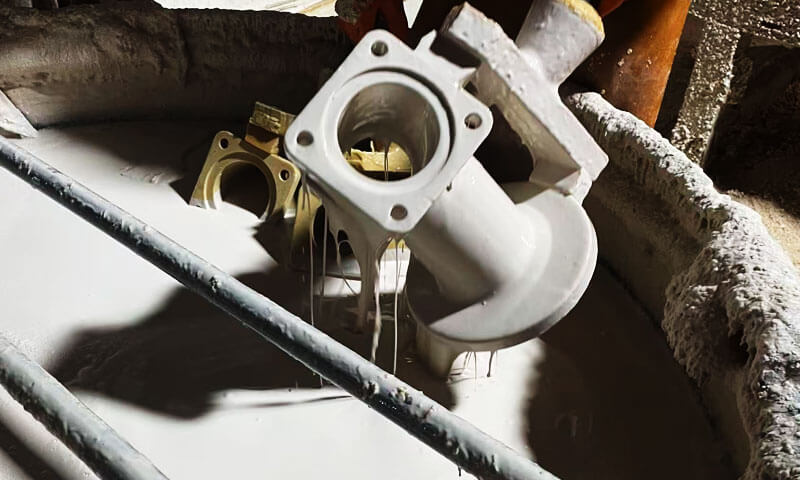
Pokok lilin dicelup berulang kali ke dalam buburan seramik dan disalut dengan stuko refraktori. Lapisan berturut-turut membina cangkerang seramik tegar di sekeliling corak.
Cangkerang mesti memberikan kekuatan yang mencukupi untuk dewaxing dan penuangan logam sambil menghasilkan semula butiran permukaan yang diperlukan.
Kawalan proses utama ialah:
Kelikatan buburan + saiz zarah refraktori + ketebalan lapisan + keadaan pengeringan + kekuatan cangkerang
Penyediaan cangkang yang tidak konsisten boleh menyebabkan keretakan, variasi dimensi, kualiti permukaan yang lemah, atau kegagalan cangkang semasa menuang.
Dewaxing dan Shell menembak
Cangkang seramik dipanaskan untuk mengeluarkan corak lilin dan mencipta rongga negatif badan injap.
Selepas dewaxing, cangkerang dinyalakan untuk mengeluarkan sisa bahan organik dan membangunkan kekuatan refraktori yang diperlukan dan kestabilan terma.
Acuan seramik yang terhasil mestilah bersih, kering, dan bunyi secara struktur sebelum loyang cair diperkenalkan.
Kawalan Peleburan Loyang dan Aloi
Aloi loyang terpilih dicairkan di bawah keadaan terkawal.
Objektif utama adalah untuk memastikan bahawa logam cair memenuhi yang ditentukan komposisi kimia dan keperluan kebersihan sebelum mencurahkan.
Ini amat penting untuk injap tersuai di mana sifat bahan dan keperluan pengawalseliaan mungkin bergantung pada gred aloi tertentu.
Kawalan proses biasanya termasuk:
- Bahan caj yang disahkan
- Pemantauan suhu cair
- Analisis kimia
- Kawalan sanga dan oksida
- Pengenalpastian haba dan kebolehkesanan
Penuangan Terkawal
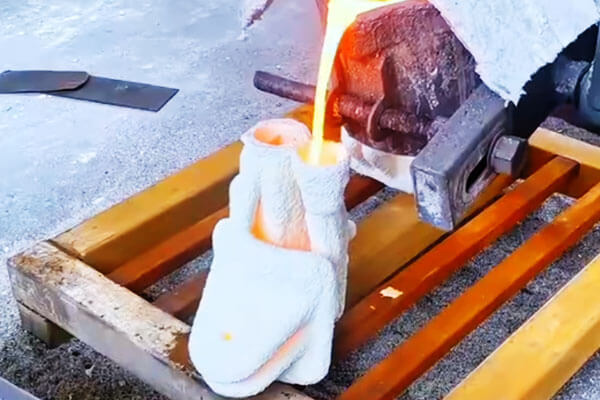
Cangkerang seramik yang telah dipanaskan telah diisi dengan loyang cair melalui sistem gating yang direka bentuk.
Suhu penuangan dan kadar pengisian mesti dipadankan dengan geometri aloi dan injap.
Logam mesti kekal cecair yang mencukupi untuk mengisi bahagian nipis dan laluan kompleks tanpa pergolakan yang berlebihan atau pemejalan pramatang.
Operasi menuang yang dikawal dengan baik cuba dicapai:
Pengisian lengkap + aliran yang stabil + entrainment minimum + keadaan terma terkawal
Pemejalan dan Pemakanan
Selepas mengisi, loyang mula mengeras. Kerana badan injap mungkin mengandungi ketebalan dinding yang berbeza, bos, dan persimpangan laluan, kawasan yang berbeza boleh menyejukkan pada kadar yang berbeza.
Oleh itu, reka bentuk tuangan perlu menyokong pemejalan terkawal dan penyusuan logam yang mengecut yang mencukupi.
Kawalan pemejalan yang lemah boleh menghasilkan kecacatan seperti:
- Keliangan pengecutan
- Rongga pengecutan
- Ketakselanjaran berkaitan gas
- Retak panas
Untuk badan injap yang kompleks, simulasi tuangan boleh digunakan untuk meramalkan gelagat pengisian dan pemejalan serta mengoptimumkan sistem gating dan penyusuan sebelum pengeluaran.
Kalah mati
Setelah tuangan telah cukup sejuk, cangkerang seramik dikeluarkan secara mekanikal.
Getaran, pemisahan mekanikal, atau kaedah lain yang sesuai boleh digunakan bergantung kepada komponen dan sistem pengeluaran.
Penjagaan mesti diambil semasa kalah mati kerana daya mekanikal yang berlebihan boleh merosakkan bahagian nipis, ciri pelabuhan, atau permukaan tuang.
Pembuangan Pintu dan Riser
sprue, pelari, pintu, dan riser dipotong daripada tuangan injap.
Lokasi pemotongan dipilih supaya penyingkiran tidak merosakkan kawasan berfungsi atau meninggalkan bahan berlebihan yang akan menyukarkan pemesinan berikutnya.
Peringkat ini menukar pokok tuangan pelaburan menjadi tuangan badan injap individu.
Penamat Casting
Tuangan yang dibersihkan tertakluk kepada pengisaran, letupan, atau operasi kemasan lain yang sesuai untuk mengeluarkan sisa seramik, sirip, kilat, dan sisa pintu.
Objektifnya adalah untuk menghasilkan tuangan yang bersih dan stabil sesuai untuk pemeriksaan dan pemesinan seterusnya.
Yang penting, kemasan tidak boleh digunakan untuk menyembunyikan ketakselanjaran tuangan yang tidak boleh diterima. Kawasan yang akan menjadi sempadan tekanan, permukaan pengedap, atau datum pemesinan kritikal memerlukan perhatian khusus.
4. Pemesinan CNC bagi Tuangan Injap Pengalih Loyang
Tuangan lilin yang hilang membentuk geometri utama injap pengalih loyang, tetapi ia biasanya tidak memberikan ketepatan akhir yang diperlukan untuk antara muka kritikal.
pemesinan CNC Oleh itu adalah jambatan antara tuangan bentuk hampir bersih dan injap ketepatan berfungsi.
Proses pemesinan bukan sahaja harus mencapai dimensi individu; ia mesti mengekalkan hubungan geometri antara pelabuhan, Laluan aliran, Kerusi injap, permukaan pengedap, batang, dan antara muka penggerak.
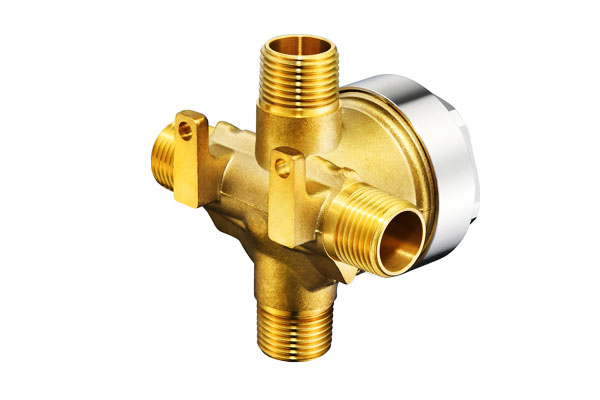
Urutan pengeluaran biasa ialah:
Pemeriksaan Tuangan → Penubuhan Datum → Pemesinan Kasar → Pemesinan Bor/Port → Pemesinan Benang → Pemesinan Tempat Duduk dan Alur Pengedap → Pemesinan Antara Muka Penggerak → Deburring → Pemeriksaan Dimensi
Urutan yang tepat bergantung pada seni bina injap.
Pemesinan Port Injap dan Bor Dalaman
Port masuk dan keluar mewujudkan sambungan injap dengan sistem bendalir luaran. Bergantung pada reka bentuk injap, antara muka ini boleh digunakan:
- NPT atau benang paip tirus lain
- Benang BSP atau BSPP/BSPT
- Metrik atau benang tersuai
- Antara muka mampatan
- Sambungan bebibir
- Pateri atau geometri sambungan khusus
Operasi pemesinan pelabuhan mesti mengawal kedua-dua dimensi dan kedudukan.
Benang yang dimesin dengan betul masih boleh menimbulkan masalah pemasangan jika paksi port diposisikan secara tidak betul berbanding badan injap atau port bersebelahan.
Untuk laluan dalaman yang bersilang, pemesinan mungkin melibatkan penggerudian, membosankan, penggerudian silang, atau gabungan ciri pelakon dan mesin.
Peralihan antara laluan ini harus dikaji dengan teliti kerana mendadak yang berlebihan boleh meningkatkan kehilangan tekanan dan pergolakan..
Dalam reka bentuk tersuai, pemutus boleh menghasilkan sebahagian besar seni bina aliran manakala pemesinan CNC menyelesaikan bukaan dan antara muka berfungsi.
Pemesinan Ketepatan Tempat Duduk Injap
Tempat duduk injap adalah antara ciri paling kritikal bagi injap pengalih kerana ia membentuk antara muka yang mengehadkan kebocoran bendalir yang tidak diingini.
Prestasi tempat duduk bergantung pada beberapa ciri yang berfungsi bersama:
Concentricity + Geometri kenalan + Kemasan permukaan + Kerataan/Kebulatan + Keserasian bahan
Tempat duduk injap yang memenuhi diameter nominalnya tetapi tidak sepusat dengan elemen injap boleh menghasilkan sentuhan tidak sekata.
Begitu juga, permukaan yang terlalu kasar boleh mengganggu pengedap, manakala geometri permukaan yang salah boleh meningkatkan tork operasi.
Oleh itu, toleransi tempat duduk dan kemasan permukaan yang sesuai hendaklah ditentukan mengikut reka bentuk injap tertentu, elemen pengedap, Penilaian Tekanan, dan keperluan kebocoran.
Pemesinan Benang
Benang adalah biasa pada injap pengalih loyang kerana ia menyediakan sambungan yang padat dan menjimatkan.
Pemesinan CNC boleh digunakan untuk kedua-dua benang dalaman dan luaran. Parameter kritikal termasuk:
- Diameter utama
- Diameter kecil
- Pitch
- Profil benang
- Diameter berkesan
- Kedalaman benang
- Concentricity
- Kemasan permukaan
Tolok benang sering digunakan untuk pengesahan pengeluaran, manakala pemeriksaan dimensi boleh mengesahkan geometri asas.
Kerana loyang agak boleh dimesin, ia menyokong pengeluaran benang yang cekap, tetapi strategi pemotongan masih perlu dipadankan dengan aloi tertentu.
Sesetengah aloi loyang tanpa plumbum boleh berkelakuan berbeza daripada gred pemesinan bebas tradisional dan mungkin memerlukan alat pemotong dan parameter yang dioptimumkan.
Pemesinan O-Ring dan Seal-Groove
Di mana pengedap elastomer digunakan, alur O-ring adalah ciri ketepatan dan bukannya ceruk mudah.
Dimensinya menentukan mampatan pengedap dan oleh itu mempengaruhi prestasi kebocoran. Lebar alur yang salah, kedalaman, geometri sudut, atau keadaan permukaan boleh menyebabkan:
- Pengedap yang tidak mencukupi
- Mampatan yang berlebihan
- Penyemperitan meterai
- Kesukaran pemasangan
- Kehausan meterai pramatang
Proses pemesinan mesti mengekalkan geometri alur yang ditentukan sambil melindungi permukaan pengedap di sekelilingnya.
5. Pilihan Kemasan Permukaan untuk Injap Pengalih Loyang
Untuk komponen injap tersuai, kemasan permukaan hendaklah dipilih bersama-sama dengan aloi, proses pemesinan, toleransi dimensi, dan persekitaran operasi.
Tidak setiap proses kemasan sesuai untuk setiap permukaan.
Khususnya, Kerusi injap, benang, antara muka pengedap, dan laluan yang dibasahi mungkin memerlukan keadaan kemasan yang dikawal ketat untuk mengelakkan perubahan dimensi fungsinya.
Penggilap mekanikal
Penggilap mekanikal menggunakan media pelelas yang lebih halus untuk menghilangkan tanda pemesinan, penyelewengan kecil permukaan, dan ketidaksempurnaan permukaan berkaitan tuangan daripada permukaan loyang.
Bergantung pada penampilan yang diperlukan, prosesnya boleh terdiri daripada kemasan kasar asas kepada penggilap berkilat tinggi.
Kelebihan:
- Menghasilkan permukaan loyang yang licin dan menarik
- Memperbaiki penampilan visual
- Mengurangkan pemesinan dan tanda tuangan yang kelihatan
- Menyediakan substrat yang berkesan untuk penyaduran seterusnya
- Boleh meningkatkan keseragaman permukaan pada permukaan injap luaran
Penyaduran nikel
Penyaduran nikel memendapkan lapisan nikel terkawal pada permukaan loyang yang disediakan, lazimnya melalui proses penyaduran elektrik.
Prarawatan yang betul adalah penting untuk memastikan lekatan yang baik antara substrat loyang dan salutan.
Kelebihan:
- Meningkatkan rintangan kakisan
- Memberikan kekerasan permukaan yang lebih besar daripada loyang yang tidak dirawat
- Meningkatkan rintangan haus
- Menghasilkan rupa logam yang seragam
- Sesuai untuk komponen yang terdedah kepada kelembapan dan pengendalian
- Boleh menyediakan lapisan asas untuk sistem kemasan hiasan atau berfungsi
Penyaduran krom
Penyaduran Chrome menggunakan lapisan permukaan berasaskan kromium di atas substrat yang disediakan dengan sesuai, selalunya atas penyaduran nikel.
Proses menghasilkan keras, permukaan cerah dengan rintangan yang baik untuk haus dan ternoda.
Kelebihan:
- Penampilan hiasan yang sangat baik
- Kekerasan permukaan yang tinggi
- Rintangan haus yang baik
- Rintangan yang baik terhadap pencemaran dan pendedahan atmosfera
- Sesuai untuk komponen injap terdedah dan perkakasan paip hiasan
Plating nikel elektroless
Penyaduran nikel tanpa elektromendepositkan salutan nikel-fosforus atau aloi nikel yang berkaitan melalui tindak balas kimia autocatalytic dan bukannya bergantung pada arus elektrik luaran terus.
Ini membolehkan ketebalan salutan yang agak seragam merentas geometri kompleks.
Kelebihan:
- Ketebalan salutan yang lebih seragam pada permukaan yang kompleks
- Rintangan kakisan yang baik
- Ketahanan haus dan lelasan yang baik
- Sesuai untuk geometri ceruk dan tidak teratur
- Menyediakan perlindungan permukaan terkawal dengan binaan dimensi yang agak boleh diramal
- Berguna untuk komponen injap industri yang memerlukan perlindungan dan ketekalan dimensi
Kemasan Permukaan Bermesin Ketepatan
Untuk permukaan berfungsi seperti tempat duduk injap, Bores, benang, dan antara muka pengedap, kemasan yang diperlukan selalunya dihasilkan secara langsung melalui pemesinan CNC terkawal, pusingan halus, membosankan, pengisaran, atau operasi ketepatan lain dan bukannya melalui salutan hiasan.
Kelebihan:
- Mengekalkan kawalan dimensi yang tepat
- Mendayakan geometri pengedap yang tepat
- Menyokong kekasaran permukaan terkawal
- Mengelakkan pembentukan salutan yang tidak perlu pada antara muka kritikal
- Menyediakan pemasangan yang boleh diramal dan prestasi berfungsi
- Sangat sesuai untuk tempat duduk injap, Bores, benang, dan permukaan bersentuhan meterai
6. Kelebihan Tuangan Lilin Hilang untuk Injap Pengalih Loyang
Tuangan lilin yang hilang memberikan kelebihan unik untuk pembuatan injap pengalih yang tidak dapat dipadankan dengan kaedah tuangan atau pembentukan alternatif.
Ketepatan Dimensi Tidak Ditandingi & Kebolehulangan
Pemutus pelaburan mencapai ±0.05–0.1 mm setiap 25 toleransi mm as-cast, dengan kebolehulangan yang konsisten merentas volum pengeluaran yang tinggi.
Ini mengurangkan stok pemesinan, meminimumkan timbunan toleransi, dan memastikan pemasangan boleh ditukar ganti.
Geometri Dalaman Kompleks & Pengoptimuman Aliran
Lilin yang hilang boleh menghasilkan geometri port dalaman yang rumit, peralihan aliran lancar, dan laluan berkontur yang mustahil dengan tuangan pasir atau tidak ekonomik untuk mesin.
Laluan aliran dalaman yang dioptimumkan mengurangkan pergolakan, penurunan tekanan, dan bunyi aliran.
Kemasan Permukaan As-Cast yang Unggul
Lapisan muka seramik halus menghasilkan kemasan permukaan as-cast Ra 1.6–3.2 μm, mengurangkan masa pemesinan dan meningkatkan prestasi permukaan pengedap.
Permukaan tuangan licin juga mengurangkan hakisan akibat aliran di dalam laluan bendalir.
Stok Pemesinan Minimum & Kecekapan bahan
Tuangan bentuk jaring hampir hanya memerlukan 0.8–1.5 mm stok pemesinan setiap sisi, berbanding 3–6 mm untuk tuangan pasir.
Ini mengurangkan sisa bahan sebanyak 40–60% dan mengurangkan masa pemesinan dengan ketara.
Fleksibiliti aloi & Formulasi Tersuai
Tuangan lilin hilang berfungsi dengan hampir mana-mana aloi loyang, membenarkan rumusan aloi tersuai untuk dipadankan dengan kakisan tertentu, kekuatan, atau keperluan kawal selia tanpa perubahan alatan yang besar.
Integriti Tekanan Konsisten & Rintangan Kebocoran
Badan tuang sekeping tunggal menghapuskan laluan kebocoran sendi yang dipasang. Pemejalan terkawal meminimumkan keliangan dalaman, memastikan prestasi ketat tekanan yang melepasi ujian kebocoran tekanan kerja 1.5x.
7. Tuangan Lilin Hilang lwn. Injap Pengalih Loyang Tempa
Kedua-dua tuangan dan penempaan menghasilkan komponen injap loyang, tetapi ia menyediakan senario reka bentuk dan prestasi yang berbeza.
| Dimensi Prestasi | Injap Loyang Tuang Lilin yang Hilang | Injap Loyang Tempa |
| Ketepatan dimensi | ±0.05 – ±0.1 mm/25 mm sebagai tuang; lebih ketat selepas pemesinan | ±0.02 – ±0.05 mm; sangat konsisten |
| Kerumitan Geometri Dalaman | Sangat tinggi — pelabuhan yang kompleks, laluan berkontur, reka bentuk pelbagai pelabuhan | Terhad — bentuk paksi ringkas sahaja; ciri dalaman yang mendalam tidak boleh dilaksanakan |
| Tekanan & Rintangan Keletihan | Baik untuk tekanan standard; bergantung kepada keliangan | Cemerlang; rintangan keletihan yang lebih tinggi dan tekanan pecah |
| Kesesuaian jumlah pengeluaran | 500 - 50,000 PC/tahun | 10,000 - 500,000+ PC/tahun |
| Kos perkakas & Masa utama | Kos perkakas sederhana; 4– 6 minggu masa utama | Kos perkakas yang tinggi; 6–10 minggu memimpin masa |
| Jumlah Kos Unit | Sederhana-tinggi untuk volum rendah; berdaya saing pada volum sederhana | Tinggi pada volum rendah; terendah pada volum yang sangat tinggi |
| Senario Aplikasi Ideal | Badan berbilang pelabuhan yang kompleks, laluan aliran berkontur, Jumlah sederhana | Reka bentuk paksi mudah, tekanan tinggi, keletihan kitaran tinggi, isipadu yang sangat tinggi |
8. Aplikasi Injap Pengalih Loyang
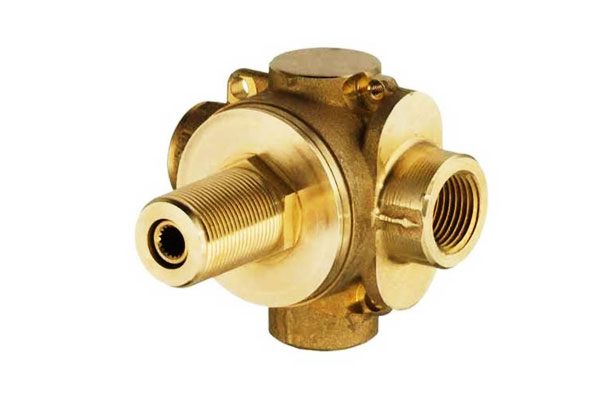
Paip dan Pengagihan Air
Injap pengalih loyang digunakan secara meluas dalam sistem paip untuk mengalihkan air antara alur keluar yang berbeza, litar, atau lekapan.
Reka bentuk kompak mereka, Rintangan kakisan, dan kebolehmesinan yang baik menjadikannya sesuai untuk peralatan kawalan air kediaman dan komersial.
Aplikasi biasa termasuk:
- Sistem pancuran mandian
- Perhimpunan keran
- Peralatan pengagihan air
- Sistem pencampuran dan penghalaan
- Peralatan paip rumah
HVAC dan Sistem Pemanasan
Injap pengalih loyang biasanya digunakan dalam sistem pemanasan HVAC dan hidronik untuk mengawal arah peredaran air dan cecair lain yang serasi..
Injap boleh menukar aliran antara litar pemanasan, garisan pintasan, atau gelung sekunder.
Aplikasi biasa termasuk:
- Sistem pemanasan radiator
- Sistem pemanasan bawah lantai
- Litar edaran HVAC
- Sistem pam haba
- Dandang dan peralatan pemanas
Sistem pengairan
Dalam peralatan pengairan, injap pengalih loyang boleh digunakan untuk mengarahkan air antara cawangan atau zon yang berbeza.
Rintangan kakisan dan pembinaan yang kukuh menjadikannya sesuai untuk penukaran aliran berulang dalam persekitaran luar.
Aplikasi biasa termasuk:
- Sistem pengairan pertanian
- Peralatan pengairan taman
- Sistem pemercik
- Pengairan rumah hijau
- Manifold pengagihan air
Peralatan Rawatan Air
Injap pengalih loyang boleh disepadukan ke dalam sistem rawatan air padat di mana laluan aliran berbeza perlu dipilih atau diasingkan.
Tuangan ketepatan amat berguna apabila badan injap memerlukan laluan dalaman yang disesuaikan.
Aplikasi biasa termasuk:
- Sistem penapisan air
- Peralatan pembersihan air
- Sistem pelembut
- Pemasangan pam dan penapisan
- Unit kawalan rawatan air
Perkakas dan Peralatan Kediaman
Injap pengalih loyang padat juga digunakan dalam peralatan di mana air atau cecair lain yang serasi mesti dialihkan antara litar dalaman yang berbeza.
Aplikasi biasa termasuk:
- Peralatan kopi dan minuman
- Mencuci peralatan
- Pemanas air
- Peralatan pembersihan
- Peranti kawalan air kediaman
Peralatan Kawalan Bendalir Industri
Peralatan industri mungkin menggunakan injap pengalih loyang untuk penghalaan air, minyak, udara, atau cecair serasi lain di mana tekanan, suhu, dan persekitaran kimia berada dalam had reka bentuk bahan dan injap.
Aplikasi biasa termasuk:
- Sistem pam
- Pemampat dan peralatan tambahan
- Jentera pemprosesan cecair
- Sistem penyejukan industri
- Perhimpunan peralatan yang disesuaikan
Sistem Komersial dan Khusus
Injap pengalih loyang tersuai juga sesuai untuk pengeluar peralatan yang memerlukan komponen kawalan aliran berbilang port padat yang direka di sekeliling pemasangan atau litar bendalir tertentu.
Aplikasi biasa termasuk:
- Peralatan paip komersial
- Sistem peredaran air
- Manifold peralatan
- Himpunan kawalan bendalir OEM
- Mesin tersuai dan peralatan proses
9. Mengapa Pilih Industri LangHe untuk Penuangan Lilin Hilang Injap Penukar Loyang & Pemesinan?
Untuk injap pengalih loyang tersuai, memilih pengeluar bukan semata-mata mencari pembekal yang boleh membuat loyang.
Komponen akhir bergantung pada penyelarasan kejuruteraan tuangan, Pemilihan aloi, pemesinan CNC, penamat permukaan, Kawalan dimensi, dan ujian fungsional.
Industri Langhe mendekati pengeluaran injap pengalih loyang tersuai sebagai projek pembuatan bersepadu, membenarkan peringkat tuangan dan pemesinan dibangunkan bersama mengikut keperluan fungsian pelanggan.
| Keupayaan | Perincian |
| Bahan | C84400, C85700, C87610, C87800, C87850, C89833, C36000. |
| Proses pemutus | Lost Lilt Casting (Pelaburan Pelaburan). |
| Toleransi | ± 0.1-0.3 mm (CT5-CT7 setiap ISO 8062). |
| Pemesinan CNC | CNC beralih, penggilingan, penggerudian, mengetuk, membosankan, reaming, threading. |
| Kualiti | ISO 9001:2015 diperakui; 100% pemeriksaan; Cmm. |
| Masa utama | 6–12 minggu untuk perkakas; 2-4 minggu untuk repeat order. |
10. Kesimpulan
Injap pengalih loyang ialah komponen padat, tetapi keperluan pembuatannya sangat saling berkaitan.
Badan injap mesti mengandungi tekanan, menyediakan laluan aliran yang tepat, menampung elemen injap dalaman, mengekalkan antara muka pengedap, dan bersambung dengan pasti dengan paip atau peralatan luaran.
Untuk reka bentuk tersuai yang kompleks, tuangan lilin yang hilang menyediakan cara yang cekap untuk mewujudkan geometri badan injap utama, termasuk port tersuai, bos, peralihan, dan seni bina dalaman yang sesuai.
Pemesinan CNC kemudian membawa benang, Bores, Kerusi injap, alur pengedap, dan antara muka penggerak kepada ketepatan yang diperlukan.
Pemilihan bahan adalah sama penting. Aloi loyang yang berbeza menawarkan kombinasi kebolehtuangan yang berbeza, kebolehkerjaan, kekuatan mekanikal, Rintangan kakisan, dan kesesuaian peraturan.
Oleh itu, pilihan yang betul mestilah berdasarkan keadaan bendalir dan operasi sebenar.
Industri LangHe menggabungkan tuangan ketepatan loyang dan pemesinan CNC untuk menyokong pengeluaran injap pengalih tersuai daripada semakan reka bentuk awal melalui pemeriksaan komponen siap., membantu pelanggan OEM menukar konsep injap yang kompleks kepada produk yang boleh dibuat dan boleh diulang.
Soalan Lazim
Apakah injap pengalih loyang?
Injap pengalih loyang ialah peranti kawalan bendalir berbilang port yang digunakan untuk mengubah hala atau mengedarkan bendalir secara selektif antara laluan aliran yang berbeza.
Elemen injap dalamannya menentukan port mana yang disambungkan dalam setiap kedudukan operasi.
Mengapakah loyang biasanya digunakan untuk injap pengalih?
Loyang menyediakan kombinasi rintangan kakisan yang berguna, kebolehkerjaan, kekuatan mekanikal, kebolehan, dan kecekapan kos.
Ciri-ciri ini menjadikannya sesuai untuk banyak air, HVAC, paip, perkakas, dan aplikasi kawalan bendalir industri.
Mengapa menggunakan tuangan lilin hilang untuk injap pengalih loyang?
Tuangan lilin yang hilang amat berguna apabila badan injap mengandungi geometri kompleks, berbilang port, bos bersepadu, atau laluan aliran tersuai.
Ia menghasilkan badan berbentuk hampir bersih yang kemudiannya boleh dimesin CNC.
Bolehkah injap pengalih loyang digunakan untuk air yang boleh diminum?
Mereka boleh, dengan syarat pembinaan injap yang lengkap memenuhi keperluan yang terpakai untuk perkhidmatan air boleh diminum.
Aloi loyang, kandungan plumbum, komponen yang dibasahi, proses pembuatan, dan pematuhan produk yang diperlukan semuanya perlu dipertimbangkan.