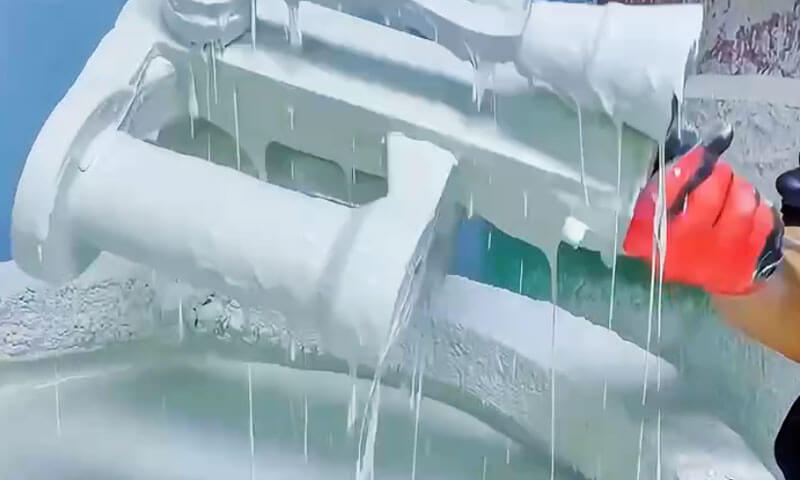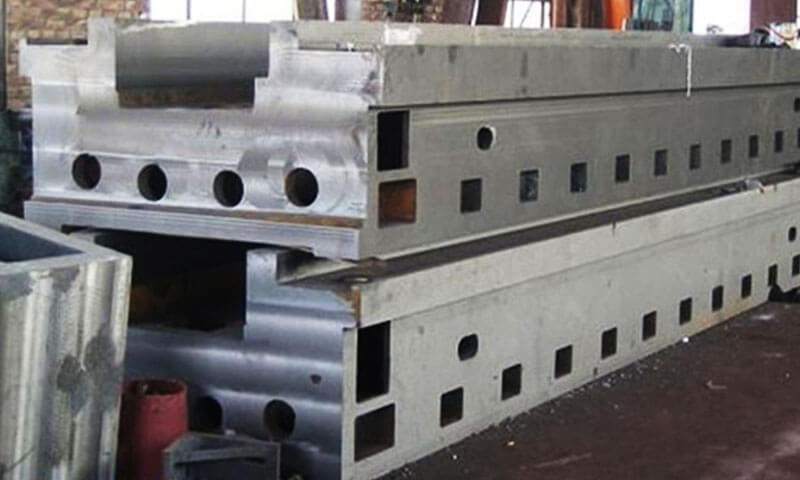
Dalam pengeluaran faundri, ia adalah fenomena yang terlalu biasa dan membingungkan: dua faundri menghasilkan tuangan yang sama daripada aloi yang sama, menggunakan suhu penuangan yang sama, reka bentuk gating, dan bahan cas,
namun satu secara konsisten menyampaikan bahagian bebas kecacatan manakala yang lain bergelut dengan gigih, retakan berulang.
Ramai pengurus faundri mengaitkan jurang ini dengan kemahiran pengendali, variasi bahan mentah, atau pun nasib.
Pada hakikatnya, perbezaan itu hampir selalu berpunca daripada perbezaan asas dalam tingkah laku sistem pasir acuan yang tidak dapat dilihat oleh pemerhatian biasa.
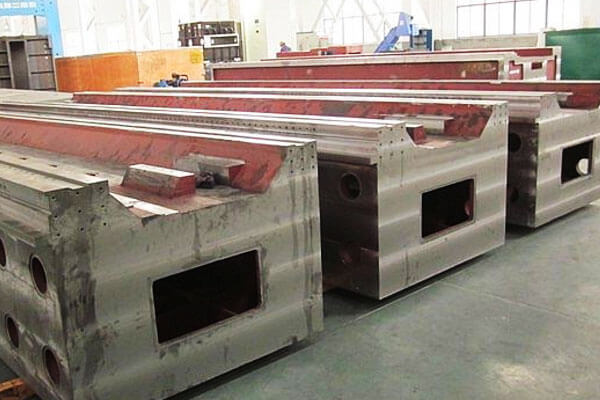
Artikel ini mengkaji kes industri dunia sebenar klasik: tuangan rasuk alat mesin 6 meter yang sama dihasilkan pada kedua-duanya pasir resin dan garisan acuan pasir pengerasan sendiri simen.
Dengan parameter penuangan yang dipadankan dengan ketat, Komposisi kimia, dan kualiti cair, proses pasir resin secara konsisten menghasilkan rasuk bebas retak, manakala garisan pasir pengerasan sendiri simen mengalami kecacatan rekahan melintang berulang tertumpu di bahagian tengah rasuk tebal.
Enam teras metalurgi dan mekanisme proses di sebalik hasil ini dianalisis secara mendalam di bawah, memberikan pandangan kejuruteraan yang boleh diambil tindakan untuk pasukan faundri yang mengoptimumkan proses tuangan keluli keratan berat.
1. Mengapa Pemutus Alat Mesin Enam Meter Yang Sama Boleh Berkelakuan Berbeza?
Katil alat mesin yang besar ialah contoh terbaik tuangan yang tingkah laku acuan sangat penting.
Geometrinya sering mengandungi:
- Dimensi keseluruhan yang panjang
- Bahagian tebal dan nipis disambungkan bersama
- Tulang rusuk dan sarang
- Bos besar atau kawasan pelekap
- Rongga dalaman
- Bahagian mendatar panjang
- Jisim terma tempatan yang sangat berbeza-beza
- Pengecutan pemejalan terkumpul besar
Apabila logam menyejuk dari keadaan cecair ke suhu bilik, ia kontrak.
Tuangan tidak boleh mengecut dengan bebas kerana acuan mengelilinginya, teras menyekat pergerakan dalaman, dan bahagian tuangan yang berlainan sejuk dan memejal pada kadar yang berbeza.
Ini menjana persaingan antara dua kuasa:
Pengecutan tuangan berbanding rintangan acuan kepada penguncupan itu
Jika acuan boleh berubah bentuk atau runtuh pada peringkat yang sesuai, sebahagian daripada penguncupan ditampung oleh pergerakan acuan.
Jika acuan kekal sangat tegar, penguncupan semakin berubah menjadi tegasan dalam logam.
Untuk masa yang lama, tuangan alat mesin yang agak langsing, ini boleh menjadi kritikal.
Mekanisme asas boleh dipermudahkan sebagai:
Penguncupan terma + sekatan struktur → tegasan tegangan → terikan plastik tempatan → permulaan retak
Sama ada tegasan benar-benar menjadi retak bergantung pada suhu, Mikrostruktur, Geometri, memberi makan, tekanan sisa, dan keupayaan acuan dan teras untuk bergerak.
Inilah sebabnya mengapa hanya membandingkan suhu penuangan atau komposisi kimia selalunya tidak mencukupi.
2. Kekuatan Baki Suhu Tinggi dan Kebolehhasilan Acuan
Untuk rasuk alat mesin yang besar, salah satu perbezaan yang paling penting antara pasir berikat resin dan pasir mengeras sendiri terikat simen ialah bagaimana acuan bertindak balas secara mekanikal apabila suhunya meningkat dan tuangan mula memejal dan mengecut.
Perbezaan ini lebih penting daripada membandingkan kekuatan acuan suhu bilik sahaja.
Acuan boleh menjadi sangat kuat semasa pengacuan dan pengendalian namun menjadi bermasalah jika ia kekal terlalu tegar semasa tempoh tuangan perlu mengecut dengan bebas.
Oleh itu, dua sifat harus dipertimbangkan bersama:
Kekuatan sisa suhu tinggi — berapa banyak kekuatan yang dikekalkan oleh acuan selepas dipanaskan oleh logam cair.
Kebolehhasilan acuan atau kebolehruntuhan — betapa mudahnya acuan boleh berubah bentuk atau kehilangan rintangan apabila tuangan yang mengecut cuba untuk bergerak.
Untuk rasuk alat mesin enam meter, interaksi antara sifat-sifat ini dan penguncupan tuangan boleh mempengaruhi perkembangan tegasan terma dan koyak panas.
Pasir Pengerasan Sendiri Simen: Kekuatan Baki Tinggi dan Kekangan Lebih Besar
Pasir pengerasan diri terikat simen mengembangkan kekuatan melalui sistem pengikat bersimen dan mampu menghasilkan acuan tegar dengan kestabilan dimensi yang baik.
Di bawah keadaan tuangan, Walau bagaimanapun, acuan tidak semestinya kehilangan rintangan mekanikalnya secepat sistem terikat organik.
Apabila tuangan keluli sejuk, ia mengalami penguncupan pemejalan diikuti oleh penguncupan haba. Acuan dan teras menentang sebahagian daripada pergerakan ini.
Di mana acuan kekal sangat tegar, sebahagian besar penguncupan yang diperlukan tuangan ditukar kepada terikan dan tegasan mekanikal.
Untuk rasuk alat mesin yang panjang, kesannya adalah terkumpul dan bukannya tempatan semata-mata.
Tuangan enam meter boleh mengalami penguncupan terma keseluruhan yang ketara, manakala tulang rusuk, bos, teras, dan bahagian tebal boleh mewujudkan sekatan tempatan tambahan.
Jika acuan tidak cukup menghasilkan, tegasan yang terhasil boleh menjadi tertumpu di kawasan sensitif geometri.
Mekanisme ini boleh diwakili secara konsep sebagai:
Pengecutan tuangan → rintangan acuan → ubah bentuk tertahan → tegasan tegangan → pengumpulan terikan tempatan → permulaan retak
Ia adalah penting, Walau bagaimanapun, bukan untuk merawat kekuatan acuan sisa sebagai satu-satunya punca keretakan.
Risiko retak sebenar juga bergantung kepada aloi, julat pemejalan, geometri bahagian, keadaan pemakanan, pengagihan suhu, sekatan teras, dan sifat mekanikal logam pada suhu yang berkaitan.
Justeru, isu kejuruteraan dengan acuan terikat simen yang sangat tegar bukan semata-mata kerana ia "terlalu kuat."
Isunya ialah rintangannya terhadap penguncupan tuangan mungkin kekal ketara semasa peringkat kritikal sejarah terma tuangan.
Pasir terikat resin: Kehilangan Kekuatan Bon Secara Progresif dan Kebolehhasilan Yang Lebih Baik
Sistem pengacuan terikat resin menggunakan pengikat organik yang tingkah laku habanya berbeza secara asas daripada sistem bersimen.
Apabila terdedah kepada haba daripada keluli cair, pengikat organik mengalami degradasi haba, dengan kelembutan dan kehilangan kekuatan ikatan yang progresif apabila suhu meningkat.
Perubahan ini amat berkaitan dengan tuangan besar kerana acuan boleh beralih daripada sokongan yang kuat semasa pengisian dan pengendalian ke arah keadaan yang kurang ketat semasa penyejukan kemudian..
Semasa pemutus kontrak, pasir secara beransur-ansur boleh kehilangan keupayaannya untuk menahan pergerakan.
Daripada mengekalkan cengkerang yang sangat tegar di sekeliling tuangan sepanjang proses penyejukan, acuan mungkin menjadi lebih patuh apabila pengikat merosot.
Mekanisme konseptual ialah:
Pengecutan tuangan → degradasi pengikat → kekuatan pasir berkurangan → pergerakan acuan/runtuh → sekatan mekanikal yang lebih rendah
Ini boleh memberi manfaat kepada yang besar, tuangan yang rumit secara geometri kerana sebahagian daripada penguncupan terma tuangan ditampung oleh ubah bentuk acuan dan bukannya ditukar sepenuhnya kepada tegasan dalam logam.
Namun begitu, pasir resin tidak boleh digambarkan sebagai "lembut" sepenuhnya atau "bebas tekanan" pada suhu tinggi.
Sistem resin yang berbeza, kepekatan pengikat, suhu pasir, sistem salutan, ketumpatan acuan, dan sejarah terma menghasilkan lengkung kekuatan sisa yang berbeza.
Ciri yang relevan ialah kadar dan pergantungan suhu kehilangan kekuatan, bukan semata-mata sama ada acuan mengandungi damar.
3. Pengembangan Terma Acuan dan Interaksi Terma dengan Tuangan
Sekatan acuan hanyalah satu bahagian daripada interaksi termal-mekanikal antara acuan dan tuangan besar.
Acuan itu sendiri mengalami pengembangan terma dan ubah bentuk selepas logam cair memasuki rongga, dan perubahan dimensi ini boleh mengubah jumlah dan arah sekatan yang dikenakan ke atas tuangan kontrak.
Untuk rasuk alat mesin enam meter, kesan ini tidak boleh dipertimbangkan secara bebas daripada penguncupan tuang.
Tuangan secara serentak menyejuk dan cuba mengecut, semasa acuan sekeliling sedang dipanaskan dan mengalami tindak balas habanya sendiri.
Oleh itu keadaan tekanan yang terhasil dikawal oleh pergerakan relatif tuangan dan acuan, bukan dengan pekali pengembangan haba bagi mana-mana bahan secara berasingan.
Pasir Berikat Simen: Interaksi Terma yang Lebih Kuat dengan Casting
Pasir pengerasan sendiri terikat simen mengandungi fasa agregat dan sistem pengikat bersimen, dan tindak balas dimensinya semasa pemanasan bergantung kepada mineralogi agregat, rumusan pengikat, keadaan lembapan, ketumpatan acuan, dan sejarah haba.
Untuk pasir acuan yang kaya dengan silika, pengembangan haba agregat menjadi sangat relevan kerana acuan dipanaskan oleh keluli cair.
Acuan tidak hanya kekal secara geometri tidak berubah selepas dituang; zarah pasir individu dan struktur terikat di sekeliling mengalami pengembangan haba dan perubahan suhu tinggi yang lain.
Pada masa yang sama, tuangan keluli mula memejal dan seterusnya mengecut.
Ini mewujudkan masalah anjakan relatif:
Pergerakan acuan yang dipanaskan + penguncupan tuang + pematuhan acuan terhad → peningkatan sekatan antara muka
Jika acuan kekal cukup tegar, pergerakan habanya boleh menentang penguncupan tuangan secara tempatan.
Interaksi yang terhasil boleh meningkatkan tekanan tegangan di kawasan yang terdedah, terutamanya di mana geometri tuangan sudah mengenakan penguncupan pembezaan.
Untuk rasuk alat mesin enam meter, kesannya boleh menjadi penting:
- Peralihan bahagian tebal ke nipis
- Persimpangan rusuk
- Bos besar
- Rongga yang disokong teras
- Bahagian terhalang panjang
- Ketakselanjaran geometri
Perkara utama ialah acuan tidak perlu menggunakan "daya mampatan" seragam mudah pada tuangan untuk pengembangan haba kepada jirim.
Pengembangan pembezaan dan ubah bentuk terkekang adalah mencukupi untuk mengubah suai keadaan tegasan.
Pasir terikat resin: Tindak Balas Terma Berbeza dan Degradasi Pengikat Progresif
Pasir berikat resin juga mengalami pengembangan haba, terutamanya apabila agregat silika digunakan.
Therefore, Secara teknikalnya adalah tidak tepat untuk menggambarkan pasir resin sebagai mempunyai "pengembangan haba yang boleh diabaikan" hanya kerana ia menggunakan pengikat organik.
Perbezaan yang lebih penting ialah tindak balas terma gabungan sistem agregat dan pengikat.
Apabila suhu acuan meningkat, resin organik semakin melembut, terurai, dan kehilangan kekuatan ikatan.
Pasir terikat boleh menjadi kurang tegar secara mekanikal dalam tempoh yang sama di mana tuangan mengalami penguncupan haba yang ketara.
Ini menghasilkan interaksi yang berbeza:
Pengecutan pemutus + pematuhan acuan progresif → mengurangkan pemindahan pergerakan haba ke dalam tegasan tuangan
Acuan masih panas dan mengembang, tetapi keupayaannya untuk menghantar perubahan dimensi itu sebagai kekangan mekanikal yang tegar mungkin berkurangan apabila pengikat merosot.
Perbezaan ini amat penting apabila membandingkan sistem terikat resin dan terikat simen. Soalan yang berkaitan bukan semata-mata:
Acuan yang manakah mempunyai pekali pengembangan haba yang lebih rendah?
Ia adalah:
Berapa banyak pergerakan haba acuan sebenarnya dihantar ke tuangan manakala tuangan terdedah secara mekanikal?
Itu adalah kriteria kejuruteraan yang lebih berguna.
Jenis Agregat Boleh Menjadi Lebih Penting Daripada Jenis Pengikat
Satu lagi pertimbangan penting ialah pengembangan haba sangat dipengaruhi oleh agregat.
Pasir silika, zirkon, kromit, dan agregat refraktori lain mempunyai ciri pengembangan haba yang berbeza.
Akibatnya, dua acuan menggunakan pengikat yang berbeza masih boleh mempamerkan pergerakan haba yang sama jika mereka menggunakan agregat yang sama, manakala dua acuan yang menggunakan sistem resin yang sama boleh berkelakuan berbeza apabila agregat atau penggredan pasirnya berbeza.
Ini bermakna perbandingan proses yang bermakna harus membezakan antara:
Tingkah laku pengikat + tingkah laku agregat + ketumpatan acuan + sejarah suhu
daripada mengaitkan semua kelakuan terma kepada pengikat sahaja.
Contohnya, pasir yang kaya dengan kuarza mempamerkan tindak balas pengembangan haba ciri yang dikaitkan dengan tingkah laku transformasi mineralnya.
Pergerakan acuan yang terhasil bergantung pada struktur acuan lengkap dan keadaan pemanasan, bukan hanya pada satu pekali pengembangan yang diterbitkan.
4. Evolusi Kelembapan dan Gas: Mengapa Kandungan Air Sistem Berikat Simen Penting
Kelembapan adalah salah satu perbezaan utama antara pasir pengerasan diri terikat simen dan pasir terikat resin, tetapi pengaruhnya pada tuangan keluli yang besar adalah lebih rumit daripada sekadar mengatakan bahawa "air menyebabkan keretakan."
Isu penting ialah interaksi antara kelembapan sisa, penjanaan gas, kebolehtelapan acuan, suhu logam, suhu acuan, dan keadaan terma dan mekanikal tuangan semasa pengisian dan pemejalan awal.
Untuk rasuk alat mesin enam meter, acuan mewakili kawasan permukaan yang sangat besar mengelilingi tuangan keluli suhu tinggi.
Sebarang produk penguraian lembapan atau pengikat yang dihasilkan pada antara muka acuan-logam mesti diangkut melalui acuan.
Jika evolusi gas melebihi keupayaan acuan untuk dibuang, tekanan dan tindak balas antara muka yang terhasil boleh menyumbang kepada kecacatan dan boleh merumitkan sejarah terma tuangan.
Perbezaan asas ialah sistem terikat simen mengandungi air sebagai sebahagian daripada mekanisme pengerasannya, manakala sistem ikatan resin tidak bergantung pada penghidratan simen.
Namun begitu, pasir resin tidak bebas gas: pengikat organiknya boleh terurai secara terma dan menghasilkan produk gas apabila terdedah kepada logam cair.
Pasir Pengerasan Sendiri Simen: Air, Penjanaan Stim, dan Tekanan Gas
Pasir pengerasan diri terikat simen menggunakan air sebagai komponen penting dalam proses pengerasan.
Bergantung kepada sistem simen, agregat, keadaan pengawetan, kelembapan ambien, masa penyimpanan, dan ketebalan acuan, beberapa lembapan mungkin kekal secara fizikal dalam acuan manakala air tambahan dimasukkan ke dalam struktur pengikat terhidrat.
Apabila keluli cair memasuki rongga, permukaan acuan tertakluk kepada beban haba yang melampau. Sebarang lembapan percuma atau tersedia secara fizikal berhampiran muka panas boleh mengewap dengan cepat, mencipta wap.
Ini mewujudkan urutan yang berpotensi:
Lembapan sisa → pemanasan pantas → penjanaan wap → pengangkutan gas → kesan tekanan/aliran tempatan
Jika kadar penjanaan gas tinggi dan kebolehtelapan tidak mencukupi, gas mungkin terkumpul berhampiran antara muka acuan-logam. Ini boleh menyumbang kepada kecacatan seperti:
- Keliangan gas
- lubang semburan
- Pukulan permukaan
- Lubang jarum
- Urat atau kecacatan yang berkaitan dengan permukaan, bergantung kepada sistem acuan
- Penembusan logam atau hakisan acuan dalam keadaan yang tidak menguntungkan
Tahap risiko sangat bergantung pada kebolehtelapan acuan dan sistem pengudaraan.
Acuan yang dikeringkan atau diawet dengan betul dengan kebolehtelapan yang mencukupi boleh membebaskan gas dengan berkesan, manakala acuan yang kaya dengan lembapan atau kurang pengaliran boleh menimbulkan masalah yang jauh lebih teruk.
Adakah Stim Terus Menyebabkan Retak Terma?
Perkara ini memerlukan penjagaan khusus.
Ia menggoda untuk menggambarkan pengewapan lembapan sebagai langsung “letupan wap → pelindapkejutan permukaan → retak haba” mekanisme. Dalam kebanyakan tuangan keluli yang besar, penjelasan itu terlalu mudah.
Acuan menyerap haba dengan cepat daripada keluli cair dan permukaan logam secara semula jadi membentuk kecerunan suhu.
Pengewapan lembapan boleh mengubah pemindahan haba tempatan, tekanan gas, dan keadaan permukaan, tetapi ia tidak secara automatik bermakna bahawa permukaan keluli dengan serta-merta "dipadamkan" dalam pengertian metalurgi.
Sama ada keretakan berkembang bergantung pada kesan gabungan:
Kecerunan terma + tingkah laku pemejalan + penahan acuan + kemuluran panas + geometri tempatan + perkembangan tekanan
Therefore, kelembapan harus dianggap sebagai penyumbang berpotensi kepada kecacatan terma dan tuangan, tidak dianggap sebagai punca kendiri universal keretakan.
Untuk rasuk alat mesin enam meter, pembezaan ini penting kerana retak yang dikaitkan secara salah kepada "pelindapkejutan wap" sebenarnya mungkin berasal daripada gabungan penahan acuan, kerentanan koyakan panas, perbezaan ketebalan bahagian, dan pemakanan yang tidak mencukupi.
Pasir terikat resin: Tiada Penghidratan, tetapi Penguraian Pengikat Masih Menghasilkan Gas
Pasir berikat resin tidak mengeras melalui penghidratan simen. Pengikat organiknya mengalami pengawetan kimia dan kemudiannya terurai apabila terdedah kepada beban terma yang dihasilkan oleh keluli cair.
Akibatnya, acuan resin yang disediakan dengan betul boleh mengandungi sedikit air bebas berbanding dengan sistem terikat simen, mengurangkan dengan ketara masalah khusus penjanaan wap daripada lembapan acuan sisa.
Namun begitu, ia akan menjadi tidak betul untuk mengatakan:
"Pasir resin tidak menghasilkan gas."
Pengikat resin organik boleh menjana pelbagai produk penguraian gas semasa menuang.
Jika penambahan pengikat berlebihan atau kebolehtelapan adalah lemah, gas-gas ini masih boleh menghasilkan kecacatan tuangan.
Oleh itu, hubungan kejuruteraan yang berkaitan adalah:
Kandungan pengikat + Penguraian terma + kebolehtelapan + pengudaraan = tingkah laku tuangan berkaitan gas
Inilah sebabnya mengapa kelembapan yang lebih rendah tidak secara automatik bermakna jumlah penjanaan gas yang lebih rendah.
5. Kadar Penyejukan dan Kecerunan Terma: Pemandu Tersembunyi di Sebalik Retak Tuangan Besar
Untuk tuangan alat mesin enam meter, penyejukan bukan sekadar peringkat akhir selepas pemejalan.
Ia adalah proses termo-mekanikal yang berterusan di mana kecerunan suhu, transformasi fasa, penguncupan, penahan acuan, dan geometri tempatan berinteraksi.
Keadaan tekanan yang terhasil boleh menentukan sama ada tuangan kekal utuh atau menyebabkan air mata panas, rekahan penyejukan, atau herotan.
Oleh itu, perbezaan penting antara pasir terikat resin dan pasir pengerasan diri terikat simen bukanlah satu sistem secara automatik "sejuk cepat" dan satu lagi "sejuk perlahan-lahan."
Tingkah laku penyejukan sebenar bergantung pada jenis agregat, ketumpatan acuan, kandungan pengikat, ketebalan acuan, konfigurasi teras, modulus tuangan, dan keadaan sentuhan haba.
Apa yang berubah dengan ketara antara sistem pasir ialah gabungan kelakuan pemindahan haba dan, yang lebih penting, bagaimana acuan terus menghalang tuangan apabila suhu jatuh.
Untuk rasuk alat mesin yang besar, interaksi ini menjadi sangat penting kerana tuangan mungkin mengandungi dinding nipis yang panjang, tulang rusuk berat, bos tebal, dan bahagian besar tempatan yang menyejukkan pada kadar yang jauh berbeza.
Pasir Berikat Simen: Interaksi Terma dan Mekanikal yang Berpanjangan
Acuan berikat simen yang tebal boleh memberikan penebat haba yang besar dan mungkin mengekalkan kekuatan mekanikal yang ketara semasa sebahagian besar kitaran penyejukan tuangan.
Masa penyejukan yang tepat berbeza dengan saiz bahagian tuangan dan reka bentuk acuan, jadi nilai tetap seperti "12–24 jam" tidak boleh dianggap sebagai universal.
Isu yang lebih penting ialah tuangan terus menguncup sementara acuan mungkin masih memberikan sekatan mekanikal yang bermakna.
Bahagian tengah yang berat kekal panas lebih lama daripada jaringan atau tepi nipis. Apabila bahagian nipis di sekeliling menjadi lebih kuat secara mekanikal dan kurang mampu menampung ketegangan, bahagian yang lebih panas terus berkembang secara terma. Ini mewujudkan penguncupan pembezaan.
Tekanan yang terhasil boleh dikonsepkan sebagai:
Penyejukan pembezaan → penguncupan pembezaan → penahan acuan/teras → pengumpulan tegasan tegangan
Jika terikan tegangan tempatan melebihi kemuluran bahan yang ada pada suhu tersebut, koyakan panas atau retak boleh bermula.
Untuk tuangan alat mesin yang panjang, risiko dikuatkan oleh panjang keseluruhan tuangan. Walaupun regangan penguncupan yang agak kecil boleh sepadan dengan anjakan mutlak yang besar sepanjang beberapa meter.
Pasir terikat resin: Tindak Balas Terma dan Kehilangan Kekangan Terdahulu
Pasir berikat resin juga mempunyai rintangan haba yang besar, terutamanya apabila agregat silika digunakan, jadi secara teknikalnya adalah tidak tepat untuk menyatakan bahawa pasir resin sememangnya memberikan kadar penyejukan yang lebih tinggi secara dramatik dalam setiap aplikasi.
Ciri yang lebih penting ialah kemerosotan bergantung kepada suhu pengikat organik.
Semasa acuan dipanaskan, resin secara beransur-ansur kehilangan kekuatan ikatan. Akibatnya, acuan boleh menjadi semakin patuh semasa tuangan memasuki peringkat penguncupan.
Ini mewujudkan urutan yang berpotensi menguntungkan:
Tuangan menyejuk dan mengecut → ikatan resin kehilangan kekuatan → acuan menjadi lebih patuh → pengecutan ditampung → sekatan berkurangan
Pengurangan dalam sekatan acuan boleh menjadi lebih penting daripada kadar penyejukan mutlak itu sendiri.
Dengan kata lain, acuan resin tidak semestinya menghalang tekanan dengan membuat tuangan sejuk dengan cepat. Ia sebaliknya boleh mengurangkan tempoh dan magnitud pengekangan berkesan secara mekanikal semasa peringkat akhir penyejukan.
6. Microcracks Pengawetan Acuan dan Pelucutan
Keadaan acuan sebelum dituang adalah satu lagi pembolehubah yang sering diabaikan apabila menyiasat keretakan dalam tuangan besar.
Acuan tidak memulakan interaksinya dengan tuangan pada saat keluli cair memasuki rongga.
Ia telah pun mengalami percampuran, menyembuhkan, pelucutan, pengendalian, perhimpunan, pemasangan teras, penyimpanan, dan pengangkutan.
Kerosakan yang diperkenalkan semasa peringkat ini boleh menjejaskan kualiti permukaan acuan dan kestabilan dimensi rongga.
Namun begitu, adalah penting untuk membezakan antara retak mikro acuan dan keretakan tuangan logam.
Kecacatan acuan pasir yang boleh dilihat atau mikroskopik tidak secara automatik menjadi retak logam. Kesannya bergantung pada tempat ia berlaku dan sama ada ia mengubah penembusan logam, geometri permukaan, atau kepekatan tekanan.
Pasir Berikat Simen: Mengawet dan Mengendalikan Sensitiviti
Acuan pengerasan diri terikat simen bergantung pada tindak balas pengawetan terkawal untuk membangunkan kekuatan akhir mereka.
Untuk acuan yang sangat besar, pengawetan seragam boleh menjadi lebih sukar kerana ketebalan, pengagihan kelembapan, keadaan ambien, dan kepekatan pengikat tempatan mungkin berbeza-beza.
Masalah yang berpotensi termasuk:
- Pengawetan tidak sekata
- Variasi kekuatan tempatan
- Kerapuhan permukaan
- Mengendalikan kerosakan
- Keretakan pada ciri acuan tajam
- Perubahan dimensi semasa penyimpanan
Jika permukaan acuan rosak semasa pelucutan atau pengangkutan, logam cair boleh menembusi atau menghasilkan semula kawasan yang rosak.
A kasar, rosak, atau permukaan acuan terhakis setempat kemudiannya boleh mewujudkan ketakselanjaran geometri dalam tuangan.
Di kawasan yang sangat tertekan, ketakselanjaran tersebut boleh bertindak sebagai a penumpu tekanan tempatan.
Ini lebih tepat dari segi teknikal daripada mengandaikan bahawa setiap retakan mikro dalam pasir secara automatik menjadi retak logam.
Pasir terikat resin: Pengawetan Pantas tetapi Kawalan Proses Masih Penting
Sistem terikat resin biasanya membangunkan kekuatan pengendalian dengan agak cepat, bergantung kepada sistem pengikat dan mangkin. Ini boleh memudahkan pelucutan corak, pemasangan acuan, dan logistik pengeluaran.
Namun begitu, pengawetan cepat tidak menghapuskan kemungkinan kerosakan acuan.
Pemangkin yang berlebihan, dos resin yang salah, pencampuran yang lemah, suhu pasir yang berlebihan, atau pengawetan tidak sekata boleh menghasilkan:
- Permukaan acuan rapuh
- Variasi kekuatan tempatan
- Ketidakstabilan dimensi
- Reaksi pengikat pramatang
- Kerosakan acuan semasa pengendalian
Dengan kata lain, pasir resin sememangnya tidak kebal terhadap kecacatan acuan pra-tuang. Kelebihannya terletak pada keupayaan untuk membangunkan kekuatan yang diperlukan dengan cepat sambil mengekalkan tetingkap proses terkawal.
Apa yang Berlaku Apabila Permukaan Acuan Yang Rosak Bertemu Logam Lebur?
Katakan dinding acuan tempatan mengandungi retakan kecil atau kawasan yang rosak.
Beberapa hasil adalah mungkin.
Logam boleh menghasilkan semula kecacatan hanya sebagai ketidakteraturan permukaan cetek.
Ia juga boleh menembusi pembukaan, mencipta unjuran sirip atau logam setempat. Dalam kes yang lebih teruk, pergerakan acuan atau hakisan boleh mengubah geometri tuangan.
Sama ada ciri yang terhasil menjadi penting dari segi struktur bergantung kepada:
- Kedalaman kecacatan
- Orientasi kecacatan
- Pemutus geometri
- Keadaan tekanan tempatan
- Elaun pemesinan
- Kemuluran bahan
- Penamat permukaan
Therefore, kecacatan acuan paling baik dilihat sebagai a tapak permulaan yang berpotensi atau ketidaksempurnaan geometri, bukannya sebagai sumber keretakan automatik.
7. Kebolehruntuhan Shakeout dan Retak Tekanan Sekunder
Proses penuangan tidak berakhir apabila logam mencapai suhu bilik. Shakeout ialah satu lagi peristiwa mekanikal yang boleh mempengaruhi integriti akhir tuangan besar.
Untuk rasuk alat mesin enam meter, peringkat ini patut diberi perhatian khusus kerana tuangan mungkin masih mengandungi tegasan sisa, manakala struktur yang panjang boleh agak terdedah kepada lenturan dan hentaman.
Pembolehubah utama ialah mudah roboh—keupayaan acuan dan teras kehilangan kekuatan secukupnya selepas dituang supaya komponen boleh dikeluarkan tanpa mengenakan beban mekanikal yang tidak perlu.
Pasir Berikat Simen: Rintangan Pecahan Lebih Tinggi Boleh Meningkatkan Permintaan Shakeout
Acuan berikat simen boleh mengekalkan kekuatan yang besar selepas dituang, bergantung kepada sistem pengikat dan pendedahan haba.
Jika acuan kekal terikat kuat selepas tuangan telah disejukkan, lebih banyak tenaga mekanikal mungkin diperlukan untuk memisahkan pasir daripada komponen.
Untuk rasuk enam meter yang besar, getaran yang berlebihan, kesan, penukul setempat, atau pemisahan mekanikal yang dikawal dengan baik boleh memindahkan beban ke dalam tuangan.
Ini menjadi lebih penting apabila pemutus sudah mengandungi:
- Tekanan haba baki
- Herotan akibat tuangan
- Ketaksinambungan tempatan
- Kepekatan tegasan geometri
- Kawasan kemuluran berkurangan
Dalam keadaan sebegitu, shakeout mungkin tidak mencipta kecacatan metalurgi asal, tetapi ia boleh mencetuskan atau memanjangkan retak sedia ada yang sudah hampir dengan keadaan kritikalnya.
Perbezaan itu penting dalam analisis punca punca.
Pasir terikat resin: Pecahan Terma Meningkatkan Kebolehruntuhan
Pengikat resin organik secara beransur-ansur terurai di bawah pendedahan haba yang dijana semasa penuangan. Ini boleh mengurangkan kekuatan pasir selepas dituang dan memudahkan penyingkiran acuan.
Akibatnya, acuan berikat resin selalunya boleh mencapai kebolehruntuhan pasca tuangan yang baik tanpa memerlukan kesan mekanikal yang berlebihan.
Ini adalah salah satu sebab sistem resin menarik untuk tuangan kompleks di mana penyingkiran acuan di sekitar tulang rusuk, Cavities, dan teras adalah sukar.
Namun begitu, "keruntuhan diri" tidak seharusnya ditafsirkan secara literal. Kekuatan pasir sisa, ketebalan acuan, rumusan pengikat, salutan, dan pendedahan haba tempatan semuanya mempengaruhi tingkah laku goncangan sebenar.
Boleh Shakeout Buat Retak Yang Tidak Hadir Sebelum Ini?
Ya—tetapi ini perlu diterangkan dengan tepat.
Tuangan yang tidak mempunyai retakan yang boleh dilihat sebelum goncangan mungkin mengalami keretakan semasa penyingkiran acuan yang agresif jika ia mengandungi tegasan sisa yang mencukupi dan beban mekanikal yang dikenakan melebihi kapasiti struktur tempatan.
Namun begitu, ini tidak membuktikan bahawa proses goncangan adalah punca asas.
Urutan sebenar mungkin:
Tuangan menghasilkan kawasan lemah terpendam → baki tegasan kekal → goncangan menggunakan beban mekanikal tambahan → retak terbuka
Justeru, shakeout mungkin yang pencetus, manakala punca asas terletak pada reka bentuk tuangan, keadaan metalurgi, kecacatan pemejalan, atau perkembangan tekanan yang lebih awal.
Perbezaan ini penting untuk tindakan pembetulan yang berkesan.
8. Pasir Resin lwn. Pasir Pengerasan Sendiri Simen: Apa yang Sebenarnya Berubah?
Kontras asas boleh diringkaskan seperti berikut:
| Faktor Teras | Pasir terikat resin | Pasir Pengerasan Sendiri Berikat Simen |
| Mekanisme Pengerasan | Damar organik + mangkin/pengeras | Pengikat bersimen + tindak balas kimia/penghidratan berasaskan air |
| Kekuatan Acuan Awal | Tinggi dan boleh dikawal | Tinggi selepas pengawetan yang mencukupi |
| Tingkah laku suhu tinggi | Pengikat merosot dengan ketara dengan pemanasan | Sistem pengikat boleh mengekalkan kekuatan sisa yang besar bergantung pada perumusan |
| Kebolehubahan | Boleh menjadi baik kerana pengikat organik rosak secara terma | Boleh kekal kukuh secara perbandingan melainkan direka bentuk khusus untuk pecahan |
| Ketergantungan Kelembapan | Secara amnya, keperluan air bebas yang rendah | Air adalah penting kepada sistem pengikat |
| Penjanaan Gas | Penguraian pengikat organik mesti dikawal | Air dan penjanaan gas berkaitan pengikat mesti dikawal |
Kebolehtelapan |
Sangat dipengaruhi oleh tahap pemadatan dan pengikat | Sangat dipengaruhi oleh pemadatan, kelembapan, dan sistem pengikat |
| Kesesuaian Tuangan Besar | Sangat serba boleh untuk tuangan besar yang kompleks | Boleh sesuai apabila tingkah laku acuan dikawal dengan betul |
| Sensitiviti Proses Utama | Tahap pengikat, pemangkin, suhu pasir, penjanaan gas | Kelembapan, menyembuhkan, kekuatan sisa, kebolehtelapan |
| Risiko Utama untuk Analisis Retak | Kekangan berlebihan atau kesan gas jika dikawal dengan baik | Kekangan acuan/teras yang berterusan dan ketidakstabilan proses berkaitan kelembapan |
| Fokus Kejuruteraan Utama | Peralihan kekuatan-ke-kelipatan terkawal | Kekuatan pengawetan terkawal dan tingkah laku kerosakan yang mencukupi |
9. Implikasi Praktikal dan Pengoptimuman Proses
Untuk faundri yang menghasilkan katil alatan mesin yang besar, lajur, rasuk silang, dan tuangan keluli keratan berat lain, pilihan antara pasir ikatan resin dan pasir pengerasan diri terikat simen tidak seharusnya dinilai hanya dari perspektif bahan atau kos pengacuan.
Penunjuk ekonomi yang lebih bermakna ialah jumlah kos untuk menghasilkan tuangan yang boleh diterima:
Kos pengacuan → Hasil tuangan → Kadar skrap → Kerja semula → Kerugian pemesinan → Kos pemeriksaan → Kebolehpercayaan penghantaran
Sistem pasir yang kelihatan lebih murah bagi setiap tan mungkin menjadi jauh lebih mahal jika ia meningkatkan keretakan, Penyimpangan, ketidakstabilan dimensi, atau kerosakan shakeout.
Pada masa yang sama, pasir resin mahupun pasir simen tidak boleh digambarkan sebagai unggul secara universal.
Pilihan yang betul bergantung pada saiz tuangan, ketebalan seksyen, Geometri, aloi, Jumlah pengeluaran, keperluan kualiti, peralatan yang ada, dan keupayaan kawalan proses.
Bilakah Pasir Pengerasan Sendiri Simen Sesuai?
Pasir pengerasan diri terikat simen boleh menjadi proses pengacuan yang berkesan apabila ciri-cirinya serasi dengan tuangan.
Ia mungkin amat praktikal untuk acuan besar yang mempunyai kekuatan acuan tinggi, kestabilan dimensi, kos corak yang rendah, dan logistik pengeluaran yang agak mudah adalah penting.
Ia juga boleh menarik untuk rendah tertentu- dan tuangan volum sederhana di mana perkakas kekal yang mahal tidak akan dibenarkan dari segi ekonomi.
Namun begitu, kerana geometri tuangan menjadi lebih kompleks dan kekangan termal-mekanikal menjadi lebih kritikal, faundri harus menilai sama ada sisa kekuatan dan kebolehlipatan acuan kekal serasi dengan penguncupan tuangan.
Untuk aplikasi yang terdedah kepada keretakan, persoalan yang berkaitan bukanlah sama ada pasir simen secara teknikal boleh menghasilkan komponen tersebut. Ia adalah sama ada proses itu boleh melakukannya berulang kali pada kadar sekerap dan kerja semula yang boleh diterima.
Bila Pasir Berikat Resin Lebih Menarik?
Pasir berikat resin selalunya menarik untuk yang besar, kompleks, tuangan keratan berat di mana pembinaan acuan yang tepat, teras yang rumit, pembiakan dimensi terkawal, dan kebolehruntuhan pasca tuangan yang menggalakkan adalah penting.
Kelebihan utamanya bukan sekadar "kualiti lebih tinggi." Faedah yang lebih bermakna ialah keupayaan untuk mencipta sistem pengacuan di mana kekuatan semasa pengendalian dan penuangan boleh digabungkan dengan kehilangan progresif kekuatan pengikat semasa pendedahan haba.
Untuk tuangan alat mesin bernilai tinggi, ini boleh menjadi penting dari segi ekonomi kerana pengurangan kecil dalam kadar retak dan kerja semula mungkin melebihi kos sistem pengikat yang lebih tinggi.
Oleh itu, kes perniagaan boleh dinyatakan sebagai:
Kos pengacuan yang lebih tinggi → kebarangkalian kecacatan yang lebih rendah → sekerap/kerja semula yang lebih rendah → hasil pembuatan keseluruhan yang lebih tinggi
Faedah sebenar mesti ditunjukkan oleh data pengeluaran dan bukannya diandaikan terlebih dahulu.
10. Kesimpulan
Prestasi tuangan alat mesin yang besar ditentukan oleh rantaian interaksi dan bukannya oleh satu parameter proses.
Pasir ikatan resin dan pasir pengerasan diri terikat simen mencipta persekitaran pengacuan yang berbeza, terutamanya dari segi kekuatan panas, kekuatan sisa, evolusi gas, tingkah laku terma, mudah roboh, dan sekatan mekanikal.
Untuk rasuk atau katil alat mesin enam meter, perbezaan ini boleh menjejaskan kerentanan keretakan secara material. Namun begitu, memberikan kecacatan sepenuhnya kepada proses pengacuan akan menjadi tidak lengkap.
Reka bentuk pemutus, metalurgi aloi, memberi makan, Kecerunan terma, sekatan teras, ketumpatan acuan, menyembuhkan, kelembapan, penyejukan, dan shakeout semua mesti dipertimbangkan.
Oleh itu, pendekatan yang paling boleh dipercayai adalah untuk merawat acuan dan tuangan sebagai satu sistem kejuruteraan yang digabungkan.
Apabila tuangan berkelakuan berbeza selepas perubahan proses pasir, jawapannya biasanya tidak tersembunyi dalam satu parameter yang jelas.
Ia didapati dalam interaksi antara bagaimana logam itu ingin menguncup dan berapa banyak acuan membenarkannya untuk bergerak.
Soalan Lazim
Mengapa pasir simen menyebabkan lebih banyak keretakan daripada pasir resin untuk tuangan berat?
Pasir simen kekal tegar pada suhu tuangan, mewujudkan tekanan kekangan pengecutan yang tinggi.
Ia juga mengembang secara terma, mengandungi lembapan yang menyebabkan kejutan wap, dan memerlukan goncangan yang ganas.
Pasir resin melembutkan pada suhu tinggi, hasil dengan pengecutan, mempunyai kelembapan yang minimum, dan runtuh diri untuk goncangan lembut.
Bolehkah pasir pengerasan diri simen digunakan untuk rasuk alat mesin yang besar?
Ya, tetapi ia memerlukan pengubahsuaian proses: menambah agen hasil organik, mengoptimumkan gating dan rising, mengawal kadar penyejukan, dan menggunakan amalan goncangan lembut.
Walaupun dengan pengoptimuman, Walau bagaimanapun, kadar retak biasanya akan lebih tinggi daripada pasir resin.
Adakah pasir resin sentiasa lebih mahal daripada pasir simen?
Pasir resin mempunyai kos bahan setiap tan yang lebih tinggi, tetapi ia biasanya menghasilkan hasil yang lebih tinggi, kurang sekerap, Masa kitaran yang lebih cepat, dan kos pembersihan yang lebih rendah.
Untuk tuangan bahagian berat bernilai tinggi, pasir resin hampir selalu memberikan jumlah kos yang lebih rendah bagi setiap bahagian yang baik.
Pada saiz tuangan apakah pasir resin menjadi lebih baik?
Tiada ambang yang ketat, tetapi secara amnya untuk tuangan melebihi 1–2 tan dengan ketebalan bahagian melebihi 50 mm, risiko keretakan pasir simen biasanya melebihi kelebihan kosnya.
Lebih besar dan berat pemutus, semakin kuat kes untuk pasir resin.
Bolehkah anda mencampur resin dan pasir simen untuk mendapatkan jalan tengah?
Sistem hibrid digunakan dalam beberapa faundri, biasanya dengan lapisan pasir resin menghadap permukaan tuangan dan sokongan pasir simen.
Ini boleh meningkatkan kualiti permukaan dan mengurangkan risiko keretakan pada kos yang lebih rendah daripada pasir resin penuh, tetapi memerlukan kawalan proses yang teliti.