Stainless steel is chosen for corrosion resistance. Yet under certain conditions, it can suffer a hidden and dangerous form of localized attack: intergranular corrosion (IGC).
The surface may still look bright and clean. The grains themselves may be largely intact. But the grain boundaries—the narrow zones between grains—have been selectively dissolved.
Strength and ductility drop sharply, and the component can fail suddenly in a brittle manner.
I have seen this in welded pipe that passed visual inspection and then cracked in service. I have seen it in heat exchangers that looked fine until a pressure test opened a leak path along a grain boundary network.
IGC is a materials engineer’s problem because it is not a surface cosmetic issue—it is a loss of structural integrity at the microscopic scale.
1. What Is Intergranular Corrosion in Stainless Steel?
Intergranular corrosion (IGC) is a localized corrosion phenomenon in which corrosion preferentially attacks the grain boundaries or the narrow regions immediately adjacent to them, while the interiors of the grains remain relatively unaffected.
To understand this phenomenon, it is important to recognize that stainless steel is composed of numerous microscopic crystals called grains.
Each grain has its own crystallographic orientation, and the interfaces between adjacent grains are known as grain boundaries.
Under normal conditions, grain boundaries and grain interiors have sufficiently similar corrosion resistance to allow stainless steel to maintain its protective passive behavior.
However, certain thermal treatments or service conditions can cause chemical or microstructural differences to develop along these boundaries.
When the grain boundaries become electrochemically less resistant than the surrounding matrix, corrosion preferentially progresses along these narrow regions.
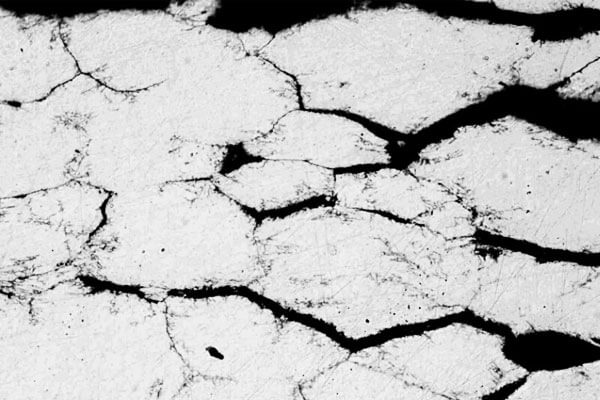
Key Characteristics of Intergranular Corrosion
Intergranular corrosion has several characteristics that distinguish it from other forms of stainless steel corrosion:
- Selective grain-boundary attack: Corrosion progresses primarily along grain boundaries rather than uniformly across the metal surface.
- Limited visible surface damage: Early-stage corrosion may not produce obvious rust, discoloration, or surface roughness.
- Loss of mechanical integrity: As grain boundaries deteriorate, adjacent grains lose their bonding strength, reducing ductility, toughness, and load-bearing capacity.
- Potential for rapid propagation: Once a continuous network of susceptible grain boundaries develops, corrosion can penetrate deeper into the material.
- Difficult early detection: Conventional visual inspection may not reveal the damage, especially during the initial stages.
One of the most concerning aspects of IGC is that a stainless steel component may retain an apparently acceptable external appearance while its internal microstructure has already suffered significant damage.
This is why intergranular corrosion is often considered a hidden material failure mechanism.
| Corrosion Type | Attack Location | Typical Appearance | Detection Difficulty |
| General corrosion | Uniform surface | Thinning, rust | Easy |
| Pitting | Localized surface pits | Small deep holes | Moderate |
| Intergranular corrosion | Grain boundaries | Surface may look bright; grain dropping possible | Difficult |
| Stress corrosion cracking | Cracks under tensile stress | Fine cracks | Difficult |
2. The Main Mechanism: Chromium Depletion Theory
The corrosion resistance of stainless steel primarily depends on chromium. When exposed to oxygen-containing environments, chromium reacts with oxygen to form an extremely thin, stable, and adherent chromium-rich passive film on the metal surface.
For conventional stainless steel, a chromium content of approximately 12 wt.% or higher is generally required to establish and maintain stainless behavior under suitable conditions.
Intergranular corrosion can occur when the chromium concentration near grain boundaries falls below the level needed to maintain a stable passive film.
Sensitization: Chromium Carbides Precipitate at Grain Boundaries
Austenitic stainless steel generally exhibits good corrosion resistance when it has undergone proper solution annealing.
A typical solution treatment involves heating the material to approximately 1050–1100°C, followed by rapid cooling, usually water quenching or another qualified cooling method.
During this process:
- Chromium carbides are dissolved into the austenitic matrix.
- Carbon is retained in a supersaturated solid solution.
- Chromium becomes more uniformly distributed throughout the material.
- The steel maintains its ability to form a protective passive film.
However, when the material is subsequently exposed to temperatures between approximately 450–850°C, a phenomenon known as sensitization may occur.
This temperature range is commonly referred to as the sensitization temperature range.
The metallurgical process develops as follows:
Step 1: Carbon diffusion toward grain boundaries
Carbon atoms have relatively high diffusivity in austenitic stainless steel.
When the material enters the sensitization temperature range, carbon atoms migrate toward grain boundaries, where precipitation is energetically favorable.
Step 2: Chromium carbide precipitation
Carbon reacts with chromium to form chromium-rich carbides, most commonly Cr₂₃C₆.
These carbides preferentially precipitate along grain boundaries because they provide favorable nucleation sites.
Step 3: Local chromium consumption
The formation of chromium carbides consumes chromium from the surrounding metallic matrix.
Since chromium diffuses much more slowly than carbon in the solid steel, the chromium concentration near the grain boundaries cannot be replenished quickly enough to compensate for carbide precipitation.
Consequently, narrow chromium-depleted regions develop adjacent to the grain boundaries.
Formation of Chromium-Depleted Zones
The chromium-depleted zone is the critical microstructural feature responsible for conventional sensitization-related intergranular corrosion.
As chromium carbides precipitate along the grain boundaries, the adjacent matrix loses chromium.
When the chromium concentration in the depleted region falls below approximately 12 wt.%, its ability to maintain a stable passive film becomes significantly impaired.
The grain interiors, which retain sufficient chromium, continue to exhibit relatively good corrosion resistance.
This creates a heterogeneous microstructure consisting of:
- Chromium-rich grain interiors with relatively strong passivity.
- Chromium carbide precipitates along grain boundaries.
- Narrow chromium-depleted regions adjacent to the precipitates.
The difference in corrosion resistance between these regions creates the conditions for selective grain-boundary attack.
It is worth noting that 12 wt.% is a practical metallurgical reference rather than an absolute threshold applicable to every environment.
Actual passivation depends on the complete alloy composition, solution chemistry, temperature, and electrochemical conditions.
Electrochemical Mechanism: Formation of a Micro-Galvanic Cell
In a corrosive medium, the chromium-depleted zone and the grain matrix have different electrochemical potentials:
- Chromium-depleted zone: anodic, low potential, easy to dissolve.
- Grain matrix: cathodic, chromium-rich, remains passive.
The critical factor is the area ratio. The depleted zone is very small; the grain matrix is very large. This creates a large cathode–small anode condition.
The anodic current density at the depleted zone becomes very high, and corrosion penetrates rapidly along the grain boundaries.
Once the boundary network is attacked, the damage cannot be repaired by the passive film. The oxide film cannot bridge a dissolved grain boundary.
3. Other Mechanisms of Intergranular Corrosion
Although chromium depletion theory explains most cases of intergranular corrosion in austenitic stainless steel, it does not account for every situation.
Under certain material compositions and service conditions, two additional mechanisms may contribute to grain-boundary attack.
Anodic Phase Theory
Certain intermetallic compounds, particularly sigma (σ) and chi (χ) phases, may precipitate along grain boundaries during thermal exposure.
These phases can exhibit different electrochemical behavior from the surrounding metal matrix and may act as preferential anodic sites, resulting in localized dissolution.
Unlike conventional chromium depletion, this mechanism does not necessarily require the formation of a chromium-depleted zone.
Instead, the intermetallic phases themselves may undergo preferential electrochemical attack.
This mechanism is more commonly associated with:
- High-chromium, high-molybdenum ferritic stainless steels.
- Austenitic stainless steels subjected to prolonged high-temperature service.
Grain Boundary Segregation Theory
Grain boundary segregation occurs when trace impurities, such as sulfur (S), phosphorus (P), and silicon (Si), accumulate at grain boundaries during thermal processing or prolonged exposure to elevated temperatures.
The enrichment of these elements can alter the local chemical composition and electrochemical properties of grain boundaries, reducing their passivation ability and increasing their susceptibility to selective corrosion.
This mechanism helps explain why certain low-carbon and ultra-low-carbon stainless steels can still experience intergranular corrosion under specific conditions.
Therefore, reducing carbon content alone does not eliminate all risks of intergranular corrosion. Impurity control and grain-boundary chemistry must also be considered when evaluating the corrosion resistance of stainless steel.
4. Common Causes of Intergranular Corrosion in Industrial Applications
In actual manufacturing and industrial service, intergranular corrosion rarely results from a single factor.
Material composition, thermal history, fabrication processes, and operating environments can interact to increase susceptibility.
The following scenarios are among the most important causes to consider.
Welding Heat-Affected Zone (HAZ)
Welding is one of the most common sources of sensitization in austenitic stainless steel.
During welding, the base metal adjacent to the weld experiences a thermal cycle. Depending on the distance from the fusion line, different regions reach different peak temperatures and cooling rates.
Some portions of the heat-affected zone may enter the sensitization range of 450–850°C.
If the material remains within this range long enough, chromium carbides can precipitate along the grain boundaries.
This can create a narrow region with reduced corrosion resistance on either side of the weld.
In certain stabilized stainless steels, a more localized phenomenon known as knife-line attack may occur near the fusion boundary.
This is particularly associated with stabilized grades such as 321 and 347 under specific thermal histories.
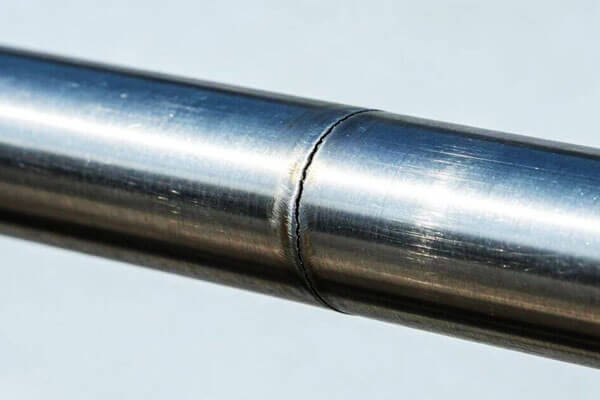
The risk is influenced by:
- Carbon content of the base material.
- Welding heat input.
- Interpass temperature.
- Cooling rate.
- Number of welding passes.
- Filler metal composition.
- Subsequent thermal exposure.
Prevention:
- Use low-carbon grades such as 304L or 316L for corrosion-sensitive welded components.
- Optimize welding heat input to avoid unnecessary thermal exposure.
- Use appropriate multi-pass welding procedures.
- Control interpass temperature.
- Select compatible welding consumables.
- Consider post-weld solution annealing when component geometry and service requirements justify it.
Importantly, simply reducing welding heat input does not guarantee the elimination of sensitization. The complete thermal cycle, including reheating by subsequent passes, must be evaluated.
Improper Heat Treatment
Solution annealing is widely used to restore the corrosion resistance of austenitic stainless steel.
However, an incorrectly controlled heat-treatment process can produce the opposite result.
For example, if austenitic stainless steel is heated to approximately 1050–1100°C but cooled too slowly, it may spend sufficient time within the sensitization temperature range for chromium carbide precipitation to occur.
Similarly, holding the material between 450–850°C for an extended period can promote sensitization.
Common heat-treatment problems include:
- Insufficient solution annealing temperature.
- Inadequate holding time.
- Slow or uncontrolled cooling.
- Uneven furnace temperature distribution.
- Incorrect loading arrangements.
- Unqualified repeated thermal cycles.
Prevention:
Use a qualified solution annealing procedure based on the alloy grade, section thickness, and component geometry.
Ensure adequate heating, temperature uniformity, and sufficiently rapid cooling through the sensitization range.
Long-Term Exposure to Elevated Temperatures
Stainless steel components used in heat exchangers, boilers, furnaces, chemical reactors, and power-generation equipment may experience prolonged thermal exposure.
Even when the operating temperature is below the peak sensitization range, long-term exposure can still promote precipitation reactions, depending on the alloy composition and thermal history.
For example, prolonged operation at approximately 400–600°C can contribute to gradual microstructural changes.
The exact response depends on the temperature, exposure duration, carbon content, alloying elements, and previous processing history.
This is particularly important for components that undergo repeated heating and cooling cycles.
Prevention:
- Select stainless steel grades with suitable thermal stability.
- Evaluate the complete service temperature history.
- Avoid unnecessary thermal exposure during fabrication and operation.
- Consider stabilized or low-carbon grades where appropriate.
- Conduct periodic inspection and metallurgical evaluation for critical components.
Corrosive Service Environments
Sensitization makes stainless steel more vulnerable to intergranular attack, but the surrounding environment determines whether significant corrosion develops.
Certain chemical environments can accelerate the dissolution of chromium-depleted regions.
Examples include:
- Strong sulfuric acid solutions.
- Nitric acid environments under specific conditions.
- Chloride-containing process streams.
- Acidic chemical solutions.
- High-temperature aqueous environments.
However, the effect of each medium is highly dependent on concentration, temperature, aeration, and electrochemical potential.
Chloride ions, for example, are particularly associated with pitting and crevice corrosion. Their presence does not automatically indicate intergranular corrosion.
In practice, sensitization and other localized corrosion mechanisms may occur simultaneously, making failure analysis more complex.
Prevention:
Evaluate the actual chemical composition and operating conditions of the service medium before selecting the stainless steel grade.
For critical applications, material qualification should include corrosion testing representative of the intended service environment.
5. How to Fix and Prevent Intergranular Corrosion
The term “fix” requires clarification. Once intergranular corrosion (IGC) has caused significant grain-boundary dissolution, the damage cannot be reversed.
Effective control therefore focuses on preventing sensitization and restoring the material’s metallurgical condition before corrosion occurs.
Use Low-Carbon Stainless Steels
Select low-carbon grades such as 304L and 316L, with a carbon content of 0.03 wt.% or below.
Lower carbon content reduces chromium carbide precipitation at grain boundaries, minimizing the risk of chromium depletion.
These grades are widely used for welded components and applications involving elevated temperatures.
Use Stabilized Stainless Steel Grades
Titanium (Ti) and niobium (Nb) combine preferentially with carbon to form stable carbides, reducing the formation of chromium carbides and helping maintain chromium in the surrounding matrix.
Common stabilized grades include:
- 321: Titanium-stabilized stainless steel.
- 347: Niobium-stabilized stainless steel.
These grades are suitable for elevated-temperature applications and welded components where post-weld solution annealing is impractical.
Apply Solution Annealing
Solution annealing typically involves heating stainless steel to approximately 1050–1100°C, followed by rapid cooling.
This treatment dissolves chromium carbides and returns chromium to solid solution, helping restore corrosion resistance.
It can reverse sensitization if significant grain-boundary corrosion has not occurred. However, it cannot repair existing corrosion damage and may be impractical for large welded structures.
Optimize Welding Procedures
Welding parameters should be controlled to minimize exposure to the 450–850°C sensitization range. Recommended practices include:
- Use controlled, relatively low heat input.
- Apply multi-pass welding with appropriate interpass temperature control.
- Select low-carbon or stabilized base metals and compatible filler metals.
- Avoid excessive preheating and unnecessarily slow cooling.
- Apply post-weld solution annealing where practical.
Control Design and Service Conditions
For sensitization-sensitive stainless steels, avoid prolonged exposure to temperatures in the 400–600°C range whenever possible.
Select low-carbon or stabilized grades according to the operating temperature and corrosive environment.
Service conditions should also be considered. Chlorides, sulfuric acid, and nitric acid can contribute to corrosion under specific conditions.
Proper drainage and the avoidance of stagnant zones help reduce the accumulation and concentration of corrosive media.
Inspect and Test for Intergranular Corrosion
For critical components, verify resistance to IGC through appropriate testing and metallurgical examination. Common methods include:
- ASTM A262: Standard practices for evaluating susceptibility to intergranular attack in austenitic stainless steels.
- Strauss test and Huey test: Specific corrosion tests used to assess intergranular corrosion resistance.
- DL-EPR: Double-loop electrochemical potentiokinetic reactivation testing for evaluating sensitization.
- Metallographic examination: Used to identify grain-boundary carbide precipitation and associated microstructural changes.
One important point is that passivation alone cannot eliminate sensitization. It can restore the passive film on a properly prepared surface, but it cannot replenish chromium in depleted grain-boundary regions.
6. How to Select the Right Stainless Steel Grade to Minimize Intergranular Corrosion
Choosing the correct stainless steel grade requires evaluating the material’s chemical composition, manufacturing route, fabrication process, and service environment.
The following recommendations provide a practical starting point for common industrial applications.
| Application Requirement | Recommended Material Options | Selection Considerations |
| General-purpose welded equipment | 304L, CF3 | Reduced carbon content helps minimize sensitization |
| Chemical processing equipment | 316L, CF3M | Low carbon and molybdenum provide improved corrosion resistance in many environments |
| High-temperature welded components | 321, 347 | Stabilizing elements help control chromium carbide precipitation |
| Corrosion-resistant cast valve bodies | CF3M, CF8M | Selection depends on carbon limit and actual process medium |
| Duplex corrosion-resistant equipment | 2205, 2507 | Control phase balance and prevent harmful intermetallic precipitation |
| Severe chemical environments | 904L, 254 SMO or other qualified high-alloy grades | Requires evaluation of the actual chemical medium and temperature |
Several important considerations should guide the final selection:
- Operating temperature: Evaluate both normal operating temperatures and transient thermal exposure.
- Welding requirements: Consider whether the component will undergo extensive welding or repair.
- Corrosion medium: Identify chloride concentration, acidity, temperature, and oxidizing conditions.
- Component geometry: Consider section thickness and heat-treatment accessibility.
- Inspection requirements: Establish whether metallographic examination or standardized corrosion testing is required.
- Service life: Evaluate the long-term effects of thermal aging and corrosion exposure.
For pressure-containing and safety-critical components, material selection should be based on applicable design codes, material specifications, and service-specific corrosion assessments.
7. Conclusion
Intergranular corrosion is a metallurgical failure mechanism that can seriously compromise the reliability of stainless steel components.
In conventional austenitic stainless steels, the most common cause is sensitization: thermal exposure causes chromium carbides to precipitate along grain boundaries, consuming chromium from adjacent regions and creating chromium-depleted zones.
When these zones lose their ability to maintain a stable passive film, corrosion preferentially progresses along the grain boundaries.
However, chromium depletion is not the only possible mechanism. Intermetallic phase precipitation, grain-boundary segregation, and the effects of specific service environments must also be considered when evaluating corrosion failures.
For manufacturers of stainless steel investment castings, corrosion resistance must be engineered from the beginning of production.
Chemical composition, melting, solidification, heat treatment, and repair welding all contribute to the final metallurgical condition.
At LangHe, our approach to stainless steel investment casting emphasizes material selection, controlled casting processes, appropriate heat treatment, and inspection to support the production of reliable components for demanding industrial environments.
Whether manufacturing custom stainless steel valve bodies, pump components, impellers, or other precision castings, understanding and controlling intergranular corrosion is essential to achieving long-term material performance and product reliability.
FAQs
What is weld decay?
Weld decay is intergranular corrosion in the heat-affected zone of a weld, caused by sensitization during welding thermal cycles.
Do 304L and 316L stainless steel prevent IGC?
They significantly reduce the risk because carbon is held to 0.03% or below, but they are not absolutely immune under all conditions.
What are 321 and 347 stainless steel used for?
They are stabilized grades. Titanium in 321 and niobium in 347 combine with carbon preferentially, reducing chromium depletion.
Can solution annealing fix sensitization?
It can restore the metallurgical condition if corrosion damage is not too advanced. It cannot repair grain boundaries that have already dissolved.
Does passivation fix intergranular corrosion?
No. Passivation restores the surface passive film but cannot restore chromium to a depleted grain-boundary zone.