

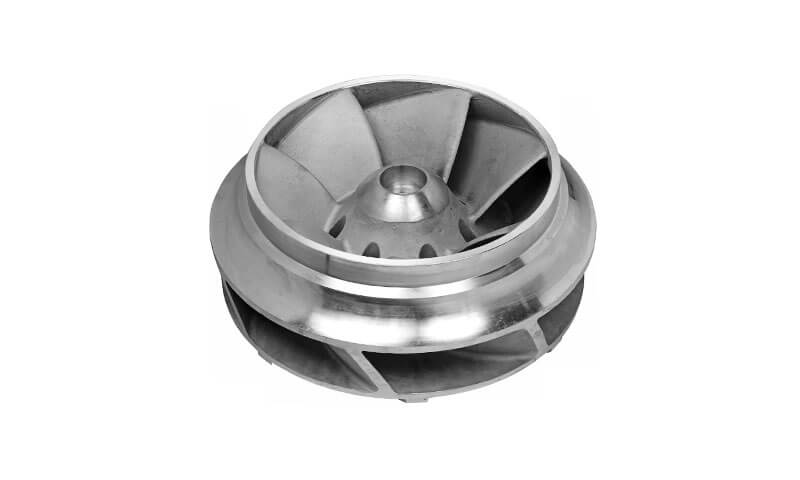
Inconel is a registered trademark originally developed by the International Nickel Company and now owned by Special Metals Corporation.
Inconel alloys occupy a unique position in modern engineering. They are not merely high-performance materials; they are enabling materials—metals that allow machines to operate in conditions where conventional steels would fail within hours.
From the combustion chambers of jet engines to the harsh interiors of chemical reactors, Inconel alloys deliver a combination of high-temperature strength, oxidációs ellenállás, and corrosion resistance that few material families can match.
Investment casting is particularly important for complex Inconel components because it can produce near-net-shape geometries with internal passages, vékony szakaszok, curved profiles, and integrated structural features.
Viszont, the process must be carefully adapted to the specific alloy because different Inconel grades have substantially different solidification and strengthening mechanisms.
1. What Is Inconel Alloy?
Inconel is a registered trademark associated with a family of nikkel-alapú szuperfémek developed for demanding environments involving high temperature, oxidáció, korrózió, nyomás, és mechanikai terhelés.
Although “Inconel” is technically a trademark rather than the name of a single alloy, the term is widely used in industry to describe nickel-chromium alloys such as Kuncol 600, 601, 625, és 718, as well as several cast nickel-based superalloys.
The composition and strengthening mechanism vary significantly between grades, but most Inconel alloys contain a nickel-rich matrix,
with chromium and other alloying elements added to provide specific combinations of corrosion resistance, magas hőmérsékleti szilárdság, és a kohászati stabilitás.
Typical nickel contents are approximately 50–75 wt.%, while chromium commonly falls in the range of 14–25 wt.%, az osztálytól függően.
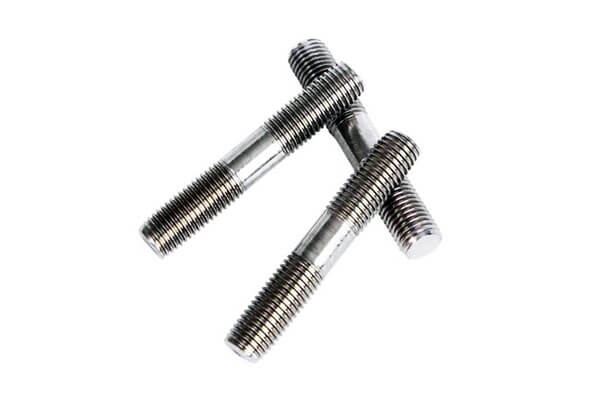
Key Alloying Elements in Inconel
| Ötvöző elem | Typical Function |
| Nikkel (-Ben) | Forms the primary matrix and provides high-temperature stability and corrosion resistance |
| Króm (CR) | Improves oxidation resistance and resistance to high-temperature corrosion |
| Molibdén (MO) | Provides solid-solution strengthening and improves resistance to localized corrosion |
| Nióbium (Földrajzi jelzés) | Contributes to precipitation strengthening, particularly in Inconel 718 |
Alumínium (Al) |
Promotes formation of strengthening γ′ phases and improves oxidation resistance |
| Titán (-Y -az) | Participates in γ′ precipitation strengthening |
| Vas (FE) | Adjusts composition, fázisstabilitás, and manufacturing characteristics |
| Kobalt (Társ) | Can improve high-temperature strength and phase stability in selected grades |
| Tungsten/Tantalum (W/Ta) | Provide additional high-temperature and solid-solution strengthening in certain superalloys |
Based on their strengthening mechanism, Inconel alloys can generally be divided into solid-solution-strengthened és precipitation-strengthened családok.
Solid-solution grades such as Kuncol 600 és 625 obtain much of their strength from alloying elements retained in the nickel matrix,
while precipitation-strengthened grades such as Kuncol 718 develop higher strength through controlled formation of strengthening phases, particularly γ′ and γ″.
For casting applications, alloy selection is especially important because not every commercial Inconel grade is equally suited to foundry production.
Some grades are primarily developed as wrought alloys, whereas alloys such as Inconel 713C and 738 are specifically associated with cast nickel-based superalloy applications.
Casting alatt, factors such as segregation, megszilárdulási viselkedés, zsugorodás, forró repedés, and subsequent heat treatment must therefore be considered together with the required service temperature and mechanical properties.
Compared with conventional stainless steels, Inconel generally provides a higher level of magas hőmérsékleti szilárdsági és oxidációs ellenállás, particularly under severe thermal and corrosive conditions.
Viszont, this performance comes with higher material cost and greater manufacturing difficulty, including more demanding melting, öntvény, megmunkálás, and heat-treatment requirements.
2. Chemical Composition of Common Inconel Alloys
The table below summarizes typical chemical compositions of selected Inconel grades.
Values are approximate and should be verified against the relevant ASTM, AMS, or UNS specification for a specific order.
| Ötvözet | MINKET | -Ben | CR | FE | MO | Földrajzi jelzés + Szembe néző | Más |
| Kuncol 600 | N06600 | ≥72.0 | 14.0–17.0 | 6.0–10.0 | - - | - - | Cu ≤0.5, C ≤0.15 |
| Kuncol 601 | N06601 | 58.0–63.0 | 21.0–25.0 | Egyensúly | - - | - - | Al 1.0–1.7 |
| Kuncol 617 | N06617 | ≥44.5 | 20.0–24.0 | ≤3.0 | 8.0–10.0 | - - | Co 10.0–15.0, Al 0.8–1.5 |
| Kuncol 625 | N06625 | ≥58.0 | 20.0–23.0 | ≤5.0 | 8.0–10.0 | 3.15–4.15 | C ≤0.10 |
| Kuncol 718 | N07718 | 50.0–55.0 | 17.0–21.0 | Egyensúly | 2.8–3.3 | 4.75–5.50 | Ti 0.65–1.15, Al 0.20–0.80 |
| Inconel X-750 | N07750 | ≥70.0 | 14.0–17.0 | 5.0–9.0 | - - | 0.70–1.20 | Ti 2.25–2.75, Al 0.40–1.00 |
| Kuncol 738 | N07738 | Egyensúly | 15.0–16.5 | ≤0,5 | 1.5–2.5 | Ta 1.5–2.5 | Co 8.0–9.0, Ti 3.0–4.0, Al 3.0–4.0 |
3. Key Properties of Inconel Alloys
Inconel alloys are selected for one or more of the following properties.
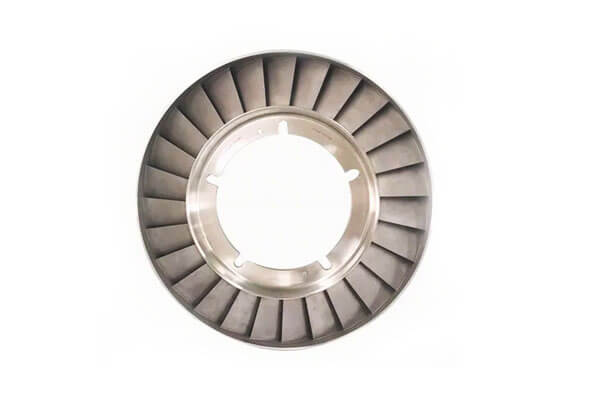
Magas hőmérsékleti szilárdság
Inconel alloys retain useful strength at temperatures from 600°C to over 1000°C, a fokozattól függően.
Precipitation-hardened grades such as 718 és 738 maintain high yield strength through the formation of coherent gamma-prime and gamma-double-prime precipitates.
Solid-solution grades such as 625 rely on molybdenum, nióbium, and chromium to resist deformation.
Oxidációs ellenállás
Chromium forms a dense, adherent Cr₂O₃ scale that protects the underlying metal.
Kuncol 601 és 617 are particularly resistant to cyclic oxidation and can operate in air at temperatures up to approximately 1200°C in some conditions.
Korrózióállóság
Inconel alloys resist a wide range of corrosive media, beleértve:
- Chloride-containing environments
- Seawater and marine atmospheres
- Acidic and alkaline solutions
- High-temperature sulfidation and carburization
- Molten salts and liquid metals
Kuncol 625 is especially noted for resistance to pitting, hasadás korrózió, and stress corrosion cracking in chloride environments.
Kúszás- és feszültség-szakadásállóság
Magas hőmérsékleten, metals deform slowly under constant load—a phenomenon known as creep.
Inconel alloys are engineered to resist creep through grain-boundary strengthening, szilárd oldatos erősítés, and precipitation hardening. This makes them suitable for turbine blades, lapátok, and high-pressure piping.
Fáradtság ellenállás
Thermal cycling and mechanical vibration are common in aerospace and power generation.
Inconel alloys exhibit good low-cycle and high-cycle fatigue resistance, particularly when produced with clean, hibamentes mikroszerkezetek.
Hőstabilitás
Long-term exposure to elevated temperatures can cause phase transformations, öblítés, or sigma-phase formation in some alloys.
Properly balanced Inconel grades resist these changes, maintaining ductility and toughness over thousands of hours.
Hegeszthetőség és megmunkálhatóság
Weldability varies by grade. Kuncol 600, 625, és 718 are generally considered weldable using matching or nickel-based filler metals.
Machinability is generally poor compared with carbon steel or stainless steel, requiring sharp tooling, low speeds, and generous coolant.
4. Inconel Mechanical and Physical Properties
The following values are representative data for Inconel 625 in annealed or solution-treated wrought condition; actual properties vary with product form, szakaszméret, hőkezelés, and test temperature.
These values should not be used as a substitute for the requirements of the applicable material specification.
| Ingatlan | Kuncol 625 Tipikus / Reference Value |
| Amerikai kijelölés | N06625 |
| Werkstoff Number | 2.4856 |
| Nominal Alloy Type | Ni-cr-mo-nb |
| Sűrűség | 8.44 G/cm³ |
| Olvadási tartomány | 1290–1350 ° C (2350–2460°F) |
| Young modulusa | ~ 207 GPA |
| Poisson aránya | ~0.30–0.31 |
| Hővezető képesség | ~9.8 W/m·K at 21°C |
| Fajlagos hő | ~410 J/kg·K |
| Termikus tágulási együttható | ~12.8 × 10⁻⁶ /K, 21–93°C |
| Elektromos ellenállás | ~1.29 × 10⁻⁶ Ω·m |
Szakítószilárdság |
~827–965 MPa, depending on condition/product |
| 0.2% Hozamszilárdság | ~414–480 MPa, depending on condition/product |
| Meghosszabbítás | Typically ≥30% in many annealed products |
| Keménység | Typically around 145–220 HB, állapotfüggő |
| Magas hőmérsékleti szilárdság | Retains substantial strength to roughly 815° C in suitable service |
| Oxidációs ellenállás | Good oxidation resistance up to approximately 980° C in appropriate environments |
| Mágneses viselkedés | Általában very low magnetic permeability lágyított állapotban |
5. Why Use Inconel for Casting?
Casting is often the most practical and economical way to produce Inconel components. There are several reasons.
- Hálózatháló alak: Casting minimizes machining, which is critical because Inconel is difficult to cut.
- Komplex geometria: Internal cooling passages, vékony falak, and intricate contours can be produced as one piece.
- Anyagfelhasználás: Less scrap compared with forging or machining from bar stock.
- Az ötvözet rugalmassága: Casting can produce alloys that are difficult or impossible to wrought, such as certain high-volume-fraction gamma-prime alloys.
- Directional and single-crystal structures: Advanced casting techniques can control grain structure for turbine blades, improving creep resistance.
- Repair and replacement: Cast components can often be repaired by welding or reconditioned, Bővítse a szolgálati élettartamot.
- Cost-effective for small and medium batches: Tooling costs can be amortized over production runs, making casting attractive for specialized parts.
6. Inconel Casting Processes
Different casting processes are suitable for different Inconel applications.
The appropriate process depends on the alloy grade, alkatrész mérete, falvastagság, belső geometria, dimenziós követelmények, termelési kötet, and required material integrity.
Among the available methods, investment casting is generally the most important process for complex precision components.
Befektetési öntés
Befektetési öntés, más néven is ismert elveszett viaszöntés, is widely used to manufacture complex Inconel components with near-net-shape geometry.
The process begins with a wax pattern that reproduces the desired component geometry.
Multiple wax patterns may be assembled onto a runner system to form a casting tree, after which the assembly is repeatedly coated with ceramic slurry and refractory material to create a ceramic shell.
After the shell reaches the required thickness and strength, the wax is removed and the shell is fired. Molten Inconel is then poured into the heated ceramic mold.
Megszilárdulás után, the shell is removed, the castings are cut from the tree, and subsequent operations such as grinding, hőkezelés, CNC megmunkálás, and inspection are performed.
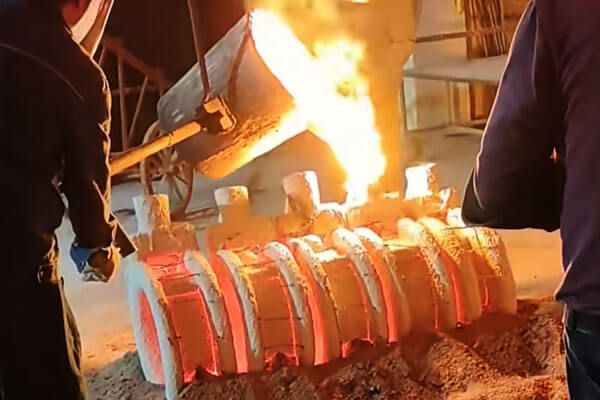
For Inconel components, A befektetési öntés számos fontos előnnyel jár:
- Komplex geometria: Belső átjárók, ívelt felületek, borda, főnökök, and integrated features can often be incorporated directly into the casting.
- Hálózat közeli formájú termelés: Less machining stock is required than with conventional wrought-stock machining.
- Good dimensional reproducibility: Appropriate process control can provide consistent geometry across production batches.
- Anyagi hatékonyság: This is particularly valuable for high-cost nickel-based alloys.
- Csökkentett összeszerelés: Complex parts can often be produced as a single casting.
The gating and feeding system must be designed carefully because Inconel alloys can be sensitive to solidification shrinkage and hot cracking.
The thermal condition of the ceramic shell is also important because it influences filling behavior and solidification.
Investment casting is especially suitable for impellers, fúvókák, turbinával kapcsolatos alkatrészek, complex valve or pump components, heat-resistant housings, and other geometrically complex parts where material performance and dimensional precision are both important.
Vákuumos befektetési öntés
Vákuumbefektetési casting combines the geometric advantages of investment casting with a controlled low-pressure environment during melting and/or pouring.
It is particularly valuable for high-performance nickel-based superalloys where control of gas contamination, oxidáció, zárvány, and reactive alloying elements is important.
During vacuum melting, the furnace atmosphere is controlled to minimize unwanted reactions between the molten alloy and the surrounding environment.
The molten Inconel is then introduced into a ceramic investment mold under controlled conditions.
Vacuum processing can provide several metallurgical advantages:
- Reduced interaction with atmospheric gases
- Better control of oxidation-sensitive alloying elements
- Lower risk of certain gas-related defects
- Improved control of melt cleanliness
- Greater suitability for demanding aerospace, energia, and high-temperature components
The benefits depend strongly on furnace design, vákuumszint, ötvözetkémia, ceramic system, öntési gyakorlat, és a folyamatvezérlés.
Vacuum casting does not automatically eliminate defects; mold reactions, zsugorodás, elkülönítés, zárvány, and solidification-related defects still need to be controlled through proper engineering and inspection.
Vacuum investment casting is particularly appropriate for high-integrity, high-value Inconel castings where metallurgical quality is more important than minimizing initial process cost.
Centrifugális casting
Centrifugális casting uses controlled rotational force to distribute molten metal against the mold wall during solidification.
The process is most suitable for components with hengeres, gyűrűs, cső alakú, or rotationally symmetric geometries.
For suitable Inconel components, centrifugal casting can offer good feeding characteristics and may help reduce certain internal defects because denser molten metal is forced toward the outer region of the mold while some lighter inclusions or gases tend to migrate differently during solidification.
Viszont, centrifugal casting is much less flexible than investment casting for highly complex three-dimensional geometries.
It is therefore generally selected according to component geometry rather than simply alloy preference.
A lehetséges alkalmazások közé tartozik:
- Rings and sleeves
- Cylindrical shells
- Tubular components
- Rotationally symmetric high-temperature parts
- Selected corrosion-resistant process components
Process parameters such as rotation speed, öntési hőmérséklet, penész hőmérséklet, falvastagság, and solidification rate must be controlled carefully.
Incorrect parameters can contribute to segregation, méretváltoztatás, zárvány, or undesirable microstructures.
For complex non-axisymmetric Inconel components, investment casting is usually more practical; for suitable rotational geometries, centrifugal casting can provide an efficient alternative.
Homoköntés
Sand casting uses a bonded sand mold to form the external geometry of the component.
Összehasonlítva a befektetési öntéssel, it generally offers greater flexibility for large components and relatively low production volumes, while requiring less expensive tooling.
For Inconel, viszont, sand casting presents additional challenges.
The mold surface, kötőanyag rendszer, áteresztőképesség, termikus viselkedés, öntési körülmények, and metal-mold reaction must all be carefully controlled because nickel-based superalloys are sensitive to contamination and casting defects.
The main advantages of sand casting include:
- Lower tooling investment for large or low-volume components
- Ability to produce larger castings
- Flexible mold dimensions
- Practicality for certain prototypes, repair-related production, and specialized components
Its limitations are equally important. Összehasonlítva a befektetési öntéssel, sand casting generally provides lower surface quality, less precise dimensional reproduction, and greater machining requirements.
Complex thin-wall Inconel components are also more difficult to produce consistently.
For these reasons, sand casting is normally considered when component size, termelési kötet, or tooling economics outweigh the need for very fine geometric detail.
Komplexumhoz, high-value Inconel components requiring high dimensional accuracy and near-net-shape geometry, investment casting or vacuum investment casting is generally the more appropriate choice.
7. Surface Finishing and Post-Casting Treatment
Casting is only the beginning. Inconel castings require carefully controlled post-processing to achieve final properties and surface quality.
Hőkezelés
- Oldat -lágyítás – dissolves precipitates and homogenizes the microstructure.
- Öregedés – precipitates strengthening phases such as gamma-prime and gamma-double-prime.
- Stressz -enyhítés – reduces residual stresses from casting and machining.
- CSÍPŐ (Forró izosztatikus sajtó) – applies high temperature and isostatic pressure to close internal porosity. HIP is often essential for fatigue-critical Inconel castings.
Felületi kikészítés
- Robbantás – removes scale and improves surface cleanliness.
- Pácolás és passziváció – removes oxide scale and restores corrosion resistance.
- Megmunkálás – achieves critical dimensions, karima arcok, és a lezáró felületek.
- Grinding and polishing – improves surface finish for hygienic or aerodynamic requirements.
- Lövöldözés – induces compressive residual stresses to improve fatigue life.
- Bevonat – thermal barrier coatings or wear-resistant coatings may be applied.
Ellenőrzés és tesztelés
- Vizuális ellenőrzés
- Dimenziós ellenőrzés
- Festék behatoló ellenőrzés (DPI)
- Radiographic inspection (Röntgen)
- Ultrasonic inspection
- Kémiai elemzés
- Mechanikai tesztelés
- Nyomásvizsgálat
A rigorous quality plan ensures that cast Inconel components meet the demanding requirements of aerospace, energiatermelés, és kémiai feldolgozás.
8. Applications of Cast Inconel Alloys
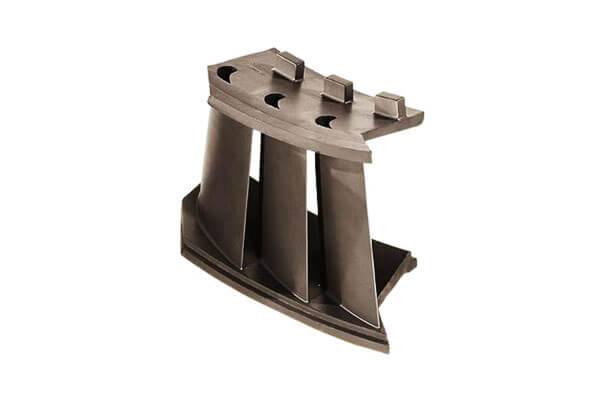
Turbine and High-Temperature Power Components
Cast nickel-based superalloys are widely associated with high-temperature rotating and stationary components.
Their ability to maintain strength and resist creep at elevated temperatures makes them suitable for demanding thermal environments.
A tipikus alkalmazások között szerepel turbine-related housings, nozzle components, égési alkatrészek, heat-resistant structural parts, and other high-temperature gas-path hardware, depending on the specific alloy and design requirements.
Cast grades such as Inconel 713C and 738 are particularly relevant where elevated-temperature mechanical performance is a primary design requirement.
Chemical Processing Equipment
Inconel alloys are well suited to chemical environments where conventional stainless steels may experience excessive corrosion or loss of performance.
Cast components may include:
- Valve bodies and flow-control components
- Pump housings and impeller-related components
- Chemical processing housings
- Nozzles and fittings
- Heat-resistant process components
In applications involving chlorides, savak, or mixed chemical environments, alloy selection must be matched carefully to the actual process chemistry rather than relying solely on a general “corrosion-resistant” classification.
Oil and Gas Equipment
Oil and gas equipment may encounter combinations of high pressure, emelkedett hőmérséklet, kloridok, sour environments, and erosive fluids.
Kuncol 625 and related nickel alloys are therefore used in selected components requiring high corrosion resistance and mechanical reliability.
A lehetséges alkalmazások közé tartozik valve and pump components, nyomást tartalmazó alkatrészek, tengeralattjárófelszerelés, and specialized flow-control hardware.
Tengeri és tengeri berendezések
Seawater environments present significant corrosion challenges because of chloride exposure and localized corrosion mechanisms.
Suitable Inconel grades can provide strong resistance in tengeri környezet, particularly where stainless steels or lower-alloy materials have insufficient resistance.
Cast components can be used in szivattyúk, szelepek, sokrétű, marine flow-control systems, and offshore process equipment, provided the alloy is selected for the actual exposure conditions.
Aerospace and Gas-Turbine Applications
Nickel-based superalloys are fundamental engineering materials for high-temperature aerospace systems.
Casting allows complex shapes to be integrated into a single component while maintaining the performance characteristics required for hot-section service.
Applications may include turbine nozzles, combustion hardware, structural hot-section components, and other specialized gas-turbine parts.
The exact alloy and casting method depend heavily on temperature, feszültség, oxidation environment, and component geometry.
Energy and Industrial Thermal Equipment
Cast Inconel components can also be used in power-generation systems, ipari kemencék, hőkezelő berendezések, égési rendszerek, and high-temperature processing machinery.
The main advantage is their ability to maintain structural integrity under simultaneous thermal, mechanikai, and chemical loads.
9. Limitations of Inconel Casting
Although Inconel casting offers excellent high-temperature strength, korrózióállóság, and complex-geometry capability, it also presents significant manufacturing challenges.
High Material Cost
The first limitation is the relatively high cost of nickel-based superalloys.
Inconel contains large amounts of nickel along with expensive alloying elements such as chromium, molibdén, nióbium, és, az osztálytól függően, kobalt, volfrám, tantál, or other additions.
Because of this high material value, casting yield and material utilization are important economic considerations.
Excessive gating and risering, megmunkálási juttatások, and casting scrap can have a greater cost impact than they would for conventional carbon steel or standard stainless steel castings.
Complex Melting and Casting Requirements
Inconel alloys generally require more controlled melting and pouring conditions than conventional casting alloys.
Their high melting temperatures and complex alloy chemistry make temperature control, atmosphere management, olvad a tisztaság, and chemical composition control particularly important.
During melting and pouring, inappropriate process conditions can increase the risk of oxidation, zárvány, gas-related defects, or changes in alloy chemistry.
For certain high-performance nickel alloys, vacuum or other controlled-atmosphere melting may therefore be preferred.
Solidification Segregation and Casting Defects
Nickel-based superalloys can exhibit significant microsegregation during solidification because alloying elements partition between the dendritic and interdendritic regions.
Depending on the alloy, undesirable phases such as Laves phases, karbidok, or other intermetallic constituents may form.
Common casting defects include:
- Zsugorodási porozitás
- Gázporozitás
- Oxide or non-metallic inclusions
- Forró repedés
- Misruns and cold shuts
- Chemical segregation
- Localized lack of soundness
These defects can reduce ductility, fáradtság ellenállás, korrózióállóság, or creep performance.
Következésképpen, kapu, táplálás, penész hőmérséklet, öntési körülmények, and solidification behavior must be carefully controlled.
Nehéz megmunkálhatóság
Inconel is significantly more difficult to machine than many conventional steels.
Nagy szilárdsága, alacsony hővezető képesség, and strong work-hardening tendency concentrate heat and cutting forces in the machining zone.
Ennek eredményeként, CNC machining may involve:
- Higher tool wear
- Lower practical cutting speeds
- Greater cutting-force requirements
- More stringent workholding and machine rigidity
- Increased machining time and tooling cost
Ezért, the casting design should be optimized to produce the final geometry as close to net shape as practical, while machining is reserved for critical dimensions, lezáró felületek, szálak, fúrások, and other functional features.
Greater Heat-Treatment Complexity
Heat treatment is often essential for achieving the required properties, but the correct cycle is highly dependent on the alloy grade and its intended application.
In precipitation-strengthened alloys, parameters such as solution temperature, hűtési sebesség, öregedő hőmérséklet, and aging time directly influence the resulting microstructure and mechanical properties.
An inappropriate heat-treatment cycle can lead to undesirable phase formation, insufficient strengthening, excessive grain growth, or loss of corrosion resistance.
Ezért, Inconel castings require alloy-specific thermal processing rather than a generic heat-treatment procedure.
Higher Inspection Requirements
Because Inconel castings are often used in high-temperature, nagynyomású, or corrosive service, internal and surface integrity may be subject to strict acceptance criteria.
Inspection can include chemical analysis, dimenziós ellenőrzés, behatoló tesztelés, röntgenográfia, ultrahangos tesztelés, CT szkennelés, metallográfiai vizsgálat, and mechanical-property verification.
The required inspection level increases manufacturing time and cost, but it is often essential for demonstrating casting integrity and ensuring reliable service performance.
Higher Overall Manufacturing Cost
The combination of expensive raw material, specialized melting equipment, complex casting control, hőkezelés, nehéz megmunkálás, and extensive inspection makes Inconel castings considerably more expensive than many conventional metal castings.
Ezért, Inconel casting is generally most justified when the component requires a combination of properties that lower-cost alloys cannot reliably provide.
For less demanding applications, rozsdamentes acél, ötvözött acél, nickel-iron alloys, or other lower-cost materials may provide a more economical solution.
10. Choose LangHe Industry for Inconel Casting
Langhe -ipar egy ISO minősítésű gyártó providing custom investment casting and CNC machining solutions for complex metal components.
For Inconel applications, LangHe can integrate DFM analysis, casting process development, ötvözött választás, precíziós befektetési casting, hőkezelés, CNC megmunkálás, felszíni befejezés, and quality inspection into a coordinated manufacturing workflow.
The engineering approach focuses on matching the manufacturing process to the actual requirements of the component.
For complex Inconel castings, this includes evaluating wall thickness, szakasz átmenetek, gating and feeding, megmunkálási juttatások, datum structures, heat-treatment requirements, and inspection requirements before production.
Critical functional features can then be CNC machined to the required dimensional and surface specifications.
LangHe supports custom production for prototype, small-batch, and repeat industrial components, with the final process defined according to the selected Inconel grade, alkatrész geometriája, service conditions, and applicable quality requirements.
This integrated casting-and-machining approach is particularly valuable for customers seeking a finished Inconel component rather than a raw casting alone.
11. Következtetés
Inconel alloys occupy an important position among high-performance engineering materials because they combine high-temperature strength, oxidációs ellenállás, korrózióállóság, és hosszú távú szerkezeti stabilitás.
Their performance comes from carefully controlled nickel-based metallurgical systems containing chromium and selected strengthening elements such as molybdenum, nióbium, alumínium, és a titán.
Összetett alkatrészekhez, casting provides an effective route to transform these high-performance alloys into near-net-shape parts while reducing the machining required for difficult-to-cut nickel alloys.
Investment casting is particularly valuable for intricate geometries, while vacuum investment casting is suitable when tighter control of melt cleanliness and atmospheric contamination is required.
Centrifugal and sand casting have more specialized applications based on component geometry and size.
Viszont, successful Inconel casting depends on much more than selecting the alloy.
Olvasztási gyakorlat, forma tervezés, megszilárdulás szabályozása, hőkezelés, megmunkálás, and inspection must work together to achieve the required final properties.
Ha ezeket a tényezőket megfelelően kontrollálják, cast Inconel components can provide reliable performance in some of the most demanding chemical, termikus, energia, tengeri, and high-temperature industrial applications.
GYIK
What is the difference between Inconel and stainless steel?
Inconel alloys are nickel-chromium-based superalloys with higher nickel content and superior high-temperature strength, oxidációs ellenállás, and corrosion resistance compared with stainless steels.
Stainless steels are iron-based alloys with at least 10.5% króm.
Can Inconel alloys be cast?
Igen. Inconel alloys are commonly cast by investment casting, vacuum investment casting, centrifugális casting, és homoköntés.
Casting is often preferred for complex shapes and for alloys that are difficult to machine.
Which Inconel grade is best for high-temperature casting?
Az alkalmazástól függ. Kuncol 718 is widely used for high-strength, moderate-temperature service.
Kuncol 625 offers excellent corrosion resistance and good high-temperature strength.
For the hottest turbine sections, cast alloys such as Inconel 738 or single-crystal nickel-based superalloys are often used.
Is Inconel magnetic?
Most Inconel alloys are austenitic and essentially non-magnetic in the annealed condition. Some grades may become slightly magnetic after cold working or certain heat treatments.
How much does Inconel casting cost?
Inconel castings are more expensive than carbon steel or stainless steel castings due to raw material cost, melting complexity, and post-processing requirements.
The final price depends on alloy grade, részméret, bonyolultság, mennyiség, inspection level, and delivery requirements.
Can cast Inconel components be welded?
Many cast Inconel components can be welded, but procedures must be carefully controlled.
Precipitation-hardened grades such as 718 require proper pre-heat, töltőanyag kiválasztása, and post-weld heat treatment to avoid cracking.
What is HIP in Inconel casting?
HIP stands for Hot Isostatic Pressing. It uses high temperature and high gas pressure to close internal porosity in castings, improving density, fáradtság élettartama, és mechanikai tulajdonságok.

