1. Panimula
Polypropylene (PP) is a semicrystalline thermoplastic polyolefin notable for low density, broad chemical resistance, and cost-effective processing.
It exists as isotactic homopolymer and as several copolymer families; additives and reinforcement extend its application envelope from flexible films and nonwovens to glass-filled structural automotive parts.
Choosing the right PP grade requires matching polymer microstructure, additives and processing conditions to service temperature, mekanikal na pag-load, chemical exposure and end-of-life strategy.
2. What is PP Plastic?
Polypropylene is synthesized from propylene monomer (C₃H₆) using coordination catalysis (Ziegler–Natta or metallocene).
Since commercialization in the 1950s it has become one of the most produced plastics worldwide.
Strategically, PP sits between commodity (PE, PS) and engineering plastics (PA, PBT): it is inexpensive and broadly processable yet sufficiently tunable for demanding applications, enabling mass-market lightweighting and cost control while meeting many regulatory and performance requirements.
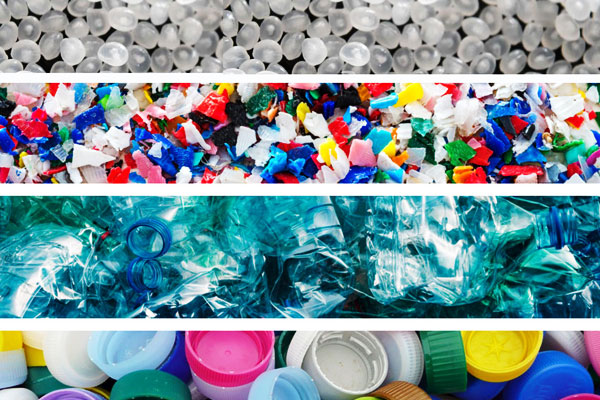
Key strategic attributes:
- Low specific gravity (≈0.90 g·cm⁻³) — advantage for lightweight design.
- Wide processing window — supports high-throughput manufacturing.
- High chemical resistance — suitable for food contact, medical disposables and industrial components.
- Broad grade availability — unfilled, filled, reinforced, flame-retardant and specialty medical grades.
3. Chemistry and Polymer Structure
Polymerization routes and catalyst impact
- Ziegler–Natta catalysts produce isotactic PP with broad molecular-weight distributions; they are economical and widely used for homopolymers and random copolymers.
- Metallocene catalysts enable narrower molecular-weight distribution and greater microstructural control (tacticity, blocky copolymer architecture), improving clarity, toughness and process consistency.
- Gas-phase vs slurry vs solution processes: choice affects economy, molecular weight and contaminant profile — important for high-purity or medical grades.
Tacticity and crystallinity
- Isotactic PP crystallizes readily; high crystallinity yields stiffness, chemical resistance and high melting point (~160–171 °C).
- Syndiotactic / atactic forms are niche: syndiotactic has lower crystallinity; atactic is largely amorphous and tacky.
- Crystalline morphology: spherulite size, nucleation density and annealing history influence optical, mechanical and shrinkage behavior.
Homopolymer vs copolymer families
- Homopolymer (iPP): best stiffness, highest melting point, good chemical resistance; more brittle at low T.
- Random copolymer (rPP): small ethylene incorporation reduces crystallinity → improved clarity and cold-temperature toughness; used for food packaging and injection molded articles requiring better impact performance.
- Epekto (block) copolymer (IPP/CPP / PP-H): dispersed rubbery EPR/EPDM domains provide high impact toughness and ductility — used for thin-walled containers, automotive bumpers and living hinges.
- Specialty modified PPs: nucleated, heat-stabilized, flame-retardant, filled (talc, CaCO₃, salamin hibla) and compatibilized grades extend mechanical and thermal performance.
4. Physical and Thermal Characteristics of PP
Typical values (representative ranges for common injection-molding homopolymer/isotactic PP; exact numbers depend on grade, Mga tagapuno, and processing):
| Pag-aari | Typical range / value |
| Densidad ng katawan | 0.895 – 0.92 g·cm⁻³ |
| Glass transition (Tg) | ≈ −10 to 0 °C |
| Melting point (Tm) | ≈ 160 – 171 °C (isotactic PP) |
| Vicat softening | ~100 – 150 °C (grade dependent) |
| Heat deflection temp (HDT) | ~80 – 120 °C (unfilled to nucleated/filled) |
| Coefficient of thermal expansion | ~100–150 ×10⁻⁶ /K (higher than many engineering thermoplastics) |
Design note: PP is semicrystalline; thermal behavior depends strongly on crystallinity and nucleation.
5. Key Performance Characteristics of Polypropylene
Mga Katangian ng Mekanikal
Representative mechanical ranges for unfilled, solution-annealed (as-molded) PP:
| Pag-aari | Typical value |
| Lakas ng paghatak (Rm) | 25 – 40 MPa |
| Yield strength (0.2% Offset) | 20 – 35 MPa |
| Young’s modulus | ~1.0 – 1.8 GPa (homopolymer) |
| Elongation at break | 100 – 700% (very ductile in many grades) |
| Notched Izod impact (unmodified) | variable; low at subzero temps |
| Pagkapagod (flexural) | excellent — PP shows good fatigue resistance and ‘living-hinge’ capability |
Paglaban sa Kemikal
PP is highly resistant to most organic solvents, mga asido, and alkalis at room temperature.
It withstands dilute acids (hal., 10% HCl), mga base (hal., 50% NaOH), and hydrocarbons but is susceptible to oxidation by strong oxidizing agents (hal., concentrated HNO₃, kloro) and swelling by aromatic solvents (hal., benzene) sa nakataas na temperatura.
This chemical inertness makes PP suitable for chemical storage and processing equipment.
6. Processing methods
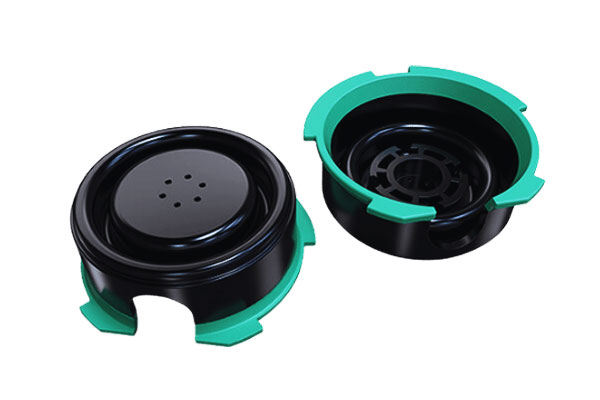
General processing window and rheology
- Melt processing: 180–240 °C depending on grade and equipment; maintain stable melt temperature to avoid thermal degradation and volatile formation.
- MFI / MFR is the primary industrial indicator: low MFR → higher molecular weight → better mechanical properties but higher processing torque.
Pag iiniksyon paghubog — design guidance
- Gate design, packing and cooling: optimize pack to compensate volumetric shrinkage; balance cooling to avoid sink marks.
- Mold temp: 20–80 °C; higher temps improve surface finish and reduce orientation stress but slow cycle time.
- Warpage mitigation: maintain wall uniformity, place ribs with proper thickness ratio (<0.5× wall) and use support bosses properly.
Extrusion and film
- BOPP production: biaxial orientation improves stiffness, strength and clarity for packaging films; orientation parameters (temperatura, stretch ratio) control properties.
- Pipe extrusion (PP-R): long-term hydrostatic strength depends on crystallinity and molecular weight distribution.
Blow molding, thermoforming na, foaming and fiber production
- Each process exploits PP’s melt strength and crystallization behavior; foam grades use chemical or physical blowing agents and nucleating agents to control cell size and density.
3D Printing/Additive manufacturing
- FFF printing of PP is challenging due to low bed adhesion and warpage; specialized grades and surface treatments (PP sticks, heated beds, raft usage) enable printing for prototyping and low-volume parts.
7. Mga additives, Fillers and Modified Grades
Mga additives, fillers and modifiers are the tools that transform base polypropylene (PP) from a single-purpose commodity into a portfolio of engineered materials.
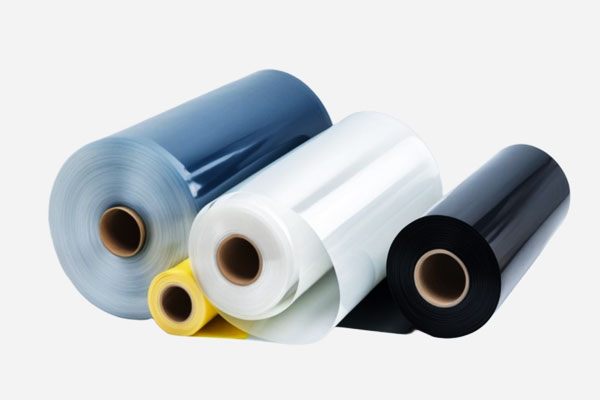
Additive and filler families
Nucleating agents
- Layunin: increase crystallization rate, refine spherulite size, raise stiffness and HDT slightly, shorten cycle times, improve clarity in some grades.
- Mga Uri: sorbitol derivatives (hal., PDO-type), sodium benzoate, organic salts.
- Typical loading:0.01 – 0.5 wt.%.
- Epekto: shorter cooling time (10–30%), higher stiffness and reduced cycle variation.
Impact modifiers / Mga Elastomer
- Layunin: increase low-temperature toughness and notched impact strength.
- Mga Uri: EPR/EPDM (ethylene–propylene rubber), SEBS (styrenic block copolymer).
- Typical loading:5 – 25 wt.% (depends on target toughness).
- Epekto: big improvement in notch impact and ductility; reduces tensile modulus and HDT; may require compatibilizer for filled systems.
Fillers (mineral)
- Talc, Mica, wollastonite: increase stiffness, improve dimensional stability and nucleation; talc often used at 5–30 wt.%.
- Calcium carbonate (CaCO₃): cost reduction, slight stiffness increase; typical 5–30 wt.%.
- Epekto: modulus up (hal., talc 10–20% can increase modulus from ~1.5 GPa to ~2–3 GPa); impact toughness generally declines; surface finish and flow may change.
Reinforcements (fibrous)
- Glass fiber (short or long): large increases in modulus/strength — common 10–40 wt.% (minsan hanggang sa 60 wt.% in LFT).
- Carbon fiber / long-fiber thermoplastics (LFT): higher stiffness and strength, electrical conductivity with carbon.
- Epekto: modulus up to 3–10+ GPa depending on fiber content and orientation; mas mataas na density, increased abrasion and higher tool wear; reduced impact in some configurations if fibers act as stress concentrators.
Flame retardants (FR)
- Halogenated FRs: effective, but restricted in many markets.
- Halogen-free: aluminum trihydrate (ATH), magnesium hydroxide, phosphorus-based organics, intumescent systems.
- Typical loading: ATH often 20–60 wt.%; phosphorus systems 5–20 wt.%.
- Epekto: reduce combustibility; significant increases in filler content reduce mechanical properties; impact on processing viscosity is substantial.
Antioxidants & heat stabilizers
- Layunin: prevent thermo-oxidative degradation during processing and long service life.
- Mga Uri & loading: primary phenolic antioxidants (0.05–0.5 wt.%), secondary phosphites (0.05–0.5 wt.%).
- Epekto: extend melt stability and long-term thermal life; crucial for elevated-temperature service.
UV stabilizers and light absorbers
- HALS (hindered amine light stabilizers) and UV absorbers (benzotriazoles): 0.1–1.5 wt.%.
- Epekto: mitigate photooxidation and color change in outdoor use; carbon black is commonly used where only UV protection is needed and color is not critical.
Processing aids, lubricants and antistats
- Stearates, erucamide: 0.1–1.0 wt.% reduce die build-up and improve mold release.
- Antistat additives: amines or ionic materials for film grades; typical 0.2–2 wt.%.
Colorants and pigments
- Masterbatches widely used; pigments must be compatible with processing temperatures and regulatory constraints (food contact, medikal na).
Nanofillers and functional additives
- Nano-clays, graphene, CNTs, nanocellulose: low loading 0.5–5 wt.% can increase barrier properties, modulus and conductivity.
- Mga epekto & Mga Hamon: strong property gains at low loadings, but dispersion, rheology, health/safety and cost issues are non-trivial.
Compatibilizers and coupling agents
- PP-g-MA (maleic anhydride grafted PP) and similar compatibilizers are essential when mixing PP with polar fillers (glass fibers with sizing, talc, mineral fillers) or with recycled polar streams. Typical usage 0.5–3 wt.%.
- They improve filler–matrix adhesion, increase tensile/flexural strength and reduce interfacial debonding under load.
8. Common PP Grades
| Grade name (typical label) | MFR category* | Densidad ng katawan (g·cm⁻³) | Lakas ng paghatak (MPa) | Key features / modifiers | Mga tipikal na aplikasyon | Typical processing methods |
| Homopolymer PP (iPP) | Low → Medium | 0.895–0.92 | 30–40 | High crystallinity, highest melting point among common PPs | Rigid containers, caps, crates, closures | Pag iiniksyon paghubog, paglabas ng mga |
| Random copolymer PP (rPP) | Low → Medium | 0.90–0.92 | 25–35 | Improved clarity, better low-temperature performance | Food containers, transparent parts, medical trays | Pag iiniksyon paghubog, thermoforming na |
| Epekto / block copolymer PP (ICP) | Medium → High | 0.90–0.92 | 20–35 | Rubber-modified for toughness and fatigue resistance | Thin-wall packaging, automotive trim, living hinges | Pag iiniksyon paghubog, pumutok paghubog |
Metallocene PP (mPP) |
Low → Medium | 0.895–0.92 | 25–40 | Narrow molecular-weight distribution, enhanced consistency | High-clarity packaging, precision molded parts | Pag iiniksyon paghubog, film extrusion |
| Glass-fiber reinforced PP (GF-PP) | Low → Medium | 1.00–1.20 | 50–120 | Mataas na lakas, elevated heat resistance | Mga bahagi ng istruktura ng sasakyan, equipment housings | Pag iiniksyon paghubog, paglabas ng mga |
| Talc / mineral-filled PP | Low → Medium | 0.95–1.00 | 35–70 | Improved dimensional stability, reduced shrinkage | Appliance housings, thin-wall molded parts | Pag iiniksyon paghubog, paglabas ng mga |
| Nucleated / heat-stabilized PP | Low → Medium | 0.895–0.92 | 30–45 | Faster crystallization, improved thermal performance | High-speed molding, food closures | Pag iiniksyon paghubog |
BOPP / film grades |
Mataas na | 0.895–0.92 | Orientation-dependent | Designed for biaxial orientation and clarity | Labels, packaging films, adhesive tapes | Film extrusion, biaxial stretching |
| PP-R (pipe grades) | Mababa ang | 0.91–0.93 | 25–40 | Long-term pressure and creep resistance | Hot and cold water piping systems | Pipe extrusion |
| Raffia / fiber grades | Medium → High | 0.90–0.92 | Orientation-dependent | Optimized for fiber drawing and tensile performance | Woven sacks, ropes, geotextiles | Fiber extrusion, weaving |
| Medical-grade PP | Low → Medium | 0.895–0.92 | 25–40 | Biocompatible, controlled additives, sterilizable | Syringes, labware, mga medikal na aparato | Pag iiniksyon paghubog |
Food-grade PP |
Low → Medium | 0.895–0.92 | 25–40 | Regulatory-compliant formulations | Food containers, closures, utensils | Pag iiniksyon paghubog, pumutok paghubog |
| Flame-retardant PP | Low → Medium | 0.92–1.10 | 20–35 | Flame-retardant additive systems | Electrical housings, Mga Bahagi ng Appliance | Pag iiniksyon paghubog |
| Kondaktibo / antistatic PP | Low → Medium | 0.90–1.10 | 20–40 | Carbon-based or antistatic modifiers | ESD packaging, mga elektronikong pabahay | Pag iiniksyon paghubog, compounding |
| Recycled PP (rPP) | Malawak na hanay | 0.89–0.95 | Variable | Epektibo ang gastos, sustainability-focused | Non-critical molded or extruded parts | Pag iiniksyon paghubog, paglabas ng mga |
9. Applications of PP
PP’s versatility drives its use across diverse industries, with global consumption exceeding 80 million metric tons annually (2024 data from the International Organization of the Plastics Industry):

Industriya ng Packaging (35% of PP Demand)
The largest application segment, including biaxially oriented polypropylene (BOPP) Mga pelikula (used in food wrapping, mga label),
injection-molded food containers (hal., microwave-safe bowls), blow-molded bottles (hal., shampoo, detergent), and non-woven fabrics (hal., face masks, diaper liners). RCP’s transparency and HPP’s rigidity make them ideal for these uses.
Industriya ng Automotive (20% of PP Demand)
PP is the most used plastic in automobiles, accounting para sa 15-20% of a vehicle’s plastic content.
Applications include bumpers (BCP), interior trim (impact-modified PP), battery cases (HPP), and underhood components (heat-stabilized PP). Its low density reduces vehicle weight, improving fuel efficiency.
Medikal na Industriya
Sterilizable PP grades (via autoclaving at 121°C) are used in syringes, kirurhiko instrumento, diagnostic devices, and drug packaging.
RCP’s transparency and chemical inertness ensure compatibility with pharmaceuticals and biological fluids, complying with FDA 21 CFR Part 177 at ISO 10993 standards.
Industrial and Construction
PP pipes and fittings are widely used for water supply, chemical transport, and wastewater treatment due to their corrosion resistance and long service life (hanggang sa 50 mga taon).
Glass fiber-reinforced PP is also used in chemical tanks, Mga pabahay ng pump, and construction templates.
Consumer Goods
Mga gamit sa bahay (hal., washing machine drums, refrigerator parts), Mga laruan, mga kasangkapan sa bahay (hal., chair shells), at mga tela (hal., carpet fibers, ropes) leverage PP’s durability, pagiging epektibo ng gastos, and processability.
10. Sustainability and Environmental Impact
As a commodity plastic, PP’s sustainability has gained increased attention, with advancements in recycling, bio-based production, and circular economy initiatives:
Recyclability
PP is recyclable (resin identification code 5) with a recycling rate of ~30% globally (higher in Europe, ~45%). Recycled PP (rPP) nananatili ang 80-90% of virgin PP’s properties and is used in non-food packaging, mga bahagi ng sasakyan, at mga materyales sa konstruksiyon.
Chemical recycling (pyrolysis) can convert mixed PP waste into propylene monomers, enabling closed-loop recycling.
Bio-Based PP
Bio-based PP is produced from renewable feedstocks (hal., sugarcane, corn-derived propylene).
It has identical properties to virgin PP and is carbon-neutral over its lifecycle, with brands like Braskem’s I’m green™ PP gaining traction in packaging and automotive applications.
Degradable PP
Oxo-degradable PP (additivated with pro-oxidants) breaks down into microplastics under UV light or heat, raising environmental concerns.
Biodegradable PP blends (with starch or PLA) are being developed for single-use applications (hal., cutlery) but require industrial composting conditions (58°C+ for 180 mga araw) to degrade fully.
11. Comparison with Other Commodity Thermoplastics
| Pag-aari / Aspeto | PP | HDPE / LDPE / LLDPE | PVC (matigas ang ulo / may kakayahang umangkop) | Alagang Hayop | ABS nga ba |
| Densidad ng katawan (g·cm⁻³) | 0.895–0.92 | LDPE ~0.91; HDPE ~0.94 | ~1.35 (matigas ang ulo) | ~1.37 | ~1.04–1.07 |
| Lakas ng paghatak (MPa) | 25–40 | LDPE low; HDPE 20–35 | PVC rigid 40–60 | 50–80 | 40–60 |
| Young’s modulus (GPa) | ~1.0–1.8 | LDPE ~0.2; HDPE ~0.8–1.6 | 2.5–4.0 | 2.0–2.8 (crystalline↑) | 2.0–2.7 |
| Katigasan ng epekto | Mabuti na lang (esp. IPP) | Napakahusay (LDPE/LLDPE excellent) | Katamtaman (rigid brittle; flexible high) | Katamtaman; oriented PET brittle across thickness | High — tough |
| Tg / Tm (°C) | Tg −10→0; Tm 160–171 | Tg ~ −125 to −90; HDPE Tm ~115–135 | PVC Tg ~ 80 (matigas ang ulo) | Tg ~70–80; Tm ~250 (crystalline PET) | Tg ~105 |
| Heat deflection / continuous temp | HDT ~80–120°C (grade dependent) | Mababa hanggang katamtaman (HDPE ~65°C) | Rigid PVC ~60–70°C; special PVC higher | Mabuti na lang (amorphous lower; crystalline higher) | Katamtaman (~80–95°C) |
Paglaban sa kemikal |
Excellent vs many acids, mga base, alcohols | Napakahusay | Good aqueous; poor vs some solvents | Mabuti na lang; sensitive to hydrolysis at high T | Mabuti na lang |
| Moisture / barrier | Moderate moisture barrier | Poor O₂ barrier | Good barrier to many gases | Excellent O₂ / CO₂ barrier (BOPET) | Katamtaman |
| UV / weathering | Needs stabilizer | Needs stabilizer | Rigid PVC can be weatherable with additives | Good with stabilizers | Good with additives |
| Processability (Paghuhulma, pelikula, paglabas ng mga) | Excellent across processes | Film & extrusion excellent; molding variable | Paglabas & calendering good; PVC sensitive | Iniksyon & pelikula (PET requires orientation) | Napakahusay |
Weldability / joining |
Mabuti na lang (thermal welding) | Mabuti na lang | Solvent welding (PVC) | Welding possible but needs temperature control | Solvent bonding & welding good |
| Email Address * / mga estetika | Mabuti na lang; can be painted with pre-treat | Iba-iba ang | Good for rigid; flexible glossy | Good clarity (amorphous) | Napakahusay na pagtatapos sa ibabaw |
| Recyclability | Widely recycled (#5) | Widely recycled (#2/#4) | Recyclable with caveats (PVC additives) | Widely recycled (#1) | Recyclable (but mixed ABS less common) |
| Typical cost | Mababa ang (commodity) | Mababa ang (commodity) | Low–moderate | Katamtaman | Katamtaman |
| Typical uses | Packaging, caps, living hinges, fibers, auto trim | Films, Mga lalagyan, Email Address *, mga tangke | Mga tubo, mga bintana, sahig na gawa sa sahig, Medikal na Tubing | Mga Bote, mga tray, Mga pelikula, engineering parts | Email Address *, consoles, Mga laruan |
12. Innovations and next-generation directions — where PP is headed
- Metallocene PP and precision-tuned MWD: yields improved toughness and optical properties for high-end packaging and films.
- Long-fiber thermoplastic composites (LFT): enable structural parts that compete with metals in light-weighting initiatives.
- Chemical recycling scale-up: commercial projects aim to reclaim mixed polyolefin streams to monomer or repeatable feedstock.
- Functionalization & Mga Additives: conductive PP for EMI shielding, antimicrobial additives for medical devices, and improved flame-retardant systems that meet environmental standards.
13. Pangwakas na Salita
Polypropylene (PP) is a foundational thermoplastic whose success lies in its balanced performance, pagiging epektibo ng gastos, and adaptability.
From its stereoisomeric structure that enables tailored properties to its diverse applications across packaging, automotive, and medical industries, PP continues to evolve with advancements in catalysis, modification, at pagpapanatili.
As the demand for lightweight, recyclable materials grows, bio-based PP, advanced recycling technologies, and high-performance modified grades will further solidify its position as a critical material in the global economy.
Understanding PP’s core characteristics and classification is essential for selecting the right grade for specific applications, ensuring optimal performance and sustainability.