1. Panimula
Stainless steel sheet metal fabrication is essential across modern industries, as it combines strength, kalinisan ng katawan, and visual appeal.
Through processes like cutting, pagbaluktot, hinang, at pagtatapos, flat stainless steel sheets (0.4–6 mm) are transformed into precise, mataas na pagganap na mga bahagi.
Success in fabrication requires a deep understanding of engineering principles to manage the material’s hardening, thermal pag-uugali, and finishing needs, especially in demanding sectors such as medical, arkitektura, at pagproseso ng pagkain.
2. Bakit hindi kinakalawang na asero?
Stainless steel is one of the most versatile and value-driven materials used in sheet metal fabrication.
Its popularity across industries stems from a combination of mechanical performance, paglaban sa kaagnasan, aesthetic appeal, and lifecycle economy.

Paglaban sa kaagnasan
The defining characteristic of stainless steel is its exceptional corrosion resistance.
This property is primarily due to the formation of a thin, stable chromium oxide layer that acts as a passive barrier against moisture, mga kemikal, at mga oxidizing agent.
Ratio ng Lakas sa Timbang
Although not as light as aluminum, stainless steel offers a superior strength-to-weight ratio compared to carbon steel.
This allows for thinner gauges without compromising structural integrity, particularly beneficial in aerospace, automotive, and architectural applications where weight reduction contributes to performance or energy efficiency.
Formability and Workability
Austenitic stainless steels such as 304 at 316 are known for their excellent ductility, making them well-suited to complex bending, malalim na pagguhit, and roll forming operations.
Gayunpaman, they also exhibit significant work hardening during fabrication, requiring controlled forming speeds and specialized tooling.
Ferritic and martensitic grades offer easier machinability but are less formable due to lower elongation values.
Hygiene and Cleanability
Stainless steel’s non-porous surface and resistance to microbial growth make it the material of choice for sterile environments such as food production, pharmaceutical manufacturing, and medical device fabrication.
Its ability to withstand repeated cleaning and sterilization without surface degradation ensures compliance with hygiene regulations like FDA, USDA, and GMP standards.
Aesthetic and Surface Finishes
Stainless steel’s natural luster and ability to accept a wide range of finishes—from mirror polish to brushed satin—make it ideal for visible architectural components, consumer products, and high-end appliances.
Surface treatments such as electropolishing, Passivation, pagsabog ng kuwintas, or PVD coatings enhance appearance while adding functional benefits like improved corrosion resistance or fingerprint resistance.
Pagpapanatili at Recyclability
From an environmental perspective, stainless steel is fully recyclable and retains its physical properties even after multiple recycling cycles.
Most stainless steel products contain a high percentage of recycled content (madalas na >60%), contributing to lower embodied energy and reduced carbon footprint over their lifecycle.
This aligns with the growing demand for sustainable materials in green building and responsible manufacturing practices.
3. Fabrication Processes of Stainless Steel Sheet Metal Fabrication
Hindi kinakalawang na asero gawa gawa ng sheet metal is a multi-stage process designed to convert flat sheet stock into precise, functional components.
Each step must be carefully controlled to preserve the stainless steel’s corrosion resistance, mekanikal na mga katangian, and surface integrity. The primary stages include cutting, pagbuo ng, joining, at pagtatapos.
Pagputol: Precision Contour Definition
Cutting is the first and most critical operation in sheet metal fabrication. It involves converting raw stainless steel sheets into defined blanks or near-net shapes.
The choice of cutting technique depends on the grade of stainless steel, sheet thickness, required tolerances, and end-use conditions.
Laser pagputol
Laser pagputol uses a high-powered (typically 1–6 kW) fiber or CO₂ laser to achieve precision cuts with tight tolerances (±0.1 mm).
It is especially suitable for thin to moderately thick sheets (hanggang sa 20 mm) at masalimuot na geometries.
Halimbawa na lang, 304 stainless steel sheets ≤3 mm can be cut at speeds of 10–15 meters per minute with minimal edge burring.

Plasma Cutting
Plasma Cutting employs a high-velocity ionized gas stream to cut thicker sheets (typically 6–25 mm).
While it offers lower precision than laser cutting (kerf widths of 0.5–1 mm), it is faster and more cost-effective for structural and HVAC components.
Waterjet Cutting
Waterjet Cutting uses a 60,000 psi stream of abrasive-laden water to cut through stainless steel without generating heat.
This cold cutting process is ideal for heat-sensitive applications, such as medical or food-grade components, where preservation of metallurgical integrity is paramount.
Gayunpaman, it operates at slower speeds (1–3 m/min for 3 mm 316L) compared to laser or plasma methods.
Shearing
Shearing involves a mechanical blade to produce straight cuts in sheets up to 3 mm makapal na makapal.
It is highly efficient for producing high volumes of simple rectangular blanks and is frequently used in washer, bracket, and panel production.
Pagbuo ng: Shaping Without Compromising Integrity
Forming transforms flat blanks into three-dimensional components by bending, pagulong gulong, or deep drawing.
Stainless steel’s high strength and work hardening characteristics require precise tooling and forming strategies.
Pindutin ang Preno Baluktot
Press Brake Pagbaluktot is the most common method for forming angles and channels. The sheet is clamped between a punch and die and bent using hydraulic or CNC-controlled force.
Austenitic grades like 304 at 316 can tolerate minimum bend radii equal to the sheet thickness, while ferritic grades like 430 require larger radii (1.5× thickness) to avoid cracking.
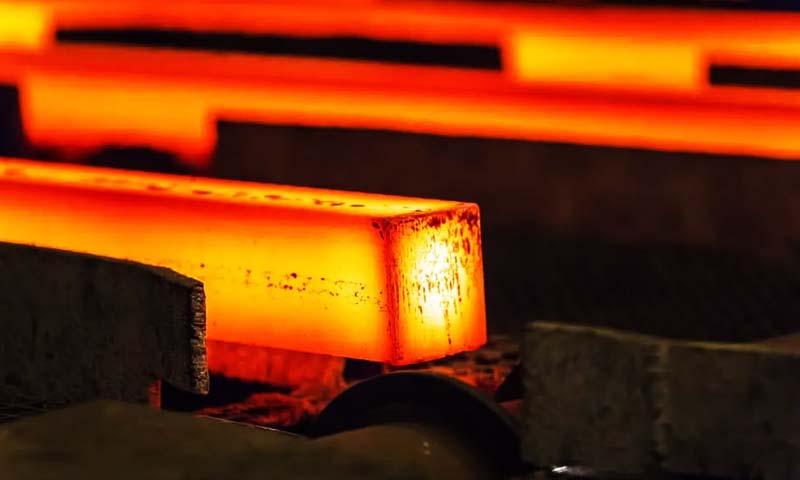
Repeated bends cause work hardening—304, halimbawang, can increase in hardness from 180 HV sa 300 HV after three 90° bends—sometimes necessitating intermediate annealing (typically at 1050°C for 30 minuto).

Paggulong
Rolling forms cylindrical or conical shapes using a three-roll machine. This technique is common in tank, pipe, and duct fabrication.
Halimbawa na lang, 2 mm thick 316L sheets can be rolled into diameters as small as 50 mm while maintaining concentricity within ±0.5 mm.
Malalim na Pagguhit
Deep Drawing pulls a flat sheet into a die using a punch to form deep, hollow shapes like cookware, Mga lalagyan, or medical trays.
Austenitic grades like 304 are ideal for this process, achieving draw ratios up to 2.5:1 with proper lubrication and die design.
Pagsali sa: Assembling Components Securely
Joining techniques for stainless steel sheet must preserve corrosion resistance, provide mechanical strength, and meet visual or hygienic standards depending on the application.
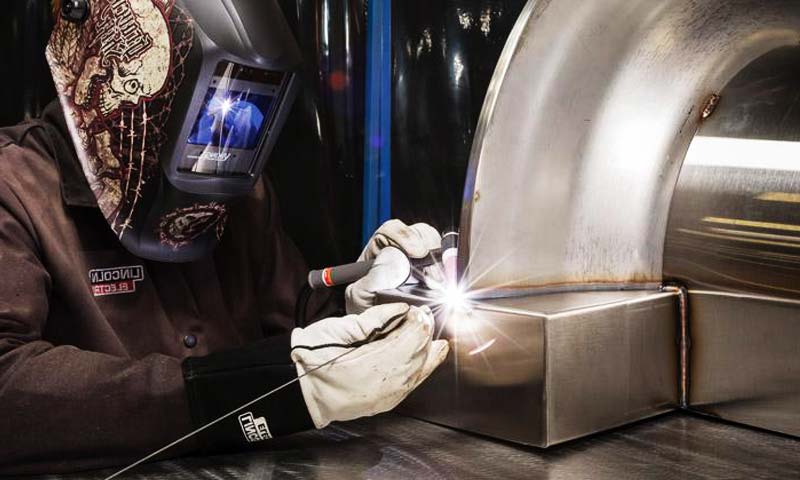
TIG hinang (Gas Tungsten Arc Welding)
TIG Welding provides clean, precise welds with minimal spatter, making it the preferred method for thin-gauge stainless steel sheets (≤3 mm), especially in hygienic applications like 316L food processing equipment.
Typical parameters include 100–150 amps and a travel speed of 10–15 cm/min using argon shielding gas.

MIG Welding (Gas Metal Arc Welding)
MIG Welding uses a continuously fed wire electrode, offering higher welding speeds for thicker sheets (3–6 mm). Gayunpaman, it produces more spatter and may require post-weld cleaning to remove flux residues that can initiate pitting corrosion.
Spot Welding
Spot Welding applies a high current (5–15 kA) through two electrodes to fuse overlapping sheets.
Common in automotive manufacturing, this technique produces discrete, high-strength weld points (typically 5–10 mm in diameter) with minimal thermal distortion.
Mekanikal na Pangkabit
Mechanical Fastening methods such as riveting, bolting, and clinching are used when disassembly or non-permanent joints are needed.
To avoid galvanic corrosion, fasteners must be made from the same or a compatible stainless grade—e.g., 316L bolts with 316L sheets.
Pagtatapos: Enhancing Surface Performance
Finishing processes are critical for both functional and aesthetic reasons. They improve corrosion resistance, eliminate sharp edges, and prepare surfaces for painting or further treatment.
Pag-aalis ng Mga Produkto
Deburring eliminates sharp edges and burrs left from cutting or punching. This can be achieved via mechanical grinding, pagbagsak, or laser ablation.
Deburring is essential in medical and food applications where edge quality is linked to hygiene and safety.
Passivatio
Passivation is a chemical treatment that dissolves free iron from the surface using nitric acid (20–50% concentration), allowing the chromium oxide layer to fully regenerate.
This improves corrosion resistance significantly—passivated 304 parts can survive over 1,000 hours in salt spray tests compared to 500 hours for unpassivated surfaces (per ASTM B117).
Electropolishing
Electropolishing removes a microscopically thin surface layer via controlled anodic dissolution.
It produces a highly reflective, smooth surface (Ra 0.05–0.1 μm), reducing bacterial adhesion by up to 90% compared to mechanically polished surfaces.
This makes it ideal for pharmaceutical and semiconductor applications.

Pagpipinta at Palabok na Patong
Painting and Powder Coating add aesthetic value and additional corrosion protection. Surfaces must be pre-treated—usually by phosphating—to ensure adhesion.
Mga patong ng pulbos (typically 60–120 μm thick) offer excellent UV and salt spray durability, with service lives exceeding 10 years in marine environments.
4. Stainless Steel Grades for Sheet Metal Fabrication
The choice of hindi kinakalawang na asero grade is critical to successful sheet metal fabrication.
Each grade possesses distinct physical, mekanikal, at mga katangian na lumalaban sa kaagnasan, influencing everything from forming behavior to weldability, tapusin, at gastos.
In industrial practice, austenitic, ferritic, and martensitic stainless steels are the most commonly used for sheet metal applications.

Austenitic hindi kinakalawang na asero (300 Serye)
Austenitic stainless steels are the most widely used grades in sheet metal fabrication due to their excellent corrosion resistance, pagiging formable, at weldability.
These grades are non-magnetic in annealed form and exhibit superior ductility, making them ideal for complex and precision-formed components.
| Grade | Komposisyon | Mga Pangunahing Tampok | Fabrication Traits | Mga Karaniwang Aplikasyon |
| 304 | 18% Cr, 8% Ni | Most commonly used stainless steel; balanced corrosion resistance and formability | Mataas na ductility (~40% elongation), mahusay na weldability, moderate work hardening | Food processing, HVAC, Email Address *, arkitektura |
| 304L | 18% Cr, 8% Ni, mababang C (≤0.03%) | Low carbon prevents intergranular corrosion after welding | Ideal for welding-intensive applications | Mga tangke, structural weldments |
| 316 | 16–18% Cr, 10–14% Ni, 2–3% Mo | Enhanced corrosion resistance, especially to chlorides and saltwater | Slightly harder than 304; may require post-weld passivation | Hardware ng dagat, pagproseso ng kemikal, Pharma |
| 316L | Lower carbon variant of 316 | Reduced risk of sensitization during welding | Maintains corrosion resistance in high-purity environments | Mga medikal na aparato, mga sistema ng paggamot ng tubig |
| 301 | 16–18% Cr, 6–8% Ni | High strength with good fatigue life | Work-hardens rapidly, suitable for springs and flexing parts | Automotive trim, rail car components |
Ferritic hindi kinakalawang na asero (400 Serye)
Ferritic stainless steels are chromium-rich and nickel-free, offering moderate corrosion resistance, magandang thermal kondaktibiti, at kahusayan sa gastos.
These grades are magnetic and less ductile than austenitics, but they exhibit better stress corrosion cracking resistance in chloride-rich environments.
| Grade | Komposisyon | Mga Pangunahing Tampok | Fabrication Traits | Mga Karaniwang Aplikasyon |
| 430 | ~17% Cr | Affordable and widely available; katamtamang paglaban sa kaagnasan | Elongation ~20–25%; prone to cracking under tight radii; better weldability than martensitic grades | Appliance panels, exhaust trim, mga kagamitan sa kusina |
| 409 | 10.5–11.75% Cr, Ti/Nb stabilized | Designed for automotive exhaust systems | Fair formability, good oxidation resistance | Mufflers, catalytic converter housings |
| 439 | ~17–18% Cr, Ti stabilized | Better weldability and corrosion resistance than 430 | More stable in heat-affected zones | Mga heat exchanger, cooking appliances |
Martensitic hindi kinakalawang na asero
Martensitic stainless steels are heat-treatable and high in carbon, allowing for high hardness and strength.
Gayunpaman, their lower corrosion resistance and ductility limit them in sheet metal applications, especially where forming is required.
| Grade | Komposisyon | Mga Pangunahing Tampok | Fabrication Traits | Mga Karaniwang Aplikasyon |
| 410 | 11.5–13.5% Cr, 0.1–0.2% C | Good wear resistance and moderate corrosion resistance | Low ductility (~15% elongation); best for machining and simple bends | Cutlery, pump shafts, hand tools |
| 420 | 12–14% Cr, 0.15–0.4% C | High surface hardness when hardened; patas na paglaban sa kaagnasan | Limited formability; preferred in ground or polished finish applications | Surgical blades, gunting na panghalamanan, Mga balbula |
Duplex hindi kinakalawang na asero
Duplex stainless steels combine the toughness of austenitic grades with the strength of ferritics.
These are increasingly used in sheet metal for structurally demanding and corrosion-critical environments.
| Grade | Komposisyon | Mga Pangunahing Tampok | Fabrication Traits | Mga Karaniwang Aplikasyon |
| 2205 | ~22% Cr, 5–6% Ni, 3% Mo | Mataas na lakas, excellent pitting and crevice corrosion resistance | Requires precise control during welding; not suitable for deep drawing | Marine equipment, structural plates, desalination plants |
5. Stainless Steel Sheet Specifications
Understanding stainless steel sheet specifications is crucial for selecting the right material for fabrication processes such as laser cutting, pagbaluktot, pag stamp ng, at hinang.
These specifications define the physical form, mga tolerance, tapos sa ibabaw, and mechanical properties of stainless steel sheets, all of which directly influence performance and manufacturability in diverse industries.

Thickness Range and Gauges
Stainless steel sheets are typically classified by kapal naman using either milimetro (mm) o gauge (Ga), with lower gauge numbers indicating thicker sheets.
| Gauge (Ga) | Ang kapal (mm) | Common Use |
| 24 | ~0.6 mm | Mga enclosure, Mga pabalat, light fabrication |
| 20 | ~1.0 mm | Mga kagamitan sa kusina, decorative panels |
| 16 | ~1.5 mm | Automotive trim, lumubog na ang mga |
| 14 | ~2.0 mm | Mga bahagi ng istruktura, mga tangke |
| 10 | ~3.4 mm | Heavy-duty panels, architectural facades |
| Plate | ≥6.0 mm | Structural and pressure vessel applications |
Sheet Sizes
Stainless steel sheets are available in standard and custom-cut sizes:
| Standard Sheet Size | Dimensions (mm) | Dimensions (pulgada) |
| Full Sheet | 1219 × 2438 mm | |
| Large Sheet | 1500 × 3000 mm | <p |
| Custom Cut | As specified | Tailored per drawing |
Mga pagpapaubaya
Tolerances for flatness, kapal naman, and length/width are governed by standards such as:
- ASTM A480: General requirements for flat-rolled stainless steel
- EN 10088-2: European standard for dimensional tolerances
- JIS G4305: Japanese specification for cold-rolled sheets
| Parameter | Tipikal na pagpapaubaya (Cold Rolled) | Mga Tala |
| Ang kapal | ±0.05 mm to ±0.10 mm | Depends on gauge and standard |
| Flatness | ≤3 mm per meter | Critical for laser/plasma cutting |
| Width | ±2.0 mm | Common for standard sheets |
Mga Pagtatapos sa Ibabaw
Surface finish affects both aesthetics and corrosion resistance. Stainless steel sheets are available in a variety of surface textures depending on application:
| Tapusin | Paglalarawan | Ra (Karaniwang Magaspang) | Mga Karaniwang Aplikasyon |
| 2B | Cold-rolled, annealed na nga ba, pickled, skin passed | 0.1–0.2 µm | General-purpose fabrication, pagproseso ng pagkain |
| BA (Bright Annealed) | Makinis na, reflective mirror-like finish | <0.1 M | Mga Kagamitan, mga item na pandekorasyon |
| Hindi. 4 | Brushed, directional grain finish | 0.2–0.5 µm | Arkitektura, mga kagamitan sa kusina |
| Hindi. 8 | Mirror finish, highly polished | <0.05 M | Elevators, luxury interiors |
| HR (Hot Rolled) | Mill scale surface, unfinished | >1.6 M | Structural or industrial uses |
Coatings and Laminates (Opsyonal na)
For added protection or processing ease, stainless steel sheets may be:
- PVC-coated: Temporary protective film during fabrication
- Vinyl laminated: For decorative applications
- Painted or PVD-coated: Architectural or anti-fingerprint finishes
6. Challenges in Stainless Steel Sheet Metal Fabrication
While stainless steel sheet metal offers exceptional corrosion resistance, lakas ng loob, at aesthetic appeal, its fabrication presents several inherent challenges that require expert handling.
Work Hardening and Springback
One of the foremost challenges in forming stainless steel is its pronounced work hardening behavior.
Austenitic hindi kinakalawang na asero, such as grades 304 at 316, rapidly increase in hardness and strength as they are cold worked. This phenomenon can cause:
- Increased Tool Wear: Cutting and forming tools experience accelerated wear rates, necessitating the use of harder, wear-resistant tool steels and frequent maintenance or replacement.
- Forming Difficulties: As hardness increases during bending or drawing, the material becomes less ductile and more prone to cracking if bends are too tight or repeated multiple times.
- Springback: Stainless steel tends to elastically recover partially after forming, meaning the final bend angle is less acute than intended.
This requires precise over-bending calculations and sometimes multiple test iterations to achieve dimensional accuracy.
Mga Sensitibo sa Hinang
Welding stainless steel sheet metal demands careful control of parameters to prevent defects:
- Heat Input Management: Excessive heat can cause sensitization in austenitic grades,
where chromium carbides precipitate at grain boundaries, reducing corrosion resistance and leading to intergranular attack. - Distortion and Warping: Stainless steel’s low thermal conductivity and high coefficient of thermal expansion can lead to significant heat buildup during welding, causing warpage and dimensional instability.
- Post-Weld Cleaning: Welding flux residues or discoloration (heat tint) can compromise corrosion resistance,
necessitating specialized chemical or mechanical cleaning methods such as pickling and passivation.
Machinability Concerns
Compared to carbon steel, stainless steel’s machinability is reduced due to its toughness and tendency to work harden:
- High Cutting Forces: Machining stainless steel requires slower cutting speeds, higher feed rates, and more frequent tool changes to avoid excessive heat and tool wear.
- Built-Up Edge Formation: Chips tend to adhere to the cutting tool, degrading surface finish and tool life.
- Coolant Requirements: Effective cooling and lubrication are essential to prevent thermal damage and maintain dimensional accuracy.
Surface Finishing Challenges
Achieving and maintaining the desired surface finish on stainless steel sheet components can be difficult:
- Avoiding Scratches and Contamination: Stainless steel surfaces are prone to scratching during handling and processing, which can become initiation sites for corrosion.
- Maintaining Passivation: Surface treatments like passivation and electropolishing must be carefully controlled to ensure uniform protective layers. Improper finishing can result in patchy corrosion resistance.
Cost and Material Waste
- Mga Gastos sa Materyal: Stainless steel alloys, particularly those with high nickel or molybdenum content (hal., 316L), are more expensive than carbon steels, increasing raw material costs.
- Scrap Generation: Tight tolerance requirements and complex geometries often lead to significant material scrap during cutting and forming, requiring efficient nesting and waste recycling strategies.
Dimensional Stability and Tolerances
Maintaining tight dimensional tolerances is critical but challenging due to:
- Pagpapalawak ng Thermal: Stainless steel’s higher coefficient of thermal expansion compared to carbon steel can lead to dimensional changes during heating and cooling cycles.
- Residual Stresses: Residual stresses introduced during forming or welding may cause part distortion or dimensional drift over time.
7. Applications of Stainless Steel Sheet Metal Fabrication
Stainless steel sheet metal fabrication plays a vital role across numerous industries, leveraging the material’s unique combination of corrosion resistance, mekanikal na lakas, at aesthetic appeal.

Aerospace at Pagtatanggol
- Critical components such as airframe structures, mga panaklaw, mga pabahay, and heat shields require stainless steel’s high strength-to-weight ratio and corrosion resistance.
- Fabricated parts must withstand extreme temperatures and harsh environmental exposure.
Food and Beverage Processing
- Hygienic stainless steel sheet metal is used for equipment like conveyors, mga tangke, storage vessels, and kitchen appliances.
- Surfaces are often electropolished or passivated to prevent bacterial growth and facilitate cleaning.
Medical and Pharmaceutical Equipment
- Mga instrumento sa kirurhiko, sterilization trays, cleanroom panels, and pharmaceutical reactors are fabricated from stainless steel sheets to meet stringent hygiene and corrosion standards.
- Makinis na, contamination-resistant finishes are critical.
Architectural and Construction
- Stainless steel is favored for decorative façades, mga cladding, Mga handrail, elevator panels, and roofing.
- The combination of durability and visual appeal makes it ideal for both interior and exterior applications.
Automotive at Transportasyon
- Mga sistema ng tambutso, trim components, heat shields, and structural reinforcements utilize stainless steel sheet metal for corrosion resistance and strength.
- Lightweight fabrication helps improve fuel efficiency and emissions.
Industriya ng Kemikal at Petrochemical
- Corrosion-resistant stainless steel tanks, Email Address *, and enclosures are essential in handling aggressive chemicals and high-temperature processes.
- Fabrication demands high precision to ensure leak-free joints and structural integrity.
Consumer Goods and Electronics
- Durable stainless steel enclosures, mga casings, and structural parts are common in appliances, mga laptop, mga smartphone, and wearables.
- Surface finishing enhances both aesthetics and scratch resistance.
8. Sustainability and Recycling
Stainless steel is 100% pwede na ba mag recycle, may hanggang sa 60% of stainless steel made from recycled material. It’s a green choice for manufacturers aiming to reduce environmental impact. Its durability also contributes to longer product life and fewer replacements.
9. Pangwakas na Salita
Stainless steel sheet metal fabrication is a highly specialized and versatile manufacturing process that plays a pivotal role across diverse industries, from aerospace and medical to automotive and architecture.
The unique properties of stainless steel—its exceptional corrosion resistance, lakas ng loob, and aesthetic appeal—combined with advances in fabrication technologies, allow for the production of complex, high-precision components tailored to demanding applications.
Success in stainless steel fabrication requires careful consideration of material grade selection, understanding the nuances of cutting, pagbuo ng, joining, and finishing processes, and overcoming challenges such as work hardening, surface damage, and welding complexities.
When executed with precision, stainless steel fabrication delivers parts that offer durability, kaligtasan, at mahabang buhay ng serbisyo, often under harsh environmental conditions.
Sa buod, mastering stainless steel sheet metal fabrication not only unlocks performance advantages but also drives quality and reliability, making it an essential discipline in modern manufacturing and engineering.
LangHe Stainless Steel Sheet Metal Fabrication Services
LangHe specializes in delivering top-tier stainless steel sheet metal fabrication services tailored to meet the exacting demands of modern industries.
Combining advanced manufacturing technologies with expert craftsmanship, LangHe ensures precision, tibay ng katawan, and exceptional corrosion resistance in every fabricated component.

Stainless steel sheet metal capabilities:
- Precision Cutting & Pagbuo ng — Utilizing laser cutting, press brake bending, and rolling techniques to achieve complex shapes and tight tolerances.
- Advanced Welding & Pagsali sa — Expert TIG, MIG, and spot welding services designed for strong, malinis na, at mga kasukasuan na lumalaban sa kaagnasan.
- Pagtatapos ng Ibabaw & Paggamot — Including passivation, electropolishing, and powder coating to enhance corrosion resistance and aesthetic appeal.
From prototype runs to high-volume production, LangHe delivers reliable, custom-fabricated stainless steel components suited for industries such as consumer goods and electronics, automotive, mga medikal na aparato, at pagproseso ng pagkain.
Partner with LangHe for stainless steel sheet metal fabrication solutions that combine precision, kalidad, and durability to support your most critical applications.
Mga FAQ
How is stainless steel sheet metal made?
Stainless steel sheet metal is made by melting raw materials (bakal, kromo, nikel, atbp.), casting them into slabs, then hot rolling and cold rolling them to the desired thickness. The sheets are then annealed, pickled, and finished.
What is stainless steel fabrication?
Stainless steel fabrication is the process of transforming flat stainless steel sheets into finished parts or structures using techniques like cutting, pagbaluktot, hinang, at pagtatapos ng ibabaw.
Can you weld stainless steel to sheet metal?
Oo nga. Stainless steel can be welded to sheet metal using processes like TIG, MIG, or spot welding, depending on the thickness and material compatibility.
Is stainless steel hard to fabricate?
Stainless steel is more challenging to fabricate than carbon steel due to its work hardening, tigas na tigas, and heat sensitivity—but with proper tools and techniques, it can be fabricated precisely and efficiently.