1. Panimula
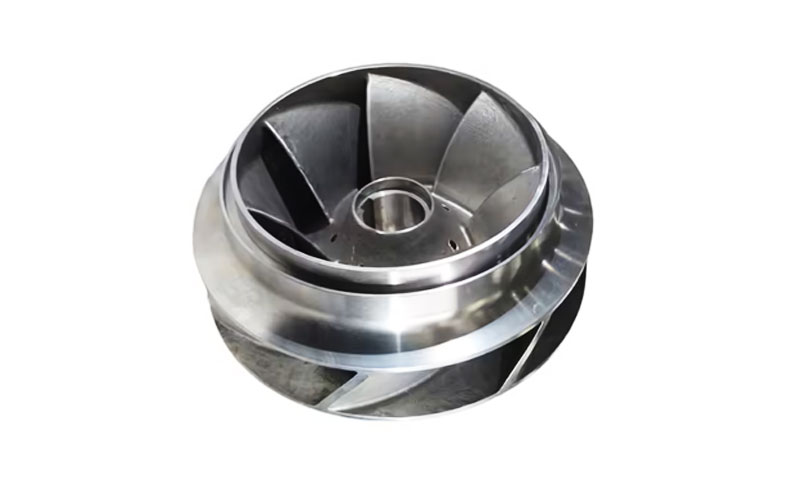
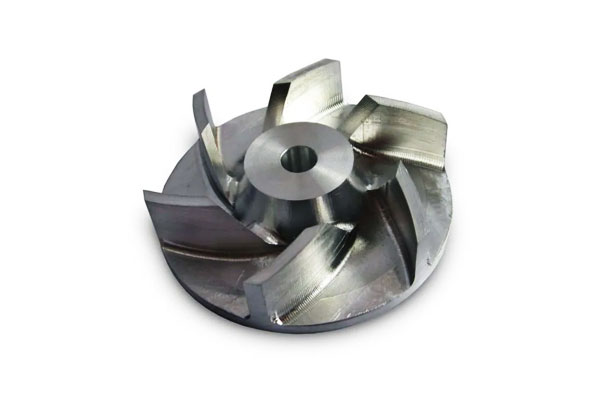
Stainless steel impeller is a critical component in pumps, mga compressor, and turbomachinery, where they transfer rotational energy to fluids.
Their geometry—curved vanes, masikip na mga tolerance, and smooth hydraulic surfaces—directly impacts efficiency, Buhay ng Serbisyo, at pagiging maaasahan.
This article explores how pamumuhunan paghahagis delivers precision stainless-steel impellers, analyzing alloy choices, process flow, critical practices, pagkatapos ng pagpoproseso, quality assurance, and how this method compares to alternatives.
2. Why Investment Casting for Stainless Steel Impeller?
Hindi kinakalawang na asero impeller must withstand high rotational speeds, hydraulic loads, kaagnasan, and in many cases, cavitation.
Their performance depends heavily on precise geometry, smooth hydraulic surfaces, at integridad ng metalurhiko.
Pamumuhunan sa paghahagis, also known as the lost-wax process, has emerged as one of the most effective manufacturing solutions for stainless-steel impellers because it offers a balance of design flexibility, katumpakan, and material performance.
Key Advantages of Investment Casting
Kumplikadong Kakayahan sa Geometry
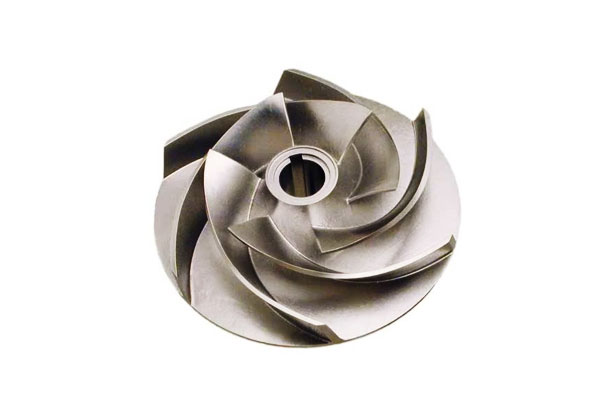
Impellers feature curved vanes, hollow hubs, and thin-wall sections that are difficult or impossible to achieve via sand casting or machining.
Investment casting reproduces intricate CAD designs with vane thicknesses as low as 2.0–2.5 mm, supporting advanced hydraulic designs.
Tapos na ang Superior Surface
Investment-cast stainless impellers achieve as-cast surface roughness of Ra 1.6–3.2 μm, kumpara sa Ra 6.3–12.5 μm for sand casting.
This reduces secondary polishing requirements and improves pump efficiency by 2–3%, a significant gain in energy-critical industries like desalination and petrochemicals.
Mataas na Dimensional na Katumpakan
Typical tolerances are ±0.1–0.2 mm per 25 mm, which minimizes machining of bore holes, keyways, and sealing surfaces.
Para sa mataas na dami ng produksyon, repeatability ensures consistent hydraulic performance across batches.
Kakayahang umangkop ng Materyal
Investment casting works with a wide range of stainless steels, from economical austenitic grades (304/316) to duplex and precipitation-hardening alloys.
This allows customization of impellers for chloride-rich seawater, abrasive slurries, or high-pressure oil & gas pumps.
Paggamit ng Materyal & Kahusayan sa Gastos
Near-net-shape production reduces raw material waste by 50–70% compared to machining impellers from billet or plate, paggawa ng ito cost-effective para sa medium hanggang mataas na dami ng produksyon.
Trade-Offs and Considerations
- Mga Gastos sa Tooling
Wax injection tooling for impellers can cost from $5,000–$20,000, depende sa pagiging kumplikado.
This makes investment casting less attractive for one-off prototypes but highly efficient for repeat production. - Lead Time
Building the ceramic shell requires 7–10 layers, each with drying cycles of several hours, extending production cycles to 2–4 na linggo.
CNC machining may be faster for urgent prototype delivery. - Pagproseso Pagkatapos ng Paghahagis
Even with high accuracy, investment-cast impellers require dynamic balancing to ISO 1940 G2.5–G6.3 standards and machining of hub bores to achieve H7 tolerances.
3. Typical Stainless Alloys for Impellers
The choice of stainless-steel alloy for impellers directly affects corrosion resistance, mekanikal na lakas, and lifecycle cost.
Different pump applications—from seawater handling to chemical dosing—demand alloys tailored to specific operating environments.
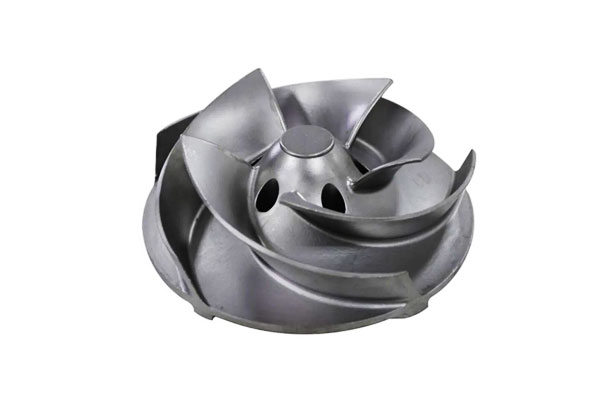
Stainless Steel Alloy Comparison Table
| haluang metal | UNS | Uri ng | Yield Lakas (MPa) | Lakas ng Paghatak (MPa) | Pagpapahaba (%) | Corrosion Resistance Highlights | Mga Karaniwang Aplikasyon |
| 304 | S30400 | Austenitic | 205 | 515 | 40 | Pangkalahatang layunin, good atmospheric and mild chemical resistance | HVAC pumps, freshwater systems |
| 316/316L | S31600 / S31603 | Austenitic (Mo-bearing) | 170–290 | 485–620 | 35–45 | Excellent resistance to chlorides and acids | Marine pumps, chemical transfer, pagproseso ng pagkain |
| 410 / 420 | S41000 / S42000 | Martensitiko | 275–450 | 480–700 | 18–25 | Mataas na katigasan, katamtamang paglaban sa kaagnasan | High-wear slurry pumps, mining |
| 17-4 PH | S17400 | Pagtigas ng ulan | 620–1170 (aged) | 930–1310 | 8–15 | Mataas na lakas, katamtamang paglaban sa kaagnasan | High-pressure boiler feed pumps, aerospace impellers |
| 2205 | S32205 | Duplex | 450 | 620–880 | 25 | High chloride resistance, good stress corrosion cracking (SCC) paglaban | Offshore seawater injection pumps |
| 2507 | S32750 | Super Duplex | 550 | 800–900 | 25 | Exceptional chloride pitting and crevice corrosion resistance, strong SCC resistance | Desalination, subsea pumps, aggressive brines |
| 904L | N08904 | Super Austenitic | 220–240 | 490–710 | 35 | Outstanding resistance to reducing acids (H₂SO₄, phosphoric acid) and chloride pitting | Fertilizer, chemical process pumps, seawater cooling |
| Hastelloy C-276 | N10276 | Ni-Cr-Mo alloy | 280 | 760 | 40 | Superior resistance to oxidizing/reducing chemicals | Acid handling pumps, flue gas desulfurization |
| Monel 400 | N04400 | Ni-Cu alloy | 240–345 | 550–700 | 30 | Excellent resistance to seawater and brine | Marine pumps, desalination evaporators |
Alloy Selection Guidelines
- Seawater/Chlorinated Water: Prioritize PREN >24 (316L, Duplex 2205). 316L impellers in seawater last 5–8 years vs. 2–3 years for 304.
- High Pressure (>100 bar): 17-4 PH (init na ginagamot) or duplex 2205—their yield strengths (>450 MPa) prevent impeller deformation.
- High Temperature (>600°C): 304/316L (max 870°C) – avoid duplex 2205 (limited to 315°C) at 17-4 PH (softens above 600°C).
4. Investment casting process flow for impellers
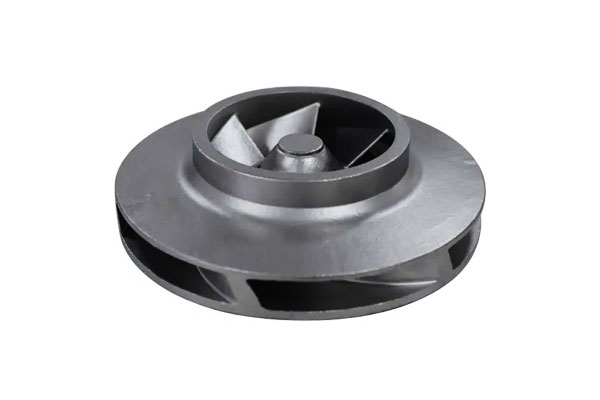
- Tooling & pattern — CNC master patterns or 3D-printed resin patterns for complex profiles. Control shrinkage compensation.
- Wax injection & Email Address * — precise wax shots, robust stems for assembly. Wax tooling tolerances matter for vane geometry.
- Assembly (wax tree) — minimize runner length to reduce turbulence and minimize inclusions.
- Shell building — 6–10 ceramic shells; shell thickness chosen to avoid distortion on pour and enable proper cooling rates. Drying profile controlled to avoid shell cracking.
- Dewax & shell firing — controlled dewax and high-temperature firing to remove organics. Shell preheat temperature influences pour behavior.
- Natutunaw na & pagbuhos — melt practice (vacuum/induction/AOD) and pouring temp/technique critical for cleanliness and solidification.
- Paglamig & shakeout — controlled cooling avoids thermal shock and reduces internal stresses.
- Cut-off & fettling — remove gates, minimize distortion.
- Lunas sa init — solution anneal for austenitics, age for PH alloys; stress relief as needed.
- Finish machining, pagbabalanse & Pagsubok — final bores, face finish, dynamic balancing and hydraulic testing.
- Email Address * & mga patong na patong — polish, electropolish, apply sacrificial or hard coatings if required.
- Inspeksyon & final QA — NDT, dimensional inspection, report and MTRs.
5. Natutunaw na, Pagbubuhos ng, and Heat-Treatment Practices That Matter for Impellers
Investment-cast stainless-steel impellers must withstand harsh environments, paggawa ng metallurgical practices crucial to achieving dimensional accuracy, mekanikal na lakas, at paglaban sa kaagnasan.
Unlike general castings, impellers have thin vanes and complex hydraulic profiles that amplify the risks of shrinkage, porosity, or microstructural defects.
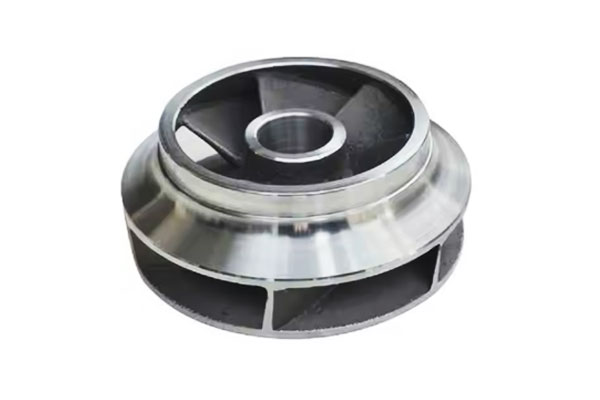
Melting Practices
- Induction Melting (IMF):
-
- Most common for stainless impellers due to controlled chemistry and low contamination risk.
- Inert gas atmosphere (argon) or vacuum induction melting (VIM) prevents oxidation and nitrogen pickup.
- Vacuum Induction Melting + Vacuum Arc Remelting (VIM + VAR):
-
- Used for critical alloys like 17-4 PH, 2507, and 904L.
- Ensures low inclusion levels (<0.5% non-metallics) and high cleanliness, essential for high-cycle fatigue resistance.
- Melt Control Parameters:
-
- Sulfur ≤0.015% and oxygen ≤50 ppm to minimize hot tearing.
- Deoxidizers (Ti, Al, Si Si) carefully balanced to avoid inclusions.
Pouring Practices
- Superheat Control:
-
- Typical superheat: 60–120°C above liquidus.
- Halimbawa: 316L (liquidus ~1,400°C) poured at 1,460–1,500°C.
- Too low → misruns in thin impeller vanes. Too high → oxide film, increased porosity.
- Direksyon ng Solidification:
-
- Impellers benefit from bottom-pour + riser-assisted feeding, ensuring solidification progresses from vane tips inward.
- Chills used to control cooling in thin-walled regions.
- Shell Preheat:
-
- Ceramic shell preheated to 900–1,050°C for uniform filling, reducing turbulence and preventing cold shuts.
Heat-Treatment Practices
Heat treatment tailors mechanical properties and corrosion performance of stainless impellers:
| haluang metal | Tipikal na paggamot sa init | Key Outcomes |
| 316L | Solution anneal at 1,050°C → water quench | Pinapanumbalik ang paglaban sa kaagnasan, Natutunaw ang mga karbid |
| 410/420 | Austenitize 980–1,050°C → oil/air quench → temper 200–600°C | Achieves hardness 40–50 HRC for wear resistance |
| 17-4 PH | Solution treat at 1,040°C → age harden at 480–620°C | Yield strength up to 1,170 MPa, paglaban sa pagkapagod |
| 2205 Duplex | Solution anneal 1,050°C → rapid quench | Balanseng austenite-ferrite (50/50), prevents embrittlement |
| 2507 Super Duplex | Solution anneal 1,080–1,120°C → water quench | PREN >40 maintained, avoids sigma phase |
| 904L | Solution anneal 1,100°C → rapid quench | Maintains high Mo content in matrix, avoiding sensitization |
6. Mga Operasyon ng Post-Casting
Investment casting produces near-net-shape stainless steel impeller, pero secondary operations are essential to achieve final tolerances, hydraulic smoothness, and vibration-free operation.
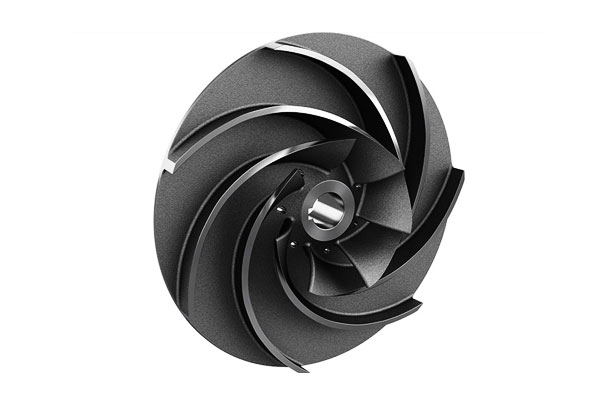
Trimming and Gate Removal
- After shell knockout, risers and gates are cut off using abrasive saws or plasma cutting.
- Care is taken to avoid heat-affected zones (HAZ) that may alter microstructure.
- Typical material loss: 3–5% of casting weight.
Machining Operations
Although investment casting provides ±0.1–0.3 mm tolerances, critical features require finish machining:
- Bore Machining: Impeller hub bores are precision machined and reamed to IT6–IT7 tolerance class for interference or sliding fits.
- Keyways & Splines: CNC broaching or milling ensures compatibility with pump shafts.
- Vane Profiling: High-performance pumps (turbomachinery, aerospace) may use 5-axis CNC milling to refine vane thickness ±0.05 mm.
- Threading: For retaining nuts or fasteners, precision tapping or thread milling is performed.
Punto ng Data: Machining contributes 10–20% of total impeller manufacturing cost, especially for aerospace-grade alloys like 17-4PH.
Dynamic Balancing
Impellers must rotate smoothly to avoid cavitation, ingay, and premature bearing failure.
- Static Balancing: Performed first to eliminate gross unbalance by grinding or adding balancing weights.
- Dynamic Balancing: Done on precision machines to ISO 1940 G2.5 or G1.0 (aerospace pumps).
- Halimbawa: A 50 kg desalination impeller balanced to G2.5 has residual unbalance <50 g·mm.
- Correction methods: spot drilling, material removal from vane tips, or adding balance weights.
Pagtatapos ng Ibabaw
Hydraulic efficiency is highly dependent on the surface roughness of flow passages.
- Pagsabog ng Shot / Grit Pagsabog: Removes oxides and casting scale, preparing the surface for polishing.
- Bead pagsabog: Provides a uniform matte finish (Ra ~3.2–6.3 μm).
- Polishing:
-
- Mekanikal na Kinis: Achieves Ra ~0.8–1.6 μm.
- Electropolishing: Dissolves surface asperities, reaching Ra ~0.2–0.4 μm. Common for 316L and 904L impellers in sanitary or marine service.
- Salamin sa Buli: Used in food processing, parmasyutiko, or high-efficiency pump impellers; improves hydraulic efficiency by 2–4% compared to as-cast surfaces.
- Passivation (ASTM A967): Nitric or citric acid passivation restores the chromium oxide passive layer, improving pitting resistance.
Quality Checks Post-Finishing
- Dimensional na Inspeksyon: CMM (coordinate measuring machine) verifies vane angles, chord lengths, and bore alignment within ±0.05 mm.
- Pagsukat ng Pagkamagaspang sa Ibabaw: Profilometers confirm Ra values meet design targets.
- Balance Verification: Final balancing certificates provided per ISO 1940/1.
7. Common Failure Modes of Stainless Steel Impeller and Casting Mitigation Strategies
| Mode ng Pagkabigo | Paglalarawan | Impact on Performance | Casting Mitigation Strategies |
| Cavitation Damage | Vapor bubble collapse causes pitting on vane surfaces. | Efficiency drop (5–10%), panginginig ng boses, ingay. | Smooth surface finish (Ra ≤ 0.4 μm), duplex alloys (2205/2507), optimized vane curvature via near-net casting. |
| Corrosion / SCC | Chloride-induced pitting or cracking, especially in seawater and chemicals. | Cracks at hub/vane root, leakage, shortened service life. | Alloy upgrade (904L, Super Duplex), post-cast passivation, uniform microstructure to reduce galvanic sites. |
| Fatigue Cracking | High-cycle stress at vane-to-hub junctions or bore shoulders. | Catastrophic fracture under cyclic load (>3,600 RPM service). | Near-net casting reduces stress risers, pagpipino ng butil, post-cast heat treatment (17-4PH: +25–30% fatigue strength). |
| Erosion by Solids | Sand/slurry particles abrade vane tips and leading edges. | Section thinning, loss of efficiency, imbalance. | Hardfacing (Stellite, WC coatings), thicker sacrificial vane edges, duplex steels for wear resistance. |
| Porosity & Mga depekto sa pag-urong | Internal voids from poor feeding or trapped gases. | Crack initiation under load, Nabawasan ang buhay ng pagkapagod. | Optimized gating/riser design, vacuum melting/argon protection, NDT (RT, UT) for defect detection. |
| Imbalance Failures | Uneven mass distribution leads to vibration. | Bearing wear, shaft misalignment, premature pump failure. | Precision casting for symmetry, machining of bores, dynamic balancing to ISO G2.5/G1.0 standards. |
8. Quality assurance
NDT
- Radiography (X-ray/CT): primary method for internal porosity and inclusions. CT provides 3-D defect mapping for critical impellers.
- Ultrasonic pagsubok: for thicker hubs or where radiography is limited.
- Dye penetrant: surface crack detection.
- Eddy current: surface and near-surface inspections.
Metallography & Kimika
- Verify microstructure (grain size, phases), inclusion content and chemistry against MTR. For duplex and PH grades, check phase balance and precipitates.
Pagsubok sa mekanikal
- Makunat, tigas na tigas, epekto nito (Charpy V) per spec for the alloy and service temp. Fatigue testing for critical applications.
Dynamic balancing
- To ISO 1940 (balance grades) or OEM rotor spec. Typical industrial impellers: G6.3–G2.5 depending on speed and application.
9. Comparison of Different Manufacturing Methods for Stainless Steel Impeller
A stainless steel impeller can be produced by several manufacturing routes.
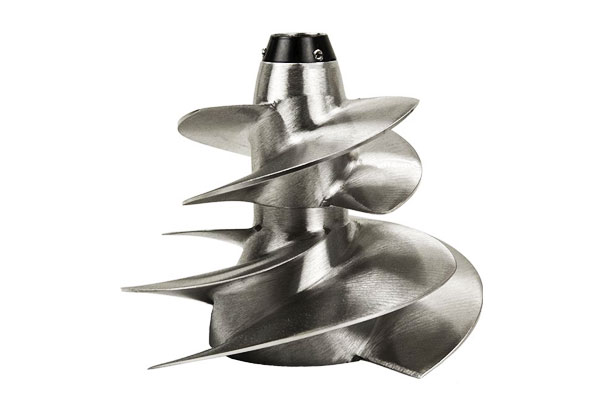
The choice depends on factors such as geometry complexity, mga kinakailangan sa pagganap, dami ng produksyon, and cost constraints.
| Paraan | Mga kalamangan | Mga Limitasyon | Mga Karaniwang Aplikasyon | Antas ng Gastos |
| Pamumuhunan sa Paghahagis | – Near-net shape (Minimal na Machining).- Napakahusay na pagtatapos sa ibabaw (Ra 1.6–3.2 μm, can reach Ra ≤ 0.4 μm after polishing).- Complex geometry achievable (thin vanes, curved passages, shrouded impellers).- Wide alloy selection (304, 316L, 904L, Duplex, 2507, 17-4PH). | – Higher tooling cost than sand casting.- Cycle time longer (10–14 days typical).- Limited size (usually ≤1.5 m diameter). | High-performance pumps, mga compressor, marine and chemical impellers. | ★★★ (Katamtaman - Mataas) |
| buhangin paghahagis | – Low tooling cost.- Suitable for very large impellers (>2 m diameter).- Flexible production scale. | – Poorer surface finish (Ra 6.3–12.5 μm).- Lower dimensional accuracy (±2–3 mm).- More machining required. | Large water pumps, low-pressure fans, municipal waterworks. | ★★ (Medium–Low) |
katumpakan machining (from Bar/Billet) |
– Excellent tolerances (±0.01–0.05 mm).- No casting defects (porosity, pag urong).- Fast turnaround for prototypes and small runs. | – Very high material waste (60–70%).- Limited to simple or semi-complex geometries.- Expensive for large impellers. | Mga prototype ng aerospace, medical pumps, custom one-offs. | ★★★★★ (Napakataas na) |
| Pagbubuo ng mga + Machining | – Superior mechanical properties (grain flow, paglaban sa pagkapagod).- Good toughness and impact resistance.- Reliable for high-pressure pumps. | – Cannot achieve complex vane geometries without heavy machining.- High forging cost for stainless steels.- Long lead times. | Power generation turbines, nuclear pumps, API pumps. | ★★★★ (Mataas na) |
| Gawa-gawa (Welded) | – Flexible for custom designs.- Large impellers possible (>3 m).- Repairable by re-welding. | – Weld quality critical (risk of distortion, mga bitak).- Surface roughness higher.- Inconsistent balance. | Very large axial fans, industrial blowers, hydro turbines. | ★★–★★★ (Mababa - Katamtaman) |
Mga Pangunahing Takeaway
- Pamumuhunan sa Paghahagis ay mainam para sa medium-to-high precision impellers where geometry complexity, kahusayan, and surface finish are critical.
- buhangin paghahagis dominates in large-diameter, low-pressure impellers where cost matters more than efficiency.
- Machining from billet ay ginagamit para sa small batches or prototypes, but cost and waste are significant.
- Pagbubuo ng mga + machining Nagbibigay ng superior mechanical strength, suitable for mission-critical pumps.
- Welded fabrication remains a Cost-effective na solusyon for oversized impellers beyond casting limits.
10. Pangwakas na Salita
Investment casting is the most practical method for producing stainless-steel impellers when performance, katumpakan, and cost balance are required.
With proper alloy selection, melt practice, paggamot ng init, at pagtatapos, investment-cast impellers deliver excellent corrosion resistance, lakas ng pagkapagod, and hydraulic efficiency.
For industries ranging from marine pumps to refinery compressors, this solution offers proven reliability and optimized lifecycle cost.
Mga FAQ
What stainless steel alloy should I use for a seawater pump impeller?
Duplex 2205 (PREN 32–35) is ideal for seawater—it resists pitting and stress corrosion cracking better than 316L.
For cost-sensitive applications, 316L (PREN 24–26) is a viable alternative, but expect shorter service life (5–8 years vs. 8–12 years for duplex 2205).
How long does it take to produce 1,000 investment-cast stainless steel impeller?
Lead time is 4–6 weeks for existing tooling (includes wax injection, shell building, pagbuhos, paggamot ng init, at pagtatapos). For new tooling, add 4–6 weeks (total 8–12 weeks).
What is the minimum blade thickness achievable with investment casting?
For 304/316L stainless steel, the minimum blade thickness is 1.5 mm (using vacuum pouring and rigid wax supports).
Thinner blades (1.0-1.5 mm) are possible but require custom tooling and add 15–20% to unit cost.
Why is dynamic balancing critical for impellers?
Unbalanced impellers cause pump vibration (>0.1 mm/s), which wears bearings and seals—reducing pump service life by 70%.
Balancing to ISO 1940 G2.5 ensures vibration <0.1 mm/s, extending bearing life to 3–5 years.
Is investment casting more expensive than sand casting for impellers?
Upfront tooling cost is higher ($8k–$12k vs. $3k–$5k), but unit cost is competitive for medium volumes (500–1,000 units).
Para sa 10,000 150 mm 316L impellers, investment casting totals $3.5M–$4.5M vs. $2.5M–$3.5M for sand casting—but sand casting requires 30% more post-machining, erasing the cost gap for complex impellers.