1. Panimula
Industrial Machinery Castings are the foundation of modern heavy equipment manufacturing.
They enable the production of large, kumplikado, and durable components that would be difficult or uneconomical to fabricate through other processes.
By combining intricate geometry, integrated functional details such as ribs, Mga Boss, and fluid passages, and controlled metallurgical properties in a single operation, castings provide unmatched advantages in performance, pagiging maaasahan, at kahusayan sa gastos.
From mining and energy to automotive, agrikultura, at konstruksiyon, castings play a pivotal role in delivering machines that withstand extreme loads, gasgas na kapaligiran, and long duty cycles.
2. Why castings matter in heavy industry
Castings provide three decisive advantages for industrial machinery:
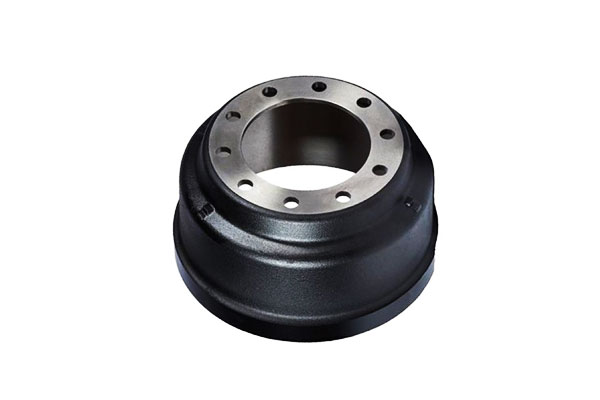
- Function integration and reduced part count. A single cast housing can replace multiple welded plates, fasteners and machined subassemblies.
That reduces assembly time, leak and fatigue-prone joints, and long-term maintenance needs. - Custom metallurgy. Foundries can deliver a broad palette of alloys — from gray iron to nickel-base superalloys — enabling designers to optimize wear resistance, tigas na tigas, temperature capability and corrosion resistance where it matters.
- Size and economy. Very large components (Mga Casing ng Bomba, turbine housings, excavator frames) are often uneconomical to fabricate or machine from solid; casting is the only practical route at scale and reasonable cost.
At system level these strengths translate into higher reliability, fewer service connections, and lower total lifecycle cost for many classes of industrial equipment.
3. Material Selection for Industrial Machinery Castings
Industrial Machinery Castings must perform reliably under extreme operating conditions such as high loads, abrasive wear, thermal cycling, at kinakaing unti-unti na kapaligiran.
Material selection is therefore a strategic engineering decision that directly influences safety, kahusayan, and lifecycle cost.

Key considerations in material selection
- Mga katangian ng mekanikal: lakas ng paghatak, tigas na tigas, paglaban sa pagkapagod, tigas na tigas, at magsuot ng resistensya.
- Thermal behavior: ability to withstand high operating temperatures, thermal pagkapagod, at pagwawaldas ng init.
- Paglaban sa kaagnasan: critical for machinery exposed to water, mga kemikal, or agricultural environments.
- Machinability and weldability: important for post-casting finishing, mga pag-aayos, or integration with other components.
- Cost and availability: balancing performance with procurement and lifecycle economics.
Common alloys and applications
| Materyal | Mga Katangian | Mga Karaniwang Aplikasyon |
| Kulay-abo na cast iron | Mataas na kapasidad ng damping, magandang machinability, matipid sa gastos | Mga bloke ng engine, Mga pabahay ng pump, large machine bases |
| Ductile (nodular) bakal | Mataas na makunat na lakas, ductility, good fatigue resistance | Mga bahagi ng suspensyon, mabibigat na tungkulin gears, pressure housings |
| Compacted graphite iron (CGI) | Higher strength than gray iron, magandang thermal kondaktibiti | Diesel engine blocks, mga ulo ng silindro, Mga manifolds ng tambutso |
| Carbon & haluang metal na bakal (cast steels) | Excellent strength and toughness, Maaaring gamutin ang init | Crane hooks, kagamitan sa pagmimina, presyon vessels |
| High-chromium white irons | Exceptional hardness and wear resistance | Crusher liners, grinding mill parts, Mga bomba ng slurry |
Manganese steel (Hadfield steel) |
High impact resistance, work-hardening properties | Crusher jaws, excavator bucket teeth |
| Mga haluang metal ng aluminyo | Mataas na ratio ng lakas sa timbang, paglaban sa kaagnasan | Mga pabahay ng sasakyan, lightweight machinery parts |
| Bronze and copper alloys | Superior sliding wear properties, paglaban sa kaagnasan | Mga bearing, mga bushing, mga bahagi ng dagat |
| Mga superalloy na nakabatay sa nikel | High-temperature strength and corrosion resistance | Mga blades ng turbine, power-generation components |
4. Core Casting Processes for Industrial Machinery
The performance and cost-efficiency of Industrial Machinery Castings depend heavily on the choice of casting process.

Each process offers distinct advantages in terms of size capability, katumpakan, tapos sa ibabaw, at ekonomiya ng produksyon.
| Proseso | Typical scale / dami | Typical alloys | Key advantages | Typical limitations |
| Buhangin paghahagis | Small → very large; low→medium volume | Bakal na Bakal, bakal na bakal, aluminyo, tanso | Mababang gastos sa tooling; malalaking bahagi; may kakayahang umangkop | Rough surface; more machining required |
| Pamumuhunan sa paghahagis | Small → medium; low→medium volume | Stainless, nikel, ilang mga bakal, bronzes | Excellent finish; manipis na pader; complex detail | Higher unit cost and cycle time |
| Die casting | High volume | Aluminyo, sink, magnesiyo | Mataas na katumpakan; mahusay na ibabaw tapusin; fast cycle | Mataas na gastos sa tooling; nonferrous only |
| Permanent mold / mababang presyon | Katamtamang dami | Aluminyo, ilang mga bakal | Better repeatability than sand; good microstructure | Mold geometry limits; mold life |
| Sentripugal paghahagis | Cylinders, mga singsing | Bakal na Bakal, bakal na bakal, tanso | Dense metallurgy; minimal defects in rotational parts | Limited to rotationally symmetric shapes |
| 3D-printed Mga hulma ng buhangin | Prototyping; small→medium runs | Any cast alloy | Rapid tooling; complex internal cores | Current cost per mold higher in very large series (but improving) |
5. Design for Casting (DfC) principles for industrial machinery
DfC reduces scrap, shortens cycles and avoids costly late-stage design changes. Practical, engineering-grade rules:

- Uniform wall thickness. Keep thicknesses consistent; where changes occur, use gradual transitions (fillets, tapered sections) to mitigate shrinkage defects.
- Draft and taper. Provide draft angles for core removal; lack of draft causes core breakage, scabs, and stuck patterns.
- Simplify parting lines. Minimize undercuts and design clear parting surfaces for mold halves to reduce core complexity.
- Core and vent access. Ensure cores can be removed and that vents prevent gas entrapment; provide core prints and escapes.
- Radii not sharp corners. Sharp corners concentrate stress and promote shrinkage; add generous radii and fillets.
- Plan machining allowances. Specify consistent machining allowances on critical surfaces (hal., +3–6 mm for large castings; smaller for precision areas), and mark datum surfaces clearly.
- Avoid trapped cavities. If unavoidable, design for open cores or use soluble cores/3D-printed cores that allow safe removal.
- Materyal- and process-aware tolerances. Use casting-specific tolerance standards (ISO 8062 or similar) rather than machining tolerances for as-cast surfaces.
- Early foundry collaboration. Conduct DFCAST sessions early — the foundry can reduce cost and risk by advising gating, Mga Riser, chills and heat treatment steps.
6. Industry Applications of Industrial Machinery Castings

Mining machinery
Key demands: Severe abrasion, epekto nito, sliding wear, abrasive slurry exposure.
Typical cast parts: Crusher jaws, grinding mill liners, cone/crusher mantles, ore pump impellers, mill trunnions, tooth adapters.
Preferred materials: High-chromium white cast irons with hard carbides for abrasive wear; mangganeso (Hadfield) steel where high impact and work-hardening are needed; nickel-alloys in corrosive slurry services.
Enerhiya & pagbuo ng kapangyarihan
Key demands: Mataas na temperatura, cyclic loading, precision profiles (aerodynamics), paglaban sa kaagnasan.
Typical cast parts: Mga blades ng turbine & vanes, turbine housings, pump/compressor impellers, mga katawan ng balbula, heat-exchanger headers.
Preferred materials: Stainless steels and nickel-based alloys (for hot sections); aluminum and steel castings for balance-of-plant auxiliary parts.
Automotive
Key demands: Volume economics, pagbabawas ng timbang (fuel/energy efficiency), NVH control and crash performance.
Typical cast parts: Mga bloke ng engine, mga kaso ng transmisyon, wheel hubs, knuckles, brake drums/rotors, EV motor housings.
Preferred materials: Aluminum alloys for light weight (mamatay sa paghahagis, buhangin paghahagis); ductile iron and compacted graphite iron in heavier-duty engines for stiffness and damping.
Agricultural machinery
Key demands: Robustness, field-serviceability, corrosion resistance to soil/fertilizer.
Typical cast parts: Mga pabahay ng gearbox, differential cases, mga panaklaw, PTO housings.
Preferred materials: Cast irons for cost and durability; ductile iron for critical structural components; bronze for bushings.
Construction machinery
Key demands: High static and dynamic loads, impact toughness, and reliable replaceable wear parts.
Typical cast parts: Mga Frame, booms, bucket teeth and adapters, final drive housings.
Preferred materials: High-strength steels and ductile irons; chromium or tungsten-carbide wear overlays for teeth and liners.
7. Sustainability in Industrial Machinery Castings
Sustainability has become a defining factor in modern manufacturing, at industrial machinery castings are no exception.
As industries face increasing pressure from regulators, customers, and investors to reduce carbon footprints, foundries and OEMs are adopting greener technologies, circular economy practices, and resource-efficient strategies.

Energy efficiency in foundries
- Melting operations account for up to 60% of a foundry’s total energy consumption.
Transitioning from traditional cupola furnaces to induction and electric arc furnaces significantly reduces greenhouse gas emissions. - Waste-heat recovery systems can capture energy from flue gases and reuse it in preheating charge materials or drying molds.
- Data-driven monitoring and smart grid integration further optimize power usage, aligning with global decarbonization goals.
Recycling and material circularity
- Castings have a natural advantage: pag-recycle ng scrap. Hanggang sa 90% of ferrous casting feedstock comes from recycled steel and iron, dramatically reducing raw material demand.
- Non-ferrous alloys such as aluminum and copper can also be remelted with minimal property loss, making castings one of the most circular manufacturing processes.
- Scrap segregation and closed-loop recycling ensure consistent alloy quality and lower procurement costs.
Emission control and waste reduction
- Dust and particulate control: Advanced baghouse filters and wet scrubbers minimize emissions during molding and melting.
- Binder system innovation: Traditional organic binders release VOCs during casting. New inorganic binders cut emissions while improving workplace safety.
- Waste sand reclamation: Automated reclamation plants can recycle 80–95% of foundry sand, reducing landfill waste and raw material costs.
Lightweighting and resource efficiency in end-use
- In the automotive and agricultural machinery sectors, switching to aluminum and compacted graphite iron (CGI) castings reduces weight, fuel consumption, and CO₂ emissions during operation.
- For construction and mining equipment, designing integrated castings replaces multiple welded assemblies, saving material, improving reliability, and simplifying logistics.
8. Industrial Machinery Castings vs. Alternative Manufacturing
| Pamantayan | Castings | Forgings | Welded/Fabricated Assemblies | Paggawa ng Additive (3D Paglilimbag) |
| Geometry complexity | Excellent – can form complex shapes, Mga Lukab, mga tadyang | Limited – mainly simple, solid geometries | Moderate – geometry depends on weld design | Excellent – lattice structures, internal channels possible |
| Mechanical strength | Good – alloy & heat-treatment dependent | Excellent – superior grain flow & lakas ng pagkapagod | Moderate – weld joints can be stress concentrators | Good – depends on material & proseso ng |
| Size capability | Napakalaki (hanggang sa 200+ tonelada) | Moderate – constrained by forging press size | Very large – frames, structures possible | Limited – constrained by build volume |
| Email Address * & mga tolerance | Katamtaman (buhangin), napakahusay na (investment, mamatay ka na) | Good – usually requires machining | Moderate – depends on welding precision | Excellent – fine detail achievable |
Production cost |
Mababa-katamtaman (economical at scale) | Medium–high | Katamtaman | Mataas na |
| Tooling investment | Katamtaman (mga pattern, namamatay na) | Mataas na (huwad na mga namatay, Pindutin ang mga pindutin) | Mababa ang | Wala na |
| Production volume suitability | Mababa hanggang mataas (flexible by process) | Katamtaman hanggang mataas | Mababa hanggang sa katamtaman | Mababa ang |
| Sustainability | High – scrap recycling & Buhangin Reclamation | Moderate – limited recycling efficiency | Moderate – rework possible, but material waste higher | High material efficiency, but energy-intensive |
| Mga tipikal na aplikasyon | Mga bloke ng engine, turbine housings, crusher liners | Mga Crankshaft, pagkonekta ng mga rod, mga shaft | Crane frames, mga suportang istruktura | Mga blades ng turbine, Mga prototype, niche components |
9. Innovation Trends in Industrial Machinery Castings
Technological advancements are transforming industrial machinery castings, enabling higher performance and efficiency:
3D Printing for Casting
- 3D-Printed Patterns/Cores: Binder jetting produces sand cores/patterns in hours (mga bes. weeks for traditional patterns), enabling rapid prototyping of custom machinery castings (hal., a one-off mining crusher part).
- Direct Metal Printing (DMP): For high-value, low-volume parts (hal., aerospace ground support machinery), DMP produces stainless steel castings with complex geometries (mga lattic) na mga 30% lighter than conventional castings.
Simulation-Driven Design
- Casting Process Simulation: Software like MAGMAsoft and Simcenter 3D predicts defects (pag urong, warpage) before production—reducing prototyping cycles by 50% and defect rates by 30%.
- Pagsusuri ng Mga Elemento ng May Hangganan (FEA): Integrates casting microstructure data into FEA models to predict machinery casting performance under load—e.g., optimizing an excavator arm casting to withstand 15% more load without weight gain.
Advanced Materials
- High-Strength Ductile Iron (HSDI): New grades (hal., ASTM A536 Grade 120-90-02) offer tensile strength up to 827 MPa—enabling castings to replace forged steel in high-load applications (hal., wind turbine shafts).
- Composite Castings: Metal-matrix composites (hal., aluminum reinforced with silicon carbide) produce castings with 2x the wear resistance of pure aluminum—ideal for agricultural machinery parts.
10. Pangwakas na Salita
Industrial machinery castings are indispensable to heavy industry because they enable size, integrated function and tailored metallurgy at competitive cost.
While the sector is mature, the convergence of additive tooling, Advanced na simulation, pag aautomat, and sustainability measures is reshaping what is possible — reducing lead times, improving quality and lowering environmental footprint.
Mga FAQ
What are the single most important factors when specifying a casting?
Clear material and heat-treatment callouts, defined hardness or mechanical property targets, explicit machining allowances, and NDT/inspection requirements.
Early foundry engagement to review gating and riser strategy is also essential.
Can large structural parts be replaced by weldments or fabricated assemblies?
Sometimes — but welded assemblies often increase part count, add fatigue-prone joints, and can increase weight.
Casting typically wins where integrated stiffness, reduced assembly complexity and lower long-term service cost are priorities.
How much energy does casting use, and how can it be reduced?
Energy intensity varies widely; a practical benchmark range is 1,200–2,500 kWh per tonne of cast metal for conventional processes.
Reduction levers include using secondary (recycled) metal feedstock, induction/electric melting, heat-recovery, and more efficient furnaces.
Is 3D printing replacing casting?
No — not at scale for most heavy industrial parts.
Gayunpaman, 3D-printed sand molds and cores are accelerating iteration cycles and unlocking complex internal geometries, complementing rather than replacing traditional casting.