1. Panimula
Inconel 718 is a precipitation-hardened nickel-based superalloy known for its high strength at elevated temperatures (up to 650°C), mahusay na paglaban sa kaagnasan, at good manufacturability.
Its strength comes from a unique combination of alloying elements—especially niobiyum, which forms hardening phases that enhance mechanical performance without compromising weldability.
Developed in the 1960s by Special Metals Corporation, Inconel 718 addressed key shortcomings in earlier alloys, such as poor weldability and limited high-temperature strength.
Ngayong araw, it plays a vital role in aerospace, pagbuo ng kapangyarihan, at langis & Mga industriya ng gas, where structural integrity under extreme conditions is critical.
2. What Is Inconel 718?
Inconel 718 (UNS N07718; W.Nr. 2.4668) is a nickel-chromium-niobium superalloy widely regarded as a “workhorse” material due to its exceptional balance of performance and processability.
Unlike many high-strength superalloys, ito ay nag aalok ng excellent high-temperature strength alongside superior weldability and machinability, making it highly versatile across complex manufacturing environments.
Its global adoption is reflected in numerous international standards, kasama na ang ASTM B637 (bars and rods), AMS 5662 (aerospace-grade forgings), at ISO 9723 (European rod and wire specifications), ensuring consistent quality and reliability across industries.

Komposisyon ng kemikal
Inconel 718’s properties come from its carefully balanced chemical composition:
| Elemento | Nilalaman (%) | Function |
| Nikel (Ni) | 50.0–55.0 | Base matrix; corrosion resistance and strength |
| Chromium (Cr) | 17.0–21.0 | Oxidation and corrosion resistance |
| Bakal na Bakal (Fe) | Balanse (~ 18) | Filler element; balances structure |
| Niobium (Nb) + Tantalum (Ta) | 4.75–5.50 | Primary strengthening phase (γ″) formation |
| Molibdenum (Mo) | 2.80–3.30 | Solid solution strengthening; paglaban sa paglaban |
| Titanium (Ti) | 0.65–1.15 | Strengthening via γ′ precipitation |
| Aluminyo (Al) | 0.20–0.80 | Forms γ′ phase; paglaban sa oksihenasyon |
| Cobalt (Co) | ≤1.0 | May enhance high-temp strength (opsyonal) |
| Carbon (C) | ≤0.08 | Controlled to minimize grain boundary sensitization |
| Mga mangganeso (Mn) | ≤0.35 | Deoxidizer; improves hot workability |
| Silicon (Si Si) | ≤0.35 | Improves oxidation resistance in small amounts |
| Sulfur (S) | ≤0.015 | Impurity; kept low to avoid hot cracking |
| Boron (B) | ≤0.006 | Grain boundary strengthener (trace element) |
3. Mechanical Properties of Inconel 718 at Different Temperatures
| Pag-aari | Temp ng kuwarto (25°C) | 538°C (1000°F) | 650°C (1200°F) |
| Yield Lakas (0.2% Offset, MPa) | ~1,035 | ~930 | ~760–820 |
| tunay na lakas ng paghatak (MPa) | ~1,280–1,380 | ~1,110 | ~950–1,000 |
| Pagpapahaba (%) | 12–20 | ~ 18 | ~ 15 |
| Lakas ng Gumagapang na Rupture (MPa, 1000h) | — | ~725 | ~690 |
| Lakas ng Pagkapagod (HCF, MPa) | ~ 450 (10⁷ Mga siklo) | ~380 | ~ 320 |
| Fracture Toughness (K_IC, MPa·√m) | ~120–150 | ~110–130 | ~100–120 |
| Ang katigasan ng ulo (HRC) | 36–45 | 34–40 | 32–38 |
4. Paglaban sa kaagnasan at oksihenasyon
Inconel 718 offers outstanding resistance to a wide range of corrosive environments, making it highly reliable in applications exposed to agresibong kemikal, kahalumigmigan, at high-temperature oxidizing conditions.
Its corrosion resistance is primarily due to its high nickel (Ni) at kromo (Cr) nilalaman, along with molibdenum (Mo) at niobiyum (Nb) for enhanced pitting and crevice corrosion resistance.

Paglaban sa kaagnasan
| Kapaligiran | Performance Summary |
| Chloride-rich (E.G. tubig dagat) | Excellent resistance to pitting and crevice corrosion; suitable for marine and offshore use |
| Sour gas (H₂S) | Compliant with NACE MR0175 / ISO 15156; resistant to sulfide stress cracking |
| Mga Acid (E.G. HNO₃, H₂SO₄) | Good resistance in mixed acid environments; katamtaman in highly reducing acids |
| Industrial atmospheres | Stable in mamasa-masa, polluted, and acidic conditions, including flue gas and refinery settings |
| High-temperature water/steam | Suitable for use in nuclear and power generation systems; retains passivity at elevated pressure/temperature |
Inconel 718 ay madalas na ginagamit sa downhole oilfield tools, Mga reaktor ng kemikal, mga fastener, at mga heat exchanger where corrosion is a critical factor.
Paglaban sa oksihenasyon
Inconel 718 performs well in oxidizing atmospheres up to ~980°C, although its mechanical strength limits practical service to ~650°C.
- Protective oxide film: The alloy forms a dense Cr₂O₃ (chromia) layer, which resists spalling and protects against further oxidation.
- Thermal cycling: Maintains surface integrity during paulit ulit na pag init at paglamig, suitable for jet engine components and turbine hardware.
- Sulfidation: Better resistance compared to stainless steels in high-sulfur combustion environments, though less than some higher Mo-containing alloys.
Wear and Galling Resistance
Though not a primary wear alloy, Inconel 718 shows good resistance to adhesive wear and galling, especially in bolted joints and valve components operating under high loads and temperatures.
5. Manufacturing and Processing Techniques
Habang Inconel 718 exhibits excellent mechanical properties and corrosion resistance, nito mataas na lakas at work-hardening tendency introduce processing challenges.
Gayunpaman, nito fabricability surpasses many other nickel-based superalloys, owing to its balanced chemistry and microstructural stability.

Welding
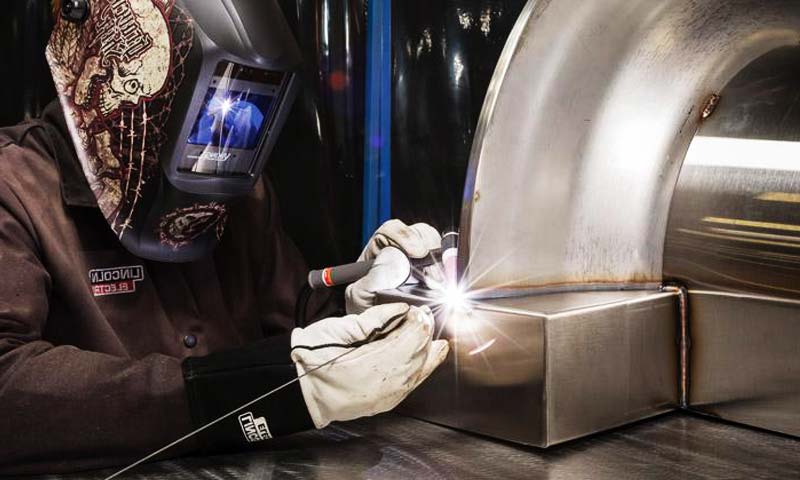
- Preferred Process: Gas Tungsten Arc Welding (GTAW or TIG) is the most common, utilizing matching filler metals such as ERNiFeCr-2 to ensure compositional compatibility.
- Mga Pangunahing Pagsasaalang alang:
-
- Precise control of heat input (typically 100–150 A current) is vital to prevent liquation cracking at mainit na pag-crack Sa Zone na Apektado ng Init (HAZ).
- Pre-weld cleaning and shielding gas purity reduce contamination and porosity.
- Post-weld init paggamot (PWHT) involves solution annealing around 980°C, followed by double aging to restore mechanical strength and precipitate distribution.
- Pagganap: Welded joints typically retain approximately 85% of the base metal’s tensile strength at room temperature at hanggang sa 90% sa nakataas na temperatura (~650°C), making welded Inconel 718 components highly reliable in critical environments.
Machining
- Mga Hamon:
-
- Inconel 718’s rapid work hardening—where the machined surface hardness can increase by up to 50%—leads to accelerated tool wear and thermal stresses.
- Low thermal conductivity causes heat to concentrate at the cutting zone.
- Mga Solusyon:
-
- Gamitin ang carbide tools with advanced coatings such as TiAlN to improve tool life and reduce adhesion.
- Mag-apply mababang bilis ng pagputol (5–10 m/min) pinagsama sa higher feed rates to minimize heat buildup.
- Magtrabaho high-performance coolants with extreme pressure (EP) additives for efficient heat dissipation.
- Cost Impact: Due to tooling wear and slower speeds, machining Inconel 718 maaaring maging 3 sa 4 times more expensive than common stainless steels like 316L, influencing part design and production economics.
Forging and Forming
- mainit na pagbubuo:
-
- Conducted between 980°C and 1,040°C to reduce yield strength and increase ductility during deformation.
- Allows effective grain refinement and uniform distribution of strengthening precipitates.
- Subsequent heat treatments restore full mechanical properties.
- Malamig na Pagbuo:
-
- Generally limited to light bending and shaping due to the alloy’s high strength and work hardening.
- Nangangailangan ng Intermediate Pagsusubo (around 900°C) to relieve stresses and restore ductility for more complex shapes.
- Careful control of forming parameters prevents pag crack na at surface defects.
Paghahagis
- Pamumuhunan sa Paghahagis is often used for complex geometries like turbine blades and rocket motor components.
- Gayunpaman, Ginawa (forged or rolled) Mga Anyo of Inconel 718 are more common for critical load-bearing applications due to:
-
- Better mechanical properties—karaniwan, cast Inconel 718 mga exhibit ~10% lower tensile strength and reduced fatigue life compared to wrought material.
- More uniform microstructure and fewer casting defects.
- Casting requires strict control of solidification rates and post-cast heat treatments to reduce segregation and porosity.
Paggawa ng Additive
- Recent advances have enabled Laser Powder Bed Fusion (LPBF) at Pagtunaw ng Electron Beam (EBM) of Inconel 718.
- AM offers:
-
- Complex geometries without tooling.
- Bawasan ang basura ng materyal.
- Fine microstructures with potentially improved mechanical properties.
- Post-processing (mainit na isostatic pagpindot, paggamot ng init) remains essential to reduce porosity and optimize precipitation phases.
6. Heat Treatment of Inconel 718
Heat treatment is fundamental to achieving the exceptional mechanical properties of Inconel 718.
The process primarily involves solusyon annealing na sinundan ng precipitation (age) pagtigas ng ulo, which controls the size, pamamahagi, and volume fraction of key strengthening phases—mainly γ″ and γ′—within the nickel-based matrix.
- Solusyon sa Pagsusubo: Heating to 980–1,065°C for 1–2 hours, Sinundan ng pag-aayos ng tubig. This dissolves excess precipitates and homogenizes the microstructure.
- Intermediate Aging: Heating to 720°C for 8 mga oras, then furnace-cooling to 620°C at 50°C/hour.
- Final Aging: Holding at 620°C for 8 mga oras, then air-cooling. This promotes the formation of γ″ and γ′ precipitates, maximizing strength.
δ-Phase Control
- The δ-phase (Ni₃Nb) forms primarily along grain boundaries between 750°C and 900°C.
- While small amounts of δ-phase help control grain growth and improve creep resistance, excessive δ-phase reduces the niobium available for γ″ precipitation, leading to diminished strength.
- Heat treatment schedules are carefully controlled to balance δ-phase formation, ensuring optimal mechanical properties and toughness.
7. Applications of Inconel 718
Inconel 718’s unique combination of mataas na lakas, mahusay na paglaban sa kaagnasan, at thermal katatagan makes it a material of choice across a wide range of demanding industries.

Industriya ng Aerospace
- Turbine Engines:
Inconel 718 is extensively used for turbine discs, mga blade, and seals in jet engines, where it withstands high centrifugal forces and elevated temperatures (up to 650°C) without compromising mechanical integrity. - Rocketry and Spacecraft:
Components such as rocket motor cases, thrust chambers, at mga fastener benefit from its strength-to-weight ratio and excellent weldability, critical for launch vehicle reliability. - Airframe Components:
Its corrosion resistance and fatigue strength are ideal for mga bahagi ng landing gear, mga bushing, at mga bahagi ng istruktura exposed to harsh environments.
Pagbuo ng Kapangyarihan
- Gas Turbines:
Inconel 718 is commonly used in compressor blades, discs, at mga bahagi ng turbine due to its high-temperature strength and creep resistance. - Steam Turbines:
Utilized in parts exposed to high temperature and steam environments, where oxidation resistance is essential.
Langis & Sektor ng Gas
- Downhole Tools:
Inconel 718’s corrosion resistance and strength under high pressure and temperature make it ideal for drill collars, stabilizers, and packers in harsh subterranean environments. - Valves and Fittings:
Resistant to sulfide stress cracking and chloride-induced corrosion, it’s widely used in Mga balbula, mga bomba, at mga vessels ng presyon handling sour gas and corrosive fluids. - Mga Offshore Platform:
Exposure to marine environments necessitates alloys like Inconel 718 to combat saltwater corrosion and mechanical stress.
Emerging and Specialized Applications
- Paggawa ng Additive:
The alloy’s compatibility with laser powder bed fusion (LPBF) and electron beam melting (EBM) enables the production of complex, lightweight parts previously impossible with traditional manufacturing. - High-Speed Machining Tools:
Cutting tools made from Inconel 718 withstand high thermal and mechanical loads, extending tool life in demanding operations. - Mga Application ng Cryogenic:
Its retained toughness at extremely low temperatures (down to -270°C) makes it suitable for liquefied gas storage and transport equipment.
8. Performance Limitations and Failure Modes
- Thermomechanical Fatigue (TMF): Fails after 500–1,000 cycles (25°C to 650°C) under combined thermal and mechanical stress, a risk in turbine engines.
- Thermal Embrittlement: Prolonged exposure above 700°C causes δ-phase coarsening, reducing toughness by 30% and increasing fracture risk.
- Pag-crack ng Stress-Corrosion (SCC): Occurs in hot (>100°C) Mga solusyon sa klorido (hal., offshore cooling systems) at stresses >70% of yield strength, though rare in well-designed systems.
9. Mga Pakinabang at Limitasyon
Inconel 718 stands out as one of the most versatile and widely used nickel-based superalloys, offering a unique combination of properties that make it suitable for extreme and demanding environments:
Advantages of Inconel 718
Exceptional High-Temperature Strength
- Maintains high tensile, ani, and creep strength up to approximately 650°C, outperforming many other alloys in similar conditions.
Outstanding Corrosion and Oxidation Resistance
- Forms a stable, protective oxide layer that resists oxidation at elevated temperatures.
- Highly resistant to klorido, asupre, and acidic environments, making it ideal for harsh chemical and marine applications.
Good Fabricability and Weldability
- Unlike many other nickel-based superalloys, Inconel 718 maaaring maging welded reliably with minimal cracking risks.
- Ang ganda nito machinability, while challenging, is better than many other superalloys, enabling efficient manufacturing.
Excellent Creep and Fatigue Resistance
- Exhibits superior resistance to creep deformation at thermomechanical fatigue, essential for aerospace turbine components and power generation equipment.
Wide Temperature Range Performance
- Maintains mechanical properties from cryogenic temperatures (-270°C) to high temperatures (~650°C).
Microstructural Stability
- Controlled precipitation hardening and stable microstructure reduce phase instability and prolong component life.
Compatibility with Advanced Manufacturing
- Adaptable to additive na pagmamanupaktura techniques such as laser powder bed fusion (LPBF) and electron beam melting (EBM), enabling complex part geometries.
Limitations of Inconel 718
- Mataas na Gastos: Raw material ($40–60/kg) is 8–10× 316L; machining adds 30–50% to fabrication costs.
- Pagproseso ng Pagiging Kumplikado: Requires specialized melting (VIM-VAR) at tooling, limiting accessibility.
- Temperature Ceiling: Ineffective above 650°C; replaced by Inconel 738 or single-crystal alloys for >700°C.
10. Comparison with Other Materials
Inconel 718 is often compared to other superalloys, hindi kinakalawang na asero, and titanium alloys when selecting materials for extreme environment applications.
Understanding these comparisons helps highlight its strengths and limitations.
Inconel 718 mga bes. Other Nickel-Based Superalloys
| Materyal | Temperature Capability (°C) | Lakas ng loob | Kakayahang gumawa ng tela | Mga Karaniwang Aplikasyon |
| Inconel 718 | Up to ~700°C | Mataas na (due to γ″, γ′) | Magandang weldability at machinability | Turbine discs, mga bahagi ng aerospace, langis & gas |
| Inconel 625 | Up to ~980°C | Katamtaman | Napakahusay na weldability | Paglaban sa kaagnasan, pagproseso ng kemikal |
| Waspaloy | Up to ~730°C | Napakataas | More difficult to machine | High-temp turbine blades, jet engine parts |
| Rene 41 | Up to ~760°C | Napakataas | Challenging weldability | Aircraft engine turbine disks |
- Buod: Inconel 718 offers a balanced combination of high strength and relatively good fabricability, unlike some other superalloys that prioritize high-temperature strength at the expense of manufacturability.
Stainless Steel vs. Inconel 718
| Materyal | Temperature Capability (°C) | Paglaban sa kaagnasan | Lakas ng loob | Mga Karaniwang Aplikasyon |
| Inconel 718 | Up to ~700°C | Napakahusay (oksihenasyon, kaagnasan) | Napakataas | High-temp aerospace, pagbuo ng kapangyarihan |
| 316L Hindi kinakalawang na asero | Up to ~400°C | Mabuti na lang (corrosion resistant) | Katamtaman | Mga tangke ng kemikal, mga fitting ng marine |
| 17-4 PH hindi kinakalawang na asero | Up to ~480°C | Mabuti na lang | Katamtaman hanggang mataas | Aerospace, pump shafts, Mga balbula |
- Buod: Inconel 718 outperforms hindi kinakalawang na asero at elevated temperatures and under aggressive corrosion conditions, making it the preferred choice when strength and oxidation resistance are critical.
Inconel 718 mga bes. Mga haluang metal ng Titanium
| Materyal | Temperature Capability (°C) | Ratio ng Lakas sa Timbang | Paglaban sa kaagnasan | Mga Karaniwang Aplikasyon |
| Inconel 718 | Up to ~700°C | Katamtaman | Napakahusay | High-temp components, turbine discs |
| Ti-6Al-4V | Up to ~400°C | Napakataas | Mabuti na lang | Aerospace structural parts, medikal na implants |
| Ti-6242 | Up to ~540°C | Mataas na | Mabuti na lang | Jet engine compressor blades, mga bahagi ng istruktura |
- Buod: Titanium alloys excel in strength-to-weight ratio and corrosion resistance at moderate temperatures, but Inconel 718 remains superior for higher temperature applications where strength retention is essential.
Mga Pangunahing Takeaway
- Strength and Temperature: Inconel 718 offers exceptional strength and stability at temperatures up to about 700°C,
surpassing most stainless steels and titanium alloys, but slightly less than some specialized superalloys. - Kakayahang gumawa ng tela: It provides better weldability and machinability compared to many other nickel-based superalloys, reducing manufacturing complexity and cost.
- Paglaban sa kaagnasan: Inconel 718 is highly resistant to oxidation, klorido, and acid corrosion, making it suitable for marine, kemikal na, and high-temperature oxidizing environments.
- Gastos: Generally more expensive than stainless steels and titanium alloys but offers superior performance in harsh environments where failure is not an option.
11. Pangwakas na Salita
Inconel 718 remains one of the most versatile and widely used superalloys in high-performance engineering.
Its unique ability to combine mataas na lakas, fatigue life, paglaban sa kaagnasan, at manufacturing adaptability makes it indispensable in mission-critical applications.
While newer alloys may offer better high-temperature properties, Inconel 718’s kakayahang maproseso, pagiging epektibo ng gastos, at well-documented performance ensure its continued dominance in aerospace, enerhiya, and advanced manufacturing sectors.
Mga FAQ
What is the maximum operating temperature for Inconel 718?
It performs reliably up to 650°C (1,200°F) for continuous service. For short durations (minutes to hours), it can withstand up to 800°C, but strength declines significantly above 650°C.
Is Inconel 718 magnetiko?
Hindi. Its austenitic microstructure remains non-magnetic in all conditions, unlike duplex stainless steels or some nickel-iron alloys.
How does Inconel 718 compare to titanium alloys?
Inconel 718 offers higher strength at >400°C (titanium alloys lose strength rapidly above 300°C) but is denser (8.1 g/cm³ vs.
Ti-6Al-4V’s 4.43 g/cm³), making it less suitable for weight-critical, low-temperature applications.
Can Inconel 718 be used in seawater?
Oo nga. Its corrosion rate in seawater is <0.02 mm / taon, making it suitable for subsea components, though it is more costly than 316L or duplex stainless steels for non-high-temperature marine applications.
What causes Inconel 718 to fail?
Common modes include thermomechanical fatigue (TMF) in turbine engines, thermal embrittlement above 700°C, and rare SCC in hot chloride environments.
Proper design (Stress <70% ani) and heat treatment mitigate these risks.