

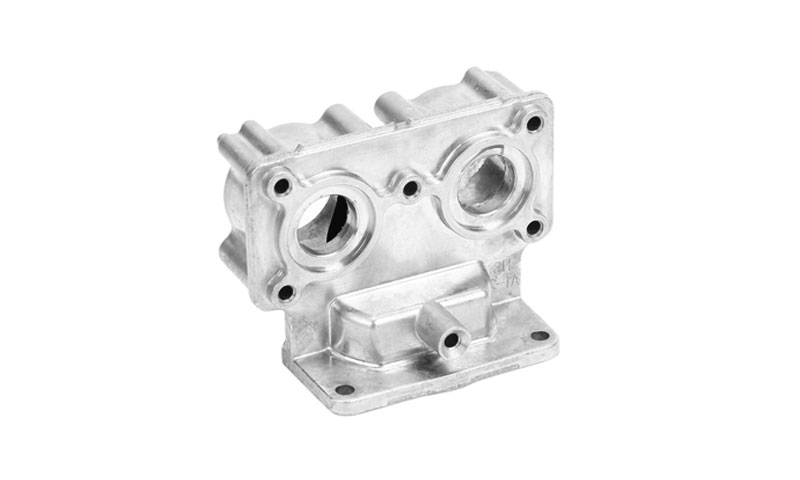
Cast aluminyo alloys are pivotal materials in automotive, aerospace, pang industriya na makinarya, at consumer electronics, valued for their lightweight properties (density 2.5–2.8 g/cm³), mahusay na castability, and tunable mechanical performance.
Based on their primary alloying elements, cast aluminum alloys are internationally classified into four core systems: Al-Si (aluminum-silicon), Al-Cu (aluminum-copper), Al-Mg (aluminum-magnesium), at Al-Zn (aluminum-zinc).
Each system exhibits distinct characteristics tailored to specific application requirements, from high-strength aerospace components to corrosion-resistant marine parts.
This article provides a comprehensive analysis of their classification, Mga pangunahing katangian, alloying mechanisms, and industrial applications—grounded in ASTM B179, ISO 3116, and other international standards.
1. Classification: four principal families of cast aluminium alloys
| Family | Typical composition (wt%) | Key properties | Mga tipikal na aplikasyon |
| Al–Si (Aluminium–Silicon) | Si ≈ 7–12%; + minor Mg (≈0.2–0.6%), optional Cu (up to ~4%) | Excellent fluidity and low solidification shrinkage; good castability and machinability; good wear and thermal stability (especially hypereutectic); age-hardenable if Mg present | Mga bloke ng engine, mga ulo ng silindro, mga pabahay ng transmisyon, structural castings, die-cast components, Mga piston (hypereutectic for low thermal expansion) |
| Al–Cu (Aluminium–Copper) | Cu ≈ 3–10%; Si low (≤ ~2%); Mg/Mn additions possible | High as-cast and heat-treatable strength; superior elevated-temperature strength and creep resistance (precipitation-strengthening via Al₂Cu) | Hot-end engine components, balbula upuan, high-load structural castings and parts operating at elevated temperatures |
| Al–Mg (Aluminium–Magnesium) | Mg ≈ 3–6%; Si small (≈0.5–1.0%) optional to aid castability | Very good corrosion resistance (excellent in seawater); low density and good toughness; single-phase or near-single-phase microstructures possible | Hardware ng dagat, subsea housings, lightweight structural parts where corrosion resistance and low mass are critical |
| Al–Zn / Al–Zn–Mg (Zinc-bearing systems) | Zn several wt% with Mg present (Zn and Mg combined for precipitation hardening) | Very high attainable strength after solution treatment + pagtanda (T6); good specific strength | Katumpakan, high-strength components and structural parts that will be solution-treated and aged (used where maximum static strength is required) |
2. The dominant family in casting — Al–Si alloys
Typical composition & mikroistruktura
- Si Si: Karaniwan 7–12 wt% in many casting grades; near-eutectic (~12.6 wt% Si) compositions exhibit the best fluidity and lowest casting shrinkage.
- Other purposeful additions: Mg (≈0.3–0.6% in A356) for age hardening (Mg₂Si precipitates); Cu (in piston or high-temperature alloys) for elevated-temperature strength;
Ni in high-temperature service and hypereutectic alloys to control silicon brittleness. - As-cast microstructure: primary α-Al dendrites plus eutectic silicon (α + Si Si).
In unmodified alloys eutectic Si is coarse and plate-like; after modification the Si becomes fine and fibrous.
Eutectic modification (purpose and agents)
Goal: convert coarse, platey Si to a fine fibrous morphology that improves ductility, machinability and fatigue resistance.
- Sosa (Na) — very effective modifier but volatile; requires sealed dosing and careful control.
- Strontium (Sr) — the most widely used commercial modifier; typical dosing 0.015–0.03 wt%; overdosing is ineffective and can be detrimental.
- Antimony (Sb) — used in combination with Sr in some systems to stabilise the modification.
- Mga bihirang lupa — small additions can stabilise and prolong modification effects in some alloys.
Harmful impurities and their control
- Bakal na Bakal (Fe) — common tramp impurity that forms hard, brittle intermetallics (hal., FeAl₃, Al₉Fe₂Si₂) that embrittle castings and degrade surface finish and corrosion resistance.
Pagbawas: add Mn (≈0.3–0.5%) o Cr (≈0.1–0.2%) to modify Fe phases into less harmful morphologies (Al₆(Fe,Mn)), and control scrap feedstock. - Posporus (P) — reacts with Na and degrades modification; tightly control furnace charge P content.
- Sn/Pb — form low-melting eutectics causing hot shortness and burn-through; keep < ~0.05% if possible.
- Kaltsyum (Ca) — can form high-melting compounds that reduce fluidity and promote shrinkage; control Ca < ~0.05% for good castability.
Representative Al–Si casting alloys and applications
- A356.0 / EN AC-AlSi7Mg (≈Si 7.0–7.5%, Mg 0.3–0.5%) — widely used sand & permanent-mould alloy; Maaaring gamutin ang init (T6); mga aplikasyon: mga bloke ng engine, structural housings, mga gulong.
- A357 — similar to A356 but with tighter control of Fe and higher mechanical properties.
- A319 / A380 (die-casting families) — Al–Si–Cu die-casting alloys used for automotive pump housings, wheel hubs, Mga pabahay ng gearbox.
- Hypereutectic Al–Si (Si Si > 12%) — used for pistons and sliding applications because of very low thermal expansion and good wear behaviour (often alloyed with Ni/rare earths to reduce brittleness). Example composition: AlSi12Cu2Mg for high-temperature piston alloys.
3. Al–Cu cast alloys — high strength and elevated-temperature capability
Metalurhiya & pagganap
- Strength derives from Al₂Cu (θ) precipitates formed on aging; Cu promotes high as-cast and heat-treated strength and good creep resistance at elevated temperatures.
- Trade-off: Cu increases hot-shortness tendency, segregation and shrinkage during solidification; casting practice must address these.
Typical compositions & mga gamit na
- High-Cu cast alloys (hal., Al–Cu with 3–10% Cu): used for valves, seats, and components requiring thermal stability and mechanical strength at elevated temperature.
- Multicomponent strengthening (addition of Mn, Mg, atbp.) can produce complex dispersions that improve both strength and hot-workability.
4. Al–Mg cast alloys — corrosion resistance and lightweighting
Key attributes
- Mg 3–6 wt% in cast variants produces Al₃Mg₂ phases; when properly processed, many Al–Mg cast alloys present excellent corrosion resistance (particularly in marine, Mga kapaligiran na may klorido) and lower density than typical Al–Si casting alloys.
- Surface finish and oxide quality are important; Mg is oxidation-prone during melting so melt control is critical.
Mga tipikal na aplikasyon
- Marine components, buoyant structures, corrosion-resistant housings and lightweight parts where high specific corrosion resistance and moderate strength are required.
Processing notes
- Use controlled atmosphere or fluxing, minimize turbulence to reduce dross and hydrogen pick-up, and often add small Si to improve castability.
5. Al–Zn (including Al–Zn–Mg) cast alloys — high strength after heat treatment
Mga Katangian
- Zn (often paired with Mg) provides an alloy system that responds well to solution treatment and aging (T6) paggawa ng very high yield and tensile strengths.
- As-cast manufacturability is less friendly (greater tendency to porosity and hot-tearing) so careful gating and solidification control are needed.
Mga Aplikasyon
- Katumpakan, high-strength parts where post-casting heat treatment is acceptable — aerospace fittings and some precision instrumentation components.
6. Comparative castability and selection guidance
| Alloy family | Katatagan | Typical strength (bilang cast / T6) | Corrosion | Typical best uses |
| Al–Si | Napakahusay (best) | Moderate → good (T6 improves) | Mabuti na lang | General castings, mga bloke ng engine, mga pabahay, mga gulong |
| Al–Cu | Fair → challenging | Mataas na; good elevated-T strength | Katamtaman | Mga bahagi ng engine, Mga balbula, hot working parts |
| Al–Mg | Katamtaman (melt control needed) | Katamtaman | Napakahusay (marine) | Marine, magaan ang timbang, corrosion-resistant parts |
| Al–Zn / Al–Zn–Mg | Moderate to poor as-cast; better after heat treatment | Very high after T6 | Variable; often lower than Al–Mg | Katumpakan, high-strength parts after aging |
7. Heat Treatment of Cast Aluminium — Practical Rules
Heat treatment is the principal tool to convert an as-cast aluminium microstructure into a controlled, serviceable condition.
For cast alloys, the common objectives are:
(1) increase strength by solution-treatment + pawiin + pagtanda (T-treatments);
(2) reduce segregation and chemical inhomogeneity by homogenisation;
(3) relieve casting stresses and restore ductility by annealing;
(4) stabilise microstructure for dimensional stability in service.
Typical treatment windows (practical reference)
(Values are engineering guidance; verify with alloy supplier and product standard for exact regimes.)
| Paggamot | Typical temperature (°C) | Typical soak time | Typical alloys / notes |
| Homogenisation | 420–520 °C | 2–12 h (thickness dependent) | Useful for large Al–Cu castings and some Al–Si high-Cu alloys |
| Paggamot ng solusyon | 480–520 °C | 1–6 h (section dependent) | Al–Si–Mg (A356/A357): ~495 °C; Al–Cu alloys often ~495–505 °C |
| Quench | Tubig (~20–40 °C) or polymer quench | immediate; minimize time between furnace and quench | Quench severity critical for T6 response; heavy sections need quench modeling |
Artificial aging (T6) |
150–185 °C | 4–12 h (depends on alloy & desired properties) | A356 T6: typical 160–180 °C for 4–8 h; Al–Zn–Mg alloys vary—follow spec |
| Stabilising / T7 (over-age) | 170-200 ° C | longer aging (hal., 8–24 h) | Used where thermal stability > service temp prioritized (less peak strength, more stability) |
| Anneal / pampawala ng stress | 300-400 ° C (mababa ang) | 0.5–2 h | For ductility recovery and stress relief; avoid dwell in sigma-forming ranges (not applicable for most Al) |
Important: soak times scale with section size. Use thermal-mass calculations or supplier charts to determine hold times for specific casting cross-sections.
Common heat-treatment defects and prevention
- Insufficient solutionising (low temperature / short time) → incomplete dissolution of soluble phases; results in lower age response and poor mechanical properties.
Prevention: follow time-temperature profiles adjusted for section size; use thermocouples or simulation to verify soak. - Over-solutionising (temperature too high / time too long) → incipient melting of low-melting eutectic phases (especially in high-Cu alloys) and grain coarsening.
Prevention: adhere to max T and avoid overheating; use furnace control & charts. - Quench cracking / pagbaluktot → excessive thermal gradient or restraint during quench.
Prevention: design fixtures, use staged quench or polymer quench for very large parts; allow controlled heat extraction. - Age softening in service → if service approaches aging temperature, premature softening occurs.
Prevention: choose T7/over-aged condition, or select more thermally stable alloy (Ni-stabilised) for elevated T. - Surface corrosion after heat treatment → residues from quench salts or contaminated water can attack aluminium.
Prevention: immediate thorough cleaning (deionized water), neutralize quench salts, and apply protective conversion or coatings.
Special considerations by alloy family
- Al–Si–Mg (hal., A356/A357): common T6: solution ~495 °C, pawiin, age 160–180 °C.
Susceptible to porosity effects; heat treat improves strength but trapped gas can reduce mechanical efficiency. - Al–Cu alloys: require homogenisation for large castings to reduce segregation before solutionising; careful control to avoid incipient melting of low-melting constituents.
- Al–Zn–Mg alloys: highly responsive to T6 but very quench-sensitive; risk of stress corrosion cracking if improper aging/quench sequence and residual stresses exist — control impurity levels and stress relief.
- Al–Mg alloys: many are not precipitation-hardenable (or only minimally); heat treatment focuses on annealing/stress relief rather than T6 strengthening.
8. Practical alloy examples and matching to applications
- General structural, heat-treatable castings: A356/A357 (Al–Si–Mg) — engine housings, gearcases, wheel parts.
- Die-cast structural parts (automotive): A380 / A319 family (Al–Si–Cu die cast) — pump housings, gearbox cases, wheel hubs.
- High-temperature pistons / low-expansion parts: Hypereutectic Al–Si (Si 12–18 wt%) with Ni/RE additions — pistons, katumpakan bearings.
- Marine / corrosion-critical: Al–Mg cast variants (Mg 3–6 wt%) — seawater fittings and housings.
- Mataas na lakas, heat-treated parts: Al–Zn–Mg cast alloys (subject to T6 treatment) — precision components requiring high static strength.
9. Konklusyon
Cast aluminium alloys are a versatile family that can be tuned over a wide range of mechanical, thermal and corrosion performance by judicious alloy selection, melt practice, modification, heat treatment and forming.
Al–Si alloys are the backbone of the cast-aluminium world because they blend superior castability with good mechanical performance and heat-treatment response.
Al–Cu at Al–Zn systems provide higher strength and heat resistance at the cost of castability; Al–Mg alloys are irreplaceable where corrosion resistance and low density are paramount.
For reliable component performance, couple an appropriate alloy choice (use recognized international designations such as A356/A357, A319/A380, AlSi12Cu2Mg atbp.) with strict impurity control, correct modification practice for Al–Si families (Sr/Na) and the right casting/heat-treatment route.
Mga FAQ
What is the most widely used cast aluminum alloy?
A356.0 (Al-Si-Mg series) is the most common, accounting for ~40% of global cast aluminum production due to its balanced castability, lakas ng loob, at paglaban sa kaagnasan.
Which cast aluminum alloy is best for marine applications?
535.0 (Al-Mg series) offers exceptional seawater corrosion resistance (corrosion rate <0.005 mm / taon) and lightweight properties, making it ideal for marine equipment.
Can Al-Cu alloys be used for complex castings?
No—Al-Cu alloys have poor castability (low fluidity, mataas na pag-urong) and are unsuitable for complex geometries. Use A356.0 or A380.0 for complex parts requiring high strength.
What heat treatment is required for Al-Zn-Mg alloys?
Al-Zn-Mg alloys (hal., 712.0) require T6 heat treatment (solution treatment + artipisyal na pagtanda) to obtain high strength—the strength in the as-cast state is too low (~180 MPa) and is not suitable for practical applications.
How to improve the castability of Al-Mg alloys?
Add 0.5–1.0% Si to form eutectic phases, enhance fluidity, and use inert gas shielding during melting to prevent Mg oxidation.
Świetne pióro i dobre wyczucie tematu.Mało który tekst sprawia, że zatrzymuję się na stronie na dłużej – ten się udał. Forma i treść – jedno wspiera drugie. Są miejsca w sieci, gdzie się wraca – myślę, że właśnie tu znalazłem kolejne.