1. Panimula
Aluminyo die casting is a high-efficiency, near-net-shape manufacturing process widely used in automotive, mga electronics, aerospace, and household appliance industries due to its ability to produce complex components with high dimensional accuracy and excellent mechanical properties.
Gayunpaman, as-cast aluminum die castings often contain inherent defects such as flash, burrs, porosity, surface oxides, and residual stresses.
Post-processing is therefore an indispensable link in the aluminum die casting production chain—it not only eliminates defects and improves surface quality but also optimizes mechanical performance, Pinahuhusay ang paglaban sa kaagnasan, and ensures compliance with end-use requirements.
2. Why post-processing matters for die-cast aluminum
Die casting is a highly productive near-net-shape process, but the as-cast component is a starting point, not a finished engineering part.
Post-processing is essential because the as-cast condition carries characteristic microstructural features, surface conditions and defects that affect function, pagiging maaasahan, appearance and downstream manufacturability.
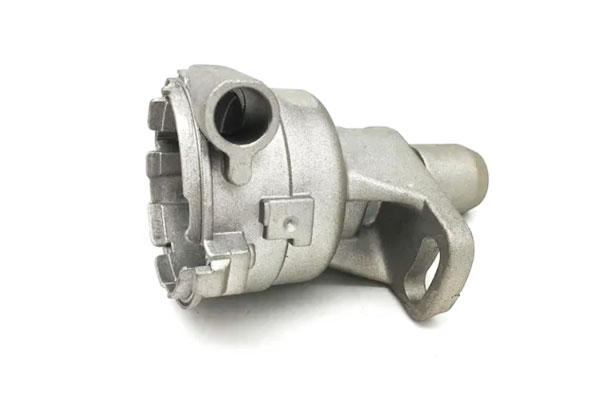
What the as-cast state leaves you with — the root causes for post-processing
- Near-surface and internal porosity. Hydrogen porosity (spherical) and shrinkage/interdendritic porosity (irregular) form during solidification.
Even low porosity volumes (fractions of 1%) can provide leakage paths, stress concentrators or initiation sites for fatigue cracks. - Residual stresses and microstructural inhomogeneity. Mataas na presyon ng die casting (HPDC) cools rapidly and unevenly; this produces local residual stresses and non-uniform mechanical properties that can relax unpredictably during machining or in service.
- Surface discontinuities and excess metal. Mga Pintuan, Mga Runner, parting lines and flash are inherent to the process and must be removed or finished for function and safety.
- As-cast surface chemistry and contamination. Die lubricants, oxides and soluble residues remain on surfaces and interfere with coating adhesion, plating continuity and corrosion resistance.
- Insufficient dimensional accuracy for functional features. Mating faces, sealing surfaces and threaded holes generally require machining to achieve the tolerances and finishes needed for assemblies.
- Low as-cast mechanical performance in critical zones. Typical die-cast Al-Si alloys have moderate as-cast strength and limited ductility; tailored heat treatment or aging can stabilize dimensions and improve mechanical properties where required.
3. Core Classification and Technical Principles of Aluminum Die Casting Post-processing
Aluminum die casting post-processing can be categorized into four core modules based on functional objectives: defect removal, surface modification, performance optimization, at katumpakan na pagtatapos.
Each module adopts targeted technologies with distinct technical principles and application scenarios.
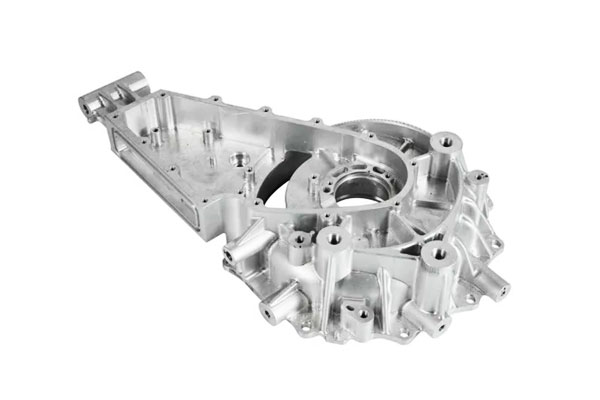
Defect Removal: Eliminating Inherent Casting Imperfections
Defect removal is the primary post-processing step, focusing on eliminating flash, burrs, porosity, pag urong ng mga cavities, and oxide inclusions generated during the die casting process.
These defects not only affect the appearance of components but also reduce structural integrity and fatigue life.
Trimming and Deflashing
Flash and burrs are inevitable in aluminum die casting, resulting from molten aluminum seeping into the gap between die halves.
Trimming and deflashing aim to remove these excess materials to meet dimensional specifications.
- Mechanical Trimming: The most widely used method, utilizing hydraulic or pneumatic presses with custom-designed trimming dies.
It offers high efficiency (hanggang sa 100 Mga Bahagi Bawat Minuto) and consistent precision, suitable for mass production.
The principle is to apply concentrated pressure along the parting line to shear off flash.
Key parameters include trimming force (determined by part thickness and aluminum alloy type) and die clearance (typically 0.05–0.15 mm to avoid part deformation). - Cryogenic Deflashing: Suitable for complex-shaped components with hard-to-reach burrs (hal., Mga Panloob na Channel).
The process involves cooling the part to -70°C to -100°C using liquid nitrogen, which embrittles the burrs (aluminum alloy burrs lose ductility at low temperatures), then removing them via high-pressure air blasting or mechanical vibration.
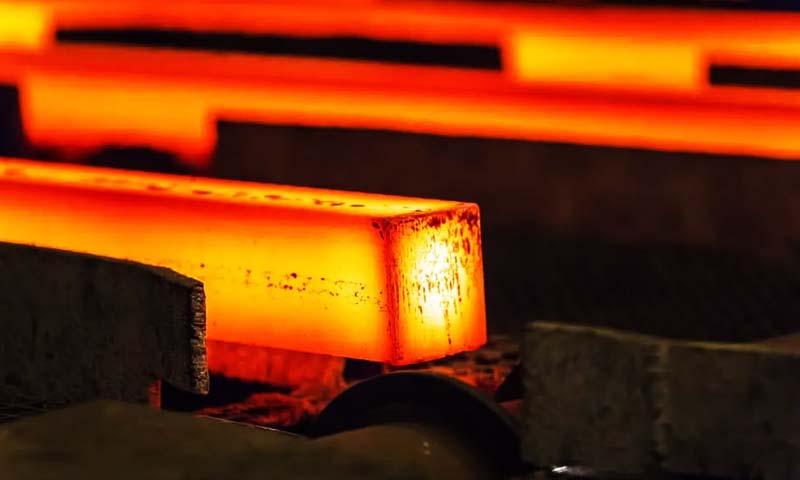
This method avoids part deformation but has higher operational costs than mechanical trimming. - Thermal Deflashing: Uses high-temperature (500-600 ° C) molten salt or hot air to burn off burrs.
It is suitable for small burrs (≤0.2 mm) but requires strict control of temperature and time to prevent part oxidation or dimensional changes.
This method is gradually being phased out due to environmental concerns about molten salt waste.
Porosity and Shrinkage Cavity Treatment
Porosity in aluminum die castings (caused by trapped air or dissolved gases during solidification) severely impairs corrosion resistance and mechanical performance. Common treatment methods include:
- Impregnation Sealing: The most effective method for sealing surface and subsurface porosity.
It involves immersing the part in a low-viscosity resin (hal., Epoxy, phenolic) under vacuum or pressure, allowing the resin to penetrate into pores, then curing to form a impermeable seal.
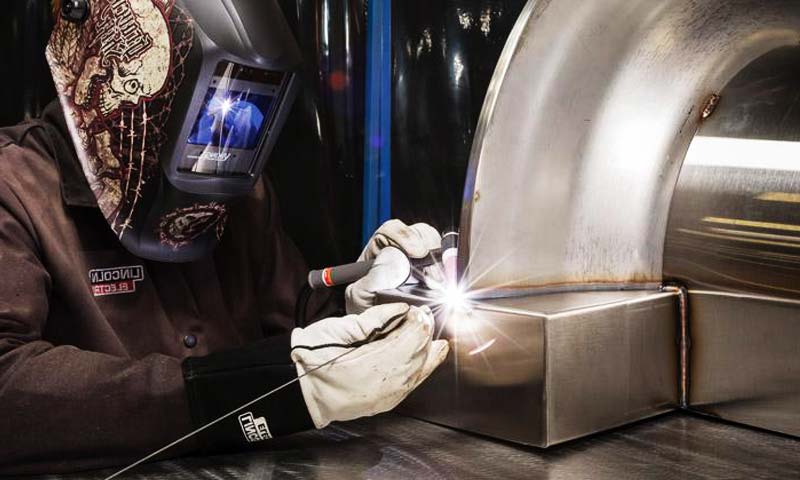
Per ASTM B945, impregnated parts can achieve leak rates as low as 1×10⁻⁶ cm³/s, making them suitable for hydraulic components and fluid-carrying parts. - Welding Repair: Used for large shrinkage cavities or surface defects. TIG hinang (tungsten inert gas) with matching aluminum alloy fillers (hal., ER4043 for A380 die castings) is preferred to minimize heat input and avoid thermal deformation.
Gayunpaman, welding may introduce new stresses and requires post-weld heat treatment to restore mechanical properties.
Surface Modification: Enhancing Corrosion Resistance and Aesthetics
Aluminum die castings have poor natural corrosion resistance (due to the presence of alloying elements like silicon and copper).
Surface modification not only improves corrosion resistance but also provides decorative or functional surfaces (hal., electrical kondaktibiti, Paglaban sa Pagsusuot).
Chemical Conversion Coatings
Chemical conversion coatings form a thin (0.5–2 μm) adherent film on the aluminum surface via chemical reactions, enhancing corrosion resistance and serving as a primer for painting. Common types include:
- Chromate Conversion Coating: Traditional method using hexavalent chromium compounds, Nag-aalok ng mahusay na paglaban sa kaagnasan (salt spray test ≥500 hours) and paint adhesion.
Gayunpaman, hexavalent chromium is highly toxic, and its use is restricted by REACH (EU) and RoHS directives. It is only permitted in specialized aerospace applications with strict waste treatment. - Non-Chromate Conversion Coatings: Environmentally friendly alternatives, including trivalent chromium, cerium-based, and zirconium-based coatings.
Trivalent chromium coatings (per ASTM D3933) provide salt spray resistance of 200–300 hours, comparable to hexavalent chromium, and are widely adopted in automotive and electronics industries.
Cerium-based coatings (hindi organiko) offer good corrosion resistance but have lower paint adhesion, suitable for non-painted components.
Pagpapahid ng langis
Pagpapahid ng langis creates a thick (5-25 μm) oxide film (Al O) on the aluminum surface via electrolysis, significantly improving corrosion resistance and wear resistance.
For aluminum die castings, two types are commonly used:
- Type II Sulfuric Acid Anodizing: The most common type, producing a porous oxide film that can be dyed in various colors.
It offers salt spray resistance of 300–500 hours and is used in decorative components (hal., appliance housings, automotive trim).
Gayunpaman, die castings with high porosity may have uneven film formation, requiring pre-sealing with nickel acetate. - Type III Hard Anodizing: Uses lower temperatures (-5°C to 5°C) and higher current densities to produce a dense, mahirap na (HV 300–500) oxide film.
It is suitable for wear-resistant components (hal., mga gears, Mga piston) but may cause dimensional changes (film thickness must be accounted for in design).
Aluminum die castings with high silicon content (hal., A380, Si=7–11%) may form a brittle film, limiting its application.
Mga Organikong Coatings
Organic coatings (pagpipinta, patong ng pulbos) provide additional corrosion protection and aesthetic effects, often applied after chemical conversion coating.
- Palabok na patong: Uses electrostatically charged powder (Poliester, Epoxy) that adheres to the aluminum surface, then cures at 180–200°C.
It offers excellent durability (salt spray resistance ≥1000 hours) and is free of volatile organic compounds (Mga VOC), making it environmentally friendly. Suitable for outdoor components (hal., Mga Bumper ng Automotive, mga fixture ng arkitektura). - Likido na Pagpipinta: Includes spray painting and dip coating, suitable for complex-shaped parts with intricate details.
High-solids polyurethane paints are preferred for their corrosion resistance and gloss retention, but they require proper ventilation to control VOC emissions. - E-patong is a liquid-based electro-deposition process in which aluminum die-cast parts are immersed in a waterborne bath containing charged polymer particles.
When an electric current is applied, these particles migrate and uniformly deposit onto all conductive surfaces, including complex geometries, corners, at mga recess.
It provides excellent corrosion protection, unipormeng saklaw, and strong adhesion to pre-treated or conversion-coated surfaces. Typical salt spray resistance can exceed 500 hours on properly prepared aluminum die castings.
Pag-optimize ng Pagganap: Adjusting Mechanical Properties and Residual Stresses
Aluminum die castings often have residual stresses (from uneven cooling during solidification) and limited mechanical properties. Post-processing techniques like heat treatment and stress relief are used to optimize performance.
Paggamot ng Heat
Unlike wrought aluminum alloys, aluminum die castings have limited heat treatability due to porosity and alloy composition (high silicon content).
Gayunpaman, certain alloys (hal., A380, A383) can undergo specific heat treatments:
- T5 Heat Treatment: Solution heat treatment (480–500°C) followed by air cooling and artificial aging (150–180°C for 2–4 hours).
This process improves tensile strength by 15–20% (A380 T5: tensile strength ≥240 MPa, yield strength ≥160 MPa) without significant dimensional changes. It is widely used in automotive structural components (hal., Mga bracket ng makina). - T6 Heat Treatment: Solution heat treatment, Pag-aayos ng Tubig, and artificial aging. It provides higher strength than T5 but may cause part deformation and porosity expansion (due to rapid cooling).
T6 is only suitable for low-porosity die castings (hal., those produced by vacuum die casting).
Kapansin pansin, heat treatment of aluminum die castings must strictly control temperature uniformity to avoid thermal cracking. Per SAE J431, the maximum heating rate should not exceed 5°C/min for thick-walled parts.
Pantanggal ng Stress
Residual stresses in aluminum die castings can cause dimensional instability during machining or service. Stress relief methods include:
- Thermal Stress Relief: Heating the part to 200–250°C for 1–2 hours, then slow cooling.
This reduces residual stresses by 30–50% without altering mechanical properties. It is a common pre-machining step for precision components (hal., mga elektronikong pabahay). - Vibratory Stress Relief: Applying low-frequency vibration (10–100 Hz) to the part to induce microplastic deformation, relieving residual stresses.
It is suitable for parts sensitive to heat (hal., those with organic coatings) and offers shorter processing time (30–60 minutes) than thermal stress relief.
Precision Finishing: Achieving Dimensional Accuracy and Surface Roughness
Although aluminum die castings have high dimensional accuracy (±0.05–0.1 mm), some critical surfaces (hal., mating surfaces, threaded holes) require additional precision finishing to meet strict tolerances.
Machining
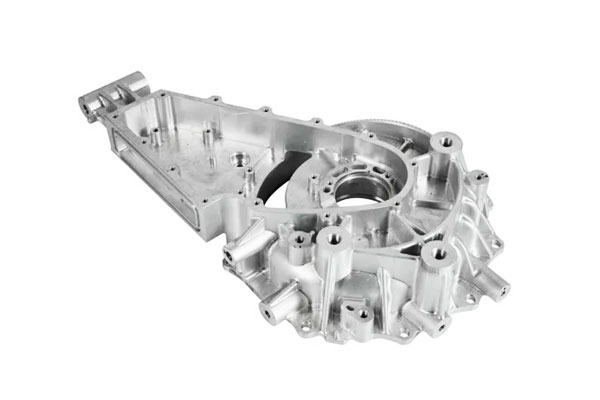
CNC machining is the primary precision finishing method, including milling, pagliko, pagbabarena, at pag-tap. Key considerations for machining aluminum die castings include:
- Tool Selection: Carbide tools with sharp cutting edges are preferred to minimize cutting forces and avoid chip adhesion (aluminum has high ductility). Coated tools (hal., TiAlN) improve wear resistance and tool life.
- Cutting Parameters: Mataas na bilis ng pagputol (1500–3000 m/min) and moderate feed rates (0.1-0.3 mm / rev) are used to reduce heat generation and prevent workpiece deformation.
Email Address * (emulsified oil or synthetic coolant) is essential to lubricate the cutting zone and flush chips. - Porosity Impact: Porous areas can cause tool chatter and uneven surface finish. Pre-machining inspection (hal., pagsusuri sa ultrasonic) helps identify high-porosity regions, which may require repair or scrapping.
Buli at Buffing
Polishing and buffing are used to improve surface roughness (Ra ≤0.2 μm) for decorative or optical components.
Abrasive polishing (using silicon carbide or aluminum oxide abrasives) is followed by buffing with a soft wheel and polishing compound (hal., rouge) to achieve a mirror finish.
For die castings with porosity, a filler (hal., polyester putty) may be applied before polishing to ensure a smooth surface.
3. Quality Control and Testing Standards for Post-processing
Kontrol sa kalidad (QC) is critical to ensuring consistency and reliability of post-processed aluminum die castings. QC measures cover each post-processing stage and adhere to international standards to maintain credibility.
Dimensional na Inspeksyon
Dimensional accuracy is verified using tools ranging from basic gauges to advanced metrology equipment:
- Coordinate Pagsukat Machine (CMM): Used for complex components to measure 3D dimensions with accuracy up to ±0.001 mm.
Per ISO 10360, CMM calibration is required annually to ensure measurement reliability. - Vision Inspection Systems: High-speed optical inspection for surface defects (hal., mga gasgas na, dents) and dimensional deviations. Suitable for mass production, with detection rates up to 99.9% for defects ≥0.1 mm.
- Pagsubok sa Katigasan: Brinell or Vickers hardness testing (per ASTM E140) to verify heat treatment effectiveness. For A380 T5 die castings, the typical hardness is 80–95 HB.
Pagsubok ng Paglaban sa Kaagnasan
Corrosion resistance of surface-treated parts is evaluated using standardized tests:
- Salt Spray Test (ASTM B117): The most common test, exposing parts to a 5% NaCl spray at 35°C.
The duration of corrosion-free performance (hal., 500 hours for anodized parts) is used to qualify surface treatments. - Electrochemical Impedance Spectroscopy (EIS): A non-destructive test to evaluate the integrity of surface coatings.
It measures the coating’s impedance to assess corrosion resistance and predict service life.
Pagsubok na Hindi Nakasisira (NDT) for Defects
NDT methods detect internal and surface defects without damaging the part:
- X-Ray Inspection (ASTM E164): Used to detect internal porosity, pag urong ng mga cavities, and welding defects.
Digital radiography (DR) provides real-time imaging and improved defect detection accuracy compared to traditional film radiography. - Ultrasonic pagsubok (ASTM A609): Evaluates subsurface porosity and bond integrity of coatings.
High-frequency sound waves (2–10 MHz) are transmitted through the part, and reflections from defects are analyzed to determine their size and location. - Dye Penetrant Testing (ASTM E165): Detects surface cracks and porosity. A colored dye is applied to the part, penetrates into defects, then excess dye is removed, and a developer is applied to reveal defects.
4. Industry-Specific Applications of Post-processing
Post-processing requirements for aluminum die castings vary by industry, depending on functional needs, mga kondisyon ng kapaligiran, at mga pamantayan sa regulasyon. Below are key applications in major industries:
Industriya ng Automotive
Automotive aluminum die castings (hal., mga bloke ng engine, mga pabahay ng transmisyon, mga bahagi ng suspensyon) require strict post-processing to meet durability and safety standards:
- Mga bloke ng engine: T5 heat treatment to improve strength, impregnation sealing to prevent oil leakage, and CNC machining of mating surfaces (tolerance ±0.01 mm).
- Exterior components (Mga Bumper, trim): Trivalent chromium conversion coating + powder coating to resist corrosion from road salt and environmental factors (salt spray test ≥1000 hours).
Industriya ng Elektronika
Electronic mga bahagi (hal., smartphone housings, nalulubog ang init) demand high surface quality, katumpakan ng sukat, at electromagnetic compatibility (EMC):
- Mga pabahay ng smartphone: Precision CNC machining, polishing to mirror finish, and anodizing (Uri II) for corrosion resistance and color customization.
- Lumubog ang init: Chemical conversion coating to enhance thermal conductivity, and CNC drilling to create cooling channels (tolerance ±0.02 mm).
Industriya ng Aerospace
Aerospace aluminum die castings (hal., aircraft brackets, haydroliko mga bahagi) require rigorous post-processing and quality control to meet aerospace standards (SAE AS9100):
- Mga bahagi ng haydroliko: Impregnation sealing (per SAE AS4775) to ensure leak tightness, and T6 heat treatment for high strength.
- Mga bracket ng istruktura: Vibratory stress relief to eliminate residual stresses, and ultrasonic testing to detect internal defects.
Household Appliance Industry
Appliance components (hal., refrigerator compressor housings, washing machine drums) focus on corrosion resistance and aesthetics:
- Mga pabahay ng tagapiga: Powder coating to resist moisture and corrosion, and thermal stress relief to prevent dimensional changes during operation.
- Decorative panels: Polishing + anodizing or painting to achieve a visually appealing finish.
5. Pangwakas na Salita
Aluminum die-cast post-processing is not a single operation but a tailored sequence chosen to meet mechanical, leakage, cosmetic and assembly requirements.
Early collaboration between design, foundry and finishing suppliers yields the best balance of cost and performance: disenyo para sa pagmamanupaktura (uniform wall thickness, adequate draft, boss geometry for inserts), minimize post-processing where possible, and specify clear acceptance tests.
For critical pressure, sealing, or high-fatigue applications, plan for vacuum impregnation, X-ray inspection and controlled heat treatment.
For appearance and corrosion resistance, select conversion pre-treatment compatible with chosen final coating, and avoid restricted chemistries when possible.
Mga FAQ
When should I specify vacuum impregnation?
When parts are required to be leak-tight (hydraulic housings), when plating or painting will be compromised by through-porosity, or for parts subject to fluid sealing. Impregnation is a standard remedy for through-porosity.
Can all die-cast aluminum be anodized?
Not effectively. High-Si die-cast alloys often give poor anodize finish. If anodizing is required, use a compatible alloy or specify special pre-treatments and acceptance criteria.
What thread insert is best for die-cast bosses?
For high pull-out strength and durability use solid inserts (hal., M4–M12) installed by press or thermal insertion; Helicoil is common for smaller diameters. Specify boss thickness and insert type in design.
Is post-casting heat treatment always beneficial?
Not always. T5 ageing can improve properties and stability for many die-cast alloys.
Full solution + age (T6) may be impractical or ineffective on some die-cast alloys and can increase distortion.
How do I control costs while ensuring quality?
Reduce the number of critical machined features, design for minimal porosity risk (even wall thickness), specify only necessary tests (hal., sample X-ray vs 100% Inspeksyon), and choose common, compliant coating systems. Early supplier involvement is the most effective lever.