1. Panimula
6063 aluminum alloy—commonly designated EN AW-6063, ASTM B221, at ISO AlMg0.7Si—stands out as a versatile, extrusion-optimized material.
Since its commercial debut in the mid-20th century, 6063 aluminum has carved a significant market niche.
Manufacturers prize its excellent surface finish, good strength-to-weight ratio, and ease of fabrication.
Sa artikulong ito, we explore 6063 aluminum from its chemical roots through microstructural evolution, examine its mechanical and corrosion performance, and highlight practical applications.
2. What Is 6063 Aluminyo?
Komposisyon ng kemikal & Alloying Philosophy
6063 aluminyo alloy belongs to the 6xxx series, saan banda magnesiyo (Mg) at Silicon (Si Si) form the strengthening phase magnesium silicide (Mg₂Si).

Its nominal composition (in wt%) typically falls within:
| Elemento | Nominal Content (wt %) | Pangunahing Tungkulin |
|---|---|---|
| Si Si | 0.2–0.6 | Improves fluidity during casting; combines with Mg to form Mg₂Si precipitates for age hardening. |
| Mg | 0.45–0.9 | Reacts with Si to produce fine Mg₂Si particles, boosting strength through precipitation hardening. |
| Fe | ≤ 0.35 | Acts as an impurity—kept low to avoid coarse intermetallics that reduce ductility and surface finish. |
| Cu | ≤ 0.10 | Increases strength slightly but is limited to maintain corrosion resistance and toughness. |
Mn |
≤ 0.10 | Scavenges iron to form benign intermetallics and refines grain structure for improved toughness. |
| Cr | ≤ 0.10 | Controls grain growth during heat treatment, enhancing strength and resistance to stress cracking. |
| Zn | ≤ 0.10 | Minor alloying addition—excess is avoided to preserve corrosion resistance. |
| Ti | ≤ 0.10 | Acts as a grain refiner in casting, producing a fine, uniform grain structure for extrusion. |
| Others | ≤ 0.05 (bawat), ≤ 0.15 (kabuuang) | Strictly limited to prevent uncontrolled secondary phases that impair mechanical or corrosion performance. |
| Al | Balanse | Provides the base matrix, offering low density, high conductivity, and excellent formability. |
3. Pisikal & Mekanikal na Katangian ng 6063 Aluminum Alloy

Physical Properties of 6063 Aluminum Alloy
| Pag-aari | Halaga |
|---|---|
| Densidad ng katawan | 2.70 g/cm³ |
| Thermal kondaktibiti (20 °C) | 201 W/m·K |
| Electrical kondaktibiti | 35 % IACS |
| Modulus ng Pagkalastiko | 69 GPa |
| Koepisyent ng Thermal Expansion | 23.4 × 10⁻⁶ K⁻¹ |
Mechanical Performance by Temper
| Pag-uugali | Lakas ng Paghatak (MPa) | Yield Lakas (0.2 % Offset, MPa) | Pagpapahaba (%) | Ang katigasan ng ulo (HB) |
|---|---|---|---|---|
| T1 | 130–160 | 95–120 | 10–14 | 40–55 |
| T5 | 160–200 | 125–155 | 8–12 | 60–75 |
| T6 | 190–240 | 160–200 | 8–12 | 60–80 |
Elevated-Temperature Performance & Pagkapagod
6063 aluminum alloy retains roughly 80 % of its room-temperature strength at 100 °C. In fatigue testing (R = 0.1), an S-N curve shows an endurance limit near 90 MPa for one million cycles.
Designers often factor in a safety margin of 1.5–2× for cyclic loading in outdoor or automotive applications.
Anisotropy from Extrusion
Extruded profiles exhibit anisotropy: longitudinal properties typically exceed transverse ones by 5–10 % in tensile strength.
Engineers compensate by aligning critical load paths with the extrusion direction.
4. Paglaban sa kaagnasan & Surface Protection
Natural Oxide Barrier
6063 aluminum forms a thin, self-healing Al₂O₃ film (2–5 nm) that resists atmospheric corrosion, passing 1,000+ hours in salt spray tests (ASTM B117) when anodized.
This film makes the alloy ideal for outdoor applications, from architectural profiles to marine fittings.
Challenges and Mitigation
- Chloride Environments: Sensitive to pitting in saltwater (Cl⁻ > 500 ppm), mitigated by thick anodizing (15-25 μm) or epoxy coatings.
- Galvanic kaagnasan: Avoid direct contact with copper or carbon steel; use insulating gaskets or zinc-rich primers.
Anodizing Techniques and Decorative Finishes
- Sulfuric Acid Pagpapahid ng langis (Uri II) produces 5–25 µm thick porous oxide.
- Hard-Coat Anodizing (Uri III) yields 25–60 µm thickness for wear resistance.
- Color Anodizing and Powder Coatings allow aesthetic customization, with chemical conversion primers (hal., chromate or trivalent zirconium) enhancing adhesion.
5. Gawa-gawa & Joining of 6063 Aluminum Alloy
Manufacturers favor 6063 aluminum for its exceptional extrudability, predictable machining behavior, and reliable weldability.
Extrusion Characteristics
Una, 6063 aluminum extrudes smoothly at 450–550 °C, a temperature window that balances metal flow and grain refinement.

Typical paglabas ng mga ratios range from 10:1 hanggang sa 30:1, enabling complex cross-sections with wall thicknesses as thin as 1 mm.
6063 aluminum alloy sets the benchmark for extrudability, with key advantages:
- Low Extrusion Pressure: 100–150 MPa for complex profiles, 30% lower than 6061,
enabling intricate shapes like thermal-break window frames with 0.8 mm wall thicknesses and hollow chambers. - Tapos na sa ibabaw: As-extruded surfaces achieve Ra ≤1.6 μm without post-processing, critical for architectural applications where secondary machining would add 20–30% cost.
- Bilis ng Produksyon: Extrusion rates of 5–20 m/min (depending on profile complexity), with a single die capable of producing 10,000–20,000 meters per day.
Machining and Tooling
Its soft as-extruded temper (F) allows rapid machining with high-speed steel (HSS) mga tool at cutting speeds up to 150 m / min.
Paggamit ng soluble coolant (5–10% concentration) reduces tool wear by 40%, while carbide tools are preferred for hard-turned features (hal., threads in T6 temper).
Mga Pamamaraan ng Hinang
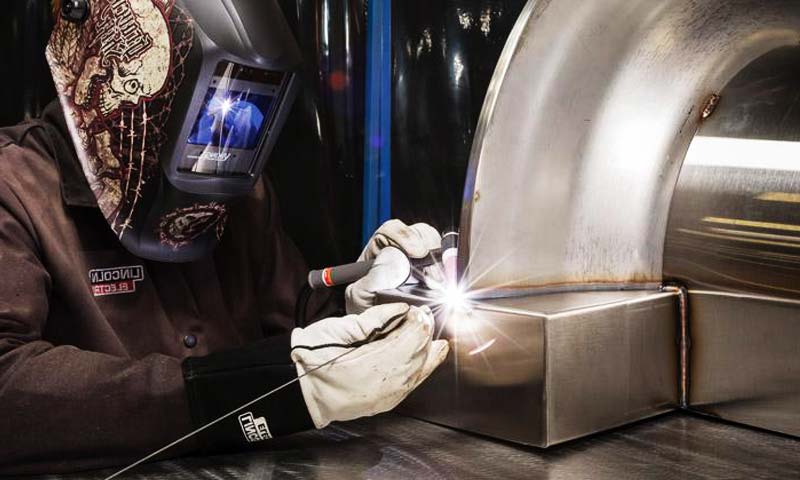
- TIG hinang: Preferred for precision components, gamit ang 4043 filler rod (Al-5%Si) to minimize hot cracking.
Weld efficiency reaches 90%, with tensile strength retention of 85% in T6 temper. - Friction Stir Welding (FSW): A solid-state process ideal for thick sections (hanggang sa 10 mm), producing defect-free joints with 90% of base metal strength.
- Paggamot pagkatapos ng weld: Stress relief at 150°C para sa 2 mga oras reduces residual stress by 60%, critical for dimensional stability in large assemblies.
6. Paggamot ng Heat & Age Hardening of 6063 Aluminum Alloy
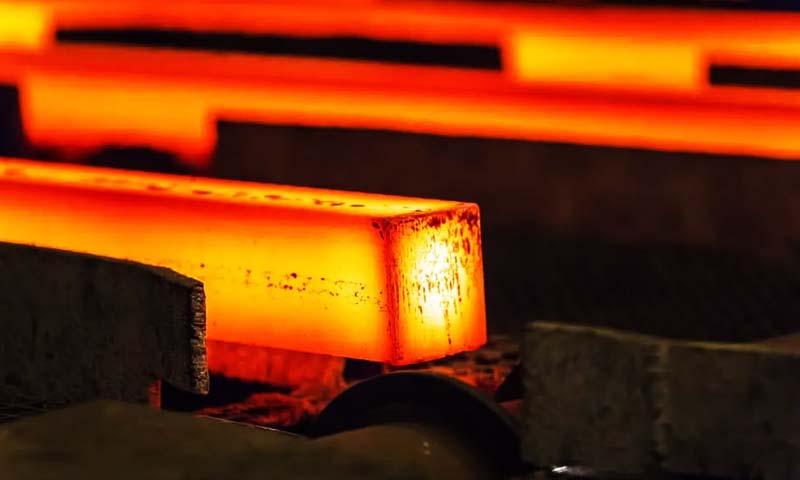
Heat treatment transforms 6063’s soft, ductile as-extruded condition into a precipitation-hardened alloy with significantly improved strength.
By selecting the right combination of solutionizing, pagpapawi ng, and aging steps,
manufacturers tailor the balance of tensile strength, ductility, and dimensional stability to application requirements.

Temper Designations and Typical Cycles
| Pag-uugali | Proseso | Typical Aging Cycle |
|---|---|---|
| T1 | Cool directly from extrusion; naturally age at room temperature | ~ 7 days at 20 °C |
| T5 | Cool from extrusion or quench; artificially age | 175–205 °C for 4–8 h |
| T6 | Solution heat treat at 520–540 °C; pawiin; artificially age | 175–205 °C for 6–12 h |
| T7 | Overage beyond T6 (for improved dimensional stability) | 200–220 °C for 8–16 h |
- T1 temper relies on slow, natural na pagtanda. Designers favor T1 for parts requiring maximum formability immediately after extrusion.
- T5 enhances strength rapidly. By holding at 175–205 °C for several hours, 6063 aluminum alloy achieves 80–90% of its peak hardness with minimal distortion.
- T6 delivers the highest strength—typically 190–240 MPa tensile.
Manufacturers solutionize at 520–540 °C to dissolve all Mg₂Si, then quench and age to form the fine β″ precipitates that impart maximum hardness. - T7 targets applications where tight dimensional control outweighs peak strength.
Extended aging coarsens precipitates into the more stable β phase, cutting strength by ~10–20% but reducing residual stress.
Lakas ng loob, Ductility, and Stability Trade-Offs
Immediately after aging, T6 6063 aluminum alloy reaches its highest yield and ultimate tensile strength, yet it also exhibits greater springback during bending.
Sa kabilang banda, T5 temper produces slightly lower strength (160–200 MPa) but retains 5–10% better elongation and minimizes distortion in complex geometries.
When designers require both moderate strength and excellent dimensional accuracy—such as in tight-tolerance window frames—they often specify a modified T6I4 or T7 cycle.
Overaging and Stress Relief
Overaging beyond the T6 peak—achieved by ramping aging temperatures to 200–220 °C or extending hold times beyond 12 hours—drives β″ precipitates to coarsen into β′ and then β.
Although this shift reduces yield strength by up to 20%, it stabilizes dimensions and relieves internal stresses that can otherwise lead to warping or cracking during service.
In assemblies with multiple joined parts, overaged 6063 aluminum alloy resists stress-corrosion cracking, making T7 temper an ideal choice for welded or mechanically fastened structures.
7. Mga Paggamot sa Ibabaw & Mga Coatings
Chemical Conversion Coatings
Chromate (Type I) and phosphate pretreatments promote adhesion for subsequent topcoats. Trivalent chromium and zirconium-based systems offer RoHS-compliant alternatives.
Powder Coating and Painting
Pagkatapos ng pretreatment, polyester or epoxy–polyester powders deliver durable color finishes.
Typical thickness: 60-120 μm. Proper surface roughness (Ra ≈ 1.5 M) enhances mechanical interlock.
Emerging Nano-Textured and Self-Cleaning Treatments
Researchers develop superhydrophobic coatings using silica nanoparticles and fluorinated binders.
Early tests show contact angles > 150°, promising reduced soiling on outdoor facades.
8. Main Application of 6063 Aluminum Alloy
Architectural and Building Industry
- Window and door frames
- Curtain wall systems
- Handrails and guardrails
- Architectural trim
- Structural glazing profiles
Transportation Sector
- Automotive trim and decorative moldings
- Roof rails and running boards
- Trailer frames
- Bicycle frames and accessories
- Boat fittings and gangways
Electrical and Lighting Systems
- LED lighting housings
- Heat sinks for electronics
- Mga enclosure ng kuryente
- Conduit tubing
- Reflector frames
Consumer Products and Furniture
- Office partition systems
- Display fixtures and signage frames
- Furniture tubing and supports
- Ladders and racks
- Sports equipment (tripods, tent poles)
Industrial Machinery and Equipment
- Machine guarding profiles
- Pneumatic cylinder tubes
- Framing systems for automation
- Conveyor system rails
- Cooling system housings
9. Mga Pakinabang at Limitasyon ng 6063 Aluminum Alloy
Mga Pangunahing Bentahe
- Formability: Unmatched for complex extrusions, enabling design flexibility in architectural and automotive sectors.
- Pagiging Epektibo sa Gastos: Raw material cost ~$2.2/kg, 30% cheaper than 6061 at 50% cheaper than 7075.
- Tapos na sa ibabaw: Ideal for anodizing and painting, critical for aesthetic applications.
Mga Limitasyon
- Lakas ng loob: Lower than 6061 (T6 tensile strength: 310 mga bes. 350 MPa) and far inferior to 7075 (570 MPa), limiting use in high-stress components.
- Mataas na Temperatura ng Pagganap: Strength drops rapidly above 150°C (nananatili ang 50% of T6 strength at 200°C), unsuitable for engine components.
- Fire Resistance: Melts at 595°C, requiring fire-retardant coatings in critical structural applications.
10. Mga Pamantayan, Mga pagtutukoy & Email Address *
6063 aluminum alloy meets multiple global standards:
- EN 573-3 / EN 755-2: Chemical and mechanical requirements for wrought products
- ASTM B221: Extruded bars, mga baras, mga wire, mga profile, at mga tubo
- ISO 6361: Wrought aluminum and aluminum alloy sheets, Mga strip, and plates
- JIS H4040: Aluminum alloy extruded shapes
Suppliers worldwide stock Alu 6063 in shapes ranging from extruded profiles (70% of production), mga sheet, mga tubo, at mga baras.
Lead times for custom extrusions typically range from 3–6 weeks for simple profiles to 8–12 weeks for complex geometries.
11. Comparison with Related Alloys
6063 aluminum alloy occupies a distinct position in the 6xxx series of aluminum alloys, known for their excellent balance between strength, paglaban sa kaagnasan, and extrudability.
Key Comparisons Table
| Pag-aari / Tampok | 6063 | 6061 | 6005A | 6082 | 7075 |
|---|---|---|---|---|---|
| Lakas ng Paghatak (MPa) | 145–240 (T5 / T6) | 240–310 (T6) | 260–340 (T5 / T6) | 290–340 (T6) | 490–570 (T6) |
| Yield Lakas (MPa) | 110–200 | 210–275 | 215–290 | 240–310 | 400–505 |
| Pagpapahaba (%) | 8–12 | 8–10 | 7–12 | 6–10 | 6–10 |
| Paglaban sa kaagnasan | Napakahusay | Napakaganda | Napakaganda | Napakaganda | Katamtaman (needs coating) |
| Extrudability | Napakahusay (kumplikadong mga profile) | Mabuti na lang | Mabuti na lang | Makatarungan | Mga Maralita |
| Anodizing Quality | Napakahusay | Mabuti na lang | Mabuti na lang | Makatarungan | Mga Maralita |
| Machinability | Makatarungan | Mabuti na lang | Mabuti na lang | Mabuti na lang | Napakahusay |
| Weldability | Napakahusay | Napakaganda | Mabuti na lang | Mabuti na lang | Fair–Poor (hot cracking risk) |
| Karaniwang Mga Kaso sa Paggamit | Arkitektura, mga kasangkapan sa bahay | Istruktura ng istruktura, automotive | Bridges, ladders | Transport, marine, mga istraktura | Aerospace, Mga bahagi na may mataas na stress |
6061 mga bes. 6063 Aluminum Alloy
- Lakas ng loob: 6061 offers 20–30% higher strength than 6063, making it better for structural applications.
- Formability: 6063 excels in complex extrusions and finishes, habang ang 6061 is more rigid.
- Mga Aplikasyon: 6063 is ideal for decorative and architectural uses; 6061 is preferred for load-bearing components like bicycle frames, tsasis, at mga vessels ng presyon.
6005A vs. 6063 Aluminum Alloy
- Lakas ng loob: 6005A outperforms 6063 in strength by 10–30%.
- Extrudability: 6063 allows finer detail in profiles; 6005A is harder to extrude.
- Best fit: 6005A is used in rail transport and structural systems, habang ang 6063 dominates in window and door systems.
6082 mga bes. 6063 Aluminum Alloy
- Lakas ng loob: 6082 provides up to 40% more strength than 6063.
- Paglaban sa kaagnasan: Maihahambing, pero 6063 provides a better anodized finish.
- Machinability & weldability: 6082 is tougher to machine; 6063 welds cleaner and neater.
7075 mga bes. 6063 Aluminum Alloy
- Lakas ng loob: 7075 is significantly stronger—more than double the strength of 6063.
- Paglaban sa kaagnasan: 6063 performs much better in moist or marine environments.
- Kakayahang magtrabaho: 7075 is difficult to weld and extrude, samantalang ang 6063 excels in ease of fabrication.
- Gamitin ang: 7075 is used in aerospace and performance-critical parts; 6063 is favored for consumer and architectural products.
12. Pangwakas na Salita
6063 aluminum alloy strikes a compelling balance: it enables complex extrusions with fine surface finishes,
provides reliable corrosion resistance, and achieves respectable mechanical strength through controlled aging.
From architectural facades to marine hardware, 6063 aluminum proves its versatility across multiple industries.
By understanding its composition, mikroistruktura, and processing pathways,
engineers can leverage 6063 aluminum to meet both performance and aesthetic requirements—while keeping manufacturing costs and environmental impact in check.
Mga FAQ
Ano ang 6063 aluminium alloy used for?
6063 aluminum alloy is primarily used for architectural applications such as window frames, mga frame ng pinto, mga pader ng kurtina, mga railings, and other decorative profiles
due to its excellent surface finish, paglaban sa kaagnasan, and good extrudability.
Is 6063 aluminum stronger than 6061?
Hindi, 6063 aluminum is not as strong as 6061.
Habang 6063 offers superior surface finish and formability, 6061 provides higher tensile and yield strength, making it more suitable for structural and load-bearing applications.
Ano ang 6063 aircraft-grade aluminum?
6063 aluminum is generally not considered “aircraft-grade” aluminum.
Aircraft applications typically require higher-strength alloys like 2024 o 7075. Gayunpaman, 6063 alu may be used in non-critical interior or decorative components within the aerospace industry.
What is equivalent to 6063 aluminyo?
International equivalents to 6063 aluminum include:
- EN: EN AW-6063
- ISO: AlMg0.7Si
- Hapon: A6063
- ASTM: B221 (covers product forms like bars, mga tubo, mga profile)