1. Panimula
Among the 5xxx-series aluminyo alloys, 5083 aluminum has earned a stellar reputation for combining mataas na lakas, superior kaagnasan paglaban, at mahusay na weldability.
Developed in the 1960s, 5083 aluminum gained traction in marine industries thanks to its uncanny ability to withstand aggressive seawater environments.
Ngayong araw, it remains a workhorse in demanding applications—from naval vessels to cryogenic tanks—because it consistently delivers reliable performance under mechanical stress, temperatura extremes, and corrosive conditions.
2. Alloy Composition and Metallurgical Basis
Sa core nito, 5083 aluminum derives its strength from a carefully balanced chemistry:
| Elemento | Tipikal na Nilalaman | Function and Impact |
|---|---|---|
| Magnesium | 4.0 – 4.9 wt % | Acts as the primary solid-solution strengthener, increasing yield strength by up to 40 % compared to pure aluminum. Magnesium atoms distort the aluminum lattice, impeding dislocation motion and boosting work-hardening capacity. |
| Mga mangganeso | 0.4 – 1.0 wt % | Refines grain size during hot working. Finer grains improve tigas na tigas, paglaban sa pagkapagod, and uniformity of mechanical properties. Manganese also helps tie up sulfur, minimizing low-melting sulfide inclusions. |
Chromium |
0.05 – 0.25 wt % | Curtails excessive grain growth at elevated temperatures (hanggang sa 150 °C), preserving strength in the heat-affected zone (HAZ) of welds. Chromium’s presence also reduces the risk of sensitization at intergranular kaagnasan. |
| Bakal na Bakal | ≤ 0.40 wt % | A common impurity controlled to low levels. Excess iron forms brittle intermetallics (Al₃Fe), so stringent limits ensure these phases do not compromise ductility or corrosion resistance. |
Silicon |
≤ 0.40 wt % | Pagpapahusay casting fluidity in initial ingots but remains low in wrought products to preserve ductility and formability. Excessive silicon can lead to hard, brittle silicides. |
| Aluminyo | Balanse | Provides a lightweight, ductile matrix in which alloying elements can dissolve or precipitate to tailor strength, tigas na tigas, and corrosion behavior. |
3. Key Variants and Heat Treatments
Building on its robust base composition, 5083 aluminum alloy presents several standard tempers—each tailored through controlled cold work and stabilization to meet distinct performance requirements.

O-Temper (Fully Annealed)
- Pagproseso: 5083-O receives a full anneal at 350–380 °C for 2–3 hours, Sinundan ng mabilis na paglamig.
- Mechanical Profile:
-
- Yield Lakas: ~125 MPa
- tunay na lakas ng paghatak (Mga UTS): ~220 MPa
- Pagpapahaba: ≥25%
- Mga Katangian: In O-temper, the alloy reaches its minimum strength at maximum ductility, making it ideal for deep drawing, Pag-ikot, and complex stamping.
Foundries commonly start with O-temper sheet when producing intricate boat hull panels or ornate architectural components.
H111-Temper (Light Cold Work)
- Pagproseso: After annealing, fabricators apply ≤15% cold work (rolling or bending) to impart a light degree of strain hardening.
- Mechanical Profile:
-
- Yield Lakas: ~175 MPa
- Mga UTS: ~310 MPa
- Pagpapahaba: ≥20%
- Mga Katangian: H111 strikingly balances pinahusay na lakas kasama ang preserved formability.
Manufacturers choose H111 for components that require moderate rigidity—such as curved railcar panels—while still accommodating on-line bending and hemming operations.
H116-Temper (Stabilized for Welding)
- Pagproseso: The alloy undergoes controlled cold work plus a natural na pagtanda period at room temperature (Karaniwan 72 mga oras) to stabilize its microstructure against sensitization.
- Mechanical Profile:
-
- Yield Lakas: ≥185 MPa
- Mga UTS: ~340 MPa
- Pagpapahaba: ≥12%
- Mga Katangian: H116 stands out for its exceptional resistance to intergranular corrosion pagkatapos ng hinang.
Naval architects and offshore engineers specify H116 for welded hulls and deck structures, confident that multi-pass welds will not degrade the surrounding material over time.
H321-Temper (Thermally Stabilized)
- Pagproseso: Similar to H116, but with a controlled low-temperature bake sa 100–150 °C for several hours to hinder aging during service.
- Mechanical Profile:
-
- Yield Lakas: ~175 MPa
- Mga UTS: ~340 MPa
- Pagpapahaba: ≥12%
- Mga Katangian: H321 further prevents undesirable changes when components operate at nakataas na temperatura (hanggang sa 150 °C).
Bilang isang resulta, HVAC ductwork and heat-exchanger panels in industrial plants often employ this temper to maintain dimensional stability and strength.
4. Physical and Thermal Properties of 5083 Aluminum Alloy
| Pag-aari | Halaga |
|---|---|
| Densidad ng katawan | 2.66 g/cm³ |
| Saklaw ng Pagtunaw | 570-650 ° C |
| Tiyak na Kapasidad ng Init (20 °C) | 0.88 J/g·K |
| Thermal kondaktibiti (25 °C) | 130 W/m·K |
| Koepisyent ng Thermal Expansion (20-100 ° C) | 23.4 μm / m · K |
5. Mekanikal na Katangian ng 5083 Aluminum Alloy
| Pag-aari | O | H111 | H116 | H321 |
|---|---|---|---|---|
| Yield Lakas | ~125 MPa | ~175 MPa | ≥ 185 MPa | ~175 MPa |
| tunay na lakas ng paghatak | ~220 MPa | ~ 310 MPa | ~340 MPa | ~340 MPa |
| Pagpapahaba | ≥ 25 % | ≥ 20 % | ≥ 12 % | ≥ 12 % |
| Limitasyon ng Pagkapagod (R=0.1, 10⁷ Mga siklo) |
~35 MPa | ~ 45 MPa | ~ 60 MPa | ~55 MPa |
| Epekto ng tigas (Charpy V-bingaw, –50 °C) |
~10 J | ~12 J | ≥ 15 J | ~14 J |
| Ang katigasan ng ulo (Brinell) |
~60 HB | ~70 HB | ~75 HB | ~75 HB |
6. Corrosion Resistance and Durability
5083 aluminum’s defining advantage is its excellent resistance to aqueous chloride environments, validated by decades of marine service and standardized testing:

- Seawater Pitting Resistance: Sa ASTM G48 ferric chloride pagsubok, 5083 aluminum exhibits a pitting potential of +0.8 V vs. SCE,
significantly higher than 6061 (+0.5 V) and comparable to aluminum bronze (Cu-Al alloys).
Field data from the North Sea shows corrosion rates <0.03 mm / taon for uncoated 5083 mga plato, half the rate of 316L stainless steel in similar conditions. - Pag-crack ng Stress-Corrosion (SCC): Unlike 7xxx series alloys, 5083 aluminum rarely experiences SCC below 80% of its yield strength in neutral chloride solutions (pH 6–8).
Crack propagation rates in NaCl solutions are ≤5 × 10⁻⁹ m/s, due to the absence of continuous grain-boundary precipitates. - Protective Measures:
-
- Pagpapahid ng langis (5–25 μm oxide layers) increases surface hardness to 200 HV, resisting abrasion from marine biofouling.
- Cathodic protection (zinc anodes) reduces corrosion current density by 90%, extending service life from 20 sa 30+ years in tropical seawater.
Ang mga katangiang ito ay gumagawa ng 5083 aluminum the only aluminum alloy approved for Class NK and DNV-GL certified marine structures in unrestricted ocean zones.
7. Fabrication and Machinability of 5083 Aluminum Alloy
5083 aluminum alloy’s widespread adoption in marine, transportasyon, and industrial applications stems
not only from its corrosion resistance and mechanical robustness but also from its exceptional fabrication versatility at predictable machining behavior.
Formability: Shaping Complex Geometries
5083 Aluminyo balanced ductility and work-hardening response make it suitable for a wide range of forming operations, from gentle bending to deep drawing:
Malamig na Pagbuo
- Pagbaluktot: Sa mga O temper (annealed na nga ba), 5083 aluminum achieves a minimum bend radius of 2× thickness (hal., 10 mm radius for 5 mm sheet), enabling sharp angles in hull stiffeners and pressure vessel skirts.
This matches the formability of pure aluminum but with 50% higher resistance to springback in the H111 temper. - Malalim na Pagguhit: Isang Erichsen index of 10 mm (ASTM E646) allows production of cylindrical components like cryogenic tank domes with diameters up to 2 metro.
Lubrication with synthetic oils (hal., ester-based fluids) reduces friction coefficients to 0.15–0.20, minimizing wall thinning. - Roll Forming: Capable of producing complex profiles (hal., ship hull panels with double curvature) with dimensional tolerances of ±0.1% of thickness, thanks to its uniform grain structure.
Mainit na Pagbuo
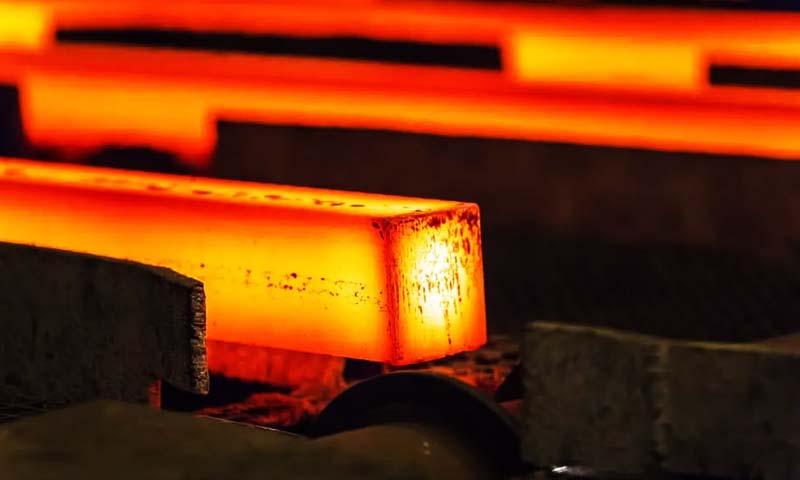
- Forging/Extrusion: Hot working at 350–450°C (with preheat the mold to 200°C) prevents surface cracking caused by magnesium segregation.
This process is used to create high-integrity components like marine propeller hubs, where grain flow alignment increases fatigue life by 15% compared to cast equivalents. - Superplastic Forming: Kahit na hindi gaanong karaniwan, 5083 aluminum exhibits superplastic behavior at 400–450°C with strain rates <10⁻³/s,
enabling formation of intricate aerospace prototypes with thickness variations down to 1.5 mm.
Welding Behavior: A Core Strength
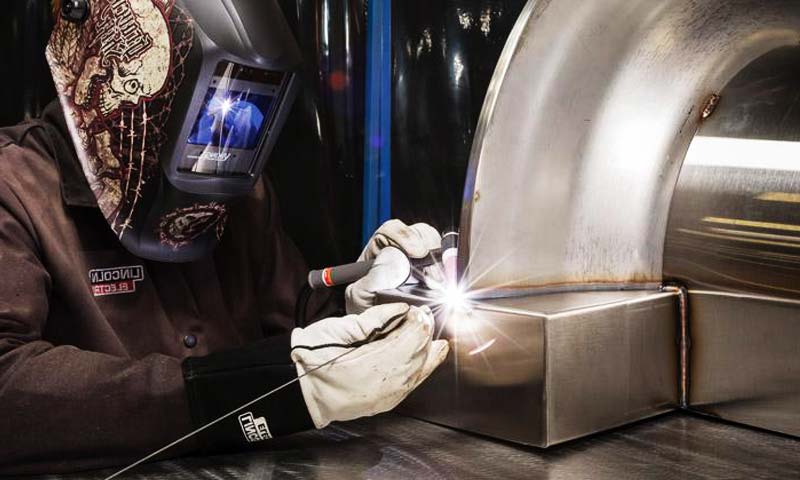
5083 aluminum is renowned for its mahusay na weldability, a critical factor in large-scale structural fabrication.
Unlike copper-rich alloys (hal., 2024), its low Cu content (≤0.1%) and high Mg solubility eliminate hot cracking during fusion welding:
Mga Proseso ng Hinang
- TIG (GTAW): The preferred method for critical applications (hal., offshore pipelines), gamit ang ER5356 filler metal (5% Mg, 0.15% Cr).
- MIG (GMAW): Suited for high-productivity welding of thick sections (≥10 mm), gamit ang ER5356 wire (1.2 mm diameter) and a gas mix of 75% Siya + 25% Ar to reduce spatter. Weld deposition rates reach 5 kg/h, ideal for ship hull assembly.
- Friction Stir Welding (FSW): Gumagawa ng defect-free joints with superior fatigue resistance (10% higher than GTAW), used in LNG carrier longitudinal seams.
The process operates at 1,000–1,500 RPM tool speed at 5–10 kN downforce, yielding surface finishes of Ra ≤6.3 μm.
Welded Joint Performance
- Sonang Apektado ng Init (HAZ): Grain growth is limited to 50–100 μm due to chromium’s grain-refining effect, preserving 85% of base metal impact toughness (25 J sa -20°C).
- Paglaban sa kaagnasan: Welds exhibit a pitting potential 0.1 V lower than base metal in seawater,
mitigated by post-weld anodizing (5 μm oxide layer) or application of zinc-rich epoxy coatings (ISO 12944 C5-M compliant).
Machinability: Balancing Precision and Productivity
While not as freely machinable as silicon-rich alloys (hal., 6061), Alu 5083 offers predictable machining behavior with proper tooling and parameters:

Tooling and Parameters
- Mga Materyal ng Tool:
-
- Mataas na Bilis ng Bakal (HSS): Suitable for low-speed operations (≤50 m/min) and manual machining, producing surface finishes of Ra ≤6.3 μm.
- Carbide (WC-Co): Recommended for high-speed machining (100–200 m / min), reducing cutting forces by 30% and extending tool life to 200 minuto for medium-depth cuts.
- Cutting Parameters (H111 Temper):
Challenges and Solutions
- Work Hardening: Aluminum alloy 5083 exhibits a work hardening index n=0.22, requiring sharp tools to avoid built-up edge (BUE).
Regrinding tools at the first sign of wear reduces surface roughness by 50%. - Kontrol ng Chip: In H321 temper, chips tend to be stringy; using chip breakers or increasing feed rate to 0.25 mm / rev converts them to manageable curls.
- Pagbutas ng butas: Use twist drills with 118° point angles and peck drilling for depths >3× diameter to prevent tool breakage in thick sections (hal., 50 mm plate).
Surface Finish and Tolerances
- As Machined Finish: Ra 3.2–12.5 μm in H111 temper; grinding or honing can achieve Ra ≤0.8 μm for mating surfaces (hal., flange gaskets).
- Dimensional Tolerances: Linear tolerances of ±0.05 mm for small parts (≤100 mm) at ±0.1 mm/m for large structures, meeting ISO 2768-mK standards without post-machining corrections.
Post-Processing and Surface Treatment
- Shot Peening: Improves fatigue life by 15–20% through residual compressive stress (-300 MPa) in welded joints or machined surfaces, critical for offshore crane components subjected to 10⁶ load cycles.
- Pagpapahid ng langis: A two-step process (sulfuric acid pre-treatment + chromic acid sealing) lumilikha ng isang 25 μm oxide layer with hardness 200 HV,
enhancing abrasion resistance for marine ladder rungs exposed to constant foot traffic. - Weld Stress Relieving: Heating welded assemblies to 200–250°C for 2 mga oras reduces residual stresses by 40%, minimizing distortion in large hull sections (hal., 10 m × 5 m plates).
8. Applications of 5083 Aluminum Alloy
Marine Engineering
- Hull Structures: Ship hulls, pontoons, submarine pressure hulls (shallow-water), superstructure panels for naval vessels.
- Offshore Components: Platform jackets, decking, mooring system components, subsea pipelines, Mga Hub ng Propeller, seawater injection systems.
- Marine Equipment: Marine ladder frames, corrosion-resistant brackets, heat exchanger tubes for ship engines.
Transportasyon
- Rail Vehicles: Underfloor battery enclosures, exterior panels, structural frames for coastal railway cars.
- Road Transport: Refrigerated truck bodies, military vehicle underbody armor, trailer frames exposed to road salt.
- Cryogenic Systems: LNG tank liners, ISO container panels, liquid hydrogen storage tanks.

Pang industriya & Enerhiya
- Mga Daluyan ng Presyon: Seawater desalination RO vessels, chemical reactor tanks, heat exchangers for coastal power plants.
- Renewable Energy: Offshore wind turbine foundations (monopiles), solar panel mounting structures in coastal zones.
- Mechanical Components: Email Address *, mga katawan ng balbula, crane brackets for harsh industrial environments.
Arkitektura & Civil Engineering
- Coastal Buildings: Anodized cladding panels, seawall protections, corrosion-resistant railings for marine-exposed structures.
- Imprastraktura: Bridges in salt-laden regions, decorative and structural elements in coastal architecture.
9. Pros and Cons of 5083 Aluminum Alloy
When specifying 5083 aluminum for an application, engineers must balance its standout attributes against inherent limitations.
Pros of 5083 Aluminum Alloy
- Exceptional Corrosion Resistance:
Bukod pa rito, 5083-H116’s stable oxide film and low impurity content deliver years of service in seawater.
Offshore platforms and hulls routinely exceed ten-year maintenance intervals thanks to this alloy’s passive protection. - High Weld Joint Efficiency:
Bukod pa rito, friction-stir welding eliminates HAZ softening entirely, enabling joint efficiencies up to 100 %.
This makes aluminum alloy 5083 uniquely suited for multi-pass weldments in naval architecture. - Excellent Low-Temperature Toughness:
Dagdag pa rito, its Charpy impact values (> 15 J at –50 °C) surpass most 6xxx-series alloys, ensuring reliability in Arctic operations and LNG storage. - Superior Fatigue Performance:
Fatigue testing shows H116 temper withstands 10⁷ cycles at 60 MPa, enabling lighter structures under cyclic loading—ideal for transport and bridge components. - Magandang Formability:
Sa wakas, its deep-draw capability (1.8:1 ratio) and minimal spring-back in bending simplify fabrication of complex shapes without pre-heating.
Cons of 5083 Aluminum Alloy
- No Precipitation Hardening:
Dahil dito, designers must accept a ceiling on strength (~340 MPa UTS) and cannot leverage artificial aging processes to further strengthen the alloy. - Moderate Machinability:
Bilang isang resulta, shops invest in coated carbide cutters and flood-coolant systems to manage chip control and tool wear—driving up machining costs by up to 20 %. - Mas Mataas na Gastos:
Kung ikukumpara sa 5086 o 5052 mga haluang metal, aluminum alloy 5083’s tighter chemistry controls add a 10–15 % price premium, which must be justified by its performance in corrosive or structural roles. - Limited Heat-Resistance:
While H321 temper stabilizes properties to 150 °C, aluminyo haluang metal 5083 suffers creep and strength loss above that threshold, ruling it out for high-temperature engine or exhaust applications. - HAZ Softening:
Without proper temper choice and post-weld natural aging (72 h), welded aluminum alloy 5083 can lose up to 15 % of its yield strength locally—potentially compromising fatigue-critical joints.
10. Pagsusuri ng Comparative
To guide alloy selection, ang paghahambing natin 5083 aluminum alloy against two industry benchmarks—6061 (a heat-treatable, medium-strength alloy) at 5052 (a non-heat-treatable, excellent-formability alloy).
Talahanayan: 5083 mga bes. 6061 mga bes. 5052 Aluminum Alloy
| Pag-aari | 5083-H116 | 6061-T6 | 5052-H32 |
|---|---|---|---|
| Yield Lakas (MPa) | ≥ 185 | ≥ 275 | ≥ 140 |
| Mga UTS (MPa) | ~ 340 | ~ 310 | ~ 228 |
| Pagpapahaba (%) | ≥ 12 | ≥ 12 | ≥ 18 |
| Paglaban sa kaagnasan | Napakahusay (marine) | Mabuti na lang | Napakahusay (marine) |
| Weldability | Napakahusay (FSW 100%) | Makatarungan (SCC risk) | Napakahusay |
| Limitasyon ng Pagkapagod (MPa) | ~ 60 @10⁷ cycles | ~ 45 @10⁷ cycles | ~ 40 @10⁷ cycles |
| Workability/Formability | Mabuti na lang (H111/O) | Katamtaman | Napakahusay |
| Heat Treatable | Hindi | Oo nga | Hindi |
| Max Service Temp (°C) | ~ 150 | ~ 120 | ~ 100 |
| Karaniwang Gastos | Katamtaman - Mataas | Mababa - Katamtaman | Mababa ang |
- Lakas ng loob: 6061-T6 leads in yield, but 5083-H116 surpasses it in UTS and retains superior corrosion and fatigue performance.
- Formability: 5052-H32 excels in deep-drawing and bending, whereas 5083-O/H111 offers a balance of strength and formability.
- Welding & Marine Use: 5083-H116 resists sensitization and SCC in seawater far better than either 6061 o 5052, making it the alloy of choice for welded hull panels.
11. Pangwakas na Salita
By seamlessly blending mataas na lakas, paglaban sa kaagnasan ng marine-grade, at superior weldability,
5083 aluminum alloy continues to dominate applications that range from ocean-going vessels to cryogenic storage.
Its ability to maintain robust mechanical and chemical performance under extreme conditions makes it an indispensable choice for engineers seeking durability, kaligtasan, and long-term value.
Choose LangHe High-performance Aluminum Components
- Optimized Alloy Expertise
LangHe leverages decades of R&D in 5xxx- and 6xxx-series aluminum to tailor chemistry, mikroistruktura, and tempers for maximum strength, fatigue life, at paglaban sa kaagnasan. - State-of-the-Art Fabrication
From CNC machining and friction-stir welding to advanced surface treatments and heat-forming,
LangHe’s vertically integrated processes ensure repeatable, tight-tolerance production—even for the most complex geometries. - Quality and Performance Guaranteed
Every part undergoes rigorous mechanical testing (tensile, pagkapagod, epekto nito), metallurgical inspection, and environmental cycling.
When you specify LangHe, you get certified material traceability, full inspection reports, and components built to last in the harshest environments.
Experience the next level of aluminum performance—partner with LangHe ngayon.
Mga FAQ
What makes 5083 aluminum alloy ideal for marine applications?
5083 alloy contains 4.0–4.9 % Mg plus trace Cr and Mn, which form a stable, adherent oxide film in seawater.
In salt-spray tests, H116 temper panels show zero pitting after 500 hours—far outperforming general-purpose alloys.
Dahil dito, naval architects specify 5083 aluminum alloy for hull plates, pontoons, and offshore platforms where corrosion resistance and structural integrity are paramount.
Can 5083 be heat-treated to increase strength?
Hindi. 5083 belongs to the non-heat-treatable 5xxx series. It gains strength primarily through cold work (pagtigas ng strain) at natural na pagtanda.
Halimbawa na lang, light cold work produces H111 temper (175 MPa yield), while stabilized H116 (≥ 185 MPa) comes from controlled cold work plus 72 hours natural aging.
How does aluminum alloy 5083 compare to 6061 in weldability and fatigue performance?
5083-H116 offers mahusay na weldability (MIG/TIG joint efficiencies ≥ 90 %, FSW up to 100 %) and a fatigue limit near 60 MPa sa 10⁷ cycles.
Sa kabilang banda, 6061-T6 suffers HAZ softening (pababa sa 150 MPa yield) and fatigue limits around 45 MPa.
Kaya nga, 5083 remains the preferred choice for welded, cyclically loaded structures in corrosive environments.
What are the recommended forming practices for 5083 aluminyo haluang metal?
- O-Temper (annealed na nga ba): Achieve deep-draw ratios up to 1.8:1 and maintain spring-back under 3°.
- H111 temper: Bend radii as tight as 3× plate thickness at speeds up to 20 m/min with ± 0.5 mm accuracy.
Always allow for 1–2° of spring-back and use progressive tooling to minimize local strain.
Is 5083 aluminum alloy suitable for cryogenic service?
Oo nga. 5083 aluminum alloy retains high toughness down to –196 °C, with Charpy V-notch impact values ≥ 15 J at –50 °C.
Its stable microstructure resists embrittlement, making it a top choice for LNG tanks, refrigerated trailers, and low-temperature piping.
What protective treatments enhance 5083’s lifespan?
- Pagpapahid ng langis: A 10–25 µm oxide layer can double service life in harsh marine atmospheres.
- Cathodic Protection: Sacrificial zinc anodes guard large hull areas against galvanic and pitting attack.
- Paint Systems: Marine-grade paint with epoxy primers and polyurethane topcoats adds UV and abrasion resistance.