1. Panimula
Stainless steel has revolutionized modern engineering and industrial design due to its exceptional paglaban sa kaagnasan, mekanikal na lakas, at hygienic properties.
Among the wide array of stainless steels, 304 at 316 remain the two most commonly used austenitic grades.
The key difference? Corrosion resistance in aggressive environments, particularly involving chlorides and acidic substances.
Understanding the specific strengths, Mga limitasyon, and economic considerations of each grade is essential when choosing the right material for high-performance, long-life applications.
2. Ano ang hindi kinakalawang na asero?
Hindi kinakalawang na asero is a family of corrosion-resistant alloy steels primarily composed of bakal (Fe), kromo (Cr ≥10.5%), at carbon (C ≤1.2%),
with optional additions like nikel (Ni), molibdenum (Mo), mangganeso (Mn), at nitrogen (N) to enhance specific properties.
The presence of chromium enables the formation of a passive oxide layer on the surface, which prevents rusting and gives stainless steel its defining corrosion-resistant quality.

Ano ang 304 Hindi kinakalawang na asero?
304 hindi kinakalawang na asero(EN 1.4301/X5CrNi18-10), kilala rin bilang 18/8 hindi kinakalawang (referring to its chromium and nickel content), is the industry standard for general-purpose stainless applications due to its excellent corrosion resistance, kadalian ng paggawa, at abot kayang presyo.
Ano ang 316 Hindi kinakalawang na asero?
316 hindi kinakalawang na asero(EN 1.4401/X5CrNiMo17-12-2) is similar to 304 pero contains molybdenum (Mo)—an alloying element that enhances resistance to Mga klorido, mga asido, and saline conditions.
Bilang isang resulta, 316 is often labeled as “marine-grade” hindi kinakalawang na asero.
Common Variants and Their Characteristics
| Grade | Uri ng | Nilalaman ng Carbon | Mga Pangunahing Tampok | Mga Karaniwang Paggamit |
| 304 | Pamantayan | ≤ 0.08% | General-purpose stainless steel, good formability and corrosion resistance | Sinks, Mga Kagamitan, automotive trim |
| 304L | Mababang Carbon | ≤ 0.03% | Better weldability; resists carbide precipitation after welding | Mga daluyan ng presyon, mga tangke, Mga Welded na Istraktura |
| 304H | High Carbon | ≥ 0.04% | Improved strength at elevated temperatures | Mga heat exchanger, Mga boiler, high-temp piping |
| 316 | Pamantayan | ≤ 0.08% | Enhanced corrosion resistance (molibdenum) | Marine, kemikal na, pagkain & pharma equipment |
| 316L | Mababang Carbon | ≤ 0.03% | Superior weldability in chloride environments | Welded tanks, Mga tool sa kirurhiko, Marine Piping |
| 316H | High Carbon | ≥ 0.04% | Greater strength at high temperatures | Refinery equipment, presyon vessels |
| 316Ti | Titanium-Stabilized | ≤ 0.08% | Resists intergranular corrosion at high temps; hindi lumalaban sa init | Exhaust manifolds, flue gas desulfurization |
Standard Chemical Composition (%)
| Elemento | 304 | 304L | 316 | 316L |
| Carbon (C) | ≤ 0.08 | ≤ 0.03 | ≤ 0.08 | ≤ 0.03 |
| Chromium (Cr) | 18.0 – 20.0 | 18.0 – 20.0 | 16.0 – 18.0 | 16.0 – 18.0 |
| Nikel (Ni) | 8.0 – 10.5 | 8.0 – 12.0 | 10.0 – 14.0 | 10.0 – 14.0 |
| Molibdenum (Mo) | — | — | 2.0 – 3.0 | 2.0 – 3.0 |
| Mga mangganeso (Mn) | ≤ 2.0 | ≤ 2.0 | ≤ 2.0 | ≤ 2.0 |
| Silicon (Si Si) | ≤ 1.0 | ≤ 1.0 | ≤ 1.0 | ≤ 1.0 |
| Posporus (P) | ≤ 0.045 | ≤ 0.045 | ≤ 0.045 | ≤ 0.045 |
| Sulfur (S) | ≤ 0.03 | ≤ 0.03 | ≤ 0.03 | ≤ 0.03 |
| Nitrogen (N) | ≤ 0.10 | ≤ 0.10 | ≤ 0.10 | ≤ 0.10 |
| Bakal na Bakal (Fe) | Balanse | Balanse | Balanse | Balanse |
3. Physical Properties of 304 mga bes 316 Hindi kinakalawang na asero
When comparing 304 at 316 hindi kinakalawang na asero, it’s crucial to evaluate their pisikal na katangian,
which determine performance in mechanical design, thermal conditions, magnetic sensitivity, at mga proseso ng pagmamanupaktura.

Buod ng Talahanayan: Mga Katangian ng Pisikal
| Pag-aari | 304 Hindi kinakalawang na asero | 316 Hindi kinakalawang na asero |
| Densidad ng katawan | 7.93 g/cm³ | 7.98 g/cm³ |
| Natutunaw na Saklaw | 1,400–1,450 °C | 1,375–1,400 °C |
| Thermal kondaktibiti (sa 100 °C) | ~16.2 W/m·K | ~16.3 W/m·K |
| Electrical Resistivity | 0.72 μΩ·m | 0.74 μΩ·m |
| Koepisyent ng Thermal Expansion | ~17.2 µm/m·°C | ~16.0 µm/m·°C |
| Magnetic Tugon (Annealed na ang mga) | Hindi magnetic | Hindi magnetic |
| Modulus ng Pagkalastiko | ~ 193 GPa | ~ 193 GPa |
| Tiyak na Kapasidad ng Init | ~ 500 J / kg · K | ~ 500 J / kg · K |
4. Mekanikal na Katangian ng 304 mga bes 316 Hindi kinakalawang na asero
Ang pag unawa sa mga mekanikal na mga katangian of stainless steel is crucial for selecting the right material for load-bearing, pagbuo ng, hinang, and durability under stress.
Mechanical Properties Overview
| Pag-aari | 304 Hindi kinakalawang na asero | 316 Hindi kinakalawang na asero |
| Lakas ng Paghatak (MPa) | 515–750 | 485–745 |
| Yield Lakas (MPa) | ~205 | ~170–290 |
| Pagpapahaba sa Break (%) | ~40–60 | ~40–60 |
| Brinell tigas na tigas (HB) | ~201 | ~217 |
| Katigasan ng Rockwell (B Scale) | ~85–90 | ~79–95 |
| Modulus ng Pagkalastiko (GPa) | ~193 | ~193 |
| Epekto ng tigas (Charpy V) | Napakahusay | Napakahusay |
Tala: Values may vary depending on product form (Sheet, bar, tube), Proseso ng Pagmamanupaktura, at paggamot sa init.
Not heat treatable
As austenitic stainless steels, pareho po 304 at 316 stainless steel are not hardenable by heat treatment in the traditional sense like ferritic or martensitic steels. Their properties are mainly controlled through cold working and the addition of alloying elements.
5. Corrosion Resistance of 304 mga bes 316 Hindi kinakalawang na asero
Stainless steels are renowned for their corrosion resistance, a key reason for their widespread use across diverse industries.

General Atmospheric and Aqueous Performance
In typical indoor environments and clean, fresh water conditions, pareho po 304 at 316 stainless steel perform exceptionally well due to the formation of a self-healing chromium oxide (Cr₂O₃) passive film on their surfaces.
This layer acts as a barrier to oxygen and moisture, protecting the underlying metal.
- 304 Hindi kinakalawang na asero: Excellent corrosion resistance in general-purpose, non-aggressive environments such as food processing, architectural use, and household equipment.
- 316 Hindi kinakalawang na asero: Performs equally well in mild conditions but offers superior performance in more demanding or slightly contaminated environments—especially where chlorides or acids are present.
Role of Molybdenum in Pitting & Crevice Corrosion Resistance
Ang molibdenum (Mo) content in 316 stainless steel—typically around 2–3%—greatly improves its resistance to localized corrosion.
- Pag-iwas sa Kaagnasan: Caused by chloride ions attacking weak spots in the passive layer.
- Kaagnasan ng bitak: Occurs in tight gaps (hal., flange joints, gasket interfaces) where stagnant solutions become increasingly aggressive over time.
Paghahambing ng Pagganap:
- In a controlled study using 6% ferric chloride solution, 316 showed a pitting corrosion rate up to 5 times lower kaysa sa 304.
- 304 is prone to visible pitting within hours in such environments, habang ang 316 resists attack for a significantly longer period.
Comparative Corrosion in Chloride, Acidic & Marine Environments
| Kapaligiran | 304 Hindi kinakalawang na asero | 316 Hindi kinakalawang na asero |
| Fresh Water | Napakahusay | Napakahusay |
| Chloride-Rich (Spray ng Asin, Pools) | Moderate—prone to pitting | Excellent—resists pitting and crevice corrosion |
| Acidic (Mild Organic Acids) | Makatarungan sa mabuti | Better performance due to Mo |
| Marine (Salt Air, Splash Zones) | Not recommended without coating | Preferred material—proven marine-grade steel |
| De-Icing Salt Exposure (Roadways) | Vulnerable to rust and staining | Mataas na paglaban, minimal maintenance required |
Passivation & Maintenance Requirements
While both grades benefit from Passivation, a chemical process that removes free iron and promotes a uniform chromium oxide film, ang kanilang maintenance profiles differ:
- 304 Hindi kinakalawang na asero: Nangangailangan ng more frequent cleaning in corrosive or chloride-exposed environments to maintain integrity.
- 316 Hindi kinakalawang na asero: Nangangailangan ng less aggressive maintenance due to its higher resilience but still benefits from periodic passivation and cleaning.
6. Gawa-gawa & Machinability of 304 mga bes 316 Hindi kinakalawang na asero
When it comes to fabrication and machinability, pareho po 304 at 316 stainless steels exhibit good versatility, but each has particular characteristics that influence manufacturing choices.

Pagbuo ng, Pagbaluktot, and Stamping Characteristics
Parehong 304 at 316 stainless steels are mataas na ductile and can be formed into complex shapes with relative ease.
Ang kanilang austenitic microstructure provides excellent elongation and toughness, which helps prevent cracking during deformation.
- 304 Hindi kinakalawang na asero: Generally considered slightly easier to form due to its lower tensile strength (Karaniwan sa paligid 520 MPa) kumpara sa 316.
This can reduce the number of annealing cycles needed during multiple-step forming. - 316 Hindi kinakalawang na asero: Has a higher strength (sa paligid 580 MPa) and more pronounced work-hardening,
which means intermediate annealing may be necessary during repeated forming or bending to restore ductility and prevent cracking.
Machinability Ratings and Recommended Tooling Practices
Machining 304 at 316 stainless steels is moderately difficult because of their work-hardening behavior at tigas na tigas:
- Both grades tend to form matagal na, stringy chips sa panahon ng pagputol, which can clog tooling and affect surface finish.
- 316 stainless steel is slightly more challenging to machine due to its higher nickel and molybdenum content that increases strength and work-hardening rate.
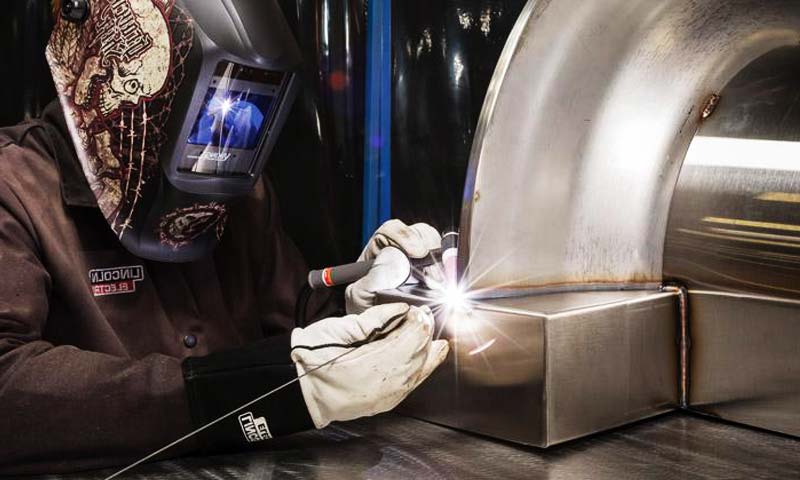
Mga Pagsasaalang-alang sa Welding: Hot Cracking, Sensitization, and Filler Selection
Welding both 304 at 316 stainless steels requires special attention to avoid common defects and preserve corrosion resistance:
- Hot Cracking: Occurs in the weld or heat-affected zone, especially in thick sections or complex weld joints.
- Sensitization: Chromium carbides can precipitate along grain boundaries at temperatures between 450-850°C during welding, nagiging sanhi ng intergranular kaagnasan.
Mitigation strategies:
- Gamitin ang low-carbon variants such as 304L or 316L to reduce carbide precipitation.
- Select appropriate filler materials:
-
- Para sa 304: Gamitin ang 308L or 309L fillers.
- Para sa 316: Gamitin ang 316L or 317L fillers, which contain molybdenum for enhanced corrosion resistance.
- Mag-apply pre-weld and post-weld heat treatments as necessary to restore corrosion resistance and relieve residual stresses.
- Employ welding techniques such as TIG, MIG, or laser welding with controlled heat input.
Pagtatapos ng Ibabaw: Polishing, Bead pagsabog, Electropolishing
Surface finish affects both the aesthetic appeal at paglaban sa kaagnasan of stainless steel products.
- Polishing: Lumikha ng isang makinis na, reflective surface often required for arkitektura, pagkain, and pharmaceutical applications.
A polished surface reduces sites for bacterial adhesion and corrosion initiation. - Bead pagsabog: Lumilikha ng isang matte, textured finish useful for grip enhancement or hiding surface imperfections.
- Electropolishing: An electrochemical process that removes a thin metal layer, na nagreresulta sa isang maliwanag na maliwanag, ultra-smooth, and highly corrosion-resistant surface.
Electropolished 316 stainless steel is often used in medical and high-purity environments.
7. Hygiene & Sanitary Applications of 304 mga bes 316 Hindi kinakalawang na asero
In industries where cleanliness, sterility, at paglaban sa kaagnasan ay pinakamahalaga, stainless steel—particularly 304 at 316 grades—stands out as the material of choice.
| Tampok | 304 Hindi kinakalawang na asero | 316 Hindi kinakalawang na asero |
| FDA/USDA Food Approval | ✔️ Yes | ✔️ Yes |
| Biofilm Resistance | Mataas na | Napakataas na |
| Resistance to Cleaners | Katamtaman | Napakahusay (especially against chlorides) |
| Biocompatibility | Mabuti na lang | Napakahusay |
| Autoclave Compatibility | Mabuti na lang | Napakahusay |
| CIP/SIP Suitability | Angkop | Highly suitable |
| Typical Foodservice Uses | Kitchen equipment, mga talahanayan, lumubog na ang mga | Fish processors, cheese vats, salt brine tanks |
| Typical Medical Uses | Basic equipment | Mga tool sa kirurhiko, mga implants, pharma reactors |
8. Price Difference of 304 Stainless Steel vs 316
304 stainless steel is generally more cost-effective than 316 hindi kinakalawang na asero.
The price difference is mainly due to the addition of molybdenum in 316 hindi kinakalawang na asero, which is an expensive alloying element.
Sa average, 316 stainless steel can cost 10-20% more than 304 hindi kinakalawang na asero, depending on market conditions, product form (such as sheet, bar, or pipe), and quantity purchased.
Gayunpaman, in applications where the superior corrosion resistance of 316 stainless steel is essential,
the additional cost may be offset by reduced maintenance, longer service life, and lower replacement costs over time.
9. Advantages and Disadvantages of 304 mga bes 316 Hindi kinakalawang na asero
When selecting between 304 at 316 hindi kinakalawang na asero, understanding their respective strengths and limitations is critical for making cost-effective and performance-appropriate decisions.

Buod ng Talahanayan ng Paghahambing: Pros and Cons
| Pag-aari | 304 Hindi kinakalawang na asero | 316 Hindi kinakalawang na asero |
| Gastos | ✅ Lower cost | ❌ Higher cost |
| Pangkalahatang Paglaban sa Kaagnasan | ✅ Good | ✅✅ Excellent |
| Paglaban sa Chloride | ❌ Poor (in marine/salty conditions) | ✅✅ Excellent |
| Formability | ✅ Excellent | ✅ Good (but harder) |
| Machinability | ✅ Moderate | ❌ Slightly more difficult |
| Email Address * | ✅ Widely available | ✅ Widely available |
| Use in Aggressive Cleaning | ❌ Limited | ✅ Excellent |
| Use in Food Contact | ✅ FDA-approved | ✅ FDA-approved |
| Medical/Pharmaceutical Use | ❌ Limited | ✅ Preferred for implants and clean systems |
| Marine Environment Use | ❌ Not recommended | ✅ Ideal choice |
10. Applications of 304 mga bes 316 Hindi kinakalawang na asero
Stainless steels are used across industries for their durability, kalinisan ng katawan, at paglaban sa kaagnasan.

Typical Applications of 304 Hindi kinakalawang na asero
304 ay ang most commonly used stainless steel grade worldwide due to its excellent balance of cost, paglaban sa kaagnasan, at pagiging formable.
Pagkain & Industriya ng Inumin
- Commercial kitchen equipment (lumubog na ang mga, mga talahanayan, mga refrigerator)
- Cookware and cutlery
- Brewing and dairy tanks
- Food storage containers
Arkitektura & Konstruksyon
- Interior and exterior decorative panels
- Handrails and balustrades
- Elevator doors and wall cladding
Automotive
- Exhaust manifolds and trim
- Mga kalasag ng init
- Mga tangke ng gasolina
Consumer Goods
- Dishwashers, Email Address *
- Outdoor furniture
- Fasteners and screws
Other Uses
- Mga heat exchanger
- Pipe systems in non-corrosive environments
- Chemical containers (non-chloride)
Typical Applications of 316 Hindi kinakalawang na asero
316 is preferred for more aggressive environments, especially where chlorides, asin, or harsh chemicals are present.
Industriya ng Dagat
- Boat fittings and hardware
- Coastal architectural components
- Offshore oil platforms and equipment
Parmasyutiko & Medikal na
- Mga instrumento sa kirurhiko
- Orthopedic implants
- Cleanroom equipment
Pagproseso ng Kemikal
- Chemical tanks and pipelines
- Heat exchangers exposed to chlorides or acidic media
- Mga Valve, mga bomba, and fittings in corrosive environments
Pagkain & Email Address * (High Hygiene Areas)
- Equipment exposed to acidic food products or salt
- High-temperature steam cleaning systems (CIP/SIP)
- Brewery and meat processing facilities
Mga Kagamitan sa Industriya
- Pulp and paper processing
- Textile dyeing and finishing
- Desalination plants
11. 304 mga bes 316 Hindi kinakalawang na asero: Comprehensive Comparison
Hindi kinakalawang na asero grado 304 at 316 are both austenitic, di-magnetiko (in annealed condition), and widely used across industries, but they serve different purposes due to their chemical composition and corrosion resistance.

Talahanayan ng Paghahambing
| Pag-aari | 304 Hindi kinakalawang na asero | 316 Hindi kinakalawang na asero |
| Mga Pangunahing Elemento ng Alloying | ~18% Cr, ~8% Ni | ~16% Cr, ~10% Ni, ~2% Mo |
| Paglaban sa kaagnasan | Excellent in general environments | Superior—especially in chloride and marine media |
| Pitting/Crevice Resistance | Katamtaman | Mataas na (due to Molybdenum) |
| Lakas ng Paghatak | ~ 515 MPa | ~ 515 MPa |
| Yield Lakas | ~ 205 MPa | ~ 205 MPa |
| Ang katigasan ng ulo (Brinell) | ~201 HB | ~217 HB |
| Magnetic Tugon | Hindi magnetic (may become slightly magnetic when cold-worked) | Same |
| Weldability | Napakahusay | Napakahusay, with slightly more care required |
| Machinability | Katamtaman (rating ~45%) | Slightly more difficult (~ 40%) |
| Formability | Napakahusay | Napakahusay |
| Gastos | Mas mababa | ~20–35% higher than 304 (depending on market) |
| Typical Uses | Sinks, cutlery, Mga Kagamitan, mga tangke | Marine, medikal na, pagproseso ng pagkain, mga halaman ng kemikal |
| FDA/USP Approval | Approved for food contact | Approved for both food and medical use |
Mga Pangunahing Pagkakaiba
Paglaban sa kaagnasan
- 304 is suitable for general indoor/outdoor use but vulnerable to chloride-induced pitting.
- 316 is far more resistant to Mga klorido, mga asido, and marine conditions due to the addition of molybdenum.
Gastos
- 316 is typically 20–35% more expensive kaysa sa 304, due to the addition of Mo and higher nickel content.
Chemical Durability
- 316 can handle harsh acids and saline solutions better—commonly used in chemical processing and marine applications.
Biocompatibility
- Both are FDA-approved, pero 316 is preferred for medical and surgical tools, thanks to better resistance to body fluids.
12. Mga Pamantayan & Certifications for 304 at 316 Hindi kinakalawang na asero
Stainless steel grades such as 304 at 316 are governed by a range of international standards and certifications to ensure quality, pagkakapare pareho, and suitability for various industrial applications.
International Standards: 304 mga bes 316 Hindi kinakalawang na asero
| Pamantayang Organisasyon | 304 | 316 | Equivalent Name(s) |
| ASTM International | ASTM A240, A276, A312, A554 | ASTM A240, A276, A312, A554 | UNS S30400 (304), UNS S31600 (316) |
| EN (European Norm) | EN 1.4301 | EN 1.4401 | X5CrNi18-10 (304), X5CrNiMo17-12-2 (316) |
| ISO | ISO 15510 (S30400) | ISO 15510 (S31600) | S30400 / S31600 |
| Hapon (Hapon) | JIS G4303 SUS304 | JIS G4303 SUS316 | SUS304 / SUS316 |
| GB (Tsina) | GB / T 3280, GB / T 4237 | GB / T 3280, GB / T 4237 | 06Cr19Ni10 (304), 06Cr17Ni12Mo2 (316) |
13. Future Directions & Inhinyeriya sa ibabaw
Emerging trends focus on strengthening and extending corrosion resistance through:
- Surface Nano-Coatings: Manipis, ultra-hard ceramic layers improve abrasion and microbial resistance—for instance, enhancing 316 for medical devices.
- Low-Nickel Austenitics: Grades such as UNS S32101 balance cost control and corrosion resistance in austenitic steels.
- Laser Surface Melting: Surface-engineered layers mimic 316’s corrosion performance on 304 Mga substrate, offering hybrid benefits.
14. Pangwakas na Salita
In the comparison of 304 mga bes 316 hindi kinakalawang na asero, the decision ultimately hinges on the specific requirements of the application, particularly in terms of paglaban sa kaagnasan, gastos, fabrication ease, at pagsunod sa regulasyon.
- 304 hindi kinakalawang na asero is a cost-effective, highly versatile material with excellent general corrosion resistance, magandang formability, and widespread availability.
It is ideal for indoor architectural projects, kitchen appliances, and general-purpose industrial applications where exposure to harsh environments is limited. - 316 hindi kinakalawang na asero, sa kabilang banda, mga alok superior resistance to chlorides, mga asido, and saline environments, primarily due to the inclusion of molibdenum.
It is the material of choice in marine, parmasyutiko, medikal na, at high-hygiene industries where increased durability, biocompatibility, and corrosion protection are critical.
Bilang material science advances, surface engineering and alloy innovation (hal., nano-coatings, hybrid structures) may further bridge the gap between the two grades, offering new solutions that optimize both pagganap at kahusayan sa gastos.
LangHe: Precision Stainless Steel Casting & Fabrication Services
LangHe is a trusted provider of high-quality stainless steel casting and precision metal fabrication services, serving industries where performance, tibay ng katawan, and corrosion resistance are critical.
With advanced production capabilities and a commitment to engineering excellence, LangHe delivers reliable, customized stainless steel solutions to meet the most demanding application requirements.
Our Stainless Steel Capabilities Include:
- Pamumuhunan sa Paghahagis & Nawala ang Wax Casting
High-precision casting for complex geometries, ensuring tight tolerances and superior surface finishes. - buhangin paghahagis & Paghuhulma ng Shell
Ideal for larger components and cost-effective production, especially for industrial and structural parts. - CNC Machining & Pagkatapos ng Pagproseso
Complete machining services including turning, paggiling, pagbabarena, buli na, and surface treatments.
Whether you need high-precision components, complex stainless assemblies, or custom-engineered parts, LangHe is your dependable partner in stainless steel manufacturing.
Makipag ugnay sa amin ngayon to learn how LangHe can deliver stainless steel solutions with the performance, pagiging maaasahan, and precision your industry demands.
Mga FAQ
Which is better, 304 o 316 hindi kinakalawang na asero?
316 stainless steel is generally better due to its superior corrosion resistance, especially in chloride or marine environments, pero 304 is often sufficient for less harsh conditions and is more cost-effective.
Is 304 o 316 stainless steel better for food?
Both are FDA-approved and widely used in food applications, pero 316 is preferred in more aggressive environments where exposure to salt or harsh cleaning chemicals is common.
What are the main differences between 304 at 316 hindi kinakalawang na asero?
The key difference is that 316 contains molybdenum, na nagpapahusay ng kaagnasan paglaban, especially against chlorides and marine environments. 304 does not have molybdenum but is less expensive and easier to form.
How does the cost of 304 compare to 316?
316 is generally 20-30% more expensive than 304 due to the addition of molybdenum and better corrosion performance.