En la industria manufacturera, Comprender todo el espectro de métodos de mecanizado es esencial para los ingenieros de procesos., maquinistas, y planificadores de producción.
Durante años, Los recién llegados al campo han tenido dificultades para distinguir entre los distintos procesos de corte: cuándo girar, cuando moler, cuando moler, y cuándo abandonar por completo los métodos tradicionales en favor de procesos eléctricos o basados en láser.
Esta confusión es comprensible.. El panorama del mecanizado se ha expandido dramáticamente durante el último siglo., evolucionando desde un simple torno manual a un sofisticado ecosistema de Mecanizado CNC centros, máquinas de descarga eléctrica, cortadores láser, y sistemas de chorro de agua.
Cada proceso tiene sus propias fortalezas., limitaciones, y aplicaciones ideales, y seleccionar la incorrecta puede provocar el desguace de piezas., herramientas dañadas, y costos innecesarios.
Este artículo explica sistemáticamente 13 métodos de mecanizado comunes, incluido 8 procesos de mecanizado tradicionales y 5 tecnologías de mecanizado especiales, ayudar a los ingenieros a comprender sus principios, ventajas, limitaciones, y aplicaciones típicas.
1. Los tres principios fundamentales de la formación de piezas
Cada componente mecánico, desde una simple arandela hasta un complejo álabe de turbina, se produce a través de uno de los tres principios fundamentales de fabricación.
Estos principios definen cómo se transforma el material desde materia prima hasta pieza terminada y sirven como distinción principal entre los diferentes métodos de procesamiento..
Principio 1: Formación de materiales (Δmetro ≈ 0)
En los procesos de formación de materiales., La masa total de la pieza de trabajo permanece casi sin cambios antes y después del procesamiento..
En lugar de quitar o agregar material, El material existente se remodela mediante deformación plástica, transformación de fase, o solidificación.
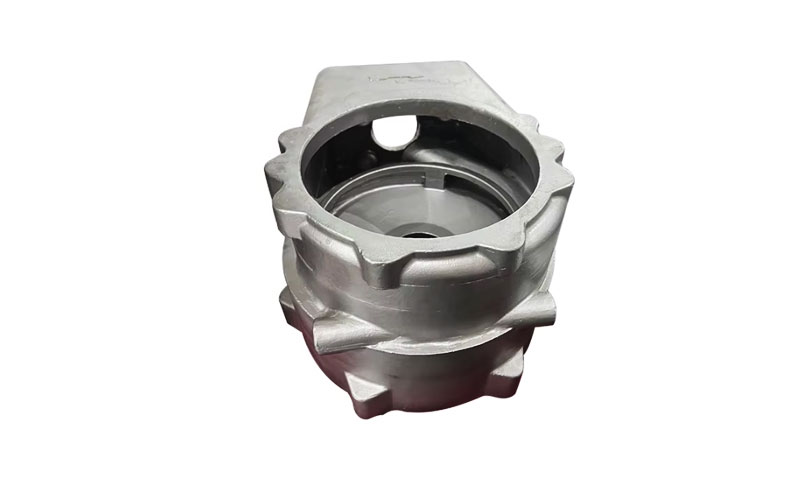
Estos procesos se utilizan principalmente para fabricar las formas iniciales de los componentes., comúnmente conocido como espacios en blanco, preformas, o piezas con forma casi neta.
Las piezas formadas pueden luego someterse a operaciones de mecanizado secundarias para lograr dimensiones y requisitos de superficie precisos..
Los procesos de formación de materiales son especialmente importantes porque determinan la estructura básica del material., propiedades mecánicas, y eficiencia de fabricación del componente final.
| Proceso | Mecanismo de fabricación | Aplicaciones típicas | Ventajas clave |
| Fundición | El metal fundido se vierte en la cavidad de un molde y se solidifica hasta darle la forma deseada.. | Alza de bombas, cuerpos de válvula, bloques de motor, bases de máquinas, componentes estructurales complejos. | Produce geometrías altamente complejas., pasajes internos, y componentes grandes con un desperdicio de material relativamente bajo. |
| Forja | El metal calentado se moldea mediante fuerzas de compresión utilizando matrices., prensas, o martillos. | Ejes, engranaje, bordes de conexión, componentes de presión, estructuras aeroespaciales. | Mejora las propiedades mecánicas mediante el flujo de grano refinado., mayor resistencia, y resistencia superior a la fatiga. |
Metalurgia en polvo |
Los polvos metálicos se compactan bajo presión y se sinterizan a temperaturas elevadas para formar componentes sólidos.. | Aspectos, filtros, engranaje, componentes resistentes al desgaste, piezas de precisión. | Utilización de material extremadamente alta, porosidad controlada, y capacidad para producir composiciones de materiales especiales. |
Insight clave: Si bien estos procesos no son “mecanizado” en el sentido tradicional, Proporcionan el material de partida (el material en bruto) que la mayoría de los componentes de precisión requieren..
Principio 2: Eliminación de materiales (Δm < 0)
Eliminación de materiales, también conocido como fabricación sustractiva, es el principio básico detrás del mecanizado convencional.
En estos procesos, El exceso de material se elimina de una pieza de trabajo inicial, como una fundición., forja, barra de valores, o placa: para crear la geometría final con dimensiones precisas, tolerancias, y acabados superficiales.
Esta categoría incluye los métodos de mecanizado más utilizados.:
- Torneado.
- Molienda.
- Perforación.
- Aburrido.
- Molienda.
- Mecanizado de engranajes.
- Mecanizado de descarga eléctrica (EDM).
La eliminación de material sigue siendo el enfoque de fabricación dominante para componentes mecánicos de precisión porque proporciona un control excelente sobre la calidad de la pieza final..
Características principales:
- Se retira material, producir virutas o virutas.
- Logra la mayor precisión dimensional y acabado superficial..
- El método más utilizado para producir componentes de precisión..
Insight clave
La eliminación de material es la base de la fabricación de precisión porque convierte piezas en bruto con forma casi neta en componentes de ingeniería funcionales..
Una ruta de fabricación industrial típica suele seguir este patrón.:
Fundición / Forja → Mecanizado en desbaste → Tratamiento térmico → Mecanizado de precisión → Acabado de superficies
Esta combinación equilibra la eficiencia del material., rendimiento mecánico, y precisión dimensional.
Principio 3: Adición de materiales (Δm > 0)
Los procesos de adición de materiales crean componentes añadiendo, depositando, o unir materiales.
A diferencia de la fabricación sustractiva, que elimina el exceso de material, Los procesos aditivos aumentan la cantidad de material durante la producción..
Esta categoría incluye tanto tecnologías de unión tradicionales como métodos modernos de fabricación aditiva..
| Proceso | Mecanismo de fabricación | Aplicaciones típicas | Ventajas clave |
| Soldadura | Los materiales se unen mediante calor., presión, o una combinación de ambos para crear un vínculo permanente. | Marcos estructurales, tuberías, buques a presión, tanques, equipo pesado. | Produce juntas permanentes fuertes y permite fabricar grandes estructuras de manera eficiente. |
| Soldadura / Soldadura | Un metal de aportación se funde y se distribuye entre los componentes sin fundir los materiales base.. | Intercambiadores de calor, componentes electrónicos, ensamblajes de precisión. | Permite la unión de materiales diferentes con mínima distorsión térmica.. |
3D impresión (Fabricación aditiva) |
El material se deposita capa por capa según un modelo digital. | Prototipos, estructuras livianas, piezas médicas personalizadas, geometrías complejas. | Proporciona una libertad de diseño excepcional y permite una producción rápida de formas complejas.. |
Insight clave: La fabricación aditiva es particularmente valiosa para la creación de prototipos., piezas personalizadas, y geometrías que son imposibles o extremadamente difíciles de lograr mediante métodos sustractivos.
2. El 8 Procesos de mecanizado tradicionales: La columna vertebral de la fabricación
El mecanizado tradicional se basa en herramientas de corte mecánicas para eliminar material de una pieza de trabajo..
Estos procesos son los caballos de batalla de la industria manufacturera., capaz de producir de todo, desde ejes simples hasta moldes y matrices complejos. Aquí están los 8 procesos tradicionales más comunes, sus principios de trabajo, y sus aplicaciones ideales.
Torneado: El proceso para piezas rotativas
Principio de trabajo:
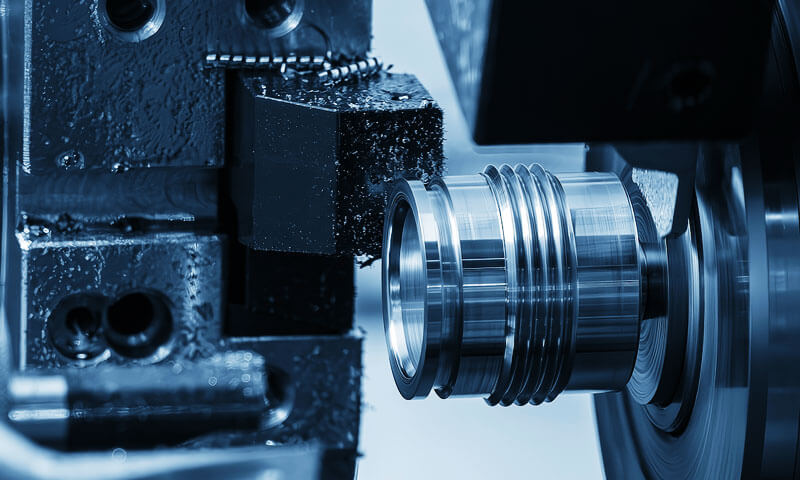
CNC Turning Es un proceso de mecanizado en el que la pieza de trabajo gira. (el movimiento primario) y una herramienta de corte de un solo punto se mueve linealmente (el movimiento de alimentación).
El torno es la máquina herramienta que se utiliza para realizar operaciones de torneado.. Mientras la pieza de trabajo gira, la herramienta elimina material para crear perfiles cilíndricos, caras, cirios, trapos, y otras características rotacionales.

Por qué Turning Excelsior:
El torneado ofrece una precisión excepcional para piezas rotativas debido a la estabilidad inherente del proceso..
La pieza de trabajo giratoria garantiza que todas las características sean concéntricas al mismo eje., facilitando la consecución de una excelente coaxialidad y perpendicularidad entre caras.
El proceso de corte es continuo. (sin interrupciones), permitiendo altas velocidades de corte, Excelente acabado superficial, y larga vida útil de la herramienta.
| Parámetro | Rango típico | Notas |
| Aspereza de la superficie | Real academia de bellas artes 0.1 - 3.2 µm | El torneado con diamante de metales no ferrosos puede alcanzar Ra <0.1 µm. |
| Precisión dimensional | ±0,01 – 0.05 mm | Los tornos de precisión pueden alcanzar ±0,005 mm. |
| Materiales típicos | Rieles, plástica, compuestos | No apto para materiales muy duros. (>HRC 60) sin herramientas especiales. |
Aplicaciones:
- Partes cilíndricas: ejes, patas, rodillos
- Piezas en forma de disco: bridas, engranaje, volante
- Componentes roscados: perno, tornillos, nueces
- Piezas excéntricas y no redondas. (en tornos de levas)
Tipos de máquinas:
- Tornos horizontales: El tipo más común; maneja una amplia gama de tamaños de piezas.
- Tornos verticales: Utilizado para grandes, componentes pesados en forma de disco (P.EJ., tambores de freno, engranajes grandes).
- tipo suizo (automático) tornos: Ideal para pequeño, largo, y partes complejas (P.EJ., componentes del reloj, dispositivos médicos).
- Centros de torneado CNC: Máquinas multieje capaces de realizar operaciones complejas (torneado, molienda, perforación) en una configuración.
Consejo práctico: El torneado es el proceso elegido para cualquier pieza con un eje de rotación dominante.. Para la producción de alto volumen, Los tornos CNC con alimentadores de barras pueden funcionar sin supervisión durante horas.
Molienda: El todoterreno versátil
Principio de trabajo:
Fresado de CNC utiliza un cortador giratorio de múltiples dientes (el movimiento primario) para eliminar material de una pieza de trabajo estacionaria o en movimiento.
El eje del cortador suele ser perpendicular a la superficie de la pieza de trabajo. (fresado final) o paralelo a él (fresado periférico).
El fresado puede producir superficies planas., ranura, bolsillos, contornos, y formas complejas en 3D.

Por qué el fresado sobresale:
El fresado es el proceso de mecanizado más versátil. Con el cortador y la configuración adecuados, Puede mecanizar casi cualquier característica de una pieza de trabajo.: superficies planas, surcos, perfiles, cavidades, e incluso superficies 3D complejas.
La acción de corte intermitente., mientras genera algo de vibración, permite altas tasas de eliminación de metal.
Distinción clave: Fresado ascendente vs.. fresado hacia abajo:
| Tipo de fresado | Acción de corte | Mejor para | Vida de herramientas |
| fresado hacia arriba (Convencional) | El espesor de la viruta aumenta de cero al máximo. | Máquinas más antiguas con reacción; Piezas fundidas y forjadas con piel dura.. | Más corto (por roce en la entrada). |
| fresado hacia abajo (Trepar) | El espesor de la viruta disminuye del máximo a cero. | Máquinas CNC con compensación de holgura; mejor acabado superficial. | Más extenso (entrada más limpia; menos frotamiento). |
Métodos de corte:
- fresado final: Eje de corte perpendicular a la pieza de trabajo; usado para tragamonedas, bolsillos, y perfiles.
- fresado periférico: Eje de corte paralelo a la pieza de trabajo; utilizado para superficies planas.
- planeado: Cortador de cara plana con plaquitas; utilizado para grandes superficies planas.
- corte de moscas: Herramienta de punta única para grandes superficies planas; Baja tasa de producción pero buen acabado..
Aplicaciones:
- Superficies planas: caras superiores, almohadillas de montaje
- Ranuras y ranuras: Ranuras en T, cajas lacas, colas de milano
- Perfiles complejos: engranaje, cámaras, impulsores
- 3contornos D: cavidades del molde, superficies de troquel, componentes aeroespaciales
- fresado de roscas: hilos de alta calidad en materiales duros
Tolerancias y acabado superficial:
| Parámetro | Rango típico |
| Aspereza de la superficie | Real academia de bellas artes 0.8 - 6.3 µm |
| Precisión dimensional | ±0,02 – 0.10 mm |
| Fresado de precisión | ±0,005 – 0.01 mm (con equipamiento de alta gama) |
Consejo práctico: Al fresar, Considere siempre la rigidez de la configuración.. Largo, los cortadores delgados desviarán, lo que lleva a un acabado superficial deficiente e inexactitud. Utilice corto, herramientas rígidas cuando sea posible.
Cepillado: La solución de superficie plana de bajo costo
Principio de trabajo:
El cepillado es un proceso de mecanizado en el que una herramienta de corte de un solo punto se mueve en línea recta. (el movimiento primario), cortar a través de una pieza de trabajo que se sostiene sobre una mesa alternativa.
La pieza de trabajo pasa por la herramienta estacionaria., que elimina una capa de material en cada pasada. La herramienta vuelve al inicio sin cortar. (golpe inactivo).
Por qué la planificación sobresale:
El cepillado es una solución de bajo coste para mecanizar grandes, superficies planas, especialmente para piezas individuales o lotes pequeños.
Las máquinas son relativamente simples y económicas., y el utillaje es básico (Herramientas HSS).
el largo, Los trazos rectos son ideales para mecanizar superficies rectas como bancadas de máquinas., carriles guía, y placas base grandes.
| Parámetro | Rango típico | Notas |
| Aspereza de la superficie | Real academia de bellas artes 1.6 - 6.3 µm | Bueno pero más áspero que el fresado.. |
| Precisión dimensional | ± 0.05 - 0.20 mm | Menos preciso que el fresado. |
| Tasa de producción | Bajo | El golpe ocioso hace perder el tiempo. |
Aplicaciones:
- Grande, superficies planas: bases de máquinas, camas, y mesas
- Ranuras rectas: ranuras en V, colas de milano, cajas lacas
- Piezas individuales y trabajos en lotes pequeños: trabajos de reparacion y mantenimiento
- Aplicaciones de sala de herramientas y fabricación de troqueles
Limitaciones:
- Baja productividad: la carrera en vacío limita las tasas de producción.
- Baja precisión: no es tan preciso como el fresado.
- Formas limitadas: sólo puede producir características planas o de línea recta.
Consejo práctico: El cepillado es más adecuado para trabajos en los que el coste de una fresadora o de su instalación es prohibitivo.. Rara vez se utiliza en producción de gran volumen..
Perforación: La base de la fabricación de agujeros
Principio de trabajo:
La perforación es el proceso de crear un orificio redondo en una pieza de trabajo utilizando una herramienta de corte giratoria de múltiples puntas llamada taladro. (o taladro helicoidal).
El taladro gira (movimiento primario) y se introduce en la pieza de trabajo (movimiento de alimentación). Los bordes cortantes en la punta eliminan el material., mientras las flautas evacuan las virutas.
Por qué la perforación sobresale:
La perforación es la forma más sencilla y económica de crear agujeros en metal..
Se puede realizar en una amplia gama de máquinas herramienta.: taladradoras, máquinas de fresado, e incluso taladros manuales. La perforación suele ser el primer paso en una secuencia de operaciones de perforación..
| Parámetro | Rango típico | Notas |
| Rango de tamaño de agujero | 0.1 - 100+ mm | Los agujeros pequeños requieren microtaladros especiales. |
| Profundidad del agujero | Hasta 10× de diámetro (estándar) | Los agujeros profundos requieren herramientas especializadas (perforación con pistola). |
| Precisión dimensional | ± 0.05 - 0.2 mm | La perforación es una operación de desbaste.; los agujeros pueden ser demasiado grandes. |
| Acabado superficial | Real academia de bellas artes 3.2 - 12.5 µm | Relativamente pobre en comparación con el escariado. |
Operaciones comunes relacionadas con la perforación:
| Operación | Descripción | Objetivo |
| Repente | Amplía y termina un agujero existente a un diámetro preciso. | Dimensionamiento de orificios de precisión; Mejora de la redondez y acabado superficial.. |
| avellanado | Amplía la parte superior de un agujero a un diámetro mayor.. | Crea un hombro para la cabeza de un tornillo. (tornillo de cabeza hueca). |
| avellanado | Crea una forma cónica en la parte superior de un agujero.. | Para tornillos de cabeza plana y desbarbado. |
| Ritmo | Corta roscas internas en un agujero.. | Para sujetadores roscados. |
Problemas comunes de perforación:
| Problema | Causa | Solución |
| Agujero de gran tamaño | oscilación del taladro; taladro desgastado; alimentación inadecuada. | Utilice un taladro central; comprobar la alineación del taladro; reducir la alimentación. |
| Error de ubicación del agujero | Movimiento de la pieza de trabajo; mal diseño. | Pieza de trabajo segura; utilizar una plantilla de perforación. |
| Formación de rebabas | Parámetros de perforación inadecuados. | Utilice una operación de desbarbado; reducir el avance al salir. |
Consejo práctico: Para hacer agujeros con precisión, Comience siempre con un taladro central para crear un punto de partida preciso., luego taladrar al tamaño, y finalmente escarbar para la dimensión final.
Aburrido: El proceso de ampliación de precisión
Principio de trabajo:
La perforación es el proceso de agrandar y refinar un agujero existente para lograr un tamaño preciso., redondez, y acabado superficial.
El mandrinado se realiza en un torno. (usando una barra aburrida) o en una taladradora.
Se introduce una herramienta de un solo punto en el orificio a lo largo del eje., quitar una fina capa de material.
Por qué el aburrido sobresale:
El mandrinado es el proceso elegido para lograr una alta precisión en los diámetros de los agujeros., concentricidad, y alineación.
Puede corregir errores posicionales de operaciones anteriores. (P.EJ., perforación) y es esencial para agujeros grandes y profundos que no se pueden escariar ni perforar con precisión.
| Parámetro | Rango típico | Notas |
| Diámetro del agujero | 5 - 500+ mm | Limitado por el diámetro de la barra de mandrinar.. |
| Profundidad | Limitado por la rigidez de la herramienta.. | Los agujeros profundos requieren un rígido, barra de mandrinar bien soportada. |
| Precisión dimensional | ±0,01 – 0.05 mm | El mandrinado de precisión es muy preciso.. |
| Acabado superficial | Real academia de bellas artes 0.4 - 3.2 µm | Muy bien. |
Aplicaciones:
- Agujeros precisos: alojamiento, cilindros del motor, componentes hidráulicos
- Alinear agujeros: donde múltiples agujeros requieren coaxialidad precisa
- Orificios de gran diámetro: agujeros demasiado grandes para escariadores estándar
- Corrección de agujeros existentes.: arreglar agujeros dañados o desalineados
Consejo práctico: Las barras de mandrinar deben ser rígidas.; Incluso una ligera desviación puede provocar vibraciones e imprecisiones.. Utilice el saliente de herramienta más corto posible.
Corte de engranajes y mecanizado de perfiles de dientes
Principio de trabajo:
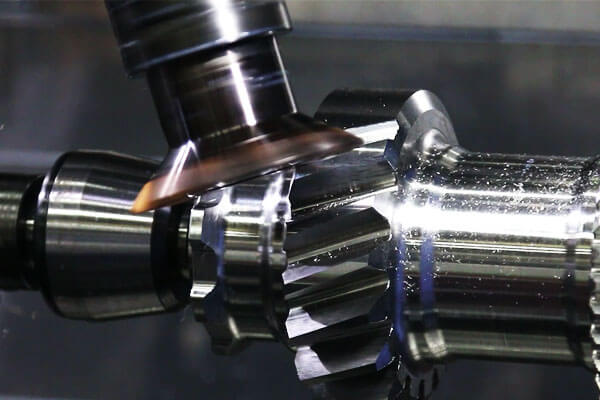
Engranaje El corte abarca una gama de procesos utilizados para producir los dientes de los engranajes., splines, y otros componentes dentados. Los dos métodos más comunes son tallando y formación de engranajes.
- Aficionado: Un cortador giratorio (la encimera) se alimenta a través de la pieza de trabajo giratoria, generar los dientes del engranaje mediante una acción de corte continua. El tallado con fresado es altamente productivo y ampliamente utilizado para engranajes rectos y helicoidales..
- Conformación de engranajes: Un cortador alternativo con el mismo perfil de diente que el engranaje se presiona en la pieza de trabajo., generando dientes uno a la vez. El modelado es más lento pero puede producir engranajes internos y algunos perfiles intrincados..
Por qué sobresale el corte de engranajes:
Los procesos de corte de engranajes están diseñados específicamente para producir precisión., fuerte, y dientes de engranaje silenciosos. Son el método estándar para fabricar la mayoría de engranajes y estrías..
Rango de rendimiento típico de mecanizado de engranajes
| Parámetro | Rango típico | Notas |
| Módulo / Tono diametral | Módulo 0.5–20+ | Cubre desde pequeños engranajes de precisión hasta grandes engranajes industriales.. |
| Diámetro del engranaje | 10–1000+ milímetros | Limitado principalmente por la capacidad de la máquina.. |
| Precisión de los dientes | Grado ISO 5–8 | Los grados más altos se utilizan para aplicaciones de precisión.. |
| Aspereza de la superficie | RA 0.8-3.2 μm | Las superficies lisas de los dientes reducen la fricción y el ruido de funcionamiento.. |
| Materiales típicos | Acero carbono, acero aleado, acero inoxidable, hierro fundido, bronce | La selección del material depende de la carga., velocidad, y medio ambiente. |
Métodos comunes de mecanizado de perfiles de dientes y corte de engranajes
| Método | Principio de trabajo | Mejores aplicaciones |
| Tallado de engranajes | Una fresadora giratoria genera continuamente dientes de engranaje mientras la pieza de trabajo gira en sincronización. | Producción en gran volumen de engranajes rectos, engranajes helicoidales, y engranajes de transmisión industriales. |
| Conformación de engranajes | Un cortador alternativo genera dientes mediante un movimiento de corte sincronizado. | Engranajes internos, splines, engranajes de hombro, y perfiles de engranajes complejos. |
Brochante |
Una brocha de varios dientes elimina material en una sola pasada progresiva. | Producción en gran volumen de engranajes internos., cajas lacas, y splines. |
| fresado de formas | Una fresa moldeada corta espacios entre dientes individuales según el perfil requerido. | Engranajes grandes, lotes pequeños, trabajo de reparacion, y diseños de engranajes personalizados. |
| Molienda de engranajes | Un proceso de acabado abrasivo elimina pequeñas cantidades de material después del tratamiento térmico.. | Engranajes endurecidos de alta precisión utilizados en automoción., aeroespacial, y maquinaria de alto rendimiento. |
Consejo práctico: El tallado de engranajes es el método más económico para la producción de engranajes de gran volumen. El moldeado se utiliza para engranajes internos y formas intrincadas..
Molienda: El proceso de acabado de precisión
Principio de trabajo:
Molienda utiliza una rueda abrasiva giratoria (compuesto por miles de duros, sémola afilada) para eliminar material mediante una combinación de corte, arada, y frotando.
La muela abrasiva actúa como una herramienta de corte de múltiples dientes., pero con un ángulo de ataque negativo, resultando en una muy suave, superficie de alta precisión.
Por qué la molienda sobresale:
El rectificado es el proceso elegido para lograr el máximo acabado superficial y precisión dimensional., especialmente en materiales endurecidos (HRC > 45).
Puede corregir las distorsiones del tratamiento térmico y producir planos., superficies paralelas.
| Parámetro | Rango típico | Notas |
| Aspereza de la superficie | Real academia de bellas artes 0.05 - 0.8 µm | El rectificado de precisión puede alcanzar Ra <0.05 µm. |
| Precisión dimensional | ±0,001 – 0.005 mm | El rectificado es el proceso de mecanizado más preciso. |
| Dureza del material | Arriba a 70 HRC | Puede moler aceros endurecidos., carburos. |
| Materiales típicos | Aceros endurecidos, aceros para herramientas, carburos, cerámica | todo duro, materiales quebradizos. |
Procesos de molienda comunes:
| Tipo | Descripción | Aplicaciones |
| Rectificado de superficies | Rectificado de superficies planas. | Placas de molde, mesas de maquina, estampación. |
| Rectificado cilíndrico | Rectificado de superficies cilíndricas externas.. | Ejes, patas, revistas de rodamientos. |
| Rectificado interno | Rectificado de superficies cilíndricas internas.. | Cajas de rodamientos, orificios del cilindro. |
| Rectificado sin centros | Rectificado cilíndrico sin centros. | Producción de ejes de gran volumen. |
| Rectificado de herramientas y cortadores | Rectificado de herramientas de corte. | Afilar taladros, fresas finales, escariadores. |
| Rectificado por avance lento | Profundo, molienda de avance lento. | Perfiles complejos en materiales duros. |
Consejo práctico: La molienda genera un calor significativo, que puede causar daño térmico (quemadura por molienda) y estrés residual. Utilice abundante refrigerante y parámetros de molienda adecuados..
Forma de molienda: La especialización del perfil
Principio de trabajo:
El rectificado de formas utiliza una muela perfilada o un proceso controlado por CNC para rectificar complejos, perfiles no lineales.
La rueda está revestida según un contorno específico., que luego se muele en la pieza de trabajo.
Esta es una extensión del rectificado para aplicaciones especializadas donde se requiere una forma o perfil específico..
Por qué sobresale el rectificado de formas:
El rectificado de formas puede producir resultados muy precisos., perfiles complejos en materiales endurecidos, con excelente acabado superficial y precisión dimensional.
Es el proceso de elección para formar matrices., golpes, y moldes.
Aplicaciones:
- Cavidades del molde
- Perfiles de matriz
- Contornos complejos en la fabricación de herramientas y troqueles.
- Perfiles de precisión en componentes aeroespaciales
Consejo práctico: El rectificado de formas es una especialidad, proceso de alto costo, Está justificado sólo cuando se requiere una precisión extrema y un excelente acabado superficial..
3. El 5 Procesos Especiales: Mecanizado no tradicional
Las herramientas de corte tradicionales tienen dificultades (o fallan por completo) cuando se enfrentan a materiales muy duros. (aceros para herramientas, carburos, cerámica), geometrías complejas (cavidades profundas, microcaracterísticas), o cuando se deben minimizar los daños térmicos o mecánicos.
Los procesos especiales utilizan formas de energía distintas al corte mecánico para eliminar el material., ofreciendo soluciones a estos desafíos.
Mecanizado de descarga eléctrica (EDM)
Principio de trabajo:
EDM(también conocida como erosión por chispas): elimina el material mediante una serie de descargas eléctricas que se repiten rápidamente. (moscas) entre un electrodo (herramienta) y la pieza de trabajo.
Las chispas erosionan pequeñas cantidades de material tanto del electrodo como de la pieza de trabajo..
La pieza de trabajo está sumergida en un fluido dieléctrico. (P.EJ., agua o aceite desionizado) para controlar la descarga y eliminar las partículas erosionadas.

Tipos de electroerosión:
| Tipo | Descripción | Aplicaciones |
| EDM de hundimiento (Electroerosionadora de ariete) | El electrodo se moldea al negativo de la cavidad deseada.. | Cavidades del molde, morir hundiéndose, cavidades 3D complejas. |
| EDM de alambre (MIEDO) | Un delgado, El alambre en movimiento continuo actúa como electrodo.. | Perfiles, contornos, piezas de precisión; espacios en blanco para estampar troqueles. |
| Electroerosión de orificios pequeños | Un electrodo de pequeño diámetro para perforaciones finas., agujeros profundos. | Orificios de refrigeración, boquillas de inyección de combustible. |
Por qué la electroerosión sobresale:
La electroerosión puede mecanizar cualquier material conductor., independientemente de su dureza. Puede producir complejos, formas intrincadas (incluyendo esquinas afiladas) con alta precisión y excelente acabado superficial.
El proceso no aplica fuerza mecánica., para que las piezas delicadas y de paredes finas se puedan mecanizar sin distorsión.
| Parámetro | Rango típico | Notas |
| Aspereza de la superficie | Real academia de bellas artes 0.2 - 3.2 µm | Depende del acabado; excelente para terminar. |
| Precisión dimensional | ±0,005 – 0.02 mm | Alta precisión, especialmente en electroerosión por hilo. |
| Dureza del material | Arriba a 70 HRC | Prácticamente ilimitado para materiales conductores. |
| Conductividad de materiales | Debe ser conductor de electricidad.. | No apto para cerámica., plástica, o vidrio. |
Aplicaciones:
- Cavidades y matrices de moldes.
- Moldes de inyección para plásticos.
- Componentes del motor de la aeronave
- Dispositivos médicos
- Contornos y perfiles complejos
Consejo práctico: La electroerosión es un proceso lento, por lo que normalmente se utiliza para operaciones de acabado., no para desbaste.
Mecanizado electroquímico (ECM)
Principio de trabajo:
ECM es un proceso de mecanizado no tradicional que elimina material mediante disolución anódica.. la pieza de trabajo (ánodo) y una herramienta con forma (cátodo) están sumergidos en un electrolito.
Una alta corriente continua pasa entre ellos., y los iones metálicos se disuelven de la pieza de trabajo, que luego son arrastrados por el flujo de electrolito.
Por qué ECM sobresale:
ECM puede mecanizar materiales duros y difíciles de mecanizar sin desgaste de herramientas y sin zonas afectadas por el calor..
El proceso es capaz de alcanzar altas tasas de eliminación de material y puede producir formas complejas con un buen acabado superficial.. Es especialmente adecuado para la eliminación de material a granel..
| Parámetro | Rango típico | Notas |
| Aspereza de la superficie | Real academia de bellas artes 0.2 - 0.8 µm | muy buen acabado. |
| Precisión dimensional | ± 0.05 - 0.2 mm | Menor precisión que la electroerosión. |
| Dureza del material | Arriba a 70 HRC | Prácticamente ilimitado; El material debe ser conductor.. |
| Tasa de eliminación de material | Alto | Adecuado para eliminación a granel. |
Aplicaciones:
- Palas y paletas de motores a reacción.
- cañones de armas (estriado)
- Implantes médicos
- moldes para plasticos
- Duro, componentes aeroespaciales complejos
Consejo práctico: ECM es un proceso especializado que requiere una inversión significativa en equipos y manejo de electrolitos.. Se justifica por los elevados volúmenes de producción o la dificultad de métodos alternativos..
Mecanizado láser
Principio de trabajo:
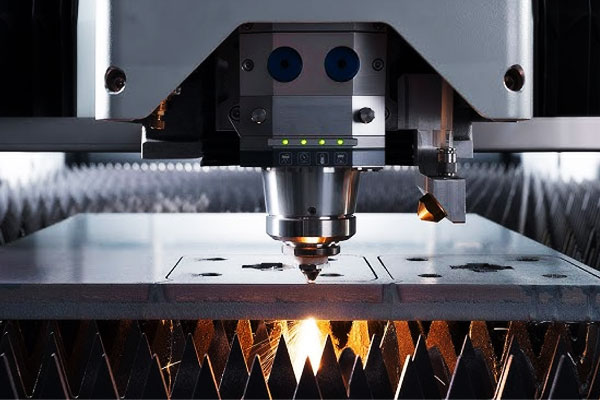
Mecanizado láser utiliza un haz de luz coherente altamente enfocado (láser) derretirse, vaporizar, o ablación del material de la pieza de trabajo.
El punto láser se mueve a través de la superficie mediante espejos o etapas de movimiento controlados por computadora..
Por qué el mecanizado láser sobresale:
El mecanizado por láser es rápido, preciso, y proceso sin contacto. Se puede realizar sobre cualquier material. (rieles, plástica, cerámica, vaso, compuestos) y puede lograr características extremadamente finas (hasta unas pocas micras).
El proceso no genera fuerzas mecánicas., para poder procesar piezas finas y delicadas.
| Parámetro | Rango típico | Notas |
| Ancho de ranura | 0.02 - 0.2 mm | Cortes muy estrechos. |
| Velocidad de corte | Arriba a 50 m/mi | Alto para materiales en láminas. |
| Tamaño de la característica | Hasta 10 µm | Para micromecanizado. |
| Material | Prácticamente cualquier material | Rieles, plástica, cerámica, vaso. |
| Exactitud | ±0,01 – 0.05 mm | Alta precisión. |
Aplicaciones:
- Corte: chapa de metal, perfiles, tubos
- Perforación: agujeros de precisión, agujeros de enfriamiento
- Grabado y marcado: números de pieza, logotipos
- Micromecanizado: stents médicos, microelectrónica
- Texturizado de superficies: creando microrugosidad
Consejo práctico: El mecanizado láser genera una zona afectada por el calor (ZAT). Para materiales sensibles al daño térmico., considere usar pulso corto (picosegundo/femtosegundo) láseres.
Mecanizado ultrasónico (USM)
Principio de trabajo:
El mecanizado ultrasónico utiliza una herramienta que vibra a alta frecuencia. (20-40 khz) y amplitud (10-50 µm).
Una lechada abrasiva (P.EJ., carburo de boro o carburo de silicio en agua) se introduce entre la herramienta y la pieza de trabajo.
La herramienta vibratoria impacta las partículas abrasivas contra la pieza de trabajo., Eliminación de material mediante microchips y erosión..
Por qué USM sobresale:
USM es el proceso elegido para mecanizar materiales duros y quebradizos que son difíciles o imposibles de mecanizar con métodos tradicionales..
Es particularmente eficaz para materiales no conductores. (cerámica, vaso, piedras) y materiales con baja conductividad eléctrica.
| Parámetro | Rango típico | Notas |
| Aspereza de la superficie | Real academia de bellas artes 0.2 - 1.6 µm | Buen acabado. |
| Precisión dimensional | ±0,005 – 0.02 mm | Alta precisión. |
| Material | Duro, frágil, materiales no conductores | Cerámica, vaso, piedras, carburos. |
| Desgaste de herramientas | Moderado | Las herramientas se desgastan por las partículas abrasivas.. |
Aplicaciones:
- Perforación de agujeros en cerámica y vidrio.
- Mecanizado de composites avanzados
- Muere por hundimiento en materiales duros.
- Componentes semiconductores y electrónicos.
Consejo práctico: USM es un proceso lento, por lo que normalmente se limita a piezas de alto valor o difíciles de mecanizar.
Mecanizado por chorro de agua
Principio de trabajo:
El mecanizado por chorro de agua utiliza un chorro de agua a alta presión. (con o sin partículas abrasivas) erosionar y cortar material. Las presiones pueden variar desde 2,000 a 6,000 bar (30,000 a 90,000 psi).
El agua es forzada a través de un orificio de pequeño diámetro., creando un chorro supersónico que impacta la pieza de trabajo.
Por qué el chorro de agua sobresale:
El mecanizado por chorro de agua es un proceso de corte en frío: no hay ninguna zona afectada por el calor., sin distorsión térmica, y sin cambios metalúrgicos.
Puede cortar una amplia gama de materiales., incluyendo metales, plástica, vaso, compuestos, y hasta comida.
El proceso es muy flexible., puede empezar en cualquier lugar (no se requiere agujero piloto), y produce una suave, borde preciso.
| Parámetro | Rango típico | Notas |
| Espesor de corte | Arriba a 200+ mm | Dependiendo del material y del abrasivo. |
| Ancho de ranura | 0.5 - 1.5 mm | Angosto. |
| Tolerancia de corte | ± 0.05 - 0.2 mm | Buena precisión. |
| Acabado superficial | Real academia de bellas artes 0.8 - 6.3 µm | Buen acabado. |
| Ninguna zona afectada por el calor | Sí | Sin daño térmico. |
Aplicaciones:
- Placas de metal gruesas: aluminio, acero inoxidable, titanio
- Materiales frágiles: piedra, vaso, cerámica
- Compuestos: materiales laminados (sin delaminación)
- Procesamiento de alimentos: cortar productos alimenticios
- Componentes aeroespaciales: formas complejas en materiales avanzados
Consejo práctico: El mecanizado por chorro de agua es un proceso potente y flexible, pero es relativamente lento y genera una gran cantidad de ruido y lodo de residuos.
Es más adecuado para materiales gruesos o difíciles de cortar donde otros procesos causarían daños térmicos..
4. Directrices de ingeniería para seleccionar métodos de mecanizado
No existe un proceso de mecanizado universalmente perfecto. La elección óptima depende de:
- Propiedades de los materiales.
- Geometría de la pieza.
- Volumen de producción.
- Requisitos de precisión.
- Requisitos de acabado superficial.
- Costo de fabricación.
| Solicitud | Proceso recomendado | Por qué? |
| Partes rotacionales (ejes, patas) | Torneado | Excelente para formas cilíndricas; buen acabado superficial y precisión. |
| Superficies planas, ranura, bolsillos | Molienda | Muy versátil; Puede producir una amplia gama de formas.. |
| Grande, superficies planas (piezas individuales) | Cepillado | Bajo costo para piezas simples.; bueno para reparación y mantenimiento. |
| Agujeros precisos | Perforación + Escariado o aburrido | Perforación para agujero rugoso; escariado/perforado para obtener el tamaño y la precisión finales. |
| Dientes de engranaje | Aficionado, Organización | Producción de alto volumen; procesos estandarizados. |
Materiales endurecidos (HRC > 45) |
Rectificado o electroerosión | Rectificado para superficies planas; EDM para formas complejas. |
| Cavidades 3D complejas | EDM o fresado (5-eje) | EDM para profundidad, formas intrincadas; 5-fresado de ejes para piezas más grandes. |
| Muy duro, materiales no conductores | Mecanizado ultrasónico | Cerámica, vaso, piedras. |
| Materiales térmicamente sensibles | Mecanizado por chorro de agua | Ninguna zona afectada por el calor; distorsión mínima. |
| Alta precisión, Características pequeñas | Mecanizado láser | caracteristicas muy finas, rápido, sin contacto. |
5. Conclusión
El mundo del mecanizado es vasto y complejo, pero en su esencia, se basa en tres principios fundamentales de transformación material: la formación, eliminación, y adición, y un conjunto de procesos bien definidos que pueden adaptarse a requisitos de piezas específicos.
El 8 procesos tradicionales: torneado, molienda, cepillado, perforación, aburrido, corte de engranajes, molienda, y moler formas: forman la columna vertebral de la industria manufacturera.
Son los caballos de batalla que producen la gran mayoría de componentes de precisión., desde simples pasadores hasta complejos moldes y troqueles. Su fuerza reside en su versatilidad., exactitud, y confiabilidad.
El 5 procesos especiales—EDM, ECM, mecanizado por láser, mecanizado ultrasónico, y mecanizado por chorro de agua: proporcionan alternativas poderosas cuando las herramientas de corte tradicionales alcanzan sus límites.
Permiten mecanizar piezas muy duras., frágil, o materiales complejos, y pueden lograr características que serían imposibles con métodos convencionales..
La clave para una selección exitosa del proceso radica en comprender el material., la geometría, el volumen de producción, y la tolerancia requerida.
Dominando las características y aplicaciones de cada proceso, Los ingenieros de fabricación pueden optimizar la eficiencia de la producción., Reducir los costos, y lograr una calidad superior.