Entre todas las familias de acero inoxidable, acero inoxidable austenítico Es la categoría más utilizada y de mayor importancia comercial., Representa más de la mitad de la producción mundial de acero inoxidable..
Es reconocido por su excepcional resistencia a la corrosión., Excelente soldadura, ductilidad excepcional, dureza superior, y un rendimiento notable tanto en entornos criogénicos como de alta temperatura.
Las propiedades únicas del acero inoxidable austenítico se originan en su estructura metalúrgica especial..
A diferencia de los aceros inoxidables ferríticos o martensíticos, El acero inoxidable austenítico mantiene una cúbico centrado en la cara (FCC) estructura cristalina a temperatura ambiente.
Esta estructura proporciona una excelente capacidad de deformación plástica y evita fallas frágiles., haciéndolo adecuado para aplicaciones que requieren conformado complejo, soldadura, y funcionamiento fiable en condiciones severas.
Grados comunes como 304, 316, 321, y 347 acero inoxidable se han convertido en estándares de la industria, mientras que los grados avanzados incluyen 904L, 254 Nosotros, y otros aceros inoxidables súper austeníticos Están diseñados para entornos altamente corrosivos..
1. ¿Qué es el acero inoxidable austenítico??
Austenítico acero inoxidable Es la familia de aceros inoxidables más grande y más utilizada., caracterizado por una estabilidad cúbico centrado en la cara (FCC) estructura cristalina, conocido metalúrgicamente como Austenita (fase γ).
Esta microestructura única se mantiene a temperatura ambiente mediante la adición de elementos de aleación estabilizadores de austenita., ante todo níquel (En), junto con elementos como manganeso (Mn), nitrógeno (norte), y carbono (C).
A diferencia del hierro puro, donde la austenita existe sólo a temperaturas elevadas, Los aceros inoxidables austeníticos se diseñan mediante aleaciones para retener la fase austenítica en un amplio rango de temperaturas., incluyendo condiciones ambientales y criogénicas.
Esta estructura austenítica estable es la razón fundamental por la que estos materiales exhiben su excelente combinación de resistencia a la corrosión., ductilidad, tenacidad, soldadura, y capacidad de fabricación.
El término “austenítico” no se refiere a una composición química específica sino más bien a la Fase metalúrgica dominante y estructura cristalina. de la aleación.
En hierro puro, la transformación de ferrita (fase α, estructura cúbica centrada en el cuerpo) austenita (fase γ, Estructura de la FCC) ocurre aproximadamente 912° C.
Sin embargo, la adición de níquel y otros elementos formadores de austenita amplía el rango de estabilidad de la fase FCC, permitiendo que la austenita permanezca estable a temperatura ambiente e incluso en condiciones de servicio de temperatura extremadamente baja.
Características clave que definen al acero inoxidable austenítico:
- Cúbica centrada en las caras (FCC) estructura cristalina—proporciona una excelente ductilidad, tenacidad, y formabilidad.
- Alto contenido de cromo (16-26%)—Proporciona resistencia a la corrosión a través de una capa de óxido pasiva autorreparable..
- Alto contenido de níquel (6-22%)—estabiliza la estructura austenítica, Mejora la resistencia a la corrosión, y mejora la tenacidad a bajas temperaturas.
- No magnético (en el estado recocido)—a diferencia de los aceros inoxidables ferríticos y martensíticos, Los grados austeníticos son esencialmente no magnéticos..
- No endurecible por tratamiento térmico.—La resistencia sólo puede aumentarse trabajando en frío. (Trabajar endureciendo).
- Excelente soldadura—la mayoría de los grados son fácilmente soldables, con calidades bajas en carbono (grados l) Diseñado específicamente para resistir la sensibilización..
2. Composición química del acero inoxidable austenítico
El rendimiento de los aceros inoxidables austeníticos está determinado por su composición química precisa..
La siguiente tabla resume los rangos de composición típicos de los elementos más comunes y sus funciones..
| Elemento | Rango típico (wt%) | Función |
| Cromo (CR) | 16-26 | Forma el óxido de cromo pasivo. (Cr₂o₃) película que proporciona resistencia a la corrosión. El aumento de Cr mejora la resistencia a los ácidos oxidantes y a la oxidación a alta temperatura.. |
| Níquel (En) | 6-22 | Estabiliza la estructura austenítica. a temperatura ambiente; Mejora la resistencia a la corrosión (especialmente en ácidos reductores); mejora la tenacidad a bajas temperaturas; reduce la tasa de endurecimiento por trabajo. |
| Molibdeno (Mes) | 0-7 | Mejora la resistencia a las picaduras y la corrosión de la grieta, especialmente en ambientes que contienen cloruro; aumenta la resistencia a altas temperaturas. |
| Manganeso (Mn) | ≤2.0 | Desoxidante; Estabiliza la austenita en algunos grados. (P.EJ., 200 serie); Mejora la trabajabilidad caliente. |
Silicio (Si) |
≤1.0 | Desoxidante; Mejora la resistencia a la oxidación. |
| Carbono (C) | ≤0.08 (estándar) <0.03 (grados l) | Fortalece la aleación pero puede reducir la resistencia a la corrosión al formar carburos de cromo. (sensibilización). Calificaciones de bajo carbono (304L, 316L) minimizar la sensibilización. |
| Nitrógeno (norte) | 0-0,25 | Fortalece la austenita; mejora la resistencia a las picaduras; estabiliza la estructura austenítica. |
| Cobre (Cu) | 0-3 | Mejora la resistencia a los ácidos reductores. (ácido especialmente sulfúrico); mejora la formabilidad. |
| Titanio (De) / Niobio (Nótese bien) | ≤1.0 | Estabilizadores—prevenir la sensibilización formando carburos preferentemente con carbono, dejando cromo en solución. |
Relaciones compositivas clave
- Equivalente de cromo vs.. equivalente de níquel: El equilibrio entre los elementos estabilizadores de ferrita (CR, Mes, Si) y elementos estabilizadores de austenita (En, Mn, norte, Cu) Determina si la microestructura es completamente austenítica o contiene algo de ferrita..
- Madera (Número equivalente de resistencia a las picaduras): Una fórmula empírica utilizada para comparar la resistencia a las picaduras de los aceros inoxidables.:
Tomar = %cr + 3.3 × %mes + 16 × %N
Los valores PREN más altos indican una mejor resistencia a la corrosión por picaduras y grietas en ambientes con cloruro.
| Calificación | Madera (aprox.) | Resistencia a la corrosión |
| 304 | 19 | Bien |
| 316 | 26 | Mejor |
| 904L | 34-38 | Excelente |
| superaustenítico (P.EJ., 6-Aleaciones de Mo) | >40 | Excepcional |
3. Principales tipos y grados de acero inoxidable austenítico
Los aceros inoxidables austeníticos representan la categoría de acero inoxidable más grande y más utilizada., que contiene numerosos grados desarrollados para cumplir con diferentes requisitos de resistencia a la corrosión, resistencia mecánica, capacidad de temperatura, soldadura, y rendimiento de fabricación.
Grados estándar de acero inoxidable austenítico (300 Serie)
El 300 serie es la familia más reconocida de aceros inoxidables austeníticos.
Estos grados suelen contener cromo y níquel como elementos de aleación principales., proporcionando un excelente equilibrio de resistencia a la corrosión, propiedades mecánicas, soldadura, y rentabilidad.
Grados comunes de acero inoxidable austenítico de la serie 300
| Calificación | Designación de EE. UU. | Composición aproximada | Características clave | Aplicaciones típicas |
| 304 | S30400 | 18% CR, 8% En | El acero inoxidable austenítico más utilizado.; Excelente resistencia a la corrosión, Formabilidad, soldadura, y equilibrio costo-rendimiento | Equipo de procesamiento de alimentos, equipo de cocina, componentes arquitectónicos, piezas automotrices, aplicaciones industriales generales |
| 304L | S30403 | 18% CR, 8% En, C baja ≤0,03% | Versión baja en carbono de 304; Minimiza la precipitación de carburo de cromo y mejora la resistencia a la corrosión después de la soldadura. | Estructuras soldadas, equipo de alimentos, equipo de procesamiento químico, buques a presión |
| 316 | S31600 | 16–18% CR, 10-14% tiene, 2–3% mes | La adición de molibdeno mejora significativamente la resistencia a la corrosión por picaduras y grietas inducida por cloruro. | Equipo marino, sistemas de procesamiento químico, equipo farmacéutico, dispositivos médicos |
316L |
S31603 | 16–18% CR, 10-14% tiene, 2–3% mes, bajo C | Versión baja en carbono de 316; Soldabilidad superior y resistencia a la corrosión intergranular. | Tanques farmacéuticos, estructuras marinas, sistemas de tuberías soldadas, equipo en alta mar |
| 321 | S32100 | 17–19% Cr, 9–12% en, El estabilizado | La estabilización del titanio evita la precipitación del carburo de cromo.; Mantiene la resistencia a la corrosión después de la exposición a altas temperaturas. | Intercambiadores de calor, sistemas de escape de aviones, componentes del horno, tuberías de alta temperatura |
| 347 | S34700 | 17–19% Cr, 9–13% en, Nb estabilizado | La estabilización con niobio mejora la resistencia a la sensibilización y aumenta la resistencia a la fluencia a altas temperaturas. | Componentes aeroespaciales, equipo de generación de energía, sistemas de procesamiento químico de alta temperatura |
309 |
S30900 | 22–24% Cr, 12–15% en | Un mayor contenido de cromo y níquel proporciona una mejor resistencia a la oxidación a temperaturas elevadas. | Piezas de horno, equipo de combustión, accesorios de tratamiento térmico, recipientes de alta temperatura |
| 310 | S31000 | 24–26% Cr, 19–22% en | Excelente resistencia a la oxidación y resistencia a temperaturas muy altas. | Revestimientos de hornos, tubos radiantes, intercambiadores de calor, equipo de procesamiento térmico |
| 904L | N08904 | 20% CR, 25% En, 4–5% mensual, Con adición | Grado superaustenítico con excelente resistencia al ácido sulfúrico y a productos químicos altamente corrosivos | Reactores químicos, equipo de procesamiento de ácido sulfúrico, sistemas farmaceuticos |
Grados de acero inoxidable superaustenítico y de alto rendimiento
Es posible que los aceros inoxidables austeníticos estándar no proporcionen un rendimiento suficiente en entornos extremadamente agresivos, como ácidos concentrados., agua de mar, y condiciones de alto contenido de cloruro.
Para estas aplicaciones, Aceros inoxidables de alto rendimiento o superausteníticos. han sido desarrollados.
Grados superausteníticos representativos
| Calificación | Designación de EE. UU. | Composición aproximada | Características clave | Aplicaciones típicas |
| 254 Nosotros | S31254 | 20% CR, 18% En, 6% Mes, 0.2% norte | Resistencia extremadamente alta al cloruro; Valor PREN superior 40; Excelente resistencia a la corrosión de picaduras y grietas | Sistemas de agua de mar, plataformas en alta mar, plantas de desalinización, equipo de procesamiento químico |
| AL-6XN | N08367 | 21% CR, 24% En, 6.3% Mes, 0.2% norte | Excelente resistencia a la corrosión por cloruros y ambientes ácidos.; alta resistencia mecánica | Ingeniería marina, industria de la pulpa y el papel, procesamiento químico, Equipo de control de contaminación |
| Incoloy 825 | N08825 | 21% CR, 42% En, 3% Mes, 2% Cu | Excelente resistencia a los ácidos reductores., agrietamiento de la corrosión del estrés, y entornos de alta temperatura | Equipos de petróleo y gas., procesamiento químico, aplicaciones nucleares |
Grados de acero inoxidable austenítico fundido
A diferencia de los aceros inoxidables forjados, Los aceros inoxidables fundidos están diseñados específicamente para la fabricación mediante procesos de fundición como:
- Fundición a la cera perdida
- Fundición de arena
- Moldura
Grados comunes de acero inoxidable austenítico fundido
| Grado fundido ASTM | Designación de EE. UU. | Equivalente forjado | Características clave | Aplicaciones típicas |
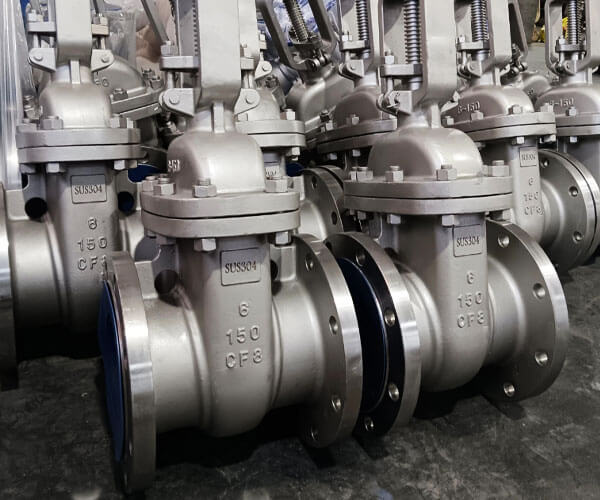
| CF-8 | J92600 | 304 | Acero inoxidable austenítico fundido de uso general; excelente resistencia a la corrosión y moldeabilidad | Cuerpos de válvula, alza de bombas, accesorios de tubería, componentes industriales |
| CF-3 | J92500 | 304L | Grado de fundición con bajo contenido de carbono; Excelente soldabilidad y resistencia a la sensibilización. | Componentes de válvula soldados, equipo químico, buques a presión |
| CF-8M | J92900 | 316 | Aleación fundida que contiene molibdeno con resistencia mejorada a la corrosión por cloruros. | Válvulas marinas, bombas quimicas, equipo farmacéutico |
| CF-3M | J92800 | 316L | Versión baja en carbono del CF-8M; excelente soldabilidad y resistencia a la corrosión | Equipos marinos, sistemas de desalinización, piezas fundidas de procesamiento químico |
| CN-7M | J95150 | Aleación 20 | Alta resistencia al ácido sulfúrico y ambientes químicos agresivos. | Equipo de procesamiento de ácido, componentes petroquímicos |
4. Propiedades clave del acero inoxidable austenítico
Los aceros inoxidables austeníticos son ampliamente reconocidos por su excelente equilibrio de resistencia a la corrosión., rendimiento mecánico, capacidad de fabricación, y confiabilidad del servicio.
Estas propiedades están determinadas principalmente por su estabilidad. cúbico centrado en la cara (FCC) estructura cristalina, alto contenido de cromo, y la presencia de elementos estabilizadores de la austenita como el níquel y el nitrógeno..
Resistencia a la corrosión
La excepcional resistencia a la corrosión es la característica más definitoria del acero inoxidable austenítico.
La protección proviene de la formación de una fina, estable, y autocuración óxido de cromo (Cr₂o₃) película pasiva en la superficie del material.
Cuando el cromo reacciona con el oxígeno del entorno., Forma una capa protectora de óxido que evita una mayor oxidación y protege el metal subyacente del ataque corrosivo..
Incluso cuando la superficie está dañada mecánicamente, Esta película pasiva puede regenerarse rápidamente en ambientes que contienen oxígeno..
El comportamiento frente a la corrosión del acero inoxidable austenítico depende de la composición de la aleación.. El cromo proporciona la resistencia básica a la corrosión., mientras que el níquel mejora la resistencia a ambientes químicos y estabiliza la estructura austenítica..
Grados que contienen molibdeno, como 316 y 316l, Ofrecen una resistencia significativamente mejorada a la corrosión por picaduras y grietas inducida por cloruro..
Para condiciones de servicio más agresivas, Grados avanzados como 904L., 254 Nosotros, y AL-6XN están desarrollados con niveles más altos de níquel., molibdeno, y nitrógeno para soportar ambientes severos, incluyendo agua de mar, ácidos fuertes, y aplicaciones de procesamiento químico.
Propiedades mecánicas y comportamiento de endurecimiento por trabajo
Los aceros inoxidables austeníticos proporcionan un excelente equilibrio entre resistencia y ductilidad..
En estado recocido, su resistencia es moderada en comparación con los aceros inoxidables martensíticos o dúplex, pero su plasticidad superior les permite sufrir deformaciones significativas sin agrietarse.
Exhibición típica de aceros inoxidables austeníticos:
- Resistencia a la tracción: aproximadamente 500–750 MPa
- Fuerza de rendimiento: aproximadamente 170–350 MPa
- Alargamiento: comúnmente arriba 40%
Una de las características mecánicas más importantes del acero inoxidable austenítico es su fuerte capacidad de endurecimiento por trabajo.
Durante la deformación en frío, como rodar, dibujo, o formando, La densidad de dislocaciones dentro de la estructura de la FCC aumenta., lo que resulta en una mayor resistencia y dureza.
Este comportamiento proporciona varias ventajas de ingeniería.. El trabajo en frío puede mejorar significativamente la resistencia mecánica de los componentes sin tratamiento térmico adicional, permitiendo fabricar alambre de acero inoxidable de alta resistencia, ballestas, tiras, y piezas de precisión.
Sin embargo, El fuerte endurecimiento del trabajo también crea desafíos durante la fabricación..
El material requiere mayores fuerzas de conformación., acelera el desgaste de la herramienta durante el mecanizado, y puede requerir un recocido intermedio durante operaciones de conformado severas para restaurar la ductilidad..
Dureza a baja temperatura
Los aceros inoxidables austeníticos poseen una tenacidad excepcional a temperaturas extremadamente bajas debido a su estructura cristalina estable FCC..
A diferencia de los aceros inoxidables ferríticos y martensíticos, No experimentan una temperatura de transición brusca de dúctil a frágil., permitiéndoles mantener una excelente resistencia al impacto incluso en condiciones criogénicas.
Grados comunes como 304L y 316L conservar una excelente tenacidad a temperaturas cercanas −196°C, haciéndolos materiales ideales para aplicaciones que involucran gases licuados y ambientes extremadamente fríos..
Esta combinación única de tenacidad a baja temperatura y resistencia a la corrosión hace que los aceros inoxidables austeníticos se utilicen ampliamente en:
- Sistemas de almacenamiento y transporte de GNL
- Tuberías criogénicas
- Equipos de oxígeno y nitrógeno líquidos.
- Sistemas de combustible aeroespaciales
- Infraestructura de la región fría
Pocos materiales de ingeniería proporcionan una confiabilidad criogénica comparable y al mismo tiempo mantienen una buena soldabilidad y resistencia a la corrosión..
Soldadura
Los aceros inoxidables austeníticos se consideran entre los materiales de acero inoxidable más soldables debido a su microestructura estable., Excelente ductilidad, y riesgo relativamente bajo de grietas relacionadas con la soldadura.
Se pueden fabricar utilizando métodos de soldadura comunes., incluyendo TIG, A MÍ, soldadura por láser, y soldadura por resistencia.
La mayoría de los grados estándar se pueden soldar sin precalentar., y las uniones soldadas generalmente conservan buenas propiedades mecánicas y resistencia a la corrosión..
Una consideración importante durante la soldadura es sensibilización, que ocurre cuando se forman precipitados de carburo de cromo en los límites de los granos durante la exposición a temperaturas de entre 450 y 850 °C..
Este proceso reduce la disponibilidad de cromo cerca de los límites de los granos y puede provocar corrosión intergranular..
Para minimizar este riesgo, grados bajos en carbono como 304L y 316L son ampliamente utilizados.
Su reducido contenido de carbono limita la formación de carburos y garantiza una mejor resistencia a la corrosión después de la soldadura., haciéndolos particularmente adecuados para recipientes a presión, sistemas de tuberías, equipo farmacéutico, y componentes de procesamiento químico.
Formabilidad y rendimiento de fabricación
La excelente formabilidad del acero inoxidable austenítico es un resultado directo de su estructura cristalina FCC y su alta ductilidad..
En comparación con muchas otras aleaciones de ingeniería, Los grados austeníticos pueden sufrir una deformación plástica extensa mientras mantienen la integridad estructural..
Son adecuados para procesos de fabricación como:
- Dibujo profundo
- Estampado
- Doblar
- Formación de rollo
- hidroformado
Calificaciones como 304 y 316 Se utilizan ampliamente para componentes de formas complejas., incluyendo equipo de cocina, dispositivos médicos, piezas automotrices, y carcasas industriales.
Su alto alargamiento permite a los fabricantes producir componentes complejos y de paredes delgadas con menos riesgos de agrietamiento..
Sin embargo, porque estos materiales se endurecen rápidamente durante la deformación, Las operaciones de conformado complejas pueden requerir herramientas optimizadas., múltiples etapas de formación, o recocido intermedio.
Características de mecanizado
Aunque los aceros inoxidables austeníticos son muy adecuados para conformar y soldar, Generalmente son más difíciles de mecanizar que los aceros al carbono..
Los principales desafíos del mecanizado están relacionados con su tenacidad., ductilidad, y comportamiento de endurecimiento laboral.
Durante el corte, la capa superficial puede endurecerse rápidamente, aumentando las fuerzas de corte y acelerando el desgaste de la herramienta.
Además, su conductividad térmica relativamente baja hace que se concentre más calor en la zona de corte, lo que puede reducir la vida útil de la herramienta.
Para lograr un rendimiento de mecanizado eficiente, Los fabricantes suelen utilizar:
- Parámetros de corte adecuados
- Herramientas afiladas de carburo o recubiertas
- Sistemas de refrigeración eficaces
- Configuraciones rígidas de la máquina
Calidades de mecanizado libre como 303 acero inoxidable A veces se seleccionan cuando se requiere una mejor maquinabilidad., aunque generalmente proporcionan una resistencia a la corrosión ligeramente menor que la estándar 304 o 316 calificaciones.
Comportamiento no magnético (Condición recocida)
Los aceros inoxidables austeníticos generalmente son no magnético en estado recocido porque su estructura austenítica FCC no exhibe comportamiento ferromagnético.
Esta característica los distingue de los aceros inoxidables ferríticos y martensíticos., que son naturalmente magnéticos debido a sus diferentes estructuras cristalinas.
Grados comunes como 304, 316, y 316L tienen una permeabilidad magnética muy baja después del recocido en solución, haciéndolos adecuados para aplicaciones donde se debe minimizar la interferencia magnética, incluido:
- Equipo medico
- Instrumentos de laboratorio
- Dispositivos electrónicos de precisión.
- Entornos relacionados con la resonancia magnética
Sin embargo, El trabajo en frío puede transformar parcialmente la austenita en martensita inducida por deformación., causando algún aumento en la respuesta magnética. El grado de magnetismo depende de la composición de la aleación., contenido de níquel, contenido de nitrógeno, y la cantidad de deformación mecánica.
5. Limitaciones del acero inoxidable austenítico
Aunque los aceros inoxidables austeníticos se utilizan ampliamente debido a su excelente resistencia a la corrosión., tenacidad, soldadura, y formabilidad, También tienen varias limitaciones que deben considerarse durante la selección de materiales y el diseño de componentes..
Menor límite elástico en la condición recocida
Una de las principales limitaciones de los aceros inoxidables austeníticos convencionales es su límite elástico relativamente bajo en estado recocido..
Grados comunes como 304 y 316 acero inoxidable normalmente tienen límites elásticos más bajos que muchos ferríticos, martensítico, y aceros inoxidables dúplex.
Esto significa que pueden requerir secciones más gruesas o métodos de refuerzo adicionales cuando se utilizan en aplicaciones de carga..
A diferencia de los aceros inoxidables martensíticos, Los grados austeníticos no se pueden reforzar mediante tratamiento térmico convencional.. Su fuerza se incrementa principalmente a través de:
- Trabajo en frío
- aleación de nitrógeno
- Fortalecimiento de la solución sólida
La deformación en frío puede mejorar significativamente la resistencia, pero puede reducir la ductilidad y aumentar la dificultad de conformado..
Para aplicaciones que requieren altas relaciones resistencia-peso, como estructuras marinas o componentes mecánicos pesados, Los aceros inoxidables dúplex o los aceros inoxidables endurecidos por precipitación pueden proporcionar un mejor rendimiento..
Riesgo de sensibilización durante la exposición térmica
Los aceros inoxidables austeníticos con mayor contenido de carbono pueden experimentar sensibilización cuando se expone a temperaturas típicamente entre 450° C y 850 ° C, especialmente durante la soldadura o el servicio prolongado a alta temperatura.
Durante este proceso:
- El carbono reacciona con el cromo para formar precipitados de carburo de cromo en los límites de los granos..
- Cerca de los límites de los granos se desarrollan áreas empobrecidas en cromo..
- La resistencia a la corrosión local disminuye., potencialmente causando corrosión intergranular.
Para minimizar este riesgo, Los ingenieros comúnmente seleccionan:
- Grados bajos en carbono, como 304L y 316L
- Grados estabilizados, como 321 y 347
Estos grados están diseñados para mantener la resistencia a la corrosión después de la soldadura o la exposición térmica..
Fisuración por corrosión bajo tensión en ambientes de cloruro
Aunque los aceros inoxidables austeníticos proporcionan una excelente resistencia a la corrosión general, pueden ser vulnerables a agrietamiento de la corrosión del estrés (SCC) bajo ciertas condiciones.
El SCC generalmente ocurre cuando existen tres factores simultáneamente:
- Estrés por tracción
- Ambiente que contiene cloruro
- Temperatura elevada
Los entornos de riesgo comunes incluyen:
- Sistemas de agua de mar
- Equipos marinos
- Procesos químicos que contienen cloruros.
- Sistemas industriales de alta temperatura
Grados austeníticos de mayor aleación con mayor contenido de níquel, molibdeno, y contenido de nitrógeno, como 904L, 254 Nosotros, y AL-6XN, Proporcionan una resistencia mejorada a la corrosión inducida por cloruro..
Sin embargo, para entornos de cloruro extremadamente severos, Aún se pueden preferir los aceros inoxidables dúplex o súper dúplex..
Rendimiento de mecanizado difícil
Los aceros inoxidables austeníticos son generalmente más difíciles de mecanizar que los aceros al carbono debido a su comportamiento mecánico único..
El principal desafío es su fuerte tendencia al endurecimiento del trabajo. Durante el mecanizado, la capa superficial deformada se vuelve más dura, aumentando las fuerzas de corte y acelerando el desgaste de la herramienta.
Las dificultades adicionales de mecanizado incluyen:
- Baja conductividad térmica, causando concentración de calor en la zona de corte
- Alta ductilidad, lo que resulta en virutas largas y difíciles de controlar
- Mayor riesgo de un acabado superficial deficiente
El mecanizado eficiente requiere:
- Parámetros de corte adecuados
- Herramientas afiladas y resistentes al desgaste.
- Refrigeración y lubricación efectivas
- Configuraciones rígidas de la máquina
Calidades de mecanizado libre como 303 acero inoxidable puede mejorar la eficiencia del mecanizado, aunque generalmente sacrifican algo de resistencia a la corrosión en comparación con el estándar 304.
Mayor costo de material
Los aceros inoxidables austeníticos son generalmente más caros que los aceros inoxidables ferríticos o martensíticos debido a su mayor contenido de aleación., especialmente níquel.
El níquel es esencial para estabilizar la estructura austenítica y mejorar la tenacidad., pero aumenta significativamente el costo del material.
Elementos de aleación adicionales como el molibdeno en 316 y los grados súper austeníticos aumentan aún más el precio.
Sin embargo, El mayor costo inicial a menudo se ve compensado por:
- Vida útil más larga
- Menores requisitos de mantenimiento
- Mejor resistencia a la corrosión
- Frecuencia de reemplazo reducida
Para aplicaciones donde la falla por corrosión resultaría en un alto tiempo de inactividad o riesgos de seguridad, El acero inoxidable austenítico a menudo proporciona un mejor valor económico general..
Formar desafíos
Los aceros inoxidables austeníticos tienen una excelente conformabilidad, pero su fuerte comportamiento de endurecimiento por trabajo puede crear desafíos durante operaciones de conformado complejas..
Comparado con los aceros al carbono., ellos requieren:
- Mayores fuerzas de formación
- Equipos más potentes
- Control de procesos más cuidadoso
Durante el doblado y estampado, Manguera Puede ocurrir debido a su alta recuperación elástica.. Esto puede afectar la precisión dimensional y requerir compensación durante el diseño de la herramienta..
Para embutición profunda y procesos de conformado complejos, Es posible que los fabricantes deban considerar:
- Operaciones de conformado en varias etapas.
- Recocido intermedio
- Geometría de herramientas optimizada
A pesar de estos desafíos, Los aceros inoxidables austeníticos siguen estando entre los materiales de acero inoxidable más moldeables disponibles..
6. Aplicaciones del acero inoxidable austenítico
Debido a su excelente combinación de resistencia a la corrosión., tenacidad, soldadura, y capacidad de fabricación, El acero inoxidable austenítico se utiliza en casi todos los sectores industriales importantes..
| Industria | Aplicaciones | Calificaciones típicas | Requisitos clave |
| Alimento & bebida | Tanques, buques, tubería, transportadores, Cuchillería, equipo de cocina. | 304, 316L | Cumple con la FDA; higiénico; resistente a la corrosión; fácil de limpiar. |
| Médico & farmacéutico | Instrumentos quirúrgicos, implantes, sistemas wifi, equipo de sala limpia. | 316L, 304L | Biocompatible; esterilizable; no poroso; resistente a la corrosión. |
| Procesamiento químico | Reactores, intercambiadores de calor, tubería, válvulas, zapatillas. | 316L, 904L, Aleación 20 | Resistencia a la corrosión por ácidos., químicos, y altas temperaturas. |
| Marina & costa afuera | Tubería de agua de mar, zapatillas, intercambiadores de calor, plataformas en alta mar. | 316L, 254 Nosotros, dúplex | Resistencia a las picaduras de cloruro; resistencia a la corrosión del agua de mar. |
| Arquitectónico & construcción | Revestimiento, techumbre, pasamanos, paredes de cortina, secciones estructurales. | 304, 316 | Estética; resistencia a la corrosión; durabilidad; Larga vida útil. |
Generación de energía |
Intercambiadores de calor, tubos de condensador, componentes de la caldera, piezas de turbina. | 304L, 316L, 310, 347 | Resistencia a altas temperaturas; resistencia a la oxidación; resistencia a la fluencia. |
Automotor |
Sistemas de escape, componentes del turbocompresor, sensores, recortar. | 304, 321, 310 | Resistencia a la oxidación a alta temperatura; resistencia a la corrosión; Formabilidad. |
| Aeroespacial | Componentes del motor, sistemas de escape, partes estructurales, sujetadores. | 304, 321, 347 | Resistencia a altas temperaturas; resistencia a la corrosión; tenacidad. |
| Criogénico | Tanques de almacenamiento de GNL, tubería criogénica, transporte de gas licuado. | 304, 316 | Dureza a baja temperatura (sin DBTT). |
| Electrónica | Alojamiento, conectores, protector, componentes del instrumento. | 304, 316L | No magnético; resistente a la corrosión; Formabilidad. |
| Aceite & gas | Tubería, válvulas, guarniciones, equipo submarino, componentes de la cabeza de pozo. | 316L, 904L, 254 Nosotros | Resistencia al cloruro SCC; alta fuerza; resistencia al gas amargo. |
7. Acero inoxidable austenítico frente a otros tipos de acero inoxidable
Los aceros inoxidables se clasifican en varias familias principales según su microestructura, composición de aleación, propiedades mecánicas, y respuesta al tratamiento térmico.
Aunque todos los aceros inoxidables dependen del cromo para lograr resistencia a la corrosión., Las diferencias en la estructura cristalina y los elementos de aleación dan como resultado variaciones significativas en la resistencia., tenacidad, rendimiento de corrosión, soldadura, e idoneidad de la aplicación.
| Criterio | Acero inoxidable austenítico | Acero inoxidable ferrítico | Acero inoxidable martensítico | Acero inoxidable dúplex | Endurecimiento por precipitación (Ph) Acero inoxidable |
| Estructura cristalina | FCC (Austenita) | BCC (ferrito) | BCT (martensita) | FCC mixto + BCC | Estructura martensítica o austenítica según el grado. |
| Contenido típico de cromo | 16–26% | 10.5–30% | 11–18% | 21–26% | 14–17% |
| Contenido típico de níquel | 6–22% | <1% | <2% | 4–7% | 3–8% |
| Contenido de molibdeno | 0–7% | 0–2% | 0–1% | 0–4% | 0–4% |
| Dureza máxima | ≤217 HB | ≤250 HB | Arriba a 600 media pensión (apagado) | ≤300 HB | Arriba a 500 media pensión |
| Fuerza de rendimiento (Recocido) | 170–280 MPa | 200–300 MPA | 250–450 MPA | 450–550 MPA | 550–1.100 MPa |
| Resistencia a la tracción | 485–650 MPA | 400–500 MPA | 700–1,000 MPA | 650–800 MPA | 1,000–1.300 MPa |
| Alargamiento | 35–60% | 20–30% | 10–20% | 20–30% | 8–15% |
| Resistencia general de corrosión | Excelente | Bien | Moderado | Excelente | Bueno a excelente |
| Resistencia al agrietamiento por corrosión bajo tensión de cloruro | Moderado | Bien | Pobre | Excelente | Moderado |
| Dureza a baja temperatura | Excelente | Pobre (transición dúctil a frágil) | Pobre (transición dúctil a frágil) | Moderado a bueno | Moderado |
Fuerza de alta temperatura |
Excelente (aproximadamente 800–1100°C dependiendo del grado) | Bien (hasta aproximadamente 800°C) | Moderado (normalmente por debajo de 400°C) | Limitado en comparación con los grados austeníticos | Moderado |
| Soldadura | Excelente | Bien | Pobre a moderado | Bien | Bien |
| Comportamiento magnético | No magnético en condición recocida | Magnético | Magnético | Débilmente magnético | Generalmente magnético |
| Endurecimiento por tratamiento térmico | No (reforzado principalmente por trabajo en frío) | Limitado | Sí | No | Sí |
| Costo relativo | Mayor debido al contenido de níquel | Más bajo | Moderado | Más alto | Más alto |
| Aplicaciones típicas | Equipo químico, procesamiento de alimentos, sistemas marinos, dispositivos médicos, arquitectura | Sistemas de escape automotriz, accesorios, paneles arquitectónicos | Cuchillería, válvulas, aspectos, componentes resistentes al desgaste | Plataformas en alta mar, sistemas de agua de mar, procesamiento químico | Componentes aeroespaciales, sujetadores de alta resistencia, piezas mecánicas de precisión |
8. Conclusión
Los aceros inoxidables austeníticos ocupan una posición única e irreemplazable en el panorama de la ingeniería de materiales..
Su estructura cristalina FCC totalmente austenítica ofrece una combinación de excelente resistencia a la corrosión., formabilidad excepcional, Excelente dureza criogénica y buen rendimiento a altas temperaturas que ninguna otra familia de acero inoxidable puede igualar por completo..
De lo omnipresente 18/8 calificación 304 a aleaciones superausteníticas de alto rendimiento, Esta clase de materiales proporciona soluciones calibradas para cada nivel de severidad de servicio corrosivo..
Comprender los aceros inoxidables austeníticos significa reconocer tanto su extraordinaria versatilidad como sus límites definidos.
Destacan en la corrosión general., criogénico, aplicaciones de alta temperatura y de conformado intensivo, pero no son la opción óptima para tareas estructurales de alta resistencia., Entornos severos de SCC con cloruro o componentes mecanizados de gran volumen donde otras familias de acero inoxidable pueden ofrecer un mejor rendimiento a un costo menor..
Preguntas frecuentes
¿Por qué el acero inoxidable austenítico no es magnético??
La cúbica centrada en las caras (FCC) La estructura de la austenita no es ferromagnética..
Esto contrasta con los aceros inoxidables ferríticos y martensíticos., que tienen estructuras BCC y son magnéticos.
¿Se puede endurecer el acero inoxidable austenítico mediante tratamiento térmico??
No. Los aceros inoxidables austeníticos no pueden endurecerse mediante tratamiento térmico.. Se fortalecen únicamente mediante trabajo en frío. (Trabajar endureciendo).
Esto se debe a que la estructura FCC no sufre una transformación martensítica al enfriarse..
¿Qué es la sensibilización?, y como se previene?
La sensibilización se produce cuando los carburos de cromo precipitan en los límites de los granos a 450‑850 °C., agotar el cromo localmente y causar corrosión intergranular.
Se previene utilizando grados bajos en carbono. (304L, 316L), grados estabilizados (321, 347), o enfriamiento rápido después de soldar.
¿Cuál es la diferencia entre 304 y 304L?
304L tiene un menor contenido de carbono (≤0,03% frente a. ≤0.08% para 304).
Esto reduce el riesgo de sensibilización durante la soldadura., haciendo que el 304L sea adecuado para estructuras soldadas que requieren buena resistencia a la corrosión.
¿Cuál es el número PREN??
Madera (Número equivalente de resistencia a las picaduras) es una fórmula empírica utilizada para predecir la resistencia a las picaduras de los aceros inoxidables: Tomar = %cr + 3.3 × %mes + 16 × %N.
Los valores PREN más altos indican una mejor resistencia a la corrosión por picaduras y grietas en ambientes con cloruro.
¿Es el acero inoxidable austenítico adecuado para aplicaciones criogénicas??
Sí. Aceros inoxidables austeníticos (especialmente 304 y 316) mantener una alta tenacidad hasta temperaturas criogénicas (−269°C, helio liquido).
No presentan una transición dúctil a frágil., haciéndolos esenciales para el almacenamiento de GNL y equipos criogénicos..