编辑翻译
经过 Transposh - translation plugin for wordpress
Custom Overmolding Services Manufacturer

包覆成型: 过程, 材料, 好处 & 应用领域

内容表 展示

Overmolding is an advanced 注入成型 technique used to combine two or more materials into a single functional component.

Instead of manufacturing every component separately and assembling them afterward, overmolding allows a secondary material to be molded directly over a preformed substrate.

The result can combine the structural properties of a rigid material with the flexibility, grip, 密封, 绝缘, 冲击阻力, or aesthetic characteristics of an elastomer or other polymer.

The process is widely used in products where material integration, ergonomic performance, environmental protection, and assembly reduction are important.

Typical examples include power-tool handles, automotive switches, 电连接器, 医疗设备外壳, 消费电子产品, 电缆组件, 握把, 密封, and industrial controls.

1. What Is Overmolding?

Overmolding is a manufacturing process in which a second material is injection molded around or onto an existing 基材, 插入, or previously molded component to create an integrated multi-material part.

The substrate provides the underlying structure of the component, while the overmolded material adds specific functional or aesthetic characteristics.

取决于申请, the substrate may be a rigid thermoplastic, metal insert, or another preformed component.

The overmold may be a softer thermoplastic elastomer (热塑性弹性体), 热塑性聚氨酯 (热塑性聚氨酯), thermoplastic rubber, or another compatible polymer.

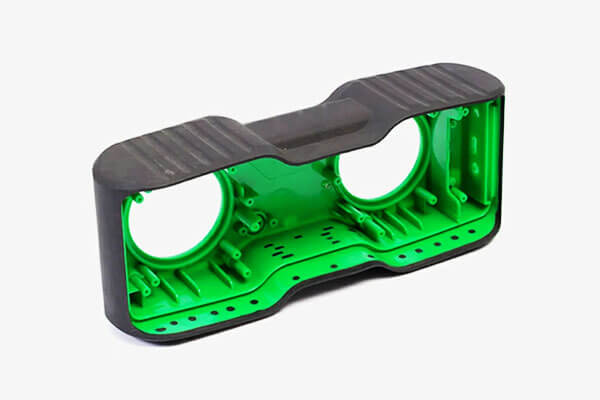
Overmolding Parts
Overmolding Parts

A simple representation of the structure is:

Substrate → Overmolding Material → Integrated Finished Part

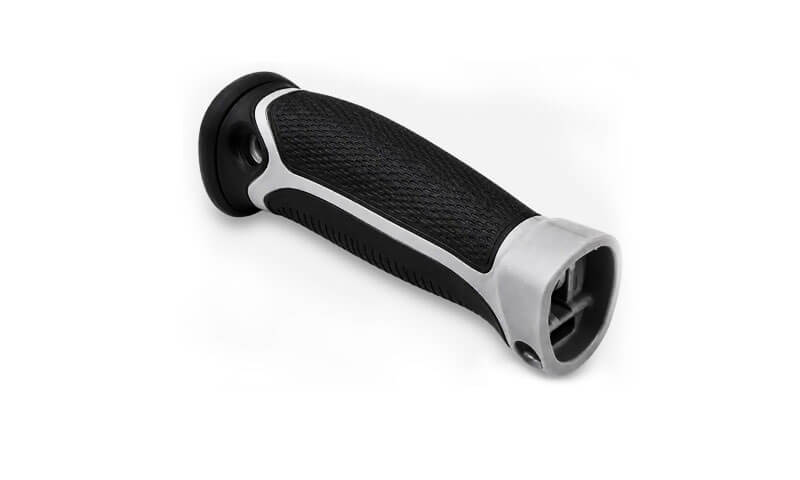
例如, consider a handheld power tool. The internal housing may be molded from a rigid engineering plastic such as ABS or reinforced nylon to provide structural strength.

A softer TPE or TPU layer can then be molded over selected areas of the housing to provide a non-slip grip and improve vibration absorption.

Instead of producing a separate rubber grip and installing it during assembly, overmolding integrates the grip directly into the housing.

The Basic Structure of an Overmolded Component

An overmolded product generally consists of two functional material zones:

成分 主要功能
基材 Provides structural support, 维稳定性, or mechanical attachment
Overmold Adds grip, 密封, 缓冲, 绝缘, 保护, or aesthetics
Bonding Interface Transfers loads and maintains material attachment

Key Characteristic: Multi-Material Integration

The defining characteristic of overmolding is direct integration of different materials into one finished component.

This distinguishes overmolding from conventional assembly. In a traditional assembly process, individual components are manufactured separately and subsequently joined using fasteners, 粘合剂, 剪辑, press fits, 焊接, 或其他方法.

Overmolding moves part of that integration into the molding process itself.

This can produce several manufacturing advantages:

  • Fewer individual components
  • Reduced assembly operations
  • Improved component integration
  • Consistent positioning of the secondary material
  • Better sealing and environmental protection
  • Improved ergonomics and tactile performance
  • Greater design freedom
  • Potential reduction in assembly-related defects

然而, the interface between the substrate and overmold becomes a critical engineering feature.

The two materials must remain securely attached under the actual operating conditions of the product.

Temperature cycling, 水分, 化学物质, 机械负载, 影响, and repeated flexing can all influence interface performance.

2. Types of Overmolding

Overmolding is not a single standardized manufacturing configuration.

Plastic-to-Plastic Overmolding

Plastic-to-plastic overmolding involves molding one thermoplastic directly over a previously molded plastic substrate.

It is commonly used when two polymers provide complementary performance characteristics.

例如, a rigid engineering plastic can provide the structural framework while a softer thermoplastic elastomer forms a grip, 海豹, button, or protective layer.

或者, two rigid polymers may be combined to create different functional zones within the same component.

The main engineering challenge is achieving adequate adhesion or mechanical retention between the two polymers while preventing deformation of the substrate during the second molding cycle.

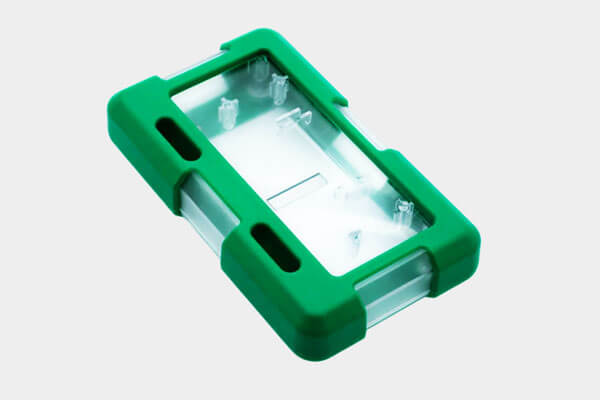
Overmolding Parts
Overmolding Parts

Typical combinations include:

  • ABS + 热塑性弹性体
  • 个人电脑 + 热塑性弹性体
  • PC/ABS + 热塑性弹性体
  • 尼龙 + 热塑性弹性体
  • 聚丙烯 + TPE or TPV
  • 聚对苯二甲酸丁二醇酯 + 热塑性弹性体
  • ABS + 热塑性聚氨酯

Not every combination is inherently compatible. The exact grade, 配方, 表面状况, processing temperature, and molding conditions must be evaluated.

Plastic-to-Elastomer Overmolding

Plastic-to-elastomer overmolding is one of the most widely recognized forms of overmolding.

A flexible material such as TPE, 热塑性聚氨酯, TPV, or another thermoplastic elastomer is molded over a rigid plastic substrate.

The purpose is usually functional rather than purely aesthetic. The elastomer can provide:

  • Improved grip and ergonomics
  • Shock and impact absorption
  • 振动阻尼
  • 密封
  • Soft-touch surfaces
  • Slip resistance
  • 电气绝缘
  • Protection against environmental contamination

Power-tool handles provide a typical example. The rigid substrate supplies structural support, while the elastomeric overmold provides a comfortable and durable interface between the tool and the operator.

The thickness of the elastomer layer must be carefully controlled. Excessive thickness can increase cycle time, 收缩, and material consumption, while an insufficient layer may not provide the required cushioning or grip.

Metal-to-Plastic Overmolding

Metal-to-plastic overmolding places a polymer directly around a metal insert or component.

The metal provides strength, 电导率, 戴阻力, 热性能, 或尺寸稳定性, while the polymer provides insulation, 保护, 密封, or structural integration.

Metal-to-plastic overmolding is particularly useful for electrical terminals, 连接器, 传感器, 螺纹插入物, 手柄, control components, and industrial assemblies.

A critical consideration is the difference in 热膨胀系数 (CTE) between the metal and polymer.

During temperature changes, the two materials expand and contract at different rates.

If the interface design does not accommodate this movement, residual stress can contribute to cracking, 分层, 或尺寸不稳定.

Insert Overmolding

Insert overmolding uses a preformed insert that is positioned inside an injection mold before the overmolding material is injected.

The insert can be metallic, 塑料, 陶瓷制品, 电子的, or another manufactured component, 取决于申请.

Insert overmolding can eliminate separate assembly operations because the molding process permanently integrates the insert into the finished component.

The insert must be accurately positioned and securely supported. Poor fixturing can allow the insert to move during injection, resulting in dimensional errors, uneven material coverage, 闪光, or damage to the mold.

Two-Shot Overmolding

Two-shot overmolding, 也称为 2K molding or two-component injection molding, produces a multi-material component through sequential injection operations, generally within the same molding system.

In a typical process, the first material forms the substrate or first component geometry.

The mold configuration or part position is then changed so that the second material can be injected over a designated region.

Unlike conventional overmolding using a separately manufactured substrate, two-shot molding can integrate the two molding operations into a highly automated production cycle.

3. How Does the Overmolding Process Work?

The overmolding process involves molding a second material directly onto a preformed substrate or insert to create a unified component.

Although the exact process varies depending on the material combination, 产品几何形状, and production method, the core workflow remains consistent:

Product Design → Material Selection → Substrate Manufacturing → Mold Preparation → Substrate Loading → Overmolding Injection → Cooling & Ejection → Inspection

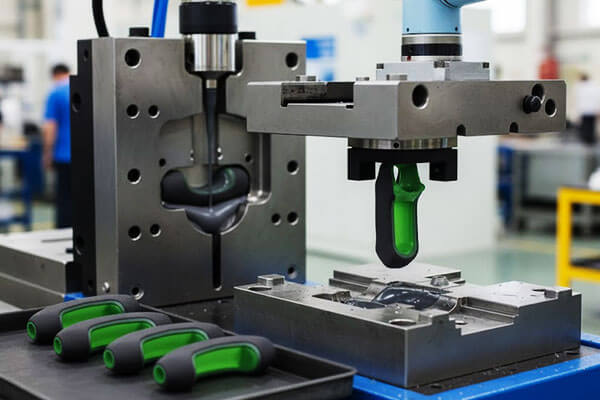
Overmolding Process
Overmolding Process

Product Design and DFM Analysis

Overmolding begins with product and Design for Manufacturing (DFM) 分析.

Engineers evaluate the substrate geometry, overmold thickness, 草稿角, parting lines, gate locations, 排气, 底切, and critical dimensions.

The substrate must be sufficiently rigid to withstand injection pressure and thermal exposure during the second molding operation.

Mechanical retention features such as ribs, 凹槽, 孔, or undercuts may also be incorporated when additional interlocking is required.

Material Selection and Compatibility

The substrate and overmolding material must be selected together. Engineers consider mechanical properties, processing temperatures, 收缩, 热膨胀, 耐化学性, moisture sensitivity, and most importantly, interfacial adhesion.

A material combination that performs well individually may not produce a reliable bond when molded together.

用于关键应用, material compatibility should be confirmed through supplier data, prototype trials, or adhesion testing.

Substrate Manufacturing and Preparation

The substrate is manufactured before the second molding operation.

Plastic substrates are commonly injection molded, while metal inserts may be machined, 盖章, 投掷, or otherwise manufactured.

Before overmolding, the substrate may require:

  • Cleaning and degreasing
  • Drying for moisture-sensitive polymers
  • 表面处理
  • 预热
  • 维度检查

Proper preparation helps prevent contamination, 尺寸变化, 粘附不良, and other interface-related defects.

Substrate Loading and Mold Closing

The prepared substrate is accurately positioned inside the overmolding mold.

It may be loaded manually for lower-volume production or automatically using robotic handling systems for high-volume manufacturing.

The mold must securely support the substrate and maintain the required overmold thickness.

一旦定位, the mold closes and applies sufficient clamping force to resist injection pressure and prevent flash.

Injection of the Overmolding Material

The second material is heated to its processing temperature and injected into the mold cavity.

The molten material flows around the designated areas of the substrate and forms the overmold layer.

The primary process parameters include:

范围 Main Effect
熔融温度 Flowability and bonding
模具温度 填充, 冷却, 和表面质量
注射速度 Flow behavior and air entrapment
注射压力 Cavity filling
Holding pressure Shrinkage compensation and dimensional stability
冷却时间 Part rigidity and cycle time

The process must be balanced carefully. Excessive temperature or pressure can deform the substrate, while insufficient filling conditions can cause short shots, weak bonding, or incomplete coverage.

Bonding and Cooling

As the molten overmolding material contacts the substrate, the interface develops through chemical adhesion, 机械联锁, 或两者的组合.

After filling and packing, the component cools inside the mold. Cooling must be controlled because the substrate and overmold may have different shrinkage and thermal expansion characteristics.

Poorly controlled cooling can lead to warpage, 残余应力, 水槽标记, or interface failure.

Ejection and Quality Inspection

After sufficient cooling, the finished overmolded part is ejected from the mold. 浇口拆除, flash trimming, or other secondary operations may be performed when necessary.

Quality control typically focuses on:

维度的准确性 + overmold coverage + 表面外观 + bonding strength + 功能性能

适用于要求苛刻的应用, manufacturers may additionally perform peel, pull, shear, 扭矩, temperature-cycle, 湿度, chemical-resistance, or other environmental tests.

4. Materials Commonly Used in Overmolding

Material selection is arguably the most important technical decision in overmolding. The ideal material combination must satisfy two separate requirements:

The materials must perform properly as individual materials, and the material interface must remain reliable as an integrated system.

Common Substrate Materials

The substrate generally provides the structural foundation of the component. It may be rigid plastic or metal.

Common Plastic Substrate Materials

底物材料 Important Characteristics Typical Overmolding Applications
ABS 良好的抗冲击性, easy processing, good appearance 消费产品, 手柄, 住房
个人电脑 高冲击强度, transparency options, good dimensional performance 电子产品, protective housings, 控制
PC/ABS Balanced toughness, 外貌, 和加工性 Automotive and electronics
PA (尼龙) 高力量, 刚性, 戴阻力 汽车, 工业组件, 工具
聚丙烯
低密度, 耐化学性, 疲劳性抗性 汽车, 消费产品, living-hinge components
聚对苯二甲酸丁二醇酯 Good dimensional stability and electrical performance 电连接器, 汽车组件
pom 低摩擦, 戴阻力, 维稳定性 Mechanical components and controls
聚苯硫醚 High temperature and chemical resistance Demanding automotive and industrial applications

Common Overmolding Materials

The second material is generally selected to add a function that the substrate cannot provide efficiently.

Overmolding Material 主要特征 典型功能
热塑性弹性体 灵活的, soft-touch, processable Grip, 缓冲, 密封
热塑性聚氨酯 High abrasion and tear resistance Protective surfaces, 握把, 柔性组件
TPV Rubber-like elasticity with thermoplastic processing Automotive seals, 握把, weather-resistant components
TPO
灵活的, 轻的, weather-resistant Automotive trim and protective components
Soft PP compounds Lightweight and chemically resistant Consumer and automotive products
Silicone-based systems Excellent flexibility and temperature performance Specialized sealing and medical applications
Specialty elastomers Application-specific chemical, 热的, or mechanical performance Industrial and demanding environments

5. Mechanical Bonding vs. Chemical Bonding in Overmolding

The interface between the substrate and overmolding material is the most critical region of a multi-material molded component.

A part may have excellent mechanical properties and an attractive surface finish, yet still fail in service if the overmold separates from the substrate.

Mechanical Bonding: Physical Interlock

Mechanical bonding relies on molten overmold resin flowing into pre-designed undercuts, 孔, 凹槽, knurling or textured surfaces on the substrate.

Upon solidification, the resin forms a permanent physical lock that transfers load through geometric interference rather than intermolecular forces.

  • Core principle: The molten polymer fills all negative features in the substrate surface and solidifies into a matching positive geometry, creating an interlock that cannot be separated without deforming one of the materials.
    Through-hole anchors produce the strongest mechanical bonds, as they form full polymer rivets that resist both peel and shear loads.
  • Common anchoring features: Through-holes, side undercuts, dovetail slots, circumferential grooves, grit-blasted texture, knurled surfaces and molded barb features.
  • 优点: Works with any material pair, including completely incompatible combinations such as silicone over metal or TPE over POM; bond strength is highly predictable based on geometry; less sensitive to surface contamination and environmental aging.
  • 限制: Requires additional substrate design and tooling complexity; bond strength is localized to anchor points; not suitable for ultra-thin overmold layers below 0.5 毫米.

化学键合: Molecular Interdiffusion

Chemical bonding occurs when the overmold resin and substrate are chemically compatible.

At molding temperature, polymer chains from the overmold diffuse into the substrate surface, forming intermolecular entanglements and secondary bonds (范德华力, hydrogen bonds, and in some cases covalent bond formation via ester exchange).

  • Core principle: For chemical bonding to occur, the two materials must have similar solubility parameters (通常在内部 2 (cal/cm³)^0.5 of each other) and the substrate surface must be above its glass transition temperature during injection, allowing chain mobility and interdiffusion.
    The resulting interphase layer typically ranges from 20 nm to several micrometers thick.
  • 影响因素: Solubility parameter matching, melt temperature matching, substrate surface energy, contact pressure, and dwell time at the interface.
  • 优点: Uniform bond strength across the entire interface; no additional substrate features required; enables very thin overmold layers with consistent adhesion; smooth bond line with no stress concentrations.
  • 限制: Requires compatible polymer chemistries; sensitive to surface contamination, oxidation and release agents; can degrade over time in high-temperature or high-humidity environments.

Hybrid Bonding: Combining Mechanical and Chemical Mechanisms

适用于要求苛刻的应用, the most robust solution may be to combine both mechanisms.

A substrate can be designed with grooves, 孔, or textured regions while the selected materials also provide inherent interfacial adhesion.

在此配置中, chemical adhesion provides distributed attachment while mechanical features provide additional resistance to peeling, shear, or axial separation.

例如, a metal insert may receive a surface treatment and be molded with a compatible polymer while also incorporating through-holes or knurling.

The resulting interface does not depend exclusively on either chemical adhesion or geometric retention.

This approach is particularly useful when failure of the interface could compromise safety or product functionality.

6. The Benefits and Limitations of Overmolding

核心优势

Reduced Part Count and Assembly

Overmolding can integrate grips, 密封, 绝缘, 缓冲, and protective layers directly onto a substrate.

This reduces the number of separate components, 紧固件, 粘合剂, 和集会操作, which can simplify production and improve consistency.

Enhanced Functional Integration

A single part can combine rigid structural support, soft ergonomic grip, environmental sealing and electrical insulation in one molding cycle.

This enables graded performance across different regions of a component that cannot be achieved with monolithic material design — for example, a rigid structural core with a soft vibration-damping grip layer and an integral environmental seal.

Improved Durability and Reliability

Integral overmolded bonds eliminate adhesive degradation, fastener loosening and gasket misalignment failure modes.

Overmolded seals achieve consistent IP67/IP68 ingress protection with 3–5x longer service life than assembled gasket systems, as there is no separate seal component to shift, degrade or fall out .

Superior Ergonomic and Sensory Performance

Soft elastomer overmolds can be tuned for precise grip, vibration damping and impact absorption.

Vibration transmission to the user can be reduced by 30–60% compared to rigid single-material handles, improving user comfort and reducing repetitive stress injury risk.

Design Flexibility and Product Differentiation

Overmolding enables multi-color, multi-texture and multi-hardness designs without secondary operations, creating product differentiation with minimal additional tooling cost. It also allows design iteration without full tooling redesign.

Reduced Total Cost of Ownership

While tooling investment is 30–80% higher than single-material molding, lower assembly cost,

reduced scrap and lower warranty claims typically deliver a 15–35% lower total cost of ownership for medium and high production volumes.

固有的局限性

Higher Tooling and Development Cost

Custom overmold tooling requires more complex design, multiple cavities or rotating platens, and longer development time.

Tooling cost is typically 2–3x that of equivalent single-material molds, and development cycles are 30–50% longer.

Material Compatibility Constraints

Not all material pairs bond reliably. Incompatible combinations require mechanical anchoring or tie layers, 增加设计复杂性和成本.

例如, PP is notoriously difficult to bond to most TPE grades, requiring PP-based TPE grades or mechanical retention features .

Narrower Process Window

Overmolding requires tighter control of melt temperature, 模具温度, injection speed and hold pressure than single-material molding.

Process deviation can cause bond failure, insert shift or delamination. Process setup typically requires 2–3x more trial runs than single-material molding.

Differential Shrinkage and Stress

Mismatched thermal expansion and shrinkage rates between substrate and overmold create residual stress at the interface, which can lead to warpage, cracking or delamination over thermal cycles.

This is particularly pronounced for rigid polymer over metal overmolding.

Limited to Melt-Processable Materials

Overmolding is restricted to thermoplastics and liquid silicone rubber (LSR).

Conventional thermoset resins and most ceramic materials cannot be overmolded with standard injection molding equipment.

7. Common Defects and Mitigation Strategies

Overmolding introduces unique failure modes related to interface bonding, insert positioning and differential shrinkage.

The table below summarizes the most common defects, root causes and proven corrective actions.

Defect Mode 外貌 Primary Root Causes 纠正措施
Delamination / peel failure Overmold layer separates from substrate Material incompatibility; cold substrate; contaminated surface; insufficient interface pressure Verify material compatibility; preheat substrate; clean substrate surfaces; increase pack pressure
Insert shift / 错位 Substrate is offset from intended position High injection flow velocity; insufficient insert fixation; unbalanced flow Add locating pins; optimize gate position to reduce flow impact; use hold-down fixtures
Sink marks at interface Depressed surface at bond line Differential shrinkage; thick overmold section; insufficient packing Reduce overmold wall thickness; increase pack pressure; optimize cooling profile
Flash at interface
Excess resin seeps between substrate and mold parting Poor mold fit; substrate dimensional variation; 注射压力过高 Improve mold cavity fit; tighten substrate tolerances; reduce injection pressure
Blisters at interface Raised bubbles under overmold surface Trapped air; moisture on substrate; outgassing Improve venting; dry substrate before molding; reduce melt temperature
Internal stress cracking Cracks at bond line after cooling Differential shrinkage; incompatible material expansion rates Optimize mold temperature; reduce cooling rate; select materials with closer CTE values

8. Key Applications of Overmolding

Overmolding is used across industries because it allows manufacturers to combine structural and functional materials without relying entirely on secondary assembly.

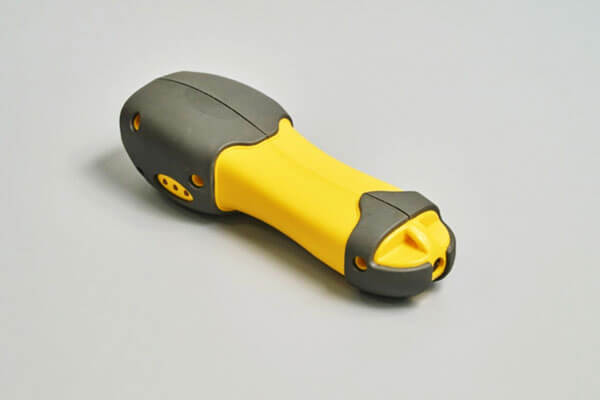
Overmolding Parts
Overmolding Parts

汽车应用

Automotive manufacturers use overmolding to improve functionality, 耐用性, comfort, and component integration.

常见的例子包括:

  • Steering-wheel controls
  • Switches and buttons
  • 传感器外壳
  • 电连接器
  • Cable protection components
  • 内部装饰组件
  • 密封组件
  • 手柄和握把
  • Protective covers
  • Vibration-damping components

消费电子产品

Consumer electronics benefit from overmolding because users interact directly with many of the product’s external surfaces.

申请包括:

  • Smartphone and electronic-device accessories
  • Remote controls
  • Wearable-device components
  • Headphone components
  • Charging connectors
  • Cable ends
  • Protective housings
  • Buttons and control interfaces

医疗设备

Overmolding is used in medical and healthcare products where ergonomics, 密封, 绝缘, 可清洁, and controlled tactile performance are important.

示例包括:

  • Medical instrument handles
  • Diagnostic equipment components
  • Surgical-device grips
  • Tubing and connector components
  • Sealing elements
  • Protective housings
  • Disposable device components

Power Tools and Hand Tools

Power tools are a classic application for rigid-to-flexible overmolding.

A structural polymer substrate can provide the required stiffness, while TPE or TPU can create ergonomic grip zones.

The overmold may improve:

  • Grip security
  • User comfort
  • 振动阻尼
  • 冲击阻力
  • Surface durability
  • Product appearance

电气和电子组件

Electrical applications frequently combine conductive metal inserts with insulating polymer materials.

典型的应用包括:

  • 电连接器
  • 终端
  • Sensor components
  • Cable assemblies
  • 开关元件
  • Insulated contacts
  • 连接器外壳
  • Electronic control components

工业设备

Industrial products often require combinations of strength, 冲击阻力, 耐化学性, vibration control, and operator ergonomics.

Overmolding is therefore used for:

  • Machine handles
  • Control knobs
  • Industrial switches
  • Tool grips
  • Protective covers
  • 密封组件
  • 传感器外壳
  • Cable protection
  • Vibration-damping components

9. Overmolding vs. 嵌件成型与. Two-Shot Molding

包覆成型, insert molding, and two-shot molding are closely related injection molding technologies, but they differ in how the substrate is produced, positioned, and integrated with the second material.

包覆成型

Overmolding generally involves molding a second material over an existing substrate or component.

The substrate may be a previously molded plastic part, machined metal component, stamped insert, or another manufactured element.

It is particularly suitable when the substrate and overmold are produced in separate operations or when different manufacturing processes are required for the two components.

Typical applications include soft-touch grips, 防护罩, 电绝缘, 密封, and strain-relief components.

嵌件成型

嵌件成型 places a preformed insert into the injection mold before plastic is injected around it.

插入件可以由金属制成, 塑料, 陶瓷制品, or another suitable material.

Metal insert molding is widely used when the final component requires the strength, 电导率, 维稳定性, or fastening capability of metal combined with the lightweight and insulating properties of plastic.

Common inserts include threaded bushings, 终端, 别针, 轴, 盘子, 和括号.

Unlike general overmolding, insert molding specifically emphasizes the integration of a pre-manufactured insert during the injection cycle.

Two-Shot Molding

Two-shot molding, also called 2K or two-component injection molding, produces two material regions through sequential injection operations within the same molding system.

The first material forms the initial substrate, after which the mold or part is repositioned and the second material is injected.

This approach can provide excellent dimensional registration between the two materials and is highly suitable for high-volume production.

It can also reduce handling because the substrate does not need to be transferred manually between separate molding operations.

工艺比较

特征 包覆成型 嵌件成型 Two-Shot Molding
基材 Preformed component or insert Preformed insert Molded during the first shot
典型材料 塑料, 弹性体, 金属 Mainly metal or rigid inserts Two compatible polymers/elastomers
Production sequence 基材 + second molding operation Insert loaded + plastic injection First shot + second shot
自动化 Low to highly automated Low to highly automated Usually highly automated
Tooling complexity 中度至高 一般 高的
主要优势 Flexible multi-material integration Combines insert functionality with plastic High-precision multi-material production
典型的应用 握把, 密封, 住房, protective layers 连接器, 终端, 螺纹插入物 Buttons, 住房, multi-color components
最适合 Flexible manufacturing strategies Metal/plastic integration High-volume integrated production

实践, the terms can overlap. Insert molding is a specific form of molding around a preformed insert, while two-shot molding is a highly integrated multi-material process in which the substrate is typically created within the same molding cycle.

Process selection should therefore be based on the actual product architecture rather than terminology alone.

10. Advanced Trends and Innovations

Overmolding technology continues to evolve rapidly, driven by demand for miniaturization, sustainability and enhanced functional integration.

LSR Overmolding

Liquid silicone rubber (LSR) overmolding onto engineering thermoplastics is the fastest-growing overmolding segment.

LSR delivers exceptional heat resistance (-60°C to 200°C+), biocompatibility and compression set performance, 使其非常适合医疗设备, food contact parts and high-temperature automotive applications.

Advanced cold-runner tooling and precision dosing systems enable LSR overmolding with wall thicknesses down to 0.2 毫米.

Micro-Overmolding

Miniaturization in electronics and medical devices has driven development of micro-overmolding processes with overmold wall thicknesses below 0.3 mm and positional accuracy of ±0.02 mm.

This enables overmolded features on micro-connectors, wearable electronics and implantable medical devices that were previously impossible to manufacture.

Sustainable and Bio-Based Overmolding

Development of bio-based and recycled polymer grades with matched melt properties is enabling overmolding of sustainable material pairs.

This includes recycled PP substrates overmolded with recycled TPE, and bio-based PA overmolded with bio-based elastomers.

Brands are increasingly specifying sustainable overmolding to meet circular economy and carbon reduction targets.

In-Mold Assembly Integration

Advanced multi-station overmolding cells integrate multiple pre-fabricated components (密封, 磁铁, 电子产品) into a single molding cycle, producing fully assembled finished parts directly from the mold.

This eliminates entire assembly lines and reduces production lead time by 70–90%.

AI驱动过程优化

Machine learning systems are being deployed to optimize overmolding process parameters in real time, adjusting injection speed, pressure and temperature based on in-mold sensor data and cavity pressure curves.

This reduces scrap rates by 30–50%, improves bond consistency and reduces setup time for new parts.

11. Overmolding for Different Product Requirements

Overmolding should be selected according to the functional requirements of the finished component, rather than simply as a method for combining two materials.

Product Requirement Recommended Overmolding Solution Key Engineering Considerations 典型的应用
Improved Grip and Friction Rigid substrate + TPE/TPU overmold 硬度, 摩擦系数, 表面纹理, 耐磨性 工具把手, 旋钮, 消费产品
Impact Protection Rigid substrate + tough elastomer Impact absorption, tear strength, 厚度, edge coverage 电子外壳, protective equipment, 工业组件
Water and Dust Protection Rigid housing + elastomeric sealing layer Interface continuity, 压缩, 维度的准确性, aging resistance 连接器, 传感器, outdoor electronics
电绝缘 Metal/electronic insert + insulating polymer 介电强度, insulation thickness, temperature rating, void prevention 终端, 连接器, cable assemblies
Vibration and Noise Reduction
Rigid substrate + damping elastomer Elastomer hardness, 厚度, dynamic response, 疲劳性抗性 电动工具, 汽车组件, 机械
Ergonomic Handling Structural core + soft-touch TPE/TPU Hardness gradient, grip geometry, tactile feel, long-term wear 手工工具, 医疗仪器, control handles
Chemical and Environmental Protection 基材 + chemically resistant polymer Chemical compatibility, 温度, 紫外线, 水分, adhesion stability 工业设备, 汽车零部件, 流体处理组件
耐磨性和耐磨性 Rigid substrate + wear-resistant TPU/TPE 表面硬度, 耐磨性, contact pressure, 使用温度 滚筒, 向导, 握把, industrial controls

12. LangHe Industry Injection Molding Services

Langhe行业 provides customized injection molding and overmolding solutions from prototype development to high-volume production, supporting materials including PP, PE, ABS, 个人电脑, 尼龙, 热塑性弹性体, 热塑性聚氨酯, LSR, 和窥视.

Its capabilities cover two-shot molding, pick-and-place overmolding, and insert molding for metal, 陶瓷制品, 塑料, and electronic inserts, backed by in-house tooling design and manufacturing.

As an ISO 9001:2015-certified manufacturer, LangHe Industry applies systematic quality control through 100% 检查, CMM measurement, and machine vision systems to ensure dimensional accuracy, appearance consistency, and reliable product performance.

Customized colors, 纹理, and surface finishes are also available to meet specific application and branding requirements.

Contact LangHe Industry today to discuss your overmolding or custom injection molding project.

13. 结论

Overmolding is far more than simply adding a layer of plastic onto a substrate.

It is a sophisticated multi-material manufacturing technology that integrates structural, ergonomic, sealing and cosmetic functions into a single integrated component, delivering performance that cannot be matched by single-material molding or traditional assembly methods.

Its value proposition rests on three core pillars: functional integration that reduces part count and assembly cost, material-specific performance optimization that enables graded functionality across a single part, and improved reliability that comes from integral bonding rather than secondary joining.

As product designs continue toward higher integration, miniaturization and sustainability, overmolding will continue to expand into new application areas.

Advances in LSR processing, micro-molding and sustainable materials will further extend its capabilities, securing its position as one of the most important and versatile precision manufacturing technologies of modern industry.


常见问题解答

What is the difference between overmolding and insert molding?

Overmolding generally refers to molding a second material over a preformed substrate.

Insert molding specifically involves placing a preformed insert—often metal—into the mold and injecting plastic around it. The two terms can overlap depending on the component architecture.

What is the difference between overmolding and two-shot molding?

In conventional overmolding, the substrate is typically manufactured separately before the second material is molded onto it.

In two-shot molding, the first material is molded and the second material is injected within the same integrated molding system, providing precise registration and high production efficiency.

Can metal be overmolded with plastic?

是的. Metal-to-plastic overmolding is widely used to combine the strength or conductivity of metal with the insulation, 保护, and design flexibility of polymers.

The metal insert must be accurately positioned and designed to withstand molding temperature and pressure.

Is overmolding more expensive than conventional injection molding?

The tooling and development costs are generally higher because overmolding requires more complex tooling and process control.

然而, the overall manufacturing cost can be lower when the process eliminates separate components, assembly operations, 粘合剂, 紧固件, or secondary sealing processes.

发表评论

您的邮箱地址不会被公开。 必填项已用 * 标注

滚动至顶部

获取即时报价

请填写您的信息,我们会及时与您联系.