1. Introduction
In today’s competitive manufacturing landscape, enhancing metal properties is critical for building durable, high-performance components.
Heat treatment plays a central role in achieving this goal.
By carefully controlling heating and cooling cycles, manufacturers transform raw metals into materials with superior strength, hardness, ductility, and resistance to wear and corrosion.
Industries ranging from automotive and aerospace to construction and industrial machinery rely on these techniques to ensure that their products meet stringent performance standards.
This article provides an in-depth, authoritative analysis of heat treatment processes, examining the underlying science, various methods, key benefits, and future trends shaping this vital field.
2. Understanding Heat Treatment
Heat treatment involves subjecting metals to controlled heating, holding, and cooling cycles to alter their microstructure and, in turn, their physical and mechanical properties.
This process empowers engineers to tailor a metal’s performance to specific applications by influencing grain size, phase distribution, and residual stress.

When metals reach critical temperatures, atomic rearrangements occur—transforming phases such as ferrite, austenite,
and martensite—thereby unlocking enhanced hardness, improved ductility, and increased wear resistance.
By managing these thermal cycles meticulously, manufacturers optimize material performance for demanding industrial applications.
3. The Science Behind Heat Treatment
Understanding the science behind heat treatment is key to optimizing the mechanical performance of metals.
This process transforms the internal structure of a material by precisely controlling its heating and cooling cycles, thereby enhancing properties such as strength, ductility, hardness, and wear resistance.
In this section, we delve into the interplay of temperature, time, and microstructural changes, and explore how phase transformations define a metal’s final characteristics.
Temperature and Time: The Dynamic Duo
At the heart of heat treatment lie two critical variables: temperature and time. When metals are heated above a critical temperature, their atomic arrangements begin to change.
Maintaining a specific temperature for a predetermined duration allows atoms to diffuse and reorganize, forming new phases and refining the grain structure.
For instance, a slight alteration in cooling rate—by as little as 10%—can lead to significant variations in hardness and tensile strength, as evidenced by controlled laboratory studies.
This careful orchestration of temperature and time is essential for achieving the desired material properties.
Microstructural Transformations: Phase Changes at the Atomic Level
During heat treatment, metals undergo phase transformations that have a profound impact on their mechanical behavior.
At high temperatures, a metal might exist in the austenite phase, characterized by a face-centered cubic (FCC) crystal structure.
Rapid cooling, or quenching, transforms austenite into martensite—a phase known for its high hardness and strength but reduced ductility.
Conversely, slow cooling results in the formation of ferrite, which is softer and more ductile.
By controlling the cooling rate, manufacturers can tailor the balance between hardness and toughness, a strategy that is critical for components subject to both high loads and impact.
Grain Refinement and Precipitation Hardening
The grain structure within a metal significantly affects its mechanical properties. Smaller, well-distributed grains usually lead to enhanced strength and improved fatigue resistance. Heat treatment techniques, such as controlled cooling and aging, promote grain refinement and facilitate the formation of fine precipitates (e.g., carbides or intermetallic compounds). These nano-scale particles hinder dislocation movement and enhance the material’s overall strength. Studies have demonstrated that a 10–20% reduction in grain size can boost yield strength substantially, which is a crucial factor in high-performance applications.
Residual Stress Relief and Multi-Phase Control
Manufacturing processes often leave residual stresses within a material, which can lead to premature failure under operational loads.
Heat treatment relieves these stresses by allowing the material to undergo phase changes and re-equilibrate at the atomic level.
Techniques such as annealing provide the necessary thermal exposure to reduce internal stress, thereby minimizing the risk of crack initiation.
Advanced analytical methods, including X-ray diffraction and electron microscopy,
enable engineers to monitor these changes and ensure the material’s microstructure remains optimal throughout the treatment cycle.
4. Common Heat Treatment Processes
Heat treatment remains a vital process in modern manufacturing, empowering engineers to tailor the microstructure and mechanical properties of metals for specific applications.
In this section, we explore several common heat treatment processes, each of which plays a crucial role in optimizing material performance.
Annealing
Annealing involves heating a metal to a specified temperature, holding it for a defined period, and then allowing it to cool slowly.
This process relieves internal stresses, refines the grain structure, and enhances ductility.
For example, annealing can improve machinability in cast components by reducing hardness, thereby facilitating easier shaping and forming.

Additionally, it homogenizes the microstructure, which is particularly beneficial for improving the consistency of alloy properties in large-scale production.
Quenching
Quenching rapidly cools heated metal—typically by immersing it in water, oil, or air—to lock in a hard, fine-grained structure.
This sudden cooling transforms the metal into a much harder phase, which is essential for applications that require high wear resistance.
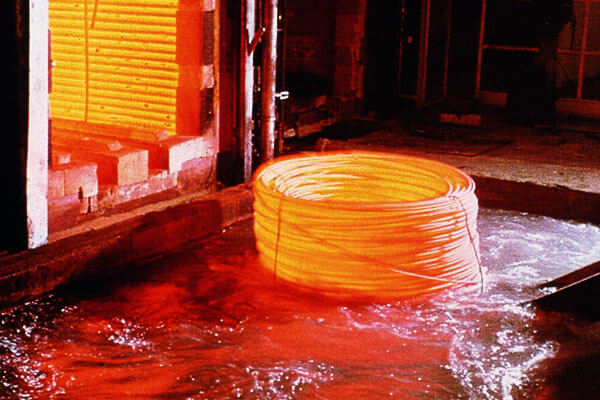
However, quenching can also lead to increased brittleness, which engineers often counteract with subsequent tempering.
The choice of quenching medium is critical as it directly affects the cooling rate and final mechanical properties of the material.
Tempering
Following quenching, tempering involves reheating the metal to a lower temperature before allowing it to cool gradually.

This process balances the increased hardness achieved through quenching with improved toughness and ductility.
Tempering effectively reduces brittleness and relieves residual stresses, making it indispensable for components such as gears and springs that require both strength and resilience.
Normalizing
Normalizing heats the metal to a temperature above its critical point and then allows it to cool in still air.
This process refines the grain structure and reduces internal stresses, resulting in improved uniformity and enhanced machinability.

Normalizing is commonly used for structural steels and cast components, as it helps to achieve a consistent microstructure and predictable mechanical properties.
Case Hardening
Case hardening, which includes processes such as carburizing and nitriding, focuses on hardening the surface of a metal while retaining a softer, ductile core.

By diffusing carbon or nitrogen into the surface layer, these techniques significantly enhance wear resistance and fatigue life.
This is especially beneficial for gears, bearings, and other components that must withstand high friction and repetitive loading.
Austempering and Martempering
These specialized heat treatment processes use controlled cooling rates to produce a bainitic microstructure, which offers an excellent balance of toughness and hardness.
Austempering involves cooling the metal to an intermediate temperature and holding it until transformation is complete,
while martempering focuses on minimizing thermal gradients to reduce internal stresses.
Both methods are favored in the automotive and aerospace sectors, where parts must endure both high impact and cyclic loads.
5. Common Materials for Heat Treatment
Some materials are more commonly subjected to heat treatment than others due to their widespread use in various industries and the significant benefits they gain from these processes.
Below are some of the most common materials used for heat treatment:
Steel:
Steel is by far the most commonly heat-treated material. Its versatility and ability to change properties significantly through heat treatment make it indispensable in manufacturing.
Different types of steel (carbon steel, alloy steel, stainless steel) respond differently to heat treatment processes like annealing, quenching, tempering, and normalizing.
Aluminum Alloys:
Aluminum alloys are popular for applications requiring lightweight yet strong materials.
Heat treatment can improve the strength and hardness of aluminum alloys without significantly affecting their weight advantage.
Processes such as solution heat treatment and aging are particularly effective for enhancing aluminum’s properties.
Copper Alloys:
Copper and its alloys (such as brass and bronze) are often heat-treated to increase strength and durability while maintaining good electrical conductivity.
Heat treatment can also improve machinability and resistance to wear and corrosion.
Titanium Alloys:
Titanium alloys are known for their high strength-to-weight ratio and excellent corrosion resistance.
Heat treatment can further enhance these properties, making titanium alloys ideal for aerospace and biomedical applications.
Processes like solution treatment and aging are frequently used.
Nickel-Based Superalloys:
These alloys are designed to maintain high strength and resist oxidation and corrosion at high temperatures. They are widely used in jet engines and gas turbines.
Heat treatment plays a crucial role in developing the desired combination of properties in nickel-based superalloys.
6. Benefits of Heat Treatment
Heat treatment offers a multitude of benefits that can significantly enhance the properties and performance of metals and alloys.
These benefits make heat treatment an indispensable process in various industries, including automotive, aerospace, manufacturing, and more. Below are some of the key advantages:
Enhanced Strength and Hardness:
One of the primary reasons for heat treating materials is to increase their strength and hardness.
Processes like quenching and tempering can produce parts that are much stronger and more resistant to wear than untreated materials.
Improved Ductility:
Through processes such as annealing, heat treatment can improve the ductility of a material.
This makes it easier to form or shape without breaking, which is particularly useful in manufacturing components that need to withstand significant deformation.
Increased Toughness:
By reducing the brittleness of a material, heat treatment can enhance its toughness.
This means treated materials can absorb more energy before fracturing, making them ideal for high-stress applications.
Stress Relief:
Manufacturing processes such as welding, casting, and forming can induce internal stresses within a material.
Heat treatment can relieve these stresses, leading to a more stable and reliable final product.
Improved Machinability:
Some heat treatments can make materials easier to machine by adjusting their hardness and other physical properties.
This leads to more efficient production processes and reduced tool wear.
Customizable Properties:
Heat treatment allows for the customization of material properties according to specific application requirements.
By carefully controlling the heating and cooling parameters, manufacturers can achieve desired characteristics in terms of hardness, strength, ductility, and toughness.
Extended Service Life:
By improving wear resistance, corrosion resistance, and overall durability,
heat treatment can extend the service life of components exposed to harsh environments or demanding operational conditions.
7. Challenges in Heat Treatment
Despite its essential role in enhancing the properties of metals, heat treatment comes with several technical and operational challenges.
These challenges can affect the consistency, efficiency, and cost-effectiveness of the process.
Understanding these limitations is crucial for optimizing heat treatment techniques and ensuring high-quality results.
Below are some of the most common challenges encountered in industrial heat treatment and strategies to mitigate them.
Risk of Distortion and Warping
Cause:
When metals are rapidly heated or cooled, internal stresses develop due to uneven thermal expansion and contraction.
These stresses can lead to distortions, warping, or even cracking, particularly in complex-shaped or thin-walled components.
The severity of these distortions depends on factors such as material composition, part geometry, and cooling rate.
Impact:
Distorted or warped parts may no longer meet dimensional tolerances, leading to assembly issues, increased machining costs, and material waste.
Solution:
- Using uniform heating methods such as vacuum furnaces or induction heating to reduce thermal gradients.
- Implementing controlled cooling techniques, including step quenching or interrupted quenching, to minimize internal stress buildup.
- Designing parts with heat treatment considerations in mind to reduce susceptibility to distortion.
Surface Oxidation and Decarburization
Cause:
When metals are exposed to high temperatures in an oxygen-rich atmosphere, oxidation can occur, leading to scale formation on the surface.
Additionally, carbon loss from the surface—known as decarburization—can weaken the outer layer of steel, reducing hardness and wear resistance.
Impact:
- Reduced surface hardness, leading to premature wear in applications requiring high durability.
- The need for additional post-treatment processes, such as grinding or chemical pickling, to restore surface properties.
Solution:
- Conducting heat treatment in controlled atmospheres (vacuum, nitrogen, or argon) to minimize oxidation.
- Applying protective coatings, such as ceramic coatings or special anti-oxidation pastes, to shield the surface.
- Using gas or plasma nitriding to introduce nitrogen into the surface, counteracting carbon loss and improving hardness.
Quenching-Related Issues: Cracking and Residual Stresses
Cause:
Quenching involves rapid cooling, which can lead to significant thermal shock and the formation of residual stresses.
If cooling is too aggressive, cracking may occur, especially in high-carbon steels or complex geometries.
Impact:
- Cracking can render components unusable, leading to material wastage and increased production costs.
- Residual stresses can cause unexpected failures during service, reducing component lifespan.
Solution:
- Selecting appropriate quenching media (oil, polymer solutions, or air) based on the material and required cooling rate.
- Implementing tempering or stress-relief treatments after quenching to reduce brittleness and balance hardness with toughness.
- Using quenching fixtures to hold parts in place and minimize warping.
Variability in Heat Treatment Outcomes
Cause:
Heat treatment results can vary due to inconsistencies in furnace temperature, heating time, material composition, and cooling conditions.
Even slight deviations can lead to significant differences in mechanical properties.
Impact:
- Inconsistent hardness, strength, and toughness can result in unpredictable component performance.
- Increased rejection rates and rework costs in mass production.
Solution:
- Using advanced process control systems with real-time monitoring and feedback to maintain precise temperature and timing.
- Regularly calibrating furnaces and quenching systems to ensure uniform heating and cooling.
- Conducting metallurgical testing (e.g., hardness testing, microstructure analysis) to verify consistency.
Energy Consumption and Environmental Concerns
Cause:
Heat treatment processes require high temperatures, leading to substantial energy consumption.
Additionally, some methods, such as carburizing, produce emissions that contribute to environmental concerns.
Impact:
- High operational costs due to energy-intensive furnaces and cooling systems.
- Regulatory compliance challenges regarding emissions and workplace safety.
Solution:
- Adopting energy-efficient heating technologies, such as induction heating or gas-fired furnaces with heat recovery systems.
- Implementing environmentally friendly processes, such as low-emission gas nitriding or vacuum heat treatment, which reduce pollution.
- Using advanced insulation materials to improve furnace efficiency and lower energy costs.
Difficulties in Heat Treating Large or Complex Components
Cause:
Achieving uniform heating and cooling in large or intricate parts can be challenging.
Uneven temperature distribution can lead to differential phase transformations, resulting in variable properties within the same component.
Impact:
- Potential weak points in critical load-bearing sections.
- Extended processing times and higher rejection rates.
Solution:
- Using multi-zone heating furnaces with precise temperature control to ensure uniform heat distribution.
- Employing slow heating and controlled cooling cycles to allow temperature equalization.
- Implementing hybrid treatments (e.g., localized induction heating combined with conventional heat treatment) to optimize results.
8. Future Directions and Innovations
AI-Driven Process Optimization
- Example: Siemens’ AI-powered heat treatment cells reduce cycle times by 25% using real-time thermal profiling.
- Data: Machine learning models trained on 10,000+ TTT diagrams predict phase transformations with 95% accuracy.
Nanostructured Surface Engineering
- Technology: Laser shock peening (LSP) introduces compressive stresses up to 1.2 GPa, enhancing fatigue life by 300% in automotive crankshafts.
- Emerging: Atomic layer deposition (ALD) of alumina coatings reduces high-temperature oxidation by 50% in jet engine blades.
Sustainable Heat Treatment
- Renewable Integration: Solar-thermal furnaces (e.g., HelioHeat’s 1,200°C concentrators) cut fossil fuel reliance by 70%.
- Hydrogen Economy: Hydrogen annealing of steel achieves zero direct emissions, with SSAB piloting industrial-scale trials by 2026.
Digitalization and IoT
- Smart Furnaces: GE’s Predix platform uses IoT sensors to monitor furnace atmospheres in real time, reducing scrap rates by 18%.
- Digital Twins: Virtual replicas of heat treatment processes simulate outcomes with <5% error margins, slashing R&D costs.
9. Conclusion
Heat treatment remains a cornerstone of modern manufacturing, enabling the transformation of metals into high-performance materials essential for a wide range of applications.
Through precise control of heating and cooling processes, manufacturers can dramatically enhance a metal’s strength, durability, and overall performance.
As industries demand ever higher performance and sustainability, embracing advanced heat treatment methods will prove critical for reducing costs and improving product quality.
Explore our state-of-the-art heat treatment services and discover how we can help you achieve superior material performance tailored to your specific needs.
Contact us today to learn more about our innovative heat treatment solutions and how they can enhance the durability and performance of your critical components.