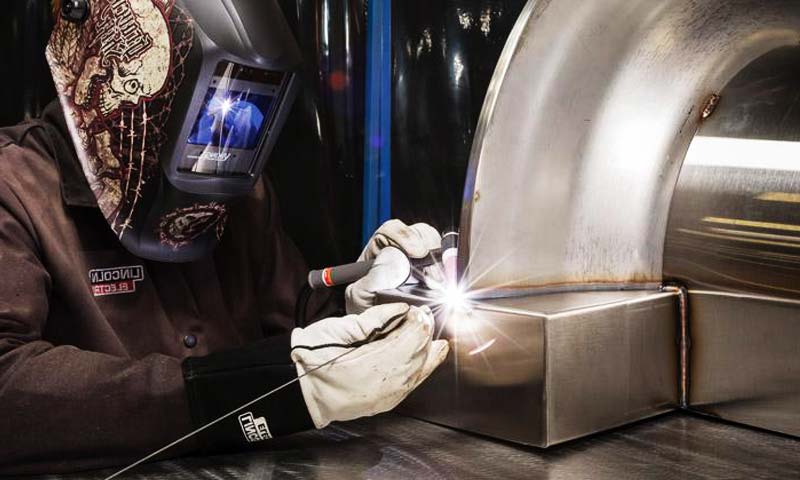
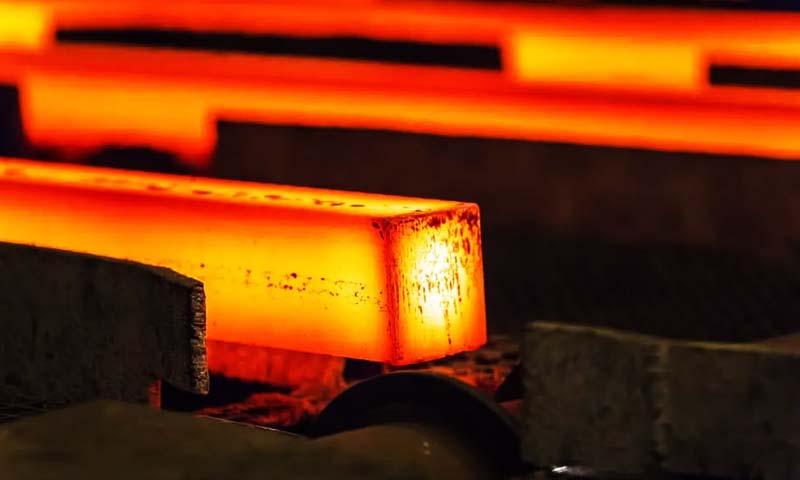
1. Introduction
Brushed stainless steel is one of the most widely specified architectural and industrial finishes.
It balances visual warmth and tactile quality with the corrosion resistance and durability of stainless alloys.
Designers specify it for kitchens, elevators, appliances, façades and equipment because the grain hides small scratches, reduces reflectivity, and imparts a premium, engineered look.
For engineers and procurement professionals, understanding the metallurgy, process controls and measurable surface data is essential to achieve reproducible aesthetic and functional performance.
2. What Exactly is Brushed Stainless Steel?
Brushed stainless steel is a stainless steel surface that has been mechanically finished to produce a uniform, directional texture, often referred to as a “grain.”
This is achieved by using abrasives in a controlled, linear motion across the surface, resulting in fine parallel micro-scratches that create a satin, low-glare appearance.
Unlike mirror-polished finishes, the brushed texture reduces reflectivity, conceals minor scratches, and provides a distinctive tactile feel.

Key characteristics of brushed stainless steel:
- Directional Grain: The visible lines are oriented in a consistent direction, giving a uniform look.
Grain orientation is important for aesthetic continuity and can influence how the surface hides wear or fingerprints. - Satin Finish: Brushed stainless steel has a soft, matte sheen rather than a mirror-like reflection, which reduces glare and contributes to its modern, industrial aesthetic.
- Scratch Concealment: The microgrooves of the brushed texture help mask small scratches and wear marks, making it ideal for high-contact surfaces like appliances, handrails, and elevator panels.
- Functional Surface: The directional micro-scratches can affect cleanability, coating adhesion, and localized corrosion behavior, making proper specification and maintenance critical for long-term performance.
3. Common Base Alloys Used for Brushed Finishes
Brushed finishes can be applied to a variety of stainless steel alloys.
The choice of base alloy depends on corrosion resistance requirements, mechanical properties, fabrication needs, and cost.
| Alloy (Common Name) | Typical Composition Highlights | Why It’s Used for Brushed Finishes |
| 304 (A2) | 18–20% Chromium, 8–10.5% Nickel | Excellent general corrosion resistance, good formability and weldability; widely used for interior architectural panels, appliances, and general-purpose equipment. |
| 316 (A4) | 16–18% Chromium, 10–14% Nickel, 2–3% Molybdenum | Superior resistance to chlorides and harsh environments; ideal for coastal, marine, food processing, and chemical applications. |
| 430 (Ferritic) | 16–18% Chromium, low Nickel | Magnetic, lower cost; used where moderate corrosion resistance is acceptable and magnetism is desirable (e.g., decorative panels, trim). |
| 304L / 316L (Low Carbon Variants) | Similar to 304/316 but ≤0.03% Carbon | Improved weldability and reduced risk of sensitization; often brushed for welded architectural or food-contact components. |
| Duplex & Specialty Grades | Balanced Chromium-Nickel content with additional alloying (e.g., Nitrogen, Molybdenum) | High strength and corrosion resistance; brushed finish applied where both durability and aesthetic appearance are critical (e.g., high-end industrial or marine applications). |
4. Manufacturing Process: How Brushed Stainless Steel is Made
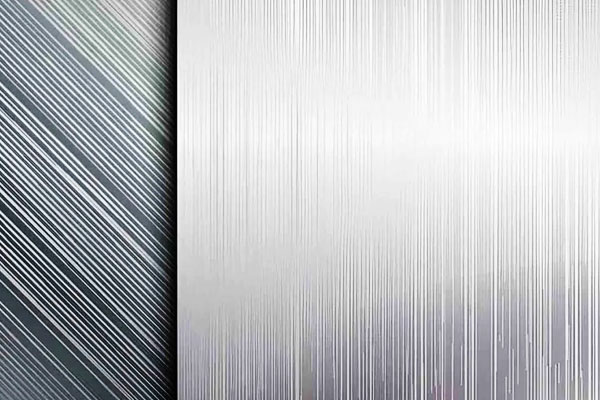
The brushed finish on stainless steel is a mechanical surface treatment that creates a uniform, directional texture while retaining the alloy’s corrosion resistance and structural integrity.
The process involves controlled abrasion using abrasive belts, brushes, or pads, producing the characteristic “grain” that defines the finish.
Step-by-Step Manufacturing Process
- Surface Preparation
-
- Cleaning: Remove mill scale, oils, grease, and surface contaminants.
- Surface leveling: Light mechanical or chemical cleaning may be applied to ensure a smooth, consistent base before brushing.
- Primary Brushing / Abrasion
-
- Abrasive belts, nylon brushes embedded with abrasive grains, or non-woven pads are run in a single direction across the surface.
- The directionality creates parallel micro-scratches, forming the characteristic grain.
- Key variables: abrasive type (aluminum oxide, silicon carbide, non-woven nylon), grit size, belt speed, and applied pressure.
- Progressive Refinement (Optional)
-
- Multiple passes with finer abrasives reduce coarse scratches and adjust sheen.
- This step allows control over grain coarseness, surface roughness (Ra), and final appearance.
- Cleaning and Passivation
-
- Post-brushing, embedded debris and contaminants are removed.
- The passive chromium oxide layer is restored using chemical passivation (e.g., nitric or citric acid) or controlled oxidation in air.
- Ensures the brushed stainless maintains corrosion resistance, especially in critical applications.
- Protective Coating or Handling (Optional)
-
- A temporary protective film, oil, or lacquer may be applied to prevent fingerprints, scratches, or contamination during handling and transport.
5. Common Brushed Finish Types & Their Uses
Industry shorthand is widely used; approximate mapping to grit and appearance:
- #3 (Coarse brushed): coarse linear grain; industrial aesthetic; Ra typically >1.0 µm. Used for heavy-duty panels and certain architectural elements.
- #4 (Medium satin, most common): medium satin grain; balanced sheen and scratch concealment; Ra ≈ 0.4–1.0 µm. Widely used in appliances, elevator interiors and handrails.
- #6 (Fine satin): finer grain and softer sheen; Ra ≈ 0.2–0.6 µm. Preferred for decorative applications where a subtle satin finish is desired.
- Directional finishes for specialty: very fine grain finishes for certain optical or control panel applications.
When specifying, state both the commercial code (e.g., “#4 brushed”) and quantitative targets (Ra range, gloss units, grain direction).
6. Surface Characterization & Data
Brushed stainless steel is defined not only by its visual appearance but also by measurable surface parameters.
| Metric | Typical Range / Values | Significance |
| Surface Roughness (Ra) | Coarse brushed: 1.0–2.5 µm Medium brushed (#4): 0.4–1.0 µm Fine brushed (#6): 0.2–0.6 µm | Indicates the height of surface peaks and valleys; affects tactile feel, light scattering, scratch concealment, and cleanability. |
| Abrasive Grit (Approx.) | Coarse: 60–80 grit Medium (#4): 120–180 grit Fine: 240–320 grit | Determines the linear grain pattern and visual texture. Coarser grits produce deeper, more pronounced scratches; finer grits produce softer, satin finishes. |
| Gloss / Reflectance (60° gloss units) | Brushed finishes: 10–40 GU Mirror-polished: >80 GU | Lower gloss reduces glare and provides a matte appearance. Directional scattering of light gives the brushed finish its signature satin look. |
| Grain Directionality | Linear, consistent orientation along a specified axis | Affects aesthetics, perception of scratches, and optical behavior. Grain direction must be consistent across panels or assemblies. |
7. Effects on corrosion resistance and passivation
The act of brushing alters the near-surface metallurgy and the protective chromium-oxide scale:

- Mechanical disruption: brushing removes the factory oxide and creates high-strain surface layers that are prone to localized corrosion if not properly passivated.
- Embedded abrasives / iron contamination: inappropriate abrasives or steel wool can leave iron particles embedded in grooves → galvanic corrosion (surface rust). Avoid ferrous abrasives.
- Passivation necessity: after brushing, a chemical passivation (e.g., nitric acid or citric acid treatments) or controlled exposure to air restores a continuous Cr₂O₃ layer that provides corrosion resistance.
For critical applications (food, medical, UHV, marine) specify passivation and test acceptance. - Chloride sensitivity: brushed 304 will be more susceptible than 316 in chloride environments due to both alloy chemistry and the textured surface which can trap salts and moisture in grooves.
8. Mechanical, thermal and hygienic implications
Mechanical: Brushing minimally reduces bulk mechanical strength but induces a thin, cold-worked surface layer that can slightly increase surface hardness.
This skin can improve wear resistance locally, but deep scratch resistance still depends on bulk properties.
Thermal: Brushed texture negligibly affects thermal conductivity or heat capacity;
however, increased surface area can marginally change convective heat transfer or emissivity in thermal design (useful in heat-exchanger aesthetics vs performance tradeoffs).
Hygiene & cleanability:
- Directional microgrooves can trap particles, biofilms or soils more easily than mirror surfaces.
- Proper cleaning procedures (pressure, surfactants, wiping along the grain) are essential in food and medical contexts.
- Many food-service standards permit brushed 304 when cleaning protocols and passivation are maintained.
9. Fabrication, welding and post-finish considerations
Welding: Welds on brushed panels will stand out unless blended. Post-weld blending with matching abrasive grit and direction is required to restore uniform appearance.
Forming & bending: Brushed surfaces can be formed, but grain continuity is disturbed at bends and joints; designers may prefer edges to be concealed or flanges oriented to mask grain discontinuities.
Coatings & adhesives: The microtexture improves mechanical adhesion for paints or laminates, but surface oils and residues must be removed.
For critical coatings, measure surface roughness and specify pretreatment.
Repair & touch-up: Minor scratches can be blended by re-brushing with matching abrasive grade in the original grain direction. Avoid over-polishing which creates mismatched sheen.
10. Typical applications and design considerations

Architecture & interior design: elevator interiors, cladding, handrails, signage — brushed stainless offers aesthetics and scratch tolerance.
Appliances & consumer products: refrigerators, dishwashers, range hoods — hides fingerprints and wears well.
Foodservice & medical: countertops, backsplashes, equipment panels — choose 304/316 and require cleaning/passivation protocols.
Transport & marine: trim panels, fixtures — use 316 for high chloride environments and consider grain orientation to minimize visual wear.
Industrial & decorative hardware: control panels, door furniture — brushed finish reduces glare and contributes to perceived quality.
11. Inspection, testing and specification guidance
To ensure performance and appearance:
- Specify alloy and mill-finish before brushing (e.g., 304L #4 brushed, Ra ≤ 0.8 μm).
- Surface roughness measurement: use a contact profilometer (Ra, Rz) and report sample locations and measurement direction (along vs across grain).
- Visual acceptance criteria: define acceptable grain uniformity, permitted scratches, blending quality around welds and edges, and gloss units range.
- Corrosion testing (if required): salt-spray (ASTM B117), cyclic corrosion, or pitting tests for chloride environments.
- Passivation verification: test for surface chromium enrichment or perform simple copper sulfate spot test for free iron contamination.
- Adhesion testing: for coatings, use tape pull or cross-cut tests after standard pretreatment.
Include handling/packing requirements (non-metallic separators, cleanroom packaging for UHV/medical parts) to preserve finish.
12. Surface care, cleaning and lifecycle maintenance
Daily cleaning: warm water, neutral detergent, soft cloth or non-abrasive pad; always wipe with the grain to avoid cross-scratches.
Stain removal: dilute vinegar or citric acid solutions for mild mineral spots; commercial stainless cleaners for fingerprints and oils.
What to avoid: steel wool, abrasive powders, chlorine bleach or high-chloride cleaners, and long exposure to saltwater without rinsing.
Repair: re-brushing along original grain with matched abrasive grade; for severe corrosion, cut out/replate or replace panel.
Lifecycle note: brushed stainless ages gracefully when maintained—microgrooves hide minor wear but will collect soils if cleaning is neglected.
13. Comparison to Other Stainless Steel Finishes
Brushed stainless steel is one of several standard finishes applied to stainless alloys.
Each finish offers a different combination of appearance, functional performance, and maintenance requirements.
Comparing brushed stainless to other common finishes helps engineers, designers, and fabricators select the optimal surface for a given application.
| Finish Type | Typical Surface Roughness (Ra) | Visual & Functional Traits | Typical Applications |
| Brushed (#3 / #4 / #6) | 0.2–2.5 µm | Satin, low-glare appearance; directional grain; conceals fingerprints and minor scratches; directional light scattering | Elevators, handrails, appliances, kitchen equipment, architectural panels |
| Mirror / Bright Annealed (#8 / BA) | ≤ 0.1 µm | Highly reflective, smooth, polished; shows fingerprints, scratches, and smudges easily | Decorative panels, reflectors, optical applications, high-end appliances |
| 2B Cold-Rolled | ~0.3–0.6 µm | Smooth, matte, cost-effective; uniform appearance; low glare | Sheet metal for general fabrication, industrial equipment, ducting |
| Bead Blasted / Matte | 0.6–2.0 µm | Diffuse, textured finish; hides defects and scratches; non-directional | Architectural cladding, anti-glare surfaces, industrial panels |
| Directional Polished / Satin | 0.1–0.5 µm | Controlled satin sheen; finer directional grain than standard brushed; moderate reflectivity | High-end interiors, control panels, decorative architectural elements |
| Pickled / Ground | Variable, 0.3–1.0 µm | Smooth with light mechanical texture; enhances corrosion resistance; intermediate reflectivity | Food processing equipment, chemical tanks, piping |
14. Conclusion
Brushed stainless steel is a controlled, repeatable surface finish that combines the corrosion resistance and structural advantages of stainless alloys with a satin aesthetic and practical performance benefits.
Success depends on choosing the right base alloy, controlling brushing process parameters, performing appropriate cleaning and passivation, and specifying measurable acceptance criteria (Ra, gloss, grain direction).
When specified and maintained correctly, brushed stainless steel delivers long service life, attractive appearance and predictable performance.
FAQs
Does brushing reduce stainless steel corrosion resistance?
Not if the surface is properly cleaned and passivated after abrasion. Brushing removes the passive layer and may embed contaminants; passivation restores the protective chromium-oxide film.
How do I specify a brushed finish unambiguously?
Use a commercial finish code plus measurable targets: e.g., “#4 brushed,Ra 0.4–0.8 µm, 60° gloss 12–20 GU, grain direction along length.”
Can I powder coat or paint over brushed stainless?
Yes. The texture helps adhesion, but the surface must be thoroughly degreased and pretreated according to the coating system.
How do I repair a scratched brushed panel?
Re-brush with the same abrasive type and grit, in the original grain direction; practice on scrap first to match appearance.
Is brushed stainless steel rust-proof?
Yes—when passivated, brushed 304/316/316L is rust-proof in most environments.
316/316L resists saltwater (corrosion rate 0.001 mm/year) and 304 resists urban/mild industrial environments (0.002 mm/year).
What’s the difference between brushed and satin stainless steel?
Satin is a type of brushed finish—satin uses finer grit (320–400) for a smoother texture (Ra 0.1–0.3 μm), while standard brushed uses coarser grit (120–320) for a more pronounced texture (Ra 0.4–1.6 μm).