Introduction
Titanium, known for its unique combination of lightweight, strength, and corrosion resistance, is a metal that continues to captivate industries worldwide.
As industries evolve, titanium’s relevance and demand only grow, thanks to its ability to perform in the most extreme conditions.
Whether it’s helping aerospace engineers develop high-performance aircraft, providing durable implants for the medical field,
or driving the innovation behind lightweight automotive components, titanium plays a crucial role.
In this article, we’ll explore the properties of titanium, its alloys, common grades, key applications, and the future of this versatile material.
1. What is Titanium?
Titanium is a chemical element with the symbol Ti and atomic number 22.

Discovered in 1791 by William Gregor, it was first used for pigment production.
Its unique qualities, however, quickly caught the attention of industries where strength, durability, and lightness were highly valued.
Over time, titanium’s usage expanded into aerospace, medical, automotive, and many other sectors.
Naturally abundant in the Earth’s crust, Ti is primarily extracted from ores such as rutile and ilmenite.
The extraction process is energy-intensive and involves the reduction of titanium tetrachloride (TiCl₄) with magnesium in a method known as the Kroll process.
This process is the main reason titanium remains costly, despite its relative abundance.
2. Titanium Alloys
Pure Ti is a versatile metal, but its properties can be enhanced by alloying it with other elements.
These alloys are divided into three primary classes: alpha, beta, and alpha-beta. Each class offers distinct advantages in terms of strength, workability, and temperature tolerance.
- Alpha Alloys: These alloys are primarily alloyed with aluminum. They are known for their excellent weldability, high-temperature strength, and formability.
Alpha alloys are often used in applications requiring both strength and ease of processing. - Beta Alloys: Alloyed with elements like vanadium or molybdenum, beta alloys provide higher strength and hardness.
These alloys are particularly beneficial in aerospace, where strength and durability are critical. - Alpha-Beta Alloys: By combining the features of both alpha and beta alloys, these alloys offer a balance of strength, ductility, and resistance to corrosion.
These are the most commonly used titanium alloys in industries such as aerospace, automotive, and medical.
3. Common Grades of Titanium
While there are numerous titanium alloys, the most common grades are grouped under the three main classes: Alpha (α), Beta (β), and Alpha-Beta (α-β) alloys.
Below is a breakdown of some of the most widely used grades and their key properties and applications.
Grade 1 (Pure Titanium)
- Composition: 99% titanium, with trace amounts of iron, oxygen, and other elements.
- Features: Grade 1 is the softest and most ductile of all titanium grades. It is also the most formable, making it ideal for applications requiring extensive shaping, such as deep drawing or welding.
Despite its softness, Grade 1 still retains the metal’s fundamental properties, such as high corrosion resistance and lightweight nature. - Applications:
-
- Plating and Piping: Because of its excellent workability, it is commonly used in applications
like chemical processing, power generation, and food and beverage industries where formability is crucial. - Aerospace: In some cases, Grade 1 is used for aerospace applications that require moderate strength but excellent corrosion resistance.
- Plating and Piping: Because of its excellent workability, it is commonly used in applications
Grade 2 (Pure Titanium)
- Composition: 99% titanium, with small amounts of iron and oxygen.
- Features: Grade 2 titanium is stronger than Grade 1 but still maintains excellent ductility and formability.
It is the most widely used grade of Ti due to its balance of strength, workability, and affordability.
Grade 2 provides better performance in most industrial applications while being cost-effective, making it an ideal material for general-purpose use. - Applications:
-
- Welding: Because of its weldability and corrosion resistance, Grade 2 is frequently used in the production of welding rods and tubes.
- Power Generation and Petroleum Industries: It is widely used for piping, heat exchangers, and other equipment in power generation and the petroleum sector.
- Marine Applications: Grade 2 is used in seawater applications due to its superior resistance to corrosion in chloride environments.
Grade 3 (Pure Titanium)
- Composition: 99.2% to 99.7% titanium, with small amounts of iron, oxygen, and trace elements.
- Features: Grade 3 is stronger than both Grades 1 and 2 but less ductile and formable.
It is the least commonly used pure titanium grade due to its relatively limited ductility and higher cost.
However, it still offers good strength and corrosion resistance, making it suitable for more demanding applications. - Applications:
-
- Marine and Chemical Processing: Due to its higher strength and corrosion resistance,
Grade 3 is used in marine applications like condenser tubing and heat exchangers, as well as in chemical processing plants. - Cryogenic Vessels and Pressure Systems: It is also utilized for cryogenic vessels and certain pressure vessels
that require higher strength while still benefiting from titanium’s corrosion resistance.
- Marine and Chemical Processing: Due to its higher strength and corrosion resistance,
Grade 4 (Pure Titanium)
- Composition: 98.9% to 99.5% titanium, with up to 0.50% iron and 0.40% oxygen.
- Features: Grade 4 is the strongest of the pure titanium grades, and it exhibits a balance of strength, corrosion resistance, and formability.
With comparable strength to low-carbon steel, Grade 4 is widely used in applications where strength is the primary requirement. - Applications:
-
- Marine Components: Due to its high strength and corrosion resistance, Grade 4 is often used for airframe structures, marine components, and heat exchangers.
- Chemical Processing: It is also used in chemical plants for making tanks, reactors, valves, and pipes, as it can withstand the most aggressive industrial environments.
- Medical Applications: In some cases, Grade 4 Ti is used for surgical implants, especially those requiring high strength and resistance to wear.
Grade 5 (Ti-6Al-4V) – Alpha-Beta Alloy
- Composition: 90% titanium, 6% aluminum, and 4% vanadium.
- Features: Grade 5 is the most widely used titanium alloy in the world.
It is an alpha-beta alloy, offering a great combination of strength, ductility, heat resistance, and corrosion resistance.
It is often considered the “workhorse” of the titanium industry. It is highly versatile and can be heat treated to improve its properties further.
Knee Replacement Products - Applications:

-
- Aerospace: Grade 5 Ti is used extensively in aerospace applications,
including engine components, landing gear, and airframe structures due to its excellent strength-to-weight ratio and high-temperature performance. - Medical: It is commonly used in medical implants such as joint replacements, dental implants, and surgical devices because of its biocompatibility.
- Automotive: Grade 5 is also used in high-performance automotive parts,
including suspension components and exhaust systems, due to its strength and lightweight properties.
- Aerospace: Grade 5 Ti is used extensively in aerospace applications,
Grade 23 (Ti-6Al-4V ELI) – Alpha-Beta Alloy
- Composition: 90% titanium, 6% aluminum, 4% vanadium, with trace elements.
- Features: Grade 23 is a high-purity version of Grade 5 titanium. The reduced oxygen content improves its ductility and toughness, which is particularly important for medical applications.
It offers superior tensile and yield strength compared to Grade 5, and its enhanced purity makes it more suitable for critical applications requiring higher material integrity. - Applications:
-
- Aerospace: Similar to Grade 5, Grade 23 is used in high-performance aerospace components such as turbine blades and engine components.
- Medical: Due to its improved purity and mechanical properties, Grade 23 is widely used in the production of medical implants,
including dental implants, joint replacements, and bone fixation devices.
Grade 7 – Beta Titanium Alloy
- Composition: 99% titanium, with 0.12–0.25% palladium.
- Features: Grade 7 is a beta titanium alloy that offers exceptional corrosion resistance, particularly in highly aggressive environments.
It is essentially similar to Grade 2 but with the added benefit of enhanced resistance to corrosion from acids,
making it an excellent choice for applications in harsh chemical environments. - Applications:
-
- Chemical Manufacturing: Grade 7 is commonly used in industries that involve highly acidic environments, such as chemical manufacturing and desalination plants.
- Welding: It is used for welding applications in industries where corrosion resistance is critical, such as in offshore and petrochemical environments.
4. Key Properties of Titanium
Titanium is one of the most remarkable metals, prized for its exceptional combination of physical, mechanical, and chemical properties.
It stands out for its lightweight nature, high strength-to-weight ratio, excellent corrosion resistance, and versatility.
Physical Properties
Lightweight:
- One of titanium’s most well-known characteristics is its low density.
With a density of 4.5 g/cm³, it is approximately 60% lighter than steel, making it ideal for applications where reducing weight is essential.
For example, aerospace companies use titanium extensively to minimize the weight of aircraft, thus improving fuel efficiency and overall performance.
Compared to steel, Ti helps save significant weight in parts such as fuselages, wings, and engine components.
This weight reduction directly contributes to cost savings over time, as lighter aircraft consume less fuel.
Strength-to-Weight Ratio:
- Titanium’s high strength-to-weight ratio is another defining property. Despite being lighter than steel, titanium offers comparable or superior strength in many applications.
For instance, titanium alloys like Ti-6Al-4V (Grade 5) have a tensile strength of up to 900 MPa,
which is higher than many steels, making it an ideal material for demanding applications.
This combination of lightness and strength makes titanium indispensable in fields like aerospace, automotive, and marine,
where high performance is required without the trade-off of heavy materials.
High Melting Point:
- Titanium’s high melting point of approximately 1,668°C (3,034°F) is another key advantage.
It can maintain its structural integrity at elevated temperatures,
which is essential in high-performance sectors like aerospace, where components are exposed to extreme heat during operation.
This property also makes titanium suitable for military applications, such as jet engines and rockets, where high temperatures are common.
The metal’s ability to perform under heat is one of the reasons it is used in exhaust systems and turbine blades.
Mechanical Properties
Strength:
- Titanium alloys, particularly Grade 5 (Ti-6Al-4V), are incredibly strong while maintaining a relatively low weight.
Titanium’s strength, along with its corrosion resistance, makes it suitable for parts that need to withstand significant stress without failure.
For example, titanium is used in aircraft landing gears, engine components, and structural frames.
Its ability to maintain high strength in both room temperature and elevated temperature environments further strengthens its position in high-performance applications.
Ductility and Toughness:
- Titanium exhibits excellent ductility and toughness, especially in its pure forms (Grades 1 and 2).
This allows it to be easily formed, welded, and machined into complex shapes without cracking or breaking.
For example, Grade 2 titanium is often used in chemical processing plants where parts are subjected to constant mechanical stress.
However, as the alloy content increases (as in Grade 5), the ductility decreases, but strength and fatigue resistance are greatly enhanced.
Fatigue Resistance:
- Titanium has exceptional fatigue resistance, which means it can endure repeated loading and unloading cycles without failure.
This is crucial for applications like aircraft wings, turbine engines, and automotive suspension systems.
For example, titanium is used in jet engine compressor blades,
where it must withstand thousands of cycles of high stress without breaking down, ensuring long-term reliability and performance.
Creep Resistance:
- Titanium alloys exhibit strong resistance to creep, a phenomenon where materials slowly deform under constant stress over time, particularly at high temperatures.
Titanium’s low creep rate makes it ideal for high-temperature applications
such as aerospace engines and power plants, where parts are under constant pressure and heat for extended periods.
The ability of titanium to resist deformation under these conditions ensures the longevity of critical components in extreme environments.
Chemical Properties
Corrosion Resistance:
- Titanium’s resistance to corrosion is one of its most defining characteristics.
It naturally forms a protective oxide layer (Titanium Dioxide, TiO₂) when exposed to oxygen,
which prevents further oxidation and enhances its resistance to corrosive substances, including seawater, chlorine, sulfuric acid, and nitric acid.
This property makes titanium highly valued in the marine industry,
where parts like propeller shafts, heat exchangers, and desalination equipment are exposed to highly corrosive seawater.
The use of titanium in the offshore oil and gas industry is also prevalent, as it ensures the longevity of drilling equipment exposed to harsh chemicals.
Biocompatibility:
- Titanium’s biocompatibility is one of the reasons it is widely used in medical applications, particularly for implants.
Pure titanium and its alloys do not cause allergic reactions or adverse biological responses, making them ideal for joint replacements, dental implants, and prosthetic devices.
Titanium’s resistance to corrosion also means that implants remain functional and safe within the human body for decades.
This is why it is the metal of choice for orthopedic surgeons and dental professionals worldwide.
Oxidation Resistance:
- Titanium naturally forms a thin oxide layer on its surface when exposed to oxygen, which protects the metal from further oxidation even at high temperatures.
This oxidation resistance is one of the reasons titanium is preferred for aerospace and military applications,
where components are exposed to both high heat and oxygen-rich environments.
For instance, titanium is used in aircraft engines and spacecraft parts, where it maintains its integrity even under the most extreme conditions.
Non-Magnetic and Non-toxic:
- Titanium is non-magnetic, which is beneficial in applications like MRI equipment or military systems where electromagnetic interference can be a concern.
Its non-toxic nature further contributes to its suitability in medical implants, as it does not react negatively with human tissue.
Thermal Properties
Temperature Resistance:
- Titanium is capable of withstanding temperatures up to 1,000°C (1,832°F) without degrading in performance.
This high-temperature tolerance is critical in applications such as turbine engines, where components must endure both high heat and mechanical stress.
Titanium alloys, particularly those used in aerospace, are specifically engineered to maintain their strength and resist creep at elevated temperatures.
This property makes titanium indispensable in military and commercial aviation applications.
Thermal Conductivity:
- Titanium has relatively low thermal conductivity compared to other metals like copper or aluminum.
This characteristic can be beneficial in specific applications, such as heat exchangers, where titanium helps to minimize heat transfer and prevent overheating.
However, it also means that titanium is not ideal for use in applications requiring high thermal conductivity, such as electrical conductors.
Electrical Properties
Electrical Conductivity:
- Titanium is not a good conductor of electricity compared to metals like copper and aluminum.
Its relatively low electrical conductivity limits its use in applications where electrical current needs to flow easily, such as in power transmission or electrical wiring.
However, its resistance to corrosion and strength under high-stress conditions make it useful for specialized electrical applications,
such as in capacitors or as a protective shell in electronic components exposed to harsh environments.
Magnetic Properties:
- Titanium is non-magnetic, making it highly suitable for environments where magnetic fields could interfere with sensitive equipment.
This property is especially important in medical applications, such as MRI-compatible implants, where magnetic interference can be problematic.
Its non-magnetic nature is also beneficial in military applications, such as in stealth technology, where reducing radar visibility is critical.
5. Applications of Titanium
Titanium’s diverse properties make it indispensable across a range of industries. Below are the primary sectors benefiting from titanium’s remarkable capabilities:

- Aerospace: In aerospace, titanium is used in aircraft structures, engine components, and rockets.
Its strength-to-weight ratio and ability to withstand extreme temperatures make it crucial in reducing aircraft weight while maintaining safety and performance. - Medical: Titanium’s biocompatibility makes it a top choice for medical implants, such as dental implants, hip replacements, and surgical screws.
It’s non-reactive and stable, which is essential for long-term implantation. - Automotive: Titanium is also used in automotive parts like exhaust systems, suspension components, and engine valves.
Its lightweight nature helps improve fuel efficiency and performance, while its strength ensures durability. - Industrial: In the industrial sector, titanium plays a crucial role in chemical processing, power plants, and desalination plants.
Its corrosion resistance makes it suitable for components such as tanks, pipes, and heat exchangers that must endure harsh environments. - Consumer Goods: Titanium’s aesthetic appeal combined with its strength and durability
makes it a popular material in high-end consumer goods such as watches, jewelry, and sporting goods.
6. Fabrication Process for Titanium
The fabrication of titanium involves several processes, each selected based on the specific requirements of the application, such as strength, shape, size, and surface finish.
Below, we explore the most common titanium fabrication methods, their uses, and the challenges associated with each process.
Casting
Investment Casting is one of the most widely used fabrication methods for titanium, particularly for producing complex shapes.
The casting process involves melting titanium and pouring it into a mold to form the desired shape.
This method is commonly used for parts with intricate geometries that cannot be achieved through other methods.

- Process: Titanium is melted in a vacuum or inert gas atmosphere (typically argon) to prevent contamination from oxygen or nitrogen.
The molten metal is then poured into a mold and allowed to solidify into the final shape. - Advantages: Casting is ideal for creating large or complex parts with high precision.
Titanium casting is often used in aerospace, marine, and automotive applications where strength and durability are essential. - Challenges: Titanium has a high melting point (1,668°C or 3,034°F), making it more difficult to cast than other metals.
Additionally, casting titanium requires specialized equipment, and the risk of contamination from oxygen or nitrogen can weaken the metal.
As such, the process is often carried out under a vacuum or in a controlled atmosphere to avoid compromising the titanium’s properties.
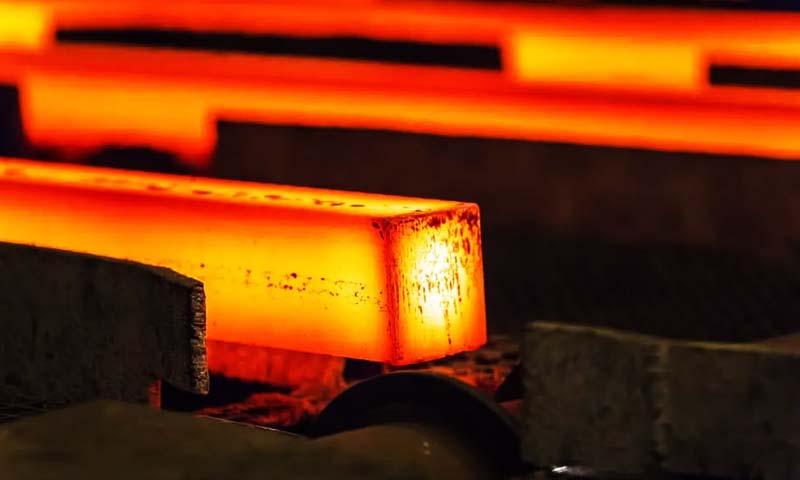
Forging
Forging is a manufacturing process where titanium is shaped by applying compressive force, usually through a hammer or press.
This process is commonly used for producing high-strength, durable parts for critical applications such as aerospace and military components.
- Process: Titanium is heated to a temperature just below its recrystallization point (approximately 900–1,000°C) and then shaped by mechanical force.
The material is deformed to the desired shape using a hydraulic press or hammer. - Advantages: Forging enhances titanium’s strength and integrity, as it refines the grain structure of the material, resulting in a more uniform distribution of material properties.
The process improves the material’s fatigue resistance and impact strength. - Challenges: Forging titanium requires high temperatures and significant force, meaning it is an energy-intensive process.
The metal’s low thermal conductivity can lead to uneven heating, making it necessary to carefully control the temperature and force during the process.
Machining
Titanium’s hardness and toughness make it difficult to machine, requiring the use of specialized cutting tools and techniques.

Common machining methods include CNC turning, CNC milling, drilling, and grinding.
These methods are employed to produce titanium parts to precise dimensions, particularly for aerospace and medical components.
- Process: The machining of titanium typically involves high-speed cutting, using carbide tools or tools coated with materials like titanium nitride (TiN) to improve tool life.
Coolants are used to dissipate heat and prevent the titanium from becoming overly brittle during machining. - Advantages: Machining allows for very precise and complex shapes, making it ideal for producing detailed parts with tight tolerances.
This method is especially useful for producing small batches of high-value parts, such as medical implants and aerospace components. - Challenges: Titanium’s low thermal conductivity makes it prone to overheating during machining, which can lead to tool wear and poor surface finish.
As a result, machining titanium is time-consuming and requires careful management of cutting speeds, feeds, and cooling techniques.
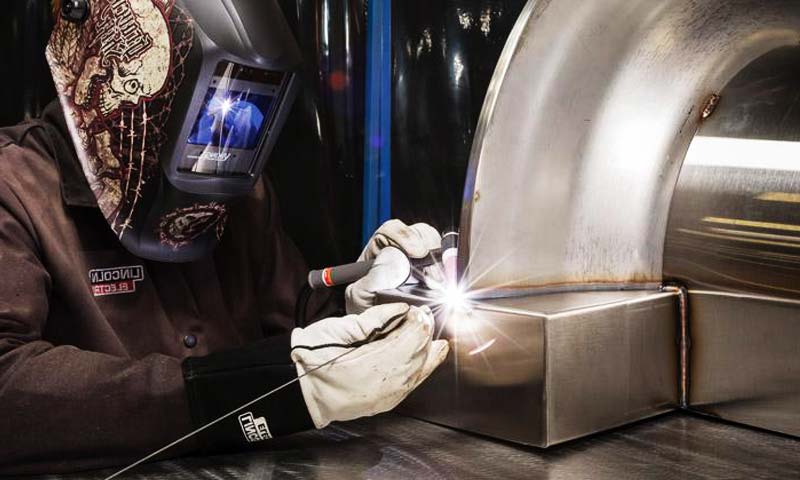
Welding
Welding is a commonly used fabrication technique for joining titanium components.
Titanium’s excellent corrosion resistance and strength make it an ideal candidate for applications that require high-performance joints.
Welding is typically done using the TIG (tungsten inert gas) method, though other methods like MIG (metal inert gas) and laser welding are also used in some cases.
- Process: In TIG welding, a tungsten electrode is used to create an arc that melts the titanium material.
The weld area is protected by an inert gas (usually argon) to prevent oxidation, which could compromise the quality of the joint. - Advantages: TIG welding offers excellent control over the heat input, minimizing distortion and ensuring a clean, strong weld.
It is suitable for welding thin sections of Ti, which are commonly used in aerospace and medical applications. - Challenges: Titanium is highly reactive with oxygen, nitrogen, and hydrogen at elevated temperatures.
Without proper shielding, these gases can contaminate the weld area, resulting in brittle and weak joints.
Welding titanium also requires high skill levels and controlled environments to prevent contamination and ensure the integrity of the weld.
Powder Metallurgy (Additive Manufacturing)
Additive manufacturing, or 3D printing, is a growing fabrication method for titanium. This process allows for the creation of complex titanium parts by depositing material layer by layer.
Titanium powder is used as the base material in many additive manufacturing processes, including Selective Laser Melting (SLM) and Electron Beam Melting (EBM).

- Process: In SLM and EBM, titanium powder is melted using a high-energy laser or electron beam in a controlled environment, typically under vacuum or inert gas.
The material is deposited in layers, allowing for the creation of highly intricate parts directly from a CAD model. - Advantages: Additive manufacturing offers tremendous design flexibility,
enabling the production of parts with geometries that would be impossible to achieve using traditional methods.
It also reduces material waste, as only the required amount of powder is used to create the part. - Challenges: The process of additive manufacturing titanium parts is still relatively slow compared to traditional methods, making it less efficient for mass production.
Additionally, the high cost of titanium powder and the need for specialized equipment make it an expensive method.
Surface Treatments
Titanium’s surface properties can be further enhanced using various surface treatments to improve wear resistance, corrosion resistance, and appearance.
Common surface treatment methods for Ti include anodizing, coating, and shot peening.
- Anodizing: This electrochemical process creates a thicker oxide layer on the surface of titanium,
improving its corrosion resistance and giving the material an attractive, colorful finish.
Anodizing is widely used in the aerospace and medical industries for parts that need additional surface protection. - Coating: Titanium parts can be coated with other materials like ceramic or carbide to increase hardness and wear resistance,
particularly in demanding applications such as turbine engines and automotive components. - Shot Peening: This process involves bombarding the surface of titanium with small spherical media to induce compressive stresses,
which improves fatigue resistance and extends the life of components.
7. Forms of Titanium
Titanium can be found and used in a variety of forms, each suitable for different applications depending on the required properties such as strength, flexibility, corrosion resistance, and more.
Here are some common forms of titanium:
Titanium Sponge:
This is the initial form of titanium after it has been reduced from its ores (usually rutile or ilmenite) using processes like the Kroll process or Hunter process.
It’s a porous material that looks somewhat like a sponge, hence the name.
Titanium Ingots:
Once the sponge is refined and possibly alloyed with other elements, it can be cast into ingots.
These are large blocks of metal that serve as the raw material for further processing into various shapes.
Titanium Sheets and Plates:
These are flat pieces of titanium that have been rolled to specific thicknesses.
They’re commonly used in aerospace, chemical plants, and marine environments due to their excellent corrosion resistance and strength-to-weight ratio.
Titanium Bars and Rods:
These cylindrical shapes are used in many engineering applications where high strength and low weight are important.
They can be machined into parts or components for use in industries like aerospace, automotive, and medical devices.
Titanium Tubes and Pipes:
Tubular forms of titanium are utilized in heat exchangers, condensers, and pipelines where resistance to seawater and other corrosive media is needed.
Titanium Wire:
Used in various applications including medical implants, springs, and fasteners. The wire can be made in different diameters and tempers according to the requirements.
Titanium Forgings:
Ti forgings are used when a part requires superior mechanical properties.
They are shaped by pressing or hammering the metal while it’s hot, which aligns the grain structure and improves strength.
Titanium Castings:
When complex shapes are required, titanium can be cast into molds. This process allows for the creation of intricate parts with minimal machining.
Titanium Powders:
Used in additive manufacturing (3D printing), coatings, and composite materials.
Powder metallurgy techniques enable the production of near-net-shape components, reducing waste and allowing for the creation of parts with unique geometries
8. Challenges in Working with Titanium
Working with titanium presents a unique set of challenges that are different from those encountered with other metals.
High Cost:
One of the most significant barriers to the widespread use of titanium is its cost.
The extraction process from its ores, primarily through the Kroll process, is energy-intensive and expensive.
This results in titanium being significantly more costly than many other structural metals.
Machining Difficulties:
Titanium has poor thermal conductivity, which means it does not dissipate heat well during machining operations.
This can lead to rapid tool wear and potential part distortion due to localized heating.
Welding Challenges:
Welding Ti requires an inert gas shield during both the welding process and cooling down
to avoid contamination from atmospheric gases like oxygen and nitrogen, which can embrittle the metal.
Specialized equipment and techniques are necessary to achieve satisfactory welds.
Formability Issues:
Titanium alloys tend to have lower formability compared to other materials, making complex shaping processes difficult.
They require careful control of temperature and deformation rates to prevent cracking or other defects.
Surface Treatment Complexity:
To enhance certain properties, such as wear resistance or biocompatibility for medical implants, surface treatments are often required.
However, these treatments can be complex and may involve multiple steps, adding to the overall manufacturing cost.
Additive Manufacturing (AM) Barriers:
While AM offers new possibilities for creating complex shapes and reducing material waste,
there are still significant challenges related to achieving consistent quality and performance in titanium parts produced by this method.
These include issues with powder quality, dimensional accuracy, and mechanical properties.
Corrosion Protection Requirements:
Although titanium exhibits excellent natural corrosion resistance, under certain conditions,
it can still suffer from forms of localized corrosion, such as crevice corrosion or stress corrosion cracking.
Protective measures may be needed depending on the application environment.
Joining with Other Materials:
Creating joints between titanium and other materials, particularly steel can be challenging due to differences in melting points and coefficients of thermal expansion.
Delamination prevention methods need to be considered when working with multi-material interfaces.
9. Future Trends and Innovations
The future of titanium looks promising, with ongoing innovations in manufacturing and sustainability.
Additive manufacturing (3D printing) is expected to revolutionize the production of titanium components, allowing for the creation of more complex geometries with less material waste.
Additionally, advancements in recycling technologies are making Ti more sustainable by enabling the reuse of scrap metal.
Furthermore, industries such as renewable energy and advanced electronics are increasingly turning to titanium for its unique properties, driving further demand and innovation in the material.
10. Conclusion
Titanium’s lightweight, strength, and corrosion resistance make it an invaluable material in industries ranging from aerospace to medical technology.
Although it comes with challenges in terms of cost and fabrication, its exceptional performance justifies its widespread use.
As advancements in manufacturing processes and sustainability continue to make titanium more accessible, its role in shaping the future of various industries is set to expand.
The growing demand for this versatile material underscores its importance in the modern world, driving innovation across multiple sectors.
If you’re looking for high-quality custom Titanium products, choosing LangHe is the perfect decision for your manufacturing needs.