1. What is Ti-6Al-4V Titanium Alloy?
Ti-6Al-4V is a high-performance titanium alloy containing approximately 6% aluminum (Al), 4% vanadium (V), and the balance titanium (Ti), with trace amounts of oxygen, iron, and other elements.
Classified as an α+β alloy, it combines the properties of both the alpha and beta phases, resulting in excellent strength-to-weight ratio, superior corrosion resistance, and high fatigue performance.
Also known as Grade 5 Titanium, UNS R56400, or ASTM B348, Ti-6Al-4V is the most widely used titanium alloy globally, accounting for nearly half of total titanium applications.
Its tensile strength typically ranges from 900 to 1100 MPa, with a density of 4.43 g/cm³, making it about 45% lighter than steel yet capable of achieving comparable or superior mechanical performance.

Historical Development
Ti-6Al-4V was first developed in the 1950s for aerospace applications, where the demand for materials with low weight, high strength, and temperature resistance was critical.
Over time, its use expanded beyond aerospace to medical implants, automotive racing, and industrial equipment, thanks to its biocompatibility and chemical stability.
2. Chemical Composition of Ti‑6Al‑4V
| Element | Grade 5 (UNS R56400) | Grade 23 – ELI (UNS R56401) | Function / Role |
| Aluminum (Al) | 5.50–6.75 | 5.50–6.75 | α-phase stabilizer; improves strength, creep, and oxidation resistance. |
| Vanadium (V) | 3.50–4.50 | 3.50–4.50 | β-phase stabilizer; enhances ductility, toughness, and hardenability. |
| Oxygen (O) | ≤ 0.20 | ≤ 0.13 | Strong α-stabilizer; increases strength but reduces ductility. |
| Iron (Fe) | ≤ 0.25 | ≤ 0.25 | Minor β-stabilizer; excessive Fe reduces toughness. |
| Nitrogen (N) | ≤ 0.05 | ≤ 0.03 | Interstitial element; strengthens but decreases ductility. |
| Hydrogen (H) | ≤ 0.015 | ≤ 0.012 | Can form hydrides, leading to embrittlement. |
| Carbon (C) | ≤ 0.08 | ≤ 0.08 | Adds strength but can reduce toughness if high. |
| Other elements (each / total) | ≤ 0.10 / 0.40 | ≤ 0.10 / 0.40 | Impurities control. |
| Titanium (Ti) | Balance | Balance | Base element providing strength, corrosion resistance, and biocompatibility. |
3. Physical and Mechanical Properties of Ti‑6Al‑4V
Ti‑6Al‑4V (Grade 5 / Grade 23‑ELI) combines high specific strength, good fracture toughness, and excellent fatigue resistance with moderate elastic stiffness and low thermal/electrical conductivity.
Properties depend strongly on product form (wrought, cast, AM), heat treatment (annealed vs. STA vs. β‑anneal), impurity (interstitial) levels, and whether the part has been HIPed (common for cast/AM parts).

Physical (Thermo‑physical) Properties
| Property | Value / Range | Notes |
| Density | 4.43 g·cm⁻³ | ~60% of steel, ~1.6× Al 7075 |
| Elastic Modulus, E | 110–120 GPa | ≈ 55% of steels (~200 GPa) |
| Shear Modulus, G | ~44 GPa | G = E / [2(1+ν)] |
| Poisson’s Ratio, ν | 0.32–0.34 | |
| Melting Range | ~1,600–1,670 °C | Liquidus/solidus vary slightly with chemistry |
| Thermal Conductivity | 6–7 W·m⁻¹·K⁻¹ | ~¼ of steels; heat concentrates at tool/work interface during machining |
| Specific Heat (25 °C) | ~0.52 kJ·kg⁻¹·K⁻¹ | Rises with temperature |
| Coefficient of Thermal Expansion (CTE) | 8.6–9.6 ×10⁻⁶ K⁻¹ (20–400 °C) | Lower than austenitic stainless steels |
| Electrical Resistivity | ~1.7–1.8 µΩ·m | Higher than steels & Al (good for galvanic isolation concerns) |
| Service Temperature (typ.) | ≤ 400–500 °C | Above this, strength and oxidation resistance drop rapidly |
Room‑Temperature Mechanical Properties (Representative)
Values shown are typical ranges; exact numbers depend on product form, section size, and specification.
| Condition / Form | UTS (MPa) | YS 0.2% (MPa) | Elongation (%) | Hardness (HV / HRC) | Notes |
| Wrought, Mill‑Annealed (Grade 5) | 895–950 | 825–880 | 10–14 | 320–350 HV (≈ HRC 33–36) | Widely used baseline |
| Wrought, STA | 930–1,050 | 860–980 | 8–12 | 330–370 HV (≈ HRC 34–38) | Higher strength, slightly lower ductility |
| Grade 23 (ELI), Annealed | 860–930 | 795–860 | 12–16 | 300–340 HV | Lower interstitials → better toughness & fatigue crack growth resistance |
| Cast + HIP + HT | 850–950 | 750–880 | 8–14 | 320–360 HV | HIP closes porosity, approaching wrought‑like properties |
| AM (LPBF/EBM) As‑Built | 900–1,050 | 850–970 | 6–10 | 330–380 HV | Often anisotropic; post‑HIP/HT recommended |
| AM (Post‑HIP/HT) | 900–1,000 | 830–930 | 10–14 | 320–360 HV | Restores ductility, reduces scatter |
Fatigue & Fracture
- High‑Cycle Fatigue (R = −1, 10⁷ cycles):
-
- Wrought / HIP’d Cast / HIP’d AM:~450–600 MPa (surface finish and defect control critical).
- As‑cast / As‑built AM (no HIP): typically 20–30% lower due to porosity and microdefects.
- Low‑Cycle Fatigue: Strongly microstructure‑ and surface‑condition dependent; bi‑modal and fine α colonies generally outperform coarse lamellar structures at RT.
- Fracture Toughness (K_IC):
-
- Grade 5: ~55–75 MPa√m
- Grade 23 (ELI):~75–90 MPa√m (extra‑low interstitials improve toughness).
- Crack Growth: Lamellar (transformed β) structures can improve fatigue crack growth resistance, while fine equiaxed α aids initiation resistance.
Creep & Elevated‑Temperature Strength
- Usable up to ~400–500 °C for most structural duty; above this, strength and oxidation resistance degrade.
- Creep: Ti‑6Al‑4V shows significant creep above ~350–400 °C; for higher temperature service, other Ti alloys (e.g., Ti‑6242, Ti‑1100) or Ni‑base superalloys (e.g., Inconel 718) are preferred.
- Microstructure effect:Lamellar/Widmanstätten (from β‑anneal or slow cooling) offers better creep and crack growth resistance than equiaxed structures.
Influence of Interstitials & Microstructure
- Oxygen (O): +0.1 wt% O can raise UTS by ~100 MPa but cut elongation several points.
Hence Grade 23 (ELI) with lower O/N/H is specified for implants and damage‑tolerant aerospace parts. - Microstructure control (via heat treatment):
-
- Equiaxed / bi‑modal: good balance of strength, ductility, and toughness—common in aerospace.
- Lamellar: improved crack growth/creep resistance, lower ductility—used in thick sections or high‑T service.
Surface Condition, Residual Stress & Finishing
- Surface finish can shift fatigue strength by >25% (as‑machined/polished vs. as‑cast or AM as‑built).
- Shot peening / Laser Shock Peening: introduce compressive residual stresses → fatigue life improvements up to 2×.
- Chemical milling (common in cast/AM parts) removes alpha‑case and near‑surface defects that otherwise degrade fatigue/fracture performance.
4. Corrosion Resistance and Biocompatibility
Corrosion Resistance
Ti-6Al-4V owes its corrosion resistance to a tightly adherent titanium dioxide (TiO₂) passive layer, formed spontaneously in air or water. This layer:
- Prevents further oxidation, with a corrosion rate <0.01 mm/year in seawater (10× better than 316L stainless steel).
- Resists chloride-induced pitting (critical for marine and offshore applications), with a pitting resistance equivalent number (PREN) of ~30.
- Withstands most acids (sulfuric, nitric) and alkalis, though it is susceptible to hydrofluoric acid (HF) and strong reducing acids.
Biocompatibility
Its non-toxic and non-reactive nature makes Ti-6Al-4V the material of choice for orthopedic implants, dental screws, and surgical devices.
5. Processing and Fabrication of Ti‑6Al‑4V Titanium Alloy
Ti‑6Al‑4V (Grade 5/Grade 23) is renowned for its high strength-to-weight ratio and corrosion resistance, but these advantages come with significant processing challenges
Due to its low thermal conductivity, high chemical reactivity, and relatively high hardness compared to aluminum or steel.
Machining Challenges and Strategies
Challenges:
- Low Thermal Conductivity (~6–7 W·m⁻¹·K⁻¹): Heat builds up at the cutting interface, accelerating tool wear.
- High Chemical Reactivity: Tendency to gall or weld to cutting tools.
- Elastic Modulus (~110 GPa): Lower stiffness means workpieces can deflect, requiring rigid setups.
Strategies for Machining Ti‑6Al‑4V:
- Use carbide tools with sharp cutting edges and heat-resistant coatings (TiAlN, AlTiN).
- Apply high-pressure coolant or cryogenic cooling (liquid nitrogen) to manage heat.
- Prefer lower cutting speeds (~30–60 m/min) with high feed rates to reduce dwell time.
- Employ high-speed machining (HSM) with trochoidal toolpaths to minimize tool load and heat concentration.
Forging, Rolling, and Forming
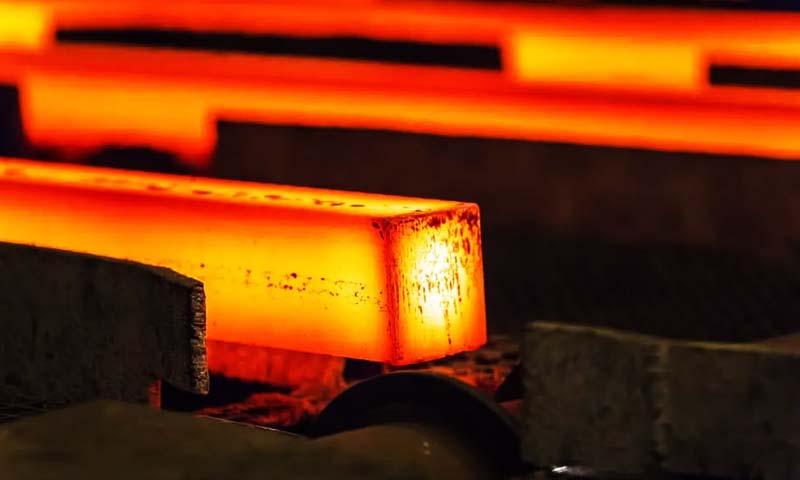
- Forging: Ti‑6Al‑4V is typically forged between 900–950 °C (α+β region).
Rapid cooling (air cooling) helps produce fine, equiaxed microstructures with good strength-toughness balance. - Hot Rolling: Produces thin plates or sheets for aerospace skins and medical device components.
- Superplastic Forming (SPF): At ~900 °C, Ti‑6Al‑4V can achieve elongations >1000% with gas-pressure forming, ideal for complex aerospace panels.
Casting
- Ti‑6Al‑4V can be investment cast (lost-wax process) but requires vacuum or inert atmospheres due to reactivity with oxygen and mold materials.
- Refractory molds such as yttria or zirconia are used to avoid contamination.
- HIP (Hot Isostatic Pressing) is commonly applied post-casting to eliminate porosity and improve mechanical properties to near-wrought levels.

Additive Manufacturing (3D Printing)
- Processes:
-
- Laser Powder Bed Fusion (LPBF) and Electron Beam Melting (EBM) are dominant for Ti‑6Al‑4V.
- Directed Energy Deposition (DED) is used for repair or large structures.
- Advantages:
-
- Complex geometries, lattice structures, and lightweight designs with up to 60% weight reduction compared to conventional machining from billets.
- Minimal material waste—critical since Ti‑6Al‑4V raw material costs $25–40/kg.
- Challenges:
-
- As-built parts often have anisotropic microstructures and residual stresses, requiring HIP and heat treatment.
- Surface roughness from powder fusion must be machined or polished.
Welding and Joining
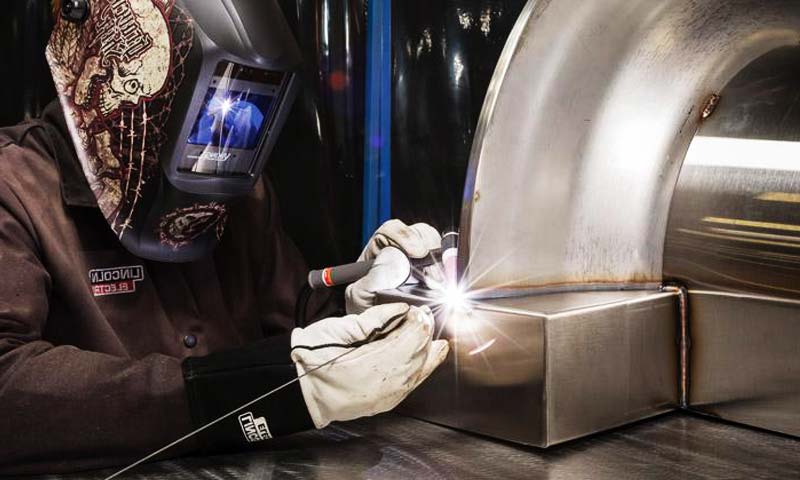
- Reactivity with air at high temperatures necessitates argon shielding (or inert chambers).
- Methods:
-
- GTAW (TIG) and Electron Beam Welding (EBW) are common for aerospace components.
- Laser Welding: High precision, low heat input.
- Friction Stir Welding (FSW): Emerging for certain aerospace structures.
- Precautions: Oxygen or nitrogen contamination during welding (>200 ppm O₂) can cause embrittlement.
- Post-weld heat treatments may be required to restore ductility.
Surface Treatments and Finishing
- Alpha-case Removal: Cast or forged surfaces develop a brittle oxygen-rich layer (“alpha-case”) which must be removed via chemical milling or machining.
- Surface Hardening: Plasma nitriding or anodizing enhances wear resistance.
- Polishing & Coating: Medical implants require mirror finishes and bio-coatings (hydroxyapatite, TiN) for biocompatibility and wear.
Cost and Material Utilization
- Traditional machining from billet has buy-to-fly ratios of 8:1 to 20:1, meaning 80–95% material waste—costly at $25–40/kg for Ti‑6Al‑4V.
- Near-net shape techniques like investment casting, forging preforms, and additive manufacturing significantly reduce material waste and cost.
6. Heat Treatment and Microstructure Control
Ti‑6Al‑4V is an α+β alloy; its performance is governed by how much of each phase is present, their morphology (equiaxed, bimodal, lamellar/Widmanstätten), colony size, and the cleanliness/interstitial level (Grade 5 vs Grade 23 ELI).
Because the β‑transus is typically ~995 °C (±15 °C), whether you heat below or above this temperature determines the resulting microstructure and, therefore, the strength–ductility–toughness–fatigue–creep balance.

The primary heat‑treatment families
| Treatment | Typical Window | Cooling | Resulting Microstructure | When to Use / Benefits |
| Stress relief (SR) | 540–650 °C, 1–4 h | Air cool | Minimal phase change; residual stress reduction | After heavy machining, welding, AM to reduce distortion/fatigue knock‑down |
| Mill / Full Anneal | 700–785 °C, 1–2 h | Air cool | Equiaxed α + retained β (fine) | Baseline aerospace stock: good ductility, toughness, machinability |
| Duplex / Bi‑modal Anneal | 930–955 °C (near β‑transus), hold 0.5–2 h + sub‑transus temper (e.g., 700–750 °C) | Air cool between steps | Primary equiaxed α + transformed β (lamellar) | Very common in aerospace: balances high strength, fracture toughness, and HCF |
| Solution Treat & Age (STA) | Solution: 925–955 °C (below β‑transus) 1–2 h → Air cool; Age: 480–595 °C, 2–8 h → Air cool | Air cool | Finer α within transformed β, strengthened by aging | Raises UTS/YS (e.g., to 930–1050/860–980 MPa), modest ductility drop |
| β‑Anneal / β‑Solution | > β‑transus (≈995–1,040 °C), 0.5–1 h → Controlled cool (air / furnace / oil) + sub‑transus temper | Air/furnace cool | Lamellar / Widmanstätten α in transformed β | Improves fracture toughness, crack growth & creep, but lowers RT ductility |
| HIP (Hot Isostatic Pressing) | 900–950 °C, 100–200 MPa, 2–4 h (often + SR/anneal) | Slow cool under pressure | Density → >99.9%, pores collapsed | Essential for cast & AM parts to restore fatigue/fracture performance |
(Exact temperatures/hold times depend on specification—AMS 4928/4911/4999, ASTM B348/B381/B367/F1472/F136, customer drawing, and desired property set.)
HIP: densification as a “must‑do” for cast & AM
- Why: Even small pores (<0.5%) are devastating to fatigue life and fracture toughness.
- Outcome: HIP typically restores ductility and fatigue to near‑wrought levels, significantly reducing property scatter.
- Follow‑on: Post‑HIP stress relief or anneal can further stabilise the microstructure and reduce residual stresses.
Emerging directions
- Sub‑transus rapid heat treatments (short‑cycle STAs) to cut cost while hitting high strength.
- Microstructure by design in AM: laser parameter control + in‑situ heat management to push toward equiaxed α/β without full HIP (research stage).
- Advanced peening (LSP) & surface modification to push fatigue limits higher without changing bulk microstructure.
- Machine learning–guided HT optimization using data from dilatometry, DSC, and mechanical testing to predict optimal recipes quickly.
7. Major Applications of Ti-6Al-4V Titanium Alloy
Ti‑6Al‑4V (Grade 5) dominates the titanium alloy market, accounting for approximately 50–60% of all titanium applications worldwide.
Its exceptional strength-to-weight ratio (UTS ≈ 900–1,050 MPa), corrosion resistance, fatigue performance, and biocompatibility make it indispensable across multiple high-performance industries.

Aerospace
- Aircraft Structures:
-
- Fuselage frames, landing gear components, pylon brackets, and hydraulic system parts.
- Titanium’s weight savings compared to steel (≈40% lighter) enable fuel reductions of 3–5% per aircraft, critical for modern commercial and military jets.
- Jet Engine Components:
-
- Fan blades, compressor discs, casings, and afterburner components.
- Ti‑6Al‑4V maintains strength up to 400–500 °C, making it ideal for compressor stages where high thermal and fatigue resistance is crucial.
Medical and Dental
- Orthopedic Implants:
-
- Hip and knee replacements, spinal fusion devices, bone plates, and screws.
- Ti‑6Al‑4V ELI (Grade 23) is favored due to its enhanced fracture toughness and low interstitial content, reducing the risk of implant failure.
- Dental Applications:
-
- Crowns, dental implants, and orthodontic brackets due to biocompatibility and osseointegration, promoting strong bone attachment.
- Surgical Instruments:
-
- Tools such as forceps, drills, and scalpel handles that require both high strength and sterilization resistance.
Automotive and Motorsports
- High-Performance Components:
-
- Racing car suspension arms, valves, connecting rods, and exhaust systems.
- Titanium reduces weight by 40–50% compared to steel, improving acceleration, braking, and fuel efficiency in competitive motorsports.
- Luxury and Electric Vehicles (EVs):
-
- Emerging use in EV battery enclosures and structural parts where lightweighting and corrosion resistance extend range and reliability.
Marine and Offshore
- Naval & Commercial Vessels:
-
- Propeller shafts, seawater piping systems, and heat exchangers.
- Ti‑6Al‑4V is resistant to chloride-induced pitting and crevice corrosion, outperforming stainless steels and copper alloys.
- Oil & Gas Offshore Structures:
-
- Used in risers, subsea valves, and high-pressure equipment due to its resistance to sour gas environments and stress corrosion cracking.
Industrial and Chemical Processing
- Heat Exchangers & Reactors:
-
- Ti‑6Al‑4V withstands oxidizing and mildly reducing environments, ideal for chlor-alkali plants and desalination systems.
- Power Generation:
-
- Turbine blades and compressor components in nuclear and fossil power plants where corrosion and fatigue resistance are crucial.
- 3D Printing of Industrial Parts:
-
- Widely used in additive manufacturing (AM) for aerospace brackets, manifolds, and prototypes.
Consumer and Sporting Goods
- Sports Equipment:
-
- Golf club heads, bicycle frames, tennis racquets, and climbing gear, leveraging its lightweight and high strength.
- Luxury Watches and Electronics:
-
- Cases, bezels, and structural components where scratch resistance and aesthetics are valued.
8. Advantages of Ti-6Al-4V Titanium Alloy
- High Strength-to-Weight Ratio
Ti-6Al-4V is approximately 45% lighter than steel while offering comparable or higher tensile strength (~900–1100 MPa), making it ideal for lightweight, high-performance components. - Exceptional Corrosion Resistance
The formation of a stable and self-healing TiO₂ oxide layer protects the alloy from corrosion in marine, chemical, and industrial environments. - Outstanding Fatigue and Fracture Resistance
Excellent resistance to cyclic loading and crack propagation ensures long-term durability, especially in aerospace and automotive applications. - Superior Biocompatibility
Naturally inert and non-toxic, Ti-6Al-4V is widely used in medical implants and surgical tools due to its compatibility with the human body. - Thermal Stability
Maintains mechanical performance at temperatures up to 500°C, making it suitable for engine components and heat-intensive applications. - Versatility in Manufacturing
Can be processed through forging, casting, machining, and advanced techniques like additive manufacturing (3D printing), offering design flexibility.
9. Limitations and Challenges of Ti-6Al-4V Titanium Alloy
- High Material and Processing Costs
Ti-6Al-4V is significantly more expensive than conventional alloys like aluminum or carbon steel due to the high cost of titanium sponge (≈$15–30/kg) and the energy-intensive Kroll process. - Difficult Machinability
Low thermal conductivity (about 6.7 W/m·K) leads to localized heating during machining, causing tool wear, low cutting speeds, and higher manufacturing costs. - Limited Service Temperature
While strong at moderate temperatures, mechanical properties degrade beyond 500°C, restricting its use in ultra-high-temperature environments such as certain turbine components. - Complex Welding Requirements
Welding Ti-6Al-4V requires inert gas shielding (argon) to prevent contamination by oxygen or nitrogen. Without proper control, welds can become brittle and prone to cracking. - Sensitivity to Oxygen and Impurities
Even small oxygen levels (>0.2%) can drastically reduce ductility and toughness, demanding stringent quality control during processing and storage.
10. Standards and Specifications
- ASTM B348: Wrought Ti-6Al-4V (bars, sheets, plates).
- ASTM B367: Cast Ti-6Al-4V components.
- AMS 4928: Aerospace-grade wrought Ti-6Al-4V.
- ISO 5832-3: Medical implants (ELI grade).
- MIL-T-9046: Military specifications for aerospace applications.
11. Comparison with Other Materials
Ti-6Al-4V titanium alloy is often compared to other widely used engineering materials such as aluminum alloys (e.g., 7075), stainless steel (e.g., 316L), and nickel-based superalloys (e.g., Inconel 718).
| Property / Material | Ti-6Al-4V | Aluminum 7075 | Stainless Steel 316L | Inconel 718 |
| Density (g/cm³) | 4.43 | 2.81 | 8.00 | 8.19 |
| Tensile Strength (MPa) | 900 – 1,000 | 570 – 640 | 480 – 620 | 1,240 – 1,380 |
| Yield Strength (MPa) | 830 – 880 | 500 – 540 | 170 – 310 | 1,070 – 1,250 |
| Elongation (%) | 10 – 15 | 11 – 14 | 40 – 50 | 10 – 20 |
| Modulus of Elasticity (GPa) | 110 | 71 | 193 | 200 |
| Melting Point (°C) | ~1,660 | 477 | 1,370 | 1,355 – 1,375 |
| Corrosion Resistance | Excellent (especially in oxidizing & chloride environments) | Moderate | Very Good | Excellent |
| Fatigue Strength (MPa) | ~550 | ~150 | ~240 | ~620 |
| Thermal Conductivity (W/m·K) | 6.7 | 130 | 16 | 11 |
| Cost (relative) | High | Low | Moderate | Very High |
| Biocompatibility | Excellent | Poor | Good | Limited |
| Common Applications | Aerospace, medical implants, motorsports | Aerospace, automotive | Medical implants, chemical processing | Aerospace, gas turbines |
12. Conclusion
Ti-6Al-4V titanium alloy remains the backbone of high-performance industries, offering an unparalleled balance of strength, weight reduction, and corrosion resistance.
While its cost and processing challenges persist, advancements in additive manufacturing and powder metallurgy are reducing material waste and production costs, ensuring its growing relevance in aerospace, medical, and future space exploration technologies.
FAQs
Why is Ti-6Al-4V more expensive than steel?
Raw titanium sponge ($15–30/kg) and complex processing (vacuum melting, specialized machining) make Ti-6Al-4V 5–10× costlier than steel, though its weight savings often offset lifecycle costs.
Is Ti-6Al-4V magnetic?
No. Its alpha-beta microstructure is non-magnetic, making it suitable for aerospace and medical applications where magnetism is problematic.
Can Ti-6Al-4V be used for food contact?
Yes. It meets FDA standards (21 CFR 178.3297) for food contact, with corrosion resistance ensuring no metal leaching.
How does Ti-6Al-4V compare to Ti-6Al-4V ELI?
Ti-6Al-4V ELI (Extra Low Interstitial) has lower oxygen (<0.13%) and iron (<0.25%), enhancing ductility (12% elongation) and biocompatibility—preferred for medical implants.
What is the maximum temperature Ti-6Al-4V can withstand?
It performs reliably up to 400°C. Above 500°C, creep rates increase, limiting use in high-heat applications (e.g., gas turbine hot sections, where nickel superalloys are preferred).