Introduction
Imagine an aerospace turbine blade, intricately designed and cast from stainless steel, where every curve and channel contributes to efficient airflow and superior performance.
In another scenario, consider a medical implant crafted with such precision that its surface minimizes bacterial adhesion, ensuring patient safety.
These real-world examples illustrate how precision casting transforms raw stainless steel
into high-performance components that drive innovation across aerospace, medical, automotive, and energy industries.
By bridging the gap between design ambition and manufacturing reality,
precision casting enables the production of complex geometries with exceptional dimensional accuracy and surface quality.
In this article, we delve into the science behind precision casting, explore its techniques, and uncover the innovations and applications that make it indispensable for modern engineering.
1. What is Precision Casting?
Precision casting is a sophisticated manufacturing process that produces near-net-shape metal parts with high dimensional accuracy and exceptional surface finishes.
This method employs techniques such as investment casting (commonly known as lost-wax casting), ceramic mold casting, and 3D-printed pattern-assisted casting.
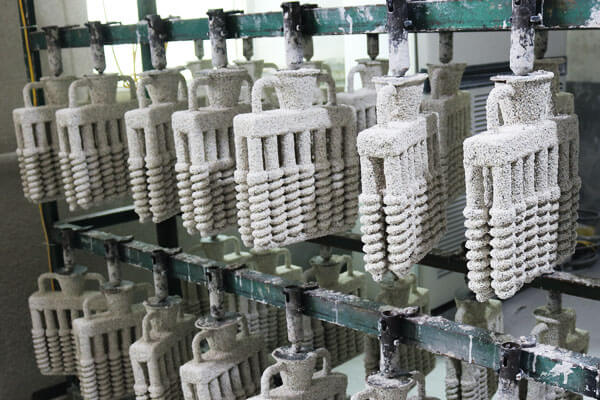
These processes allow engineers to replicate complex designs with minimal post-processing, thereby reducing waste and improving overall production efficiency.
Stainless steel, with its renowned corrosion resistance, strength, and versatility, proves to be an ideal candidate for precision casting,
enabling the creation of parts that excel even under the most demanding conditions.
2. Stainless Steel Grades for Precision Casting
Selecting the appropriate stainless steel grade is pivotal for achieving precision cast parts’ desired performance and durability.
CF3 – The General-Purpose Champion
CF3 serves as a general-purpose grade and corresponds to 304L wrought stainless steel.
Its low carbon content minimizes intergranular corrosion, making it ideal for applications where moderate corrosion resistance is needed.
This grade excels in scenarios such as medical device components and architectural elements where a clean, smooth finish is essential.
CF8 – The Versatile Workhorse
CF8 aligns with 304 wrought stainless steel and offers a balanced mix of corrosion resistance, formability, and weldability.
Its versatile properties make it suitable for a wide range of industrial environments,
including food processing equipment and marine hardware, where both aesthetic quality and structural integrity are critical.
CF3M – Enhanced for Aggressive Environments
CF3M corresponds to 316L, CF3M builds upon the properties of CF3 by incorporating molybdenum—typically around 2-3%—to enhance resistance to pitting and crevice corrosion.
This modification makes CF3M particularly well-suited for more aggressive environments,
such as those found in chemical processing or marine applications, while maintaining excellent formability and weldability.
CF8M – Advanced Corrosion Resistance
CF8M mirrors 316 wrought stainless steel by also adding molybdenum, but it further enhances corrosion resistance to meet the demands of the harshest environments.
It provides superior protection against localized corrosion and is ideally used in high-stress applications like oil and gas pipelines, aerospace components, and critical industrial parts.
17-4 PH Stainless Steel
Known for its high strength through precipitation hardening, this grade is often employed in aerospace fasteners and valves, where both durability and precise performance are critical.

2205 Duplex Stainless Steel
Combining austenitic and ferritic microstructures, duplex stainless steel offers superior stress corrosion resistance,
making it an excellent choice for oil and gas pipelines and other high-stress environments.
3. The Precision Casting Process: Step-by-Step
Precision casting of stainless steel parts unfolds through a series of well-coordinated steps that ensure the final product meets strict quality standards.
Pattern Creation:
Engineers first craft a highly detailed pattern using either wax or 3D-printed resin.
These patterns capture every intricate detail of the component’s design, providing a blueprint for the final product.
Shell Building:
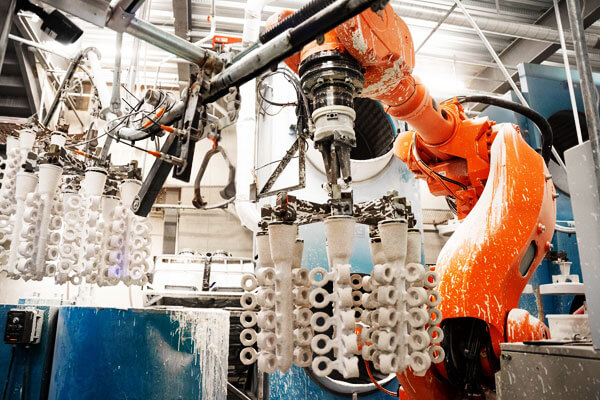
Next, the pattern undergoes repeated dip-coating in a ceramic slurry. This builds a robust, heat-resistant shell that will eventually form the mold.
The quality of this shell directly influences the surface finish and dimensional accuracy of the cast part.
Dewaxing:
The ceramic shell, now housing the pattern, enters a steam autoclave that melts out the wax or resin, leaving behind a hollow mold.
This critical step ensures that no residues remain, which could otherwise cause defects during the casting process.
Melting & Pouring:
Stainless steel is melted in a vacuum induction furnace at temperatures ranging between 1,500–1,600°C.
The molten metal is then carefully poured into the preheated ceramic mold under controlled conditions, ensuring uniform filling of even the most intricate features.
Cooling & Shell Removal:
After casting, the component cools under controlled conditions to promote a uniform microstructure.
Subsequently, the ceramic shell is removed using vibratory techniques or chemical methods, revealing the as-cast part.
Post-Processing:
Finally, the cast part undergoes heat treatment (such as solution annealing or aging) to optimize its mechanical properties,
followed by precision machining and surface finishing techniques like electropolishing to achieve the desired surface quality.
Stainless Steel Precision Casting Process Video:https://youtu.be/Oky0dvf9nvo
4. Advantages of Precision Casting of Stainless Steel Parts
Precision casting of stainless steel parts offers a multitude of benefits that significantly enhance both performance and efficiency in high-precision industries.
Exceptional Geometric Complexity and Design Freedom
- Intricate Designs Made Possible:
Precision casting enables the production of parts with complex internal channels, ultra-thin walls (down to 0.5 mm), and organic shapes that conventional machining cannot achieve.
This design freedom allows engineers to optimize component performance while meeting exact functional requirements. - Seamless Integration:
The process captures every minute detail of the design, ensuring that even the most intricate geometries are faithfully reproduced,
which is critical for applications in aerospace and medical devices.
High Dimensional Accuracy and Superior Surface Quality
- Tight Tolerances:
Precision casting consistently achieves dimensional accuracies of around ±0.1 mm.
This level of precision minimizes the need for additional machining and ensures that parts meet design specifications right from the casting stage. - Improved Surface Finish:
Typical cast surfaces might initially present roughness levels between Ra 3.2–6.3 µm.
However, precision casting lays the foundation for further finishing processes, such as electropolishing, which can reduce surface roughness to below Ra 1.6 µm.
This smooth, mirror-like finish not only enhances aesthetics but also improves functional performance by reducing friction and wear.
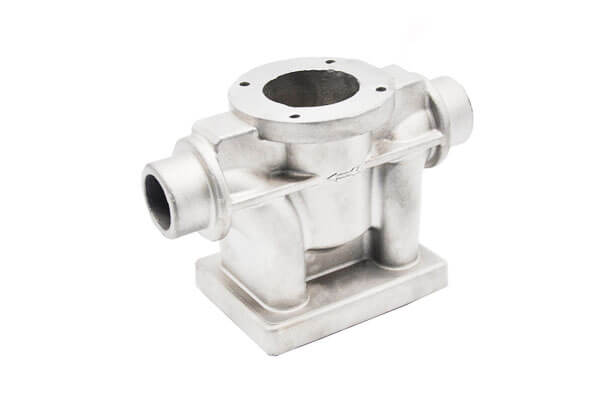
Stainless Steel Castings
Material Efficiency and Cost-Effectiveness
- Near-Net-Shape Production:
Precision casting produces parts that are nearly in their final shape, thereby reducing the volume of material removed during subsequent machining.
This near-net-shape approach can cut machining waste by 30–50%, leading to significant cost savings and more efficient material usage. - Lower Overall Production Costs:
By reducing material waste and minimizing secondary processing steps, precision casting helps lower production costs.
This advantage becomes particularly evident in high-volume manufacturing, where every percentage reduction in waste translates into substantial savings.
Enhanced Mechanical and Corrosion Properties
- Uniform Microstructure:
Controlled solidification during precision casting results in a uniform microstructure, which improves fatigue strength and resistance to crack initiation.
Components benefit from enhanced durability, making them more reliable under cyclic loading and extreme conditions. - Superior Corrosion Resistance:
Stainless steel parts produced via precision casting display enhanced corrosion resistance due to their refined surface and improved passivation.
This attribute is crucial in environments such as marine, chemical processing, and medical applications, where exposure to harsh chemicals or bodily fluids is common.
Environmental and Operational Benefits
- Energy Efficiency and Sustainability:
Precision casting optimizes material usage and minimizes waste, thereby reducing the overall energy consumption compared to traditional machining methods.
Manufacturers benefit from a more sustainable production process, which aligns with global environmental goals. - Reduced Post-Processing Requirements:
Since precision casting delivers high-quality parts with excellent surface finishes and tight tolerances, manufacturers spend less time and resources on additional finishing processes.
This efficiency not only speeds up production cycles but also improves throughput in competitive markets.
5. Applications Across Industries
Precision-cast stainless steel parts are integral to many industries, each benefiting from the process’s ability to produce high-performance components:
- Medical Industry:
Electropolished surgical instruments and joint implants meet stringent standards for biocompatibility and cleanliness, reducing biofilm formation by up to 80%. - Aerospace Industry:
Turbine blades and fuel nozzles, when precision cast and electropolished, show improved airflow efficiency by 15%, which directly boosts engine performance. - Energy Sector:
Precision-cast pump housings and valve bodies withstand harsh, corrosive environments, ensuring reliability in energy systems.Custom Stainless Steel Pump - Automotive Industry:
Components such as turbocharger wheels and fuel injectors benefit from enhanced wear resistance and improved fatigue performance, which are critical for high-performance engines. - Semiconductor Industry:
Ultra-smooth wafer handling components minimize particulate contamination, ensuring optimal performance in cleanroom environments.

6. Challenges in Precision Casting Stainless Steel
Despite its advantages, precision casting of stainless steel presents several challenges:
- Controlling Defects:
Porosity, inclusions, and micro-shrinkage can compromise component integrity. Advanced simulation and real-time monitoring help mitigate these defects. - Dimensional Tolerance:
Achieving tolerances within ±0.1 mm demands sophisticated mold design and rigorous process control,
often supported by computer-aided design (CAD) and finite element analysis (FEA). - Cost Management:
Although precision casting reduces material waste, optimizing batch sizes using hybrid 3D-printed wax patterns is necessary to balance cost and quality. - Microstructural Uniformity:
Ensuring a consistent microstructure across complex geometries requires advanced heat treatments and controlled cooling techniques. - Surface Treatment Limitations:
Post-casting treatments must be precisely managed to avoid over-processing, which can affect dimensional accuracy and surface integrity.
7. Quality Control & Testing
To ensure that precision-cast stainless steel parts meet the highest standards, manufacturers implement rigorous quality control and testing protocols:
- Non-Destructive Testing (NDT):
Techniques like X-ray inspection and dye penetrant testing identify internal defects and surface cracks without damaging the part. - Mechanical Testing:
Testing for tensile strength, hardness (using the Rockwell C scale), and corrosion resistance (per ASTM A262) confirms that the components perform reliably under expected conditions.
8. Innovations in Precision Casting
The field of precision casting continues to evolve rapidly, driven by breakthroughs in technology, process optimization, and sustainability initiatives.
Manufacturers now harness cutting-edge innovations that not only improve efficiency and accuracy but also reduce environmental impact and overall production costs.
Below, we explore some of the most notable innovations reshaping precision casting today.
Integration of 3D-Printed Molds
- Accelerated Prototyping and Design Iteration:
Manufacturers increasingly employ 3D-printed molds to speed up the prototyping phase.
With this technology, designers can create complex patterns rapidly, reducing the time needed to iterate and refine designs.
In fact, adopting 3D-printed molds can cut tooling costs by up to 40%, enabling faster market entry for new products. - Enhanced Design Freedom:
3D printing allows for the production of molds with intricate internal features and geometries that traditional mold-making methods cannot achieve.
This capability facilitates the creation of near-net-shape castings, thereby minimizing post-casting machining and material waste.
AI-Driven Process Optimization
- Real-Time Monitoring and Defect Prediction:
The advent of artificial intelligence and machine learning has revolutionized the casting process.
Smart sensors and AI algorithms monitor parameters such as temperature, flow rate, and chemical composition in real time.
These systems predict defect risks and automatically adjust process variables to maintain optimal conditions, reducing the defect rate significantly.AI-Driven Precision Casting Process - Data-Driven Process Improvements:
Manufacturers collect vast amounts of data during casting operations, which AI systems analyze to uncover process inefficiencies and suggest improvements.
This data-driven approach not only enhances quality but also boosts production throughput, leading to substantial cost savings and increased yield.
Sustainable and Eco-Friendly Practices
- Recycling and Waste Reduction:
As sustainability becomes a priority, the industry is shifting toward the use of recycled stainless steel scrap in precision casting.
This practice not only conserves raw materials but also significantly reduces carbon emissions.
For example, every ton of recycled steel can save approximately 1.5 tons of CO₂ emissions, contributing to a greener production process. - Low-Emission Shell Materials:
Innovations in shell material technology have led to the development of low-emission, eco-friendly ceramics and binders.
These materials reduce the environmental footprint of the casting process while maintaining high performance and accuracy.
Manufacturers are now exploring bio-based additives that further decrease harmful emissions and chemical waste.
Hybrid Manufacturing Techniques
- Combining Precision Casting with Additive Manufacturing:
The integration of precision casting with additive manufacturing (3D printing) is creating a new paradigm in component production.
By casting parts in near-net shape and using 3D printing for subsequent finishing processes,
manufacturers can achieve higher precision and reduce the need for extensive post-processing.
This hybrid approach unlocks the potential for more complex and customized designs while ensuring that production remains efficient and cost-effective. - Enhanced Material Properties:
Researchers are experimenting with hybrid techniques that blend conventional casting with novel material treatments, such as nanocrystalline coatings and self-healing surfaces.
These innovations aim to further improve the mechanical properties, corrosion resistance, and overall performance of cast parts.
Future Outlook
Looking ahead, the precision casting industry is poised for further transformation as digital technologies, green manufacturing practices, and hybrid processes continue to evolve.
Digital twins and virtual simulations are set to play a larger role in optimizing mold design and cooling strategies,
ensuring that precision cast parts meet ever-stricter quality and performance standards.
In addition, emerging sustainable practices promise to reduce environmental impact while driving cost efficiency,
making precision casting not only a technical but also an eco-friendly solution for modern manufacturing challenges.
9. Precision Casting of Stainless Steel Parts vs. Alternative Methods
Precision casting offers a unique blend of advantages that set it apart from traditional manufacturing techniques.
To truly appreciate its benefits, it’s helpful to compare precision casting with alternative methods such as die casting and CNC machining.
Here’s a comprehensive look at how these methods stack up in terms of surface quality, dimensional accuracy, material efficiency, and overall cost-effectiveness.
Surface Finish and Dimensional Accuracy
- Precision Casting:
This method produces near-net-shape components with a typical dimensional tolerance of ±0.1 mm.
As-cast surface roughness often falls between Ra 3.2–6.3 µm, which can be further refined through post-processing (e.g., electropolishing) to achieve finishes below Ra 1.6 µm.
This level of finish ensures that components meet the rigorous demands of high-performance applications, such as aerospace turbine blades or medical implants. - CNC Machining:
CNC machining offers superior precision with tolerances as tight as ±0.05 mm and surface finishes ranging from Ra 0.4–1.6 µm.
However, it requires significant material removal from a near-net shape blank, resulting in substantial material waste and higher production costs, particularly for complex geometries. - Die Casting:
Die casting can achieve tolerances around ±0.2 mm and surface finishes of Ra 1.6–3.2 µm.
While it is efficient for producing large volumes of parts, its ability to capture intricate internal features often falls short compared to precision casting.
Additionally, die casting may struggle with achieving the high-quality surface finish needed for applications requiring optimal performance.
Material Efficiency and Waste Reduction
- Precision Casting:
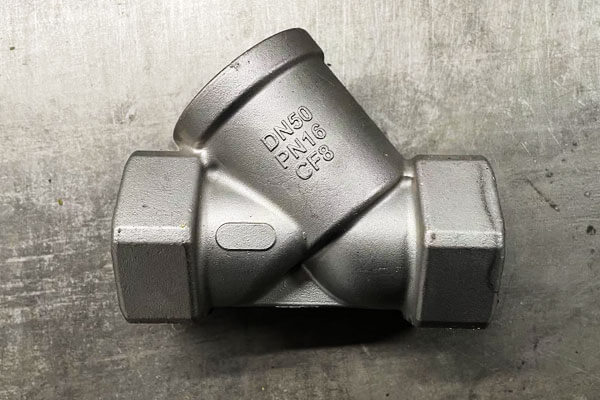
This process produces components that are very close to their final shape, minimizing the need for extensive machining.Precision Casting Stainless Steel Tee Connector Studies indicate that near-net-shape casting can reduce machining waste by 30–50%, thereby lowering both material costs and environmental impact.
Precision casting shines in applications where material efficiency is paramount. - CNC Machining:
Although CNC machining delivers excellent precision, it generally starts with a bulk material that requires significant removal.
This not only increases material waste but also drives up energy consumption and overall production costs, especially when dealing with expensive stainless steel alloys. - Die Casting:
Die casting excels in high-volume production and minimizes waste during the molding process.
However, its efficiency diminishes when producing parts with complex internal geometries, often necessitating additional machining or finishing, which can add to waste and cost.
Cost Efficiency and Production Throughput
- Precision Casting:
Precision casting offers a balanced approach by delivering high-quality parts with minimal post-processing.
This method is particularly cost-effective for producing intricate components in medium to high production volumes.
Its ability to combine complex design capabilities with near-net shape production translates to reduced labor costs and shorter lead times. - CNC Machining:
Although CNC machining produces parts with exceptional precision and finish, its reliance on extensive material removal makes it more expensive, particularly for complex designs.
High tooling costs and increased energy consumption further diminish its cost-effectiveness for certain applications. - Die Casting:
Die casting often proves cost-efficient for large-scale production due to its rapid cycle times and low per-unit cost.
However, the initial investment in tooling can be substantial, and the process is less suited for parts that require intricate details or superior surface finishes.
Adaptability to Complex Geometries
- Precision Casting:
One of the major strengths of precision casting is its ability to reproduce intricate designs
with complex internal features that are difficult or impossible to achieve through CNC machining or die casting.
This makes it an ideal choice for high-performance applications in aerospace, medical, and automotive sectors where complex geometries are required. - CNC Machining:
CNC machining excels at producing simple to moderately complex shapes with high precision.
However, for parts with deeply recessed cavities or intricate internal channels,
machining may require multiple setups and additional tooling, complicating the process and increasing the risk of dimensional errors. - Die Casting:
Die casting can handle a range of geometries but often falls short when it comes to very intricate designs.
The process is optimized for speed and volume rather than ultra-high detail, which limits its application in industries requiring the finest precision.
10. Conclusion
Precision casting of stainless steel parts represents the pinnacle of modern manufacturing, seamlessly combining advanced materials science with cutting-edge production techniques.
This process not only enhances surface quality and dimensional accuracy but also unlocks new possibilities for intricate designs and high-performance components.
As industries continue to demand lighter, stronger, and more sustainable products,
precision casting will remain a critical technology, driving innovation in aerospace, medical, automotive, energy, and beyond.
Collaborate with industry-leading foundries that integrate digital innovations and sustainable practices to harness the full potential of precision casting for your stainless steel components.
Contact us today to learn how we can help elevate your product performance and competitive edge.