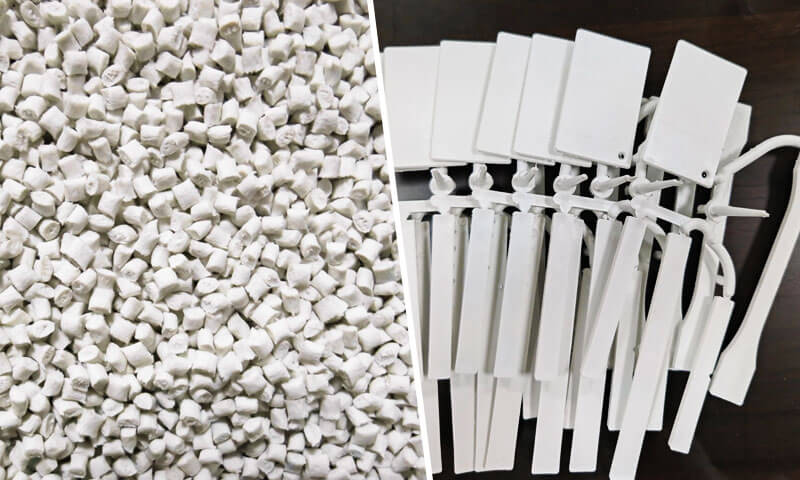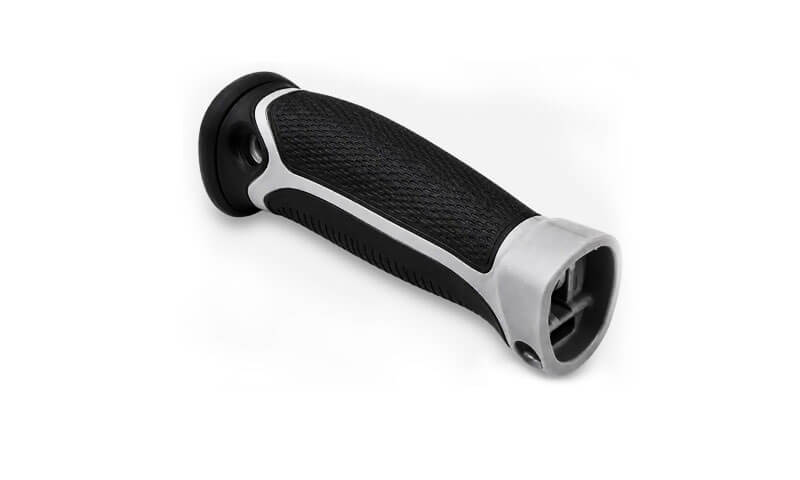
Overmolding to zaawansowana metoda formowanie wtryskowe technika stosowana do łączenia dwóch lub więcej materiałów w jeden komponent funkcjonalny.
Zamiast produkować każdy element osobno i później go montować, overmolding umożliwia formowanie materiału wtórnego bezpośrednio na wstępnie uformowanym podłożu.
W rezultacie można połączyć właściwości strukturalne sztywnego materiału z elastycznością, chwyt, opieczętowanie, izolacja, Odporność na uderzenie, lub właściwości estetyczne elastomeru lub innego polimeru.
Proces ten jest szeroko stosowany w produktach wymagających integracji materiałów, ergonomiczne wykonanie, ochrona środowiska, i redukcja montażu są ważne.
Typowymi przykładami są uchwyty do elektronarzędzi, przełączniki samochodowe, Złącza elektryczne, Obudowy urządzenia medycznego, Elektronika konsumpcyjna, elementy kabla, uchwyty, pieczęcie, i kontroli przemysłowej.
1. Co to jest overmolding?
Overmolding to proces produkcyjny, w którym drugi materiał jest formowany wtryskowo wokół istniejącego materiału lub na nim substrat, wstawić, lub wcześniej uformowany element aby utworzyć zintegrowaną część składającą się z wielu materiałów.
Podłoże zapewnia podstawową strukturę komponentu, podczas gdy materiał obtryskiwany dodaje określone cechy funkcjonalne lub estetyczne.
W zależności od aplikacji, podłoże może być sztywnym tworzywem termoplastycznym, metalowy wkład, lub inny wstępnie uformowany element.
Forma zewnętrzna może być wykonana z bardziej miękkiego elastomeru termoplastycznego (TPE), termoplastyczny poliuretan (TPU), guma termoplastyczna, lub inny kompatybilny polimer.
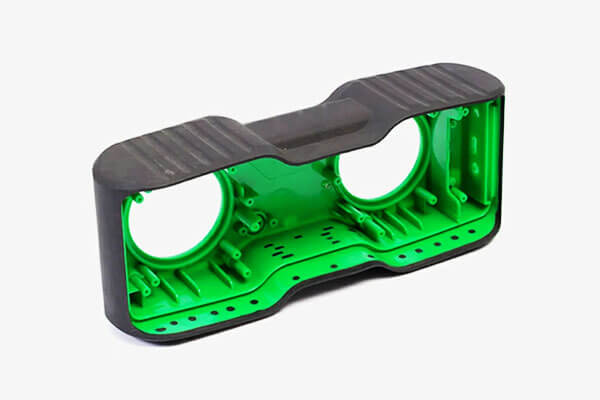
Prosta reprezentacja struktury to:
Podłoże → Materiał do formowania → Zintegrowana wykończona część
Na przykład, rozważ ręczne elektronarzędzie. Obudowa wewnętrzna może być uformowana ze sztywnego tworzywa sztucznego, takiego jak ABS lub wzmocniony nylon, aby zapewnić wytrzymałość konstrukcyjną.
Następnie na wybranych obszarach obudowy można uformować bardziej miękką warstwę TPE lub TPU, aby zapewnić antypoślizgowy chwyt i poprawić pochłanianie wibracji.
Zamiast produkować osobny gumowy uchwyt i montować go na etapie montażu, overmolding integruje uchwyt bezpośrednio z obudową.
Podstawowa struktura komponentu typu overmolded
Produkt formowany na ogół składa się z dwóch funkcjonalnych stref materiału:
| Część | Funkcja pierwotna |
| Podłoże | Zapewnia wsparcie strukturalne, Stabilność wymiarowa, lub mocowanie mechaniczne |
| Obtrysk | Dodaje przyczepność, opieczętowanie, amortyzacja, izolacja, ochrona, lub estetyka |
| Interfejs łączenia | Przenosi obciążenia i utrzymuje mocowanie materiału |
Kluczowa charakterystyka: Integracja wielu materiałów
Charakterystyczną cechą overmoldingu jest bezpośrednia integracja różnych materiałów w jeden gotowy komponent.
To odróżnia overmolding od konwencjonalnego montażu. W tradycyjnym procesie montażu, poszczególne elementy produkowane są oddzielnie i następnie łączone za pomocą elementów złącznych, Kleje, klipy, naciśnij pasuje, spawalniczy, lub inne metody.
Overmolding przenosi część tej integracji do samego procesu formowania.
Może to dawać kilka korzyści produkcyjnych:
- Mniej pojedynczych elementów
- Mniej operacji montażowych
- Poprawiona integracja komponentów
- Stałe pozycjonowanie materiału wtórnego
- Lepsze uszczelnienie i ochrona środowiska
- Poprawiona ergonomia i wydajność dotykowa
- Większa swoboda projektowania
- Potencjalna redukcja wad związanych z montażem
Jednakże, interfejs między podłożem a formą obtryskową staje się krytyczną cechą inżynierską.
Obydwa materiały muszą pozostać bezpiecznie połączone w rzeczywistych warunkach pracy produktu.
Cykl temperaturowy, wilgoć, chemikalia, obciążenie mechaniczne, uderzenie, i wielokrotne zginanie mogą mieć wpływ na wydajność interfejsu.
2. Rodzaje overmoldingu
Overmolding nie jest pojedynczą znormalizowaną konfiguracją produkcyjną.
Obtrysk tworzywa sztucznego na tworzywo sztuczne
Obtrysk tworzywa sztucznego na tworzywo sztuczne polega na formowaniu jednego tworzywa termoplastycznego bezpośrednio na wcześniej uformowanym podłożu z tworzywa sztucznego.
Jest powszechnie stosowany, gdy dwa polimery zapewniają uzupełniające się właściwości użytkowe.
Na przykład, sztywne tworzywo konstrukcyjne może zapewnić szkielet konstrukcyjny, podczas gdy bardziej miękki elastomer termoplastyczny tworzy przyczepność, foka, przycisk, lub warstwę ochronną.
Alternatywnie, dwa sztywne polimery można połączyć, aby utworzyć różne strefy funkcjonalne w tym samym komponencie.
Głównym wyzwaniem inżynierskim jest osiągnięcie odpowiedniej przyczepności lub retencji mechanicznej pomiędzy dwoma polimerami, przy jednoczesnym zapobieganiu deformacji podłoża podczas drugiego cyklu formowania.
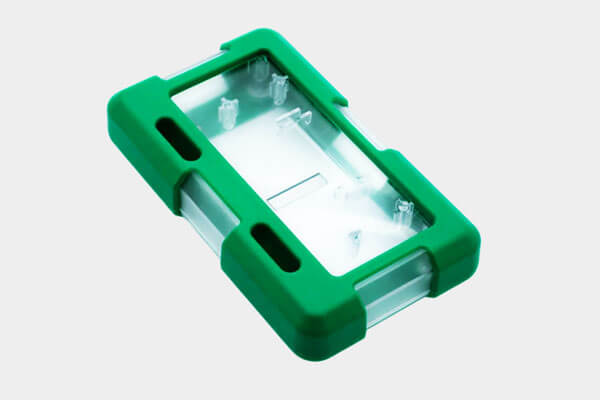
Typowe kombinacje obejmują:
- Abs + TPE
- komputer + TPE
- PC/ABS + TPE
- Nylon + TPE
- PP + TPE lub TPV
- PBT + TPE
- Abs + TPU
Nie każda kombinacja jest z natury kompatybilna. Dokładna ocena, sformułowanie, stan powierzchni, temperatura przetwarzania, i warunki formowania muszą zostać ocenione.
Obtrysk tworzywa sztucznego na elastomer
Obtrysk tworzywa sztucznego na elastomer jest jedną z najbardziej znanych form obtrysku.
Elastyczny materiał, taki jak TPE, TPU, KADŹ, lub inny termoplastyczny elastomer jest formowany na sztywnym podłożu z tworzywa sztucznego.
Cel jest zwykle raczej funkcjonalny niż czysto estetyczny. Elastomer może zapewnić:
- Poprawiony chwyt i ergonomia
- Absorpcja wstrząsów i uderzeń
- Tłumienie wibracji
- Opieczętowanie
- Powierzchnie miękkie w dotyku
- Odporność na poślizg
- Izolacja elektryczna
- Ochrona przed zanieczyszczeniem środowiska
Typowym przykładem są uchwyty do elektronarzędzi. Sztywne podłoże zapewnia wsparcie strukturalne, podczas gdy elastomerowa osłona zapewnia wygodne i trwałe połączenie pomiędzy narzędziem a operatorem.
Należy dokładnie kontrolować grubość warstwy elastomeru. Nadmierna grubość może wydłużyć czas cyklu, skurcz, i zużycie materiału, podczas gdy niewystarczająca warstwa może nie zapewnić wymaganej amortyzacji lub przyczepności.
Obtryskiwanie metalu na tworzywo sztuczne
Obtryskiwanie metalu na tworzywo sztuczne polega na umieszczeniu polimeru bezpośrednio wokół metalowej wkładki lub elementu.
Metal zapewnia wytrzymałość, przewodność, odporność na zużycie, Wydajność termiczna, lub stabilność wymiarowa, podczas gdy polimer zapewnia izolację, ochrona, opieczętowanie, lub integracji strukturalnej.
Obtryskiwanie metalu na tworzywo sztuczne jest szczególnie przydatne w przypadku zacisków elektrycznych, złącza, czujniki, gwintowane wkładki, uchwyty, elementy sterujące, i montaże przemysłowe.
Krytycznym czynnikiem jest różnica w Współczynnik rozszerzalności cieplnej (Cte) pomiędzy metalem i polimerem.
Podczas zmian temperatury, oba materiały rozszerzają się i kurczą w różnym tempie.
Jeśli projekt interfejsu nie uwzględnia tego ruchu, Naprężenia szczątkowe mogą przyczyniać się do pękania, rozwarstwienie, lub niestabilność wymiarowa.
Włóż overmolding
Metoda obtrysku metodą wstawiania wykorzystuje wstępnie uformowaną wkładkę, która jest umieszczana wewnątrz formy wtryskowej przed wtryśnięciem materiału do natrysku.
Wkładka może być metalowa, plastikowy, ceramiczny, elektroniczny, lub inny wyprodukowany komponent, w zależności od aplikacji.
Obtrysk wkładki może wyeliminować oddzielne operacje montażu, ponieważ proces formowania trwale integruje wkładkę z gotowym komponentem.
Wkładka musi być dokładnie ustawiona i bezpiecznie podparta. Złe zamocowanie może spowodować przesuwanie się wkładki podczas wstrzykiwania, co skutkuje błędami wymiarowymi, nierówne pokrycie materiału, błysk, lub uszkodzenie formy.
Obtrysk dwustrzałowy
Obtrysk dwustrzałowy, nazywany również 2Formowanie K lub wtrysk dwuskładnikowy, wytwarza komponent złożony z wielu materiałów poprzez operacje wtrysku sekwencyjnego, ogólnie w ramach tego samego systemu formowania.
W typowym procesie, pierwszy materiał tworzy geometrię podłoża lub pierwszego komponentu.
Następnie zmienia się konfigurację formy lub położenie części, tak aby można było wtryśnąć drugi materiał w wyznaczonym obszarze.
W przeciwieństwie do konwencjonalnego overmoldingu przy użyciu oddzielnie wyprodukowanego podłoża, Formowanie dwuetapowe może zintegrować dwie operacje formowania w wysoce zautomatyzowany cykl produkcyjny.
3. Jak działa proces overmoldingu?
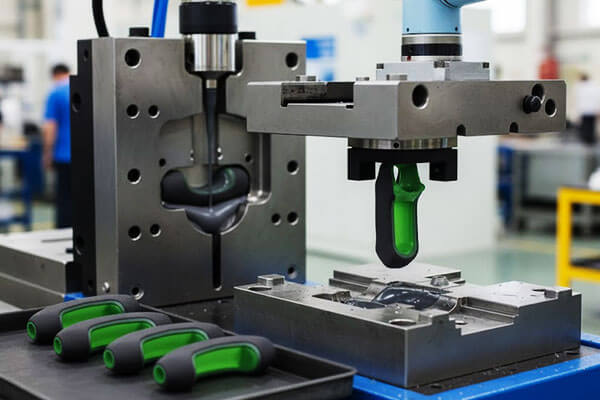
Proces overmoldingu polega na formowaniu drugiego materiału bezpośrednio na wstępnie uformowanym podłożu lub wkładce w celu utworzenia jednolitego komponentu.
Chociaż dokładny proces różni się w zależności od kombinacji materiałów, geometria produktu, i sposób produkcji, podstawowy przepływ pracy pozostaje spójny:
Projekt produktu → Wybór materiału → Produkcja podłoża → Przygotowanie formy → Załadunek podłoża → Wtrysk z obtryskiem → Chłodzenie & Wyrzut → Kontrola
Projekt produktu i analiza DFM
Overmolding zaczyna się od produktu i Projektowanie dla produkcji (DFM) analiza.
Inżynierowie oceniają geometrię podłoża, grubość formy, szkic kąty, linie podziału, lokalizacje bram, Wentylacja, podcięcia, i wymiary krytyczne.
Podłoże musi być wystarczająco sztywne, aby wytrzymać ciśnienie wtrysku i ekspozycję termiczną podczas drugiej operacji formowania.
Mechaniczne elementy utrzymujące, takie jak żebra, rowki, dziury, lub podcięcia można również zastosować, gdy wymagane jest dodatkowe ryglowanie.
Wybór materiału i kompatybilność
Podłoże i materiał do obtrysku należy wybrać wspólnie. Inżynierowie biorą pod uwagę właściwości mechaniczne, temperatury przetwarzania, skurcz, Rozszerzanie termiczne, Odporność chemiczna, wrażliwość na wilgoć, i najważniejsze, adhezja międzyfazowa.
Kombinacja materiałów, która sprawdza się dobrze indywidualnie, może nie zapewniać niezawodnego połączenia po uformowaniu razem.
Do krytycznych aplikacji, zgodność materiałową należy potwierdzić danymi dostawcy, próby prototypów, lub badanie przyczepności.
Produkcja i przygotowanie podłoża
Podłoże wytwarza się przed drugą operacją formowania.
Podłoża z tworzyw sztucznych są powszechnie formowane wtryskowo, podczas gdy metalowe wkładki mogą być obrabiane maszynowo, wytłoczony, rzucać , lub wyprodukowane w inny sposób.
Przed overmoldingiem, podłoże może tego wymagać:
- Czyszczenie i odtłuszczanie
- Suszenie polimerów wrażliwych na wilgoć
- Obróbka powierzchni
- Podgrzewanie
- Kontrola wymiarowa
Właściwe przygotowanie pozwala zapobiec zanieczyszczeniu, zmienność wymiarowa, Słaba przyczepność, i inne defekty związane z interfejsem.
Załadunek podłoża i zamykanie formy
Przygotowane podłoże jest dokładnie umieszczane wewnątrz formy obtryskowej.
Może być ładowany ręcznie w przypadku produkcji na mniejszą skalę lub automatycznie przy użyciu zrobotyzowanych systemów manipulacyjnych w przypadku produkcji na dużą skalę.
Forma musi bezpiecznie podpierać podłoże i utrzymywać wymaganą grubość formy.
Po uruchomieniu, forma zamyka się i przykłada wystarczającą siłę zaciskającą, aby wytrzymać ciśnienie wtrysku i zapobiec wypływowi.
Wtrysk materiału do obtrysku
Drugi materiał jest podgrzewany do temperatury przetwarzania i wtryskiwany do gniazda formy.
Roztopiony materiał opływa wyznaczone obszary podłoża i tworzy warstwę overmold.
Podstawowe parametry procesu obejmują:
| Parametr | Główny efekt |
| Temperatura topnienia | Płynność i przyczepność |
| Temperatura formy | Pożywny, chłodzenie, i jakość powierzchni |
| Prędkość wtrysku | Zachowanie przepływu i uwięzienie powietrza |
| Ciśnienie wtrysku | Wypełnienie ubytku |
| Trzymanie ciśnienia | Kompensacja skurczu i stabilność wymiarowa |
| Czas chłodzenia | Sztywność części i czas cyklu |
Proces musi być starannie wyważony. Nadmierna temperatura lub ciśnienie mogą odkształcić podłoże, podczas gdy niewystarczające warunki napełniania mogą powodować krótkie strzały, słabe wiązanie, lub niepełne pokrycie.
Klejenie i chłodzenie
Gdy stopiony materiał do formowania styka się z podłożem, interfejs rozwija się poprzez adhezję chemiczną, blokowanie mechaniczne, lub połączenie obu.
Po napełnieniu i zapakowaniu, element schładza się wewnątrz formy. Chłodzenie musi być kontrolowane, ponieważ podłoże i forma zewnętrzna mogą mieć różną charakterystykę skurczu i rozszerzalności cieplnej.
Źle kontrolowane chłodzenie może prowadzić do wypaczeń, stres resztkowy, Znakomite znaki, lub awaria interfejsu.
Wyrzucanie i kontrola jakości
Po wystarczającym ochłodzeniu, gotowa część obtryskiwana jest wyrzucana z formy. Demontaż bramy, przycinanie błyskowe, lub w razie potrzeby można wykonać inne dodatkowe operacje.
Kontrola jakości zazwyczaj koncentruje się na:
Dokładność wymiarowa + pokrycie overmold + wygląd powierzchni + siła wiązania + Wydajność funkcjonalna
Do wymagających zastosowań, producenci mogą dodatkowo wykonać peeling, ciągnąć, ścinanie, moment obrotowy, cykl temperaturowy, wilgotność, odporność chemiczna, lub inne testy środowiskowe.
4. Materiały powszechnie stosowane w overmoldingu
Wybór materiału jest prawdopodobnie najważniejszą decyzją techniczną w procesie obtrysku. Idealna kombinacja materiałów musi spełniać dwa odrębne wymagania:
Materiały muszą działać prawidłowo jako pojedyncze materiały, a interfejs materialny musi pozostać niezawodny jako zintegrowany system.
Typowe materiały podłoża
Podłoże zazwyczaj stanowi podstawę konstrukcyjną elementu. Może to być sztywny plastik lub metal.
Typowe materiały na podłoża z tworzyw sztucznych
| Materiał podłoża | Ważne cechy | Typowe zastosowania overmoldingu |
| Abs | Dobra odporność na uderzenia, łatwe przetwarzanie, dobry wygląd | Produkty konsumenckie, uchwyty, obudowy |
| komputer | Wysoka siła uderzenia, opcje przezroczystości, dobra wydajność wymiarowa | Elektronika, obudowy ochronne, sterownica |
| PC/ABS | Zrównoważona wytrzymałość, wygląd, i możliwość przetwarzania | Motoryzacja i elektronika |
| ROCZNIE (Nylon) | Wysoka siła, sztywność, odporność na zużycie | Automobilowy, Komponenty przemysłowe, narzędzia |
PP |
Niska gęstość, Odporność chemiczna, odporność na zmęczenie | Automobilowy, produkty konsumenckie, elementy zawiasów dziennych |
| PBT | Dobra stabilność wymiarowa i parametry elektryczne | Złącza elektryczne, Komponenty samochodowe |
| POM | Niskie tarcia, odporność na zużycie, Stabilność wymiarowa | Elementy mechaniczne i sterowanie |
| PPS | Wysoka temperatura i odporność chemiczna | Wymagające zastosowania w motoryzacji i przemyśle |
Typowe materiały do obtrysku
Drugi materiał jest zazwyczaj wybierany w celu dodania funkcji, której podłoże nie jest w stanie skutecznie zapewnić.
| Materiał do formowania | Główna charakterystyka | Typowe funkcje |
| TPE | Elastyczny, miękki w dotyku, przetwarzalne | Chwyt, amortyzacja, opieczętowanie |
| TPU | Wysoka odporność na ścieranie i rozdarcie | Powierzchnie ochronne, uchwyty, elastyczne komponenty |
| KADŹ | Elastyczność przypominająca gumę dzięki obróbce termoplastycznej | Uszczelki samochodowe, uchwyty, komponenty odporne na warunki atmosferyczne |
TPO |
Elastyczny, lekki, odporny na warunki atmosferyczne | Elementy wykończeniowe i ochronne samochodów |
| Miękkie związki PP | Lekki i odporny chemicznie | Produkty konsumenckie i motoryzacyjne |
| Systemy na bazie silikonu | Doskonała elastyczność i wydajność temperaturowa | Specjalistyczne zastosowania uszczelniające i medyczne |
| Specjalne elastomery | Substancja chemiczna specyficzna dla zastosowania, termiczny, lub wydajność mechaniczną | Środowiska przemysłowe i wymagające |
5. Klejenie mechaniczne vs. Wiązanie chemiczne w procesie overmoldingu
Granica między podłożem a materiałem do formowania obtryskowego jest najbardziej krytycznym obszarem formowanego elementu składającego się z wielu materiałów.
Część może mieć doskonałe właściwości mechaniczne i atrakcyjne wykończenie powierzchni, ale nadal nie działają, jeśli forma obtryskowa oddzieli się od podłoża.
Klejenie mechaniczne: Blokada fizyczna
Klejenie mechaniczne opiera się na stopionej żywicy typu overmold wpływającej do wstępnie zaprojektowanych podcięć, dziury, rowki, moletowane lub teksturowane powierzchnie podłoża.
Po zestaleniu, żywica tworzy trwałą blokadę fizyczną, która przenosi obciążenie poprzez interferencję geometryczną, a nie siły międzycząsteczkowe.
- Podstawowa zasada: Stopiony polimer wypełnia wszystkie negatywne cechy powierzchni podłoża i zestala się, tworząc pasującą dodatnią geometrię, tworząc zazębienie, którego nie da się rozdzielić bez deformacji jednego z materiałów.
Kotwy przelotowe zapewniają najsilniejsze wiązania mechaniczne, ponieważ tworzą nity z pełnego polimeru, które są odporne zarówno na obciążenia odrywające, jak i ścinające. - Wspólne cechy kotwiczenia: Otwory przelotowe, podcięcia boczne, szczeliny na jaskółczy ogon, rowki obwodowe, piaskowana konsystencja, radełkowane powierzchnie i formowane kolce.
- Zalety: Działa z dowolną parą materiałów, w tym całkowicie niezgodne kombinacje, takie jak silikon z metalem lub TPE z POM; siła wiązania jest wysoce przewidywalna w oparciu o geometrię; mniej wrażliwe na zanieczyszczenia powierzchni i starzenie się środowiska.
- Ograniczenia: Wymaga dodatkowego projektu podłoża i złożoności narzędzi; siła wiązania jest zlokalizowana w punktach zakotwiczenia; nie nadaje się do ultracienkich warstw obtrysku poniżej 0.5 mm.
Wiązanie chemiczne: Wzajemna dyfuzja molekularna
Wiązanie chemiczne występuje, gdy żywica typu overmold i podłoże są chemicznie kompatybilne.
W temperaturze formowania, łańcuchy polimerowe z formy overmold dyfundują na powierzchnię podłoża, tworząc splątania międzycząsteczkowe i wiązania wtórne (siły van der Waalsa, wiązania wodorowe, a w niektórych przypadkach tworzenie wiązań kowalencyjnych poprzez wymianę estrową).
- Podstawowa zasada: Aby doszło do wiązania chemicznego, oba materiały muszą mieć podobne parametry rozpuszczalności (zazwyczaj wewnątrz 2 (kal/cm3)^0,5 od siebie) a powierzchnia podłoża podczas wtryskiwania musi być powyżej temperatury zeszklenia, umożliwiając mobilność łańcucha i wzajemną dyfuzję.
Powstała warstwa międzyfazowa zwykle waha się od 20 nm do kilku mikrometrów grubości. - Czynniki wpływające: Dopasowanie parametrów rozpuszczalności, dopasowanie temperatury topnienia, energia powierzchniowa podłoża, nacisk kontaktowy, i czas przebywania na interfejsie.
- Zalety: Jednolita siła wiązania na całej powierzchni styku; nie są wymagane żadne dodatkowe cechy podłoża; umożliwia nakładanie bardzo cienkich warstw o stałej przyczepności; gładka linia łączenia bez koncentracji naprężeń.
- Ograniczenia: Wymaga kompatybilnych chemikaliów polimerowych; wrażliwe na zanieczyszczenia powierzchni, środki utleniające i antyadhezyjne; może z czasem ulec degradacji w środowisku o wysokiej temperaturze lub dużej wilgotności.
Klejenie hybrydowe: Łączenie mechanizmów mechanicznych i chemicznych
Do wymagających zastosowań, najsolidniejszym rozwiązaniem może być połączenie obu mechanizmów.
Podłoże można zaprojektować z rowkami, dziury, lub teksturowane obszary, podczas gdy wybrane materiały zapewniają również naturalną przyczepność międzyfazową.
W tej konfiguracji, przyczepność chemiczna zapewnia rozproszone mocowanie, a właściwości mechaniczne zapewniają dodatkową odporność na zdzieranie, ścinanie, lub separacja osiowa.
Na przykład, metalowa wkładka może zostać poddana obróbce powierzchniowej i uformowana z kompatybilnego polimeru, jednocześnie zawierając otwory przelotowe lub radełkowanie.
Powstała powierzchnia styku nie zależy wyłącznie od adhezji chemicznej ani retencji geometrycznej.
To podejście jest szczególnie przydatne, gdy awaria interfejsu może zagrozić bezpieczeństwu lub funkcjonalności produktu.
6. Korzyści i ograniczenia overmoldingu
Podstawowe zalety
Zmniejszona liczba części i montaż
Overmolding może zintegrować uchwyty, pieczęcie, izolacja, amortyzacja, i warstwy ochronne bezpośrednio na podłoże.
Zmniejsza to liczbę oddzielnych komponentów, łączniki, Kleje, i operacje montażowe, co może uprościć produkcję i poprawić konsystencję.
Ulepszona integracja funkcjonalna
Pojedyncza część może łączyć sztywne wsparcie konstrukcyjne, miękki, ergonomiczny uchwyt, uszczelnienie środowiskowe i izolacja elektryczna w jednym cyklu formowania.
Umożliwia to stopniowaną wydajność w różnych obszarach komponentu, czego nie można osiągnąć na przykład w przypadku konstrukcji z materiału monolitycznego, sztywny rdzeń konstrukcyjny z miękką warstwą tłumiącą drgania i integralną uszczelką środowiskową.
Zwiększona trwałość i niezawodność
Zintegrowane wiązania typu overmolded eliminują degradację kleju, tryby awaryjne poluzowania elementów złącznych i niewspółosiowości uszczelki.
Uszczelki formowane natryskowo zapewniają stałą ochronę przed wnikaniem IP67/IP68 i 3–5 razy dłuższą żywotność niż zmontowane systemy uszczelek, ponieważ nie ma oddzielnego elementu uszczelniającego, który można przesunąć, zdegradować lub wypaść .
Doskonała ergonomia i wydajność sensoryczna
Nakładki z miękkiego elastomeru można dostosować w celu zapewnienia precyzyjnego chwytu, tłumienie drgań i absorpcja uderzeń.
Przenoszenie wibracji na użytkownika można zmniejszyć o 30–60% w porównaniu do sztywnych uchwytów z jednego materiału, poprawiając komfort użytkownika i zmniejszając ryzyko urazów spowodowanych powtarzalnym stresem.
Elastyczność projektowania i różnicowanie produktów
Overmolding umożliwia wielokolorowość, projekty o wielu teksturach i twardościach bez operacji wtórnych, tworzenie zróżnicowania produktów przy minimalnych kosztach dodatkowego oprzyrządowania. Umożliwia także iterację projektu bez konieczności całkowitego przeprojektowywania narzędzi.
Obniżony całkowity koszt posiadania
Inwestycja w oprzyrządowanie jest o 30–80% wyższa niż w przypadku formowania pojedynczego materiału, niższy koszt montażu,
mniejsza liczba złomów i niższych roszczeń gwarancyjnych zazwyczaj zapewnia o 15–35% niższy całkowity koszt posiadania w przypadku średnich i dużych wielkości produkcji.
Nieodłączne ograniczenia
Wyższe koszty oprzyrządowania i rozwoju
Niestandardowe narzędzia do obtrysku wymagają bardziej złożonego projektu, wiele wnęk lub płyt obrotowych, i dłuższy czas rozwoju.
Koszt oprzyrządowania jest zazwyczaj 2–3 razy większy niż w przypadku równoważnych form z jednego materiału, a cykle rozwojowe są o 30–50% dłuższe.
Ograniczenia kompatybilności materiałów
Nie wszystkie pary materiałów łączą się niezawodnie. Niekompatybilne kombinacje wymagają mechanicznego zakotwienia lub warstw wiążących, Dodanie złożoności i kosztów projektu.
Na przykład, PP jest bardzo trudny do połączenia z większością gatunków TPE, wymagających gatunków TPE na bazie PP lub właściwości retencji mechanicznej .
Węższe okno procesu
Overmolding wymaga ściślejszej kontroli temperatury topnienia, temperatura formy, prędkość wtrysku i ciśnienie docisku niż w przypadku formowania pojedynczego materiału.
Odchylenie od procesu może spowodować uszkodzenie połączenia, przesunięcie wstawki lub rozwarstwienie. Konfiguracja procesu zwykle wymaga 2–3 razy więcej serii próbnych niż formowanie z jednego materiału.
Skurcz różnicowy i naprężenie
Niedopasowane współczynniki rozszerzalności cieplnej i skurczu pomiędzy podłożem a formą zewnętrzną powodują naprężenia szczątkowe na styku, co może prowadzić do wypaczeń, pękanie lub rozwarstwianie w trakcie cykli termicznych.
Jest to szczególnie widoczne w przypadku sztywnego polimeru nad formowaniem metalowym.
Ograniczone do materiałów przetwarzalnych w stanie stopionym
Overmolding ogranicza się do tworzyw termoplastycznych i ciekłego kauczuku silikonowego (LSR).
Konwencjonalnych żywic termoutwardzalnych i większości materiałów ceramicznych nie można formować za pomocą standardowego sprzętu do formowania wtryskowego.
7. Typowe defekty i strategie łagodzenia
Overmolding wprowadza unikalne tryby awarii związane z łączeniem interfejsów, pozycjonowanie płytek i skurcz różnicowy.
Poniższa tabela zawiera zestawienie najczęstszych usterek, przyczyny źródłowe i sprawdzone działania naprawcze.
| Tryb wady | Wygląd | Pierwotne przyczyny | Środki naprawcze |
| Rozwarstwienie / awaria peelingu | Warstwa overmold oddziela się od podłoża | Niekompatybilność materiałowa; zimne podłoże; zanieczyszczona powierzchnia; niewystarczające ciśnienie powierzchniowe | Sprawdź zgodność materiałów; podgrzać podłoże; oczyścić powierzchnie podłoża; zwiększyć ciśnienie opakowania |
| Wstaw przesunięcie / niewspółosiowość | Podłoże jest przesunięte w stosunku do zamierzonej pozycji | Wysoka prędkość przepływu wtrysku; niewystarczające mocowanie płytki; przepływ niezrównoważony | Dodaj kołki ustalające; zoptymalizować położenie bramy, aby zmniejszyć wpływ przepływu; użyj uchwytów dociskowych |
| Ślady opadania na interfejsie | Wklęsła powierzchnia na linii łączenia | Skurcz różnicowy; gruba sekcja obtrysku; niewystarczające opakowanie | Zmniejsz grubość ścianki formy overmold; zwiększyć ciśnienie opakowania; zoptymalizować profil chłodzenia |
Flash w interfejsie |
Nadmiar żywicy przedostaje się pomiędzy podłożem a rozstaniem formy | Słabe dopasowanie formy; zmienność wymiarów podłoża; nadmierne ciśnienie wtrysku | Poprawić dopasowanie wnęki formy; zaostrzyć tolerancje podłoża; zmniejszyć ciśnienie wtrysku |
| Pęcherze na interfejsie | Podniesione pęcherzyki pod powierzchnią formy | Uwięzione powietrze; wilgoć na podłożu; odgazowanie | Popraw wentylację; suche podłoże przed formowaniem; obniżyć temperaturę topnienia |
| Wewnętrzne pękanie naprężeniowe | Pęknięcia na spoinie po ochłodzeniu | Skurcz różnicowy; niezgodne szybkości rozszerzania materiału | Zoptymalizuj temperaturę formy; zmniejszyć szybkość chłodzenia; wybierz materiały o bliższych wartościach CTE |
8. Kluczowe zastosowania overmoldingu
Obtrysk jest stosowany w różnych gałęziach przemysłu, ponieważ umożliwia producentom łączenie materiałów konstrukcyjnych i funkcjonalnych bez polegania wyłącznie na montażu wtórnym.
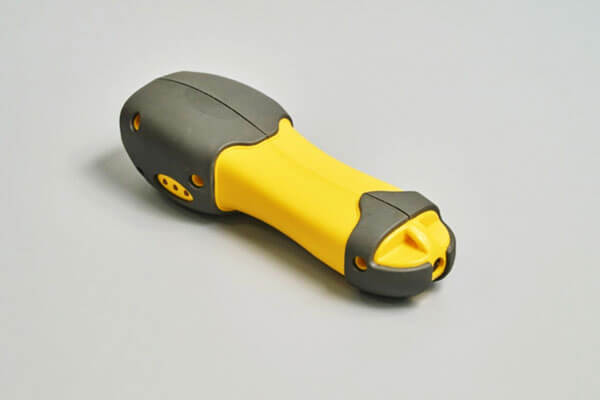
Zastosowania motoryzacyjne
Producenci samochodów stosują overmolding w celu poprawy funkcjonalności, trwałość, komfort, i integracji komponentów.
Typowe przykłady obejmują:
- Sterowanie na kierownicy
- Przełączniki i przyciski
- Obudowy czujników
- Złącza elektryczne
- Elementy zabezpieczające kable
- Wewnętrzne elementy wykończenia
- Elementy uszczelniające
- Uchwyty i uchwyty
- Osłony ochronne
- Elementy tłumiące wibracje
Elektronika konsumpcyjna
Elektronika użytkowa czerpie korzyści z overmoldingu, ponieważ użytkownicy wchodzą w bezpośrednią interakcję z wieloma zewnętrznymi powierzchniami produktu.
Aplikacje obejmują:
- Akcesoria do smartfonów i urządzeń elektronicznych
- Piloty zdalnego sterowania
- Elementy urządzeń przenośnych
- Elementy słuchawek
- Złącza do ładowania
- Końcówki kabla
- Obudowy ochronne
- Przyciski i interfejsy sterujące
Urządzenia medyczne
Overmolding jest stosowany w produktach medycznych i zdrowotnych, gdzie wymagana jest ergonomia, opieczętowanie, izolacja, czyszczenie, i kontrolowana wydajność dotykowa są ważne.
Przykłady obejmują:
- Uchwyty do instrumentów medycznych
- Elementy sprzętu diagnostycznego
- Uchwyty do urządzeń chirurgicznych
- Elementy rur i złączy
- Elementy uszczelniające
- Obudowy ochronne
- Jednorazowe elementy urządzenia
Elektronarzędzia i narzędzia ręczne
Elektronarzędzia są klasycznym zastosowaniem obtrysku ze sztywnego na elastyczny.
Strukturalne podłoże polimerowe może zapewnić wymaganą sztywność, podczas gdy TPE lub TPU mogą tworzyć ergonomiczne strefy chwytu.
Overmold może się poprawić:
- Bezpieczeństwo chwytu
- Komfort użytkownika
- Tłumienie wibracji
- Odporność na uderzenie
- Trwałość powierzchni
- Wygląd produktu
Komponenty elektryczne i elektroniczne
Zastosowania elektryczne często łączą przewodzące wkładki metalowe z izolującymi materiałami polimerowymi.
Typowe zastosowania obejmują:
- Złącza elektryczne
- Terminale
- Elementy czujnika
- Zespoły kablowe
- Przełącz komponenty
- Izolowane styki
- Obudowy złączy
- Elektroniczne elementy sterujące
Sprzęt przemysłowy
Produkty przemysłowe często wymagają kombinacji wytrzymałości, Odporność na uderzenie, Odporność chemiczna, kontrola wibracji, i ergonomia operatora.
Dlatego stosuje się overmolding:
- Uchwyty maszynowe
- Pokrętła sterujące
- Przełączniki przemysłowe
- Uchwyty narzędziowe
- Osłony ochronne
- Elementy uszczelniające
- Obudowy czujników
- Ochrona kabla
- Elementy tłumiące wibracje
9. Overmolding vs. Formowanie wstawkowe vs. Formowanie dwustrzałowe
Overmolding, formowanie wkładkowe, i formowanie dwuetapowe są ściśle powiązanymi technologiami formowania wtryskowego, ale różnią się sposobem wytwarzania podłoża, ustawiony, i zintegrowany z drugim materiałem.
Overmolding
Overmolding zazwyczaj polega na formowaniu drugiego materiału na istniejącym podłożu lub elemencie.
Podłoże może stanowić uprzednio uformowana część z tworzywa sztucznego, obrabiany element metalowy, stemplowana wkładka, lub inny wyprodukowany element.
Jest to szczególnie przydatne, gdy podłoże i obtrysk są wytwarzane w oddzielnych operacjach lub gdy dla obu komponentów wymagane są różne procesy produkcyjne.
Typowe zastosowania obejmują uchwyty miękkie w dotyku, osłony ochronne, Izolacja elektryczna, pieczęcie, i elementy odciążające.
Wstaw formowanie
Wstaw formowanie umieszcza wstępnie uformowaną wkładkę w formie wtryskowej przed wtryśnięciem wokół niej tworzywa sztucznego.
Wkładka może być wykonana z metalu, plastikowy, ceramiczny, lub inny odpowiedni materiał.
Formowanie wkładką metalową jest szeroko stosowane, gdy końcowy element wymaga wytrzymałości, przewodność, Stabilność wymiarowa, lub zdolność mocowania metalu w połączeniu z lekkością i właściwościami izolacyjnymi tworzywa sztucznego.
Typowe wkładki obejmują tuleje gwintowane, terminale, szpilki, Wały, płyty, i wsporniki.
W przeciwieństwie do ogólnego overmoldingu, formowanie wkładek szczególnie podkreśla integrację wstępnie wyprodukowanej wkładki podczas cyklu wtrysku.
Formowanie dwustrzałowe
Formowanie dwustrzałowe, zwane także formowaniem wtryskowym 2K lub dwuskładnikowym, wytwarza dwa obszary materiału poprzez sekwencyjne operacje wtrysku w tym samym systemie formowania.
Pierwszy materiał stanowi początkowe podłoże, po czym następuje zmiana położenia formy lub części i wtryskiwanie drugiego materiału.
Takie podejście może zapewnić doskonałą rejestrację wymiarową pomiędzy dwoma materiałami i jest bardzo odpowiednie do produkcji na dużą skalę.
Może to również ograniczyć obsługę, ponieważ nie trzeba ręcznie przenosić podłoża pomiędzy oddzielnymi operacjami formowania.
Porównanie procesów
| Funkcja | Overmolding | Wstaw formowanie | Formowanie dwustrzałowe |
| Podłoże | Wstępnie uformowany element lub wkładka | Wstępnie uformowana wkładka | Uformowany podczas pierwszego strzału |
| Typowe materiały | Plastikowy, elastomer, metal | Głównie metalowe lub sztywne wkładki | Dwa kompatybilne polimery/elastomery |
| Sekwencja produkcyjna | Podłoże + druga operacja formowania | Wkładka załadowana + wtrysk plastiku | Pierwszy strzał + drugi strzał |
| Automatyzacja | Niska lub wysoce zautomatyzowana | Niska lub wysoce zautomatyzowana | Zwykle wysoce zautomatyzowany |
| Złożoność narzędzi | Umiarkowany do wysokiego | Umiarkowany | Wysoki |
| Główna zaleta | Elastyczna integracja wielu materiałów | Łączy funkcjonalność wkładu z tworzywem sztucznym | Wysoka precyzja produkcji wielu materiałów |
| Typowe zastosowania | Uchwyty, pieczęcie, obudowy, warstwy ochronne | Złącza, terminale, gwintowane wkładki | Pikolak, obudowy, wielokolorowe elementy |
| Najlepiej nadać | Elastyczne strategie produkcyjne | Integracja metalu i plastiku | Zintegrowana produkcja na dużą skalę |
W rzeczywistości, terminy mogą się pokrywać. Formowanie wkładkowe to specyficzna forma formowania wokół wstępnie uformowanej wkładki, podczas gdy formowanie dwuetapowe jest wysoce zintegrowanym procesem obejmującym wiele materiałów, w którym podłoże jest zwykle tworzone w tym samym cyklu formowania.
Wybór procesu powinien zatem opierać się na rzeczywistej architekturze produktu, a nie na samej terminologii.
10. Zaawansowane trendy i innowacje
Technologia overmoldingu stale się rozwija, napędzany popytem na miniaturyzację, zrównoważony rozwój i wzmocniona integracja funkcjonalna.
Obtrysk LSR
Płynna guma silikonowa (LSR) Obtrysk na inżynieryjne tworzywa termoplastyczne to najszybciej rozwijający się segment obtrysku.
LSR zapewnia wyjątkową odporność na ciepło (-60°C do 200°C+), biokompatybilność i wydajność kompresji, dzięki czemu jest idealny dla urządzeń medycznych, części mające kontakt z żywnością i zastosowania samochodowe w wysokich temperaturach.
Zaawansowane oprzyrządowanie do zimnego kanału i precyzyjne systemy dozowania umożliwiają obtrysk LSR przy grubościach ścianek do 0.2 mm.
Mikro-overmolding
Miniaturyzacja elektroniki i urządzeń medycznych przyczyniła się do rozwoju procesów mikroobtrysku przy grubościach ścianek obtrysku poniżej 0.3 mm i dokładność pozycjonowania ±0,02 mm.
Umożliwia to overmolding funkcji na mikrozłączach, elektronikę do noszenia i wszczepialne urządzenia medyczne, których wcześniej nie można było wyprodukować.
Zrównoważone i biologiczne obtryskiwanie
Opracowywanie gatunków polimerów pochodzenia biologicznego i pochodzących z recyklingu o dopasowanych właściwościach stopu umożliwia obtrysk par materiałów zrównoważonych.
Obejmuje to podłoża PP pochodzące z recyklingu, obtryskiwane TPE pochodzącym z recyklingu, oraz biopolimerowy PA obtryskiwany bioelastomerami.
Marki coraz częściej wybierają zrównoważone obtryskiwanie, aby spełnić cele w zakresie gospodarki o obiegu zamkniętym i redukcji emisji dwutlenku węgla.
Integracja zespołu w formie
Zaawansowane, wielostanowiskowe komórki do obtrysku integrują wiele prefabrykowanych komponentów (pieczęcie, magnesy, elektronika) w pojedynczy cykl formowania, produkcja w pełni zmontowanych gotowych części bezpośrednio z formy.
Eliminuje to całe linie montażowe i skraca czas realizacji produkcji o 70–90%.
Optymalizacja procesu opartego na AI
Wdrażane są systemy uczenia maszynowego, które optymalizują parametry procesu obtrysku w czasie rzeczywistym, regulacja prędkości wtrysku, ciśnienie i temperatura w oparciu o dane z czujnika w formie i krzywe ciśnienia we wnęce.
Zmniejsza to liczbę złomowań o 30–50%, poprawia konsystencję wiązania i skraca czas konfiguracji nowych części.
11. Overmolding dla różnych wymagań produktu
Obtryskiwanie należy dobierać w zależności od wymagań funkcjonalnych gotowego elementu, a nie po prostu jako metoda łączenia dwóch materiałów.
| Wymagania dotyczące produktu | Zalecane rozwiązanie do obtrysku | Kluczowe zagadnienia inżynieryjne | Typowe zastosowania |
| Poprawiona przyczepność i tarcie | Sztywne podłoże + Obtrysk TPE/TPU | Twardość, współczynnik tarcia, Tekstura powierzchni, Odporność na ścieranie | Uchwyty narzędzia, pokrętła, produkty konsumenckie |
| Ochrona przed uderzeniami | Sztywne podłoże + twardy elastomer | Absorpcja uderzenia, siła rozdarcia, grubość, pokrycie krawędzi | Obudowy elektroniczne, sprzęt ochronny, Komponenty przemysłowe |
| Ochrona przed wodą i kurzem | Sztywna obudowa + elastomerowa warstwa uszczelniająca | Ciągłość interfejsu, kompresja, dokładność wymiarowa, odporność na starzenie | Złącza, czujniki, elektronika zewnętrzna |
| Izolacja elektryczna | Wkładka metalowa/elektroniczna + polimer izolacyjny | Wytrzymałość dielektryczna, grubość izolacji, ocena temperatury, zapobieganie pustkom | Terminale, złącza, zespoły kablowe |
Redukcja wibracji i hałasu |
Sztywne podłoże + elastomer tłumiący | Twardość elastomeru, grubość, dynamiczna reakcja, odporność na zmęczenie | Elektronarzędzia, Komponenty samochodowe, maszyneria |
| Ergonomiczna obsługa | Rdzeń konstrukcyjny + miękki w dotyku TPE/TPU | Gradient twardości, geometria chwytu, wrażenia dotykowe, długotrwałe noszenie | Narzędzia ręczne, instrumenty medyczne, uchwyty sterujące |
| Ochrona Chemiczna i Środowiska | Podłoże + polimer odporny chemicznie | Kompatybilność chemiczna, temperatura, UV, wilgoć, stabilność przyczepności | Sprzęt przemysłowy, Części samochodowe, elementy obsługujące płyny |
| Odporność na zużycie i ścieranie | Sztywne podłoże + odporny na zużycie TPU/TPE | Twardość powierzchniowa, Odporność na ścieranie, nacisk kontaktowy, temperatura serwisowa | Rolki, przewodnicy, uchwyty, kontrole przemysłowe |
12. Usługi formowania wtryskowego LangHe Industry
Przemysł Langhe zapewnia dostosowane do indywidualnych potrzeb rozwiązania w zakresie formowania wtryskowego i obtrysku, od opracowania prototypu po produkcję wielkoseryjną, materiały pomocnicze, w tym PP, PE, Abs, komputer, nylon, TPE, TPU, LSR, i zajrzyj.
Jego możliwości obejmują formowanie dwuetapowe, Obtrysk typu pick-and-place, i wstawić listwę do metalu, ceramiczny, plastikowy, i wkłady elektroniczne, poparte wewnętrznym projektowaniem i produkcją narzędzi.
jako ISO 9001:2015-certyfikowany producent, LangHe Industry stosuje systematyczną kontrolę jakości poprzez 100% kontrola, Pomiar CMM, i systemy widzenia maszynowego zapewniające dokładność wymiarową, spójność wyglądu, i niezawodne działanie produktu.
Dostosowane kolory, tekstury, i wykończenia powierzchni są również dostępne w celu spełnienia określonych wymagań aplikacji i marki.
Skontaktuj się z LangHe Industry dzisiaj, aby omówić Twój projekt overmoldingu lub niestandardowego formowania wtryskowego.
13. Wniosek
Overmolding to znacznie więcej niż zwykłe nałożenie warstwy plastiku na podłoże.
Jest to zaawansowana technologia produkcji wielu materiałów, która integruje elementy konstrukcyjne, ergonomiczne, funkcje uszczelniające i kosmetyczne w jednym zintegrowanym komponencie, zapewniając wydajność, której nie można dorównać formowaniem z jednego materiału ani tradycyjnymi metodami montażu.
Jej propozycja wartości opiera się na trzech głównych filarach: integracja funkcjonalna, która zmniejsza liczbę części i koszty montażu, optymalizacja wydajności specyficzna dla materiału, która umożliwia stopniowaną funkcjonalność pojedynczej części, oraz zwiększona niezawodność wynikająca z łączenia integralnego, a nie wtórnego.
W miarę jak projekty produktów zmierzają w kierunku większej integracji, miniaturyzacja i zrównoważony rozwój, overmolding będzie nadal rozszerzać się na nowe obszary zastosowań.
Postępy w przetwarzaniu LSR, mikroformowanie i zrównoważone materiały jeszcze bardziej poszerzą jego możliwości, umacniając swoją pozycję jednej z najważniejszych i najbardziej wszechstronnych technologii wytwarzania precyzyjnego współczesnego przemysłu.
FAQ
Jaka jest różnica między formowaniem obtryskowym a formowaniem wkładkowym?
Overmolding ogólnie odnosi się do formowania drugiego materiału na wstępnie uformowanym podłożu.
Formowanie wkładkowe polega w szczególności na umieszczeniu wstępnie uformowanej wkładki – często metalowej – w formie i wtryskiwaniu wokół niej plastiku. Te dwa terminy mogą się pokrywać w zależności od architektury komponentów.
Jaka jest różnica między obtryskiem a formowaniem dwuetapowym?
W konwencjonalnym overmoldingu, podłoże jest zwykle wytwarzane oddzielnie przed uformowaniem na nim drugiego materiału.
W formowaniu dwustrzałowym, pierwszy materiał jest formowany, a drugi materiał jest wtryskiwany w tym samym zintegrowanym systemie formowania, zapewniając precyzyjną rejestrację i wysoką wydajność produkcji.
Czy metal można obtryskiwać plastikiem??
Tak. Obtryskiwanie metalu na tworzywo sztuczne jest szeroko stosowane w celu połączenia wytrzymałości lub przewodności metalu z izolacją, ochrona, i elastyczność projektowania polimerów.
Wkładka metalowa musi być dokładnie umiejscowiona i zaprojektowana tak, aby wytrzymała temperaturę i ciśnienie formowania.
Czy overmolding jest droższy niż konwencjonalne formowanie wtryskowe?
Koszty narzędzi i rozwoju są na ogół wyższe, ponieważ obtrysk wymaga bardziej złożonych narzędzi i kontroli procesu.
Jednakże, całkowity koszt produkcji może być niższy, gdy w procesie eliminuje się oddzielne komponenty, operacje montażowe, Kleje, łączniki, lub wtórne procesy uszczelniania.