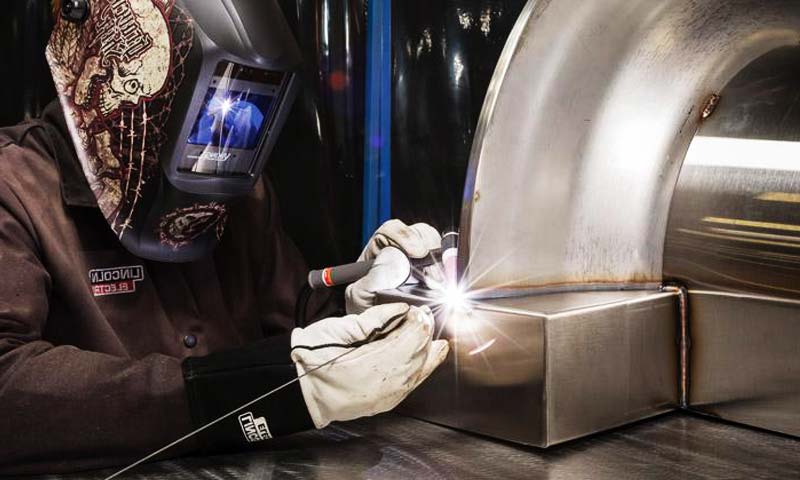
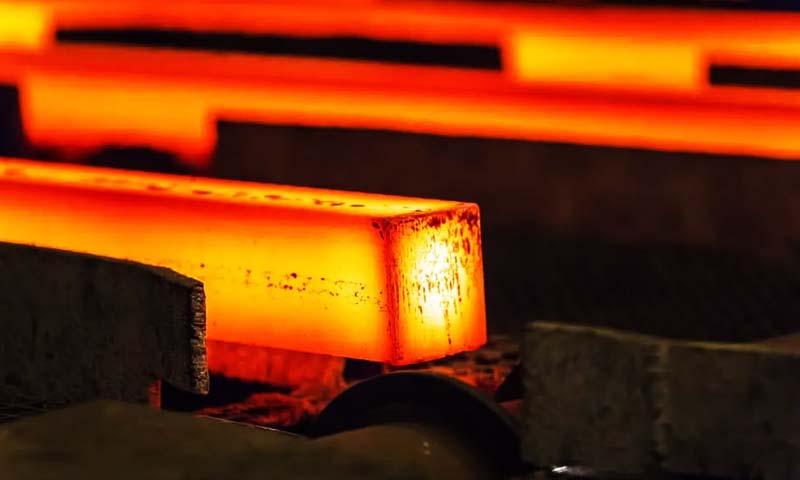
In today’s manufacturing world, machining vs. casting are two of the most widely used processes for producing high-quality parts.
These methods play a pivotal role in creating everything from sophisticated medical implants to robust automotive components.
Choosing the right process for your project is essential and depends on several factors such as design complexity, material requirements, and budget constraints.
In this article, we’ll provide a detailed comparison between machining vs. casting,
highlighting their distinct characteristics and helping you make the most informed decision for your manufacturing needs.
1. Introduction: Understanding Casting and Machining
Both casting and machining are essential manufacturing processes, each with its own set of benefits and applications.
Casting involves pouring molten metal into a mold to form complex shapes,
while machining refers to the process of subtracting material from a solid workpiece using tools like CNC machines.
While they can both produce high-quality parts, choosing between these two methods requires understanding their unique capabilities and limitations.
2. What is Casting?
Casting is a manufacturing process where molten material—typically metal or alloy—is poured into a mold cavity to solidify and take the shape of the mold.
This versatile process allows for the creation of complex parts and shapes, which would be difficult or expensive to achieve using other methods.
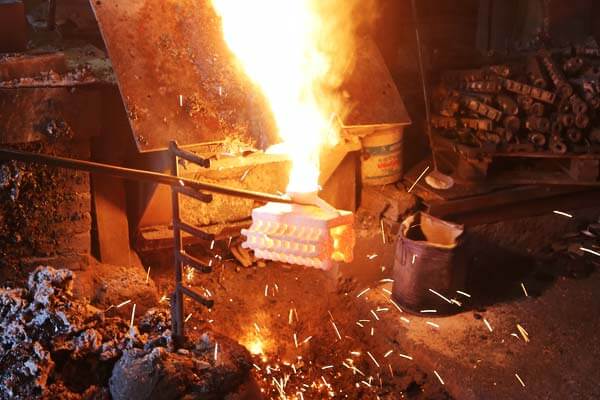
It is one of the oldest methods of metalworking and continues to be widely used in industries today.
During casting, the material is heated to a molten state, and once it has reached the correct temperature, it is poured into a mold that reflects the desired geometry.
The material cools and solidifies, forming the part, which is then removed from the mold.
Afterward, any necessary finishing touches—such as trimming, grinding, or polishing—are applied to achieve the final product.
Key Types of Casting:
Sand Casting:
- Process Overview: Sand casting is the most common and cost-effective method, especially for large parts.
A pattern of the part is made from wood, plastic, or metal and is embedded in sand.
The sand is packed tightly around the pattern, and then molten metal is poured into the mold to form the part.
Sand Casting - Applications: Commonly used in automotive, aerospace, and heavy machinery industries for parts like engine blocks, gears, and industrial machinery components.
- Advantages: Low tooling costs, flexibility for handling large parts, and suitability for a variety of metals.
- Disadvantages: Less precise tolerances and rougher surface finishes compared to other methods.

Investment Casting (Lost-Wax Casting):
- Process Overview: In investment casting, a wax pattern of the part is created, and then coated with a ceramic shell.
The shell is heated to remove the wax, leaving a hollow mold. Molten metal is then poured into the mold to form the part.Investment Casting - Applications: Used for parts that require high precision, such as turbine blades, medical implants, and aerospace components.
- Advantages: High dimensional accuracy, excellent surface finish, and the ability to create intricate internal geometries.
- Disadvantages: Higher labor costs and slower production rates, suitable mostly for smaller parts.

Die Casting:
- Process Overview: Die casting involves forcing molten metal into steel molds (also known as dies) under high pressure.
The metal cools rapidly within the mold, forming a solid part. Dies can be reused, making this process ideal for high-volume production.Die Casting - Applications: Commonly used in mass production of small to medium-sized parts, such as housings, connectors, and automotive components.
- Advantages: Fast production cycles, high precision, excellent surface finishes, and good tolerance control.
- Disadvantages: High initial tooling costs and limitations on the alloys that can be used, as it’s best suited for low-melting-point metals like zinc, aluminum, and magnesium.

Permanent Mold Casting:
- Process Overview: Similar to die casting, but instead of high pressure, molten metal is poured into reusable molds made from steel or iron.
This technique is often used for parts that require better mechanical properties than sand casting can provide. - Applications: Common in automotive manufacturing for parts like pistons, cylinder heads, and wheels.
- Advantages: Improved dimensional accuracy and surface finish compared to sand casting, with faster cooling rates resulting in better mechanical properties.
- Disadvantages: More expensive tooling compared to sand casting and limited to medium-sized parts.
Centrifugal Casting:
- Process Overview: In centrifugal casting, molten metal is poured into a rotating mold, where the centrifugal force distributes the material evenly along the mold walls.
This is particularly useful for cylindrical parts, such as pipes or bushings. - Applications: Common in manufacturing pipes, gears, and other cylindrical components.
- Advantages: Dense, uniform material distribution, and reduced porosity.
- Disadvantages: Limited to circular or cylindrical shapes and less suitable for intricate designs.
Key Advantages of Casting:
- Complex Geometries: Casting excels in producing parts with intricate internal and external shapes that would be difficult or impossible to create with machining alone.
- Cost-Effective for Large Volumes: Once molds are made, casting can be a very cost-effective method for producing large quantities of parts, making it ideal for mass production.
- Material Flexibility: Casting can accommodate a wide range of metals and alloys,
including aluminum, bronze, cast iron, steel, and superalloys. This makes it versatile across industries that require specialized materials. - High Tolerance and Surface Quality (Investment Casting): When compared to other casting methods,
investment casting offers superior surface finishes and tight tolerances, suitable for parts requiring high precision. - Low Material Waste: Casting produces near-net-shape parts, minimizing material waste and reducing the need for costly secondary machining.
Key Considerations and Limitations of Casting:
- Precision and Tolerances: While some casting methods provide good dimensional accuracy, the tolerance of cast parts is generally not as high as parts made using machining methods.
Some casting processes like sand casting can result in rougher surface finishes and require additional post-processing. - Setup Costs: Initial mold design and production can be expensive, especially for complex parts or when utilizing high-quality molds for processes like die or investment casting.
However, the cost can be amortized over high-volume production. - Lead Time: Casting, particularly with complex molds or intricate designs, may require longer lead times compared to machining or additive manufacturing methods.
This may impact projects with tight timelines. - Material Limitations: Some casting processes are only suitable for specific materials,
such as aluminum or zinc-based alloys, and are limited when working with high-melting-point metals or more complex alloys.
Applications of Casting:
- Automotive: Engine blocks, gearboxes, and exhaust components.
- Aerospace: Turbine blades, engine parts, and structural components.
- Construction: Large components such as pipes and beams.
- Marine: Boat propellers, marine fittings, and structural parts.
- Consumer Products: Decorative items, cookware, and hardware components.
3. What Is Machining?
Machining is a subtractive manufacturing process that involves removing material from a solid workpiece using precision cutting tools to achieve the desired shape, size, and finish.
Unlike casting, where material is poured into a mold, machining removes material from a larger piece to create a part with exact specifications.
This process is crucial in industries that require high precision, such as aerospace, automotive, medical devices, and electronics.
Machining is typically performed using CNC (Computer Numerical Control) machines, which are programmed to follow specific tool paths, allowing for exceptional accuracy and repeatability.
Although machining can also be done manually using traditional machine tools, the rise of automated machining has significantly improved production efficiency, consistency, and speed.
Types of Machining Processes
CNC Machining
- Process Overview: CNC machining is an automated process where pre-programmed computer software controls machine tools
like lathes, mills, and drills. It is widely used for creating high-precision parts with complex geometries.CNC machining - Advantages: High accuracy, excellent repeatability, fast production times, and reduced labor costs.
- Disadvantages: Higher initial setup costs due to programming and tooling, and not ideal for large parts when compared to casting.

Manual Machining
- Process Overview: In manual machining, skilled operators control the machines directly, adjusting tools and settings for each part.
While it requires more labor and expertise, it offers flexibility for one-off parts, repairs, and small-batch production. - Advantages: Flexibility in custom work, lower cost for single parts or small batches, and the ability to make on-the-fly adjustments.
- Disadvantages: Slower production rates, higher labor costs, and less consistency than CNC machining.
Electrical Discharge Machining (EDM)
- Process Overview: EDM uses electrical sparks to erode material from a workpiece, making it ideal for hard metals and intricate shapes.
It is commonly used for mold and die-making, as well as for components with small holes or precise contours.Electrical Discharge Machining - Advantages: Can machine hard materials, achieves fine details, and produces minimal heat-affected zones.
- Disadvantages: Slower process and higher operational costs, making it less suitable for mass production.

Grinding
- Process Overview: Grinding uses an abrasive wheel to remove material from the workpiece, typically to refine surface finishes and achieve tight tolerances.
It is often the final step in machining to achieve precise finishes. - Advantages: Excellent for achieving smooth surfaces and tight tolerances.
- Disadvantages: Generates heat that can alter material properties if not managed correctly and is slower than other processes.
Broaching
- Process Overview: Broaching is a machining process that uses a toothed tool called a broach to remove material in a linear stroke.
It is ideal for producing internal or external forms such as keyways, splines, and slots. - Advantages: Efficient and fast for specific shapes, high productivity for repetitive tasks.
- Disadvantages: Limited to specific shapes and high tooling costs.
Key Advantages of Machining
- High Precision and Accuracy: Machining is known for its ability to produce parts with extremely tight tolerances,
which is critical in industries like aerospace, automotive, and medical devices.
- CNC machining can achieve tolerances as tight as ±0.0005 inches (0.0127 mm), ensuring that components fit perfectly and function as designed.
- Superior Surface Finishes: One of the key benefits of machining is its ability to create smooth, high-quality surface finishes without the need for additional post-processing steps.
This is particularly beneficial for parts where minimal friction or high aesthetic standards are required. - Versatility: Machining is compatible with a broad range of materials, including metals (e.g., steel, aluminum, titanium), plastics, and composites.
This allows manufacturers to choose the best material for their specific application needs. - Customization and Rapid Prototyping: Machining allows for quick design modifications and adjustments during production,
making it a suitable option for prototyping and small-batch manufacturing.
Custom parts can be easily created by modifying CAD models and CNC programs. - Repeatability and Consistency: Automated CNC machining ensures that each part produced is identical to the last.
This repeatability makes machining ideal for applications where part-to-part uniformity is essential.
Key Considerations of Machining
- Material Waste: Machining is a subtractive process, meaning the material is removed from a larger workpiece, which can lead to waste.
However, careful planning and optimal tool paths can minimize material loss. - Tool Wear and Maintenance: The cutting tools used in machining can wear out over time, especially when machining hard materials.
Regular maintenance and tool replacement are necessary to maintain accuracy and efficiency. - Setup and Programming Costs: For CNC machining, there are often higher initial setup costs due to programming, tool changes, and machine calibration.
However, these costs are often offset by the efficiency of mass production once the setup is complete.
Applications of Machining
- Aerospace: Machining is widely used to produce critical components for aircraft, such as turbine blades, structural elements, and engine parts.
These parts require extremely tight tolerances and precise surface finishes. - Automotive: From engine blocks to suspension components, machining is crucial in the production of high-performance automotive parts that require strength, precision, and durability.
- Medical Devices: Many medical implants, surgical instruments, and diagnostic equipment are produced using machining techniques, where precision is paramount.
- Consumer Electronics: Machining is used to create housing for smartphones, laptops, and other electronic devices, ensuring components are precisely formed and securely fitted.
4. Factors to Consider When Choosing Between Machining vs. Casting
When deciding whether to use machining vs. casting for your project, several critical factors must be taken into account.
Both processes offer unique advantages, but their suitability depends on the project’s specific requirements.
Below are the key considerations to help you determine which method is the best fit for your manufacturing needs:
Design Complexity and Tolerance Requirements
Casting:
- Complex Geometries: If your part requires complex internal features or intricate geometries, casting might be the better option.
Casting is ideal for parts with non-standard shapes, including hollow sections, undercuts, and intricate patterns. - Tolerance Range: Casting can achieve reasonable tolerances, but it typically requires secondary operations (like machining) for higher precision.
Investment casting offers better tolerances than sand casting but still generally doesn’t match the precision of machining.
Machining:
- Precision Parts: If your design requires tight tolerances, machining is the preferred choice.
CNC machining offers the highest precision, with tolerances as tight as ±0.0005 inches (0.0127 mm).
This is critical for applications such as aerospace, medical devices, and automotive components where the slightest deviation can compromise performance. - Detail and Finish: For parts requiring smooth surface finishes or detailed features,
machining is unmatched in producing high-quality, tight-fitting components with minimal post-processing.
Production Volume and Lead Time
Casting:
- High-Volume Production: Casting is especially effective for mass production of parts where high quantities are required.
Once the mold is created, large numbers of parts can be produced at a relatively low cost per unit, making casting the go-to choice for large-scale manufacturing. - Lead Time: Casting may require longer lead times for mold creation, especially with complex designs.
However, once molds are made, production is fast, and parts can be produced quickly in high volumes.
Machining:
- Small to Medium Batches: Machining is more suitable for smaller production runs or custom parts that don’t require large quantities.
The setup time and cost per part can be high for larger batches, making machining less cost-effective in mass production. - Faster Prototyping: If quick prototypes are needed, machining is faster.
The ability to adjust the design on the fly and make immediate changes is a significant advantage when rapid prototyping is a priority.
Material Type and Properties
Casting:
- Material Flexibility: Casting allows for the use of a broad range of materials, including aluminum, steel, bronze, cast iron, and superalloys.
This makes casting a versatile method for industries where material choice is paramount, such as automotive, aerospace, and heavy machinery. - Material Limitations: While casting supports various alloys, it may not be suitable for materials that require extreme precision,
such as some high-performance alloys, which may benefit more from machining.
Machining:
- Wide Material Compatibility: Machining works well with a broad range of materials, including metals (steel, aluminum, titanium), plastics, and composites.
However, machining is particularly ideal for hard materials that can withstand high-speed cutting, including stainless steel, titanium, and certain alloys. - Material Waste: One downside of machining is that it can lead to higher material waste because it’s a subtractive process, especially with complex geometries.
This needs to be considered when dealing with high-cost or limited materials.
Cost and Budget Constraints
Casting:
- Initial Setup Costs: The initial tooling cost for casting, particularly for creating molds, can be high.
For example, creating custom molds can range from hundreds to thousands of dollars, depending on complexity.
However, once the molds are made, the cost per part is significantly lower, making casting a cost-effective solution for large-scale production. - Cost per Unit: For high-volume production, casting becomes much more cost-effective as the cost of molds is
spread across a large number of parts, reducing the per-unit cost dramatically.
Machining:
-
- Higher Initial Costs: Although machining has lower setup costs compared to casting (no molds are required),
the per-unit cost of machining is generally higher due to the labor and equipment costs involved in material removal. - Cost for Low-Volume Production: For low to medium production volumes or customized parts, machining can be more cost-efficient than casting.
However, for larger runs, the initial cost of machining can become expensive, especially for parts requiring multiple processes.
- Higher Initial Costs: Although machining has lower setup costs compared to casting (no molds are required),
Mechanical Properties and Durability
Casting:
- Material Strength: While casting can produce parts with good mechanical properties,
the resulting material is often less dense and may have porosity or voids, which can affect its strength and durability.
Additional treatments or secondary processes such as heat treatment or machining are often required to achieve the desired strength and durability. - Application Suitability: Casting is highly suitable for non-structural components, or parts that don’t bear heavy loads or need high strength.
Machining:
- Superior Strength: Machining provides excellent mechanical properties as it produces solid parts free from voids.
The part’s final structure is often denser and more uniform, resulting in better durability and fatigue resistance. - Toughness: For applications requiring high strength under stress, such as automotive components and aerospace parts, machining is a superior choice.
It delivers stronger and more reliable components that perform well under high loads or extreme conditions.
Sustainability and Waste Management
Casting:
- Less Material Waste: Casting processes, particularly die casting and sand casting, often result in less material waste compared to machining.
Parts are created close to the net shape, requiring less secondary material removal. - Environmental Impact: However, the casting process can be energy-intensive, especially when melting metals.
Additionally, mold creation can generate waste that needs to be managed or recycled.
Machining:
- Material Waste: Since machining is subtractive, it generates material waste, particularly when removing large amounts of material to create a part.
For high-precision machining, scrap rates can increase. - Efficiency: Although machining can be wasteful, advanced techniques and efficient tool paths can help optimize material usage.
Additionally, recycling machining scrap material can help mitigate its environmental impact.
Lead Time and Turnaround Time
Casting:
- Longer Setup Times: Casting generally involves longer lead times because of the mold-making process, which can take days to weeks depending on the complexity of the part.
- Faster Mass Production: Once molds are created, casting can produce parts quickly in high volumes, making it an efficient solution for large-scale runs.
Machining:
- Shorter Setup Times: CNC machining requires less setup time compared to casting.
Once the part design is programmed, machining can begin quickly, offering faster turnaround times for small batches or custom parts. - Faster Prototyping: Machining excels in producing rapid prototypes or small batches with quicker delivery, which is particularly beneficial for testing new designs.
5. Combining Casting and Machining
In many manufacturing projects, a hybrid approach of casting and machining is the most effective method to achieve the desired results.
Combining both processes takes advantage of the strengths of each, optimizing both cost and performance.
Here’s how casting and machining work together to deliver high-quality components:
Why Combine Casting and Machining?
- Casting for Complex Shapes: Casting excels at producing large, complex shapes and parts with internal geometries that would be difficult or impossible to achieve through machining alone.
For example, casting is ideal for creating hollow sections, intricate internal features, and complex contours. - Machining for Precision and Finish: While casting is efficient for creating parts in bulk and complex shapes,
it doesn’t always deliver the tight tolerances and smooth surface finishes required in certain industries. This is where the machining steps come in.
After casting the base shape, machining can be used to fine-tune the part, ensuring it meets precise specifications and performance standards.
Combining these two methods allows manufacturers to create cost-effective, high-performance parts while keeping production time and costs in check.
Common Examples of Combined Casting and Machining
Several types of components are commonly produced by combining both casting and machining, particularly in industries where strength, precision, and complexity are key requirements:
Automotive Engine Blocks
- Casting: Engine blocks are usually cast to form the main structure, which is large and complex.
The casting process is ideal for shaping the bulk of the part, including the engine’s cylinder head and crankcase. - Machining: Once cast, the engine block undergoes machining to achieve precise features such as threads, housings for pistons, cooling channels, and sleeves.
Machining ensures that the final dimensions and surface finish meet the exact standards needed for engine performance.
Turbine Blades
- Casting: Turbine blades, which require fine internal features and thin geometries, are often produced via investment casting to create intricate shapes.
- Machining: After casting, the blades are machined to tight tolerances to ensure that they fit within the engine components and withstand high-stress conditions.
Cooling channels and fine details can also be added at this stage to optimize the blade’s performance.
Aerospace Components
- Casting: Aerospace parts like engine casings, brackets, and structural supports are often produced through casting to form the base shape.
- Machining: These cast components then undergo machining to refine the final part, ensuring it fits precisely with other parts in the assembly and meets weight and strength requirements.
Critical features such as bolt holes, mounting points, and fluid pathways are added through machining.
Advantages of Combining Casting and Machining
Cost-Effectiveness:
- Casting allows for the creation of complex parts in a single step, eliminating the need for multiple processes.
Once the casting mold is made, parts can be produced quickly in high volumes.
By following up with machining, manufacturers save costs on secondary operations and material waste. - Machining can refine the part’s geometry after the bulk material has been cast, reducing the amount of material that needs to be removed, and leading to more efficient manufacturing.
Design Flexibility:
- Combining casting and machining opens up more design possibilities.
Complex shapes and intricate internal structures can be cast, while precise features, threads, holes, and finishes can be machined afterward.
This combination allows manufacturers to create parts that meet complex, real-world demands.
Time Efficiency:
- Casting provides the bulk form of the part quickly, which is then finished rapidly through machining.
This reduces overall lead times compared to machining the entire part from raw material.
Enhanced Mechanical Properties:
- Machining can help improve the mechanical properties of cast parts.
After casting, the material may have imperfections such as porosity or internal voids.
Machining can remove these defects, improving the density and strength of the final product.
Achieving Precision:
- Machining steps after casting help achieve higher precision for parts that require tight tolerances and smooth finishes.
For example, after a turbine component is cast, machining ensures the part fits into the assembly precisely and meets rigorous performance standards.
Challenges and Considerations
While combining casting and machining offers many advantages, manufacturers must consider a few challenges:
Increased Complexity:
- The need to perform both casting and machining increases the complexity of the manufacturing process.
The design process must consider both steps, and close coordination is required between the casting and machining operations to ensure compatibility.
Lead Time:
- Combining both processes can increase lead times compared to using only one method.
The casting process itself takes time, and then the machining process adds additional time. Proper planning is required to minimize delays.
Cost of Setup:
- While casting is cost-effective for large volumes, initial tooling costs for both the casting mold and machining equipment can be high.
Manufacturers must carefully assess the cost-effectiveness of combining both processes.
Material Constraints:
- Certain alloys and materials may be better suited for casting or machining, but not both.
For example, certain metals may be more prone to cracking or warping when cast and may require special machining processes to mitigate those issues.
6. Conclusion: Which Process is Right for Your Project?
Both machining vs. casting have their strengths, and choosing the right process depends on your specific requirements.
Casting is a great option for producing complex parts in high volumes at a lower cost per unit.
On the other hand, machining excels in precision and versatility, making it ideal for prototypes, small batches, and parts with tight tolerances.
Understanding the characteristics of each method will help you determine the best approach to meet your project’s design, production, and budget goals.
Whether you choose casting or machining, both processes offer unique benefits that are essential in modern manufacturing.
DEZE has extensive experience in both casting and machining.
If you need assistance in choosing the right process for your next project, feel free to contact us for expert guidance and solutions.