1. Introduction — why the wax pattern matters
Investment casting’s ability to deliver near-net shapes, thin walls and high surface finish stems from faithful replication of a wax pattern by refractory shells.
Any imperfection in the pattern — a geometric deviation, a surface blemish or an internal void — will be transferred and amplified through shelling, dewaxing and metallurgical transformation.
In many industrial environments upwards of 60% of casting rejects can be traced to errors introduced at the wax stage.
For high-reliability sectors (aerospace, medical, precision optics), wax pattern dimensional tolerances may be as tight as ±0.05 mm.
Consequently, manufacturing and verifying wax patterns to exacting standards is indispensable for robust investment-casting production.
2. Role and functional requirements of wax patterns
A wax pattern is not merely a sacrificial model; it is the primary prototype that must satisfy a set of mechanical, thermal and geometrical requirements:
- Geometric fidelity: pattern dimensions (including local thicknesses, bosses and holes) must be within the tolerance band required for the finished casting after known process shrinkages are applied.
- Surface integrity: the face that the shell must reproduce needs appropriate roughness and defect-free condition.
- Structural integrity: patterns must endure handling, assembly and dewaxing forces without fracture or distortion.
- Thermo-behavior: predictable and stable shrinkage from wax solidification and cooling must be controlled and repeatable.
Meeting these requirements depends on wax formulation, molding practice and strict process discipline.
3. Full-Process Analysis of Wax-Pattern Manufacturing and Key Process Control Points
Wax-pattern manufacture is a multi-step, tightly controlled engineering sequence.
The integrity of each stage determines whether the pattern will reliably reproduce the designed geometry, surface and mechanical behavior through shelling, dewaxing and metal casting.
Practically, the workflow is organized into four principal stages:
- Wax formulation & melt preparation
- Injection molding (wax pressing)
- Cooling and demolding
- Trimming and tree (cluster) assembly
Each stage contains specific control points — material, thermal, mechanical and handling — that must be specified, monitored and recorded.
Below is a purpose-driven description of each stage, the critical variables, their functional rationale and recommended control practices.
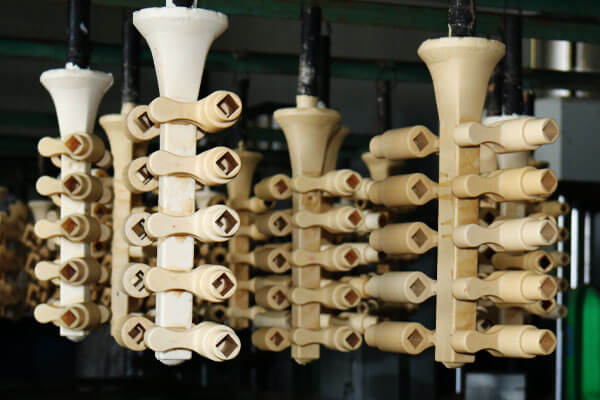
Wax formulation and melt preparation (material foundation)
Function: supply a homogeneous, stable molten wax whose rheology, strength and shrinkage are suitable for accurate molding and handling.
Key parameters & control points
- Formulation: typical systems combine paraffin (flow), stearic acid (green strength/dimensional stability) and modifiers (microcrystalline wax, resins).
Empirical practice often targets stearic-acid content in the 10–20 wt% range to increase flexural strength (reported improvement ~30%) and reduce internal gas entrapment.
Any formulation change must be validated with test pieces before production use. - Melt temperature: maintain the melt in a controlled vessel at ~70–90 °C. Temperatures below ~70 °C impair flow and increase short-shot risk;
temperatures above ~120 °C accelerate oxidation and chemical degradation.
Hold temperature to within ±5–10 °C of set point and log each heat. - Homogenization & degassing: ensure vigorous but controlled agitation to homogenize additives, then allow standing or apply vacuum for ≥30 minutes to release entrained air.
Filtration is required when recycled wax is used. - Contamination control & traceability: segregate melt batches, label lot identifiers, and retain melt logs (composition, temperature, degassing time) to support process traceability.
Why it matters: formulation and melt history set rheology, shrinkage and green strength — variables that directly influence fillability, dimensional stability and resistance to handling damage.
Injection molding (wax pressing) — the geometric shaping step
Function: reproduce the part geometry in wax by controlled injection into a pre-machined tool under predictable thermal and pressure conditions.
Primary process variables
- Wax (shot) temperature: typical shot temperatures range 55–90 °C (many paraffin/stearic systems run ~60–65 °C).
Adjust shot temperature to balance flowability and post-solidification shrinkage. - Tool (die) temperature: maintain die surface temperature in the 20–45 °C band; complex molds may require segmented control to avoid local cold spots.
Preheat tools to stable temperature before production to prevent dimensional drift. - Injection pressure: machine capability and cavity geometry govern pressure; typical range 0.2–2.6 MPa.
Choose pressure to ensure complete filling without excessive flash or over-compression. - Injection speed/profile: adopt multi-stage control — slow initial fill to prevent air entrapment, accelerated mid-fill for rapid cavity fill, and controlled deceleration to finish.
Exact speed windows must be validated in try-out. - Hold/pack time and pressure: apply a holding stage (commonly 10–30 s) to compensate early solidification shrinkage in thick sections;
maintain hold pressure until initial green strength forms to avoid internal voids and sink marks.
Why it matters: injection parameters determine both macroscopic geometry and microscopic integrity (voids, flow lines). Tight control here minimizes rework downstream.
Cooling and demolding — solidification and release
Function: solidify the injected wax into a dimensionally stable pattern and remove it from the tool without distortion.
Key parameters & best practices
- Cooling time: depends on section thickness; typical demold times range 10–60 minutes.
Do not demold before adequate green strength is achieved — premature ejection causes dimensional spring-back or tears, especially on thin walls and slender features. - Die cooling medium & temperature: cooling water supply is commonly maintained at 14–24 °C; control flow and distribution to avoid local hotspots.
For complex cavities, segmented die cooling reduces uneven solidification. - Demolding technique: execute smooth, uniformly distributed demolding motions; avoid point-loading on delicate geometry.
Use mechanical assistance or fixtures for slender parts to support geometry during release. - Immediate inspection: perform a quick visual and tactile check for surface defects, flash, short shots or tearing immediately after demolding;
record and segregate nonconforming patterns for root-cause analysis.
Why it matters: uniform cooling prevents differential shrinkage and internal stress. Proper demolding practice preserves the precise geometry created in the die.
Trimming and tree assembly (preparation for shelling)
Function: remove excess wax, assemble patterns into clusters (trees) suitable for shelling and subsequent processing while preserving datum locations and surface integrity.
Trimming controls
- Tools & technique: use sharp, properly maintained tools; perform work under magnification for precision features.
Gentle, steady motions minimize the risk of introducing scratches or removing more material than intended. - Dimensional reference: ensure trimming does not alter datums or mating features; measure critical dimensions after trimming when they are tolerance-sensitive.
Tree (cluster) assembly
- Weld quality: hot-weld patterns to runners using matching wax rods.
Welds must be continuous, free of wax droplets and mechanically sound to withstand shell handling and dewaxing forces. - Spacing and balance: maintain 5–15 mm spacing between adjacent patterns for even slurry penetration and shell thickness;
arrange the tree with balanced center-of-gravity to ensure uniform heating and drying during shell build and dewax. - Storage environment: temporarily store assembled trees under controlled conditions — recommended 18–28 °C and low humidity — and limit storage time (typical guidance ≤48 hours) to reduce shape drift and aging effects.
Why it matters: poor trimming or suboptimal assembly introduces localized defects or thermal imbalances that will be magnified during shelling and metalcasting.
4. Core Dimensions and Standard System of Wax Pattern Quality Evaluation
The quality evaluation of wax patterns is a multi-dimensional and systematic process, mainly carried out around three core dimensions:
dimensional accuracy, surface quality and internal performance, and quantitatively determined in accordance with industry norms and enterprise standards.
The establishment of a scientific and standardized quality evaluation system is an important guarantee for ensuring the stability of wax pattern quality and improving the qualification rate of castings.
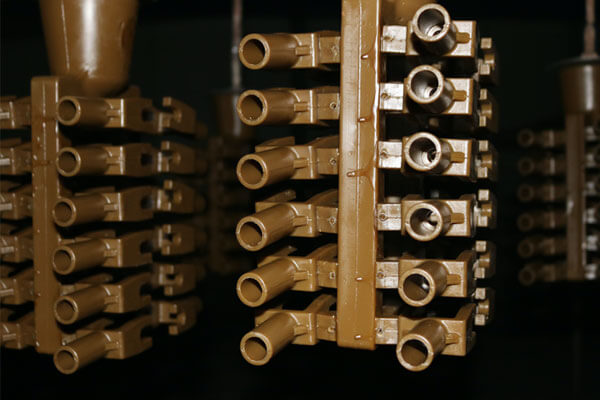
Dimensional Accuracy Evaluation
Dimensional accuracy is the core evaluation index of wax patterns, directly determining whether the casting can meet the assembly and functional requirements.
Its evaluation is mainly based on tolerance levels and measurement methods, and strict environmental control is required during the measurement process.
Tolerance level:
At present, there is no mandatory national standard specifically for wax patterns, but the industry generally refers to the tolerance system of precision mechanical parts.
For high-precision fields such as aerospace and medical care, the dimensional tolerance of wax patterns is usually required to be controlled between ±0.05mm and ±0.1mm,
which is much higher than the ±0.3mm requirement for ordinary castings.
During mold design, the linear shrinkage rate of the wax (usually 0.8%~1.5%) must be considered in advance,
and the mold cavity size should be compensated to ensure that the final wax pattern size meets the drawing requirements.
For complex parts with uneven wall thickness, regional shrinkage compensation should be adopted to avoid dimensional deviations caused by uneven shrinkage.
Measurement methods:
High-precision measuring tools are used for detection, including micrometers (accuracy 0.001mm), digital calipers (accuracy 0.01mm), projectors and Coordinate Measuring Machines (CMM).
Key dimensions (such as hole diameter, shaft diameter, wall thickness) must be 100% fully inspected to ensure that each wax pattern meets the requirements;
non-key dimensions can be sampled and inspected according to the sampling plan.
The measurement environment must be constant temperature (23±2℃) and constant humidity (65±5%RH) to eliminate the impact of thermal expansion and contraction on the measurement results.
Before measurement, the wax pattern should be placed in the measurement environment for at least 2 hours to ensure that its temperature is consistent with the ambient temperature.
Surface Quality Evaluation
Surface quality directly affects the surface finish of the casting and the subsequent processing cost.
The evaluation standards mainly include defect types, surface roughness and cleanliness, which are evaluated by visual inspection and professional measuring tools.
Defect types:
The surface of the wax pattern should be free of visible defects such as bubbles, sink marks, wrinkles, flow lines, flash and sticking.
According to general industry standards, the appearance surface is not allowed to have bubbles or sink marks with a diameter greater than 0.5mm;
the depth of flow lines should be less than 0.1mm and should not affect the subsequent coating application.
For wax patterns used in high-end fields, even tiny surface defects (such as scratches with a depth greater than 0.05mm) are not allowed, and must be repaired or scrapped.
Surface roughness:
The surface roughness (Ra) of the wax pattern should be controlled within the range of 0.8μm~1.6μm to ensure that the shell coating can perfectly replicate its surface details.
The roughness can be measured by a surface profilometer, or qualitatively evaluated by visual comparison with standard samples.
For wax patterns with special surface requirements (such as high-gloss castings), the surface roughness (Ra) should be controlled below 0.8μm.
Cleanliness:
The surface of the wax pattern must be free of contaminants such as wax chips, dust and oil stains, otherwise, the shell coating will be polluted, leading to inclusions or roughness on the casting surface.
After trimming and before tree assembly, the wax pattern should be cleaned with compressed air to remove surface impurities, and stored in a clean environment to avoid secondary pollution.
Internal Performance Evaluation
Internal performance is the key to ensuring that the wax pattern does not break or deform during handling, tree assembly and dewaxing.
Its evaluation mainly focuses on strength and toughness, shrinkage rate and demolding performance.
Strength and toughness:
The wax pattern should have sufficient flexural and compressive strength to withstand the welding stress during tree assembly and the steam pressure during dewaxing.
Insufficient strength will easily lead to fracture or deformation of the wax pattern.
It can be evaluated by a simple bending test or a special strength tester—during the bending test, the wax pattern should not break or have obvious deformation under the specified load.
Shrinkage rate:
The linear shrinkage rate of wax is an inherent property affecting dimensional accuracy, which needs to be measured by standard samples (such as ASTM D955) under specific conditions (after 24 hours, 23℃).
Its value should be stable and consistent with the formula expectation.
Low-shrinkage wax (<1.0%) is more conducive to the production of high-precision castings, as it can reduce dimensional deviations caused by shrinkage.
Demolding performance:
The wax pattern should be able to be smoothly and completely demolded from the mold without scratches or tears.
This depends on the surface finish of the mold, the uniform application of mold release agent and the reasonable cooling time.
After demolding, the surface of the wax pattern should be intact, and there should be no residual wax on the mold contact surface.
Summary of Core Dimensions for Wax Pattern Quality Evaluation
| Evaluation dimension | Key indicator | Typical acceptance range | Primary detection method |
| Dimensional accuracy | Linear tolerance (critical features) | ±0.05 – ±0.10 mm (precision); up to ±0.3 mm (general) | CMM, micrometer, caliper |
| Dimensional stability | Linear shrinkage | 0.8% – 1.5% (prefer <1.0% for precision) | Standard shrinkage test (ASTM D955) |
| Surface roughness | Ra | 0.8 – 1.6 μm (≤0.8 μm for premium) | Contact/optical profilometer |
| Surface defects | Bubbles / sink marks | No visible defect > Ø 0.5 mm on critical faces | Visual inspection + magnifier |
Flow lines / scratches |
Depth | < 0.1 mm (standard); ≤ 0.05 mm (high-end) | Visual / optical comparator |
| Flexural strength | Bend / break behaviour | No fracture; no permanent deformation under specified load | Simple bend test fixture |
| Demolding integrity | Tears / residual wax | Clean release; no residue on mold contact surfaces | Visual inspection after demold |
| Cleanliness | Contaminants present | No wax chips, dust, oil | Visual + compressed-air purge |
5. Conclusion
Wax pattern manufacture is the decisive upstream activity in investment casting.
Excellence at this stage yields castings that meet intricate geometry, tight tolerances and demanding surface requirements with minimal secondary machining.
A mature quality system comprises controlled wax formulations, disciplined molding practice, rigorous inspection and traceability, and continuous feedback through SPC and corrective action.
Future advances are likely to come from improved wax chemistries (lower shrinkage, higher green strength), intelligent injection equipment with closed-loop control,
and digital inspection workflows (3D scanning + ML) that accelerate anomaly detection and process optimization.
For organizations seeking consistent, high-yield investment-casting production, investment in wax-pattern process control pays direct dividends in reduced scrap, shorter lead times and predictable part performance.