1. Introduction
Wax pattern quality is the controlling factor for dimensional accuracy, surface integrity, and yield in investment casting.
This article synthesizes a structured, engineering-driven approach to prevent and control the principal wax-pattern defects common in aerospace and high-end equipment manufacture.
Building on a cause-mechanism-countermeasure logic and the six quality dimensions (Man, Machine, Material, Method, Environment, Measurement),
the paper presents targeted corrective and preventive actions (CAPA), a factory-level quality control architecture, two validated production cases, and an implementation checklist with measurable KPIs.
The goal is to convert reactive rework into proactive process control and design-for-robustness.
2. Targeted CAPA summary — defect → mechanism → engineering countermeasure
A disciplined corrective-and-preventive action (CAPA) system for wax-pattern quality must follow a single, repeatable logic:
identify the observable defect, determine the governing physical mechanism(s), and apply quantified, engineering controls that are auditable and measurable.
All countermeasures should be organized against the six quality dimensions — Man, Machine, Material, Method, Environment, Measurement — so that fixes are systemic rather than ad-hoc.
The paragraphs below restate the principal defect types and give practical, verifiable countermeasures (with target ranges where appropriate).
Short-shot (incomplete fill)
Mechanism: inadequate wax flow or early skin-off at the cavity walls, insufficient momentum to penetrate thin or tortuous sections, or suboptimal gate placement.
Controls:
- Material / Temperature: Hold wax at 60–65 °C (medium-temperature wax) ±2 °C to ensure target viscosity. Limit wax temperature to ≤70 °C to control shrinkage.
- Tooling / Gating: If feasible increase gate cross-section by ≥20% and relocate gate toward thicker sections to shorten flow path.
- Machine / Injection profile: Use a multi-stage velocity profile: slow start 15–20 mm/s, rapid fill 40–50 mm/s through critical features, then slow pack to avoid rebound. Lock profiles in PLC.
- Verification: track short-shot incidence; target production short-shot rate < 1%. Use cavity-pressure traces or fill sensors to confirm complete filling.
Entrained bubbles and internal porosity
Mechanism: air entrainment during filling and/or dissolved/entrapped gas in the melt.
Controls:
- Material / Melt treatment: Vacuum degas at –0.08 MPa for ≥60 minutes when possible; if vacuum is unavailable, vigorous stirring at 70–90 °C followed by ≥30 minutes standing.
Expect >70% reduction in entrained gas after proper vacuum degassing. - Method / Injection speed: Maintain sub-turbulent regime; limit peak injection speeds to 30–40 mm/s for geometries prone to entrainment.
- Tooling / Venting: Add and maintain exhaust grooves (typical geometry 0.02–0.04 mm depth × 1–3 mm width) at cavity termini, parting lines and core seats; clean vents each shift.
- Machine / Hold strategy: Use segmented hold: e.g., 0.3 MPa for 10 s to allow trapped gas migration, then 0.5 MPa until solidification.
- Verification: periodic cross-section inspections or X-ray on representative parts; target critical-area porosity < 0.5% area fraction.
Surface wrinkles / flow lines
Mechanism: unstable melt-front convergence and surface skin instabilities caused by temperature mismatch, poor lubrication or mismatched pressure/speed.
Controls:
- Temperature coordination: Maintain Δ(T_wax – T_mold) ≤ 15 °C at fill time. Preheat molds and monitor with thermocouples.
- Release agent protocol: Limit to approved agents (e.g., transformer oil or turpentine). Apply uniformly by spray at 0.05–0.10 g/m²; avoid pooling. Record lot and application rate.
- Injection/Pressure tuning: Hold steady pack pressure 0.3–0.5 MPa and match speed to viscosity to prevent creeping.
- Design: Where practical, adopt multi-gate or symmetric gating so melt fronts arrive simultaneously.
- Verification: visual and profilometric checks; flow-line depth acceptance typically ≤ 0.1 mm for high-precision patterns.
Surface sinks / shrinkage cavities
Mechanism: insufficient feed to thick regions during solidification; high intrinsic linear shrinkage of the wax.
Controls:
- Hold time & pressure: For wall thickness >3 mm, extend hold to 40–60 s and increase pack pressure to 0.5–0.6 MPa where mold and equipment allow.
- Mold design: Install cold-wax chills (low-temperature wax inserts of identical composition) in thick nodes to promote directional solidification and feeding.
- Material control: Regulate wax formulation (e.g., control stearic acid content) and measure linear shrinkage; set mold compensation to match measured shrinkage (do not under-compensate).
- Verification: surface scan and CMM; aim to eliminate visible sinks in production lots.
Flash (excess parting flash)
Mechanism: poor parting-line sealing due to surface damage, debris, or incorrect clamping.
Controls:
- Mold maintenance: Polish parting faces and core seats to Ra ≤ 0.4 μm (≥800 grit). Record surface finish and maintenance dates.
- Clamping control: Calibrate clamp force per mold size and wax viscosity; example ranges 0.8–1.2 MPa for typical machines.
Lock settings in PLC and require process-engineer authorization to change. - Daily housekeeping: Wipe parting surfaces with alcohol-dampened, lint-free cloth before each run; remove chips and dust that cause seal failure.
- Verification: measure flash incidence; set KPI e.g., flash rate < 0.5%.
Wax-pattern distortion (warpage)
Mechanism: thermal gradients and locked-in residual stresses during cooling and premature demolding; thin, slender features especially vulnerable.
Controls:
- Cooling protocol: Prohibit immersion in cold water (<14 °C). Use constant-temperature cooling baths at 18–24 °C with controlled soak times proportional to section thickness (typical 10–60 min).
- Physical support: For slender or hole-critical features, insert temporary metal supports (pins or rings) sized to provide light interference; cool parts together with supports to maintain datums.
- Demolding timing & method: Demold once surface temperature ≤ 30 °C and internal stress has relaxed; use gentle pneumatic or soft-tool demolding and lift from robust reference surfaces only.
- Verification: track dimensional statistics (hole coaxiality, flatness); target coaxiality and flatness within spec (case examples achieved coaxiality improvements from ~60% → >98%).
Sticking (adhesion to mold)
Mechanism: degraded or uneven release agent, incorrect mold temperature or premature demolding.
Controls:
- Release agent QA: Check each lot for turbidity/precipitates prior to use; maintain approved supplier list. Standardize spray method and frequency; log application.
- Demolding criteria: Only demold when surface T < 30 °C; apply smooth, even force using pneumatic assists or soft tools; avoid pry bars on thin walls.
- Verification: sticking events logged and trended; corrective action (reapply agent, strip & clean mold) triggered on pattern of failures.
Dimensional inaccuracy (global / local)
Mechanism: compounded effects of shrinkage variation, thermal drift, mold deformation, and process instability.
Controls:
- Mold design: Use CAE to derive zonal shrinkage compensation (e.g., thick areas ~1.5%, thin areas ~0.9%) and iterate with tryout castings.
- Closed-loop process control: Instrument key variables and enforce tight bands (example: wax temp 60 ±1 °C, mold temp ±1 °C, injection pressure ±0.05 MPa). Apply alarms and automatic hold/stop on excursions.
- Environment & storage: Store patterns in climate-controlled room 23 ±2 °C, 65 ±5% RH for ≥24 hours prior to inspection or tree assembly.
- Measurement & traceability: Implement one-pattern → one-code traceability; record melt lot, mold ID, cycle data. Set dimensional Cpk ≥ 1.33 for critical features.
- Verification: 100% CMM inspection of critical datums on first article and statistically sampled runs thereafter.
System integration note
Each countermeasure must be captured in SOPs, locked in machine control where feasible, and verified by measurement.
Material certificates, calibration logs, environmental records and operator training records form the audit trail that converts a local fix into a sustained capability.
Where process limits conflict with throughput goals, document the trade-off and require engineering approval; prioritize defect elimination where part function or safety is at stake.
3. Construction of a systematic quality-control system for wax-pattern production
A robust quality system translates corrective measures into sustained capability by embedding controls across the entire production chain: Material, Machine, Method, Environment, Measurement, and Personnel.
The objective is to make every countermeasure verifiable, traceable and resistant to process drift: specification → instrumented control → inspection → documented CAPA.
The paragraphs below restate that structure in rigorous, actionable terms.
Material control — wax and molds
- Supply and incoming verification. Require a certificate of analysis for every new wax lot:
at minimum report melting point, acid value, penetration and linear shrinkage. Reject lots that do not meet the approved specification. - Recycled wax management. Maintain a segregated recycled-wax repository. Limit recycled wax to ≤ 20% of the melt charge for high-precision patterns.
Prior to reuse, filter recycled wax (≥ 200-mesh stainless filter), degas, and retest acid value; reject any batch with acid value > 15 mg KOH/g. Log batch IDs and test reports for traceability. - Mold documentation and care. Keep a per-mold dossier (mold ID, design shrinkage, manufacture date, maintenance history, number of cycles, last acceptance).
Preheat molds for at least 30 minutes, to a temperature 5–10 °C below the wax injection temperature, to ensure thermal uniformity.
Include parting-surface cleaning and vent checks in the daily pre-run checklist; control parting surface finish to Ra ≤ 0.4 μm.
Machine control — parameter standardization and monitoring
- SOP-driven setpoints. Define all key parameters (wax temperature, mold temperature, injection pressure and speed profile, hold pressure and hold time) in formal SOPs and lock them in the machine PLC.
Example control bands: wax 60 ±2 °C, mold 35 ±5 °C, injection pressure 0.3–0.5 MPa, hold time 40–60 s for thick sections. Changes require process-engineer authorization and a logged reason. - Real-time monitoring and interlocks. Stream PLC telemetry to MES: if any parameter exceeds limits, produce an alarm and automatically pause production.
For high-precision work, fit cavity-pressure sensors to upgrade from parameter monitoring to result monitoring (confirm fill and pack effectiveness by pressure curve analysis). - Planned maintenance. Schedule preventive maintenance and calibration for clamps, servo drives, thermocouples and vents; log completed tasks and any corrective actions.
Method control — SOPs, training and first-article discipline
- Detailed, illustrated SOPs. Produce step-by-step, illustrated instructions covering wax preparation, injection, cooling, demolding, trimming and tree assembly.
Include acceptance criteria and immediate actions when out-of-spec conditions occur. - Qualification and mentoring. New hires must pass theoretical and practical assessments before independent operation.
Implement a mentor-apprentice program (minimum one month) and periodic re-certification. Retain training records. - First-article inspection. Require full dimensional and visual inspection of the first pattern of each shift and each mold run; only after acceptance may the run proceed to production sampling.
Environment control — production and storage climate
- Production area: maintain ambient 18–28 °C and relative humidity < 70% to reduce variability in cooling and operator comfort.
All personnel entering the production area must wear clean work clothes and shoe covers, and are strictly prohibited from carrying dust, oil, or other pollutants. - Pattern storage: provide a dedicated climate-controlled storage room for finished patterns (recommended 23 ±2 °C, 65 ±5% RH).
Use purpose racks that support datum surfaces flat; avoid stacking or compressing slender parts. Log environmental data continuously to MES.
Measurement — inspection, traceability and feedback
- Layered inspection strategy. Implement three levels of inspection:
-
- Operator self-inspection immediately after demolding (visual defect checklist).
- Supervisor / mutual checks (sampling by team leaders per shift).
- Quality inspection for critical features (100% inspection of key datums on first article; statistically sampled thereafter).
- Instruments and calibration. Use calibrated micrometers, surface-roughness gauges and CMM for critical dimensions; maintain calibration records and intervals.
- Traceability. Assign a unique identifier to each wax pattern (one-pattern → one-code).
Record the pattern ID, mold ID, wax lot, operator, PLC cycle data and inspection results in the MES/quality database.
On any nonconformance, the system must trigger CAPA workflow and attach the dataset to the corrective action record.
Personnel and governance
- Competency framework. Define role-specific skills and periodic assessments (operators, process engineers, maintenance staff, quality inspectors).
Tie competence to authorization for parameter changes. - Performance metrics & continuous improvement. Monitor KPIs such as first-pass yield, defect rates by defect type, process capability (Cpk) on key dimensions, CAPA closure time.
Review metrics in regular quality boards and feed lessons back into SOPs and training.
Shop-floor summary table
| QC element | Core controls | Key control points | Verification / detection |
| Material | New-lot certs; recycled wax ≤20%; filter ≥200 mesh; acid value ≤15 mgKOH/g | Wax melt spec; mold preheat ≥30 min; parting Ra ≤0.4 μm | COA, acid titration, filter integrity record, surface-roughness tester |
| Machine | PLC-locked setpoints; real-time MES logging; cavity pressure sensors | Wax 60±2 °C; mold 35±5 °C; injection 0.3–0.5 MPa; hold 40–60 s | PLC/MES logs, cavity-pressure traces, automatic alarms |
| Method | Illustrated SOPs; first-article inspection; mentor/apprentice | Operator certification; SOP compliance; first-article hold | Training records, SOP audits, first-article inspection reports |
Environment |
Controlled production & storage climates | Production 18–28 °C RH<70%; storage 23±2 °C, 65±5% RH | Temp/humidity recorder, MES trending, visual housekeeping audits |
| Measurement | 3-level inspection; instrument calibration; traceability | 100% key-datum checks per run; one-pattern one-code | CMM reports, micrometer checks, calibration certificates, MES trace logs |
| Personnel | Competency matrix; CAPA governance; KPI reviews | Authorization levels; CAPA response times; training refresh | Training matrix, CAPA records, monthly KPI dashboard |
4. Analysis, corrective measures and lessons learned from representative wax-pattern defect cases
This section examines two real-world failure modes encountered in high-precision investment-casting wax pattern production — severe distortion of turbine-blade patterns and shrinkage-related dimensional failure in valve-body patterns.
For each case I summarize the defect manifestation, the investigative approach and root cause, the engineered countermeasures that were implemented, the verification metrics reported after implementation, and the transferable lessons for other high-precision programs.
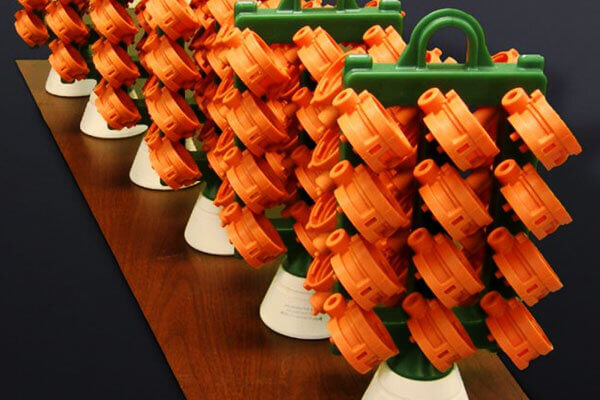
Case 1 — Distortion control for aero-engine turbine-blade wax patterns
Defect manifestation
Wax patterns for superalloy turbine blades exhibited significant post-demold warpage.
Critical bores lost coaxiality and other datums moved outside tolerance, producing low shell-preparation yield and an overall pattern qualification rate that had stalled below 60%.
The quality inspector found that the deformation was irregular, and the direction and degree of deformation were inconsistent between different batches and different molds.
Investigation and root-cause analysis
A structured on-site investigation eliminated initial suspects such as gross mold geometry or wax formulation errors. Direct observation and data review identified two operative contributors:
- Improper cooling practice and handling. Operators were removing patterns by hand immediately after demolding and placing them into a cold water tank at ~12 °C, creating severe external-to-internal temperature gradients.
- High section-thickness contrast. The blades combined a very thick root (~5.0 mm) with a thin tip (~0.8 mm).
During rapid forced cooling this produced non-uniform solidification and internal residual stress that could not relax uniformly, causing unpredictable, batch-to-batch warpage.
The root cause was therefore a combination of thermal shock (cooling protocol) and lack of physical constraint during stress relaxation.
Corrective engineering measures
A two-pronged mitigation strategy was designed and implemented:
- Controlled cooling: discontinue cold-water quenching. Replace with a constant-temperature cooling bath maintained at 18 °C,
and increase cooling soak time from 15 minutes → 45 minutes to moderate thermal gradients and allow stress relaxation. - Physical datum support: manufacture precision metal support pins sized to Ф10.80 −0.1 mm to fit the pattern bores (nominal hole Ф10.5 mm).
Immediately after molding, insert these pins and cool the pattern and supports together so the pins act as rigid restraints preserving bore geometry during shrinkage.
Verification and results
Production data collected over three consecutive months after implementation showed dramatic improvement:
- Hole coaxiality qualification improved from ~60% → 98.5%.
- Rework and scrap costs attributable to distortion fell by ~87%.
Key lesson
When geometry produces large local thermal or section-thickness gradients, process adjustments alone are often insufficient.
Combining controlled thermal ramps with deterministic physical constraints (supports, pins) produces the most reliable outcome for datum retention in complex, slender geometries.
Case 2 — Elimination of shrinkage cavities and dimensional shortfall in valve-body wax patterns
Defect manifestation
Valve-body wax patterns repeatedly developed surface sinks in an 8 mm thick region and the as-produced overall dimension was undersized by up to ±0.15 mm, exceeding the design tolerance of ±0.05 mm.
These defects prevented successful assembly and produced frequent customer rejects.
Investigation and root-cause analysis
A fishbone (Ishikawa) analysis across the six quality dimensions (Man, Machine, Material, Method, Environment, Measurement) isolated the dominant contributors as Method and Machine:
- Process drift: documented setting called for 0.4 MPa injection pressure and 20 s hold time, but operators had shortened hold time in practice — sometimes to 10 s — to increase throughput.
- Material shrinkage mismatch: the wax recipe contained ~18% stearic acid, producing a measured linear shrinkage of ~1.4%, while the mold compensation had been designed for 1.2%.
- Mold design deficiency: no local chills (cold wax blocks) were included in the thick region, so feeding during solidification was inadequate.
Root cause: insufficient holding/feeding to compensate the actual shrinkage behavior of the wax, compounded by incorrect mold compensation design.
Corrective engineering measures
A three-step remediation plan was executed:
- Process parameter correction: restore and extend hold to 50 s and raise injection pressure to 0.55 MPa to improve feeding into thick zones.
- Mold modification: install three cold-wax blocks (same composition as the main wax) in the thick cavity as intentional chills to promote sequential, directional solidification and to act as local feeders.
- Design compensation: recalculate and correct the cavity shrinkage compensation,
moving from 1.2% → 1.4% globally and adding zonal compensation (an extra +0.1% in the thick area) based on thermal-solidification simulation and trial casting.
Verification and results
After implementation:
- Surface shrinkage cavities were eliminated in production samples.
- Dimensional qualification rose from 75% → 99.2%.
Key lesson
Shrinkage control requires co-optimization of material, mold design and runtime discipline.
Without aligning the actual linear shrinkage behavior of the wax with mold compensation and ensuring sufficient pack/hold, changing a single variable (e.g., hold time) is unlikely to produce a stable fix.
Cross-case experience summary — reusable insights
From these two cases, several generalizable principles and operational rules emerge:
- Use structured root-cause methods. Tools such as fishbone diagrams and direct observation narrow the search quickly and expose the interplay between design and process variables.
- Favor deterministic mechanical constraints for geometry control.
For features that define assembly datums (holes, bosses, bores), engineered supports or chilled inserts are often the most reliable way to preserve dimensional integrity. - Measure the material, then design the mold to match. Empirically determine wax linear shrinkage under production conditions; apply zonal compensation and validate with CAE and trial casts rather than relying on nominal values.
- Enforce process discipline. SOPs and automated parameter locks (PLC/MES) prevent throughput-driven shortcuts (e.g., shortening hold time) that undermine quality.
- Adopt a closed-loop verification protocol. Quantify outcomes (yield, Cpk, defect counts) before and after CAPA; codify successful fixes into mold files, SOPs and operator training to prevent recurrence.
- Address both immediate containment and permanent fixes. In emergencies, temporarily adjust parameters to contain defects, but follow with engineering changes to mold or material to eliminate root causes.
5. Conclusion
Investment-casting success is grounded in anticipating physics rather than reacting to failures.
A systematic program—linking material stewardship, controlled equipment, robust mold design, disciplined methods, environmental control, and rigorous measurement—converts intermittent fixes into sustained capability.
Two practical cases demonstrate that paired solutions (process + tooling or process + physical constraint) consistently deliver step-function performance improvements.
Organizations that codify the CAPA logic and lock it into PLCs, SOPs, and MES traceability will shift from firefighting to capability building and reliably supply parts that meet aerospace and high-precision industry requirements.