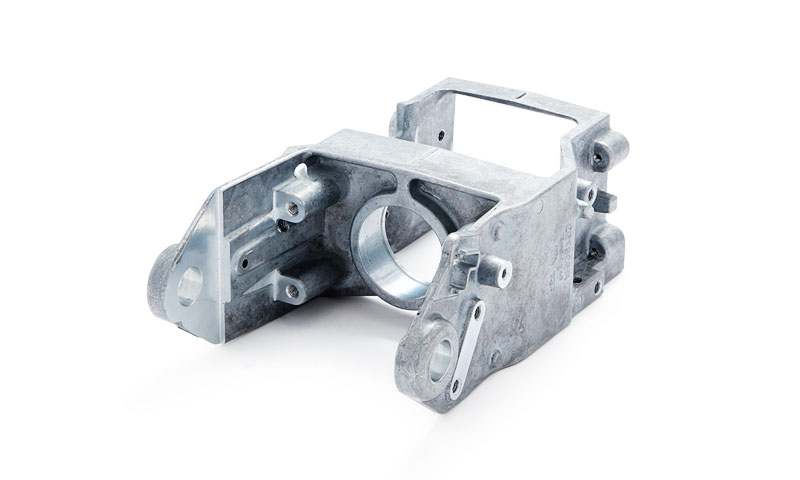
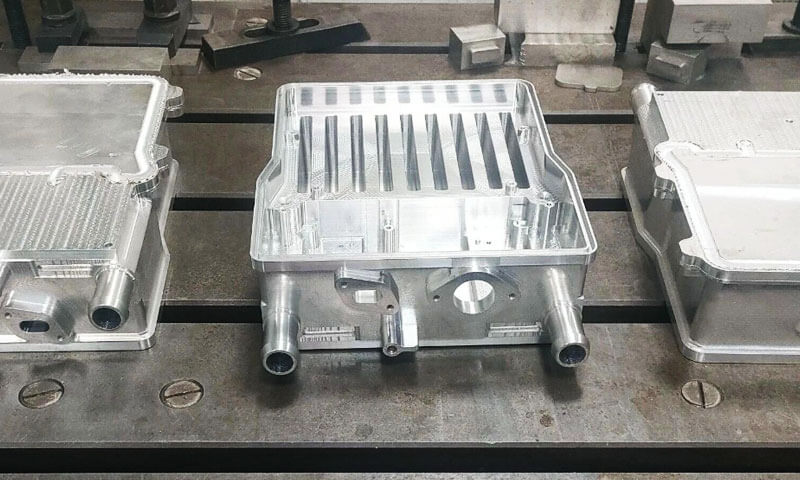
Poroznost skupljanja jedan je od najozbiljnijih unutarnjih nedostataka koji utječu na nepropusnost i strukturnu pouzdanost aluminij tlačno lijevana kućišta.
Osobito je problematično u elektroničkim upravljačkim kućištima, hidrauličke upravljačke jedinice, Kućišta za motore, i druge komponente koje sadrže unutarnje kanale za ulje ili vodu, navojne montažne točke, i precizno obrađene brtvene površine.
Za razliku od očitih površinskih nedostataka, poroznost stezanja često ostaje skrivena ispod površine odljevka.
Nakon podrezivanja i vizualnog pregleda kućište može izgledati zvučno, ipak pasti na testu propuštanja zraka ili tlaku nakon što se unutarnje pore povežu ili strojna obrada izloži šupljine ispod površine.
Za kasting inženjeri, izazov nije jednostavno smanjiti poroznost u cijelom lijevanju.
Treba utvrditi je li kvar povezan s plinom, povezane sa skupljanjem, ili kombinacija oboje, zatim nanesite ispravnu otopinu na mjesto gdje se stvara kvar.
1. Zašto je poroznost zbog skupljanja ozbiljan problem kod tlačno lijevanih kućišta
Poroznost skupljanja je unutarnji diskontinuitet nastao kada tekući aluminij ne može adekvatno kompenzirati kontrakciju volumena tijekom skrućivanja.
U lijevanju visokog pritiska, često se pojavljuje u debelim dijelovima, spojevi između rebara i izbočina, duboke jezgre, i područja koja se skrućuju kasnije od okolnog metala.
U praksi, pojam gas-shrinkage poroznost također se koristi kada se zarobljavanje plina i skrućivanje skupljaju zajedno.
Ovi nedostaci mogu izgledati kao zaobljene pore, nepravilne šupljine, ili međusobno povezane spužvaste strukture. Njihova morfologija i mjesto daju važne tragove za određivanje stvarnog uzroka.
Za elektronička kontrolna kućišta, posljedice općenito spadaju u tri kategorije.
Propuštanje i nepropusnost zraka
Mnoga elektronička upravljačka kućišta sadrže unutarnje visokotlačne kanale za ulje, kanali za rashladnu vodu, ili zapečaćene šupljine.
Ako se međusobno povezane pore protežu kroz zid ili povezuju unutarnji prolaz s vanjskim, tekućina ili komprimirani zrak mogu proći kroz odljevak.
To može uzrokovati križno curenje između susjednih kanala za ulje ili vodu, vanjsko curenje, ili kvar tijekom ispitivanja nepropusnosti zraka i hidrostatičkog ispitivanja.
Za kućišta dizajnirana da zadovolje zahtjev za zaštitu od prodora IP67, curenje odljevka može spriječiti da gotov sklop postigne potrebnu razinu zaštite.
Važno je razlikovati između zrakonepropusnosti lijevanja i konačne IP ocjene: IP67 odnosi se na dovršeno kućište pod navedenim uvjetima ispitivanja.
Ipak, unutarnja poroznost lijevanja može ugroziti sustav brtvljenja i otežati usklađenost.
Smanjena čvrstoća na rupama s navojem i montažnim izbočinama
Rupe s navojem, montažni stupovi, a izbočine za pričvršćivanje često su lokalno deblje od okolnih zidova kućišta. Ove značajke mogu postati vruće točke tijekom skrućivanja.
Ako se šupljine zbog stezanja razviju blizu dna rupe s navojem ili unutar montažne izbočine, naknadno lupanje može otkriti poroznost ili ostaviti nedovoljno čvrstog materijala oko niti.
Rezultat može biti smanjeni zahvat niti, neadekvatan moment zatezanja, otpuštanje vijaka, ili kvar pričvršćivanja.
Poroznost izložena tijekom strojne obrade
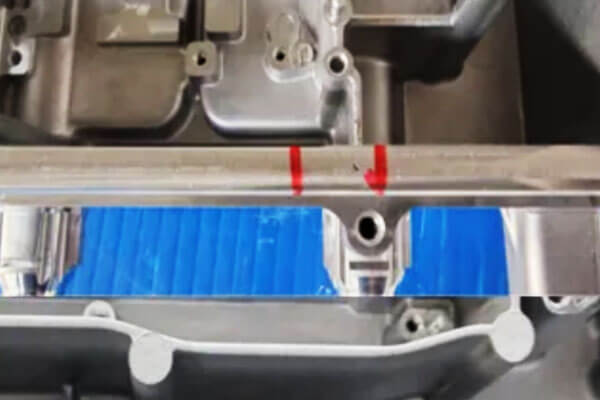
Tlačno lijevano kućište može proći vizualni pregled iako sadrži podpovršinsku poroznost.
Kada CNC obrada uklanja vanjsku opnu kako bi stvorila brtvenu površinu, bearing seat, priključak s navojem, ili precizno sučelje, prethodno zatvorene pore mogu postati izložene.
To može proizvesti vidljive rupice, putevi curenja, Loša površinska završna obrada, i odbijanje dimenzija ili izgleda.
Za komponente sa strojno obrađenim brtvenim površinama, kontrola poroznosti stoga mora uzeti u obzir dopuštenje za strojnu obradu i dubinu gotove površine—ne samo stanje lijevanog.
2. Osnovni uzroci poroznosti skupljanja plinom kod tlačnog lijevanja
Poroznost stezanja uslijed plina u kućištima od tlačnog lijeva općenito se dijeli na dva primarna mehanizma: plinom povezana poroznost uzrokovana zarobljenim plinom, i poroznost povezana sa skupljanjem uzrokovana nedovoljnim napajanjem tijekom skrućivanja.
Oba mehanizma mogu se pojaviti u istoj regiji, otežavaju dijagnozu.
Poroznost povezana s plinom: Zarobljeni zrak i procesni plinovi
Plinska poroznost nastaje kada se zrak ili procesni plinovi zarobe u rastaljenom aluminiju i ne mogu izaći prije skrućivanja.
Glavni izvori su turbulencije punjenja, neadekvatna ventilacija plijesni, i plin koji stvaraju sredstva za odvajanje ili drugi procesni materijali.
Turbulentno punjenje i loš dizajn zatvarača
Ako ingate položaj, površina presjeka, ili je geometrija klizača loše projektirana, rastaljeni aluminij može ući u šupljinu kao mlaz velike brzine.
Nestabilan protok, metal splashing, and premature flow-front collision can fold air into the melt.
Once enclosed by molten metal, this air may remain as internal gas pores.
The problem is especially common in thin-walled housings with complex ribs, multiple bosses, i duge staze protoka, where the metal front must change direction several times before reaching the end of the cavity.
Nedovoljna ventilacija plijesni
Tijekom punjenja, the air originally present in the cavity must be evacuated through parting-line vents, overflow areas, vent inserts, and other designated exhaust paths.
If these passages are undersized, incorrectly positioned, or blocked by aluminum buildup and release-agent deposits, cavity gas cannot escape quickly enough.
The resulting back pressure can cause incomplete filling, ugradnju na plin, and porosity near the last-filled regions.
Ejector pins and core-pin clearances can also provide secondary venting paths, ali ih ne treba tretirati kao zamjenu za ispravno projektiran ventilacijski sustav.
Stvaranje plina iz sredstava za odvajanje i maziva klipa
Pretjerano nanošenje prskanjem, nedovoljno puhanje zraka, a nepravilno podmazivanje klipa može uvesti dodatni plin u šupljinu matrice ili rastaljeni metal.
Voda i organske komponente u sredstvima za odvajanje isparavaju ili se razgrađuju na visokim temperaturama.
Ako površina matrice nije dovoljno suha prije sljedećeg pucanja, ti se plinovi mogu zarobiti tijekom punjenja. Pretjerano nanošenje maziva u čahuru može stvoriti sličan problem.
Ispravan pristup je kontrolirati količinu prskanja, pokrivenost, vrijeme sušenja, i doziranje maziva, a ne jednostavno povećanje kapaciteta odzračivanja kako bi se kompenziralo prekomjerno stvaranje plina.
Poroznost povezana sa skupljanjem: Nedovoljno hranjenje tijekom skrućivanja
Aluminijske legure skupljaju se dok se skrućuju. U postupku tlačnog lijevanja, pritisak koji se prenosi kroz vodilicu i vrata može kompenzirati dio ove kontrakcije, pod uvjetom da put napajanja ostane otvoren i tlak dosegne kritično područje prije nego se metal skrutne.
Kada lokalna sekcija ostane tekuća nakon što su okolne regije očvrsnule, postaje vruća točka.
Ako preostali tekući metal ne može hraniti ovo područje, razvijaju se šupljine skupljanja ili disperzna mikroporoznost.
Nagli prijelazi debljine stijenke i vruće točke
Kućišta za elektroničko upravljanje često sadrže navoje za ugradnju, visokotlačne spojnice, duboke jezgre, i ojačani montažni stupovi.
Neke od ovih značajki mogu biti tri do četiri puta deblje od susjednih tankih stijenki.
Najprije se skruću tanki dijelovi, dok debeli dijelovi zadržavaju toplinu i kasnije se skrućuju.
Nakon što se spojne metalne staze zalede, the remaining liquid in the thick section cannot receive sufficient additional metal to compensate for solidification shrinkage.
This produces sponge-like shrinkage porosity or concentrated shrinkage cavities, particularly at boss roots, križanja rebara, deep-hole bottoms, and other heavy sections.
Nekontrolirana toplinska ravnoteža kalupa
A local area of the die that remains excessively hot—such as a deep cavity without adequate cooling—will prolong the solidification time.
The resulting temperature imbalance can increase the risk of localized shrinkage and coarse, non-uniform microstructures.
The issue is not simply that the die temperature is high. It is that the temperature distribution does not match the required solidification sequence.
A housing may have an acceptable average die temperature while still containing one or two critical hot spots.
Gubitak prijenosa tlaka pojačanja
High-pressure die casting relies on intensification pressure to compensate for shrinkage while the gate and internal feeding paths remain sufficiently liquid.
If the ingate or runner freezes too early, the intensification pressure cannot be effectively transmitted to remote thick sections.
Even when the machine displays the target intensification pressure, the actual pressure acting on the critical region may be insufficient.
This is why machine pressure settings alone cannot confirm effective feeding. Gate thickness, položaj vrata, solidification timing, and local thermal conditions must also be evaluated.
3. Sustavna rješenja za poroznost skupljanja i curenje
Different porosity locations require different corrective measures. A process adjustment that improves one region may have little effect on another.
For die-cast electronic control housings, an effective strategy is to use conventional process optimization for general areas, localized squeeze technology for heavy-section shrinkage, and vacuum-assisted filling and improved venting for gas-prone regions.
The following solutions address the main defect locations encountered in production.
Tehnologija lokalnog stiskanja za skupljanje debljih presjeka
When shrinkage porosity repeatedly appears in a localized hot spot, conventional adjustments to injection speed and intensification pressure may not be sufficient.
This is particularly true for deep-hole bottoms, rebra koja se križaju, thick mounting bosses, and other areas where the feeding path freezes prematurely.
Local squeeze technology is an effective solution for these difficult locations.
Princip rada
A squeeze pin is installed in the die at the position corresponding to the shrinkage-prone region.
After the cavity has been filled, but while the local aluminum remains in a suitable semi-solid state, a hydraulic cylinder drives the pin forward.
The pin applies localized pressure to the remaining liquid or semi-solid metal, forcing it toward the shrinkage-prone area and compensating for solidification contraction.
Unlike general intensification pressure, which must be transmitted through the runner and gate, local squeezing acts directly on the critical section.
This makes it particularly useful when the normal feeding path is too long, too narrow, or already partially solidified.
Ključni procesni parametri
The effectiveness of local squeezing depends on the relationship between pin position, squeeze timing, moždani udar, and applied force.
These parameters must be established through mold trials rather than copied directly from another component.
| Parametar | Inženjerski razmatranja |
| Squeeze-pin position | Place the pin close to the predicted hot spot, with sufficient access to the remaining liquid or semi-solid metal |
| Squeeze stroke | Calculate according to the local shrinkage volume and available feeding space; the reference stroke may be estimated at approximately 5–10% of the hot-spot diameter, but must be validated through trials |
| Squeeze delay | One of the most critical parameters; it must allow the surrounding metal to develop sufficient strength while the hot spot remains capable of being fed |
| Squeeze force | Determine according to the projected squeeze area, local metal condition, pin geometry, and hydraulic system capacity |
In one production example, an electronic control housing developed severe shrinkage porosity at the bottom of a lower-core blind hole because of excessive local wall thickness.
X-ray inspection revealed a concentrated shrinkage defect, and the airtightness pass rate was below 50%.
After a local squeeze structure was added at the corresponding hot spot and the squeeze timing and stroke were optimized, follow-up X-ray inspection showed that the shrinkage defect had been eliminated in the inspected area. The airtightness pass rate increased to above 98%.
Određivanje vremena zahtijeva posebnu pozornost.
If the squeeze pin advances too early, the aluminum is still too fluid and the pin may simply displace the metal without generating effective feeding pressure.
If it advances too late, a solidified shell may have formed around the hot spot, preventing the pin from moving the remaining metal into the shrinkage cavity.
A production reference in the original case was a squeeze delay of approximately 1.5–2 seconds after cavity filling. This is not a universal setting.
The actual delay must be established from the machine’s position or pressure signals, the local solidification behavior, and the response observed during mold trials.
The squeeze-pressure requirement must also be calculated carefully.
A cited process reference used a squeeze-pressure level approximately three to five times the conventional casting-pressure reference—for example, 240–400 MPa when the cited casting pressure was 80 MPA.
Međutim, engineers must distinguish hydraulic pressure, machine intensification pressure, and pressure acting on the squeeze-pin face.
These values are not directly interchangeable. The required force, cylinder area, pin area, and equipment rating must be checked before adopting any setting.
Kapiranje, Odzračivanje, i Vakuumska pomoć za regije sklone plinu
Gas porosity commonly occurs near the last-filled regions of a housing, especially around remote cavities, uski prolazi, and areas where the metal flow changes direction.
In these locations, improving the exhaust path is often more effective than simply increasing injection pressure.
Dodajte prijenosne mostove kako biste poboljšali protok metala
For long housings or structures with difficult-to-fill remote sections, a transfer bridge can be added near the end-of-fill window or in an open region of the die.
The bridge provides a more favorable route for molten aluminum to move into the target area. It can help reduce flow stagnation, premature flow-front collision, and unstable filling.
Its position and cross-section must be designed to maintain a smooth flow path without creating additional turbulence or an unfavorable solidification sequence.
Poboljšajte ventilaciju kroz igle za izbacivanje i ventilacijske umetke u obliku rukava
Ordinary ejector pins can provide limited venting through their clearance with the die. Međutim, where gas repeatedly accumulates, a dedicated venting structure may be more effective.
At suitable locations, conventional ejector pins can be replaced with sleeve-type vent pins or specially designed vent inserts.
The small clearance between the pin and sleeve forms an exhaust passage through which trapped cavity gas can escape.
A clearance of approximately 0.03–0,05 mm is a process reference for this type of venting arrangement.
The actual clearance depends on the alloy, temperatura matrice, flash sensitivity, and insert design.
It must be sufficient for gas evacuation without allowing excessive aluminum penetration or creating difficult-to-remove flash.
Vent passages should also be inspected and cleaned regularly. Aluminum deposits and release-agent residues can gradually reduce their effective cross-section and undermine venting performance.
Primijenite lijevanje pod visokim vakuumom
Conventional die casting relies mainly on passive venting through the parting line, overflow areas, i ventilacijskih umetaka.
In complex electronic housings with strict airtightness requirements, this may not be sufficient.
Vacuum-assisted die casting removes part of the air from the cavity before molten aluminum enters.
By reducing the amount of gas present during filling, the process lowers cavity back pressure and reduces the risk of air entrapment.
A practical vacuum reference for high-vacuum die casting is approximately −0.06 to −0.08 MPa gauge pressure, corresponding to an absolute pressure of roughly 20–40 kPa, depending on local atmospheric pressure and the measurement system.
The actual vacuum level at the cavity should be verified rather than relying only on the vacuum pump’s nominal capacity.
Valve response, performanse zapečaćenja, vacuum-line resistance, and the timing of vacuum shutoff all affect the result.
For housings requiring reliable airtightness, vacuum assistance should be considered together with optimized gating, overflow design, and venting.
Vacuum reduces gas-related porosity, but it does not replace the feeding required to prevent solidification shrinkage.
Parametri ubrizgavanja i toplinska ravnoteža kalupa
Even with a well-designed gating system, unstable injection parameters or an uneven die-temperature field can cause recurring porosity.
Process control should therefore focus on both the metal-filling sequence and the solidification sequence.
Optimizirajte poziciju za brzu promjenu udarca
The transition from slow shot to fast shot determines when the molten aluminum accelerates toward the ingate and enters the cavity at high speed.
If the changeover occurs too early, the metal may accelerate before reaching the intended position, increasing the risk of unstable flow and aluminum buildup near the shot sleeve or ingate.
If it occurs too late, the metal may lose too much temperature before rapid filling begins, resulting in poor filling and increased porosity near the end of the cavity.
A useful initial trial reference is to set the fast-shot changeover point approximately 10–20 mm before the molten aluminum reaches the ingate.
This distance must be adjusted according to shot-sleeve diameter, brzina klipa, filling volume, machine response, and the actual metal-front position.
The correct setting should be confirmed through shot-profile analysis, short-shot trials, and defect inspection—not treated as a fixed value for every die-casting machine.
Kontrolirajte raspodjelu temperature kalupa
Thick-section hot spots need to release heat at a rate compatible with the surrounding thin sections.
If a deep cavity, boss root, or rib intersection remains too hot, local solidification is delayed and shrinkage porosity becomes more likely.
Point cooling channels or high-pressure spot cooling can be installed near these critical areas to remove heat more efficiently.
Cooling should be targeted: excessive cooling can cause premature solidification, Hladno se zatvara, soldering-related issues, or an unfavorable filling pattern.
For some aluminum die-casting processes, a mold-temperature reference of 180–220°C koristi se, with temperature variation controlled within approximately ±20°C.
These values are starting points rather than universal requirements.
The appropriate range depends on alloy, geometrija lijevanja, vrijeme ciklusa, die material, and the balance between filling and solidification.
Temperature monitoring should focus on the critical regions of the die, not only the average mold temperature.
A stable overall reading can conceal a local hot spot that repeatedly produces shrinkage defects.
4. Poboljšanja dizajna lijevanja za sprječavanje poroznosti
Process optimization can reduce porosity, but some defects originate from the component geometry itself.
If the housing contains excessive wall-thickness variation or poorly designed structural transitions, the die-casting process will have difficulty achieving uniform filling and solidification.
Design improvements should therefore be considered early, preferably before the die is manufactured.
Glatki prijelazi debljine zida
Abrupt transitions between thick and thin sections create localized hot spots and increase the risk of shrinkage porosity.
Where a thick boss connects directly to a thin housing wall, the surrounding metal may solidify first and isolate the remaining liquid metal.
A more gradual wall-thickness transition helps reduce this temperature imbalance. Larger transition radii should be used where the geometry permits, particularly around mounting bosses, connector bases, i ojačani dijelovi.
Fillets and rounded transitions also reduce local stress concentration and improve metal flow around geometric junctions.
Međutim, increasing the radius alone does not eliminate a hot spot if excessive metal volume remains concentrated in the same region. Wall thickness should be reviewed together with the overall feeding and cooling strategy.
Optimizirajte geometriju rebra za pojačanje
Reinforcing ribs are necessary to improve housing stiffness, but excessive rib thickness and poorly arranged intersections can create local metal accumulation.
For long cylindrical or box-shaped housings, a rationalized grid-like rib arrangement can provide structural support while distributing material more evenly.
Debljina rebra, razmak, and connection geometry should be designed to avoid large concentrations of metal at intersections.
Gdje je to moguće, use thinner ribs with smooth connections rather than oversized solid sections. This reduces the risk of isolated hot spots and helps maintain more consistent solidification.
5. CAE simulacija i provjera kvarova
A reliable porosity-control strategy should combine engineering simulation with physical inspection.
Visual inspection and pressure testing can identify rejected parts, but they do not always explain why a defect formed or where the process needs to be corrected.
CAE Simulacija toka kalupa
Koristiti FLOW-3D or MAGMASOFT to simulate the existing die and evaluate the filling and solidification behavior.
Focus particularly on the solidification field and particle tracking to identify potential gas-entrapment areas and shrinkage-prone regions.
If a local area remains liquid while the surrounding metal has already solidified, it indicates a potential isolated hot spot with insufficient feeding.
Additional localized cooling or a squeeze pin should be considered to eliminate the risk of shrinkage porosity.
This step is often overlooked when production schedules are tight. Međutim, simulation can identify potential defects before trial casting begins, helping prevent problems such as the blind-hole shrinkage encountered in the electronic control housing case.
Uspostavite standarde rendgenske inspekcije
Establish a clear X-ray inspection plan for critical casting locations, particularly thick sections, blind-hole bottoms, and other areas prone to shrinkage porosity.
A practical sampling reference is to inspect the first article from each production batch, followed by two samples every two hours.
Shrinkage severity can be evaluated with reference to ASTM E505, with acceptance criteria defined according to the applicable customer specifications and quality requirements.
Standardizirajte parametre lokalnog stiska
For each local squeeze pin, record the squeeze delay and squeeze stroke in the die-casting machine parameter sheet.
These values should be treated as critical process parameters and monitored through Statistička kontrola procesa (Spc).
Consistent monitoring helps prevent unauthorized parameter changes and ensures that the local squeezing process remains stable throughout production.
Any significant deviation should be investigated promptly to avoid recurring shrinkage defects.
6. Zaključak
Shrinkage porosity leakage in die-cast housings cannot be reliably solved by simply increasing injection pressure or adjusting one machine parameter.
The defect is closely related to component geometry, molten-metal flow, cavity venting, local solidification, and the transmission of intensification pressure.
For electronic control housings with strict airtightness requirements, an effective engineering approach should combine optimized gating and venting, high-vacuum die casting, stable injection parameters, and a balanced mold-temperature field.
Where conventional process adjustments cannot eliminate localized shrinkage, local squeeze technology offers a targeted solution for critical thick sections.
što je najvažnije, every corrective measure should be verified through X-ray inspection and airtightness testing.
By connecting simulation, dizajn kalupa, praćenje procesa, and production inspection, manufacturers can reduce internal porosity, improve casting consistency, and achieve more reliable sealing performance in aluminum die-cast housings.
Česta pitanja
Što je poroznost skupljanja plina u tlačno lijevanim kontrolnim kućištima?
It is an internal defect that combines the characteristics of gas porosity and shrinkage porosity.
It typically occurs at abrupt wall thickness changes or at the fill end far from the gate, and it causes hermeticity failure, structural weakness, and machined surface rejection.
Zašto je poroznost zbog skupljanja plina toliko štetna za elektronička kontrolna kućišta?
Because it causes pressure leakage through internal oil or water passages, fails the IP67 protection rating, weakens threaded bosses, and becomes visible after machining.
All three consequences lead to scrap or field failure.
Što je tehnologija lokalnog stiskanja?
It is a die casting technique in which a squeeze pin at a hot spot is driven forward by a hydraulic cylinder after filling, while the aluminum is still semi-solid, forcing unsolidified metal into the shrinkage cavity to feed it.
Što je igla za ventilaciju rukava i kako radi?
It is an ejector pin converted to a sleeve configuration. The clearance between the pin and the sleeve—0.03–0,05 mm—acts as a venting channel to evacuate gas from locations that are difficult to vent conventionally.