


1. Introduction
Forged wheels are high-performance alloy wheels manufactured by shaping heated metal billets under extreme pressure.
Unlike cast wheels, which are made by pouring molten metal into molds, or flow-formed wheels, which combine casting and mechanical deformation, forging creates a denser, stronger microstructure.
Originating in motorsport, forged wheels have evolved into premium aftermarket and OEM solutions thanks to their advantages in weight, strength, safety, and styling.
2. What Are Forged Wheels?
Forged wheels are premium automotive wheels manufactured through a forging process, where a solid billet of metal—usually aluminum or magnesium—is compressed under extreme pressure (often 8,000 to 10,000 tons) into the desired wheel shape.
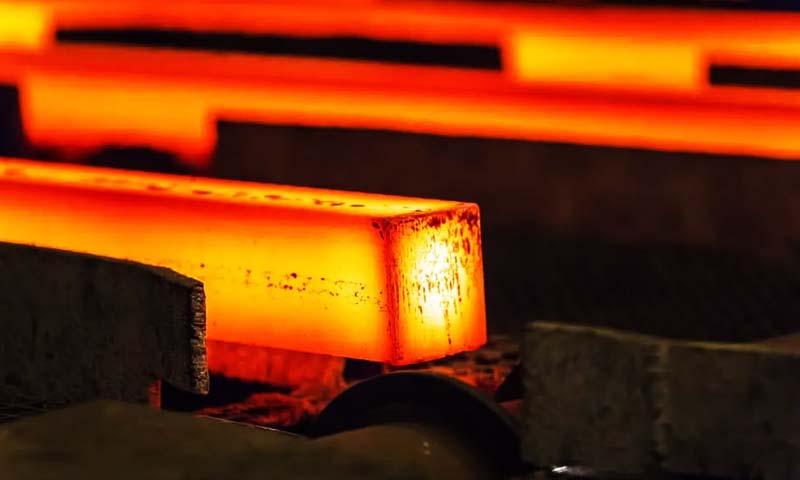
This process is performed while the metal is heated but not melted, aligning the internal grain structure and creating a denser, more uniform material.
The result is a wheel that offers superior strength, reduced weight, and enhanced structural integrity compared to cast or flow-formed wheels.
Forged wheels are widely used in motorsports, high-performance vehicles, luxury cars, and increasingly in electric vehicles due to their strength-to-weight benefits.

Common Alloys Used in Forged Wheels:
| Alloy | Typical Use | Key Properties |
| 6061-T6 | Performance street wheels | Excellent corrosion resistance, tensile strength ~310 MPa |
| 7075-T6 | Racing & aerospace applications | Very high strength (~550 MPa), less corrosion resistant |
| AZ80/AZ91 Magnesium | Motorsport wheels | ~33% lighter than aluminum, but requires coating due to corrosion sensitivity |
Microstructural Benefits of Forging
The forging process fundamentally enhances the metallurgical quality of the wheel:
- Grain Alignment (Directional Flow): Grains follow the contour of the wheel, especially the spokes and barrel, enhancing load-bearing capability and crack resistance.
- Grain Refinement: Fine grains improve toughness and resistance to fatigue and stress corrosion cracking.
- Low Porosity: Forged wheels exhibit near-zero porosity, unlike cast wheels that may develop air pockets during solidification. This translates into more predictable and uniform performance under load.
- Isotropic Strength: Forging reduces mechanical anisotropy, meaning the wheel maintains strength consistently in all directions.
3. Forging Processes
The manufacturing of forged wheels is a highly engineered process that transforms raw metal billets into high-performance wheel structures through extreme pressure and precise control of temperature, deformation, and finishing.

Open-Die and Closed-Die Forging Techniques
Forged wheels begin with a billet—usually aluminum or magnesium—which is preheated and then shaped using either open-die or closed-die forging.
In open-die forging, the metal is pressed between flat or slightly contoured dies that do not completely enclose the billet.
This method allows for free movement of the material and is typically used for pre-forming or large, non-standard wheel blanks. While versatile, it requires more machining after forging to reach final dimensions.
Closed-die forging, also known as impression-die forging, is more precise. Here, the metal is deformed inside a die set that closely mirrors the final wheel shape.
As the billet fills the cavity under extreme pressure, it takes on its near-final geometry.
This method allows for greater consistency, tighter tolerances, and better control over material flow—especially in critical areas like the spokes and rim.
Isothermal and Near-Net-Shape Forging
Advanced techniques such as isothermal forging maintain the die at a temperature close to that of the billet.
This results in uniform deformation, reduced residual stress, and a cleaner surface finish.
It’s especially useful when working with complex designs or more sensitive materials like magnesium alloys.
Near-net-shape forging is another innovation that minimizes the material and energy required to finish the wheel.
By shaping the wheel blank as close as possible to its final dimensions during forging, the need for excessive machining is reduced.
This not only shortens the production timeline but also preserves the forged material’s integrity.
Heat Treatment for Strength and Stability
After forging, wheels undergo heat treatment to further enhance their mechanical properties. This usually involves a multi-step process:
- Solution heat treatment, where the forged wheel is heated to a high temperature to dissolve alloying elements uniformly into the matrix.
- Quenching, a rapid cooling step that locks the alloying elements in place.
- Aging (or precipitation hardening), where the wheel is reheated at a lower temperature to allow fine precipitates to form.
These precipitates improve strength, fatigue resistance, and hardness.
For example, aluminum 6061 forged wheels typically undergo this T6 tempering process, significantly increasing yield and tensile strength while maintaining good ductility.
4. Finishing, Customization & Aesthetics
While the strength and performance of forged wheels are key drivers in engineering and motorsport applications, their visual appeal and surface finish are just as important—especially in luxury, aftermarket, and premium vehicle segments.
Finishing and customization elevate forged wheels from purely functional components to distinctive design elements that reflect brand identity, performance heritage, and personal taste.

CNC Machining for Precision and Style
After forging and heat treatment, wheels undergo multi-axis CNC machining to define intricate design features.
This process sculpts the spoke faces, rim flanges, and hub details with exacting precision, ensuring both structural symmetry and aesthetic appeal.
Complex geometries, deep concave profiles, and weight-reduction pockets are all possible due to the rigidity and homogeneity of the forged blank.
The precision of CNC machining not only refines visual lines but also ensures proper fitment, balance, and performance under high-speed conditions.
Designers can tailor spoke curvature, window shapes, and engraving to match either OEM specifications or aftermarket preferences.
Surface Treatments and Coatings
Surface finishing enhances corrosion resistance, durability, and visual appearance. A range of treatments are available, depending on the intended application and styling goals:

- Anodizing: An electrochemical process that forms a corrosion-resistant oxide layer, available in a variety of colors. Ideal for high-performance wheels where weight and heat resistance are critical.
- Powder Coating: A popular choice for both OEM and custom applications.
Powder-coated finishes offer strong durability, UV resistance, and a wide spectrum of colors—from matte blacks to candy reds and metallic bronzes. - Polishing and Brushing: These mechanical finishes enhance the metallic sheen of aluminum alloys.
Brushed surfaces offer a subtle, industrial look, while mirror-polished wheels are ideal for show or high-end luxury applications. - PVD (Physical Vapor Deposition): Provides a chrome-like finish without the drawbacks of traditional chrome plating.
It offers excellent corrosion resistance and is often used in luxury and electric vehicles.
Final coatings—such as clear-coat lacquers—are often applied to protect decorative finishes and maintain long-term appearance under road conditions.
Customization: One-Piece, Two-Piece, and Three-Piece Designs
Forged wheels come in various construction formats:
- Monoblock (One-Piece): The most structurally efficient design, forged from a single billet.
It offers high strength, reduced weight, and minimal maintenance—ideal for racing and performance road use. - Two-Piece Wheels: Combine a forged center with a separate rim (barrel), allowing for greater customization in offset and width.
They are often bolted together and sealed, offering design flexibility without significant weight penalties. - Three-Piece Wheels: Feature separate rim halves and a forged center.
They are highly modular and allow for color contrasts, lip depths, and repairability—popular in motorsports and the premium aftermarket.
OEM vs. Aftermarket Styling Trends
- OEM Forged Wheels: Manufacturers like BMW M, Mercedes-AMG, Xiaomi, and Porsche offer forged wheel options for performance models.
These designs are engineered for specific models, focusing on optimized aerodynamics, strength, and brand styling cues. - Aftermarket Trends: The custom wheel scene pushes the limits of design with ultra-deep concave profiles, floating spokes, and multi-tone finishes.
Trends vary by region—North America often favors bold and aggressive looks, while Europe leans toward understated elegance.
5. Mechanical Properties & Performance of Forged Wheels
Forged wheels are not just a design upgrade—they are a mechanical engineering solution to optimize strength, reduce mass, and enhance long-term durability under demanding conditions.
Strength-to-Weight Advantage
Forged wheels offer a significantly higher strength-to-weight ratio than cast wheels.
The forging process aligns the grain structure along the wheel’s contours, producing a more continuous and defect-free metal matrix. This results in:
- Tensile Strength: Aluminum forged wheels made from 6061-T6 typically achieve tensile strengths of 290–320 MPa, while magnesium variants (e.g., AZ80A) can exceed 330 MPa.
- Yield Strength: Yield values for forged 6061-T6 alloys generally range from 240–280 MPa, making them highly resistant to permanent deformation under load.
- Weight Reduction: Forged wheels can be 20–30% lighter than equivalent cast wheels, depending on size and design.
For instance, a typical 19″ cast aluminum wheel might weigh 12.5 kg, while a forged equivalent could weigh as little as 9–10 kg.
This reduction in unsprung weight translates directly into better suspension response, quicker acceleration, improved fuel efficiency, and enhanced handling.
Fatigue Strength and Crack Resistance
Fatigue strength is critical for wheels subjected to repetitive stress cycles, such as during braking, cornering, or rough-road driving. Forged wheels excel in this area due to:
- Refined Grain Structure: Forging minimizes internal voids and porosity, leading to higher fatigue limits and slower crack initiation.
- Improved Crack Propagation Resistance: Once a crack starts (from impact or corrosion), forged materials are better at slowing its growth, reducing the risk of catastrophic failure.
Fatigue testing often shows forged wheels achieving 2–3× the fatigue life of their cast counterparts under identical loading conditions.
Stiffness and Torsional Rigidity
Another benefit of forging is higher stiffness and torsional rigidity, which improve vehicle dynamics:
- Cornering Feedback: Increased lateral stiffness maintains tire contact patch shape under load, improving steering feel and precision.
- Braking Stability: A stiffer wheel helps distribute braking forces more evenly, minimizing vibration and distortion.
Stiffness is especially important in high-performance applications, where predictable feedback and chassis control are mission-critical.
Impact Resistance and Load Ratings
Forged wheels offer superior impact resistance, particularly in urban environments where potholes or curbs can pose risks:
- The dense microstructure absorbs shock loads better than cast wheels.
- Forged wheels deform plastically before cracking, offering a safer failure mode.
Industry-standard impact and load tests (such as JWL/VIA and SAE J2530) consistently show forged wheels exceeding minimum requirements by 20–50%, depending on design and alloy.
Temperature Performance
Forged wheels maintain their properties across a wide temperature range:
- Aluminum forged wheels are stable up to ~150 °C in normal use and up to 200 °C for short durations (e.g., motorsport braking heat).
- Magnesium forged wheels offer excellent heat dissipation, critical for high-speed or track applications.
This thermal stability prevents warping, loss of strength, or dimensional distortion under heavy braking loads—an advantage for both race and high-performance street applications.
6. Applications of Forged Wheels
Forged wheels are not merely aesthetic upgrades—they serve a critical role across industries where performance, durability, and safety are paramount.
Thanks to their superior mechanical properties and lightweight design, forged wheels have found widespread application in motorsports, premium consumer vehicles, SUVs, and increasingly in the electric vehicle (EV) segment.
High-Performance and Racing Vehicles
Forged wheels are a staple in Formula 1, GT racing, rally, and endurance racing due to their unmatched strength-to-weight ratio. In these environments, every gram of unsprung weight matters. Forged wheels help:
- Improve acceleration and deceleration by reducing rotational inertia
- Enhance cornering grip and responsiveness by minimizing flex under high lateral G-forces
- Withstand severe impact loads from kerbs, jumps, or rough track surfaces
Leading motorsport teams opt for forged magnesium or forged 6061-T6 aluminum wheels, designed with precise tolerances to maintain performance under extreme thermal and mechanical loads.
Premium Street Cars and Supercars
Luxury and high-performance road vehicles—such as those produced by Porsche, Ferrari, BMW M, Mercedes-AMG, and Audi RS—increasingly come equipped with forged wheels either as standard or optional upgrades. They offer:
- Enhanced aesthetics with sculpted multi-piece or monoblock designs
- Weight savings of up to 30% compared to cast wheels
- Superior ride quality through improved suspension compliance
Owners of sports sedans and grand tourers also choose forged aftermarket wheels for performance upgrades and personalization.
SUVs and Off-Road Vehicles
Modern performance SUVs like the Lamborghini Urus, Range Rover SVR, Xiaomi YU7, and Tesla Model X Plaid benefit from forged wheels due to their:
- High load ratings to support heavier chassis
- Resistance to deformation under rugged or off-road conditions
- Better heat dissipation for large braking systems
For off-road enthusiasts, forged wheels offer reliability where durability and impact resistance are mission-critical.
Electric Vehicles (EVs)
EVs are a rapidly growing application segment for forged wheels. Automakers and aftermarket manufacturers are turning to forged solutions to address:
- Range optimization: Reducing unsprung mass can increase EV range by 2–5%, depending on usage and terrain
- Aerodynamic efficiency: Precision-forged wheels allow for integrated aero designs without sacrificing strength
- Battery protection: Forged wheels reduce impact transfer, protecting battery packs from road shock
Examples include forged wheels used on the Tesla Model S Plaid, Lucid Air, Xiaomi SU7, and various performance EV conversions.
Aerospace and Military Ground Vehicles (Niche Applications)
In select cases, forged wheels are used in aerospace ground equipment and military vehicles, where extreme reliability under load and environmental durability are critical.
The forging process ensures structural integrity even in harsh climates and over long service lives.
7. Forged vs. Cast vs. Flow‑Formed Wheels
Understanding the differences between forged, cast, and flow-formed wheels is essential for consumers, engineers, and automotive designers when selecting the ideal wheel type based on performance, budget, and intended use.

| Category | Forged Wheels | Flow-Formed Wheels | Cast Wheels |
| Manufacturing Process | High-pressure forging from billet; CNC machining | Cast preform + rotary forging of barrel | Molten metal poured into mold |
| Grain Structure | Directionally aligned, fine grain (highest strength) | Refined in barrel region only | Random grain, may contain porosity |
| Strength | ★★★★★ (Very High) | ★★★★☆ (High, barrel-focused) | ★★☆☆☆ (Moderate to Low) |
| Weight | ★★★★★ (Lightest) | ★★★★☆ (Lighter than cast) | ★★☆☆☆ (Heaviest) |
| Fatigue Resistance | Excellent | Good | Fair to Poor |
| Impact Resistance | Very High | Moderate to High | Lower, may crack under severe impact |
| Durability (Long-Term) | 8–15+ years in performance use | 5–10 years | 3–7 years depending on conditions |
| Customization | Maximum (design, finish, size options) | Moderate | Limited |
| Heat Dissipation | Excellent | Good | Fair |
| Corrosion Resistance | High with proper finishing | Good | Good |
| Machinability | High (CNC-friendly) | Moderate | Low to moderate |
| Repairability | Difficult but possible if damage is minimal | Limited | Generally not repairable |
| Cost | $$$$ – Highest (~$1,500–$4,000+/set) | $$$ – Mid-range (~$1,000–$2,000/set) | $$ – Budget (~$400–$1,200/set) |
| Production Volume | Low to mid | Mid to high | High (mass-produced) |
| Best Use Cases | Racing, luxury, EVs, off-road | Street performance, track day | Commuter cars, budget builds |
| Certifications Available | SAE, JWL, VIA, ISO 3006 | JWL, VIA | JWL, VIA |
8. Cost, Production Capacity & Market Trends
- Cost Breakdown: Material (~30%), forging (~30%), heat treatment (~15%), CNC machining and finishing (~25%).
- Typical unit cost: 19″ forged ~ $600–1,200 each vs. cast wheels ~ $150–350.
- Global production share: Forge makes ~10–15% of the wheel market but dominates performance segments.
- Emerging trends:
-
- Micro-forging: For compact, lightweight designs.
- Hybrid forging-additive: Enables integrated cooling channels.
- Sustainable materials: Investigating recycled aluminum and low-energy forging methods.
9. Conclusion
Forged wheels combine advanced metallurgy, precision engineering, and high-end aesthetics into a performance-packed package.
They deliver lightweight durability, superior strength, and customization—all critical for motorsport and premium vehicle markets.
While initial investment is higher, their advantages in handling, safety, and longevity justify the cost for enthusiasts and OEMs alike. Ongoing innovations promise further performance and sustainability gains.
FAQs
Are forged wheels worth the extra cost?
Yes—especially for performance-oriented vehicles, drivers feel marked improvements in handling, braking, acceleration, and ride comfort.
How much lighter are forged wheels vs. cast?
Typically 20–25% lighter. On a 19″ wheel, that’s around 2–3 kg saved per corner.
Can forged wheels be repaired if bent?
Often, yes. Straightening and refinishing are feasible due to the ductile nature of the forging. Cracked wheels usually require replacement.
Do forged wheels improve handling measurably?
Yes. Reduced unsprung weight leads to quicker suspension response, better steering feel, and improved traction—evidenced by lap time reductions in track testing.
With havin so much content do you ever run into any problems of plagorism or copyright infringement? My blog has a lot of exclusive content I’ve either created myself or outsourced but it appears a lot of it is popping it up all over the web without my authorization. Do you know any techniques to help stop content from being stolen? I’d truly appreciate it.
Sorry, we don’t have a good solution for “plagiarism or copyright infringement issues”.