1. Executive Summary
EN-GJS-400-15 is a widely used grade of ductile (spheroidal graphite) cast iron defined under the European EN 1563 standard.
A balanced combination of moderate tensile strength, high ductility, good toughness, and excellent castability characterizes it.
With a minimum tensile strength of 400 MPa and minimum elongation of 15%, this grade is particularly suitable for components that require reliable mechanical performance, resistance to impact and vibration, and cost-effective production in complex shapes.
EN-GJS-400-15 occupies an important position between grey cast iron and higher-strength ductile irons or steels, making it a preferred choice in fluid handling, automotive, machinery, and general engineering applications.
2. What is EN-GJS-400-15 Ductile Iron
Ductile iron is a cast iron in which the graphite is present in a spheroidal (nodular) form rather than as flakes.
This graphite morphology is achieved through controlled treatment of molten iron with magnesium or magnesium-based alloys.
The spherical graphite particles significantly reduce stress concentration and crack initiation, resulting in much higher strength and ductility compared with grey cast iron.
EN-GJS-400-15 represents a ferritic or ferritic–pearlitic ductile iron grade designed to offer good elongation and toughness while maintaining sufficient strength for structural and pressure-bearing components.
It is often selected when castability and mechanical reliability are required without moving to more expensive steel forgings.
Designation and Standard
- EN-GJS: European designation for spheroidal graphite cast iron
- 400: Minimum tensile strength in MPa
- 15: Minimum elongation at fracture in percent
The grade is specified in EN 1563 – Spheroidal Graphite Cast Irons. Unlike some material standards that prescribe exact chemical compositions, EN 1563 defines grades primarily by mechanical properties and microstructural requirements.
This allows foundries flexibility in alloy design and processing while ensuring consistent performance for end users.
3. Standard Chemical Composition Range
EN-GJS-400-15 does not have a fixed chemical composition; instead, foundries adjust chemistry to meet mechanical and microstructural requirements.
Typical composition ranges used in industrial practice are:
| Element | Typical Range (wt. %) | Function |
| Carbon (C) | 3.2 – 3.8 | Promotes graphite formation, improves castability |
| Silicon (Si) | 2.2 – 2.8 | Strengthens ferrite, promotes graphite spheroidization |
| Manganese (Mn) | 0.1 – 0.3 | Controls pearlite formation |
| Phosphorus (P) | ≤ 0.05 | Kept low to avoid brittleness |
| Sulfur (S) | ≤ 0.02 | Strictly controlled for nodularity |
| Magnesium (Mg) | 0.03 – 0.06 (residual) | Essential for spheroidal graphite formation |
4. Mechanical Properties and Material Performance — EN-GJS-400-15
Typical mechanical properties (representative ranges)
The values below are representative of commercially produced EN-GJS-400-15 castings in the as-cast (and normally stress-relieved or lightly thermal-treated) state.
Actual values depend on foundry practice, section thickness, heat treatment and inspection acceptance criteria.
| Property | Typical / nominal | Typical range (practical) |
| Ultimate tensile strength, Rm | ≈ 400 MPa | 370 – 430 MPa |
| 0.2% proof or yield (approx.) | ~250–280 MPa | 230 – 300 MPa |
| Elongation at fracture, A (%) | ≥ 15 % (grade minimum) | 15 – 22 % |
| Young’s modulus, E | ≈ 165 GPa | 155 – 175 GPa |
| Poisson’s ratio, ν | ≈ 0.27–0.29 | 0.26 – 0.30 |
| Brinell hardness, HB | ~150 (typical) | 130 – 230 HB (matrix dependent) |
| Density | ≈ 7.15 g·cm⁻³ | 7.05 – 7.25 g·cm⁻³ |
| Compressive strength (approx.) | typically > Rm | ~700 – 1200 MPa (dependant on matrix) |
| Fracture toughness, K_IC (est.) | ≈ 40 – 70 MPa·√m (typical ferritic/mixed) | 30 – 80 MPa·√m (strongly matrix & quality dependent) |
| Fatigue endurance (unnotched, R = –1, fully reversed) | conservative: ~0.3–0.5·Rm | ~120 – 200 MPa (depends on finish, defects) |
| Coefficient of thermal expansion, α | ≈ 11.0 × 10⁻⁶ /K | 10.5 – 12.0 × 10⁻⁶ /K |
| Thermal conductivity | ≈ 35 – 55 W·m⁻¹·K⁻¹ | 30 – 60 W·m⁻¹·K⁻¹ |
| Specific heat | ≈ 450 J·kg⁻¹·K⁻¹ | 420 – 480 J·kg⁻¹·K⁻¹ |
Key Performance Characteristics and Mechanisms
High ductility and toughness
EN-GJS-400-15 is typically supplied with a ferritic or ferritic–pearlitic matrix and spheroidal graphite.
The ferritic matrix provides strong plastic deformation capability, while spherical graphite minimizes stress concentration.
As a result, standard castings achieve elongation of 15–20%, enabling the material to absorb impact loads and tolerate overload conditions without brittle failure. This makes it well suited for dynamically loaded and pressure-bearing components.
Moderate strength with favorable specific strength
The nominal tensile strength of EN-GJS-400-15 is ≈400 MPa, with typical production results in the 370–430 MPa range and occasional values approaching ≈450 MPa under optimized conditions.
This represents approximately 1.5–2 times the strength of common grey cast iron (e.g., GG25), while remaining below medium-carbon steels.
Due to a density comparable to steel, the specific strength is similar to carbon steel, but casting-based manufacturing commonly delivers 20–40% lower total part cost, particularly for complex geometries.
Good machinability
With typical hardness levels of ~130–180 HB, EN-GJS-400-15 machines efficiently.
Spheroidal graphite reduces cutting forces and tool wear, supporting higher cutting speeds and stable tool life.
In industrial practice, machining productivity is often 20–30% higher than for grey cast iron. Surface finishes of Ra 3.2–6.3 μm are readily achievable in series production.
Low-temperature performance
EN-GJS-400-15 retains useful toughness at sub-zero temperatures. At –20 °C, impact energy values of ≥20 J are commonly achieved in well-controlled castings, significantly outperforming grey cast iron.
For lower-temperature service (down to –40 °C), improved toughness can be obtained through stricter phosphorus control (≤0.04 wt%) and moderate nickel alloying (≈0.5–1.0 wt%), enabling impact energies of ≥25 J, subject to qualification testing.
Influence of Heat Treatment on Mechanical Properties
EN-GJS-400-15 is mainly used in the cast state, but targeted heat treatment can further optimize its performance:
- Annealing (Ferritizing Annealing): Conducted at 850–900℃ for 2–3h, followed by furnace cooling (≤5℃/min).
This process converts residual pearlite into ferrite, increasing elongation by 5–10% and impact energy by 15–20%, suitable for components requiring ultra-high ductility (e.g., pressure pipes). - Stress Relief Annealing: Conducted at 550–600℃ for 3–4h, followed by air cooling.
Eliminates residual stress caused by uneven cooling during casting, reducing deformation during machining by 30–40%, critical for precision components (e.g., automotive hubs). - Normalizing: Conducted at 900–950℃ for 1–2h, followed by air cooling. Increases pearlite content to 15–20%, improving tensile strength to 450–500MPa, but reducing elongation to 10–12%. Used for components requiring higher strength but lower ductility requirements.
5. Production and process control (foundry practices)
Melting and nodulizing
- Charge and melt chemistry control. Consistent base chemistry is achieved by controlling the charge mix (scrap, pig iron, ferroalloys) and maintaining strict limits on sulfur, phosphorus and silicon.
Melt cleanliness, oxygen control and accurate additions are prerequisites for predictable nodularity and matrix control. - Nodulizing practice. Spheroidal graphite is produced by a controlled magnesium (or Mg + rare-earth) treatment. Common methods include in-melt additions and ladle dosing.
Key process variables are nodulizer dosage, melt temperature, stirring/agitation and the time interval between treatment and pour.
Improper dosing or excessive hold time produces degenerate graphite shapes (pearlitic/chunky graphite) that degrade ductility and fatigue resistance. - Inoculation and modification. Inoculants (Fe–Si based) are used to promote uniform graphite nucleation and stabilize the matrix.
Inoculation level and timing are adjusted by section size and expected cooling rate to achieve target ferrite/pearlite balance.
Casting methods and section-size effects
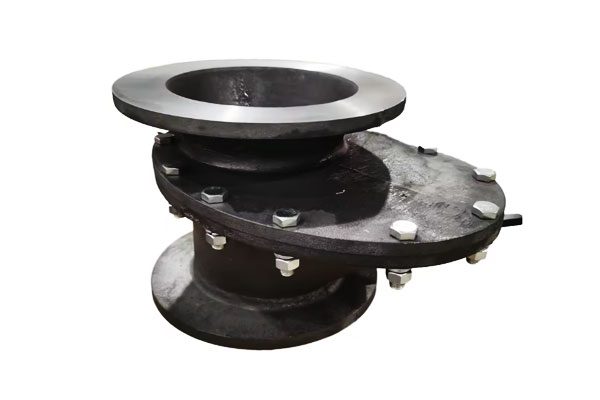
- Typical processes. EN-GJS-400-15 is manufactured by conventional sand casting, shell moulding, investment/precision casting and centrifugal processes as required by part geometry and quantity.
Each route requires tailored thermal control and gating design to avoid defects. - Section thickness influence. Cooling rate strongly affects matrix fraction: thick sections tend toward ferrite, thin sections toward pearlite.
Foundries compensate with inoculation strategy, gating design, chills and targeted post-cast thermal treatment where uniform properties are required. Designers should avoid extreme section variation within the same casting.
Process control and quality assurance
- Primary production metrics. Control and document: nodularity percentage, graphite size distribution, ferrite/pearlite fraction, tensile Rm and elongation, hardness mapping, and chemical composition for each heat.
- Defect control. Implement gating/riser design, melt cleanliness, and pouring practice to minimize shrinkage, porosity and inclusions. Employ filtration and degassing where geometry or service requires high integrity.
- Inspection regime. Routine checks include tensile and hardness tests, metallographic samples (nodularity, matrix fraction) and chemical analysis.
For critical parts add NDT (radiographic, ultrasonic, or CT) and if necessary pressure/leak tests.
Define acceptance criteria tied to the component’s function (e.g., maximum allowable porosity, minimum nodularity).
6. Fabrication, repair and weldability
General considerations
- Ductile iron weldability is limited relative to steels: high carbon equivalent in the heat-affected zone (HAZ), residual stresses and potential formation of hard martensitic zones create a risk of cracking if unsuitable procedures are used.
Treat welding as a qualified repair technique rather than routine fabrication.
Recommended repair welding approach
- Preheat and interpass control. Typical preheat ranges are 150–300 °C depending on section size and geometry; maintain interpass temperatures below specified upper limits (commonly < 300–350 °C) to control cooling rate and avoid hard microstructures.
Adjust temperatures based on part mass and restraint. - Filler metal selection. Use nickel-based or specially formulated cast-iron/Fe–Ni consumables for best ductility and reduced cracking tendency.
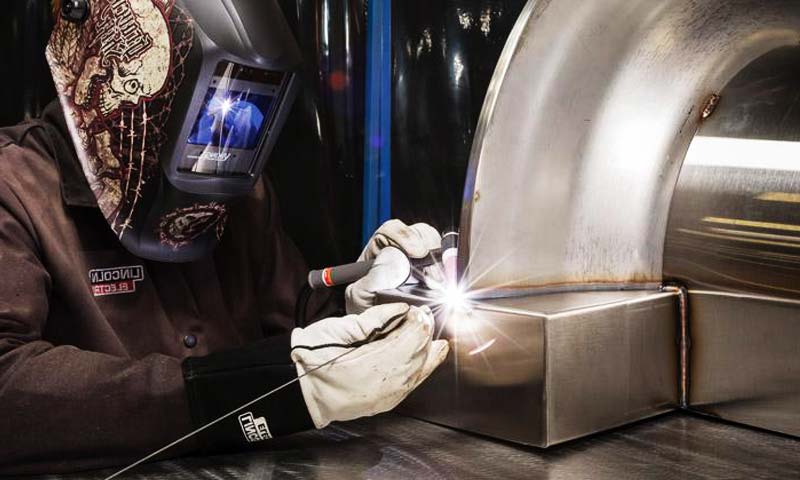
These fillers tolerate mismatches and produce a more ductile weld metal and HAZ. Avoid plain low-hydrogen steel rods. - Welding processes. Manual metal arc welding with appropriate electrodes, TIG (GTAW) with nickel filler, and emerging methods (laser, induction-assisted, hybrid processes) are all used successfully when procedures are qualified.
Local preheating using induction is effective for large/complex parts. - Post-weld heat treatment. Where required, perform stress relief or tempering (commonly in the range 400–600 °C) to reduce residual stresses and temper any hard martensite in the HAZ.
The exact cycle must be qualified to avoid over-softening or dimensional distortion. - Qualification and testing. Every weld procedure should be qualified on representative coupons and include mechanical testing (tensile, bend), hardness surveys across weld and HAZ, and appropriate NDT (penetrant, radiography or ultrasonic).
Alternatives to fusion welding
- For many repair cases consider: mechanical repair (bolted sleeves, clamps), metal stitching/plugging, brazing, adhesive bonding, or use of repair inserts and sleeving.
These options often reduce risk and preserve base-metal properties.
7. Design, machining and surface treatment recommendations
Design guidelines
- Geometry and transitions. Use smooth transitions and generous fillets: avoid sharp corners and abrupt thickness changes that concentrate stress at nodules.
As a practical rule, choose fillet radii at least 1.5× the nominal wall thickness with a minimum of ~3 mm for small sections. - Wall-thickness control. Design for uniform wall thickness where possible. For sand casting, typical minimum practical wall thicknesses for ductile iron are 4–6 mm depending on tooling and casting method; adjust for structural duty and service requirements.
- Riser and gating design. Specify gating and feeding to minimize shrinkage in critical areas; include chills or local increases in section where required to control microstructure.
Machining guidance
- Tooling and geometry. Use carbide inserts with appropriate grades for interrupted cuts and roughing; positive rakes and chip breakers improve chip control.
Ground or coated carbide is preferred where pearlite content increases. - Cutting parameters. Select cutting speeds and feeds based on hardness and matrix; treat EN-GJS-400-15 like an alloy steel of comparable HB.
Use rigid machine setups, efficient coolant, and chip control to avoid chatter and surface damage. - Dimensional tolerances and finishes. Tight tolerances are achievable with proper stress-relief (see heat treatment).
Typical machined surface finishes in production can reach Ra 3.2–6.3 µm; specify finish class and inspection points for fatigue-sensitive zones. - Distortion control. If close tolerances are required, include stress-relief anneal in the process plan and sequence roughing/finish passes to minimize distortion.
Surface protection and wear treatments
- Corrosion protection. Use paints, epoxy coatings, fusion-bonded epoxy (for pipe internals), or lining systems (cement mortar, polymeric linings) depending on fluid chemistry and service temperature.
Consider cathodic protection for buried or marine applications. - Wear resistance. Apply thermal spray (HVOF), hardfacing weld overlays or local induction hardening on high-wear zones.
Where possible, design replaceable wear inserts or hardened sleeves to simplify maintenance. Validate adhesion and HAZ effects on prototype pieces. - Fatigue enhancement. For high-cycle components specify surface finishing (grinding/polishing), shot peening to induce compressive surface stresses, and removal of casting skin at critical fillets to eliminate surface defects.
8. Typical Applications of EN-GJS-400-15 Ductile Iron
EN-GJS-400-15 is a versatile cast material that combines good ductility (A ≥ 15%), moderate tensile strength (nominal ≈ 400 MPa), and favorable castability and machinability.
The combination makes it attractive across a broad set of industries.
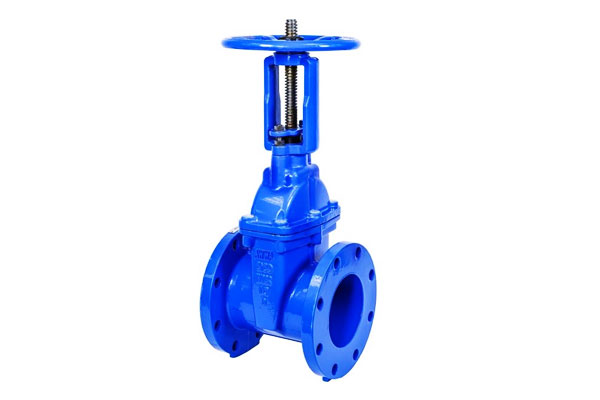
Fluid-handling and hydraulic equipment
Common parts: pump casings, valve bodies, flanges, impeller housings, pump covers, control-valve components.
Why EN-GJS-400-15: good pressure containment and toughness, excellent castability for complex internal cores, good machinability for sealing surfaces and ports.
Pump, compressor and valve trim components
Common parts: valve bonnets, actuator housings, gearbox housings for pumps.
Why EN-GJS-400-15: combination of impact resistance and machinability for precision mating surfaces and threaded features; resilience to transient hydraulic shocks.
Power transmission and gearbox housings
Common parts: gearbox housings, differential carriers, bell housings, transmission brackets.
Why EN-GJS-400-15: stiffness for accurate bearing alignment (E ≈ 160–170 GPa), damping properties reduce noise/vibration, and integral casting reduces assembly count. Economical for medium-duty driveline applications.
Automotive suspension, steering and structural components
Common parts: knuckles, control-arm housings (in some vehicle classes), brackets, flanges.
Why EN-GJS-400-15: good toughness and energy absorption in impact or overload events, improved fatigue behavior vs grey iron, cost advantages for complex geometries.
Agricultural and construction equipment
Common parts: linkage housings, housings for hydraulic motors, gearcases, coupling flanges, frame brackets.
Why EN-GJS-400-15: robust to shock loading and abrasive environments; cast near-net shapes reduce welding/assembly.
Machine frames, supports and general industrial castings
Common parts: machine bases, pump mounts, compressor frames, gearbox frames.
Why EN-GJS-400-15: favorable damping (reduces transmitted vibration), dimensional stability after stress relief, easily machined mounting features.
Pipe fittings, manhole covers and municipal hardware
Common parts: fittings, tees, elbows, flanged components, manhole covers, street furniture.
Why EN-GJS-400-15: durability, impact resistance, good castability for shapes with varying wall thicknesses, and economy in medium to large volumes.
Railway, marine and off-highway components
Common parts: couplings, bracketry, housings for onboard pumps and auxiliary equipment.
Why EN-GJS-400-15: toughness in impact environments, acceptable corrosion resistance with coatings, and good fatigue performance when produced to high quality.
Bearing housings, bushings and structural supports
Common parts: housing bodies, bearing carriers, pillow blocks (where white-metallurgy inserts or liners are used).
Why EN-GJS-400-15: supports precise bores when stabilized by stress relief; good compressive and bearing capacity.
Wear and abrasion-resistant components (with surface treatments)
Common parts: wear plates, crusher housings (with liners), impeller shrouds (lined).
Why EN-GJS-400-15: base casting gives toughness and structural support; wear life is provided by overlays, liners, or local induction hardening. This approach is more economical than making the entire part from a hard steel.
Prototype and small-volume precision castings
Common parts: bespoke housings, prototypes requiring close dimensional control, low-volume production runs.
Why EN-GJS-400-15: ability to produce intricate geometries with good surface finish and reduced machining; predictable material response aids rapid prototyping to production transition.
9. Commonly used international equivalent standards for EN-GJS-400-15
| Region / Standard system | Common designation (equivalent) | Typical reference standard | Nominal tensile (approx.) | Nominal elongation (approx.) | Notes / guidance |
| Europe (original) | EN-GJS-400-15 | EN 1563 | 400 MPa (min) | 15 % (min) | Baseline European grade; often specified by EN designation and material number (5.3106). |
| DIN (historic) | GGG40 | DIN (legacy) | ~400 MPa | ~15 % | Older German designation frequently mapped to EN-GJS-400-15; check supplier certificate for confirmation. |
| ISO | GJS-400-15 | ISO 1083 (spheroidal graphite irons) | ~400 MPa | ~15 % | ISO naming aligns closely with EN naming; use ISO/EN text to confirm microstructure acceptance. |
| ASTM (USA) — closest by elongation | A536 Grade 60-40-18 (approx.) | ASTM A536 | ~414 MPa (60 ksi) | ~18 % | Closer in elongation than some ASTM grades; UTS slightly higher than 400 MPa. Use when elongation is priority. |
ASTM (USA) — closest by tensile |
A536 Grade 65-45-12 (approx.) | ASTM A536 | ~448 MPa (65 ksi) | ~12 % | Closer in tensile strength but lower elongation (12%). Not a direct one-to-one match — choose by mechanical tradeoff. |
| China (PRC) | QT400-15 | GB/T (nodular cast iron series) | ~400 MPa | ~15 % | Common Chinese designation for the same performance band. Confirm national standard clause and certificate. |
| Typical commercial notation | 5.3106 | European material number | ~400 MPa | ~15 % | Material number often used in procurement and supplier documentation to avoid ambiguity. |
10. Sustainability, recyclability and cost considerations
- Recyclability: ductile iron is highly recyclable within standard ferrous recycling streams.
Foundry practice commonly incorporates significant scrap fractions, reducing embodied energy on a per-part basis relative to primary metallurgy. - Lifecycle cost: for complex shapes, cast EN-GJS-400-15 often offers lower total part cost than multi-piece welded steel assemblies or forged components when accounting for near-net geometry, machining allowances and part consolidation.
Consider maintenance, reparability and coating life when performing life-cycle cost comparisons.
11. Comparison with similar materials
| Property / Material | EN-GJS-400-15 (ductile iron) | EN-GJS-500-7 (high-strength GJS) | ADI (Austempered Ductile Iron) | Medium-carbon steel (C45 / 1045) | ASTM A536 (65-45-12) |
| Typical tensile Rm (MPa) | ≈ 370–430 | ≈ 450–550 | ≈ 500–1,400 (grade dependent) | ≈ 600–750 | ≈ 420–480 |
| Typical elongation A (%) | 15–20 | ≈ 6–10 | ≈ 3–12 | ≈ 10–16 | ≈ 12 |
| Typical Brinell HB | 130–180 | 160–240 | 200–500 | 160–220 | 150–220 |
| Young’s modulus (GPa) | 160–170 | 160–170 | 160–170 | 200–210 | 160–170 |
| Machinability (relative) | Good — graphite aids chip breaking; carbide tooling recommended | Fair — higher pearlite increases tool wear | Lower — much harder, requires robust tooling | Good — conventional machining practice | Good — similar to EN-GJS family |
Weldability (relative) |
Moderate — repair welding requires qualified procedures & Ni fillers | Moderate — similar constraints; procedure qualification required | Poor–Moderate — welding typically avoided | Good — routine welding with standard consumables | Moderate — qualified welding required |
| Typical applications | Pump & valve bodies, housings, machine frames, knuckles | Heavier-duty housings, gears, high-stress components | High-wear gears, shafts, fatigue-critical parts | Shafts, forgings, welded structures | Pump/valve components where ASTM spec required |
| Relative cost (material + processing) | Medium — economical for complex castings | Medium–High — higher control/processing cost | High — specialized heat treatment and QA raise cost | Medium–High — higher machining/assembly cost for complex shapes | Medium — comparable when ASTM required |
12. Custom-Made Ductile Iron Precision Castings from Langhe
Langhe specializes in custom-made ductile iron precision castings, including EN-GJS-400-15, supporting a wide range of industries.
Through controlled melting, nodularization, and advanced molding processes, Langhe can deliver castings with consistent mechanical properties, tight dimensional tolerances, and tailored surface finishes.
In addition to casting, Langhe provides secondary operations such as machining, heat treatment, coating, and inspection, enabling customers to receive ready-to-install components that meet specific technical and quality requirements.
13. Conclusion
EN-GJS-400-15 ductile iron is a versatile and reliable engineering material that bridges the gap between traditional cast iron and steel.
Its balanced mechanical properties, excellent castability, and cost efficiency make it a preferred choice for medium-duty structural, hydraulic, and mechanical components.
Proper design, process control, and quality assurance are essential to fully realize its performance potential.
For applications requiring higher strength or fatigue resistance, alternative ductile iron grades or steels should be considered, but for many industrial uses, EN-GJS-400-15 remains an optimal and proven solution.
FAQs
Is EN-GJS-400-15 suitable for pressure-containing components?
Yes, it is commonly used for valves, pumps, and pipe fittings when designed and tested according to relevant pressure standards.
Can EN-GJS-400-15 replace steel in structural applications?
In many cast components, yes—especially where complex geometry and vibration damping are required. However, weldability and very high fatigue demands may favor steel.
What matrix structure is typical for EN-GJS-400-15?
Primarily ferritic or ferritic–pearlitic, optimized to achieve high elongation and toughness.
How does section thickness affect properties?
Thicker sections cool more slowly and tend to form more ferrite, while thinner sections may develop more pearlite. Foundry process control compensates for these effects.
Can the properties be customized?
Yes. Through composition adjustment, inoculation, and heat treatment, foundries can fine-tune hardness, strength, and ductility within the EN-GJS-400-15 framework.