1. Introduction
Bronze has served humanity for millennia, yet it remains a premier choice for CNC machining today.
Its unique combination of wear resistance, thermal conductivity, and corrosion performance makes it invaluable in sectors as diverse as marine engineering, heavy machinery, and fine art.
In this guide, we’ll explore why bronze continues to excel under the cutter,
outline the CNC process, survey common bronze alloys, and provide best practices—from tooling and parameters to finishing and design—to help you achieve optimal results.
2. What Is CNC Machining Bronze?
CNC (Computer Numerical Control) machining of bronze involves precisely removing material from a bronze workpiece—typically bar stock or billet—using rotating cutters, drills, and mills under computer control.

Unlike casting or forging, CNC machining delivers tight tolerances (often ±0.01–0.05 mm) and complex geometries with minimal post-processing, making it ideal for both prototypes and high-volume production.
3. CNC Machining Bronze Process
- Material selection and verification (alloy grade, certification)
- CAD modeling and toolpath programming (CAM software)
- Setup and fixturing (vises, custom fixtures)
- Rough machining (high feed, deep cuts)
- Finish machining (light cuts for surface quality)
- Deburring and cleaning
- Quality inspection (CMM, surface roughness measurements)
4. Types of Bronze Available for CNC Machining
The following table outlines the most common bronze alloys used in CNC machining, along with their typical chemical makeup, mechanical strengths, corrosion behavior, and common applications.
| Alloy Name | Key Alloying Elements | Tensile Strength (MPa) | Corrosion Resistance | Typical Applications |
|---|---|---|---|---|
| C932 (SAE 660) | Cu-Sn-Pb | 200–275 | Moderate | Bearings, bushings, pump impellers |
| C954 Aluminum Bronze | Cu-Al-Fe | 500–620 | Excellent (marine-grade) | Marine components, landing gear bushings, heavy-duty guides |
| C936 (High-Lead Bronze) | Cu-Sn-Pb | 160–220 | Good | High-speed bearings, low-load wear surfaces |
| C907 (Tin Bronze) | Cu-Sn | 275–350 | Good | Gears, valve seats, pressure fittings |
| Phosphor Bronze (C510, C544) | Cu-Sn-P | 300–550 | Excellent | Springs, fasteners, electrical connectors |
| Silicon Bronze (C655) | Cu-Si-Zn | 350–500 | Excellent | Architecture hardware, marine fasteners |
| PB1 (Phosphor Bronze Grade 1) | Cu-Sn-P | 270–320 | Very Good | Worm gears, shafts, instrument bushings |
| Manganese Bronze (C863) | Cu-Zn-Mn-Fe | 500–620 | Fair | Hydraulic cylinders, valve components |
| Copper-Nickel (CuNi, 90/10 or 70/30) | Cu-Ni | 300–400 | Outstanding (saltwater) | Heat exchangers, ship hull cladding, offshore equipment |
| Bismuth Bronze | Cu-Bi-Zn | 250–350 | Good | Eco-friendly plumbing, decorative items |
5. Machinability of Bronze
Bronze generally machines more easily than steel but less so than aluminum.
Its machinability rating spans 60 % (silicon bronze) up to 120 % (leaded bronzes) relative to the AISI 1112 steel benchmark.

Bronze forms long, stringy chips; proper chip breakers and high-pressure coolant facilitate evacuation.
Bronze’s thermal conductivity (~ 60 W/m·K) quickly dissipates heat, reducing built-up edge, but you must still control cutting temperatures to prevent work-hardening.
6. Cutting Tools & Toolpath Strategies
- Tool Materials: Solid carbide with TiN or TiAlN coatings for general bronze; polycrystalline diamond (PCD) for high-volume leaded bronzes; high-speed steel (HSS) for low-volume.
- Geometry: Positive rake angles (10–15°), radial clearance (7–10°), and 30–45° helix angles steer chips away.
- Toolpaths: Climb milling reduces rubbing and built-up edge. Ramp-in and ramp-out moves minimize entry-exit stresses, especially on thin walls.
7. Cutting Parameters & Coolants
| Operation | Speed (m/min) | Feed (mm/tooth) | DOC (mm) | Coolant |
|---|---|---|---|---|
| Rough Milling | 150–300 | 0.2–0.4 | 2–5 | Flood coolant |
| Finish Milling | 200–350 | 0.05–0.15 | 0.5–1 | Through-tool or flood |
| Drilling | 100–200 | 0.1–0.2 | Diameter/2 | Lubricant concentrate |
| Turning | 200–400 | 0.2–0.5 | 1–3 | High-pressure coolant |
Maintain rigidity—both machine and setup—to achieve Ra < 0.4 µm. Use flood or through-tool coolant (water-soluble or neat oil) to control temperatures and clear chips.
8. Post-Processing & Finishing in CNC Machining Bronze
Post-processing is a critical phase in CNC machining bronze components, ensuring not only aesthetic appeal but also dimensional accuracy, surface integrity, and extended service life.

Deburring and Edge Refinement
Purpose:
To remove sharp edges, burrs, and micro-protrusions left after milling, turning, or drilling operations.
Methods:
- Manual deburring: Using abrasives, files, or brushes
- Vibratory finishing: Effective for small or complex parts; uses media to polish and smooth edges
- Thermal deburring (TEM): Utilizes combustion in a pressurized chamber to burn off burrs—ideal for internal features
Surface Polishing
Purpose:
To improve surface roughness, visual appeal, and in some cases, corrosion resistance.
Techniques:
- Mechanical polishing: Buffing wheels or polishing compounds to achieve a mirror or satin finish
- Electropolishing: Dissolves surface material via anodic dissolution, resulting in a smooth, reflective surface
- Tumbling: Barrel or vibratory tumblers with abrasives polish multiple parts at once
Performance Note:
For components requiring low friction or cosmetic perfection—like sliding bushings or architectural trim—polishing reduces Ra values to 0.1–0.4 µm.
Patination and Coloring
Purpose:
To achieve desired aesthetic effects or mimic antique finishes. Common in art, architecture, and luxury hardware.
Approaches:
- Chemical patinas: Solutions of liver of sulfur, ferric nitrate, or cupric nitrate react with bronze to form colorful oxide layers (greens, browns, blues)
- Heat patination: Controlled heating creates oxide gradients
Durability Tip:
Patinas must be sealed (e.g., with microcrystalline wax or lacquer) to prevent further oxidation and maintain the desired look.
Coatings and Protective Layers
Purpose:
To enhance corrosion resistance, reduce wear, or preserve appearance.
Types:
- Clear lacquer or polyurethane coatings: Protect polished or patinated surfaces from oxidation
- Electroplating (less common): Thin layers of nickel, chrome, or gold for specialized applications
- Oil impregnation: Common for bronze bushings to self-lubricate during use (especially in porous bearing bronze)
Dimensional Inspection & Quality Control
Purpose:
To verify tolerances, surface finish, and feature geometry after machining and finishing.
Inspection Techniques:
- Coordinate Measuring Machines (CMM): For high-precision dimensional verification
- Surface profilometry: Measures surface roughness (Ra, Rz)
- Optical comparators or laser scanners: Useful for profile and contour accuracy
Tolerance Achievement:
CNC-machined bronze parts typically hold tolerances between ±0.01 mm to ±0.05 mm depending on design and finishing method.
9. Bronze CNC Machining Tolerances & Surface Finishes
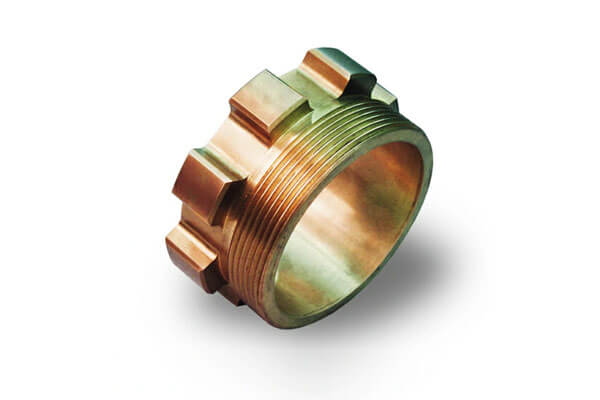
Precision is paramount in CNC machining, particularly when working with bronze alloys for high-performance applications.
Tolerances in CNC Machining Bronze Components
Bronze alloys—especially those with high copper content—are dimensionally stable under controlled machining conditions.
Typical achievable tolerances depend on the part geometry, bronze grade, and machine setup.
| Tolerance Classification | Typical Range (mm) | Application Examples |
|---|---|---|
| Standard | ±0.05 – ±0.10 | Bushings, cast housings, decorative features |
| Precision | ±0.01 – ±0.03 | Bearings, gears, valve seats |
| Ultra-Precision (with grinding or lapping) | ±0.005 or better | Optical mounts, aerospace hydraulic components |
Note: Phosphor bronze and aluminum bronze can hold tighter tolerances than leaded bronze due to lower tool deflection and more uniform grain structure.
Surface Finish Capabilities
Surface roughness (Ra) plays a vital role in wear behavior, sealing, and aesthetics.
The machinability of bronze allows for good to excellent finishes using standard tooling under optimized parameters.
| Machining Process | Typical Ra (µm) | Comments |
|---|---|---|
| Rough CNC milling | 3.2 – 6.3 | For non-critical surfaces or pre-finish operations |
| Finish CNC turning | 0.8 – 1.6 | Suitable for sliding or sealing surfaces |
| Fine boring/grinding | 0.2 – 0.8 | Ideal for bearing fits and hydraulic interfaces |
| Lapping or polishing | < 0.2 | High-performance sealing, aerospace, and optics |
10. Advantages & Disadvantages of Bronze CNC Machining
When you choose bronze for CNC machining, you gain notable benefits—yet you also face certain challenges.
Below, we balance these advantages and disadvantages to help you make an informed decision.

Advantages
- Superior Wear and Corrosion Resistance
Bronze alloys like C954 and Cu–Ni resist seawater corrosion with rates below 0.01 mm/year, making them ideal for marine hardware and pump components. - Excellent Thermal and Electrical Conductivity
With thermal conductivity around 60 W/m·K and electrical conductivity up to 15% IACS, bronze dissipates heat quickly and makes reliable electrical connectors. - High Machinability (Leaded Grades)
Leaded bronzes (e.g. C930) achieve machinability ratings up to 120% relative to AISI B1112 steel. Consequently, you can run faster spindle speeds (300–350 m/min) and maintain good tool life. - Ductility and Shock Resistance
Most bronze alloys exhibit elongation of 10–30%, absorbing impact loads without cracking—advantageous in bearing bushings and valves. - Excellent Surface Finish
Bronze readily polishes to Ra < 0.2 µm, delivering aesthetic and functional surfaces for sculptures and precision instruments.
Disadvantages
- Higher Material Cost
Bronze typically costs $5–$15 per kg, compared to $2–$3/kg for brass or steel. As a result, material expenses can dominate low-volume runs. - Relative Density
With a density of 8.7 g/cm³, bronze components weigh over three times more than aluminum equivalents, impacting weight-sensitive designs. - Built-Up Edge Risk
In non-leaded or high-silicon bronzes, built-up edge can form at cutting speeds above 200 m/min, necessitating optimized feeds, coatings, or high-pressure coolant. - Tool Wear in Abrasive Grades
Aluminum bronze and manganese bronze—with hardness up to 250 HB—can accelerate tool abrasion, requiring more frequent tool changes or wear-resistant coatings like TiAlN. - Environmental and Waste Considerations
Bronze swarf often contains oil-laden chips that demand careful recycling processes. Moreover, spent cutting fluids may require treatment to meet disposal regulations.
11. Applications of CNC Machining Bronze
Bronze has been used for centuries, and in modern precision manufacturing, CNC machining brings out its full potential.
With its unique combination of mechanical strength, corrosion resistance, machinability, and visual appeal, bronze alloys serve a wide range of applications across diverse industries.
Below are key sectors and real-world examples where CNC-machined bronze components are indispensable.

Marine & Offshore Engineering
Why Bronze?
Bronze alloys—especially aluminum bronze and copper-nickel—offer exceptional resistance to saltwater corrosion and biofouling, outperforming many other metals in marine conditions.
Common Components:
- Propeller shafts
- Bearings and bushings for rudder systems
- Valve bodies and seawater intake screens
- Subsea connectors and corrosion-resistant fasteners
Heavy Machinery & Industrial Equipment
Why Bronze?
Bronze’s high load-bearing capacity and low coefficient of friction make it ideal for wear-resistant components subjected to repetitive motion and stress.
Common Components:
- Thrust washers
- Slide plates
- Worm gears and spur gears
- Wear rings and guide rings
Aerospace & Defense
Why Bronze?
In critical aerospace environments, CNC-machined bronze provides electrical conductivity, anti-sparking behavior, and durability under high stress.
Common Components:
- Electrical terminals and EMI/RFI shielding
- Bushing assemblies for actuation systems
- Non-magnetic structural inserts
- Aerospace-grade fasteners
Electrical & Electronics Industry
Why Bronze?
Bronze’s consistent conductivity, corrosion resistance, and formability make it ideal for both high-precision connectors and power transmission components.
Common Components:
- Electrical contact terminals
- Springs and switch components
- Grounding hardware
- Heat sinks and conductive housing units
Architecture & Decorative Arts
- Sculptures and relief panels
- Ornamental grilles and architectural trims
- Handrails, fixtures, and signage
- Custom inlays for luxury interiors
Oil & Gas / Petrochemical
Why Bronze?
Bronze’s resistance to sulfide stress cracking and abrasive media makes it suitable for demanding environments in oil extraction and refining.
Common Components:
- Valve seats and stems
- Sealing rings and pump impellers
- Non-sparking tools
- High-pressure bushings
12. Cost-Saving Design Tips for CNC Machining Bronze
Designing for cost-efficiency in CNC machining bronze requires a deep understanding of both the material’s characteristics and the machining process.
Select the Right Bronze Grade Early
Why It Matters:
Different bronze alloys (e.g., C932, C954, phosphor bronze, aluminum bronze) vary widely in machinability, corrosion resistance, and cost.
Cost-Saving Tip:
- For general applications, use high-machinability bronze grades like C932 (Bearing Bronze).
- Reserve expensive, specialty bronzes (e.g., C954 Aluminum Bronze) for parts requiring high strength or extreme corrosion resistance.
Design for Material Efficiency
Why It Matters:
Bronze is costlier per kilogram than common engineering metals.
Cost-Saving Tip:
- Avoid excessive wall thickness or overengineering for strength.
- Use hollow sections, undercuts, or pockets to reduce weight and raw material volume.
- Consider near-net-shape blanks (e.g., cast bronze) when applicable, to minimize machining.
Minimize Tight Tolerances Where Not Necessary
Why It Matters:
Tight tolerances increase machining time, inspection requirements, and scrap rates.
Cost-Saving Tip:
- Apply tight tolerances only to critical features (e.g., bearing seats, mating interfaces).
- Use standard tolerance classes (e.g., ISO 2768-m) for non-critical dimensions.
Avoid Deep Cavities and Undercuts
Why It Matters:
Deep cavities require long-reach tooling, which increases cycle time and tool deflection.
Cost-Saving Tip:
- Keep depth-to-diameter ratios of pockets and holes within 3:1 to 4:1.
- Redesign features that require specialized cutters or multiple setups.
Use Standard Hole Sizes and Thread Types
Why It Matters:
Custom or non-standard sizes increase tool changeovers, manual rework, and inspection time.
Cost-Saving Tip:
- Design holes to match standard drill bit sizes (e.g., 6 mm, 10 mm, ½ in.).
- Choose standard thread forms (e.g., UNC, UNF, ISO metric) for tapped features.
Simplify Geometry for Faster Machining
Why It Matters:
Complex contours, organic shapes, or compound curves require 5-axis machining or long programming time.
Cost-Saving Tip:
- Use simple, prismatic features where possible.
- Avoid decorative or non-functional complexity in industrial components.
Leverage Batch Production Efficiencies
Why It Matters:
Setup time and programming amortize across more units in batch runs.
Cost-Saving Tip:
- Where possible, consolidate orders or design modular parts to enable bulk production.
- Use bar stock-friendly geometries for lathe-turned bronze components.
13. LangHe CNC Machining Bronze Services
LangHe offers precision CNC machining services for bronze components, catering to industries such as marine, aerospace, heavy machinery, electrical engineering, and custom artistic fabrication.
With advanced multi-axis CNC equipment and a seasoned engineering team,
we expertly machine a wide range of bronze alloys—including C932 (bearing bronze), C954 (aluminum bronze), phosphor bronze, and more—according to your exact specifications.
Whether you require corrosion-resistant marine hardware, high-strength, low-friction bushings, or custom electrical connectors,
LangHe delivers components with tight tolerances up to ±0.01 mm and superior surface finishes.
Our services also include a full range of post-processing options such as polishing, protective coatings, and dimensional inspection to ensure both performance and aesthetics meet the highest standards.
Partnering with LangHe means gaining a reliable, efficient, and technically capable supplier who understands the unique challenges of bronze machining.
Contact us today to begin your custom CNC bronze part production with confidence.
14. Conclusion
CNC machining bronze demands a nuanced understanding of alloy selection, tooling, parameters, and design.
By leveraging bronze’s unique machinability, thermal and corrosion properties, engineers can produce precision components that excel in harsh environments.
Whether crafting a marine fitting or a fine art sculpture, applying the strategies outlined here will optimize your machining process and deliver reliable, high-quality bronze parts.