1. Introduction
CD4MCu (commonly supplied to cast-steel specifications such as ASTM A890 Grade 1A for duplex castings with UNS number J93370) is a purpose-engineered duplex stainless casting that combines high strength, elevated resistance to localized corrosion, and good erosion/cavitation resistance.
Its chemistry (high chromium, molybdenum, copper and nitrogen with moderate nickel) and two-phase (ferrite + austenite) microstructure make CD4MCu a popular choice for demanding wet-service rotating components (impellers, pump casings), valves, and other cast hardware where chloride exposure, erosion or mechanical load are present.
2. What is CD4MCu Stainless Steel?
CD4MCu is a duplex (ferritic–austenitic) stainless steel grade provided principally in cast product forms.
It is formulated to give a balanced duplex microstructure (≈ 35–55% ferrite typical in well-processed castings) that yields high yield strength, good toughness and significantly improved resistance to pitting, crevice corrosion and chloride stress-corrosion cracking relative to conventional austenitic cast grades (e.g., CF8M/316 cast).
The “Cu” in the designation reflects a deliberate copper addition (≈ 2.7–3.3 wt%) that enhances resistance to certain reducing and erosive chemistries and improves performance in cavitating or slurry environments.
Features
- High mechanical strength (yield substantially higher than CF8M/316 castings).
- Elevated localized-corrosion resistance (Mo and N boost PREN; copper improves behavior in some reducing chemistries).
- Good erosion/cavitation resistance for rotating wet components.
- Castability for complex geometries (impellers, volutes, valve bodies).
- Good weldability when qualified procedures and matching fillers are used.
- Balanced duplex microstructure provides damage-tolerant toughness while increasing fatigue resistance vs many austenitics.
3. Typical Chemical Composition of CD4MCu Stainless Steel
| Element | Typical range (wt.%) | Role / comment |
| C | ≤ 0.04 | Keep low to avoid carbide precipitation |
| Cr | 24.5 – 26.5 | Primary passive-film former; key to general corrosion resistance |
| Ni | 4.5 – 6.5 | Austenite former; helps duplex balance |
| Mo | 1.7 – 2.5 | Strengthens pitting/crevice resistance |
Cu |
2.7 – 3.3 | Improves resistance to reducing acids, cavitation/erosion behavior |
| N | 0.15 – 0.25 | Strengthener and powerful PREN booster |
| Mn | ≤ 1.0 | Deoxidizer/processing aid |
| Si | ≤ 1.0 | Deoxidation and oxidation resistance |
| P | ≤ 0.04 | Impurity control |
| S | ≤ 0.03 | Low S for soundness |
| Fe | Balance | Matrix element (ferrite + austenite) |
4. Mechanical Properties — CD4MCu (ASTM A890 Grade 1A)
Below is a focused, engineering-grade presentation of the typical mechanical behaviour of CD4MCu in the usual supply condition (cast, solution-annealed, water- or air-quenched as specified by the foundry).

Room-temperature (typical) mechanical properties — solution-annealed cast CD4MCu
| Property | Typical range (SI) | Typical range (imperial) | Comment |
| Tensile strength, Rm | 650 – 780 MPa | 94 – 113 ksi | Dependent on section size and foundry practice; heavier sections trend lower. |
| 0.2% proof / Yield, Rp0.2 | 450 – 550 MPa | 65 – 80 ksi | Use heat-specific value for allowable stress calculations. |
| Elongation, A (%) | 15 – 25 % | — | Measured on standard test specimens; decreases with heavier sections and casting defects. |
| Reduction of area, Z (%) | 30 – 40 % (typical) | — | Indicative of ductile fracture when casting quality is high. |
Brinell hardness (HBW) |
220 – 280 HB | ≈ 85 – 110 HRB | Higher hardness correlates with higher strength but may signal microstructural issues if above expected. |
| Modulus of elasticity, E | ≈ 190 – 205 GPa | ≈ 27.6 – 29.7 ×10³ ksi | Use ~200 GPa for stiffness calculations unless supplier data differ. |
| Charpy V-notch, CVN (room T) | Typically good; specify if fracture-critical (e.g., ≥ 20–40 J target) | — | CVN is heat- and section-dependent; require supplier test if toughness is critical. |
| Fatigue (guidance) | Endurance (smooth specimen) ≈ 0.30–0.45 × Rm | — | Strongly dependent on surface finish, casting defects, residual stresses and detail geometry. Component testing recommended. |
5. Physical and Thermal Properties of CD4MCu Stainless Steel
| Property | Representative value |
| Density | ≈ 7.80 – 7.90 g·cm⁻³ |
| Thermal conductivity (20 °C) | ≈ 12 – 16 W·m⁻¹·K⁻¹ |
| Specific heat (20 °C) | ≈ 430 – 500 J·kg⁻¹·K⁻¹ |
| Coefficient of thermal expansion (20–100 °C) | ≈ 12.0 – 13.5 × 10⁻⁶ K⁻¹ |
| Modulus of elasticity (E) | ≈ 190 – 205 GPa |
| Melting/solidus (approx.) | ~1375 – 1450 °C (alloy-dependent) |
6. Corrosion Performance
- Pitting & crevice: CD4MCu’s Mo + N + high Cr give strong resistance; PREN in the low-30s makes it suitable for brackish water, many cooling-water systems and chloride-containing process streams at moderate temperatures.
- SCC (chloride stress-corrosion cracking): duplex microstructure and lower austenite fraction confer greater resistance to chloride SCC than typical austenitic cast grades;
however, SCC can still occur under severe combinations of chloride, temperature and tensile stress. - Erosion-corrosion / cavitation: copper addition and high strength improve resistance to erosion-assisted corrosion and cavitation pitting; this is why CD4MCu is used for impellers and slurry pumps.
- Reducing acids: CD4MCu is more tolerant than 316 in some mildly reducing fluids, but concentrated hot reducing acids may require higher-alloy or nickel-base materials.
- Temperature limits: for long-term chloride service prefer exposures at or below levels validated by lab screening; at elevated temperatures generalized corrosion rates and localized attack susceptibilities increase.
7. Casting Characteristics of CD4MCu Stainless Steel
CD4MCu is typically delivered as investment or sand cast components.

Key casting considerations:
- Solidification and shrinkage: expect typical linear shrinkage in the order of ~1.2–2.0% — use foundry shrink factors for pattern design. Directional solidification and properly placed risers avoid shrink cavities.
- Melt control: controlled induction melting, argon degassing and ceramic filtration reduce gas and inclusions; vacuum melting or ESR may be used for the highest integrity castings.
- Common casting defects: gas porosity, shrinkage cavities, non-metallic inclusions and cold shuts — prevented by correct gating, filtration, degassing and pour control.
- Post-cast heat treatment: solution anneal (see section 8) is needed to attain the desired duplex balance and dissolve segregated phases. HIP (hot-isostatic pressing) can be used for critical, high-integrity parts to close internal porosity.
- Machining allowances & tolerances: provide realistic machining stock (e.g., 2–6 mm roughing allowance; less for investment castings) and specify machined critical faces.
8. Fabrication, Heat Treatment, and Welding Best Practices
Heat treatment
- Solution anneal after casting (typical temperature range around 1040–1100 °C; exact foundry specification to be followed) with rapid quench to lock in balanced duplex microstructure and dissolve undesirable precipitates.
Some sources advise a heat treatment around ~1900 °F (~1038 °C) followed by quench for cast duplex grades; follow supplier/foundry datasheet for exact temp/hold/quench.
Welding
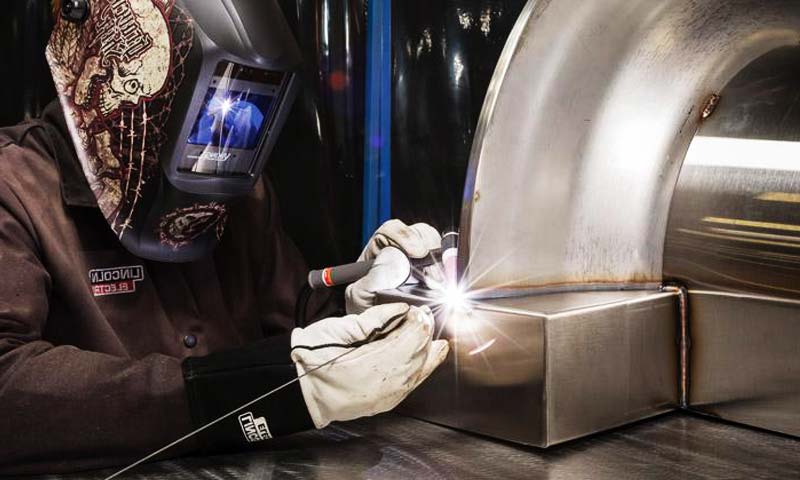
- Weldability is good, but control is essential: use qualified welding procedures (WPS/WPQ), matching filler metals designed for duplex chemistry, control interpass temperature, and limit heat input to maintain phase balance in HAZ.
- Post-weld solution anneal: not always practicable for completed assemblies; if not possible, select appropriate filler alloys and minimize HAZ extent to preserve local corrosion resistance.
Machining & forming
- Machinability of CD4MCu is moderate; use carbide tooling, appropriate feeds and coolant.
Duplex grades are stronger than austenitics so expect higher tool wear. Cold forming is limited compared with ductile austenitics; design drawings accordingly.
Surface preparation & passivation
- After welding/repair remove heat tint and pickle as required, and then passivate with nitric or citric passivation processes to restore a uniform passive film.
9. Industrial Applications of CD4MCu (ASTM A890 Grade 1A)
CD4MCu is widely used where cast geometry, elevated strength and improved localized-corrosion/erosion resistance are required:
- Pump components: impellers, volutes and casings for seawater, brackish water, cooling water and slurry services.
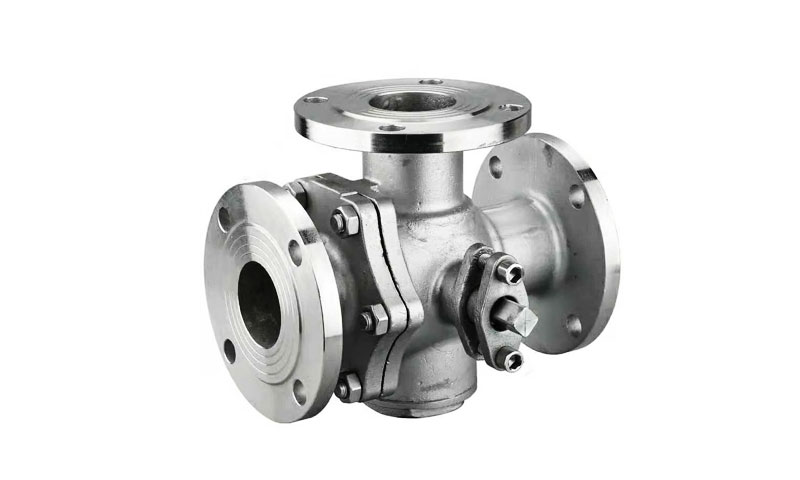
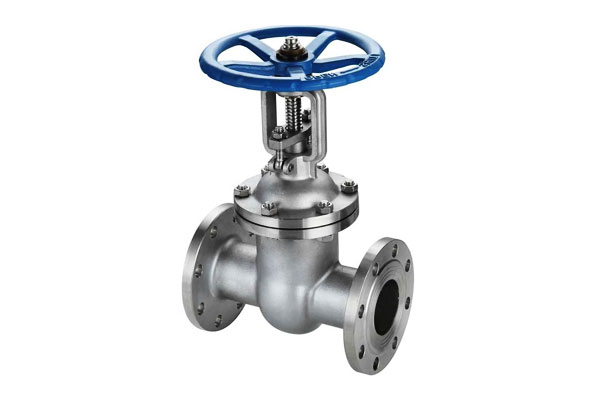
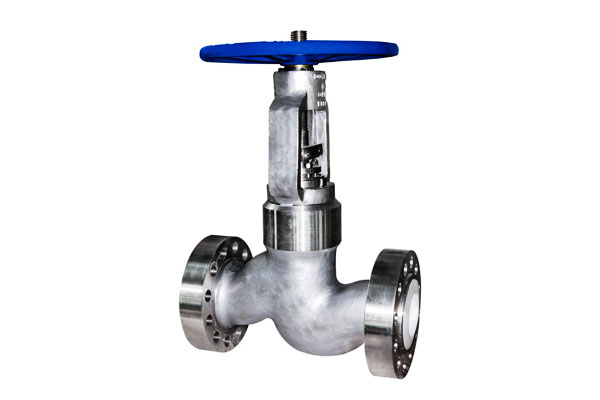
- Valve bodies & trim: control and isolation valves in offshore, desalination, chemical, and power plant systems.
- Desalination & reverse-osmosis equipment: rotating hardware and fittings exposed to chlorides and transient conditions.
- Pulp & paper and mining equipment: slurry pumps and wear-prone components.
- Chemical process & cooling systems: where chloride levels and mechanical load combine.
10. Advantages & Limitations
Core Advantages of CD4MCu (ASTM A890 Grade 1A)
- Balanced strength and corrosion resistance: Yield strength twice that of 316L with comparable or superior corrosion resistance in chloride and acid media.
- Superior sour service performance: Complies with NACE MR0175, making it ideal for H₂S-containing environments.
- Excellent castability: Suitable for complex-shaped components that are difficult to fabricate via wrought processes.
- Cost-effectiveness: 30–50% cheaper than nickel-based alloys (e.g., Hastelloy C276) while offering similar corrosion resistance in moderate environments.
- Wear resistance: Copper addition enhances resistance to abrasion and erosion, extending service life in fluid-handling applications.
Key Limitations of CD4MCu (ASTM A890 Grade 1A)
- Welding complexity: Requires strict heat input control and mandatory PWHT, increasing fabrication costs compared to austenitic steels.
- Temperature restriction: Not suitable for continuous service above 450°C due to σ phase formation.
- Sensitivity to residual elements: High Mn (>0.8%) or Sn/Pb impurities reduce corrosion resistance and increase cracking risk.
- Lower ductility than austenitic steels: Elongation (16–24%) is lower than 316L (≥40%), limiting use in high-deformation applications.
11. Comparative analysis — CD4MCu versus similar alloys
Values are representative, for screening and specification drafting only — always use supplier MTRs, manufacturer datasheets and application-specific test data for final selection.
| Aspect / Alloy | CD4MCu (cast duplex) | CF8M / Cast 316 (austenitic) | Duplex 2205 (wrought) | Nickel-base (e.g., C-276) |
| Composition highlights | Cr ~24.5–26.5; Ni ~4.5–6.5; Mo ~1.7–2.5; Cu ~2.7–3.3; N ~0.15–0.25 | Cr ~16–18; Ni ~10–14; Mo ~2–3 (CF8M) | Cr ~21–23; Ni ~4–6.5; Mo ~3; N ~0.08–0.20 | Very high Ni and Cr; substantial Mo (and other alloying) |
| Typical PREN (screening) | ~30–35 (depends on Mo/N) | ~24–27 | ~35–40 | >40 (varies by alloy) |
| Representative mechanical (Rm / Rp0.2) | Rm 650–780 MPa; Rp0.2 450–550 MPa | Rm ≈ 480–620 MPa; Rp0.2 ≈ 170–300 MPa | Rm ≈ 620–880 MPa; Rp0.2 ≈ 400–520 MPa | Rm variable (often 500–900 MPa); Rp0.2 depends on grade |
| Chloride SCC resistance | Good (better than CF8M; duplex benefit) | Moderate — susceptible under hot/stressed conditions | Very good (one of best stainless choices for SCC) | Generally excellent (engineered for extreme chemistries) |
Pitting / crevice resistance |
High (Mo + N + Cr; PREN ~30s) | Moderate | Very high | Excellent |
| Erosion / cavitation resistance | Good (Cu + higher strength improve performance) | Moderate | Good (higher strength helps) | Variable — depends on grade; often chosen for corrosion rather than erosion |
| Castability / product forms | Excellent as castings (impellers, volutes, valve bodies) | Excellent (cast forms widely available) | Primarily wrought (plate, bar, pipe); some cast duplex exists but more complex | Wrought and cast; castings possible but costly |
| Weldability & HAZ behavior | Good — requires qualified procedures and HAZ control | Excellent (316 is forgiving) | Weldable but requires strict control to preserve duplex balance | Weldable with qualified procedures; filler choice critical |
| Typical cost band (material) | Mid–high (less than most Ni alloys) | Lower (economical) | Mid–high (similar to CD4MCu or higher for high-spec) | High (premium alloys) |
Typical applications |
Impellers, pump casings, valve bodies for brackish/seawater, slurry pumps, desalination, cooling water | General process piping, tanks, sanitary equipment, moderate chloride service | Offshore, desalination, high-strength chloride services, pressure systems | Chemical reactors, extreme acid/chloride service, very high corrosion severity |
| When to choose | Need complex cast parts with high strength, good pitting/SCC and erosion resistance at moderate cost | Cost-driven projects where chloride exposure is low–moderate and fabrication simplicity is desired | When highest chloride resistance and strength required and wrought form is acceptable | When service chemistry or temperature exceeds stainless/duplex capability and life-cycle cost justifies premium |
12. Conclusion
CD4MCu (ASTM A890 Grade 1A when specified in cast duplex form) is a technically attractive option for rotating and pressure-containing cast components in chloride-bearing, erosive or cavitating services.
Its duplex structure, molybdenum and nitrogen content yield robust pitting resistance and SCC tolerance while copper and high strength enhance resistance to erosion and mechanical damage.
To realize the alloy’s advantages, disciplined foundry practice, documented solution anneal, qualified welding and appropriate NDE are essential.
Where service chemistry or temperature exceeds CD4MCu capability, duplex wrought grades or nickel-base alloys should be evaluated.
FAQs
What does “CD4MCu” mean?
It denotes a duplex stainless casting grade with composition features (Cr, Mo, Cu and N) tuned for improved pitting, SCC and erosion resistance. It is commonly supplied as ASTM A890 Grade 1A in cast duplex specifications.
What is the difference between CD4MCu and 2205 duplex stainless steel?
CD4MCu is a cast duplex alloy optimized for complex component fabrication, with copper addition to enhance reducing acid resistance.
2205 is a wrought duplex alloy with higher nitrogen content (0.14–0.20 wt.%) for austenite stabilization.
While both have similar PREN values (~34), CD4MCu is preferred for castings, and 2205 is used for wrought products (plates, pipes).
Is CD4MCu suitable for seawater?
Yes — CD4MCu is widely used for seawater, brackish water and cooling-water applications; however, specify lab screening and corrosion allowances for long-term immersed or splash-zone service.
Can CD4MCu be welded in the field?
Yes — but welding requires qualified procedures, matching duplex filler metals, controlled heat input and post-weld cleaning/passivation. For critical assemblies consider pre-qualification and welded coupon tests.
How does CD4MCu compare to 316 castings?
CD4MCu offers higher strength and significantly better localized-corrosion and SCC resistance than CF8M/316 castings — enabling longer life in chloride-bearing, erosive environments.