1. Introduction
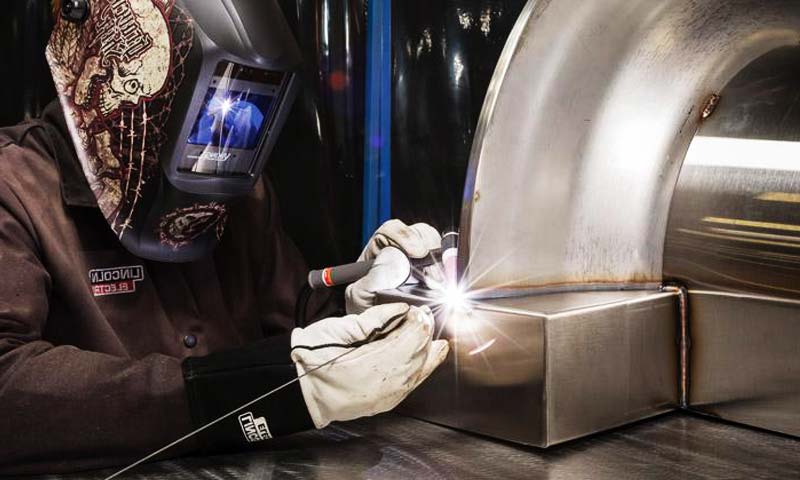
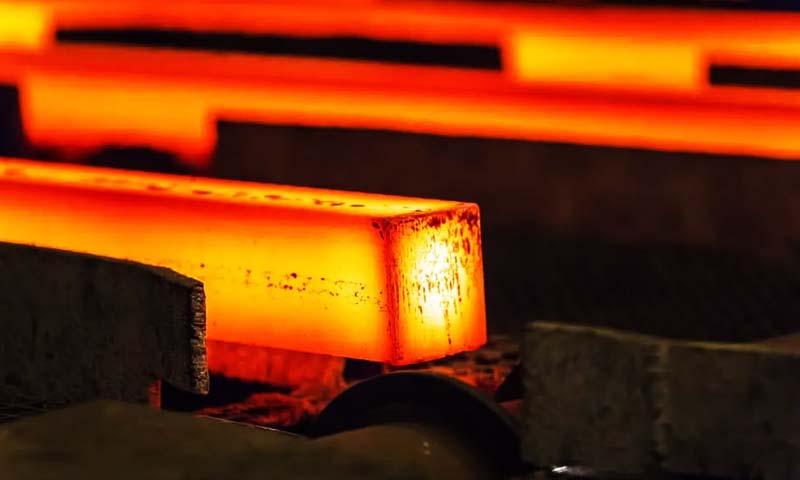
Carbon steel casting is a fundamental manufacturing process that involves shaping molten carbon steel into desired forms using molds.
As one of the most widely used materials in engineering and industrial applications, carbon steel offers a unique combination of strength, cost-effectiveness, and versatility.
From automotive to oil and gas, cast carbon steel components play a critical role in the global economy, supporting infrastructure, mobility, and machinery.
2. What Is Carbon Steel Casting?
Carbon steel casting is a precise and cost-effective manufacturing process in which molten carbon steel—an alloy of iron (95–99%) and carbon (0.05–2.1%), with minor elements such as manganese, silicon, sulfur, and phosphorus—is poured into a mold to form solid components.
Once the metal fills the cavity and cools, the mold is removed, producing a near-net-shape part that closely matches the intended geometry.
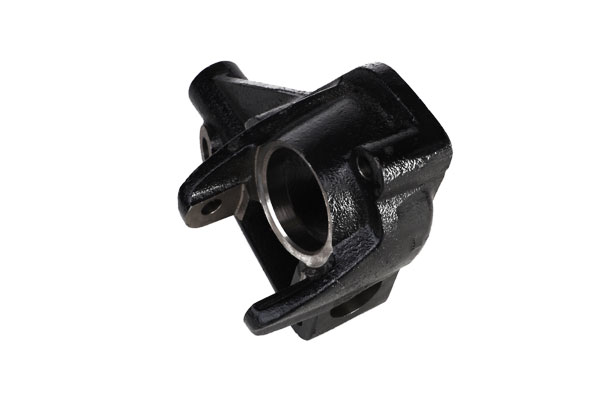
What sets carbon steel casting apart is its capability to economically produce complex geometries—such as thin walls (down to ~3 mm), internal channels, or intricate external contours—that would be difficult, expensive, or sometimes impossible to achieve using wrought processes like forging, rolling, or machining.
Unlike wrought steel, which exhibits directional grain flow from mechanical deformation, cast carbon steel generally forms an isotropic grain structure, providing uniform mechanical properties throughout the part.
Why Carbon Steel Is Ideal for Casting
Carbon steel possesses several metallurgical traits that make it particularly suitable for casting:
- Low melting point: ~1,370–1,530 °C — lower than many alloy steels, allowing easier melting and pouring
- Good fluidity: Enables the metal to fill detailed mold cavities
- Stable solidification behavior: Minimizes internal shrinkage defects and improves dimensional accuracy
Common Carbon Steel Alloys for Casting:
| Standard | Grade | Typical Applications |
| ASTM A216 | WCB, WCC | Valves, flanges, and pressure vessels |
| ASTM A352 | LCB, LCC | Low-temperature pressure parts |
| DIN 1.0619 | GS-C25 | Structural components and machinery |
| JIS SC42, SC46 | Carbon Steel | Automotive, pumps, and general engineering |
3. Carbon Steel Casting Processes
Carbon steel can be cast using various methods, each offering distinct advantages based on the complexity, size, tolerance, and surface finish requirements of the final part.
The most commonly used casting processes for carbon steel include sand casting, investment casting, shell mold casting, and lost foam casting.
Sand Casting
Sand casting is the most traditional and widely used method for casting carbon steel, particularly suitable for large, heavy, and geometrically simple components.
It involves creating a cavity in compacted sand around a pattern, into which molten metal is poured.
Due to its flexibility, affordability, and short tooling lead time, sand casting remains a preferred option for prototyping and low- to medium-volume production.

Key Features:
- Uses expendable sand molds formed around patterns
- Cost-effective for low- to medium-volume production
- Suitable for large and heavy parts
- Tolerances: ±1.5–3 mm (depending on size)
- Surface finish: Rougher (Ra ~12.5–25 μm), may require machining
Typical Applications:
Pump housings, valve bodies, machine frames, industrial parts
Investment Casting (Lost-Wax Casting)
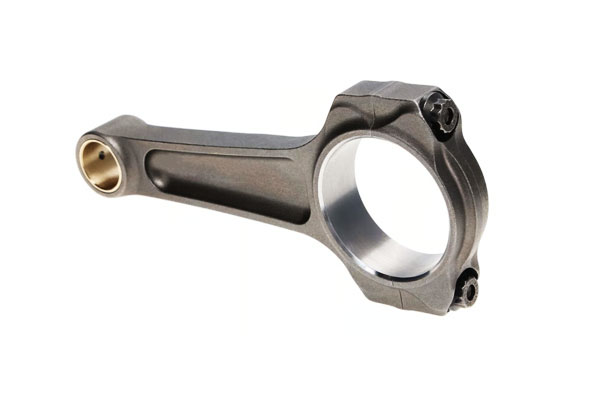
Investment casting is a high-precision casting technique that uses a wax pattern, which is coated in ceramic to create a detailed mold.
Once the wax is melted out, molten carbon steel is poured into the cavity.
This method is ideal for producing small-to-medium sized parts with intricate shapes, thin walls, and fine details that require minimal machining. It offers excellent surface finish and dimensional accuracy.
Key Features:
- Wax patterns are coated in ceramic slurry to form molds
- Produces complex geometries and thin walls (as thin as 2–3 mm)
- Tolerances: ±0.1–0.3 mm
- Excellent surface finish: Ra ~3.2–6.3 μm
- More expensive than sand casting but less post-processing required
Typical Applications:
Automotive brackets, turbine components, tool parts, defense hardware
Shell Mold Casting
Shell mold casting is a refined version of sand casting, using fine silica sand coated with a thermosetting resin to form thin, rigid mold shells.
The process provides improved dimensional accuracy and surface finish over traditional sand casting and is particularly efficient for producing moderate-to-high volumes of medium-sized carbon steel parts with tighter tolerances.
It bridges the gap between sand casting and investment casting in terms of performance and cost.
Key Features:
- Good dimensional accuracy and surface finish
- Tolerances: ±0.5–1 mm
- Suitable for medium to high-volume production
- Lower machining costs due to near-net-shape quality
Typical Applications:
Gear housings, engine components, precision industrial parts
Lost Foam Casting
Lost foam casting uses patterns made of expanded polystyrene foam, which evaporate when molten metal is poured into the mold, forming the final shape without the need for cores or parting lines.
This technique excels in producing complex, consolidated designs with minimal machining.
It is well-suited for medium to large parts and provides significant design freedom, reduced assembly requirements, and good dimensional consistency.
Key Features:
- Excellent for complex, consolidated designs
- Eliminates need for cores or parting lines
- Good dimensional control
- Tolerances: ±0.5–1 mm
- Reduces assembly and welding needs
Typical Applications:
Manifolds, structural castings, automotive blocks, compressor parts
Process Selection Considerations for Carbon Steel Casting
Choosing the right casting process depends on multiple technical and economic factors, including part size, dimensional tolerance, surface finish, complexity, and production volume.
| Criteria | Sand Casting | Investment Casting | Shell Mold Casting | Lost Foam Casting |
| Typical Part Size Range | Medium to very large (0.5 kg – >5,000 kg) | Small to medium (50 g – 50 kg) | Small to medium (0.5 – 30 kg) | Medium to large (1 – 1,000 kg) |
| Dimensional Accuracy | Low to moderate (±1.5–3 mm per 100 mm) | High (±0.1–0.5 mm per 100 mm) | Moderate to high (±0.5–1.0 mm per 100 mm) | Moderate to high (±0.5–1.5 mm per 100 mm) |
| Surface Finish (Ra) | 12.5–25 µm | 3.2–6.3 µm | 6.3–12.5 µm | 6.3–12.5 µm |
| Wall Thickness Capability | ≥5–8 mm (may require chills) | ≥2–3 mm (very thin features possible) | ≥3–5 mm | ≥3–6 mm |
| Design Complexity | Moderate (limited internal detail) | Very high (excellent for intricate designs) | Moderate to high | High (consolidated structures, no cores needed) |
| Tooling Cost | Low (~$500–$5,000) | High (~$5,000–$50,000) | Medium (~$3,000–$20,000) | Medium (~$4,000–$25,000) |
| Production Cost per Part | Low at small volumes | High at low volumes, cost-effective at scale | Medium | Medium |
| Production Volume Suitability | Medium to high (1–50000 pcs/year) | Medium to high (>10000 pcs/year recommended) | High (>30000 pcs/year) | Medium (100–10,000 pcs/year) |
| Lead Time (Tooling + First Part) | ~2–4 weeks | ~4–8 weeks | ~3–6 weeks | ~4–7 weeks |
| Post-Casting Machining Need | High | Low to moderate | Low to moderate | Moderate |
| Material Yield/Waste | Moderate (requires gating, risers) | Low (precision mold size, minimal excess) | Low to moderate | Low (mold evaporates, minimal metal loss) |
| Application Examples | Gearboxes, counterweights, engine blocks | Aerospace brackets, valves, surgical tools | Pump housings, manifolds, gear covers | Engine blocks, suspension parts, structural parts |
4. Post-Casting Heat Treatment and Surface Treatment
Once carbon steel castings are removed from their molds, they often undergo post-casting treatments to enhance mechanical properties, relieve internal stresses, and improve surface characteristics.
These treatments are critical for achieving the desired performance, reliability, and longevity of the final part.
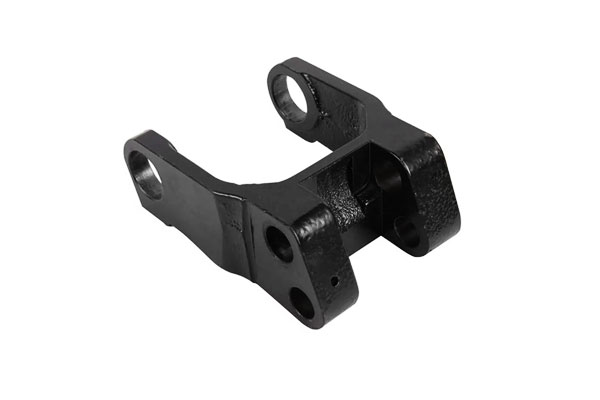
Heat Treatment for Carbon Steel Castings
Heat treatment modifies the microstructure of the casting to improve strength, ductility, toughness, and machinability.
The choice of treatment depends on the carbon content and the specific grade of steel.
Common heat treatment methods include:
| Treatment | Purpose | Typical Temperature Range |
| Annealing | Refines grain structure, relieves internal stress, improves ductility | 790–900 °C |
| Normalizing | Improves strength and hardness, promotes uniform microstructure | 850–950 °C |
| Quenching & Tempering | Increases hardness and tensile strength while retaining toughness | Quenching: 800–870 °C; Tempering: 500–700 °C |
| Stress Relieving | Reduces residual stresses from casting and machining | 550–650 °C |
Note: Improper heat treatment can lead to undesirable phases (e.g., martensite or pearlite imbalance), cracking, or dimensional instability.
Therefore, strict process control and temperature monitoring are essential.
Surface Treatment for Carbon Steel Castings
Surface treatments enhance the appearance, corrosion resistance, and wear performance of carbon steel castings, especially in demanding environments.
Typical surface finishing processes include:
| Method | Function | Application Examples |
| Shot Blasting | Removes scale, sand, and oxides; prepares surface for coating | Standard prep for painting, powder coating |
| Pickling & Passivation | Removes surface oxides and rust; improves corrosion resistance | Used in corrosive service applications |
| Phosphate Coating | Provides a base for painting and improves corrosion resistance | Automotive, military equipment |
| Zinc Plating (Galvanizing) | Protects from corrosion via sacrificial coating | Outdoor or marine hardware |
| Powder Coating / Painting | Enhances appearance, weather protection | Agricultural equipment, structural parts |
| Machining & Grinding | Achieves dimensional tolerances and surface finish | Bearing surfaces, sealing faces |
Integration with Quality Control
Post-casting treatments are often followed by non-destructive testing (NDT) or dimensional inspections to ensure the treated part conforms to mechanical and surface quality specifications.
Techniques like magnetic particle inspection (MPI) or ultrasonic testing (UT) help detect hidden cracks or subsurface flaws that may occur during heat treatment.
Key Benefits of Post-Casting Treatments
- Enhanced mechanical properties: strength, toughness, and fatigue resistance
- Improved dimensional stability and machinability
- Increased surface durability and corrosion resistance
- Preparation for downstream processing (e.g., welding, coating, assembly)
5. Mechanical and Physical Properties of Carbon Steel Casting
Understanding the mechanical and physical properties of carbon steel castings is critical for selecting the right material and casting process to meet the functional demands of various industrial applications.
| Property | Low-Carbon (0.1–0.25% C) | Medium-Carbon (0.3–0.6% C) | High-Carbon (0.6–1.0% C, Q&T) |
| Tensile Strength (MPa) | 350 – 550 | 550 – 850 | 850 – 1,200 |
| Yield Strength (MPa) | 250 – 400 | 400 – 700 | 700 – 1,000 |
| Elongation (%) | 25 – 30 | 15 – 25 | 5 – 15 |
| Hardness (HB) | 150 – 200 | 200 – 300 | 300 – 400 |
| Impact Toughness (J, Charpy V-notch) | 40 – 60 | 20 – 40 | 10 – 30 |
| Density (g/cm³) | ~7.85 | ~7.85 | ~7.85 |
| Melting Range (°C) | 1,420 – 1,530 | 1,370 – 1,480 | 1,370 – 1,480 |
| Thermal Conductivity (W/m·K) | 50 – 60 | 45 – 55 | 45 – 50 |
| Coefficient of Thermal Expansion (×10⁻⁶ /°C) | 11 – 13 | 11 – 13 | 11 – 13 |
Machinability and Weldability
- Machinability: Low-carbon steel (machinability index 80–100 vs. 100 for 1215 steel); high-carbon steel (40–60) due to hardness.
- Weldability: Low-carbon steel (excellent, no preheating needed); medium-carbon (requires 200–300°C preheat); high-carbon (poor, prone to cracking).
Heat and Wear Resistance
- Heat Resistance: Oxidation rate <0.1 mm/year up to 400°C; rapid oxidation above 500°C (limiting use in high-heat applications).
- Wear Resistance: High-carbon Q&T steel (350 HB) has 2× better abrasive wear resistance than ductile iron (250 HB).
6. Applications of Carbon Steel Castings
Carbon steel castings are widely used across diverse industries due to their versatility, strength, and cost-effectiveness.
Their ability to be cast into complex shapes while maintaining excellent mechanical properties makes them ideal for critical components in heavy-duty and structural applications.

Automotive and Transportation
- Engine components: crankshafts, camshafts, cylinder heads, and connecting rods, benefiting from high tensile strength and fatigue resistance.
- Transmission parts: gears, housings, and shafts that require wear resistance and dimensional accuracy.
- Chassis components: brackets and suspension parts where durability and toughness are essential.
Construction and Infrastructure
- Structural elements: cast frames, supports, and connectors used in buildings and bridges.
- Heavy machinery parts: excavator buckets, crane components, and loader arms requiring high impact resistance.
- Fasteners and fittings: durable, high-strength components for assembling large structures.
Oil & Gas and Petrochemical
- Valves and pump housings: components exposed to high pressure and wear.
- Pipe fittings and flanges: carbon steel’s strength and machinability allow for reliable sealing and connection.
- Drilling equipment: rugged parts designed for extreme environments.
Agricultural and Mining Equipment
- Plowshares, blades, and tillage equipment: wear-resistant parts for soil engagement.
- Mining machinery components: crushers, conveyor parts, and housing units that require toughness and abrasion resistance.
- Tractor and heavy equipment parts: frames and engine components subjected to heavy loading.
Marine and Industrial Machinery
- Propeller shafts and housings: carbon steel castings used where strength and moderate corrosion resistance are required.
- Pump and compressor parts: castings offering durability under continuous operation.
- Industrial valves and fittings: essential for fluid control systems in manufacturing plants.
7. Advantages of Using Carbon Steel Castings
Carbon steel castings are widely favored in manufacturing due to a unique combination of mechanical performance, cost efficiency, and versatility.

Cost-Effectiveness
Carbon steel castings provide an economical solution due to affordable raw materials and efficient near-net-shape casting, reducing machining and waste.
High Strength-to-Weight Ratio
They offer excellent tensile strength and toughness, delivering durable parts capable of withstanding heavy loads without excessive weight.
Design Flexibility
The casting process enables complex shapes, thin walls, and internal features that are difficult to achieve with other manufacturing methods.
Excellent Machinability and Weldability
Most carbon steel castings are easy to machine and can be welded reliably, facilitating post-casting operations and repairs.
Recyclability
Carbon steel is highly recyclable, supporting sustainable manufacturing with minimal quality loss upon remelting.
Thermal and Wear Resistance
Carbon steel castings provide good wear resistance and thermal conductivity, suitable for components exposed to abrasion and moderate heat.
8. Limitations of Carbon Steel Casting
- Corrosion Sensitivity: Uncoated carbon steel corrodes at 0.1–0.3 mm/year in freshwater, 0.3–0.5 mm/year in seawater—requires coatings for harsh environments.
- Surface Finish and Post-Processing: As-cast surface finish (Ra 12.5–25 μm for sand casting) often needs machining (cost +10–20%) for sealing surfaces.
- Dimensional Tolerances: Wider than stainless steel or ductile iron shell castings; sand-cast parts require ±0.5 mm vs. ±0.2 mm for shell-molded ductile iron. May require additional machining for precision applications
9. Challenges and Quality Control of Carbon Steel Casting
Carbon steel casting faces unique challenges, addressed through rigorous process controls:

- Shrinkage and Porosity: Molten steel shrinks 3–5% during solidification, risking cavities.
Mitigated by riser design (10–15% of part volume) and vacuum degassing (reducing hydrogen to <0.003 cm³/100g). - Oxidation and Inclusions: Oxygen reacts with iron to form oxides, weakening the casting.
Solutions include inert gas shielding (argon) during pouring and ladle refining to remove inclusions. - Cracking: Thermal stress from uneven cooling causes hot tears.
Controlled cooling rates (5–10°C/min) and mold coatings (graphite-based) reduce stress, ensuring <0.1% defect rates in high-volume production.
10. Comparison with Other Casting Materials
| Feature | Carbon Steel Casting | Alloy Steel Casting | Stainless Steel Casting | Ductile Iron Casting |
| Typical Carbon Content | 0.1% – 1.0% | 0.1% – 1.0% + alloying elements (Cr, Ni, Mo, V) | ≤ 0.1% with high Cr (10.5%–30%) | 3.0% – 4.0% carbon, plus Mg for nodularity |
| Tensile Strength (MPa) | 350 – 1,200 | 500 – 1,500 | 400 – 1,200 | 400 – 900 |
| Yield Strength (MPa) | 250 – 900 | 350 – 1,200 | 250 – 1,000 | 250 – 700 |
| Elongation (%) | 5 – 30 | 4 – 20 | 20 – 40 | 10 – 25 |
| Hardness (HB) | 120 – 300 | 200 – 400 | 150 – 300 | 180 – 280 |
| Melting Point (°C) | 1,370 – 1,530 | 1,370 – 1,600 | 1,400 – 1,530 | 1,150 – 1,400 |
| Corrosion Resistance | Low, requires coatings or treatments | Moderate, depends on alloying | High, due to chromium content | Moderate, prone to rust without protection |
| Wear Resistance | Moderate, improved with heat treatment | High, especially with alloy additions | Moderate | Very high, excellent abrasion resistance |
| Machinability | Good, easy to machine and weld | Moderate to low, depends on alloy content | Moderate to difficult due to hardness | Good, easier than many steels |
| Density (g/cm³) | ~7.85 | ~7.75 – 8.05 | ~7.7 – 8.0 | ~7.1 – 7.3 |
| Typical Applications | Automotive parts, construction machinery, pipelines | Aerospace components, heavy-duty machinery | Medical devices, food processing, chemical equipment | Pipes, automotive components, agricultural machinery |
11. Conclusion
Carbon steel casting remains a cornerstone of industrial manufacturing, offering unmatched versatility, mechanical performance, and economic value.
With a wide range of grades, casting methods, and post-processing options, it can be tailored to meet diverse engineering requirements across nearly every major industry.
As technologies like 3D printed patterns and advanced simulation continue to evolve, the precision and efficiency of carbon steel casting are expected to improve, reinforcing its role in next-generation manufacturing.
FAQs
How does carbon steel casting compare to ductile iron casting?
Carbon steel offers higher tensile strength (600–1,200 MPa vs. 400–800 MPa for ductile iron) but is 20–30% more expensive.
Ductile iron excels in corrosion resistance with coatings, while carbon steel requires more protection in harsh environments.
Can carbon steel castings be welded?
Yes. Low-carbon cast steel (≤0.25% C) welds easily with minimal preheating.
Medium/high-carbon grades require preheating (200–300°C) to prevent cracking, with post-weld heat treatment to relieve stress.
What is the maximum service temperature for carbon steel castings?
Medium-carbon cast steel retains 80% of room-temperature strength at 500°C.
Above 600°C, oxidation and grain growth reduce performance, limiting use to lower-temperature applications than stainless steel.
How are carbon steel castings inspected for quality?
Non-destructive testing (ultrasonic, radiographic) detects internal defects; tensile testing ensures strength meets standards (e.g., ASTM A216); and metallographic analysis verifies grain structure and inclusion content.
What is the typical lead time for carbon steel castings?
Sand casting: 2–4 weeks (tooling + production). Investment casting: 4–8 weeks (longer tooling for wax patterns).
High-volume production (10,000+ parts) reduces per-unit lead time to 1–2 weeks.
What is the difference between WCB and LCC carbon steel?
WCB (ASTM A216) is medium-carbon (0.25–0.35% C) for high-temperature service; LCC (ASTM A352) is low-carbon (≤0.15% C) for low-temperature (-46°C) applications, with better toughness.