1. Introduction
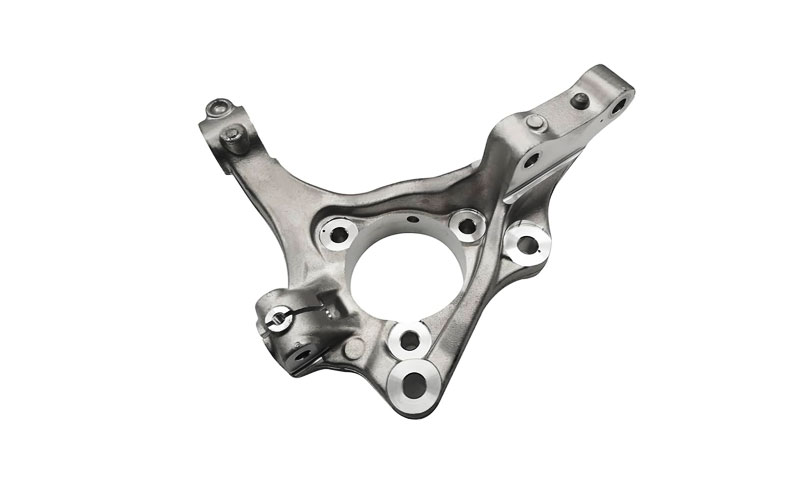
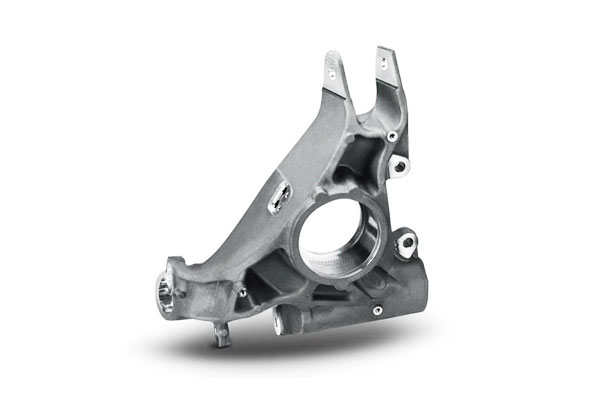
Steering knuckles (also called upright or spindle) are the structural interface between wheel hub/bearing, steering tie-rod, control arms or strut, and brake caliper.
They transmit steering, braking and suspension loads — often repeatedly and under complex multiaxial stress states — so strength, fatigue resistance and dimensional accuracy are paramount.
Aluminum die-casting of knuckles is attracting interest because it enables complex integrated geometry (bearing bosses, brake mounting faces, integrated ribs) and mass savings.
However, the application is demanding: knuckles must meet crash and fatigue requirements, and die casting introduces risks (porosity, inclusions, segregation) that must be managed.
2. Roles & Functional Requirements of a Steering Knuckle
Key functional demands include:
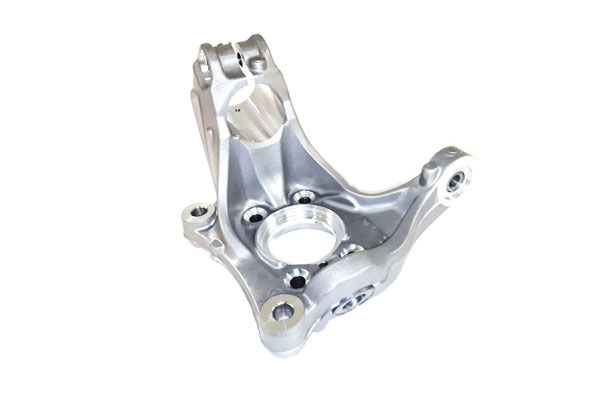
- Load bearing & transmission: steering torque, lateral cornering loads, vertical loads from suspension and braking forces.
- Precision datums: bearing bore coaxiality, wheel hub mounting, caliper face location, and tie-rod/ball-joint fits.
Typical bore tolerances are tight (often <±0.05–0.1 mm after final machining). - Fatigue life: millions of load cycles over vehicle life. Knuckles are fatigue-critical components.
- Impact & crashworthiness: survive jolts, curb hits and U-bar impacts without catastrophic fracture.
- Corrosion & environmental resistance: withstand road salts, moisture and debris without accelerated degradation.
- NVH performance: control stiffness and damping to avoid resonance and harshness.
3. Why Choose Aluminum Die-Casting for Steering Knuckles?
Advantages
- Weight reduction: Al alloys ≈ 2.7 g·cm⁻³ vs steel ≈ 7.8–7.9 g·cm⁻³ → substantial unsprung-mass savings, improving ride and efficiency.
- Near-net shape & integration: combine bosses, ribs and mounting features into one casting reducing part count and welds.
- High production rates: HPDC supports fast cycle times and low per-part cost at scale.
- Good thermal behavior: aluminum dissipates heat from brakes better than some materials, aiding brake cooling in some designs.
Trade-offs / challenges
- Lower intrinsic strength & stiffness versus forged steel — requires larger sections or reinforcement, influencing packaging.
- Fatigue sensitivity to casting defects (porosity, inclusions) — demands strict foundry controls and inspection.
- Wear at bearing bores and threaded assemblies may require inserts or post-machining.
- Corrosion & galvanic coupling with steel parts must be managed (coatings, design, sacrificial anodes).
4. Materials & Alloy Choices
Common die-cast aluminum alloys used for knuckles

- A380 / ADC12 (Al-Si-Cu family) — often chosen for HPDC parts due to excellent castability, fluidity and surface finish.
-
- Density: ≈ 2.82–2.90 g·cm⁻³ (typical range depending on alloy).
- As-cast tensile strength: broadly ~200–320 MPa (varies with porosity, section, and process).
- Comments: excellent die life & fast cycles; moderate strength; commonly used when large complex castings and thin walls are required.
- A356 / AlSi7Mg (heat-treatable casting alloy) — used when higher strength and fatigue performance are needed; heat-treatable to T6.
-
- Density: ≈ 2.68–2.72 g·cm⁻³ (close to generic aluminium).
- T6 tensile strength:~260–320 MPa (varies with section size and T6 effectiveness).
- Comments: commonly used in gravity or squeeze casting, or low-pressure die casting where better mechanical properties are needed.
- High-integrity die-cast variants / reinforced alloys — some OEMs use special alloys or modified chemistries for improved ductility, reduced hot-cracking, or to accept T6 heat treatment.
Key physical data (typical, engineering guidance)
- Elastic modulus (Al): ≈ 69–72 GPa
- Thermal expansion: ≈ 23–25 ×10⁻⁶ /°C
- Fatigue behavior: strongly dependent on casting soundness; cast alloys show much lower fatigue endurance limits than wrought counterparts unless defects are controlled.
Note: All numbers above are typical engineering ranges. Exact values depend on alloy lot, casting method, section thickness, heat treatment, and porosity level. Always use supplier-specific data and test coupons for qualification.
5. Die-Casting Processes Used for Knuckles
- High-Pressure Die Casting (HPDC): Most common for complex, thin-walled knuckles at high volume. Pros: speed and surface finish.
Cons: higher tendency to entrain gas porosity (unless vacuum & low-turbulence gating used). - Vacuum HPDC: HPDC with vacuum applied to shot chamber or mold to reduce entrapped air and hydrogen porosity — used for safety-critical components like knuckles.
- Low-Pressure Die Casting / Squeeze Casting: Better solidification control, lower porosity, and improved mechanical properties; cycle times slower and tooling different — chosen when higher integrity is needed.
Process selection tradeoff: HPDC + vacuum is often the practical compromise for high volume automotive knuckles; squeeze casting or LPDC may be selected when fatigue margins are tight and volumes justify cost.
6. Machining, Assembly Features & Joining
Even with near-net shape casting, knuckles require crucial machining steps.
Primary operations
- Finish bore for wheel hub and bearing: typically reamed/finish-bored to tight concentricity.
- Bolt face & caliper mounting: machined for flatness and bolt pattern tolerances.
- Threaded holes: machined; consider inserts (Helicoil / press-fit stainless) where repeated torque cycles occur.
Bearing & hub retention
- Press fits: design for correct interference (specify press-fit interference values per bearing spec).
- Cold expansion / clinching sometimes used for additional retention.
Hybrid inserts
- For high wear/tight tolerances, fit steel or sintered inserts into the cast bosses (shrink-fit or bonded) to combine the cast geometry and the wear resistance of steel.
Joining
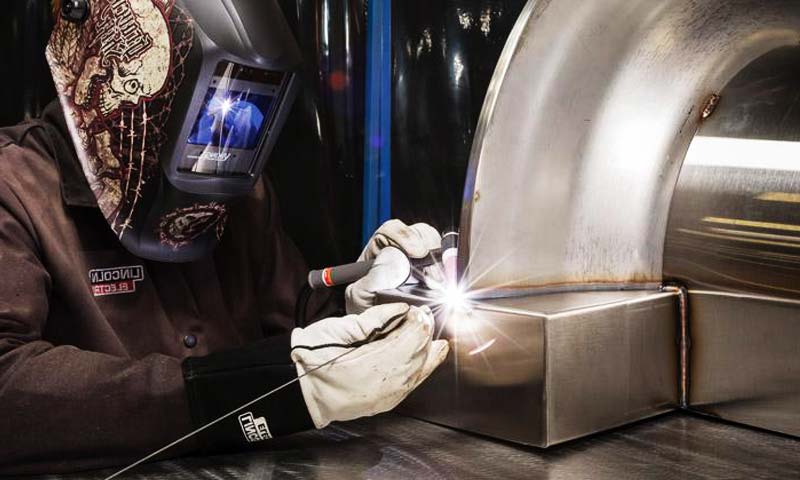
- Welding on die-cast Al is limited; brazing or adhesive bonding are options for some attachments. Use mechanical fasteners for critical load paths.
7. Heat Treatment, Local Reinforcement & Hybrid Processes
- T6 solution + artificial aging: applicable to heat-treatable alloys (A356) to raise strength and fatigue life.
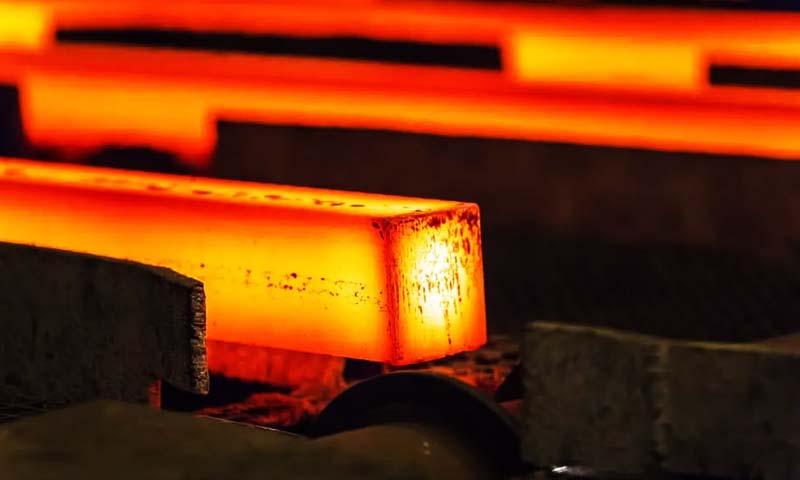
HPDC alloys like A380 typically aren’t T6-treated at scale but special processes exist. - Local induction hardening: applied to wear zones or bearing journals in some designs.
- Forged/inserted hubs: combining cast bodies with machined/forged bearing housings (pressed/bolted) gives the best of both worlds: lightweight cast geometry and high-integrity bearing seats.
8. Surface Treatments, Corrosion Protection & NVH
Steering knuckles sit at a harsh intersection of mechanical load, road splash, salt and mixed-metal contacts.
Surface treatment and NVH measures are not cosmetic add-ons — they protect fatigue life, prevent galvanic attack and tune dynamic response.
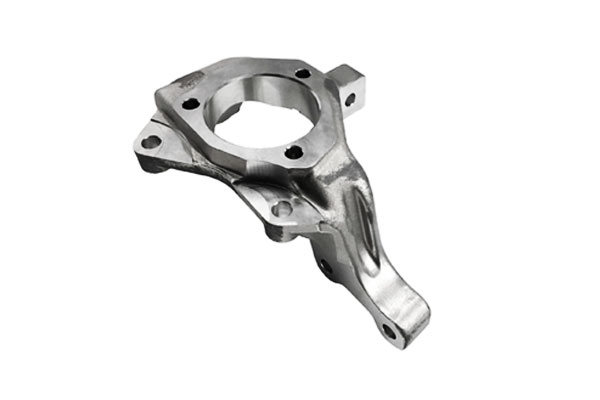
Bulk coating options (recommended stack for automotive knuckles)
Cathodic Electrodeposition (E-coat) + Epoxy Primer + Topcoat (polyurethane / polyester) — the OEM standard
- E-coat (electrodeposition primer): typical thickness 10–25 µm. Excellent substrate coverage and corrosion resistance.
- Epoxy/primer: 30–70 µm for chip resistance and adhesion.
- Topcoat (base/clear or powder coat): 20–40 µm for UV/weather protection and appearance.
- Advantages: excellent stone-chip, salt, and long-term corrosion resistance; mature automotive process; good adhesion to conversion-treated Al.
- Key controls: pre-treatment cleanliness, conversion coating, bake schedule and masking of bearing/press-fit zones.
Conversion coatings (pre-treatment) — required before e-coat/paint
- Trivalent chromium conversion (Cr(III)) or zirconium/titanium-based conversion coatings (chromate-free) are preferred for environmental compliance.
- Function: improves paint adhesion, provides some temporary corrosion protection during handling. Typical film is thin (nm scale) and not a standalone protection.
- Avoid: hexavalent chromium (Cr(VI)) due to regulatory and health issues.
Anodizing / Hard Anodize — selective use
- Anodizing builds a ceramic oxide layer (thickness 5–25 µm typical); hard anodize gives thicker layers (25–100 µm).
- Limitations for knuckles: anodize is brittle and generally unsuitable for bearing bores or mating surfaces that require press fits or tight tolerances; anodize can be used on non-functional exterior surfaces where extra abrasion resistance is needed.
- Recommendation: prefer coating + sealing rather than full anodize for structural knuckles.
Localized plating / nickel or zinc flake treatments
- Zinc flake coatings (thin sacrificial layer) are sometimes used for fasteners and exposed steel inserts to improve galvanic hierarchy.
- Electroless nickel may be considered for wear surfaces but is expensive and adhesive control on die-cast Al is challenging.
Functional/local treatments & inserts (critical for performance)
Machined bearing bores & pressed steel inserts
- Always machine final bearing bores to required tolerance; consider steel insert sleeves (shrink / press fit or bonded) for:
-
- improved local wear resistance,
- higher interference press fits, and
- galvanic isolation (insert material chosen to be compatible with axle/hub steel).
- Insert practice: prepare bore with a conversion coat + local adhesive or interference fit; mask during bulk coating process.
Threaded holes
- Use stainless steel inserts (Helicoil, Press-in inserts) for repeated torque cycles or use thread-locking adhesives and anti-seize when mating with steel fasteners.
- Protect threads during coating (temporary plugs) or perform post-coat thread cleaning.
Sealing faces & mating surfaces
- Do not coat sealing faces that must be machined for flatness — machine after coating where required, or mask these regions.
Use electropolishing sparingly; it can improve corrosion resistance but changes geometry.
Anti-galvanic measures
- Isolators/washers (polymer or non-metallic) between aluminum and steel mating faces reduce galvanic current.
- Selective plating for steel fasteners (zinc flake) creates a sacrificial partner to protect Al.
Assembly lubricants & anti-seize
- Use approved anti-seize compounds on steel-Al contacts to prevent galling and ease disassembly; ensure lubricant chemistry is compatible with coatings and fluids.
Fatigue and surface conditioning treatments
Shot peening / surface peening
- Purpose: introduce beneficial compressive residual stress in the surface to delay fatigue crack initiation (especially useful near fillets and machined radii).
- Application: shot appropriately selected (aluminium-compatible media), intensity and coverage controlled. Typical practice: validate peening on prototypes and measure residual stress/Almen equivalent.
- Note: avoid over-peening which can induce surface roughness and localized tensile rise.
Vibratory finishing / tumbling
- Removes sharp edges and improves surface finish to reduce stress raisers. Use as a pre-machining operation where appropriate.
Surface roughness targets
- For fatigue-sensitive fillets and load paths, specify as-machined Ra targets and secondary smoothing where needed; typical guidance: Ra ≤ 3.2 µm for general surfaces and ≤ 1.6 µm for critical stress transition zones after finishing.
NVH (Noise, Vibration & Harshness) considerations
Aluminum’s lower density vs. cast iron can increase vibration transmission—mitigated by:
- Damping Features: Integral rubber bushings in suspension brackets (e.g., 50 Shore A durometer) – reduces vibration by 20–30%.
- Material Damping: Alloy selection (A356 has 15% higher damping than 6061) – lowers resonant noise by 5–10 dB.
- Geometry Optimization: Stiffening ribs tuned to avoid resonance with wheel/tire frequencies (20–30 Hz) – prevents “road hum” in the cabin.
9. Failure Modes, Common Defects & Mitigation
Typical defects
- Porosity (gas/shrinkage): mitigated by vacuum, degassing, ceramic filtration and optimized gating.
- Cold shuts / misruns: inadequate pouring temp or poor gating — fix gating and thermal mass.
- Hot tearing: avoid sharp section changes and control solidification with chills/risers.
- Cracks at machined bores: caused by subsurface porosity or over-aggressive machining — detect via CT and control machining allowances.
- Galvanic corrosion at steel interfaces: manage with coatings and isolation.
10. Manufacturing Economics, Tooling & Supply Chain
- Tooling cost: die tooling is capital-intensive (typical ranges vary widely).
Expect notable upfront investment — small dies tens of thousands USD; complex multi-cavity dies can exceed hundreds of thousands.
Accurate cost depends on complexity, number of cavities, die life materials and cooling. - Per-part cost: dies amortized over high volumes; HPDC becomes competitive at medium→high production volumes (tens of thousands+).
- Supply chain: critical suppliers include die manufacturers, core/insert producers, heat-treatment houses, machining centers and inspection labs. OEMs often require supplier IATF 16949 quality systems and process capability evidence (Cp/Cpk).
- Cycle time: HPDC cycle times for a knuckle can range from several seconds to a minute depending on size and cooling strategy; additional machining and finishing add hours per part in throughput planning.
11. Comparison with Alternatives
(Casting Aluminum Die-Casting Steering Knuckle vs. Other Manufacturing & Material Options)
| Option | Manufacturing Method | Key Advantages | Limitations | Typical Applications |
| Aluminum Die-Casting Steering Knuckle | High-pressure die casting (HPDC) or squeeze casting | • Very light weight (25–40% lighter than steel) • High dimensional accuracy for complex shapes • Excellent manufacturability at high volumes • Good corrosion resistance • Compatible with surface coatings and heat treatment | • Potential porosity if not vacuum-assisted • Lower damping than iron/steel • Requires careful NVH and fatigue engineering | Passenger cars, EVs, lightweight platforms, performance vehicles |
| Forged Aluminum Knuckle | Closed-die forging + CNC machining | • Higher toughness and fatigue strength than cast aluminum • Superior structural integrity • Excellent crash performance | • Higher cost (material + machining) • Limited geometric freedom • Heavier than cast due to required rib/section thickness | Premium vehicles, motorsport, heavy-duty SUVs |
Cast Iron Knuckle |
Sand casting | • Very high damping and NVH stability • Excellent wear and robustness • Low material cost | • Significantly heavier (2–3× aluminum) • Poor corrosion resistance • Not suitable for weight-sensitive vehicles | Trucks, buses, legacy vehicles, budget platforms |
| Forged Steel Knuckle | Hot forging + machining | • Highest mechanical strength • Excellent fatigue and impact resistance • Suitable for extreme loads | • Very heavy • Needs coating to prevent corrosion • Higher machining cost | Heavy-duty trucks, off-road vehicles, commercial vehicles |
| Composite Knuckle (Carbon Fiber / Hybrid) | Lay-up, RTM, or hybrid over-molding | • Ultra-lightweight (<50% of forged Al) • Superior corrosion resistance • Potential NVH improvements with engineered damping | • Very expensive • Limited temperature resistance vs. metals • Complex repair and joining methods | High-end EVs, racing, advanced R&D programs |
12. LangHe Offers Custom Aluminum Die-Casting Steering Knuckles
LangHe specializes in custom-designed, high-precision aluminum die-casting steering knuckles for Tier-1 automotive applications.
Leveraging advanced HPDC, vacuum-assisted die casting, and squeeze casting technologies, LangHe delivers lightweight components with optimized fatigue strength, dimensional accuracy, and corrosion resistance.
With in-house casting, CNC machining, surface treatment, and quality inspection capabilities, LangHe supports fully tailored solutions for passenger vehicles, EVs, SUVs, and performance platforms, ensuring compliance with OEM specifications, NVH targets, and safety-critical standards.
The company also provides rapid prototyping, small-batch validation, and full-scale production, making it a trusted partner for automakers seeking cost-effective, high-performance steering knuckle solutions.
13. Conclusion
Aluminum die-casting steering knuckles can deliver substantial mass savings and packaging/assembly benefits for modern vehicles — especially EVs and high-efficiency ICE vehicles.
But they are only viable when alloy choice, process selection (vacuum HPDC or LPDC), design for casting and machining, and a rigorous qualification and inspection regime are implemented.
Safety margins must be conservative, and fatigue/impact qualification is mandatory.
FAQs
Which alloy is best for a knuckle: A380 or A356?
A356 (heat-treatable) gives higher potential strength and fatigue when T6 is applied (if process supports it); A380 is excellent for die-castability and cycle time.
The choice depends on required mechanical margins and whether the process and design allow heat treatment.
Can die-cast knuckles be T6 heat-treated?
Some alloys and process variants support T6; HPDC A380 is less commonly T6-treated at scale due to porosity and distortion risk.
LPDC or squeeze cast A356 with controlled solidification is more suitable for T6.
How do OEMs control porosity?
Use vacuum HPDC, argon degassing, ceramic filtration, optimized gating, controlled melt temperature and solidification, and CT/radiography inspection with SPC trending.
Are aluminum knuckles used in production vehicles?
Yes — several OEMs have adopted aluminum knuckles in production for specific models (lightweight platforms, EVs), typically with robust process controls and qualifying tests in place.
What’s the main failure risk for aluminum knuckles?
Fatigue crack initiation at subsurface porosity or stress concentrators; also wear/creep at bearing seats if not properly reinforced.