1. Introduction
AlSi10Mg Alloy represents a benchmark in the Al‑Si‑Mg family, combining exceptional castability with a high strength‑to‑weight ratio.
Widely adopted across aerospace, automotive, and electronics industries, this alloy leverages its ~10 wt% silicon content to achieve fluidity and thin‑wall capability, while its magnesium addition enables precipitation hardening for enhanced mechanical performance.
In both traditional casting routes, such as high‑pressure die casting and gravity die casting,
and advanced additive manufacturing processes like Direct Metal Laser Sintering (DMLS) and Selective Laser Melting (SLM), AlSi10Mg continues to set the standard for high‑performance, lightweight components.
2. What is AlSi10Mg Alloy?
AlSi10Mg is a hypoeutectic aluminum alloy belonging to the widely used Al‑Si casting family.
Its nominal chemical composition is approximately 89 wt% aluminum, 9–11 wt% silicon, and 0.2–0.5 wt% magnesium, with trace levels of iron, manganese, and titanium to control intermetallic formation and refine grain structure.
Because of its balanced silicon and magnesium content, AlSi10Mg combines the fluidity and low melting range typical of Al‑Si alloys with the age‑hardening capability endowed by Mg₂Si precipitates.
This makes it exceptionally versatile across both conventional and powder‑based manufacturing techniques.

Classification and Equivalents
- EN AC‑43000 (DIN EN 1706): European designation for sand, die, and gravity castings.
- ASTM A360/A360M: North American standard covering permanent mold castings for general engineering.
- ISO 945‑2: Governs chemical composition tolerances for AlSi10Mg in wrought and cast forms.
3. Chemical Composition of AlSi10Mg Aluminum Casting Alloys
The performance of AlSi10Mg stems directly from its carefully balanced chemistry. Below is a summary of the typical composition ranges and the metallurgical roles each element plays.
| Element | Nominal (wt%) | Range (wt%) | Primary Function |
| Aluminum (Al) | Bal. | Bal. | Provides the lightweight, ductile matrix that carries the load. |
| Silicon (Si) | 10.0 | 9.0 – 11.0 | Lowers the melting range to 570–610 °C while enhancing fluidity and promoting a refined eutectic microstructure. |
| Magnesium (Mg) | 0.35 | 0.20 – 0.45 | Precipitates as Mg₂Si during heat treatment to significantly boost yield and tensile strength. |
| Iron (Fe) | — | ≤ 0.55 | Kept below 0.55 wt% to prevent formation of brittle iron‑rich intermetallics. |
| Manganese (Mn) | — | ≤ 0.45 | Modifies iron phases into compact intermetallics that improve ductility and reduce hot‑tearing. |
| Titanium (Ti) | — | ≤ 0.15 | Acts as a grain refiner, promoting a uniform, equiaxed microstructure and consistent mechanical properties. |
| Copper, Zinc, Others | — | ≤ 0.10 each | Held to minimal levels to avoid harmful intermetallics and preserve both corrosion resistance and castability. |
4. Mechanical Properties of AlSi10Mg Aluminum Casting Alloys
AlSi10Mg exhibits a versatile mechanical profile that can be tailored through choice of casting process and heat‐treatment regimen.
In its as‑cast or as‑built state, the alloy delivers a balance of strength and ductility suitable for many applications.
| Property | As‑Cast / As‑Built | T4 (Solution + Natural Aging) | T6 (Solution + Artificial Aging) |
| Ultimate Tensile Strength (MPa) | 230 – 320 | 280 – 360 | 400 – 460 |
| Yield Strength (0.2% offset) (MPa) | 130 – 230 | 160 – 250 | 250 – 300 |
| Elongation at Break (%) | 1 – 6 | 5 – 10 | 4 – 8 |
| Brinell Hardness (HB) | 70 – 110 | 90 – 120 | 110 – 130 |
| Fatigue Strength (MPa, 10⁷ cycles) | ~90 | ~100 | ~120 |
| Fracture Toughness K_IC (MPa·√m) | 15 – 18 | 16 – 20 | 18 – 22 |
5. Physical Properties of AlSi10Mg Alloys
AlSi10Mg combines the lightweight and thermal performance of aluminum with silicon‑enhanced stability, making it an excellent choice where thermal management and dimensional control are critical.
Its physical constants are largely invariant across casting and AM processes, though minor variations can arise from porosity levels and microstructural differences.
| Property | Typical Value |
| Density | 2.65 g/cm³ |
| Thermal Conductivity | 160 – 180 W/m·K |
| Coefficient of Thermal Expansion (CTE) | 21 – 24 µm/m·K |
| Melting Range | 570 – 610 °C |
| Specific Heat Capacity | ~0.88 J/g·K |
| Electrical Conductivity | 30 – 40% IACS |
| Young’s Modulus | ~70 GPa |
| Poisson’s Ratio | ~0.33 |
6. Castability and Processing Techniques of AlSi10Mg Alloy
AlSi10Mg’s castability is among the best in the aluminum alloy family, largely due to its silicon content (9.0–11.0 wt%) which reduces the melting range to 570–610 °C and increases molten metal fluidity.
This enables precise replication of complex geometries across various casting and additive manufacturing methods.

Key Castability Traits
- Fluidity: The high silicon concentration reduces melt viscosity, enabling filling of intricate cavities with sharp transitions and thin walls.
AlSi10Mg can achieve wall thicknesses as low as 0.5–1 mm in controlled conditions, outperforming A356 and similar alloys. - Shrinkage Behavior: Displays predictable volumetric solidification shrinkage of 5–7%, manageable through proper gating/riser design and thermal control. Its eutectic Al–Si structure helps reduce hot tearing susceptibility.
- Porosity Resistance: In optimized casting and AM processes, gas and shrinkage porosity can be limited to <1–2%, preserving mechanical integrity.
Controlled atmospheres or vacuum-assisted processing further reduce porosity risk.
Processing Techniques for AlSi10Mg
High-Pressure Die Casting (HPDC)
- Process:
Molten AlSi10Mg is injected into hardened steel dies at high pressures typically ranging from 10 to 150 MPa using a plunger system.
The injection is rapid (filling time <0.5 seconds), enabling high production efficiency and dimensional repeatability.
Mold temperatures are maintained between 180–250 °C to control cooling rates and minimize thermal shock. - Advantages: Excellent for mass production (up to 100,000+ units annually), with precise dimensional tolerances (±0.1 mm) and good surface finish (Ra 3.2–6.3 μm).
- Applications: Transmission cases, motor housings, and consumer electronics enclosures.
- Limitations: High cooling rates and gas entrapment can cause porosity, limiting suitability for high-integrity or load-critical parts.
Gravity Die Casting (GDC)
- Process:
Molten AlSi10Mg is poured into a preheated permanent mold (typically at 200–350 °C) using gravity alone. Pouring is controlled to minimize turbulence and oxidation.
The slower filling and natural flow promote fewer gas inclusions and better surface quality compared to HPDC. - Advantages: Yields better mechanical properties (2–5% higher strength) and is suitable for mid-volume runs (10,000–50,000 parts).
- Applications: EV battery trays, structural engine mounts, and pump components.
- Strength Note: Slower cooling promotes slightly coarser microstructures but better ductility than HPDC.
Low-Pressure Casting (LPC)
- Process:
AlSi10Mg is held in a sealed crucible furnace below the mold. A pressure of 0.5–1.5 MPa is applied, pushing molten metal upward through a riser tube into the mold.
This bottom-up filling minimizes turbulence and enables precise temperature control. - Advantages: Produces dense, defect-free parts (≥99% density) with excellent mechanical integrity and minimal turbulence.
- Applications: Aerospace turbine components, structural automotive parts, and fuel distribution manifolds.
Sand Casting
- Process:
Patterns (often 3D printed or CNC machined) are used to form sand molds (resin or clay-bonded). Molten AlSi10Mg is manually or automatically poured into the cavity at 680–730 °C.
Cooling occurs naturally in ambient conditions, producing coarse microstructures unless modified. - Advantages: High design flexibility and low tooling costs ($500–$5,000). Capable of producing components weighing up to 100 kg.
- Surface and Tolerances: Typical rougher finish (Ra 12.5–25 μm); tolerances around ±0.5 mm.
- Applications: Industrial pump housings, large structural elements, and pre-series automotive parts.
Investment Casting (Lost-Wax Casting)
- Process:
A wax model is coated with ceramic slurry and stuccoed in multiple layers to form a shell. After dewaxing and firing (~900 °C), molten AlSi10Mg is poured into the shell.
Castings are cooled, shell is removed, and parts are cleaned. - Advantages: Extremely fine detail (down to 0.5 mm wall thickness), tight dimensional control (±0.05 mm), and excellent surface finish (Ra 1.6–3.2 μm).
- Applications: Aerospace instrumentation components, surgical instruments, and miniature gear systems.
Additive Manufacturing (Laser Powder Bed Fusion, LPBF / DMLS)
- Process:
Fine AlSi10Mg powder (typically 20–60 μm) is spread in thin layers. A high-power fiber laser (200–500 W) selectively melts the powder layer by layer in a protective argon or nitrogen environment.
The build plate is preheated (~100–200 °C) to reduce residual stress. - Advantages: Unmatched geometric freedom, ideal for lattice structures, internal cooling channels, and topology-optimized designs. Post-build treatments such as stress relief (200–300 °C) and HIP can boost fatigue life by up to 30%.
- Applications: Lightweight aerospace brackets (e.g., 40% weight reduction), motorsport suspension systems, UAV chassis, and custom orthopedic implants.
7. Heat Treatment of AlSi10Mg Alloy
Heat treatment is essential for optimizing the mechanical properties of AlSi10Mg aluminum casting alloys by refining its microstructure and enhancing strength, ductility, and dimensional stability.
The alloy responds well to various tempering processes, each tailored to specific performance needs.

T6 Temper (Solution Treatment + Artificial Aging):
This is the most commonly applied heat treatment for AlSi10Mg, designed to maximize strength and fatigue resistance.
The process involves heating the alloy to approximately 505–540°C (solution treatment) to dissolve magnesium and silicon into a solid solution, followed by rapid quenching to retain this supersaturated state.
The final step is artificial aging at 160–180°C for 6–10 hours, promoting fine Mg₂Si precipitates that significantly increase tensile strength.
- Mechanical properties: Tensile strength of 250–290 MPa, yield strength of 180–230 MPa, and elongation of 2–5%.
- Applications: Ideal for high-stress, load-bearing components such as aerospace brackets, automotive suspension parts, and engine housings where high strength and fatigue resistance are critical.
T4 Temper (Solution Treatment + Natural Aging):
T4 treatment also begins with solution annealing at similar temperatures but relies on natural aging at room temperature over several days.
This yields improved ductility compared to T6, at the expense of somewhat lower strength.
- Mechanical properties: Tensile strength around 200–230 MPa, yield strength about 130–160 MPa, and elongation of 6–8%.
- Applications: Suitable for parts requiring subsequent forming or machining after casting, such as housings and structural components needing higher toughness and flexibility.
T5 Temper (Artificial Aging Only):
In T5, the alloy is artificially aged after casting or additive manufacturing without prior solution treatment, typically at 160–180°C for 6–8 hours.
- Mechanical properties: Tensile strength between 230–260 MPa and elongation of 3–6%.
- Applications: Used for thin-walled or dimensionally sensitive components where distortion must be minimized, common in electronics housings and additively manufactured parts.
F Temper (As-Cast or As-Built Condition):
This temper involves no heat treatment, representing the alloy’s as-cast or as-built microstructure.
- Mechanical properties: Tensile strength ranging from 150–200 MPa and elongation of 1–4%.
- Applications: Non-critical or decorative parts where cost efficiency and rapid production are priorities.
Stress Relieving (Specific to Additive Manufacturing):
Additive manufacturing processes like Laser Powder Bed Fusion generate residual stresses due to rapid heating and cooling cycles.
A stress-relief treatment at 200–300°C for a few hours reduces these stresses, improving part stability without significantly altering strength.
8. AlSi10Mg in Additive Manufacturing (3D Printing)
AlSi10Mg is the most widely used aluminum alloy in laser-based 3D printing:
- Processes: Laser Powder Bed Fusion (LPBF) and Direct Metal Laser Sintering (DMLS) fuse 20–60 µm AlSi10Mg powder layers into complex shapes.
- Advantages:
-
- Design freedom for lightweight lattices, internal channels, and topology-optimized parts (e.g., aerospace brackets with 40% weight reduction).
- Near-net-shape production, reducing material waste to <5% (vs. 50–70% for machining).
- Post-Processing:
-
- Stress Relieving: 200–300°C for 2–4 hours to reduce residual stress.
- HIP (Hot Isostatic Pressing): 100–200 MPa at 500–550°C eliminates porosity, improving fatigue strength by 20–30%.
- Machining: Finishes critical surfaces (e.g., mating interfaces) to ±0.01 mm.
Key Applications: Motorsport suspension parts, drone frames, and medical prosthetics customized to patient anatomy.
9. Corrosion Resistance and Surface Treatments
AlSi10Mg’s natural corrosion resistance is moderate but enhanceable:
- Passive Layer: Forms a thin aluminum oxide (Al₂O₃) layer, protecting against mild environments (e.g., indoor air, freshwater).
- Surface Treatments:
-
- Anodizing: Creates a porous oxide layer (10–50 µm thick) for improved wear/corrosion resistance; Type III (hard anodizing) achieves 500+ HV hardness.
- Powder Coating: Adds a 50–150 µm polymer layer, ideal for outdoor applications (e.g., automotive trim).
- Chemical Conversion Coating: Chromate or zirconium treatments improve paint adhesion and corrosion resistance in humid environments.
- Limitations: Susceptible to pitting in marine/chloride-rich environments (corrosion rate: 0.1–0.3 mm/year) without treatment.
10. Applications of AlSi10Mg Alloy
AlSi10Mg’s unique blend of castability, strength, and lightweight properties has made it a staple in diverse industries, where its ability to balance performance and manufacturability drives innovation.

Aerospace and Defense
AlSi10Mg is a workhorse in aerospace, where weight reduction and structural integrity are critical.
Its compatibility with both traditional casting and additive manufacturing (AM) enables complex, high-performance parts:
- Structural Brackets: Laser Powder Bed Fusion (LPBF)-printed brackets for aircraft and drones,
featuring topology-optimized designs that reduce weight by 30–40% compared to machined alternatives while maintaining 280–320 MPa tensile strength (T6 temper). - Engine Housings: Gravity die-cast casings for auxiliary power units (APUs), leveraging the alloy’s heat resistance (up to 150°C) and corrosion resistance in high-humidity environments.
- UAV Components: Low-pressure cast rotor arms and payload bays, where AlSi10Mg’s 2.65 g/cm³ density enhances flight endurance.
Automotive and Transportation
The automotive industry relies on AlSi10Mg for its high-volume manufacturability and ability to reduce vehicle weight—key for improving fuel efficiency and electric vehicle (EV) range:
- Engine Blocks and Transmission Cases: High-pressure die-cast (HPDC) components, where the alloy’s fluidity enables thin walls (2–3 mm) and integrated cooling channels.
T6 heat treatment provides 280 MPa tensile strength to withstand engine vibrations. - EV Battery Enclosures: Large sand-cast or die-cast enclosures that protect battery packs from impact and corrosion.
AlSi10Mg’s thermal conductivity (160–180 W/m·K) aids in heat dissipation, preventing thermal runaway. - Suspension Parts: Investment-cast control arms and knuckles, combining the alloy’s 200–230 MPa yield strength (T6) with fatigue resistance (110–130 MPa at 10⁷ cycles) to handle road stresses.
Major automakers report a 15–20% weight reduction in powertrain components when switching from cast iron to AlSi10Mg.
Electronics and Thermal Management
AlSi10Mg’s thermal conductivity and machinability make it ideal for electronics, where heat dissipation and compact design are priorities:
- Heat Sinks and Cooling Plates: Die-cast or machined parts for servers, LED arrays, and EV chargers,
using the alloy’s 160–180 W/m·K thermal conductivity to transfer heat away from sensitive components. - Device Housings: LPBF-printed enclosures for rugged electronics (e.g., industrial sensors), featuring integrated ribs and ports that eliminate assembly steps.
The alloy’s corrosion resistance ensures durability in outdoor environments. - 5G Antenna Brackets: Lightweight, high-precision cast parts that maintain dimensional stability across temperature fluctuations (thanks to controlled thermal expansion).
Medical and Healthcare
In medical applications, AlSi10Mg’s biocompatibility (when properly finished) and AM adaptability enable patient-specific solutions:
- Prosthetics and Orthopedics: 3D-printed prosthetic sockets and orthopedic braces, customized to CT scan data.
The alloy’s low density (2.65 g/cm³) reduces user fatigue, while porous surface structures (achieved via LPBF) promote tissue integration. - Surgical Instrument Housings: Investment-cast handles and casings, finished with electropolishing to meet FDA hygiene standards (21 CFR 177.1520).
The alloy’s 70–80% machinability rating allows precise fitting of internal components. - Diagnostic Equipment: Die-cast frames for MRI and X-ray machines, where non-magnetic properties (no ferromagnetic elements) and vibration damping enhance imaging accuracy.
Industrial and Tooling
AlSi10Mg’s versatility extends to industrial machinery, where its cost-effectiveness and durability in moderate environments shine:
- Pump and Valve Components: Sand-cast impellers and housings for water treatment and chemical processing, leveraging the alloy’s corrosion resistance in freshwater and mild chemicals.
T6 temper ensures 280 MPa strength to withstand pressure up to 10 bar. - Injection Molds: LPBF-printed mold inserts with conformal cooling channels, reducing cycle times by 20–30% compared to steel molds.
AlSi10Mg’s thermal conductivity ensures uniform cooling of plastic parts. - Conveyor Systems: Die-cast rollers and brackets, where the alloy’s wear resistance (enhanced via hard anodizing) and low maintenance needs reduce downtime in manufacturing facilities.
Consumer Goods and Electronics
In consumer products, AlSi10Mg balances aesthetics, functionality, and cost:
- Power Tool Housings: High-pressure die-cast casings for drills and saws, featuring impact-resistant designs (2–5% elongation in T6 temper) and a smooth surface finish (Ra 3.2–6.3 μm) suitable for painting or branding.
- Laptop and Smartphone Frames: 3D-printed or die-cast chassis, where thin walls (1–2 mm) and lightweight construction improve portability.
The alloy’s EMI shielding properties protect internal electronics. - Sporting Equipment: Investment-cast components for bicycles (cranks, handlebars) and golf clubs, where strength-to-weight ratio (105–120 MPa/g/cm³ in T6 temper) enhances performance.
11. Advantages of AlSi10Mg Casting Alloys

- Exceptional Castability: Flows into thin walls (≥1 mm) and complex molds, reducing machining needs by 30–50%.
- Heat Treatability: T6 temper achieves 280–320 MPa tensile strength—sufficient for most structural applications.
- Lightweight: 2.65 g/cm³ density cuts fuel consumption in vehicles and improves payload capacity in aerospace.
- Additive Manufacturing Compatibility: LPBF/DMLS enables geometries impossible with traditional casting (e.g., hollow, lattice structures).
- Cost-Effectiveness: Lower raw material costs than high-strength alloys (e.g., 7075) and reduced processing expenses vs. wrought aluminum.
12. Limitations and Challenges of AlSi10Mg Casting Alloy
- High-Temperature Weakness: Loses 30–40% strength above 150°C (e.g., 200 MPa at 200°C vs. 280 MPa at 25°C), limiting use in engine hot zones.
- Wear Resistance: Lower than cast iron or Al-Si alloys with higher silicon (e.g., AlSi12), requiring hard anodizing for high-wear parts.
- Brittleness Risk: Over-aging (T7 temper) or excessive iron content (>0.6%) reduces elongation to <1%, increasing fracture risk.
- Thermal Expansion Mismatch: CTE (21–24 µm/m·K) is 2× higher than steel, causing stress in mixed-material assemblies (e.g., bolted steel inserts).
- AM-Specific Issues: LPBF parts may exhibit anisotropic strength (10–15% lower in build direction) without post-heat treatment.
13. Comparison with Other Aluminum Alloys
| Property / Feature | AlSi10Mg | A356 (AlSi7Mg0.3) | AlSi12 | 7075 (AlZnMgCu) |
| Silicon Content (wt%) | ~10 | ~7 | ~12 | <1 |
| Magnesium Content (wt%) | 0.3–0.5 | ~0.3 | 0.3–0.5 | 2.1–2.9 |
| Tensile Strength (MPa) | 230–320 (heat treated) | 180–280 (heat treated) | 220–310 (heat treated) | 500–600 |
| Yield Strength (MPa) | 130–230 | 130–230 | 140–230 | 440–540 |
| Elongation (%) | 1–10 | 7–12 | 1–5 | 5–11 |
| Castability | Excellent (high fluidity, suited for complex & thin-walled parts) | Good (suitable for general castings) | Excellent (ideal for very thin & complex castings) | Poor (primarily wrought alloy, not suitable for casting) |
| Weldability | Good | Fair | Moderate | Poor |
| Corrosion Resistance | Good | Reliable | Good | Fair |
| Machinability | Good | Effective | Moderate | Good |
| Typical Applications | Structural parts, aerospace, additive manufacturing | Automotive engine parts, general industrial castings | Thin-walled, complex precision castings | High-strength structural components, aerospace forgings |
14. Conclusion
AlSi10Mg stands as a versatile, high‑performance alloy that bridges traditional casting and cutting‑edge additive manufacturing.
Its combination of castability, mechanical robustness, and thermal properties suits a vast range of applications—from mass‑produced automotive parts to bespoke aerospace components.
While it faces limitations in high‑temperature and wear‑intensive environments, appropriate heat treatments and surface coatings extend its utility even further.
LANGHE Die Casting Services
LANGHE offers specialized custom die casting solutions tailored to your precise requirements.
Backed by extensive industry experience and cutting-edge technology, LANGHE delivers high-quality, precision metal components in aluminum, zinc, and magnesium alloys.
Key Services and Capabilities:
- Custom OEM & ODM Die Casting Solutions
Flexible manufacturing options to support both original equipment manufacturers and custom designs. - Scalable Production Volumes
Efficiently handle small batch prototypes to large-scale, high-volume production runs. - Custom Mold Design & Engineering Support
In-house expertise to develop and optimize molds for superior casting accuracy and performance. - Tight Dimensional Tolerances & Superior Surface Finishes
Ensuring parts meet stringent quality standards with smooth, defect-free surfaces. - Comprehensive Secondary Operations
Including CNC machining, various surface treatments, and final assembly to deliver ready-to-use components.
LANGHE Die Casting Services is your partner for reliable, precise, and fully integrated metal casting solutions.
FAQs
Can AlSi10Mg be used for structural aerospace parts?
Yes. T6-tempered AlSi10Mg (280–320 MPa tensile) meets aerospace standards for non-critical structural parts (e.g., brackets, housings).
For high-load components, it is often paired with reinforcing ribs or 3D-printed lattice structures.
What’s the difference between AlSi10Mg and AlSi12?
AlSi12 has higher silicon (11–13%), improving fluidity for thinner walls (0.5 mm) but reducing strength (250 MPa T6 vs. 280 MPa for AlSi10Mg).
AlSi10Mg offers better machinability and ductility, making it more versatile.
Is AlSi10Mg good for machining?
Yes. Its machinability rating (70–80%) is higher than many aluminum alloys, allowing fast turning, milling, and drilling with minimal tool wear—critical for finishing tight-tolerance parts (e.g., valve seats).
Does AlSi10Mg corrode?
It has moderate natural corrosion resistance in dry/freshwater environments but corrodes in marine/chloride-rich settings (0.1–0.3 mm/year).
Anodizing or powder coating extends service life in harsh conditions.
Is AlSi10Mg suitable for 3D printing?
Yes—it is the most common aluminum alloy in LPBF/DMLS. Its low melting range and good weldability enable strong layer fusion, producing 99.9% dense parts with T6-equivalent strength.
Can AlSi10Mg be welded?
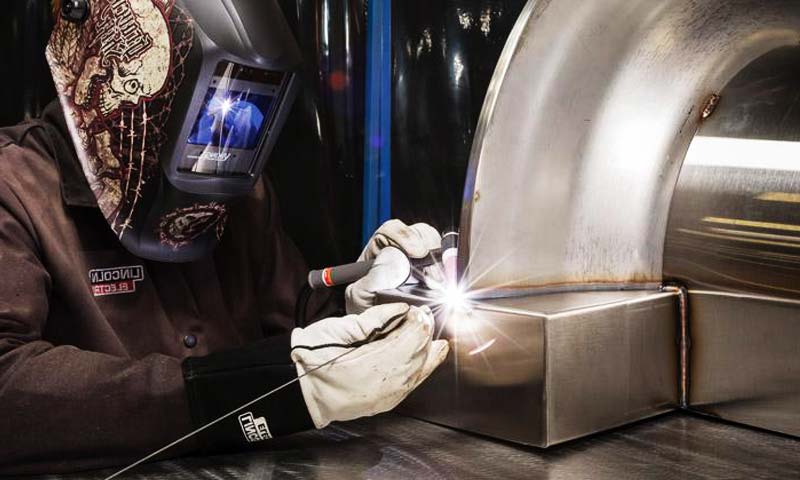
Yes, but with caution. It welds well using TIG or MIG methods with 4043 filler, though heat input may reduce strength in the heat-affected zone.