In the landscape of corrosion-resistant cast alloys, ASTM A217 CA15 occupies a unique position as a cost-effective martensitic stainless steel, valued for its balance of moderate corrosion resistance, high strength, and castability.
1. Defining ASTM A217 CA15: Standards and Classification
ASTM A217 CA15 is a martensitic stainless steel casting grade standardized under the ASTM A217/A217M specification, primarily intended for high-temperature pressure-containing applications.
It is widely used in critical components such as valves, flanges, pump housings, and other pressure-retaining equipment in industries like oil and gas, petrochemical, and power generation.
Its designation “CA15” reflects its heritage in the ASTM casting system: “CA” denotes a corrosion-resistant alloy, and “15” indicates its chromium-rich composition.

The material is identified by the UNS number J91150 and is often associated with AISI 410 for reference in wrought grades.
As a martensitic stainless steel, CA15 exhibits a combination of moderate corrosion resistance, high strength,
and heat-treatable properties, making it suitable for components exposed to elevated temperatures and moderately aggressive media.
Classification under ASTM A217 specifies the chemical composition limits, mechanical properties, heat treatment requirements, and testing protocols to ensure consistent performance across applications.
CA15 falls under the martensitic stainless steel category, which distinguishes it from austenitic and ferritic castings,
with a focus on achieving strength and hardness through controlled heat treatment.
This standardization ensures that CA15 castings can reliably operate in high-pressure and high-temperature environments while maintaining structural integrity and corrosion resistance.
2. Chemical Composition of CA15 Stainless Steel
ASTM A217 CA15 is a martensitic stainless steel casting whose properties are governed by a precise chemical composition designed to balance strength, hardness, and corrosion resistance.
The typical composition ranges are as follows (wt.%):
| Element | Typical Range (%) | Function / Role |
| Carbon (C) | 0.40 – 0.50 | Provides hardness and strength after heat treatment; enables martensitic transformation; higher carbon increases wear resistance but reduces ductility. |
| Chromium (Cr) | 12.0 – 14.0 | Enhances corrosion resistance; improves hardenability; contributes to oxidation resistance at elevated temperatures. |
| Nickel (Ni) | 0.50 – 1.50 | Improves toughness and reduces brittleness in martensitic matrix; stabilizes microstructure. |
| Manganese (Mn) | 0.50 – 1.0 | Increases strength and hardness; acts as a deoxidizer during casting. |
| Silicon (Si) | 0.50 – 1.0 | Improves strength, hardness, and oxidation resistance; assists in deoxidation during melting. |
| Phosphorus (P) | ≤ 0.04 | Generally undesirable; controlled to minimize brittleness. |
| Sulfur (S) | ≤ 0.03 | Improves machinability in some cases, but excessive sulfur can reduce toughness. |
| Iron (Fe) | Balance | Base element; forms the matrix of the alloy. |
3. Physical and Mechanical Properties of ASTM A217 CA15
| Property | Typical Values | Description / Significance |
| Density | 7.70 – 7.85 g/cm³ | Moderate density typical of martensitic stainless steels; affects weight-sensitive applications. |
| Melting Range | 1420 – 1480°C | High melting point suitable for high-temperature applications like valve bodies and pump components. |
| Tensile Strength (Ultimate) | 850 – 1000 MPa | High strength after heat treatment; suitable for high-pressure environments. |
| Yield Strength (0.2% offset) | 550 – 700 MPa | Indicates resistance to plastic deformation under load. |
| Elongation at Break | 12 – 18% | Moderate ductility, allowing some plastic deformation without fracture. |
Hardness (HRC) |
30 – 40 (annealed); 40 – 48 (hardened) | Provides wear resistance and surface durability; can be adjusted by heat treatment. |
| Impact Toughness (Charpy V-notch) | 30 – 50 J | Reasonable toughness at ambient temperature; lower than austenitic stainless steels but sufficient for mechanical components under moderate impact. |
| Thermal Conductivity | 15 – 20 W/m·K | Moderate thermal conductivity; influences heating/cooling rates in service. |
| Coefficient of Thermal Expansion | 10 – 11 ×10⁻⁶ /°C | Low to moderate expansion helps maintain dimensional stability under temperature changes. |
| Maximum Service Temperature | ~550°C | Suitable for high-pressure steam and hot fluid applications; prolonged exposure above may reduce mechanical properties. |
4. Heat Treatment: Optimizing Microstructure
Heat treatment is critical to CA15’s performance, as the as-cast material is relatively soft and ductile.

The standard quenching and tempering cycle is:
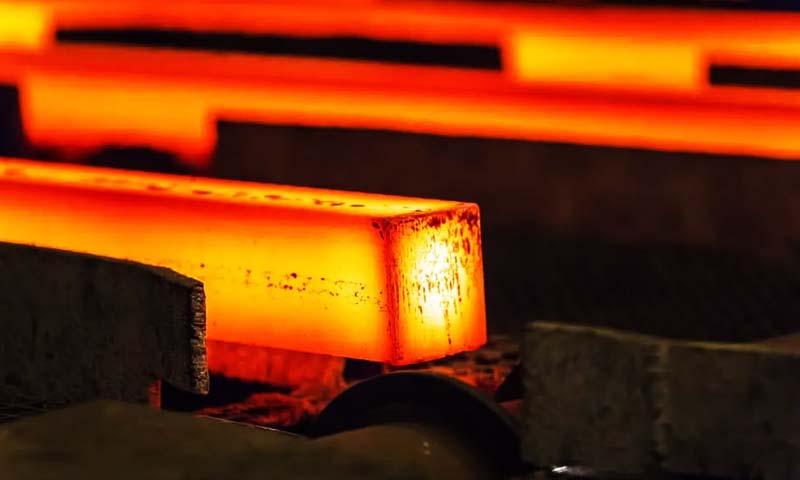
- Austenitizing: Heat to 925–1010°C (1700–1850°F) and hold for 1–2 hours (depending on section thickness) to fully form austenite—a face-centered cubic phase that enables martensite transformation.
- Quenching: Cool rapidly in oil or water to below 150°C (302°F) to convert austenite to martensite, a hard but brittle body-centered tetragonal phase. This step increases hardness to 45–50 HRC.
- Tempering: Reheat to 595–705°C (1100–1300°F) for 2–4 hours, then air cool.
This reduces hardness to 20–30 HRC while improving toughness by precipitating fine carbides (Cr₂₃C₆) within the martensitic matrix and relieving internal stress.
Tempering temperature is adjustable to balance strength and toughness: lower temperatures (595°C) yield higher strength but lower toughness, while higher temperatures (705°C) prioritize ductility.
5. Corrosion Resistance: Capabilities and Limitations
CA15 offers moderate corrosion resistance tailored to specific environments, making it a practical choice for non-aggressive applications:

- Atmospheric Corrosion: Resists rusting in dry or moderately humid air, with a corrosion rate of <0.1 mm/year in urban environments—superior to carbon steel (0.5–1.0 mm/year) but inferior to 304 stainless steel (<0.01 mm/year).
- High-Temperature Oxidation: Performs well in air up to 650°C (1200°F), forming a stable chromium oxide layer that limits oxidation rates to <0.1 mm/year—critical for boiler components and furnace parts.
- Mild Chemicals: Withstands dilute alkaline solutions (e.g., 10% sodium hydroxide) and non-oxidizing acids (e.g., 5% sulfuric acid) at room temperature, though corrosion rates increase significantly in stronger concentrations.
Limitations are notable:
- Chloride Environments: Vulnerable to pitting and crevice corrosion in seawater or high-chloride solutions (e.g., road salt), with corrosion rates exceeding 0.5 mm/year.
- Strong Acids: Rapidly attacked by concentrated acids (e.g., hydrochloric acid) and oxidizing agents (e.g., nitric acid).
Its corrosion behavior stems from its chromium content: while sufficient to form a protective oxide layer in mild conditions, the layer is thinner than in higher-chromium alloys (e.g., 304 with 18–20% Cr), making it prone to breakdown in aggressive environments.
6. Casting and Fabrication Characteristics
CA15’s castability and post-casting processability contribute to its industrial appeal:

Casting Processes:
CA15 exhibits good castability, making it suitable for several industrial casting methods:
- Sand Casting: Most common for large, thick-walled components like valve bodies and pump casings.
The steel’s fluidity, enhanced by manganese and silicon, ensures complete mold filling and minimizes defects such as cold shuts or misruns. - Investment Casting: Ideal for complex, intricate geometries requiring high dimensional accuracy, including internal passages and threaded features.
- Centrifugal Casting: Suitable for cylindrical components, such as pipes and rings,
as the centrifugal force helps reduce porosity and segregation, improving density and structural integrity.
Weldability:
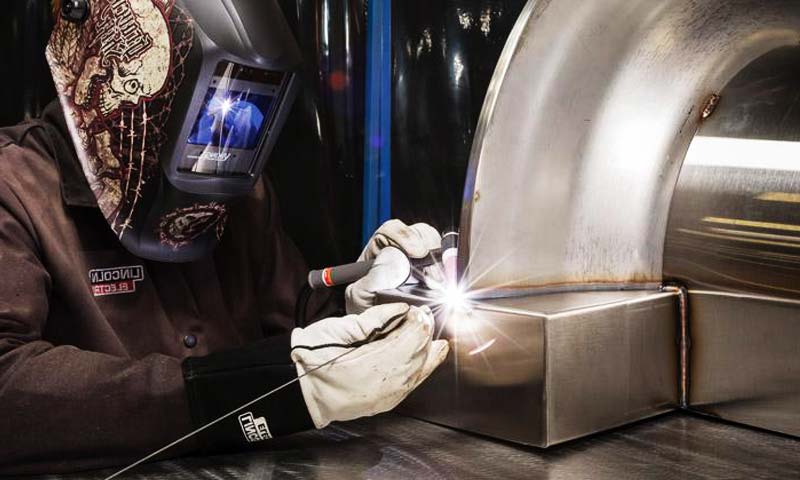
Welding CA15 is challenging due to its martensitic nature, which increases the risk of cracking in the heat-affected zone (HAZ).
Preheating to 200–300°C and post-weld tempering at 600–650°C are required to reduce residual stress.
Matching filler metals (e.g., E410NiMo) improve weld integrity, though welded joints retain only 70–80% of the base metal’s strength.
Machinability:
Moderately machinable in the tempered condition (20–30 HRC).
Carbide tools are recommended for turning and milling, with cutting speeds of 50–70 m/min—slower than austenitic stainless steels but faster than hardened tool steels.
7. Applications: Where CA15 Excels
ASTM A217 CA15 is a martensitic stainless steel widely used in industries that demand high strength,
excellent hardness, and moderate corrosion resistance at elevated temperatures.
Its unique combination of properties makes it particularly suitable for critical components in demanding environments.

Valve Components:
- Gate, Globe, and Check Valves: CA15 is commonly used for valve bodies, trim, and discs due to its high tensile strength (up to 930 MPa) and hardness (20–30 HRC tempered).
- High-Pressure Applications: Its martensitic structure maintains integrity under pressures exceeding 100 bar, making it ideal for steam, oil, and gas pipelines.
- Temperature Resistance: Can operate safely up to ~540°C, suitable for high-temperature fluids in chemical and petrochemical plants.
Pump and Compressor Components:
- Pump Shafts and Impellers: Offers excellent wear resistance, machinability, and dimensional stability.
- Centrifugal Pumps and High-Pressure Pumps: CA15 handles high mechanical loads and repetitive stress, ensuring long-term reliability in power plants, refineries, and industrial water systems.
Oil & Gas Industry:
- Wellhead and Downhole Equipment: High strength and moderate corrosion resistance suit components exposed to oil, gas, and brine under high pressure.
- Severe Service Valves: CA15 trims in globe and gate valves resist wear from slurry, hydrocarbons, and abrasive fluids.
Steam and Power Generation:
- Boiler Valves and Fittings: Can withstand high-temperature steam and thermal cycling without significant loss of mechanical properties.
- Industrial Turbines and Heat Exchangers: Components retain structural integrity under cyclical thermal loads.
General Industrial Applications:
- High-Pressure Fittings and Flanges: Strength and hardness make CA15 suitable for critical joints in chemical plants, refineries, and desalination plants.
- Specialty Castings: Its casting versatility allows production of thick-walled or complex parts that combine strength, wear resistance, and moderate corrosion resistance.
8. Standards and Quality Control
Compliance with ASTM A217 ensures CA15 castings meet rigorous quality criteria:
- Chemical Analysis: Each heat of CA15 must be tested via optical emission spectroscopy (OES) to verify elements fall within specified ranges (e.g., chromium 11.5–13.5%).
- Mechanical Testing: Tensile and impact tests are mandatory for each casting lot, with specimens taken from representative sections to ensure compliance with strength and ductility requirements.
- Non-Destructive Testing (NDT): Critical pressure-containing parts undergo ultrasonic testing (UT) to detect internal porosity and magnetic particle inspection (MPI) to identify surface cracks.
- Heat Treatment Certification: Manufacturers must provide documentation of austenitizing, quenching,
and tempering parameters, including temperature-time profiles, to confirm proper microstructure development.
9. Comparisons to Alternate Alloys
When selecting materials for high-pressure and high-temperature applications, ASTM A217 CA15 is often evaluated against other stainless steels and martensitic alloys.
| Property / Alloy | CA15 (ASTM A217) | CA6NM | CF8 / CF8M | WCB (Carbon Steel) |
| Tensile Strength (MPa) | 550–750 | 500–700 | ~450 | 400–550 |
| Yield Strength (MPa) | 320–480 | 300–450 | ~250 | 250–350 |
| Hardness (HRC) | 20–30 (tempered) | 18–28 | ~15 | 14–18 |
| Corrosion Resistance | Moderate; water, steam, mild chemicals | Moderate; better than WCB, less than CF8 | High; excellent for chemical exposure | Low; prone to rust and corrosion |
| Weldability | Moderate; preheat 200–300°C, post-weld tempering 600–650°C | Moderate; preheat recommended | Excellent; standard welding | Good; standard welding |
| Casting Characteristics | Good; sand, investment, centrifugal casting; moderate complexity | Good; similar to CA15, slightly easier | Excellent; austenitic, easy casting | Very good; simple molds, less critical shrinkage |
| Typical Applications | Valve bodies, pump housings, pressure vessels | Pumps, turbine components, moderate pressure valves | Chemical tanks, piping, valves in corrosive environments | General industrial valves, flanges, pipelines |
| Cost (Relative) | High | Moderate-High | High | Low |
| Notes | Martensitic; good strength and pressure capability | Martensitic; improved corrosion resistance | Austenitic; easy fabrication, lower strength | Economical, low corrosion resistance, suitable for non-critical pressure components |
10. Conclusion
ASTM A217 CA15 stands as a practical, cost-effective solution for industrial applications demanding high strength, moderate corrosion resistance, and castability at elevated temperatures.
Its well-balanced chemistry, coupled with precise heat treatment, delivers the performance required for power generation, chemical processing,
and oil and gas equipment—all at a fraction of the cost of higher-alloyed stainless steels.
FAQs
What is ASTM A217 CA15?
ASTM A217 CA15 is a martensitic stainless steel grade commonly used for castings in pressure-containing applications such as valves, pump housings, and pressure vessels.
It is standardized under ASTM A217, which defines chemical composition, mechanical properties, and heat treatment requirements.
Is CA15 magnetic?
Yes. CA15 is a martensitic stainless steel, which is ferromagnetic in both the as-cast and tempered conditions.
Does CA15 rust?
Yes, CA15 can rust if exposed to harsh environments, especially in the presence of chlorides or moisture.
Its corrosion resistance is moderate compared to austenitic stainless steels, so protective coatings or regular maintenance may be needed.
How is quality controlled for CA15 castings?
Quality control includes chemical analysis (OES), mechanical testing (tensile, impact),
non-destructive testing (ultrasonic for internal porosity, magnetic particle for surface defects), and heat treatment certification.
Compliance with ASTM A217 ensures reliability in critical applications.
Is CA15 cost-effective?
CA15 is moderately expensive due to alloying elements and processing requirements,
But it is cost-effective for high-pressure applications where strength, wear resistance, and partial corrosion resistance are critical.