

Among the four main families of stainless steel, martensitic stainless steel occupies a unique and distinguished position.
Unlike austenitic grades, which cannot be hardened by heat treatment, or ferritic grades, which offer limited hardenability, martensitic stainless steels are hardenable by heat treatment—capable of achieving high hardness, strength, and wear resistance through quenching and tempering.
This combination of corrosion resistance and mechanical performance makes them the material of choice for applications requiring both durability and resistance to aggressive environments.
From cutlery and surgical instruments to turbine blades and automotive components, martensitic stainless steels are indispensable in countless industrial and consumer applications.
1. What Is Martensitic Stainless Steel?
Martensitic stainless steel is a category of stainless steel that can develop a predominantly martensitic microstructure through heat treatment.
It is generally classified separately from austenitic, ferritic, duplex, and precipitation-hardening stainless steels because its primary strengthening mechanism is based on the transformation of austenite into martensite during cooling, followed by tempering to achieve the required balance of mechanical properties.
In simplified terms, the manufacturing and heat-treatment sequence follows the transformation:
Annealed Structure → Austenitizing → Quenching → Martensitic Structure → Tempering → Final Engineering Properties
The process begins by heating the steel to an appropriate austenitizing temperature, where the microstructure transforms into austenite and alloying elements redistribute according to the composition and thermal cycle.
The component is then cooled rapidly enough to suppress the formation of softer equilibrium structures and promote martensitic transformation.
The resulting martensite is characterized by a highly strained crystal structure containing supersaturated carbon.
This produces high hardness and strength, but freshly quenched martensite may also have limited toughness and significant residual stress.
Consequently, martensitic stainless steel components are commonly subjected to tempering, which reduces brittleness and allows engineers to tailor the final hardness and toughness.
The Martensitic Transformation
The martensitic transformation is a diffusionless, shear‑type transformation that occurs when austenite (FCC) is rapidly cooled below the martensite start temperature (Ms).
The transformation is instantaneous and does not involve diffusion of carbon atoms—carbon remains trapped in the lattice, creating a supersaturated solid solution.
| Stage | Description | Temperature |
| Austenitising | Heating to 950–1050°C to form austenite. | 950–1050°C |
| Quenching | Rapid cooling (oil, air, or water) to transform austenite to martensite. | Below Ms |
| Tempering | Re‑heating to 150–650°C to relieve stress and adjust properties. | 150–650°C |
2. Chemical Composition of Martensitic Stainless Steel
Since martensitic stainless steel covers a broad family of grades, the ranges below are representative industry ranges rather than requirements for any single grade.
| Alloying Element | Typical Range (wt%) | Primary Function in Martensitic Stainless Steel |
| Chromium (Cr) | 10.5–18.0% | Provides the fundamental corrosion and oxidation resistance of stainless steel and strongly influences phase stability. |
| Carbon (C) | 0.03–1.20% | Primary hardening and strengthening element in conventional martensitic grades. |
| Nickel (Ni) | 0–3.0% | Improves toughness, hardenability, and phase stability in selected grades. |
| Molybdenum (Mo) | 0–1.5% | Enhances localized corrosion resistance and contributes to hardenability and elevated-temperature performance. |
| Manganese (Mn) | 0–1.5% | Supports deoxidation and influences austenite stability and hardenability. |
Silicon (Si) |
0–1.0% | Primarily acts as a deoxidizer during steelmaking and can contribute to oxidation resistance. |
| Nitrogen (N) | 0–0.20% | Strengthening and austenite-stabilizing element used in selected modern or specialized grades. |
| Vanadium (V) | 0–1.0%* | Strong carbide-forming element used mainly in specialized high-wear or tool-type martensitic steels. |
| Niobium (Nb) | 0–1.0%* | Forms stable carbides and can improve metallurgical stability in selected grades. |
Carbon: The Primary Hardening Element
Carbon has an especially important role in martensitic stainless steel because it strongly affects the structure formed during heat treatment.
In the annealed condition, carbon may exist partly in solid solution and partly in carbide phases, depending on the grade and thermal history.
During austenitizing and subsequent quenching, carbon contributes to the formation of hard martensite.
As a general engineering trend:
- Lower carbon levels favor improved toughness and more moderate hardness.
- Medium carbon levels provide a balance between hardness and mechanical strength.
- High carbon levels enable very high hardness and improved wear resistance but can reduce toughness and increase brittleness.
This is why grades within the martensitic family can have dramatically different applications.
A relatively low-carbon grade may be used for valves, shafts, and structural components, while a high-carbon grade may be selected for knives, cutting tools, and wear-resistant precision parts.
3. Major Types and Grades of Martensitic Stainless Steel
Martensitic stainless steel includes several distinct grade groups developed to meet different requirements for hardness, strength, corrosion resistance, wear resistance, machinability, toughness, and castability.
Standard Martensitic Grades
The composition ranges below are representative limits commonly associated with the corresponding grade designations.
Exact requirements should always be verified against the applicable ASTM, EN, UNS, JIS, or customer specification.
| Grade | UNS Designation | Approximate Composition | Typical Applications |
| 410 | S41000 | Cr: 11.5–13.5%; C: ≤0.15% | Valves, pump components, shafts, fasteners, turbine parts, and general industrial components. |
| 420 | S42000* | Cr: 12–14%; C: 0.15–0.40% | Cutlery, surgical instruments, blades, molds, and wear-resistant components. |
| 420J2 | Commonly associated with S42000-family equivalents** | Cr: 12–14%; C: 0.26–0.40% | Knives, scissors, shears, consumer cutlery, and general-purpose cutting tools. |
| 431 | S43100 | Cr: 15–17%; Ni: 1.25–2.50%; C: ≤0.20% | Pump shafts, marine shafts, valve components, aircraft fittings, and high-strength mechanical parts. |
440A |
S44002 | Cr: 16–18%; C: 0.60–0.75% | Cutlery, valve components, bearings, medical instruments, and wear-resistant parts. |
| 440B | S44003 | Cr: 16–18%; C: 0.75–0.95% | Cutting tools, precision instruments, bearings, and wear components. |
| 440C | S44004 | Cr: 16–18%; C: 0.95–1.20% | High-performance bearings, precision wear components, premium cutlery, valve parts, and surgical instruments. |
| 416 | S41600 | Cr: 12–14%; C: ≤0.15%; S: 0.15–0.35% | Precision-machined fittings, shafts, screws, valve components, fasteners, and automatic-screw-machine parts. |
Cast Martensitic Grades
The ASTM casting designation system identifies several important martensitic stainless steel grades.
| ASTM Cast Grade | UNS Designation | Approximate Composition | Typical Applications |
| CA-15 | J91150 | Cr: approximately 11.5–14.0%; C: typically ≤0.15% | Valve bodies and trim, pump components, turbine parts, hydraulic equipment, and industrial machinery. |
| CA-40 | J91151 | Cr: approximately 11.5–14.0%; C: typically up to 0.40% | Wear-resistant valve parts, industrial machinery, steam-service components, and mechanical parts. |
CA-6NM |
J91540 | Cr: approximately 11.5–14.0%; Ni: approximately 3.5–4.5%; Mo: approximately 0.4–1.0%; C: ≤0.06% | Hydraulic turbines, hydroelectric equipment, large pump impellers, pump casings, and water-handling components. |
| CB-7Cu-1 | J92180 | Cr: approximately 14–16%; Ni: approximately 4–6%; Cu: approximately 2.5–4.0%; C: ≤0.07% | Aerospace components, high-strength castings, pumps, valves, and demanding industrial equipment. |
4. Heat Treatment of Martensitic Stainless Steel
Heat treatment is one of the defining aspects of martensitic stainless steel.
Unlike austenitic stainless steels, which generally cannot be significantly strengthened by conventional quenching and tempering,
martensitic grades are specifically designed to develop different combinations of hardness, strength, toughness, wear resistance, and dimensional stability through controlled thermal processing.
Annealing
Annealing is commonly used to soften martensitic stainless steel before machining, forming, or subsequent heat treatment.
Depending on the grade and specification, the steel is heated into an appropriate temperature range and cooled under controlled conditions to produce a softer and more machinable microstructure.
The primary objectives of annealing include:
- Reducing hardness
- Relieving internal stress
- Improving machinability
- Improving dimensional stability
- Producing a more uniform microstructure before final hardening
For many components, rough machining is performed in the annealed condition because fully hardened martensitic stainless steel can be difficult and expensive to machine.
The component is subsequently heat treated and then finish-machined or ground to achieve the required final dimensions.
Austenitizing
Austenitizing is the stage at which the steel is heated to form austenite before quenching. The required temperature depends strongly on the grade.
For common martensitic stainless steels, typical austenitizing temperatures may fall approximately within the following ranges:
| Grade Family | Typical Austenitizing Range* | Primary Objective |
| 410 / low-carbon martensitic grades | Approximately 925–1,010°C | Develop an austenitic structure suitable for subsequent hardening. |
| 420 / medium-carbon grades | Approximately 980–1,065°C | Dissolve an appropriate amount of carbon and alloying elements before quenching. |
| 440-series high-carbon grades | Approximately 1,010–1,120°C | Develop high hardness potential while controlling carbide dissolution and grain growth. |
| 431 and nickel-containing grades | Approximately 980–1,070°C | Develop a suitable balance of hardenability, strength, and toughness. |
* These ranges are representative only. Actual heat-treatment temperatures and holding times should be selected according to the applicable material specification, section size, furnace conditions, and required final properties.
Austenitizing must be carefully controlled. If the temperature is too low, insufficient transformation or carbide dissolution may limit the attainable hardness.
Excessively high temperatures or excessive holding times may promote grain growth and increase the amount of retained austenite, potentially reducing toughness and dimensional stability.
Quenching
After austenitizing, the component is cooled at a rate sufficient to promote the transformation of austenite into martensite.
Depending on the grade and component geometry, quenching may involve:
- Air cooling
- Oil quenching
- Polymer quenching
- Pressurized gas quenching
- Other controlled cooling methods
The selection of quenching medium is a balance between achieving sufficient cooling for hardening and minimizing thermal stress.
Tempering
Freshly quenched martensite can have very high hardness but also high internal stress and limited toughness.
Tempering is therefore an essential step for most engineering applications.
During tempering, the steel is reheated to a controlled temperature below the austenitizing range and held for an appropriate period.
The process allows the martensitic structure to stabilize and reduces residual stresses while adjusting the balance between hardness and toughness.
In general:
- Lower tempering temperatures tend to retain higher hardness and wear resistance.
- Higher tempering temperatures generally reduce hardness while improving toughness and stress stability.
The precise relationship is grade-dependent. Some martensitic stainless steels can also exhibit undesirable embrittlement or changes in corrosion behavior within particular tempering ranges.
Therefore, tempering temperature should be selected according to the relevant grade specification and required service properties rather than based solely on a general hardness target.
Double Tempering and Dimensional Stabilization
High-carbon and high-performance martensitic stainless steels may require multiple tempering cycles to improve structural stability and reduce retained austenite effects.
Double tempering can provide several benefits:
- Improved dimensional stability
- More uniform mechanical properties
- Reduced residual stress
- Stabilization of transformed retained austenite
- Improved balance between hardness and toughness
In precision applications, additional stabilization treatments may be used before final grinding or finishing.
This is particularly important for bearings, cutting tools, precision valve components, and other parts where small dimensional changes can affect functional performance.
5. Typical Mechanical Property Ranges of Martensitic Stainless Steel
The following values provide representative engineering ranges for commonly used martensitic stainless steels.
Actual properties vary according to product form, section thickness, heat treatment, tempering condition, and applicable standard.
| Grade | Typical Condition | Yield Strength, Rp0.2 (MPa) | Tensile Strength, Rm (MPa) | Elongation A (%) | Hardness |
| 410 | Hardened & tempered | 550–1,000 | 700–1,200 | 10–20 | Approx. 25–45 HRC |
| 416 | Hardened & tempered | 550–1,000 | 700–1,200 | 10–20 | Approx. 25–45 HRC |
| 420 | Hardened & tempered | 700–1,300 | 900–1,600 | 8–18 | Approx. 45–55 HRC |
| 431 | Hardened & tempered | 700–1,000 | 900–1,200 | 10–20 | Approx. 28–45 HRC |
| 440A | Hardened & tempered | 1,000–1,500 | 1,500–1,900 | 5–12 | Approx. 54–58 HRC |
| 440B | Hardened & tempered | 1,100–1,500 | 1,600–1,950 | 4–10 | Approx. 56–59 HRC |
| 440C | Hardened & tempered | 1,200–1,600 | 1,800–2,000+ | 2–8 | Approx. 56–60 HRC |
| CA-15 | Cast, heat treated | ≥450 | ≥620 | ≥18 | Typically ~180–230 HB |
6. Characteristics of Martensitic Steel
Corrosion Resistance
Like all stainless steels, martensitic grades derive corrosion protection from a thin, self-healing chromium oxide passive film.
However, their performance sits below that of austenitic grades:
- They provide good resistance to rural and light urban atmospheres, neutral fresh water, mild organic acids and most food environments.
- Their lower chromium content (12–14% for standard grades) and chromium carbide precipitation result in poorer pitting resistance and general corrosion resistance compared with 18/8 austenitic steels.
- They are unsuitable for prolonged exposure to seawater, strong mineral acids, high-chloride solutions or heavy industrial atmospheres.
- Higher-chromium grades such as 440C offer better corrosion performance than lower-chromium 410 and 420, despite higher carbon content.
Magnetic Properties
Martensitic stainless steels are strongly magnetic in all heat treatment conditions.
This is a direct consequence of their body-centered tetragonal crystal structure, which supports spontaneous magnetic ordering from unpaired electron spins.
A common misconception is that magnetic response indicates low-quality stainless steel.
In reality, magnetism is a structural property, not a quality indicator: all martensitic and ferritic stainless steels are naturally magnetic, including high-performance grades like 440C.
Wear Resistance and Hardness
Excellent wear resistance is the flagship advantage of high-carbon martensitic grades.
When hardened to 55+ HRC, they outperform austenitic and ferritic stainless steels by a factor of 5–10 in both abrasive and adhesive wear applications.
The combination of hard martensitic matrix and dispersed chromium carbide particles creates a material that retains its shape and surface finish under repeated sliding contact.
This makes martensitic stainless the only viable stainless steel option for cutting edges, bearing surfaces and sliding contact components.
Weldability of Martensitic Stainless Steel
Weldability is generally considered the most significant processing limitation of martensitic stainless steels:
- The high hardenability of the alloy means weld metal and heat-affected zones harden rapidly upon cooling, creating high residual tensile stress and high risk of cold cracking.
- Standard welding procedures require preheating to 200–300°C, controlled interpass temperature and mandatory post-weld tempering immediately after welding to prevent failure.
- Low-carbon grade 410 has the best weldability within the family; high-carbon 440C is generally not recommended for fusion welding.
- For critical applications, matching martensitic filler metals or austenitic 309/310 fillers are used to reduce cracking risk.
Machinability and Formability
- Machinability varies strongly with hardness. In the fully annealed condition, martensitic stainless steels have good machinability, generally better than austenitic 304 due to a lower work-hardening rate.
In the hardened condition, machinability is very poor; nearly all finish machining should be completed in the soft annealed state before hardening.
Free-machining grade 416 offers significantly improved chip breaking and tool life for high-volume screw machine production. - Formability is moderate in the annealed state, suitable for bending, roll forming and shallow drawing operations.
Martensitic grades cannot match the deep drawability of austenitic steels, and cold forming must always be performed before hardening.
7. Manufacturing Processes for Martensitic Stainless Steel Components
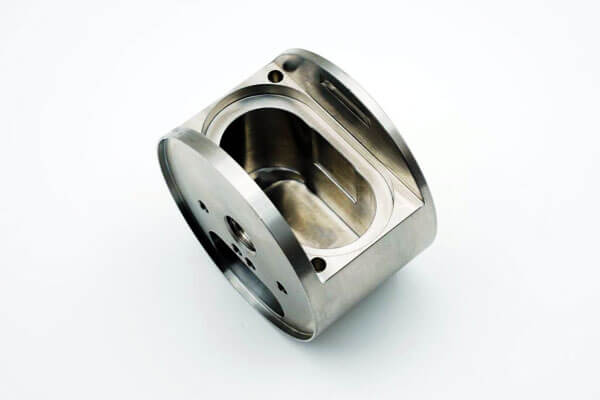
Martensitic stainless steel can be processed through a wide range of manufacturing routes, including CNC machining, investment casting, sand casting, forging, and powder metallurgy.
The appropriate process depends on component geometry, dimensional requirements, production volume, mechanical-property requirements, material utilization, and whether the component will undergo subsequent hardening and tempering.
CNC Machining
CNC machining is a subtractive manufacturing process in which martensitic stainless steel is removed from bar, plate, forging, or other semi-finished stock using computer-controlled cutting tools.
Common operations include turning, milling, drilling, threading, boring, grinding, and multi-axis machining.
Martensitic stainless steel is frequently machined in the annealed or softened condition before final hardening.
Rough machining can then be followed by quenching and tempering, with finish machining or grinding used to achieve the final dimensional and surface requirements.
Investment Casting
Investment casting, also known as lost-wax casting, produces martensitic stainless steel components by creating a detailed wax pattern, forming a ceramic shell around the pattern, removing the wax, and pouring molten stainless steel into the resulting cavity.
The process is especially useful for components with complex geometries, thin sections, internal passages, integrated bosses, and difficult-to-machine profiles.
Sand Casting
Sand casting uses a sand mold to form the cavity into which molten martensitic stainless steel is poured.
Compared with investment casting, sand casting provides greater flexibility for larger components and relatively simple or moderately complex geometries.
It is widely used for industrial components where structural integrity, component size, and manufacturing economics are more important than extremely fine surface detail.
Forging
Forging forms martensitic stainless steel through controlled plastic deformation, normally at elevated temperature.
The material is compressed between dies or other tooling to produce the required geometry.
Forging can generate a refined and directional microstructure while reducing internal porosity and improving structural integrity.
It is therefore frequently selected for components exposed to high mechanical loads, impact, pressure, or cyclic stresses.
Typical forged components include shafts, valve stems, pump shafts, fasteners, fittings, and high-strength mechanical components.
Powder Metallurgy
Powder metallurgy produces high-carbon martensitic grades such as 440C with extremely uniform carbide distribution and fine grain structure, outperforming wrought material in wear resistance and dimensional stability.
The process is ideal for small, complex high-wear components where conventional machining would be prohibitively expensive.
8. Surface Finishes and Surface Engineering
Martensitic stainless steels are compatible with a full range of surface finishing and engineering treatments to enhance appearance, corrosion resistance and wear performance:
- Mill finish: Standard as-rolled or as-forged surface for industrial structural parts
- Mechanical polishing / mirror finish: High-carbon grades can be polished to optical-quality mirror surfaces, making them the standard for surgical instruments and high-end cutlery
- Brushed / satin finish: Directional textured finish for hand tools and decorative hardware
- Passivation: Chemical treatment to remove free iron and enhance the passive oxide layer, improving corrosion resistance
- Electropolishing: Ultra-smooth, corrosion-resistant surface finish for medical and food-contact components
- Hard coatings: DLC, TiN and chromium carbide coatings further increase surface hardness and reduce friction for severe-wear bearing and cutting applications
9. Applications of Martensitic Stainless Steel
Martensitic stainless steel is widely used where a component requires a combination of high strength, hardness, wear resistance, moderate corrosion resistance, and dimensional stability.
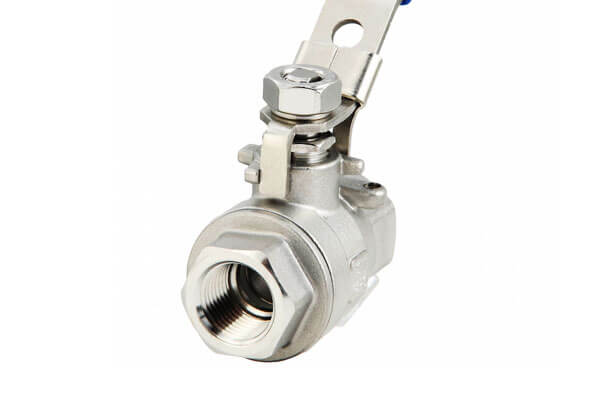
Valves and Fluid-Control Equipment
Martensitic stainless steel is widely used for valve stems, valve trim, seats, shafts, and other internal components.
Its high hardness helps resist erosion, abrasion, and repeated mechanical contact, while its corrosion resistance provides protection in many water, steam, and industrial-fluid environments.
Typical components include:
- Valve stems
- Valve balls and trim
- Seats
- Pump shafts
- Impellers
- Bushings
- Wear rings
Cutlery and Cutting Tools
High-carbon martensitic grades are particularly important in knives and cutting applications.
420 is widely used for general-purpose blades, while 440A, 440B, and 440C can provide higher hardness and wear resistance.
The key advantages are:
- High edge retention
- High hardness
- Resistance to deformation
- Good wear resistance
- Reasonable corrosion resistance compared with conventional carbon tool steels
Bearings and Precision Wear Components
High-carbon martensitic stainless steels, particularly 440C, are used for corrosion-resistant bearing components.
Typical applications include:
- Bearing balls
- Bearing races
- Precision rollers
- Bushings
- Wear rings
- Instrument bearings
Medical and Surgical Instruments
Martensitic stainless steels are widely used in surgical instruments because they can combine hardness, edge retention, strength, corrosion resistance, and sterilization capability.
Applications include:
- Surgical scissors
- Surgical blades
- Forceps
- Clamps
- Dental instruments
- Cutting instruments
Automotive Components
Martensitic stainless steel can be used in automotive components exposed to mechanical loads, heat, wear, and corrosive environments.
Applications include:
- Shafts
- Valve components
- Pump components
- Fasteners
- Exhaust-related components
- Mechanical actuators
- Wear-resistant components
Aerospace and Turbine Components
Selected martensitic stainless steels are used in aerospace and energy equipment where high strength and dimensional stability are required.
Applications can include:
- Turbine components
- Shafts
- Fasteners
- Pump components
- Actuation components
- High-strength mechanical parts
Energy, Pump, and Hydroelectric Equipment
Martensitic stainless steels are also important in energy-generation and water-handling equipment.
The cast grade CA-6NM, for example, is a low-carbon martensitic stainless steel containing nickel and molybdenum and is widely associated with hydraulic turbine runners, pump components, and water-handling equipment.
10. Advantages and Limitations of Martensitic Stainless Steel
Martensitic stainless steel is distinguished from other stainless steel families by its ability to develop high strength and hardness through quenching and tempering.
This makes it particularly suitable for components exposed to wear, mechanical loading, cutting, impact, and repeated contact.
However, the same metallurgical characteristics that provide high hardness can reduce ductility, toughness, corrosion resistance, and weldability.
Key Advantages
- The only stainless steel family hardenable by heat treatment, with tunable hardness from 20 HRC to 62 HRC
- Excellent wear resistance and surface hardness, 5–10 times superior to austenitic stainless steels
- 2–3 times higher strength than standard austenitic grades in hardened condition
- Moderate corrosion resistance, significantly better than plain carbon steel
- Naturally magnetic, suitable for magnetic component applications
- Excellent polishability to high-gloss mirror finishes
- Lower cost than high-alloy austenitic and duplex stainless steels for equivalent strength levels
Inherent Limitations
- Lower general and pitting corrosion resistance compared with 304/316 austenitic grades; unsuitable for high-chloride and strong acid environments
- Poor weldability requiring preheat and post-weld tempering to avoid cracking
- Requires heat treatment to achieve optimal properties, adding processing cost and lead time
- Lower ductility and toughness than austenitic stainless steels in hardened condition
- Susceptible to temper brittleness in specific temperature ranges
- Limited deep-drawing and cold-forming capability
11. Martensitic vs. Austenitic vs. Ferritic Stainless Steel
The three major stainless steel families differ primarily in microstructure, heat-treatment response, strength, corrosion resistance, ductility, magnetic behavior, and weldability.
The following table focuses on the engineering characteristics most relevant to material selection.
| Property | Martensitic Stainless Steel | Austenitic Stainless Steel | Ferritic Stainless Steel |
| Typical Grades | 410, 420, 431, 440A/440C | 304, 304L, 316, 316L, 321 | 409, 430, 439, 441, 444 |
| Crystal Structure | BCT martensite after hardening | FCC austenite | BCC ferrite |
| Typical Cr Content | ~11.5–18 wt% | ~16–26 wt% | ~10.5–30 wt% |
| Heat-Treatment Hardening | Excellent; quenched and tempered | Not hardenable by conventional quenching | Not hardenable by conventional quenching |
| Strength | High to very high | Moderate; higher strength achievable by cold working | Moderate |
| Hardness | High, typically ~20–60+ HRC depending on grade and condition | Generally lower in annealed condition | Generally moderate |
| Ductility & Toughness | Moderate to low when highly hardened | Excellent | Moderate |
| Corrosion Resistance | Moderate to good | Excellent to very good | Good for many atmospheric environments |
| Wear Resistance | Excellent when hardened | Moderate | Moderate |
| Magnetic Properties | Magnetic | Generally non-magnetic when annealed | Magnetic |
| Weldability | Moderate to poor; heat-treatment control may be required | Excellent, particularly low-carbon grades | Good to moderate |
| Formability | Moderate; limited severe forming | Excellent, including deep drawing | Good to moderate |
Machinability |
Good when annealed; difficult after hardening | Moderate; work hardening can complicate machining | Generally good to moderate |
| Low-Temperature Performance | Grade-dependent; high-carbon grades can have limited toughness | Excellent | More limited because of the ductile-to-brittle transition |
| Typical Applications | Knives, shafts, valves, pumps, bearings, surgical instruments, wear parts | Chemical equipment, food-processing equipment, pressure vessels, piping, architectural components | Automotive exhaust systems, appliances, architectural panels, heat exchangers |
| Main Advantage | High strength, hardness, and wear resistance | Superior corrosion resistance, ductility, toughness, and weldability | Good corrosion resistance, low thermal expansion, magnetic properties, and cost efficiency |
| Main Limitation | Lower corrosion resistance and weldability | Lower hardness in the annealed condition; Ni-containing grades can be more expensive | Lower toughness and formability than austenitic grades |
12. Custom Martensitic Stainless Steel Parts from LangHe
LangHe provides customized manufacturing solutions for martensitic stainless steel components, combining material selection, precision casting, CNC machining, heat treatment, and surface finishing to produce components tailored to specific mechanical and dimensional requirements.
| Capability | Details |
| Martensitic Stainless Steel Grades | 410, 420, 431, 440A, 440B, 440C and selected cast martensitic grades |
| Manufacturing Processes | Investment casting, sand casting, CNC turning, CNC milling, drilling, grinding and related secondary operations |
| Heat Treatment | Annealing, hardening, quenching and tempering according to grade and required mechanical properties |
| Machining | CNC turning, milling, drilling, threading, boring, grinding and precision finishing |
Surface Finishing |
Polishing, grinding, passivation and selected functional surface treatments |
| Component Types | Valve components, pump parts, shafts, bushings, wear components, mechanical fittings, tooling and precision industrial parts |
| Quality Control | ISO 9001:2015 certified; 100% NDT and dimensional inspection. |
| Customization | Production according to customer drawings, 3D CAD models, specifications, samples or application requirements |
13. Conclusion
Martensitic stainless steel occupies a unique and irreplaceable position in the stainless steel family.
As the only stainless steel that can be hardened by heat treatment to achieve high strength and excellent wear resistance, it fills the critical performance gap between plain carbon tool steels and corrosion-resistant austenitic stainless steels.
Its corrosion resistance is lower than that of 304 and 316 austenitic grades, but it delivers strength and wear performance that no austenitic or ferritic grade can match.
From everyday cutlery to precision surgical instruments, from industrial valves to power generation turbine blades, martensitic stainless steels deliver targeted performance where moderate corrosion resistance must be combined with high strength and wear durability.
As alloy design and heat treatment technology continue to advance, new toughened, high-purity and precipitation-hardened martensitic grades will continue to expand the material family’s application scope, reinforcing its status as an essential branch of the global stainless steel ecosystem.
FAQs
What is the difference between martensitic and austenitic stainless steel?
Martensitic stainless steel is hardenable by heat treatment, magnetic, and has moderate corrosion resistance.
Austenitic stainless steel is not hardenable by heat treatment, non‑magnetic, and has excellent corrosion resistance.
Martensitic grades are used for cutlery, valves, and bearings; austenitic grades are used for chemical, food, and marine applications.
Can martensitic stainless steel be welded?
Yes, but with care. Preheating and post‑weld heat treatment are required to prevent cracking and restore mechanical properties.
Is martensitic stainless steel magnetic?
Yes. All martensitic stainless steels are ferromagnetic (strongly attracted to magnets).
Does martensitic stainless steel rust?
Martensitic stainless steel can stain and corrode under aggressive conditions.
It resists rust in normal atmospheric and fresh-water environments, but will develop surface staining and pitting in high-salt, strong-acid or heavy industrial settings.
It is not suitable for prolonged seawater immersion or continuous chloride exposure.
Can martensitic stainless steel be heat treated?
Yes. Heat treatment is one of the defining characteristics of this stainless steel family.
Depending on the grade, hardening followed by tempering can substantially increase hardness, tensile strength, and wear resistance.
Which martensitic stainless steel is the hardest?
Among common martensitic stainless steels, 440C is one of the highest-carbon grades and can achieve very high hardness after appropriate heat treatment.
Its high hardness makes it particularly suitable for bearings, cutting tools, wear components, and high-end blades.

