1. Introduction
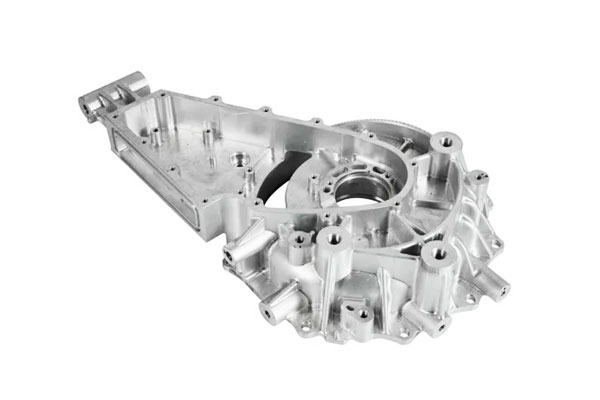
CD3MWCuN (UNS J93380, ASTM A890/A995 Grade 6A) is a high-performance super duplex stainless steel (SDSS) developed in the mid-1980s, specifically engineered to address the corrosion challenges of extreme service environments such as subsea oil and gas fields, chemical processing plants, and seawater desalination facilities.
Unlike conventional duplex stainless steels (DSS) like 2205, CD3MWCuN achieves a breakthrough balance of corrosion resistance, mechanical strength, and processability through optimized alloying design, filling the performance gap between standard DSS and expensive nickel-based alloys (e.g., Hastelloy C276).
2. What is CD3MWCuN Duplex Stainless Steel?
CD3MWCuN is a super-duplex stainless steel alloy engineered to combine very high localized-corrosion resistance with elevated mechanical strength and practical manufacturability in both cast and wrought forms.
Its designation reflects the alloying emphasis — high Cr (chromium), significant Mo (molybdenum) and W (tungsten), deliberate N (nitrogen) levels for austenite stabilization and strengthening, and a controlled Cu (copper) addition for improved behavior in certain reducing or acidic process media.
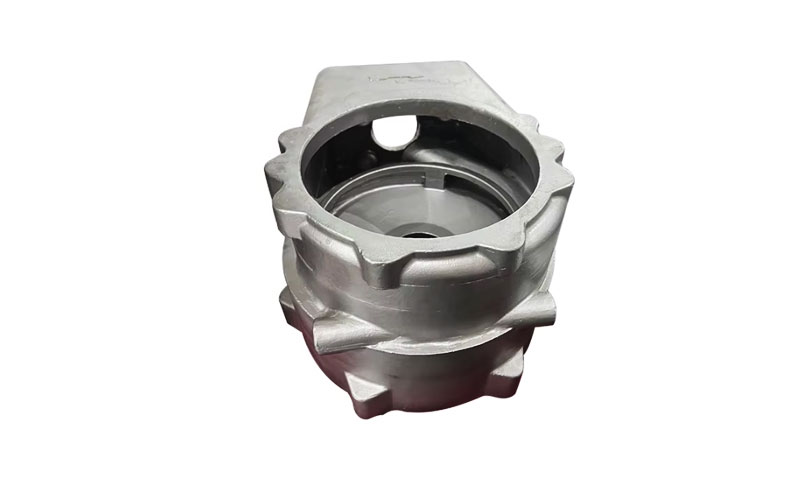
In engineering practice CD3MWCuN is specified where chloride-rich environments, high mechanical loads, and long service intervals coincide — for example, subsea hardware, seawater pumps and valves, oil & gas manifolds, desalination plant components and aggressive chemical-process equipment.
Typical functional attributes (summary)
- Exceptionally high localized-corrosion resistance: engineered Cr–Mo–W–N balance yields PREN values usually well into the “super-duplex” range (screening indicator for excellent pitting/crevice resistance).
- High mechanical strength: duplex structure delivers yield strengths and tensile strengths substantially greater than common austenitics (enabling thinner, lighter pressure parts).
- Improved SCC tolerance: reduced susceptibility to chloride stress-corrosion cracking compared with 300-series austenitics and many lower-alloy duplex steels.
- Castability for complex geometries: formulated to be produced as high-integrity castings (with appropriate foundry controls) so that complex components can be delivered near-net shape.
- Good general corrosive stability: stable passive film under oxidizing conditions; alloying breadth gives versatility across many process chemistries.
3. Chemistry and metallurgical function of alloying elements
The performance of CD3MWCuN duplex stainless steel is governed by a carefully balanced, multi-element alloy system designed to stabilize a two-phase ferrite–austenite microstructure while maximizing localized corrosion resistance and mechanical strength.
| Element | Typical content (wt.%) | Metallurgical function |
| Chromium (Cr) | 24.0 – 26.0 | Primary passivating element; promotes formation of a stable Cr₂O₃ film; strong ferrite stabilizer |
| Nickel (Ni) | 6.0 – 8.5 | Austenite stabilizer; improves toughness and ductility |
| Molybdenum (Mo) | 3.0 – 4.0 | Enhances resistance to pitting and crevice corrosion; strengthens ferrite |
| Tungsten (W) | 0.5 – 1.0 | Supplements Mo in improving localized corrosion resistance |
Nitrogen (N) |
0.18 – 0.30 | Powerful austenite stabilizer; solid-solution strengthening; improves pitting resistance |
| Copper (Cu) | 0.5 – 1.0 | Improves resistance to certain reducing acids; enhances general corrosion resistance |
| Carbon (C) | ≤ 0.03 | Controlled to minimize carbide precipitation |
| Manganese (Mn) | ≤ 1.0 | Deoxidizer; assists nitrogen solubility |
| Silicon (Si) | ≤ 1.0 | Deoxidizer; improves fluidity in casting |
| Phosphorus (P) | ≤ 0.03 | Residual element; limited to preserve toughness |
| Sulfur (S) | ≤ 0.02 | Impurity control |
| Iron (Fe) | Balance | Base matrix element |
4. Typical mechanical properties (solution-annealed condition)
| Property | Typical range / value | Test condition / comment |
| 0.2% proof / Yield strength, Rp0.2 (MPa) | 450 – 700 | Variation by product form: castings toward lower end, forged/wrought at upper end |
| Tensile strength, Rm (MPa) | 700 – 950 | Room temperature, standard tensile specimen |
| Elongation at break, A (%) | 20 – 35 | Higher for wrought/forged; castings may be toward lower bound |
| Reduction of area, Z (%) | 30 – 50 | Dependent on product form and heat treatment quality |
Hardness, HB (Brinell) |
220 – 350 | Typical as-supplied; higher values may indicate cold work or local hardening |
| Charpy V-notch impact energy (J) | ≥ 50 – 150 (room temp) | Wide range—depends on casting quality and heat treatment; specify required minimum |
| Fatigue strength (rotating bending, 10^7 cycles) (MPa) | ~300 – 450 (application dependent) | Strongly surface- and detail-dependent; use qualified S–N data for design |
| Yield / tensile ratio (Rp0.2 / Rm) | ~0.60 – 0.80 | Typical for duplex microstructure |
5. Physical And Thermal Properties Of CD3MWCuN Duplex Stainless Steel
| Property | Typical value / range | Test condition / comment |
| Density (g·cm⁻³) | 7.80 – 7.90 | Room temperature |
| Elastic modulus, E (GPa) | 200 – 210 | Room temperature; reduces with temperature |
| Poisson’s ratio, ν | 0.27 – 0.30 | Engineering estimate: use 0.28 where needed |
| Thermal conductivity, k (W·m⁻¹·K⁻¹) | 14 – 18 | At 20 °C; lower than ferritic steels, higher than many nickel alloys |
| Coefficient of thermal expansion (20–200 °C) (×10⁻⁶ K⁻¹) | 11.0 – 13.0 | Use temperature-dependent curve for accurate thermal strain analysis |
| Specific heat capacity, cp (J·kg⁻¹·K⁻¹) | 450 – 500 | Room temperature; increases with temperature |
| Thermal diffusivity (m²·s⁻¹) | ~4.5 – 7.0 ×10⁻⁶ | Calculated from k/(ρ·cp); product dependent |
Electrical resistivity (Ω·m) |
~7.5 – 9.5 ×10⁻⁷ | Room temperature; depends on exact chemistry |
| Magnetic behaviour | Partially magnetic | Due to ferritic phase fraction; permeability depends on phase balance and cold work |
| Typical service temperature (continuous) | −50 °C up to ≈ 300 °C (recommended) | Above ~300 °C, risk of intermetallic precipitation and loss of toughness/corrosion resistance; qualification needed for higher temps |
| Solidus / liquidus (°C) | Alloy dependent; refer to supplier | Duplex/super-duplex alloys solidify over a range; consult mill data for casting/welding practice |
6. Corrosion Resistance: Beyond Conventional Duplex Steels
CD3MWCuN’s corrosion resistance is its defining advantage, supported by a PREN (PREN = Cr + 3.3Mo + 30N + 16Cu) of over 40, far exceeding 2205 DSS (PREN≈32) and 316L austenitic steel (PREN≈34).
Comprehensive test data confirms its performance in extreme environments:
Pitting and Crevice Corrosion Resistance
In 6% FeCl₃ solution (ASTM G48 Method A), CD3MWCuN exhibits a pitting rate ≤0.015 g/(m²·h), with Critical Pitting Temperature (CPT) ≥40℃ and Critical Crevice Corrosion Temperature (CCCT) ≥35℃.
Field tests in seawater (salinity 35‰) show a corrosion rate ≤0.003 mm/year, suitable for long-term service in seawater desalination RO membrane shells.
Stress Corrosion Cracking (SCC) Resistance
In chloride-containing media, CD3MWCuN’s critical stress intensity factor KISCC ≥30 MPa·m¹/², outperforming 2205 DSS (KISCC≈25 MPa·m¹/²).
It complies with NACE MR0175 standards for acidic oil and gas fields, tolerating H₂S partial pressure up to 20 kPa without SCC initiation.
Acid and Mixed Media Corrosion Resistance
In 10% H₂SO₄ (25℃), its corrosion rate ≤0.05 mm/year, making it suitable for chemical reactor liners.
In flue gas desulfurization (FGD) systems (Cl⁻ + SO₃²⁻ mixed media), it maintains stable performance with no visible corrosion after 5,000 hours of service.
7. Casting Characteristics of CD3MWCuN
Being a high-alloy, cast super-duplex alloy introduces specific casting challenges:
- Wide freezing range and segregation: high alloy content increases the liquidus-to-solidus range, raising the likelihood of interdendritic segregation and trapped low-PREN residual liquid if feeding is inadequate.
- Intermetallic precipitation: slow cooling or excessive thermal exposure during cleaning/welding can promote σ and χ phases in interdendritic regions and α/γ interfaces — these phases embrittle the material and degrade corrosion resistance.
- Gas porosity and oxide inclusion sensitivity: strict melt cleanliness, degassing and ceramic filtration are critical — porosity reduces effective strength and corrosion performance.
- Feeding & riser design: directional solidification, properly sized feeders and chills are essential to avoid shrinkage defects; cast simulation is recommended for complex geometries.
Foundry requirements: vacuum or controlled atmosphere melting (EAF + AOD/VOD), rigorous de-oxidation/fluxing, ceramic foam filtration, and validated solution anneal furnaces sized for the largest section are best practice when producing CD3MWCuN castings.
8. Heat Treatment, Solution Anneal and Thermal Stability
Solution anneal
- Purpose: dissolve intermetallics and eliminate segregation, restore duplex phase balance and maximize corrosion resistance.
- Typical window:approx. 1,050–1,100 °C (exact cycle depends on section thickness), followed by rapid quench (water or fast air quench) to avoid reprecipitation.
- Soak time: scaled to maximum section size; thick castings require extended soak to fully homogenize.
Thermal stability & phase precipitation
- Sigma phase and other intermetallics can form on prolonged exposure in the 600–900 °C range, embrittling the alloy and reducing corrosion resistance. Avoid thermal excursions into this range for prolonged periods.
- Nitride precipitation and chromium carbide formation are concerns if cooling/heat cycles are not controlled — low carbon and appropriate furnace practice reduce sensitivity.
9. Welding, Fabrication and Machining Best Practices
Welding
- Consumables: use matching or slightly over-matching filler metals designed for super-duplex composition to help restore corrosion resistance in weld metal.
- Heat input control: minimize heat input and control interpass temperature to avoid excessive local thermal cycles that encourage σ/χ formation in the HAZ.
- Pre/post treatments: for critical components, post-weld solution anneal is commonly specified to restore homogeneous microstructure; for field repairs, low heat input TIG with qualified PQR/WPS and local post-weld solutioning where practicable is advised.
- Hydrogen control: standard precautions apply — dry electrodes, low hydrogen processes where appropriate.
Machining
- Machinability: duplex/super-duplex steels are tougher and harder than austenitics — use robust carbide tooling, positive rake, rigid fixturing, and coolant. Expect lower cutting speeds than for stainless 304/316.
- Threading and inserts: for repeated assembly, consider stainless steel orustenitic/bronze inserts if required for wear; specify thread engagement accordingly.
Fabrication advice
- Avoid oxy-fuel thermal cutting on critical castings before solution anneal — local heating can precipitate intermetallics and cause brittle cracks at riser roots.
If thermal cutting is unavoidable, prefer mechanical/safer cutting (sawing) followed by solution anneal.
10. Surface Finishing and Corrosion Protection Options
- Pickling & passivation: standard nitric/hydrofluoric or citric acid passivation tailored for duplex chemistry removes contaminants and promotes a stable passive film.
- Mechanical finishing: shot-blasting, grinding and polishing improve surface condition and fatigue life; avoid excessive cold work that raises residual stresses.
- Coatings: polymeric paints, epoxy linings or specialised coatings provide extra protection in extremely aggressive media or to mitigate crevice corrosion risk.
- Cathodic protection: in massive subsea structures cathodic protection (sacrificial anodes or impressed current) complements CD3MWCuN’s innate resistance in severe marine environments.
11. Typical Applications of CD3MWCuN Stainless Steel
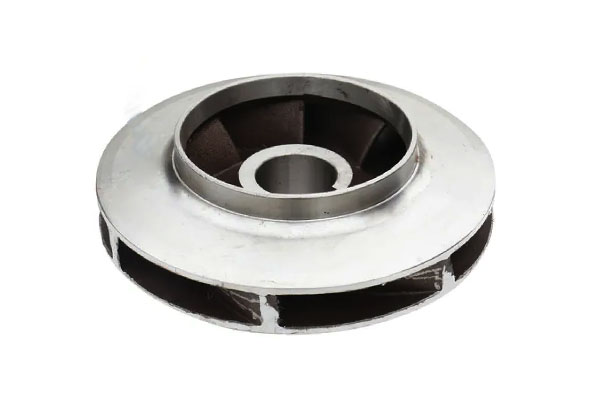
- Subsea components: manifolds, connectors, clamps, fasteners (where high PREN and strength are required).
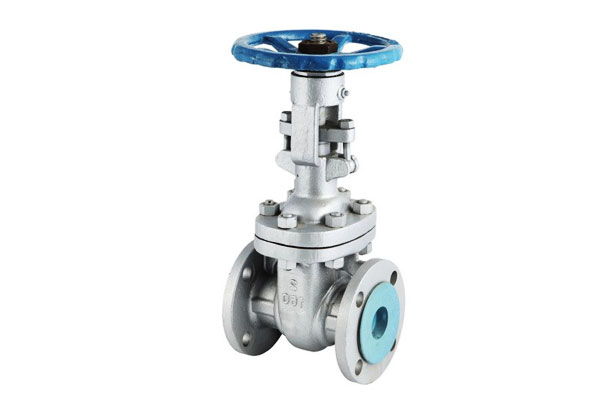
- Valves & fittings: valve bodies, bonnets and trim for seawater and produced water service.
- Pump casings & impellers: seawater and brine pumps where erosion-corrosion and pitting are risks.
- Desalination & RO systems: components exposed to high chloride brines.
- Chemical processing equipment: heat exchangers, reactors, and piping in chloride-containing streams.
- Oil & gas topside / topside tubulars: where high strength and corrosion resistance lower part count and weight.
12. Advantages and limitations
Advantages of CD3MWCuN Stainless Steel
- High pitting/crevice resistance for chloride environments (PREN often > 40 for well-alloyed heats).
- High mechanical strength — allows thinner sections and weight savings compared with austenitics.
- Good SCC resistance relative to 300-series stainless steels.
- Castable for complex geometries with careful foundry practice, enabling consolidation of parts.
Limitations of CD3MWCuN Stainless Steel
- Cost: higher alloying (Mo, W, N) increases material and melt cost relative to common grades.
- Casting & heat-treat complexity: requires careful foundry control, possible solution anneal and NDT; large parts may be hard to heat treat uniformly.
- Weld/repair sensitivity: welding requires qualified consumables and controls; risk of sigma or other detrimental phases if mishandled.
- Machining hardness: tougher to machine than austenitic grades — tooling & cycle design must account for that.
13. Comparative Analysis — CD3MWCuN Versus Similar Alloys
This section compares CD3MWCuN with commonly considered alternatives for chloride-bearing and structural applications: duplex 2205, super-duplex 2507, and 316L (austenitic).
| Property | CD3MWCuN (representative cast super-duplex) | Duplex 2205 (wrought) | Super-duplex 2507 (wrought) | 316L (austenitic / cast equiv.) |
| Representative chemistry (wt%) | Cr ≈ 25.0; Ni ≈ 4.0; Mo ≈ 3.6; W ≈ 0.5; N ≈ 0.30 | Cr ≈ 22.0; Ni ≈ 5.0; Mo ≈ 3.1; N ≈ 0.17 | Cr ≈ 25.0; Ni ≈ 6.5; Mo ≈ 4.0; N ≈ 0.28 | Cr ≈ 17.0; Ni ≈ 10.0; Mo ≈ 2.5; N ≈ 0.03 |
| PREN (calc. = Cr + 3.3·Mo + 16·N + 0.5·W) | 41.93 (25.00 + 11.88 + 4.80 + 0.25) ≈ 42 | 34.95 (22.00 + 10.23 + 2.72) ≈ 35 | 42.68 (25.00 + 13.20 + 4.48) ≈ 42.7 | 25.73 (17.00 + 8.25 + 0.48) ≈ 25.7 |
| Typical tensile (UTS), MPa | 700 – 900 | 620 – 850 | 800 – 1000 | 480 – 650 |
| Yield (0.2%), MPa | 450 – 700 | 450 – 550 | 650 – 800 | 200 – 300 |
| Elongation (A5) | 10 – 25% (section dependent) | 15 – 30% | 10 – 20% | 35 – 50% |
| Density (g·cm⁻³) | ~7.8 – 8.0 | ~7.8 – 7.9 | ~7.8 – 7.9 | ~7.9 – 8.0 |
| Castability | Good (engineered for casting) | Moderate (cast duplex possible but demanding) | Challenging (super-duplex casting needs expert control) | Excellent (cast equivalents like CF8M exist) |
Weldability |
Good when using matched duplex consumables; needs control | Good with qualified procedures | More demanding; requires tight control | Excellent |
| SCC / chloride resistance | High for many seawater/brine services (PREN ≈ 42) | Moderate-high (good for many services) | Very high (PREN ≈ 41–45) | Low–moderate; susceptible to pitting/SCC in chlorides |
| Typical applications | Cast valve bodies, subsea components, pump casings for seawater/brine | Heat exchangers, pressure vessels, piping where duplex strength needed | Critical subsea, highly aggressive chloride environments | General chemical process, food, pharma, mild chloride services |
| Relative material cost | High (alloying + melt complexity) | Medium | Very high | Low–medium |
14. Conclusion
CD3MWCuN is a cast super-duplex stainless steel family that offers an attractive combination of high strength and excellent localized corrosion resistance for demanding chloride-bearing environments.
Its suitability for complex cast parts makes it an excellent option where integration, weight saving and corrosion performance are required simultaneously.
Successful use depends on rigorous foundry practice (solidification control, melt cleanliness, ferrite control), appropriate heat treatment, and qualified fabrication/welding procedures.
When specified and processed correctly, CD3MWCuN provides durable, high-performance castings for subsea, desalination, oil & gas and chemical industries.
FAQs
What does PREN > 40 mean in practice?
PREN > 40 indicates strong pitting and crevice resistance. In practical terms, it means the alloy will resist localized attack in seawater and many high-chloride process streams at temperatures and flow conditions that would pit lower-PREN materials.
Is CD3MWCuN suitable for subsea use?
Yes — when cast/forged and fabricated under qualified procedures, and with controlled surface finish and inspection, CD3MWCuN is widely used in subsea components and seawater-exposed hardware.
Can CD3MWCuN be welded without post-weld heat treatment?
Welding is feasible without PWHT if procedures are qualified and heat input is tightly controlled; however, for the most critical components or where HAZ performance is paramount, post-weld solution anneal (or other validated remedial measures) may be required.
How does CD3MWCuN compare with superaustenitic alloys?
Superaustenitics may match or exceed PREN in some chemistries and offer better ductility/formability, but CD3MWCuN generally provides higher strength and often a more favorable lifecycle cost in chloride-dominated, mechanically demanding service.