

1. Introduction
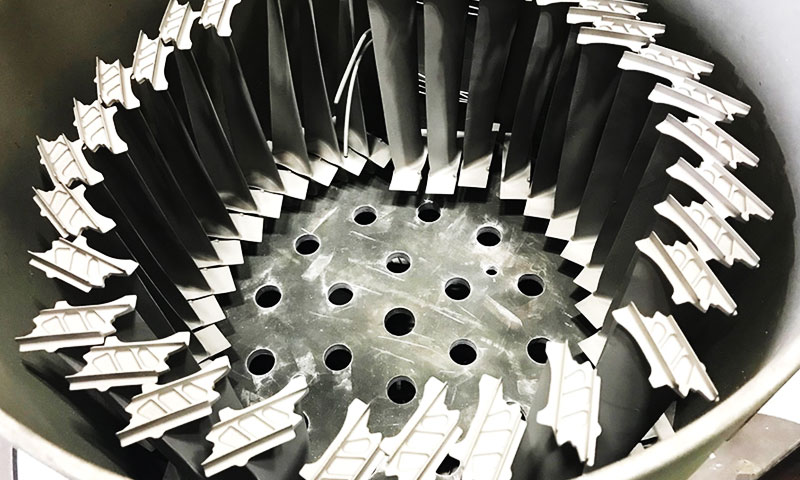
Hot Isostatic Pressing (HIP) is a high-pressure, high-temperature consolidation and defect-remediation process used across aerospace, medical, power, and additive-manufacturing supply chains.
By applying an inert gas pressure uniformly to a part at elevated temperature, HIP closes internal pores, heals shrinkage defects and dramatically improves mechanical reliability.
This article provides a technical, data-driven review of HIP’s principles, equipment, process windows, materials practice, microstructural effects, inspection and qualification, industrial use cases and where HIP sits relative to competing technologies.
2. What is Hot Isostatic Pressing?
Hot Isostatic Pressing (HIP) is a high-pressure, high-temperature metallurgical process in which parts are subjected simultaneously to an isostatic (equal in all directions) gas pressure—normally high-purity argon—while being heated to a temperature where plasticity, creep or diffusion are active.
The T–P–t (temperature–pressure–time) combination drives closure of internal voids, neck growth between particles, and mass transport that heals shrinkage defects and pores.
Primary industrial goals for HIP:
- convert cast, additive-manufactured (AM) or sintered parts from partially porous to near-fully dense (typical relative densities ≥99.5–99.95%);
- eliminate internal defects (shrinkage porosity, entrapped gas pockets, lack-of-fusion pores);
- homogenize microstructure and reduce anisotropy in AM or PM components;
- improve mechanical reliability (fatigue life, fracture toughness, creep resistance).
3. Working Principle of Hot Isostatic Pressing
Core physical mechanisms
- Hydrostatic compression: External gas pressure transmits uniformly; internal pores are subjected to compressive hydrostatic stress that tends to reduce pore volume.
- Plastic/viscoplastic flow: At elevated temperature, ligaments between pores deform and close voids by plastic flow or creep.
- Diffusional bonding (sintering): Atomic diffusion (Nabarro–Herring, Coble) and surface/interface diffusion eliminate voids and grow necks between particles—important for fine powders and ceramics.
- Evaporation/condensation & surface transport: Under some conditions, vapor transport helps redistribute material to eliminate cavities.
Practical considerations in mechanism selection
- At higher temperatures and lower pressures, diffusion mechanisms dominate.
- At higher pressures and sufficiently high homologous temperature, plastic flow and creep dominate.
- The pore size distribution matters: small, closed pores respond faster than large shrinkage cavities. Very large discontinuities may not fully close without preform design changes.
4. Typical HIP equipment and process flow
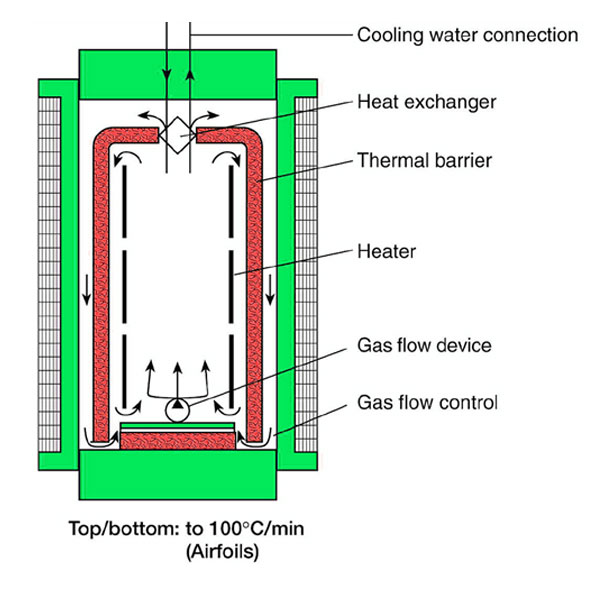
Main components
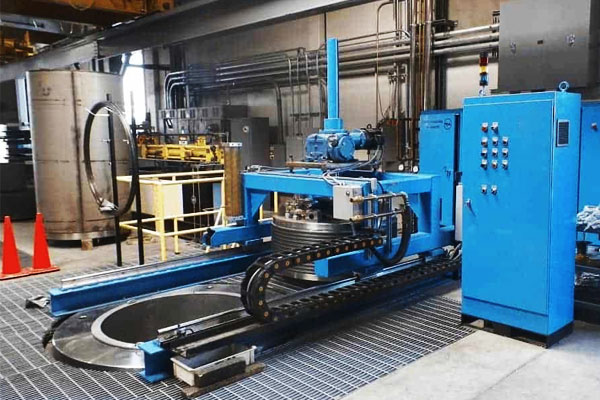
- Pressure vessel (autoclave/HIP furnace): thick-walled, code-certified vessel rated to operating pressure (common industrial range: up to ~220 MPa).
- High-pressure gas system: high-purity argon compressors, accumulators and controls.
- Heating system & insulation: resistive or induction heating capable of uniform temperature control and ramping.
- Vacuum capability: to evacuate the chamber or sealed canisters before gas fill—minimizes oxidation and trapped air.
- Loading fixtures & baskets: to hold multiple components or canisters; tooling must tolerate temperature and pressure cycles.
- Process control & safety systems: PLC/SCADA for ramp control, interlocks and pressure safety devices.
Typical process flow
- Part prep & encapsulation (if used): parts placed in canisters (or loaded naked for capsuleless HIP) and vacuum-sealed if required.
- Pump down / vacuum: chamber evacuated to remove air/oxygen.
- Argon fill & pressurization: gas pressure ramped to setpoint.
- Heating to soak temperature: coordinated ramps to target T while at pressure or with controlled pressure ramping.
- Soak (hold) under pressure: time appropriate for densification.
- Controlled cooling under pressure: prevents re-opening of closed pores as internal gas cools.
- Depressurize & unload: after safe temperature/pressure thresholds.
- Post-HIP operations: canister removal, cleaning, heat treatment, machining, NDT and qualification.
Encapsulation strategies
- Sealed canisters: protect surfaces, contain volatiles and ease batching; require weld sealing and post-HIP canister removal.
- Vented/escape features: used when outgassing must be permitted.
- Capsuleless HIP: powders or compatible parts placed directly in the chamber; surface oxidation must be controlled.
5. Process parameters and their effects
Key idea: HIP is a T–P–t (temperature–pressure–time) process. Adjusting any parameter trades off densification rate, microstructure evolution, and potential side effects (grain growth, over-aging).
Table — Typical HIP parameter ranges and principal effects
| Parameter | Typical industrial range | Principal effects |
| Pressure (argon) | 50 – 220 MPa (commonly 100–150 MPa) | Higher pressure accelerates pore collapse; allows lower T or shorter holds; limited by vessel rating |
| Temperature | 400 °C (polymers) → >2000 °C (advanced ceramics); metals example: Ti alloys 900–950 °C, Al alloys 450–550 °C, Ni-alloys 1120–1260 °C | Drives diffusion/creep/plasticity; must avoid melting, over-aging or undesirable phase changes |
| Soak time | 0.5 – 10+ hours (geometry & material dependent) | Longer time allows closure of small pores and homogenization; increases grain growth risk |
| Vacuum pre-evacuation | 10⁻² – 10⁻³ mbar typical | Removes oxygen and trapped gases; improves surface quality and prevents oxidation |
| Heating / cooling rates | 1 – 20 °C/min typical (can be faster) | Rapid ramps can induce thermal gradients and distortion; controlled cooling under pressure avoids pore re-opening |
| Encapsulation wall thickness | 1 – 10+ mm (material & size dependent) | Must survive handling & process; affects heat transfer and final surface condition |
Performance targets frequently quoted by users
- Final relative density:>99.5 – 99.95% (many systems report ≥99.8% for AM and PM parts).
- Porosity reduction: bulk porosity reduced from several percent to <0.1%; elimination of critical shrinkage defects improves fatigue life often by 2× to >10× depending on initial defect population.
6. Materials suitable for HIP and recommended cycles
HIP works for a wide range of materials: metals (Al, Cu, Fe, Ti, Ni alloys), powder metallurgy steels and superalloys, and many ceramics.
The table below gives representative cycles—each part must be qualified and cycles optimized.
Table — Representative HIP cycles by material (typical values)
| Material / family | Typical T (°C) | Typical P (MPa) | Typical soak | Typical objective |
| Ti-6Al-4V (cast / AM) | 900–950 °C | 100–150 | 1–4 h | Close porosity; improve fatigue; homogenize microstructure |
| Aluminum alloys (cast / AM) | 450–550 °C | 80–150 | 0.5–2 h | Eliminate shrinkage pores; densify lightweight castings |
| Austenitic stainless (316, 304) | 1150–1250 °C | 100–200 | 1–4 h | Remove shrinkage porosity; homogenize segregations |
| Ni-base superalloys (IN718, etc.) | 1120–1260 °C | 100–150 | 1–4 h | Heal casting/AM defects; reach near full density; post-HIP heat treat required |
| PM tool steels | 1000–1200 °C | 100–200 | 1–8 h | Densify sintered compacts; close residual pores |
| Copper & alloys | 600–900 °C | 80–150 | 0.5–2 h | Consolidate PM/cast copper components |
| Oxide ceramics (Al₂O₃, ZrO₂) | 1400–1800 °C | 100–200 | hours–tens h | Pressure-assisted sintering to near theoretical density |
| Carbides / refractory ceramics | 1600–2000 °C | 100–200 | hours | Densify refractory components |
Notes: cycles above are indicative. For age-hardenable alloys (Ni superalloys, some steels) HIP must be coordinated with solution and aging treatments to control precipitates and avoid over-growth.
7. Microstructural and mechanical effects of HIP
Porosity and density
- Primary benefit: closure of internal porosity and shrinkage defects. Typical densification: parts with initial porosity of 1–5% can be reduced to <0.1% post-HIP (material and pore size dependent).
Mechanical properties
- Fatigue life: pore elimination removes crack nucleation sites—reported improvements range from 2× up to >10× for fatigue life in many cast and AM parts.
- Tensile & ductility: yield and ultimate strengths often increase modestly; elongation tends to increase as voids are removed.
- Fracture toughness: increases as a result of fewer internal stress concentrators; useful for safety-critical components.
- Creep life: homogenized, pore-free microstructure often improves high-temperature creep performance.
Microstructure tradeoffs
- Grain growth: extended high-T exposure may coarsen grains—this can reduce yield and low-cycle fatigue performance. Optimization balances densification against grain control (use lower T/higher P when possible).
- Precipitate evolution: age-hardenable alloys may experience precipitate coarsening; post-HIP heat treatment (solution + aging) is commonly required to restore designed precipitate distributions.
- Residual stress: HIP reduces internal tensile residual stresses; the process may change macroscopic stress states—controlled cooling is used to mitigate distortion.
8. Inspection, NDT and qualification after HIP
Common inspection methods
- Computed Tomography (CT): the gold standard for internal porosity mapping in complex AM components.
Modern CT can detect pores down to ~20–50 µm depending on system and material. - Ultrasonic Testing (UT): effective for larger internal defects (sensitivity varies with geometry and material); useful for production screening.
- Radiography / X-ray: 2-D inspection for larger pores or inclusions.
- Archimedes density measurement: precise bulk density check to detect average porosity; quick and economical.
- Metallography / SEM: destructive section for detailed pore closure and microstructure analysis.
- Mechanical testing: tensile, fracture toughness and fatigue testing per qualification plans.
Qualification criteria examples
- Porosity acceptance: e.g., total porosity <0.1% by image analysis or no pores >0.5 mm in critical regions—customer-specific.
- CT acceptance: no connected porosity exceeding defined volume threshold; CT slice spacing and voxel size must be specified.
- Coupon testing: representative specimens processed with parts for tensile & fatigue verification.
9. Advantages & Limitations of Hot Isostatic Pressing
Advantages
- Near-full density: achieves densities unattainable by pressureless sintering; typical final density ≥99.8%.
- Improved mechanical reliability: major gains in fatigue life, toughness and creep performance.
- Isotropic pressure: avoids die-marks and anisotropic deformation associated with uniaxial pressing.
- Flexibility: applicable to castings, PM compacts, and AM builds; enables near-net shaping strategies.
- Surface protection: sealed canisters protect critical surfaces from oxidation/contamination.
Limitations & challenges
- Capital & operating cost: HIP furnaces and compressors are expensive; per-part cost is high for low-value, high-volume components.
- Size constraints: vessel diameter and height limit single-part dimensions (though large HIPs exist).
- Not a cure for gross defects: very large shrinkage cavities, misruns or cracks may not fully heal.
- Grain growth & overaging risk: extended high-T soaks can degrade some properties unless counteracted by lower T/higher P or post-HIP heat treatments.
- Surface imprint / canister removal: sealed canisters can leave markings and require additional machining/finishing.
10. Industrial Applications of Hot Isostatic Pressing
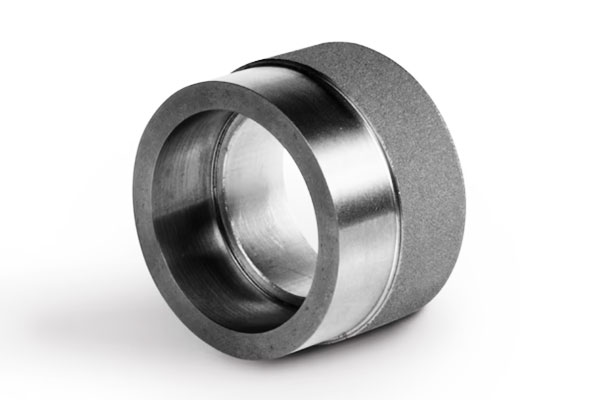
- Aerospace: HIP is widely used on turbine discs, blades (cast and AM), structural components and high-value rotors where internal defects are unacceptable.
- Medical implants: AM Ti-6Al-4V hip stems and spinal implants are HIPed to remove internal porosity and guarantee long in-vivo fatigue life.
- Power generation & nuclear: critical pressure-boundary castings and components (steam turbine blades, reactor parts) use HIP for defect mitigation.
- Additive manufacturing (AM) supply chain: HIP is a standard post-processing step for flight-critical AM parts to ensure mechanical performance and reduce anisotropy.
- Powder metallurgy tooling and bearings: PM tools and carbide composites are HIPed for near-full density and improved toughness.
- Automotive / motorsport: high-performance components (connecting rods, turbo parts) from AM or PM sometimes HIPed for reliability.
11. Common Misconceptions About HIP
“HIP Can Fix All Material Defects”
False. HIP eliminates porosity and microcracks but cannot repair macro-defects (e.g., large cracks >1 mm, inclusions, or incorrect alloy composition).
“HIP Is Only for Powder Metallurgy Parts”
False. HIP is widely used for cast parts (closing shrinkage pores), AM post-processing, and forged parts (homogenization)—PM is just one application.
“HIP Increases Hardness for All Materials”
False. HIP improves strength/toughness but may slightly reduce hardness for heat-treated steels (e.g., H13 tool steel: 64→62 HRC) due to grain refinement—tempering post-HIP restores hardness.
“HIP Causes Significant Dimensional Change”
False. Controlled cooling and uniform pressure limit dimensional change to 0.1–0.5%—sufficient for precision components (e.g., aerospace parts with ±0.1 mm tolerance).
“HIP Is Replaceable by Additive Manufacturing”
False. AM produces complex shapes but induces porosity/residual stress—HIP is often required to achieve reliability for critical applications (medical implants, turbine blades).
12. Key Distinctions from Competing Technologies
| Technology | Pressure type | Typical target | Strength vs HIP |
| Hot Isostatic Pressing (HIP) | Isostatic gas pressure (all directions) | Porosity elimination, densification | Best for internal pore healing; isotropic pressure |
| Hot pressing / Hot uniaxial pressing | Uniaxial mechanical pressure in a die | High densification, often with shaping | Strong densification but anisotropic, tool marks, limited shapes |
| Vacuum sintering (furnace) | No external pressure (vacuum only) | Sintering of powders | Lower densification; HIP yields higher density and mechanical properties |
| Hot forging | Uniaxial compressive load | Shape refinement, defect closure near surfaces | Very effective for surface defects, not for internal isolated pores |
| Spark Plasma Sintering (SPS) | Uniaxial pressure + pulsed DC heating (small parts) | Rapid sintering of powders | Very fast, excellent for small components and special materials; size limited |
| Liquid metal impregnation / infiltration | Capillary infiltration | Seal surface porosity or infill | Local remediation; does not generally restore bulk isotropic properties like HIP |
13. Conclusion
Hot Isostatic Pressing is a proven, high-value process for consolidating powders, healing casting and AM defects, and bringing parts to near-wrought mechanical performance.
Its strength lies in isotropic pressure, the ability to close internal porosity, and applicability across a wide materials range.
The tradeoffs are capital intensity, cycle cost, potential microstructural side effects (grain growth, precipitate evolution) and practical size limits.
For safety-of-life and high-value applications—especially where fatigue and fracture reliability matter—HIP is often indispensable.
Careful cycle design, encapsulation strategy, and qualified inspection/acceptance criteria ensure the process delivers its intended benefits.
FAQs
How much porosity reduction can I expect from HIP?
Typical HIP cycles reduce bulk porosity from several percent to <0.1%; many AM and PM parts reach ≥99.8% relative density.
The actual reduction depends on initial pore size/distribution and chosen T–P–t cycle.
Does HIP change the grain size of my alloy?
Yes—HIP’s elevated temperature and soak time can cause grain growth.
Process optimization (higher pressure, lower temperature, shorter holds) and post-HIP heat treatments are used to control grain size.
Is HIP required for additive-manufactured parts?
Not always, but for flight-critical or fatigue-sensitive AM parts HIP is commonly required to close internal pores and meet OEM qualification limits.
What gas is used and why?
High-purity argon is standard because it is inert and safe to use at high pressure; gas purity reduces contamination and oxidation risk.
Are there size limits for HIP?
Yes—limited by the pressure vessel dimensions. Industrial HIP units exist in a range of sizes (small lab <1m chambers to very large units several meters in diameter), but extreme part sizes may not be feasible or economical.

