1. Introduction
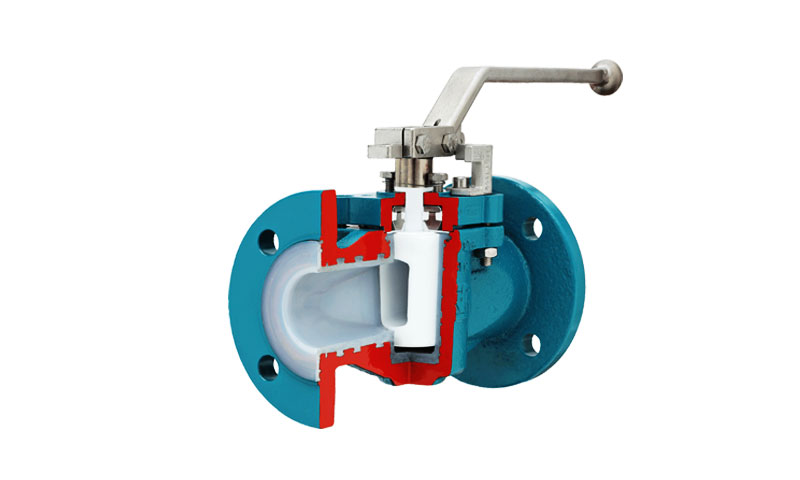
Stainless steel casting is a critical manufacturing process used to create high-performance components across industries that demand corrosion resistance, durability, and dimensional precision.
By pouring molten stainless steel into custom-designed molds, complex parts can be produced with tight tolerances and excellent surface finishes, making it an ideal solution for intricate and high-strength applications.
Compared to other metal forming methods such as forging or machining, stainless steel casting offers enhanced design freedom, material efficiency, and suitability for low-to-medium production volumes.
Its significance has grown in sectors such as energy, automotive, aerospace, food processing, and marine engineering, where performance and longevity are non-negotiable.
2. What is Stainless Steel Casting?
Stainless steel casting is a precision metal forming process in which molten stainless steel is poured into a mold to create complex and high-performance components.
It combines the corrosion-resistant properties of stainless steel with the dimensional accuracy and design flexibility of modern casting techniques.

This process allows manufacturers to produce parts with intricate geometries, thin walls, and fine surface finishes that are difficult or uneconomical to achieve through machining or forging.
Stainless steel casting can be carried out using various methods, including investment casting, sand casting, and shell mold casting, depending on the part size, shape, and performance requirements.
It supports a wide range of stainless grades—such as austenitic, martensitic, duplex, and precipitation-hardened steels—offering tailored mechanical properties for strength, toughness, or heat resistance.
3. Common Stainless Steel Grades for Casting
Stainless steel casting encompasses a wide range of alloys, each engineered to meet specific performance criteria.
These grades are categorized primarily based on their microstructure: austenitic, martensitic, ferritic, duplex, and precipitation-hardening (PH) stainless steels.

Common Stainless Steel Grades for Casting
| Category | Grade (ASTM/UNS) | Structure | Key Characteristics | Typical Applications |
| Austenitic | CF8 (304), CF8M (316) CF3, CF3M | Austenitic | Non-magnetic; excellent corrosion resistance; good ductility and weldability; not hardenable by heat treatment | Pumps, valves, food processing, marine hardware |
| Martensitic | CA15 (410), CA6NM | Martensitic | Magnetic; high strength and hardness; moderate corrosion resistance; heat-treatable | Turbine components, valve seats, high-wear mechanical parts |
| Ferritic | CB30, CF10 | Ferritic | Magnetic; good resistance to stress corrosion; moderate corrosion resistance; limited toughness | Automotive exhausts, architectural trim, industrial casings |
| Duplex | CD4MCu, CE8MN | Austenitic + Ferritic | High strength; excellent pitting and crevice corrosion resistance; improved stress corrosion cracking resistance | Offshore platforms, chemical processing, seawater systems |
| Precipitation-Hardening (PH) | CB7Cu-1 (17-4PH) | Martensitic + Precipitation Hardening | High strength; moderate corrosion resistance; excellent dimensional stability; hardenable by aging | Aerospace, defense, precision tools, nuclear components |
4. Stainless Steel Casting Methods
Stainless Steel Investment Casting (Lost Wax Casting)
Investment casting is a precision casting technique that begins with the creation of a wax model that replicates the final part geometry.
This wax pattern is assembled onto a wax tree (for batch processing) and repeatedly dipped into a ceramic slurry to build a shell.
After the ceramic hardens, the entire mold is heated to melt out the wax (dewaxing), leaving a hollow ceramic cavity.
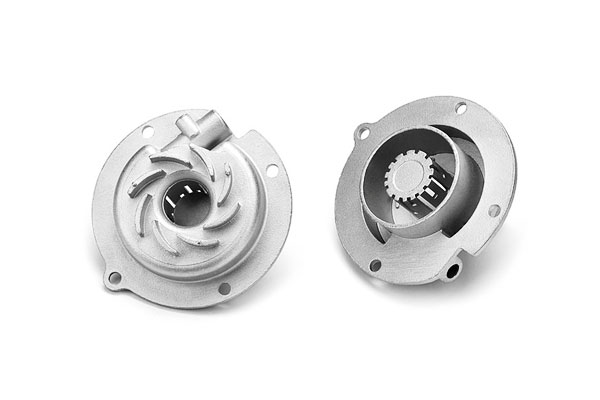
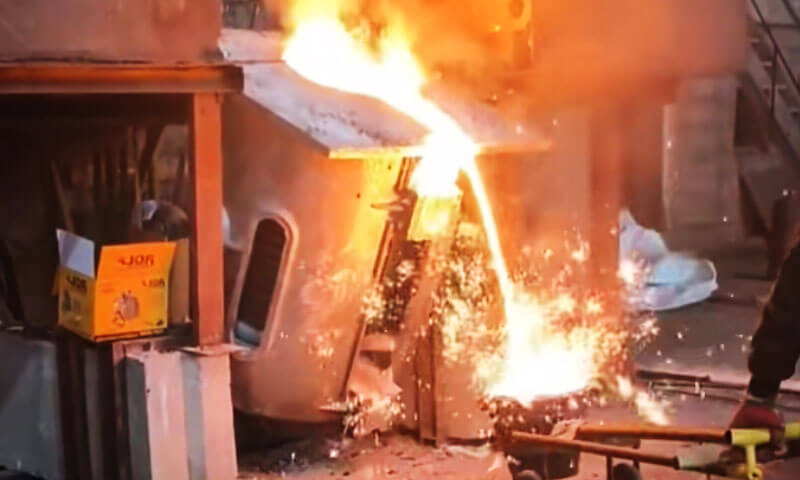
Molten stainless steel is then poured into the heated shell, allowing for detailed filling.
Once solidified, the ceramic shell is broken away, and the casting is cleaned, heat-treated, and finished as required.
- The shell can withstand high temperatures, enabling intricate and thin-walled castings.
- Common for parts requiring tight dimensional tolerances (±0.1 mm), smooth surface finishes (Ra 3.2–6.3 µm), and complex internal features.
Stainless Steel Sand Casting
Sand casting utilizes a disposable mold made from silica sand, typically bonded with clay or chemical binders.
A wooden or metal pattern is pressed into the sand to form a negative cavity. For complex internal features, sand cores are inserted.
The mold halves are clamped, and molten stainless steel is poured into the cavity through a gating system.
After cooling and solidification, the sand mold is broken away, revealing the rough casting.
- This method is highly flexible in terms of size and weight—capable of producing parts from a few kilograms to several tons.
- Tolerances are looser (±1.5 mm or more), and surface finish is coarser (Ra 12.5–25 µm), often requiring post-machining.
Stainless Steel Shell Mold Casting
Shell mold casting is a variation of sand casting that uses resin-coated, fine-grain sand and a heated metal pattern.
The heated pattern causes the resin to cure as the sand contacts it, forming a thin, rigid shell (typically 5–10 mm thick).
The shell halves are then removed from the pattern, assembled, and filled with molten stainless steel.
After cooling, the shell is broken away, and the part is finished similarly to investment or sand castings.
- Provides better dimensional accuracy (±0.5 mm) and surface finish (Ra 6.3–12.5 µm) than traditional sand casting.
- Especially suitable for medium-to-high volume production of geometrically simpler parts.
Stainless Steel Centrifugal Casting
In centrifugal casting, a hollow cylindrical mold is rotated at high speeds (300–3000 RPM) while molten metal is poured into it.
The centrifugal force pushes the molten metal outward toward the mold walls, resulting in a dense, fine-grained structure with minimal porosity.
The axis of rotation can be horizontal (for pipes) or vertical (for rings or gear blanks).
As the casting solidifies from the outer surface inward, impurities are forced toward the inner diameter and can be machined away.
- This process yields excellent mechanical properties and uniform grain orientation due to directional solidification.
- Ideal for applications requiring high strength, pressure resistance, and minimal inclusions.
Stainless Steel Metal Mold (Permanent Mold) Casting
Metal mold casting uses permanent steel or cast iron molds instead of disposable sand or ceramic molds.
Molten stainless steel is introduced either by gravity, low-pressure, or vacuum assistance into the pre-heated mold.
The mold may include retractable cores or inserts for more complex geometries. Once the metal cools and solidifies, the mold is opened, and the part is ejected for finishing.
- Produces consistent, repeatable results with tight tolerances (±0.25–0.5 mm) and superior surface finish (Ra 3.2–6.3 µm).
- Economical for medium-to-high production volumes due to fast cycle times and reduced labor.
5. Stainless Steel Casting Process: Step-by-Step (Investment Casting Example)
- Pattern Creation: Wax patterns (±0.02 mm tolerance) are injection-molded; multiple patterns are attached to a wax tree.
- Shell Building: Patterns are dipped in ceramic slurry (silica/alumina) and coated with sand, repeating 6–8 times to build a 6–10 mm shell.
- Dewaxing and Shell Firing: Shells are heated to 160–200°C to melt wax (recycled), then fired at 900–1,050°C to harden the ceramic.
- Pouring: Molten stainless steel (1,450–1,530°C for CF8M) is poured into the shell under gravity or vacuum to avoid porosity.
- Cooling and Solidification: Controlled cooling (air or water) prevents hot cracking; solidification time: 5–30 minutes (varies by part size).
- Knockout and Cleaning: Shells are shattered with hammering or water jets; gates/risers are cut, and parts are sandblasted to remove ceramic residue.
- Heat Treatment: Austenitic grades (CF8, CF8M) are solution-annealed (1,050–1,150°C, water-quenched) to dissolve carbides. Martensitic grades (CA15) are quenched and tempered for hardness.
- Inspection: Dimensional checks (CMM), NDT (dye penetrant), and mechanical testing (tensile strength) ensure compliance.
6. Surface Finishing Options of Stainless Steel Casting
Surface finishing of stainless steel castings is critical for both functional performance (e.g., corrosion resistance, wear resistance) and aesthetic appeal.
The choice of finish depends on the application—from food-grade parts requiring ultra-smooth, hygienic surfaces to industrial components needing enhanced durability.

Shot Blasting
Shot blasting uses high-velocity abrasive media (steel grit, ceramic beads, or glass) to clean and texture casting surfaces.
- Process: Media is propelled at 60–100 m/s via compressed air or centrifugal wheels, removing surface contaminants (e.g., ceramic residue from investment casting) and creating a uniform matte texture.
- Results: Surface roughness (Ra) of 3.2–6.3 μm; improves adhesion for paints, coatings, or powder finishes.
- Applications: Industrial valve bodies, pump housings, and structural castings where a textured surface aids in coating retention.
Pickling and Passivation
These chemical treatments enhance corrosion resistance by removing impurities and stabilizing the chromium oxide passive layer.
- Pickling: Uses a nitric-hydrofluoric acid solution to dissolve scale, rust, and free iron from casting surfaces. Critical for removing heat tint (oxidation) from welded or heat-treated areas.
- Passivation: Follows pickling, using nitric acid to enrich the chromium content in the surface oxide layer, boosting corrosion resistance. Complies with ASTM A967 for stainless steels.
- Results: Clean, oxide-free surface with Ra 1.6–3.2 μm; prevents pitting in chloride environments (e.g., seawater).
- Applications: Food processing equipment (304 castings), marine components (316 castings), and medical devices requiring biocompatibility.
Electropolishing
Electropolishing is an electrochemical process that removes a thin layer of metal (5–50 μm) to achieve a mirror-like finish.
- Process: The casting acts as the anode in an electrolyte bath (phosphoric/sulfuric acid), with current dissolving surface irregularities.
- Results: Ultra-smooth surface (Ra 0.025–0.1 μm) with improved cleanliness—microscopic pores and crevices (potential sites for bacterial growth) are eliminated.
- Advantages: Enhances corrosion resistance by 30–50% vs. passivation alone; reduces friction in dynamic applications (e.g., sliding parts).
- Applications: Pharmaceutical equipment (316L castings), surgical instruments, and semiconductor components where particle shedding must be minimized.
Machining and Surface Tolerance
For castings requiring tight dimensional control or precise mating surfaces, machining is often paired with finishing:
- Turning/Milling: Removes 0.1–1 mm of material to achieve tolerances as tight as ±0.01 mm (e.g., valve seats requiring leak-tight seals).
- Grinding: Surface grinding achieves flatness within 0.005 mm/m and Ra 0.05–0.1 μm, critical for bearing surfaces in aerospace castings.
- Threading/Tapping: Creates precise threads (ISO metric or NPT) in cast flanges or fittings, ensuring compatibility with piping systems.
Other Finishes
- Bead Blasting: Uses softer media (glass beads) than shot blasting to create a uniform, satin finish (Ra 1.6–3.2 μm) without altering dimensions.
Common in architectural castings (e.g., handrails) for aesthetic appeal. - Electroplating: Applies a thin layer of nickel, chrome, or gold for decorative purposes or enhanced wear resistance.
Used in high-end fixtures (e.g., marine hardware) where appearance is critical. - Laser Engraving: Adds permanent markings (part numbers, logos) to cast surfaces without compromising corrosion resistance, essential for traceability in aerospace and medical applications.
7. Mechanical and Physical Properties of Stainless Steel Casting
| Property | CF8 (Austenitic) | CA15 (Martensitic) | CD4MCu (Duplex) | Wrought 316 (for comparison) |
| Tensile Strength | 550–650 MPa | 600–800 MPa | 690–800 MPa | 620–720 MPa |
| Yield Strength | 240–300 MPa | 400–550 MPa | 480–620 MPa | 290–350 MPa |
| Elongation | 30–40% | 10–15% | 20–25% | 40–50% |
| Hardness (HB) | 160–180 | 200–300 (untreated) | 220–260 | 170–190 |
| Corrosion Resistance | Excellent (PREN ~20) | Good (PREN ~12) | Excellent (PREN ~35) | Excellent (PREN ~30) |
| Max Operating Temp | 870°C | 650°C | 315°C | 870°C |
8. Advantages of Stainless Steel Casting

- Complex Geometry: Produces undercuts, thin walls (≥1 mm for investment casting), and internal cavities—e.g., CF8M valve bodies with multi-port designs.
- Superior Surface Finish: Investment casting achieves Ra 1.6–3.2 μm as-cast, reducing post-processing.
- Material Efficiency: 70–90% material utilization vs. 30–50% for machining, lowering raw material costs.
- Design Flexibility: Enables part consolidation (e.g., replacing 5 machined components with 1 cast part, reducing assembly costs by 40%).
- Alloy Versatility: Compatible with grades from low-cost 430 to high-performance 310 (25Cr-20Ni) for extreme heat.
9. Limitations and Challenges
- Higher Cost: 30–50% more expensive than carbon steel casting due to alloying elements (e.g., nickel in 304).
- Long Lead Times: Investment casting requires 2–4 weeks for tooling and first parts, vs. 1–2 weeks for sand casting.
- Defect Risks: Shrinkage (1.5–2.0% volume reduction) and hot cracking (in martensitic grades) without precise process control.
- Thick Section Challenges: Sections ≥50 mm risk porosity due to slow cooling; requires risers (extra metal reservoirs) to feed molten steel.
10. Applications of Stainless Steel Castings

Aerospace Industry
- Parts: Turbine blades, impellers, engine components, structural parts, exhaust systems.
Automotive Industry
- Parts: Exhaust manifolds, turbocharger housings, brake calipers, suspension components.
Chemical and Petrochemical Industry
- Parts: Valves, pumps, pipe fittings, reactor components, heat exchangers.
Food Processing Industry
- Parts: Mixers, valves, pumps, conveyor components, processing equipment.
Marine and Shipbuilding Industry
- Parts: Propellers, shafts, valves, pump casings, seawater piping components.
Power Generation Industry (Including Nuclear and Renewable Energy)
- Parts: Turbine components, valve bodies, pump casings, generator parts.
Construction and Heavy Equipment
- Parts: Hydraulic components, excavator parts, structural castings, lifting equipment.
Medical and Pharmaceutical Industry
- Parts: Surgical instruments, sterilization equipment, pump components, valve bodies.
Water Treatment and Plumbing
- Parts: Valves, pipe fittings, pump housings, filter components.
Industrial Machinery
- Parts: Gears, housings, bearing supports, machine bases, hydraulic components.
11. Stainless Steel Casting vs. Forging and Machining
| Factor | Stainless Steel Casting | Forging | Machining (from Wrought Stock) |
| Complexity | Excellent for intricate geometries (undercuts, thin walls, internal cavities). | Limited to simple, bulky shapes; struggles with undercuts or fine details. | Good, but constrained by tool access (e.g., deep internal channels). |
| Material Utilization | 70–90% (minimal waste from gates/risers). | 50–80% (waste from flash/trimming). | 30–50% (high waste from chip removal). |
| Mechanical Strength | 5–10% lower tensile strength than forging due to coarser grain structure. | Highest strength (grain alignment with stress directions). | Equivalent to wrought material (no grain disruption from casting). |
| Surface Finish | Investment casting: Ra 1.6–3.2 μm (as-cast); sand casting: Ra 12.5–25 μm (requires finishing). | Ra 6.3–12.5 μm (as-forged); needs machining for smooth surfaces. | Ra 0.8–3.2 μm (after machining); achievable with tight tolerances. |
| Lead Time | Investment casting: 2–4 weeks (tooling + production); sand casting: 1–2 weeks. | 3–6 weeks (die fabrication + forging). | 1–2 weeks (no tooling for low volumes). |
| Cost (10,000 Units) | $10–$30/part (investment casting); $5–$15/part (sand casting). | $15–$40/part (closed-die forging). | $20–$50/part (CNC machining). |
| Volume Suitability | Ideal for medium-to-high volumes (1,000–100,000+ units) to amortize tooling. | Best for high volumes (10,000+ units) due to expensive die costs. | Suitable for low volumes (1–1,000 units) with minimal setup. |
| Typical Applications | Turbine blades, valve bodies, medical implants. | Crankshafts, flanges, high-stress structural parts. | Shafts, precision fasteners, parts requiring tight tolerances. |
| Post-Processing | Minimal (heat treatment + surface finishing). | Requires machining for tight tolerances (e.g., bearing seats). | Extensive (multiple operations: turning, milling, grinding). |
12. Quality Control and Testing
- Non-Destructive Testing (NDT):
-
- X-ray: Detects internal porosity (critical for pressure vessels).
- Ultrasonic: Identifies cracks in thick sections (e.g., duplex pipe flanges).
- Dye Penetrant: Reveals surface defects in martensitic valve stems (ASTM E165).
- Dimensional Inspection: CMM (Coordinate Measuring Machine) verifies tolerances to ±0.005 mm.
- Chemical Analysis: Optical emission spectrometry (OES) confirms alloy composition (e.g., 18±1% Cr in CF8).
- Mechanical Testing: Tensile tests (ASTM A370) and impact tests (Charpy V-notch) validate strength and toughness.
13. Conclusion
Stainless steel casting is a versatile process that balances complexity, corrosion resistance, and cost, enabling the production of critical components across industries.
Its ability to transform molten stainless steel into intricate, high-performance parts—from marine valves to medical implants—makes it irreplaceable in modern manufacturing.
While challenges like cost and lead times persist, advances in process control (e.g., computer simulation of solidification) and material science (e.g., high-entropy alloys) continue to expand its capabilities.
LangHe: Precision Stainless Steel Casting & Fabrication Services
LangHe is a trusted provider of high-quality stainless steel casting and precision metal fabrication services, serving industries where performance, durability, and corrosion resistance are critical.
With advanced production capabilities and a commitment to engineering excellence, LangHe delivers reliable, customized stainless steel solutions to meet the most demanding application requirements.
Our Stainless Steel Capabilities Include:
- Investment Casting & Lost Wax Casting
High-precision casting for complex geometries, ensuring tight tolerances and superior surface finishes. - Sand Casting & Shell Molding
Ideal for larger components and cost-effective production, especially for industrial and structural parts. - CNC Machining & Post-Processing
Complete machining services including turning, milling, drilling, polishing, and surface treatments.
Whether you need high-precision components, complex stainless assemblies, or custom-engineered parts, LangHe is your dependable partner in stainless steel manufacturing.
Contact us today to learn how LangHe can deliver stainless steel solutions with the performance, reliability, and precision your industry demands.
FAQs
What is the best method for stainless steel casting?
Depends on part requirements: Investment casting for precision (±0.05 mm) and complexity; sand casting for large, low-cost parts; centrifugal casting for cylindrical components like pipes.
How strong is cast stainless steel?
Austenitic grades (CF8, CF8M) have tensile strengths of 550–650 MPa; martensitic CA15 (410) reaches 800 MPa when heat-treated; duplex CD4MCu exceeds 690 MPa.
Can cast stainless steel be welded?
Yes. Austenitic grades (CF8, CF8M) weld well with 308L filler; martensitic grades require preheating (200–300°C) and post-weld annealing to avoid cracking.
What is CF8M stainless steel casting used for?
CF8M (cast 316) is ideal for corrosive environments: chemical processing valves, offshore oil fittings, and marine hardware, thanks to its molybdenum-enhanced chloride resistance.