1. Introduction
C93200, also known as SAE 660 bearing bronze, is a widely used copper-based alloy specifically formulated for applications requiring excellent wear resistance and machinability.
Classified under lead-tin bronze alloys, it has become an industry standard in bearings and bushings due to its well-balanced mechanical properties and cost-effective performance.
In industrial metallurgy, C93200 plays a critical role in components operating under moderate loads and speeds.
Its versatility across manufacturing environments—especially in fluid power, marine, and mechanical systems—makes it a mainstay in both original equipment manufacturing (OEM) and aftermarket part replacement.
2. What is C93200 Copper Alloy?
C93200, also known as SAE 660 bearing bronze, is a high-performance leaded tin bronze alloy widely used for applications involving friction, wear, and moderate loads.
It is engineered for superior machinability, embedded debris tolerance, and good corrosion resistance, particularly in lubricated environments.
As a standard in the bronze family, it is recognized for its balance of mechanical strength, tribological performance, and cost-efficiency.

C93200 is most commonly produced via casting processes such as sand, centrifugal, and permanent mold casting, and is widely used in bushings, thrust washers, bearings, and pump components.
Its composition and microstructure make it especially effective for components operating in boundary or mixed lubrication regimes.
Chemical Composition
| Element | Typical Range (%) | Function in Alloy |
| Copper (Cu) | 83.0 – 88.5 | Base metal; provides ductility and conductivity |
| Tin (Sn) | 6.3 – 7.5 | Adds strength, hardness, and wear resistance |
| Lead (Pb) | 6.0 – 8.0 | Enhances machinability and embeddability |
| Zinc (Zn) | 1.0 – 4.0 | Improves fluidity; minor strength contributor |
| Iron (Fe) | ≤ 0.25 | Impurity control; excessive iron may cause brittleness |
| Nickel (Ni) | ≤ 0.25 | Optional; improves corrosion resistance |
| Others | ≤ 0.50 (total) | Limited trace elements |
Standards and Designations
- UNS Number: C93200
- SAE Designation: SAE 660
- Common Trade Names: Bearing Bronze, 660 Bronze, SAE 660 Bronze
- ASTM Specifications: B505 (continuous cast), B271 (centrifugal cast), B148 (ingot)
- ISO: CuSn7Pb7Zn4
3. Mechanical Properties of C93200 Copper Alloy
C93200 (SAE 660) copper alloy is renowned for its well-balanced mechanical properties that make it ideal for bearing and bushing applications under moderate loads and speeds.
The alloy’s performance is a function of its composition, microstructure, and casting method.
It exhibits excellent machinability, good fatigue strength, and outstanding wear behavior—especially in lubricated environments.

Key Mechanical Properties
| Property | Typical Value | Notes |
| Tensile Strength | 220 – 275 MPa | Varies with casting method (sand vs. centrifugal) |
| Yield Strength (0.2% offset) | 105 – 130 MPa | Higher in centrifugal cast components due to finer grain structure |
| Elongation at Break | 10 – 20% | Indicates moderate ductility |
| Brinell Hardness | 65 – 85 HB | Can increase after work hardening or surface treatment |
| Compressive Yield Strength | ~120 MPa | Relevant for bearing surface loads |
| Shear Strength | ~170 MPa | Important in rotating contact applications |
| Fatigue Strength | ~90 MPa (at 10⁷ cycles) | Based on rotating beam tests in lubricated conditions |
| Modulus of Elasticity | ~100 GPa | Governs elastic deformation under stress |
Machinability
C93200 exhibits excellent machinability, often rated at 80–90% compared to free-cutting brass (C36000 = 100%).
The presence of lead (6–8%) contributes significantly to chip control, reduced tool wear, and high surface finish quality.
This makes C93200 a preferred choice in CNC-machined bearing shells and hydraulic bushings.
- Machinability Rating: ~85%
- Tool Material Compatibility: HSS and carbide tools
- Typical Surface Finish: 0.8 – 1.6 µm Ra with appropriate feed rates
4. Physical Properties of C93200 Copper Alloy
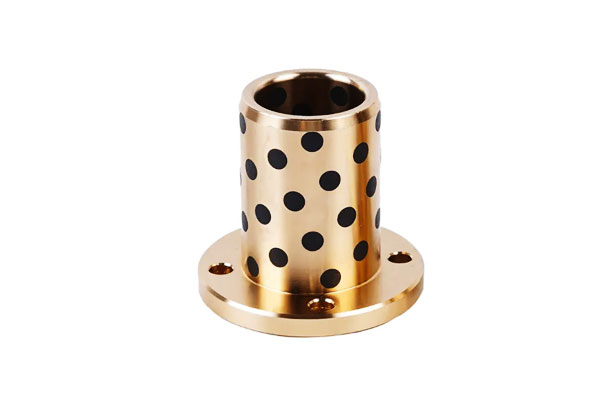
C93200, or SAE 660 bearing bronze, exhibits a well-balanced set of physical properties that make it highly suitable for applications involving sliding motion, thermal cycling, and moderate mechanical stress.
These physical characteristics contribute directly to the alloy’s effectiveness in bearings, bushings, and hydraulic components—especially where thermal stability, dimensional integrity, and conductivity are required.
Key Physical Properties
| Property | Typical Value | Remarks |
| Density | 8.8 g/cm³ (8800 kg/m³) | Provides mass and stability in rotating equipment |
| Melting Range | 930 – 1020 °C | Slightly lower than pure copper due to lead and tin |
| Thermal Conductivity | ~58–70 W/m·K | Lower than pure copper but sufficient for heat dissipation |
| Specific Heat Capacity | ~0.38 J/g·K | Affects thermal response in rapidly cycling applications |
| Coefficient of Thermal Expansion | ~18.5 × 10⁻⁶ /K | Important in press-fit and high-temperature assemblies |
| Electrical Conductivity | ~10–15% IACS | Not typically used in electrical circuits |
| Modulus of Elasticity | ~100 GPa | Indicates stiffness under load |
| Thermal Diffusivity | ~2.4 × 10⁻⁵ m²/s | Reflects the rate of heat spread in the material |
| Poisson’s Ratio | ~0.31 | Defines lateral expansion under uniaxial stress |
Thermal Performance
C93200 maintains structural integrity over a broad operating temperature range, typically up to 205°C (400°F) in continuous service, making it suitable for thermally stressed components.
Dimensional Stability
The alloy exhibits low shrinkage during cooling (~1.2–1.5%) and a uniform microstructure when properly cast.
5. Casting Characteristics of C93200 Copper Alloy
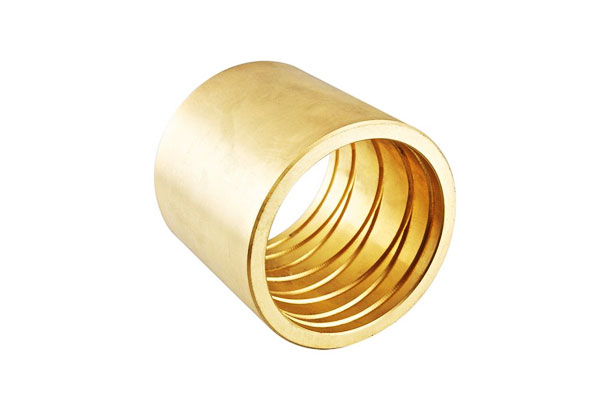
C93200 copper alloy, commonly known as SAE 660 bearing bronze, is highly regarded in foundry practice for its excellent castability, dimensional consistency, and adaptability to various casting methods.
Its unique composition—particularly the presence of lead (Pb), tin (Sn), and zinc (Zn)—makes it especially favorable for casting complex shapes while maintaining good surface finish and internal soundness.
Key Casting Characteristics
| Casting Property | C93200 Copper Alloy | Remarks |
| Fluidity | High | Lead and tin improve molten metal flow into intricate molds |
| Shrinkage Rate | ~1.2 – 1.5% | Allows accurate pattern compensation |
| Hot Shortness | Low | Good resistance to cracking during solidification |
| Porosity Tendency | Moderate | Controlled through gating and degassing |
| Gas Absorption | Moderate | Requires proper venting and melt treatment |
| Machinability After Casting | Excellent | As-cast microstructure aids cutting and finishing |
| Soundness | High (in centrifugal and continuous cast) | Superior structural integrity in critical components |
Common Casting Methods for C93200
| Casting Method | Suitability for C93200 | Typical Applications |
| Sand Casting | Excellent for large and complex shapes | Pump housings, gear blanks, large bushings |
| Centrifugal Casting | Ideal for cylindrical parts; minimal porosity | High-precision bushings, sleeve bearings, liners |
| Die Casting | Less common (lead content can degrade dies) | Small, high-volume components if alloy modified |
| Permanent Mold Casting | Good for repeatability and finer grain | Medium-sized parts requiring better surface finish |
| Continuous Casting | Preferred for stock shapes (rods, tubes) | Machined bearings, bar stock for custom fabrication |
6. Wear Resistance and Tribological Performance
C93200’s tribological superiority stems from its unique microstructure:
- Self-Lubrication: Dispersed lead particles (5–20 μm in diameter) act as “micro-bearings”, smearing across sliding surfaces to form a low-friction film.
This reduces the coefficient of friction to 0.15–0.20 (vs. 0.6–0.8 for steel-on-steel). - PV Limit: Safe for continuous operation at PV (pressure × velocity) values up to 1.5 MPa·m/s (e.g., electric motor bearings).
Exceeding this threshold causes lead melting (lead melts at 327°C), accelerating wear. - Wear Mechanism: Exhibits mild adhesive wear, with minimal debris generation—critical for clean environments like food processing (with strict lead leaching controls).
In field tests, C93200 bushings in agricultural machinery lasted 10,000+ hours under intermittent lubrication, outperforming brass (C36000) by 3× and cast iron by 2×.
7. Corrosion Resistance of C93200 Copper Alloy
C93200 offers moderate corrosion resistance in non-aggressive environments:
- Atmospheric Exposure: Forms a protective patina (basic copper carbonate) in rural and urban environments, with corrosion rates <0.01 mm/year—suitable for outdoor machinery.
- Freshwater: Resists corrosion in pH 6–8 water (e.g., cooling systems, freshwater pumps) with rates <0.02 mm/year.
- Saltwater/Chlorides: Poor resistance—corrosion rates exceed 0.1 mm/year in seawater (35,000 ppm Cl⁻) due to lead’s susceptibility to pitting and tin’s limited ability to form a protective oxide layer.
- Chemicals: Tolerates dilute oils, greases, and mild alkalis (e.g., 10% NaOH at 25°C) but corrodes rapidly in acids (e.g., 5% sulfuric acid: 1.2 mm/year).
Protection Strategies: Epoxy coatings, tin plating, or chromate conversion coatings extend service life in humid or coastal environments by 2–3×.
8. Applications of C93200 Copper Alloy
C93200’s versatility spans industries requiring reliable sliding components:

- Bearings & Bushings: Automotive crankshaft bearings (meeting SAE 660 specifications), industrial gearbox bushings, and electric motor bearings—leveraging self-lubrication to reduce maintenance.
- Hydraulic Components: Valve stems, pump impeller sleeves, and cylinder liners—resisting wear from hydraulic fluids (e.g., mineral oil, water-glycol mixtures).
- Automotive: Transmission synchronizer rings, steering linkage bushings, and suspension pivot points—withstanding 100,000+ km of service in passenger vehicles.
- Marine (Freshwater): Inland boat propeller shafts, pump components, and hatch hinges—avoiding seawater exposure.
- General Industrial: Conveyor rollers, press tool guides, and agricultural machinery pivot points—tolerating dirt, dust, and intermittent lubrication.
9. Advantages of C93200 Copper Alloy
- Self-Lubrication: Lead particles eliminate the need for continuous lubrication in low-maintenance applications, reducing downtime and operational costs.
- Exceptional Machinability: 80–90% machinability rating (vs. 30% for C95400 aluminum bronze) cuts production time by 20–30% and extends tool life.
- Ductility: 15–20% elongation absorbs shock loads, reducing failure risk in heavy machinery (e.g., construction equipment).
- Cost-Effectiveness: 30–40% cheaper than aluminum bronze (C95400) for equivalent low-load performance, making it ideal for high-volume production.
- Castability: Adapts to diverse casting methods, enabling complex geometries without secondary machining—reducing part count and assembly costs.
10. Limitations of C93200 Copper Alloy
- Lead Toxicity: Restricted in food contact (FDA 21 CFR 178.3280 limits lead to <0.1%) and medical devices, requiring lead-free alternatives (e.g., C86300 manganese bronze) in these sectors.
- Temperature Sensitivity: Loses 20% of tensile strength at 150°C; unsuitable for high-heat applications (e.g., engine exhaust components, industrial ovens).
- Low Hardness: 60–80 HB limits use in high-load (≥5 MPa) or high-speed (≥5 m/s) applications, where aluminum bronzes or steels are preferred.
- Corrosion Vulnerability: Not recommended for seawater, acidic environments, or high-chloride solutions (e.g., road salt exposure).
11. Comparative Analysis with Other Bronzes
C93200 (SAE 660) bearing bronze is one of the most widely used copper alloys due to its excellent balance of machinability, wear resistance, and castability.
However, in demanding applications, it is often compared to other bronze alloys such as C95400 (aluminum bronze), C83600 (red brass), and C36000 (free-cutting brass).
Comparison Table: C93200 vs. Other Bronze Alloys
| Property / Alloy | C93200 (SAE 660) | C95400 (Aluminum Bronze) | C83600 (Red Brass) | C36000 (Free-Cutting Brass) |
| Composition | Cu-Sn-Pb-Zn | Cu-Al-Fe-Ni | Cu-Sn-Zn-Pb | Cu-Zn-Pb |
| Tensile Strength (MPa) | 200–275 | 450–700 | 170–250 | 345–550 |
| Hardness (Brinell) | 60–80 | 125–175 | 50–70 | 80–100 |
| Machinability | Excellent (80–90%) | Moderate (30–40%) | Good (60%) | Excellent (90%+) |
| Corrosion Resistance | Moderate | Excellent (esp. seawater) | Good | Poor to moderate |
| Wear Resistance | Good | Very High | Fair | Moderate |
| Cost | Moderate | High | Moderate | Low |
| Friction Applications | Best with lubrication | Excellent dry or lubricated | Not ideal | Limited |
| Casting Suitability | Excellent | Fair to Good | Excellent | Not typically cast |
| Typical Uses | Bearings, bushings | High-load bushings, pumps | Plumbing, valves | Screws, fittings |
C93200 vs. C95400 (Aluminum Bronze)
- Strength & Load Capacity: C95400 significantly outperforms C93200 in tensile strength and wear resistance, making it more suitable for high-load, high-speed applications like gear components and industrial valves.
- Corrosion Resistance: C95400 exhibits exceptional resistance to seawater, chlorides, and chemicals, making it the preferred material in marine and offshore environments.
- Machinability: While durable, C95400 is harder to machine and more expensive to produce than C93200.
- Use Case: Choose C93200 for general-purpose bearings; choose C95400 when strength and corrosion resistance are critical.
C83600 (Red Brass) vs. C93200
- Cost & Castability: Both alloys are cast-friendly, but C83600 is cheaper and often used in non-critical applications like plumbing and decorative parts.
- Performance: C93200 has better wear resistance and pressure-handling capacity, especially for sliding or rotating components.
- Use Case: Choose C83600 for low-load, corrosion-resistant fittings; use C93200 for moving parts requiring lubrication and dimensional stability.
C93200 vs. C36000 (Free-Cutting Brass)
- Machinability: C36000 has the highest machinability rating among copper alloys (>90%), ideal for high-speed turning and precision components.
- Mechanical Properties: While strong and precise, C36000 lacks the tribological and fatigue properties required for bearing surfaces.
- Use Case: Use C36000 for fittings, connectors, and light-duty components; use C93200 where lubrication, wear resistance, and castability are key.
12. Conclusion
C93200 copper alloy remains a cornerstone of industrial design for bearing-grade applications due to its combination of machinability, tribological stability, and corrosion resistance.
While it may not suit all high-load environments, it offers dependable, cost-effective performance in countless machinery types—particularly when moderate loads, good lubrication, and tight tolerances are essential.
FAQs
Can C93200 be used without lubrication?
Yes, in low-load (≤1 MPa) and low-speed (≤1 m/s) applications. Its lead particles act as internal lubricants, reducing friction.
However, periodic lubrication extends service life in higher PV (pressure × velocity) scenarios.
Is C93200 suitable for seawater exposure?
No. Seawater’s high chloride content causes pitting corrosion in C93200, with rates exceeding 0.1 mm/year. For marine applications, use C95400 aluminum bronze, which resists seawater corrosion.
What are alternatives to C93200 for high-load applications?
For high-load (≥5 MPa) or high-speed (≥5 m/s) applications, C95400 aluminum bronze is preferred, as it offers 2× the tensile strength (450–550 MPa) and superior wear resistance.
Can C93200 be welded or brazed?
Welding is not recommended, as lead vaporizes at welding temperatures (≥327°C), causing porosity and brittleness.
Brazing (with silver-based fillers) is possible but requires careful surface preparation to avoid lead contamination of the joint. Mechanical fastening (bolting, press-fitting) is preferred for assembly.