


1. Introduction
AZ91D is the most widely used magnesium die-casting alloy worldwide, renowned for its exceptional combination of lightweight properties, castability, and mechanical strength.
As industries push the limits of material performance while aiming to reduce carbon emissions and improve fuel efficiency, AZ91D magnesium alloy has emerged as a vital solution for lightweight engineering.
2. What is AZ91D Magnesium Alloy?
AZ91D is a magnesium-based alloy primarily composed of aluminum (9%), zinc (1%), and manganese (~0.2–0.3%), with magnesium as the balance.
The designation “AZ” stands for Aluminum (A) and Zinc (Z), the principal alloying elements, while the number 91 indicates approximately 9% Al and 1% Zn.
The letter “D” represents a specific grade optimized for high-pressure die casting with excellent fluidity and dimensional stability.
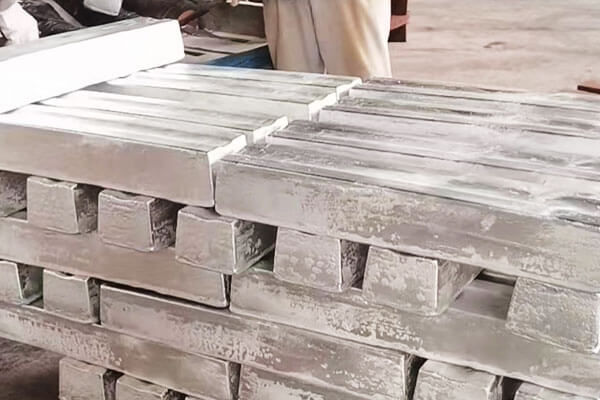
Chemical Composition of AZ91D Magnesium Alloy
(Typical values by weight%)
| Element | Content (%) | Function / Purpose |
| Magnesium (Mg) | Balance | Base metal, provides lightweight properties |
| Aluminum (Al) | 8.3 – 9.7 | Improves strength, hardness, and castability |
| Zinc (Zn) | 0.35 – 1.0 | Enhances strength and corrosion resistance |
| Manganese (Mn) | 0.15 – 0.5 | Neutralizes iron, improves corrosion resistance |
| Silicon (Si) | ≤ 0.10 | Limited to reduce brittleness |
| Copper (Cu) | ≤ 0.030 | Impurity—must be limited to avoid corrosion |
| Nickel (Ni) | ≤ 0.002 | Impurity—very harmful to corrosion resistance |
| Iron (Fe) | ≤ 0.005 | Must be minimized to maintain corrosion performance |
3. Physical Properties of AZ91D Magnesium Alloy
| Property | Typical Value | Notes |
| Density | ~1.81 g/cm³ | ~35% lighter than aluminum, ~78% lighter than steel |
| Melting Range | 595–640 °C | Allows for efficient die-casting with good fluidity |
| Thermal Conductivity | ~72 W/m·K | Lower than pure magnesium but suitable for heat sinks |
| Electrical Conductivity | ~6.8 MS/m | Lower than aluminum; not ideal for conductive components |
| Thermal Expansion Coefficient | ~26 x 10⁻⁶ /°C | Higher than steel; must consider in multi-material joints |
| Specific Heat | ~1.05 J/g·K | Slightly higher than aluminum |
| Damping Capacity | High | Superior vibration absorption—ideal for NVH reduction |
4. Mechanical Properties of AZ91D Magnesium Alloy
AZ91D magnesium alloy is widely regarded as the most structurally capable die-cast magnesium alloy, offering a balanced profile of strength, stiffness, and castability.
While it does not match the strength of some wrought aluminum alloys, it delivers excellent mechanical performance for lightweight applications, especially in high-volume, net-shape casting environments.
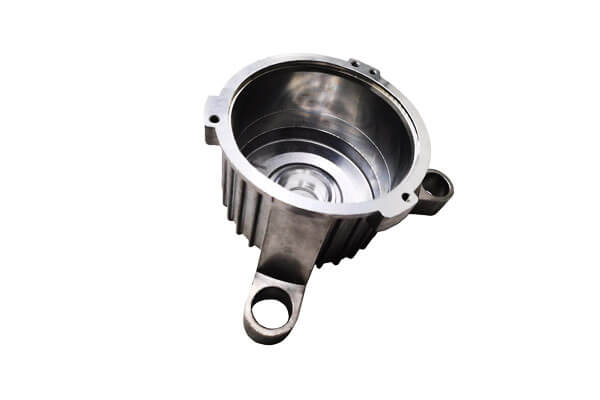
Typical Mechanical Properties (As-Cast Condition)
| Property | Typical Value | Remarks |
| Ultimate Tensile Strength | 230 MPa (33 ksi) | Adequate for many structural components |
| Yield Strength (0.2% offset) | 160 MPa (23 ksi) | Good for lightweight load-bearing applications |
| Elongation at Break | 3% – 7% | Moderate ductility; sensitive to cooling rate and casting quality |
| Brinell Hardness | 63 – 70 HB | Softer than most aluminum alloys; sufficient for moderate wear resistance |
| Modulus of Elasticity | ~45 GPa | ~70% of aluminum’s stiffness; should be considered in vibration-prone uses |
| Fatigue Strength (10⁷ cycles) | ~105 MPa | Stable under cyclic loads; depends on surface condition and defects |
| Shear Strength | ~145 MPa | Important in torsional and fastener applications |
5. Corrosion Resistance of AZ91D Magnesium Alloy
AZ91D has moderate corrosion resistance, which can be significantly improved through surface treatments.
The presence of the β-phase, rich in aluminum, forms galvanic couples at the grain boundaries, which can become corrosion initiation sites, particularly in saline or humid environments.

Common protection methods include:
- Chromate conversion coatings
- Anodizing
- Electrostatic or liquid painting
- Powder coatings
- Cathodic protection
Recent advancements in alloying—such as small additions of calcium or rare-earth elements—have shown to enhance the corrosion resistance by reducing β-phase continuity and refining grain structures.
6. Casting & Manufacturing Considerations of AZ91D Magnesium Alloy
AZ91D is the most widely used magnesium alloy in high-pressure die casting (HPDC) due to its exceptional castability, dimensional stability, and excellent surface finish.
Casting Characteristics
Excellent Fluidity
Magnesium alloy AZ91D exhibits superior fluidity compared to many magnesium and aluminum alloys.
This allows it to fill thin-walled and complex molds easily, which is essential for parts like electronic housings, instrument clusters, and transmission cases.
Low Tendency for Hot Tearing
Thanks to its optimized aluminum content (~9%), AZ91D maintains a low risk of hot cracking during solidification. This enables high-integrity castings with fewer internal defects.
Fine Microstructure in HPDC
High-pressure die casting results in rapid solidification (~10⁴ K/s), producing a fine-grained microstructure that improves strength and surface finish.
However, it may trap some porosity or oxide inclusions if not well controlled.

Preferred Manufacturing Process: High-Pressure Die Casting (HPDC)
- Cycle Time Efficiency: Typical cycle times range from 30 to 90 seconds, supporting mass production.
- Near-Net-Shape Capability: Minimal machining is needed due to tight tolerances and excellent mold replication.
- High Dimensional Stability: Good for components requiring precise fit, such as gearboxes and brackets.
Other less common casting methods for AZ91D:
- Gravity Die Casting (for lower volumes)
- Thixomolding (semi-solid processing with improved mechanical properties and less porosity)
- Sand Casting (not ideal due to poor fluidity in low-pressure environments)
Machining and Post-Processing
Machinability
Magnesium alloy AZ91D offers moderate machinability. Its low cutting forces and excellent chip formation are advantages.
However, the alloy’s relatively low hardness and high chemical reactivity can lead to tool wear and built-up edge formation if not properly managed.
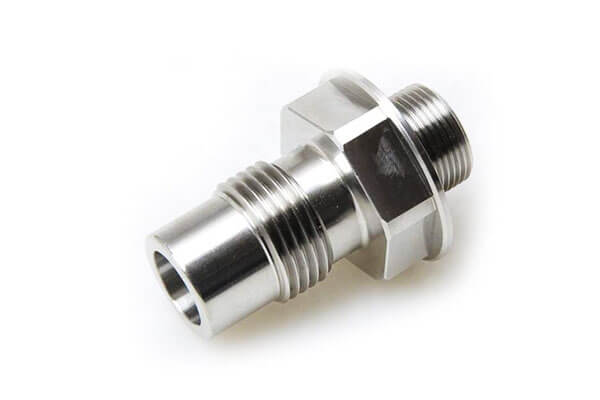
Key Recommendations:
- Use sharp, coated carbide tools.
- Apply water-soluble cutting fluids to prevent oxidation and improve finish.
- Avoid dry machining due to the risk of chip ignition (though magnesium is less flammable than often assumed).
Joining & Welding Challenges
Welding AZ91D is difficult due to the formation of stable surface oxides and the alloy’s limited solid solubility range.
- Fusion welding (TIG/MIG) is not recommended without special shielding and pre-cleaning.
- Solid-state joining techniques like friction stir welding or mechanical fastening are more effective.
- Adhesive bonding is also used in electronics and automotive parts with dissimilar materials.
7. Applications of AZ91D Magnesium Alloy
AZ91D is one of the most widely used magnesium die-casting alloys in the world, primarily due to its excellent strength-to-weight ratio, superior castability, and good surface finish.
These attributes make it ideal for lightweight structural and semi-structural applications across multiple industries.
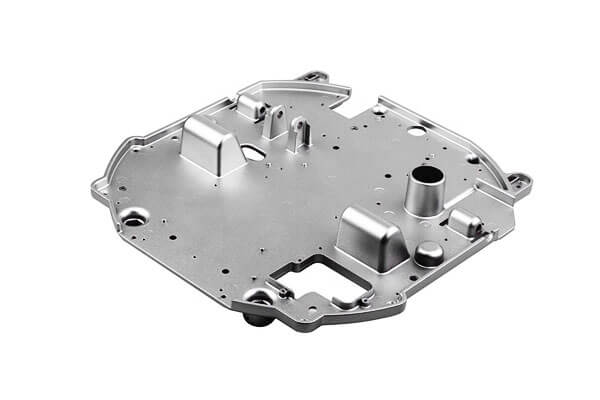
Automotive Industry
Magnesium alloy AZ91D plays a critical role in reducing vehicle weight and improving fuel efficiency.
Its use has expanded significantly in electric and hybrid vehicles, where mass savings directly impact range and performance.
Typical Automotive Components:
- Transmission cases and gear housings
- Steering wheels and steering columns
- Engine brackets and mounts
- Instrument panels and dashboard structures
- Clutch housings, pedal brackets, and mirror brackets
Consumer Electronics
Due to its excellent surface quality, thin-wall castability, and electromagnetic shielding properties, AZ91D is widely used in high-end electronic devices.
Key Applications:
- Laptop chassis and tablet frames
- Mobile phone housings
- Digital camera bodies
- Hard disk drive enclosures
- Speaker frames
Its ability to dissipate heat and its rigidity make it especially suitable for compact, high-performance devices.
Aerospace and Aviation
While magnesium alloys are used more conservatively in aerospace due to strict safety regulations, AZ91D magnesium alloy still finds use in low-load, non-critical structural and interior applications.
Common Components:
- Cabin and cockpit enclosures
- Electronic housings and sensor covers
- Seat frame structures
- Interior panel brackets
Its flame-retardant potential (with proper treatment) and mass reduction capabilities are attractive for future aircraft cabin designs and UAVs.
Medical and Sporting Equipment
Thanks to its biocompatibility and high damping capacity, AZ91D is increasingly used in the medical and sports equipment sectors.
Applications:
- Orthopedic braces and prosthetic frames
- Bicycle frames and gear housings
- Golf club heads, tennis racket frames
- Wheelchair components
Its ability to absorb vibration makes it ideal for sports equipment requiring precision and comfort.
Industrial Equipment & Power Tools
Magnesium’s low density, strength, and durability make AZ91D suitable for high-performance industrial tools and enclosures.
Examples:
- Power tool housings (e.g., drills, saws)
- Portable generator frames
- Pump and compressor housings
- Handheld instrument casings
8. Advantages of AZ91D Magnesium Alloy
- High strength-to-weight ratio: delivers strong performance with minimal mass
- Superior castability: ideal for complex, thin-wall components
- Good damping capacity: reduces vibration in sensitive components
- Recyclability: magnesium requires less energy to recycle than aluminum or steel
- Improved surface appearance: achievable with polishing or coating
- Thermal and Electromagnetic Shielding
- Reliable dimensional stability in dynamic loading
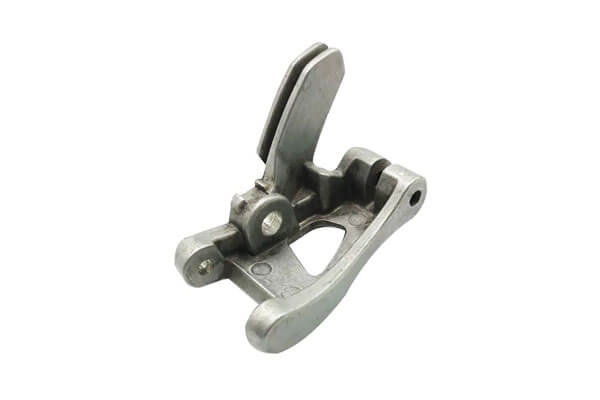
9. Limitations and Challenges
- Susceptibility to galvanic corrosion, especially when coupled with dissimilar metals
- Limited ductility, making it unsuitable for impact-critical parts
- Weldability issues, requiring special shielding and fluxes
- Impurity sensitivity: trace iron, copper, or nickel above threshold levels severely reduce corrosion resistance
- Poor performance in marine or chemically aggressive environments without additional protection
10. International Equivalent Grades for AZ91D
| Standard System | Grade Name | UNS Number | Notes |
| ASTM (USA) | AZ91D | M11917 | As per ASTM B93/B93M – most common die-casting alloy |
| ISO (Global) | M10910 | — | ISO 16220 magnesium alloy designation |
| EN (Europe) | EN-MgAl9Zn1 (EN 1753) | — | Equivalent chemical and mechanical properties |
| JIS (Japan) | JIS H 5202 AZ91D | — | Japanese Industrial Standard for die-cast magnesium |
| GB (China) | GB/T 5153 AZ91D | — | Chinese equivalent specification |
11. Comparison with Other Magnesium Alloys
AZ91D is often considered the benchmark among magnesium die-casting alloys.
However, when engineering lightweight components, it’s essential to compare AZ91D with other common magnesium and aluminum alloys to determine the best fit for specific application demands.
| Property / Alloy | AZ91D | AM60 | AZ31 | Aluminum 6061 |
| Alloy Type | Die-cast magnesium | Die-cast magnesium | Wrought magnesium | Wrought aluminum |
| Primary Alloying Elements | ~9% Al, ~1% Zn, Mn | ~6% Al, Mn | ~3% Al, ~1% Zn, Mn | ~1% Mg, ~0.6% Si |
| Density (g/cm³) | 1.81 | 1.80 | 1.77 | 2.70 |
| Tensile Strength (MPa) | ~230 | ~220 | ~250 | 275–310 |
| Yield Strength (MPa) | ~160 | ~130 | ~160 | 240 |
| Elongation (%) | 3–7 | 7–10 | 10–20 | 10–17 |
| Hardness (Brinell) | 63–70 | ~60 | ~55 | ~95 |
| Castability/Formability | Excellent (die casting) | Very good (die casting) | Good (extrusion, rolling) | Excellent (wrought) |
| Corrosion Resistance | Moderate (coated) | Moderate | Moderate to good | Excellent |
| Weldability | Poor | Poor | Good | Excellent |
| Use Cases | Structural die-cast parts | Impact-resistant auto parts | Sheets, tubes, extrusions | Frames, aircraft, machinery |
| Key Strengths | High strength-to-weight | High ductility, toughness | Good formability, weldability | High strength, corrosion res. |
| Key Limitations | Low ductility, weldability | Slightly lower strength | Not suitable for die casting | Heavier, higher energy cost |
12. Future Trends and R&D Directions
Several R&D trends aim to expand magnesium alloy AZ91D’s capabilities:
- Advanced Coatings: Nano-structured anodizing and micro-arc oxidation coatings improve wear and corrosion resistance
- Rare Earth Additions: Incorporating elements like yttrium, cerium, and neodymium improves creep resistance and thermal stability
- Hybrid Composites: Reinforced magnesium matrix composites (MMCs) enhance strength and stiffness for aerospace and defense
- EV Adoption: Use in battery casings, motor housings, and structural frames to reduce weight and extend driving range
13. Conclusion
AZ91D magnesium alloy remains a cornerstone of lightweight engineering, offering a superior combination of castability, moderate mechanical strength, and acceptable corrosion resistance.
As industries continue pushing toward efficiency and environmental responsibility, magnesium alloy AZ91D’s role is expected to grow, especially when combined with cutting-edge coatings and alloy modifications.
Custom Die Casting Solutions by LANGHE
LANGHE INDUSTRY specializes in delivering high-precision die casting services tailored to your exact project needs.
With extensive expertise in aluminum, zinc, and magnesium alloy die casting, we provide comprehensive OEM and ODM manufacturing solutions for industries such as automotive, electronics, industrial equipment, and consumer products.
What We Offer:
- Custom aluminum, zinc, and magnesium die casting
- In-house mold design and engineering support
- Support for both low-volume prototyping and high-volume production
- Tight dimensional tolerances and smooth surface finishes
- Complete secondary operations: CNC machining, surface treatment, and assembly
At LANGHE, we combine advanced equipment with strict quality control to ensure every component meets your performance and reliability expectations.
From concept to final product, we are your trusted partner in die casting manufacturing.
FAQs
Is AZ91D suitable for marine applications?
No, unless heavily coated. Its corrosion rate in seawater exceeds 0.5 mm/year—use 316 stainless steel instead for marine environments.
Can AZ91D be welded?
Yes, but with difficulty. Laser or TIG welding with argon shielding is possible but requires expertise; mechanical fastening is preferred for cost-effectiveness.
How does AZ91D compare with aluminum 6061?
Magnesium alloy AZ91D is 35% lighter but has lower tensile strength and higher corrosion rates. It excels in weight-critical applications (e.g., electronics) where 6061’s extra strength is unnecessary.
Is AZ91D alloy environmentally friendly?
Yes. It is 95% recyclable, with production emitting 50% less CO₂ than aluminum and 80% less than steel (World Magnesium Association).
Which industries benefit most from the use of AZ91D?
Automotive (weight reduction), electronics (portability), and aerospace (fuel efficiency)—industries where lightweighting drives performance and cost savings.

