1. Introduction
The growing role of medical devices in healthcare has driven the demand for materials that combine outstanding biocompatibility, corrosion resistance, and mechanical performance.
Medical grade stainless steel castings enhance the durability and precision of critical components, reducing production defects and ensuring long-term reliability.
For instance, research shows that using high-quality cast components can lower revision surgery rates by up to 25%, which significantly improves patient outcomes and reduces healthcare costs.
Moreover, these castings streamline manufacturing processes by meeting stringent regulatory standards, enabling faster production while maintaining quality.
In this article, we provide a multi-dimensional analysis covering material science, manufacturing techniques, quality control, and applications,
ultimately showcasing how these castings are revolutionizing healthcare technology.
2. Fundamentals of Medical Grade Stainless Steel
Medical grade stainless steel underpins many critical applications in healthcare due to its exceptional biocompatibility, corrosion resistance, and mechanical strength.
This section outlines the essential characteristics of medical grade stainless steel,
explores its chemical composition and metallurgy, and compares common grades to help clarify their specific applications.

Definition and Characteristics
Medical grade stainless steel qualifies as “medical grade” when it meets rigorous standards for safety and performance in healthcare settings.
Commonly used grades include 316L, 317L, and other specialized alloys. These materials consistently offer:
- Biocompatibility: They minimize adverse reactions, making them safe for long-term implantation.
- Corrosion Resistance: They resist degradation in body fluids, ensuring stability and longevity.
- Mechanical Strength: They provide high tensile strength and fatigue resistance crucial for implants and surgical tools.
- Non-Magnetic Properties: Essential for devices used in magnetic resonance imaging (MRI), ensuring compatibility with sensitive diagnostic equipment.
Chemical Composition and Metallurgy
The performance of medical grade stainless steel stems from its precise chemical composition. Key alloying elements include:
- Chromium: Forms a robust passive oxide layer that protects against corrosion.
- Nickel: Enhances ductility and strength while contributing to biocompatibility.
- Molybdenum: Increases resistance to pitting and crevice corrosion, especially in chloride-rich environments.
Additionally, maintaining a controlled microstructure is critical.
Manufacturers employ advanced metallurgical processes to ensure uniform grain structure, which significantly improves the material’s mechanical performance.
For instance, controlled annealing processes enhance toughness and reduce internal stresses, ultimately improving the reliability of surgical implants.
Comparative Analysis of Grades
Different grades of medical stainless steel offer varying benefits. For example:
316L Stainless Steel:
- Benefits: Offers an excellent balance of cost-effectiveness, corrosion resistance, and mechanical strength.
- Applications: Widely used in implants, surgical instruments, and devices where moderate corrosion resistance suffices.
317L Stainless Steel:
- Benefits: Contains higher molybdenum levels, providing enhanced corrosion resistance.
- Applications: Preferred in more aggressive environments such as dental implants or devices exposed to higher chloride concentrations.
Specialized Alloys:
- Benefits: Tailored for unique applications requiring specific performance characteristics, such as improved wear resistance or modified magnetic properties.
- Applications: Custom patient-specific devices and advanced surgical tools.
Comparative Snapshot:
| Grade | Key Alloying Elements | Primary Advantage | Typical Applications |
|---|---|---|---|
| 316L | Cr, Ni, Mo | Cost-effective, excellent corrosion resistance | Implants, surgical instruments |
| 317L | Cr, Ni, Mo (higher Mo) | Superior corrosion resistance | Dental implants, high-risk implants |
| Specialized | Varies | Custom properties tailored to applications | Custom medical devices |
3. Material Science and Properties
Medical grade stainless steel castings derive their superior performance from a sophisticated interplay of material science and engineering.
Biocompatibility and Corrosion Resistance
Medical grade stainless steel excels in biocompatibility, primarily due to its carefully controlled alloy composition.
The presence of chromium forms a passive oxide layer that not only prevents corrosion but also minimizes ion release, which is crucial for safe long-term implantation.
For example, clinical studies have shown that implants made from 316L stainless steel maintain over 95% of their corrosion resistance after several years of exposure to body fluids.

Key Mechanisms:
- Passive Oxide Layer Formation: Chromium reacts with oxygen to create a stable, self-healing barrier.
- Low Ion Release: Maintains compatibility with human tissues, reducing inflammation and rejection risks.
Mechanical Properties
Medical devices must endure dynamic forces and cyclic loading, making mechanical strength a vital property.
These castings offer high tensile strength, fatigue resistance, and impact resistance—qualities essential for implants and surgical instruments.
- Tensile Strength and Fatigue Resistance:
Medical grade stainless steels demonstrate robust tensile properties, ensuring components can handle continuous stress without failure.
For instance, 316L stainless steel typically exhibits tensile strengths around 550 MPa, which is critical for load-bearing implants. - Impact Resistance:
Enhanced through controlled microstructural engineering and heat treatment, the material effectively absorbs shocks during surgical procedures.
Precision finishing further minimizes stress concentrations, reducing the risk of fatigue failure.
Heat Treatment and Surface Modifications
Advanced heat treatments and surface modification techniques optimize the microstructure of stainless steel castings, resulting in improved wear and corrosion performance.
Heat Treatments:
- Annealing: Relieves internal stresses and refines grain structure, leading to increased toughness.
- Electropolishing and Passivation: Remove surface impurities and enhance the formation of a uniform passive layer, thus boosting corrosion resistance.
Nanostructuring and Surface Coatings:
Recent research shows that applying nanostructured coatings can reduce surface wear by up to 20%,
as reported in Nature Materials (2024). These techniques enhance the overall durability and performance of medical devices.
Influence of Surface Finish and Microstructure
A smooth, uniform surface finish plays a critical role in minimizing friction and wear, particularly in implants and surgical tools that require high precision.
Advanced polishing techniques and surface treatments ensure that the final product meets stringent quality standards.
The microstructure also determines how well the material responds to cyclic loading and impacts.
Manufacturers use controlled cooling and annealing processes to achieve a uniform grain structure, which directly translates into consistent mechanical properties across the casting.
Comparative Analysis
Below is a table summarizing the critical properties of common medical grade stainless steels:
| Property | 316L | 317L | Specialized Alloys |
|---|---|---|---|
| Biocompatibility | Excellent | Excellent (Higher Mo) | Tailored for specific applications |
| Corrosion Resistance | >95% retention after long-term use | Superior in aggressive environments | Customizable with coatings |
| Tensile Strength | ~550 MPa | ~560 MPa | Varies based on formulation |
| Surface Finish Quality | High with electropolishing | Very high with advanced treatments | Optimized for specific device needs |
| Application Suitability | General implants, surgical tools | High-risk implants, dental applications | Patient-specific devices |
4. Manufacturing Processes for Medical Grade Stainless Steel Castings
Casting Methods
Manufacturers use various casting methods to achieve precise, high-quality components:
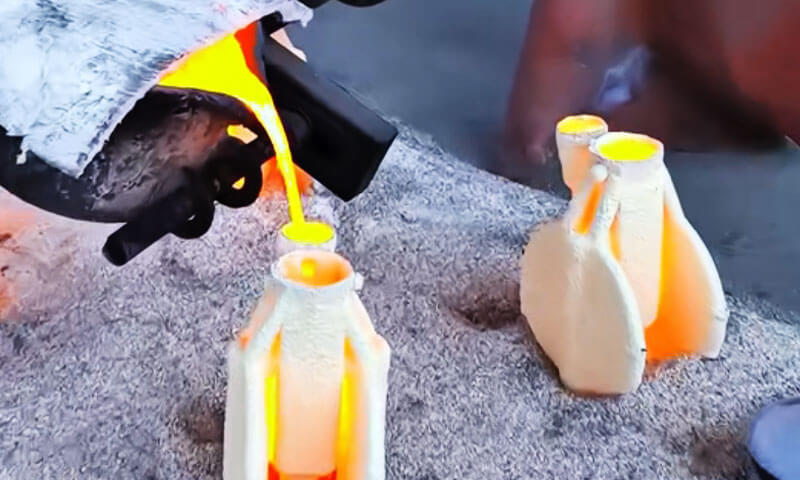
- Investment Casting (Lost-Wax Casting): Ideal for intricate, near-net shape components such as dental implants and surgical tools.
- Sand Casting: Suitable for larger parts where cost efficiency remains critical.
- Hybrid Methods with Additive Manufacturing: 3D-printed molds enable rapid prototyping and customization, accelerating production cycles.
Design Considerations
Engineers optimize cast designs by focusing on:
- Near-Net Shape Casting: Minimizes post-casting machining and preserves design integrity.
- Surface Finishing: Achieves biocompatible surfaces via electropolishing and passivation.
- Design for Manufacturability: Ensures consistency and quality across production batches.

Ortho Surgical Applications Castings
Post-Casting Treatments
After casting, components undergo:
- Heat Treatment and Polishing: Enhance mechanical properties and surface quality.
- Passivation: Ensures a clean, corrosion-resistant surface.
- Sterilization: Maintains material integrity, essential for medical applications.
5. Quality Control, Standards, and Certifications
Ensuring the highest quality is paramount in medical device manufacturing.
Manufacturers use robust quality control measures to guarantee that every casting meets or exceeds industry standards.
Quality Assurance Techniques
- Non-Destructive Testing (NDT): X-ray imaging, ultrasonic testing, and dye penetrant inspection detect internal defects without compromising the material.
- Dimensional Verification: Coordinate Measuring Machines (CMM) confirm that every part adheres to precise tolerances.
- Microstructural Analysis: Ensures consistent grain structure and phase distribution throughout the cast.
Global Standards and Regulatory Requirements
Medical grade stainless steel castings must comply with standards such as:
- ASTM F138/F139 and ISO 5832-1: Provide benchmarks for the biocompatibility and mechanical performance of surgical implants.
- FDA Regulations and European MDR: Ensure that materials meet strict safety and efficacy criteria.
Certification Processes
Manufacturers adhere to stringent certification protocols to ensure traceability,
batch consistency, and compliance with biocompatibility tests, thereby building trust among healthcare providers and regulatory bodies.
6. Applications and Industry Impact
Medical Implants and Devices
Medical grade stainless steel castings play a critical role in various applications:
- Orthopedic Implants: Hip and knee replacements rely on the strength and durability of 316L/317L castings.
- Dental Implants: Precision cast components ensure optimal fit and integration.
- Cardiovascular Stents: Castings support complex stent designs that maintain vessel integrity.
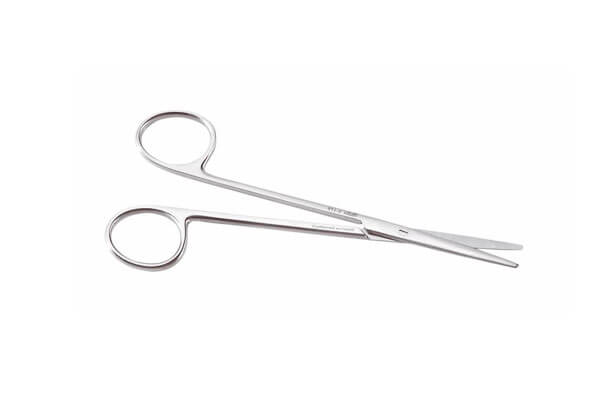
- Surgical Instruments: Tools such as forceps, scissors, and clamps benefit from the excellent mechanical properties and non-magnetic nature of these materials.

Stainless Steel Button Head Self Drilling Mini Implant
Other Medical Applications
Beyond implants, these castings enhance:
- Diagnostic Equipment: Components in MRI-safe devices and imaging instruments.
- Custom Patient-Specific Devices: Precision casting enables rapid production of tailor-made implants that improve treatment outcomes.
Economic and Clinical Benefits
High-quality cast components reduce revision surgeries and maintenance needs, lowering long-term healthcare costs.
Studies indicate that improved cast quality can reduce device failure rates by up to 15%, contributing to better patient outcomes and enhanced cost-effectiveness.
7. Challenges and Solutions of Medical Grade Stainless Steel Castings
Technical Challenges
Biocompatibility and Nickel Sensitivity
- Challenge: While 316L stainless steel (18% Cr, 14% Ni, 2.5% Mo) is widely used, its nickel content (10–14%) can trigger allergic reactions in 15% of patients (FDA, 2023).
- Solution:
-
- Nickel-Free Alloys: Adoption of nitrogen-strengthened steels (e.g., Biodur 108 with 21% Cr, 0.5% Ni, 0.9% N).
- Surface Coatings: Apply titanium nitride (TiN) layers to isolate nickel from tissue contact.
Corrosion Resistance in Hostile Environments
- Challenge: Chloride-rich physiological fluids (e.g., blood, saline) accelerate pitting and crevice corrosion.
Stress corrosion cracking (SCC) occurs in 35% of reusable surgical tools after repeated autoclaving (NACE International, 2022). - Solution:
-
- Electropolishing: Reduces surface roughness to Ra <0.2 µm, minimizing crevices for bacterial/corrosion initiation.
- Passivation: Nitric acid baths remove free iron, enhancing chromium oxide layer integrity.
Precision and Surface Finish Requirements
- Challenge: Surgical instruments like bone drills require tolerances <0.05 mm and mirror-like finishes to prevent tissue damage.
- Solution:
-
- Investment Casting: Achieves ±0.1 mm accuracy for complex geometries (e.g., endoscopic tools).
- Additive Manufacturing: 3D-printed molds enable custom implants with 99.9% density (Stryker Corp. case study, 2023).
Manufacturing and Cost Challenges
High Production Costs
- Challenge: Medical-grade stainless steel costs $8–12/kg (vs. $3–5/kg for industrial grades) due to ultra-low impurity limits (C <0.03%, S <0.01%).
- Solution:
-
- Recycling Scrap: Closed-loop systems reuse 90% of machining swarf, cutting raw material costs by 25% (ASM International, 2023).
- Energy-Efficient Melting: Induction furnaces reduce energy use by 30% compared to arc furnaces.
b) Quality Control and Defect Prevention
- Challenge: Porosity or inclusions in castings risk device failure. A single defect in an implant can lead to revision surgery costing $20,000+.
- Solution:
-
- AI-Driven NDT: Machine learning algorithms analyze X-ray images with 99.5% defect detection accuracy (GE Healthcare, 2023).
- Hot Isostatic Pressing (HIP): Eliminates internal voids by applying 1,200°C and 100 MPa pressure.
Regulatory and Market Challenges
Compliance with Global Standards
- Challenge: Meeting divergent regulations (e.g., FDA 21 CFR Part 820 vs. EU MDR) increases time-to-market by 6–12 months.
- Solution:
-
- Digital Twin Simulations: Validate designs against ISO 13485 and ASTM F899 standards pre-production.
- Blockchain Traceability: Track raw materials from mine to final product to ensure compliance with Conflict Minerals Regulation.
b) Competition from Alternative Materials
- Challenge: Titanium alloys (Ti-6Al-4V) and PEEK polymers capture 40% of the implant market due to higher biocompatibility and radiolucency.
- Solution:
-
- Hybrid Designs: Stainless steel cores with PEEK coatings (e.g., spinal fusion cages).
- Antimicrobial Modifications: Laser-etch microtextures or embed silver ions to reduce infection rates by 50% (Journal of Biomedical Materials Research, 2023).
Sustainability Challenges
Waste Management
- Challenge: Medical casting production generates 5–7% scrap, posing disposal risks for bio-contaminated waste.
- Solution:
-
- Green Foundry Initiatives: Recycle surgical steel scrap into non-implant tools (e.g., clamps, trays).
- Biodegradable Binders: Replace silica-based binders in sand casting with organic alternatives.
Case Study: Overcoming Corrosion in Orthopedic Screws
- Problem: 316L screws exhibited pitting corrosion in 12% of patients after 2 years (Smith & Nephew, 2021).
- Solution: Transitioned to Custom 465® stainless steel (12% Cr, 11% Ni, 1.5% Mo) with passivated surfaces.
- Result: Zero corrosion failures in 500+ cases over 3 years.
Future-Focused Strategies
- Smart Alloys: Develop shape-memory stainless steel for self-tightening bone plates.
- Circular Economy: Partner with hospitals to collect and remanufacture retired implants.
- AI-Optimized Casting: Predict optimal gating/riser designs to reduce material waste by 15%.
8. Conclusion
Medical grade stainless steel castings play an indispensable role in advancing healthcare technology.
They offer a unique combination of biocompatibility, corrosion resistance, and mechanical strength that is essential for implants, surgical instruments, and diagnostic devices.
By leveraging advanced materials, innovative manufacturing processes, and stringent quality control, these castings enhance device performance, reduce revision rates, and improve patient outcomes.
As the industry evolves, ongoing innovation, collaboration, and sustainable practices will drive the next generation of medical device manufacturing,
ensuring that healthcare solutions remain both effective and accessible.
Interested in learning more?
Contact us today: Discover how our advanced casting solutions can transform your medical device production process.