1. Introduction
What is Stainless Steel Lost Wax Casting?
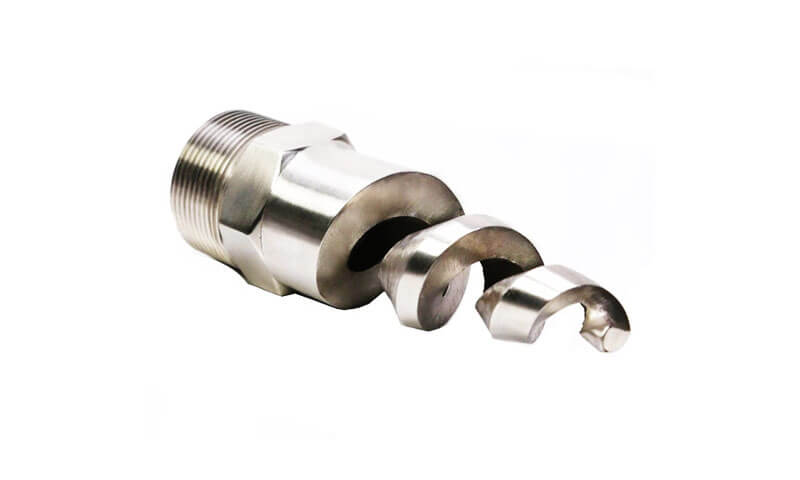
Stainless Steel Lost Wax Casting, also known as investment casting, is a highly precise method used to manufacture intricate and durable metal parts.
It is a process that has been used for centuries and continues to be integral in creating complex components across various industries.
The technique involves creating a wax model of the desired part, coating it with a ceramic shell, and then using heat to remove the wax, leaving a hollow shell that is filled with molten stainless steel.
The Importance of Stainless Steel in Lost Wax Casting
Stainless steel is a preferred material in lost wax casting due to its high tensile strength, corrosion resistance, and aesthetic appeal.
These properties make it an ideal choice for applications where durability and precision are required.
Whether it’s for aerospace components, medical devices, or decorative jewelry, stainless steel provides both functionality and visual appeal.
In this blog, we’ll explore the advantages of Stainless Steel Lost Wax Casting, how the process works,
its applications, and key considerations for manufacturers to keep in mind when choosing this casting method.
2. What is Lost Wax Casting?
Definition and History
Lost wax casting is an ancient process that has evolved over thousands of years.
In its most basic form, it is a method of making metal parts by creating a wax model of the item to be cast, coating it with a hard material like ceramic to form a mold, and then melting the wax away.
This method provides exceptional precision and allows for the creation of very detailed and complex shapes.
How Lost Wax Casting Works
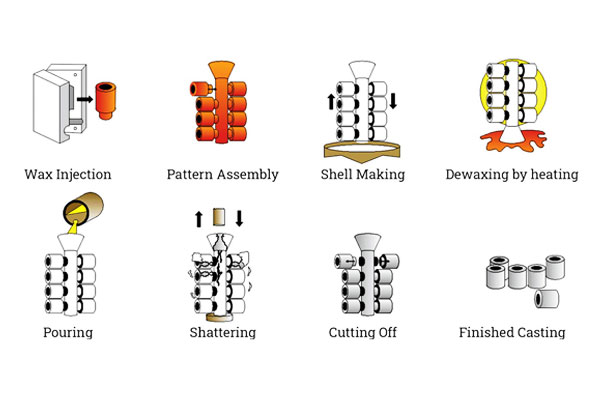
The process begins with the creation of a detailed model or pattern made from wax. This pattern is then coated in a ceramic shell, which is hardened and forms the mold.
After the mold is hardened, it’s heated to melt away the wax, leaving behind a hollow mold.
Molten metal, such as stainless steel, is then poured into the mold, solidifying into the shape of the desired part.
After cooling, the mold is broken away, and the final part is cleaned, finished, and inspected.
Why Stainless Steel is Chosen for Casting
Stainless steel is chosen for casting because it combines strength, resistance to corrosion, and the ability to withstand high temperatures.
These properties make it ideal for industries such as aerospace, automotive, and medical devices, where durability and reliability are essential.
Stainless steel also has a polished finish that makes it visually appealing, which is important in industries like jewelry manufacturing.
3. Stainless Steel and its Role in Lost Wax Casting
Properties of Stainless Steel
Stainless steel is one of the most versatile and widely used materials in industries requiring high strength, corrosion resistance, and durability.
Its properties make it an excellent choice for lost wax casting, where precision and performance are crucial.
Here’s a breakdown of the key properties that make stainless steel ideal for this process:
- High Strength: Stainless steel is known for its exceptional tensile strength, which makes it ideal for applications that involve high stress, pressure, or wear.
This property ensures that cast parts maintain their integrity and perform effectively under demanding conditions. - Corrosion Resistance: Stainless steel naturally resists corrosion due to the formation of a protective oxide layer, primarily composed of chromium.
This resistance is crucial for parts exposed to harsh environments such as marine, chemical, and medical settings.
Whether it’s a pump component or a surgical tool, stainless steel provides longevity and reliable performance. - Aesthetic Appeal: Stainless steel has a sleek, polished finish that not only adds to the visual appeal but also provides a surface that is easy to clean and maintain.
Its aesthetic properties make it popular in applications like jewelry, consumer goods, and architectural components. - Heat Resistance: Stainless steel maintains its strength and structural integrity even at elevated temperatures,
which is essential for components used in high-temperature environments like aerospace, automotive, and industrial applications.
Different Grades of Stainless Steel Used in Lost Wax Casting
The choice of stainless steel grade plays a significant role in the quality and functionality of the cast part.
Each grade offers specific advantages depending on the requirements of the application. Below are some of the commonly used stainless steel grades in lost wax casting:
- 304 Stainless Steel: This is the most widely used stainless steel grade for casting. It is known for its excellent corrosion resistance, ease of welding, and good mechanical properties.
It is commonly used in the production of parts for the food, beverage, and chemical industries, as well as architectural components and medical devices. - 316 Stainless Steel: Often referred to as marine-grade stainless steel, 316 has superior corrosion resistance, particularly in saltwater and chemical environments.

316 Stainless Steel marine hardware It’s used in applications requiring high strength, such as turbine blades, marine parts, and medical implants.
- 17-4 PH Stainless Steel: This precipitation-hardening stainless steel combines high strength with good corrosion resistance.
It is commonly used in aerospace, nuclear, and high-performance automotive applications, especially for parts like gears, fasteners, and pumps. - 410 Stainless Steel: Known for its high strength and moderate corrosion resistance,
410 stainless steel is often used in applications where hardness is more critical than corrosion resistance.
It’s used in the manufacturing of components like valves, pumps, and machinery parts. - 2205 Duplex Stainless Steel: This grade offers a combination of excellent corrosion resistance, especially in chloride environments, and superior strength.
It’s widely used in chemical processing, offshore, and marine applications.
4. How Stainless Steel Lost Wax Casting Works
Stainless Steel Lost Wax Casting is a sophisticated process that combines centuries-old techniques with modern technology to create highly intricate, precise, and durable parts.
The process allows manufacturers to produce components with complex geometries that would be difficult or impossible to achieve through other manufacturing methods.
Here’s a step-by-step breakdown of how stainless steel lost wax casting works:
Step 1: Wax Pattern Creation
The first stage of the process involves creating a precise pattern of the part to be cast.
This pattern is made from a special type of wax that can be easily melted and removed during the later stages of casting.
The pattern is created by either molding the wax or injecting it into a metal mold to achieve the desired shape.

- Precision: Each wax pattern is made to exact specifications, with details down to microns.
This is especially important when creating complex designs like turbine blades, medical implants, or jewelry. - Technology: In some cases, modern 3D printing is used to create the wax pattern, offering even more precision and design flexibility.
This allows for rapid prototyping and adjustments before the final casting process begins.
Step 2: Coating and Shell Building
Once the wax pattern is ready, it is coated with a layer of fine sand and a special binder to create the mold shell.
This shell is critical as it provides the structure that will hold the molten stainless steel.
The process typically involves multiple layers of coating and drying, building up the shell until it is thick and strong enough to withstand the high temperatures of molten metal.
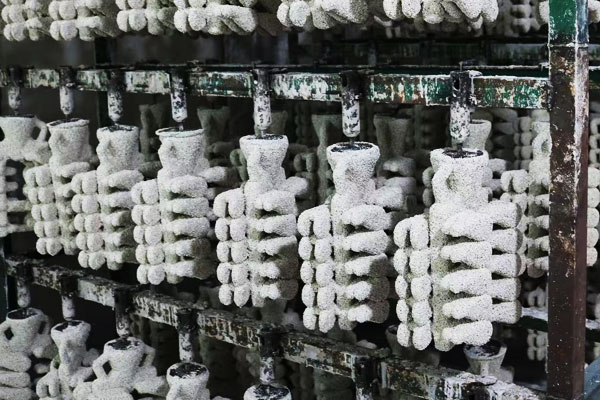
- Multiple Coatings: The pattern is dipped in a slurry made of fine sand and a liquid binder.
This is done multiple times to build up the thickness of the shell, which can vary from a few millimeters to several inches, depending on the size and complexity of the part. - Shell Hardening: The coated pattern is then left to dry, hardening the shell. The more layers applied, the stronger and more precise the mold becomes.
The shell is then further hardened by baking it in an oven.
Step 3: Wax Removal (The Lost Part)
Once the mold shell has fully cured, the next step involves removing the wax pattern. This is the “lost” part of the process, from which the name “lost wax casting” derives.

- Melting the Wax: The mold is heated in a furnace, causing the wax to melt and drain out. This process ensures that the mold retains the shape of the pattern but without any residual wax.
- Leaving a Hollow Mold: After the wax is fully removed, what remains is a hollow shell that accurately reflects the shape of the part to be cast.
Step 4: Metal Pouring
Now that the mold is ready, molten stainless steel is poured into it. The shell must be preheated to prevent thermal shock when the molten metal is introduced.
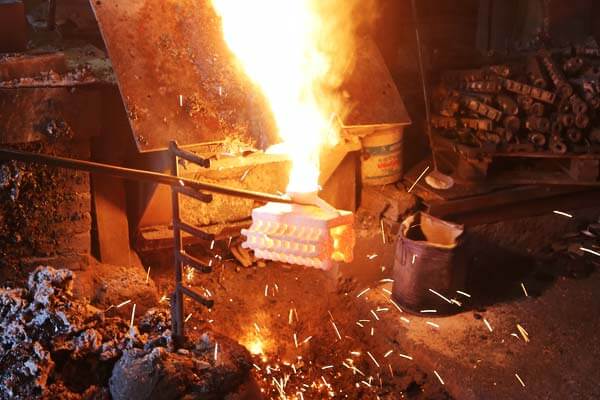
- Melting the Stainless Steel: Stainless steel is melted in a furnace at temperatures reaching over 1400°C (2550°F).
The molten steel is carefully controlled to ensure it has the right chemical composition and temperature before pouring. - Pouring the Metal: The molten stainless steel is poured into the mold under controlled conditions,
ensuring that it fills every detail of the mold and forms the part accurately.
This stage requires precise temperature control to avoid defects such as porosity or uneven cooling.
Step 5: Shell Breaking
Once the stainless steel has cooled and solidified, the next step is to remove the ceramic shell. This is typically done by mechanical methods such as vibrating, chipping, or sandblasting.

- Shell Removal: The shell is carefully broken away to reveal the cast stainless steel part.
Depending on the design, this process can take some time and requires precision to ensure the part is not damaged during shell removal.
Step 6: Finishing and Clean-Up
Once the shell has been removed, the stainless steel casting is still rough and will require additional cleaning and finishing to achieve the final product.

- Cleaning: The part is cleaned of any residual shell fragments and oxidation.
It is often placed in a solution or subjected to abrasive blasting to achieve a smooth, clean surface. - Machining: Depending on the level of precision required, some parts may undergo additional machining to refine the dimensions, remove excess material, or smooth rough surfaces.
- Polishing and Surface Treatment: For certain applications, especially in industries like jewelry or medical devices,
the part may undergo polishing, coating, or other surface treatments to enhance its appearance or performance.
These steps help to achieve the desired finish and ensure the part meets industry standards.
5. Advantages of Stainless Steel Lost Wax Casting
Stainless Steel Lost Wax Casting offers numerous benefits, which is why it has remained a favored manufacturing method across multiple industries.
High Precision and Complex Geometries
One of the most significant advantages of stainless steel lost wax casting is its ability to produce parts with highly detailed and complex geometries.
Unlike traditional machining or casting methods, this process allows for the creation of components with intricate shapes, fine details, and tight tolerances.
- Intricate Designs: The lost wax process can replicate designs with extreme accuracy,
making it ideal for manufacturing parts with complex internal passages, thin walls, and sharp features.
This is especially valuable for industries like aerospace, medical devices, and jewelry, where precision is paramount. - Minimal Need for Post-Processing: Due to the precision of the casting process,
parts require minimal post-processing, which helps to reduce production time and costs.
Material Strength and Durability
Stainless steel is renowned for its exceptional strength, corrosion resistance, and overall durability.
These properties are retained throughout the lost wax casting process, ensuring that the final component
meets the demanding performance standards of industries like aerospace, automotive, and medical sectors.
- Corrosion Resistance: Stainless steel offers excellent resistance to corrosion, even in challenging environments,
making it ideal for parts that will be exposed to moisture, chemicals, and high-temperature conditions. - High Strength: Stainless steel maintains its strength even at elevated temperatures, making it suitable for high-performance applications such as turbine blades and engine components.
- Wear Resistance: Stainless steel’s inherent wear resistance ensures that parts cast using this material are durable
and can withstand frequent or harsh use, resulting in longer service life and reduced maintenance.
Near-Net Shape and Minimal Waste
The lost wax casting process is highly efficient, producing near-net shape parts, meaning the cast component requires minimal machining after it has been cooled and solidified.
This feature significantly reduces material waste, as the parts are shaped very close to their final dimensions, limiting the need for extra cutting and processing.
- Material Efficiency: Since less material is wasted during casting, this method reduces raw material costs and minimizes scrap,
making it an environmentally friendly option in comparison to traditional machining or forging. - Reduced Lead Times: The ability to create near-net shapes also reduces the time spent on finishing, which ultimately leads to shorter lead times for production.
Versatility in Applications
Stainless steel lost wax casting is highly versatile, making it suitable for a wide range of industries.
Whether manufacturing large industrial components, intricate medical implants, or fine jewelry, this casting method adapts to diverse requirements.
- Aerospace: Producing turbine blades, engine components, and other precision parts.
- Medical Devices: Surgical instruments, implants, and high-quality medical equipment benefit from the high precision and biocompatibility of stainless steel.
- Automotive: Parts like exhaust systems, engine components, and connectors that demand strength and heat resistance.
- Jewelry: Creating fine jewelry pieces with intricate designs that require high detail.
- Industrial Equipment: Manufacturing pumps, valves, and other durable components for heavy industries.
Excellent Surface Finish
The lost wax casting process is known for producing parts with smooth, high-quality surface finishes.
This is especially valuable in applications where aesthetics matter, such as in jewelry or medical implants.
Additionally, the fine surface finish reduces the amount of post-casting treatment required, which can lower costs and production time.
- Polished Finish: The casting process yields parts with a smooth surface, requiring less time for polishing and finishing operations.
- Aesthetic Appeal: This makes stainless steel lost wax casting an ideal choice for industries where surface appearance is as important as functionality,
such as in luxury goods and high-end machinery.
Flexibility for Small and Large Production Runs
Stainless steel lost wax casting is suitable for both low and high-volume production.
It offers excellent flexibility for manufacturers who need to produce small batches of high-quality components with intricate details, as well as large quantities of parts that require the same high standards.
- Low-Volume Production: The process allows manufacturers to produce customized or specialized parts in small batches,
making it perfect for industries like aerospace and medical devices, where custom designs and small production volumes are often required. - Scalability: When scaling up production, the lost wax casting is still cost-effective and maintains its precision, making it a versatile option for various production needs.
Reduced Need for Complex Tooling
Unlike other manufacturing methods like die casting or forging, which often require expensive tooling and molds, lost wax casting does not rely on highly complex tools.
This reduces the upfront investment required for mold creation and tooling, particularly when manufacturing low or medium volumes of components.
- Cost-Effective Tooling: The simplicity of the pattern creation process (especially when 3D printing is used) helps save on tooling costs,
which is particularly advantageous for companies that need custom or short-run parts. - Flexibility in Design Changes: The pattern creation process also allows for more flexibility in making design changes without incurring significant additional costs or tooling modifications.
6. Applications of Stainless Steel Lost Wax Casting
Aerospace
Stainless steel lost wax casting is crucial for the production of high-performance parts such as turbine blades, engine components, and structural elements.
These parts must withstand extreme temperatures and stresses, making stainless steel an ideal material.

Medical Devices
Surgical instruments, implants, and other medical equipment benefit from stainless steel’s biocompatibility and corrosion resistance.
Cast parts like bone screws, joint replacements, and surgical tools ensure patient safety and long-term functionality.
Automotive Industry
Lost wax casting plays an essential role in automotive manufacturing, particularly for producing complex engine components like exhaust systems, pistons, and valves.
Stainless steel offers both durability and heat resistance for these parts.
Jewelry
The precision of lost wax casting makes it ideal for fine jewelry production.
Stainless steel’s appealing finish ensures that intricate jewelry designs, such as rings, necklaces, and bracelets, have both aesthetic and functional value.
Industrial Equipment
Components like pumps, valves, and fittings require high durability.
Stainless steel lost wax casting is used to manufacture these critical parts, ensuring long-lasting performance under demanding industrial conditions.
7. Challenges in Stainless Steel Lost Wax Casting
While stainless steel lost wax casting offers numerous benefits, it also comes with its own set of challenges that need to be carefully managed to ensure optimal results.
High Initial Setup Costs
One of the primary challenges in stainless steel lost wax casting is the high initial cost associated with pattern creation, mold building, and investment in specialized equipment.
The process often requires the use of custom molds, ceramic shells, and precise pattern-making tools, all of which contribute to higher upfront expenses.
- Pattern Creation: The creation of intricate wax patterns, which are often done manually or using advanced technologies like 3D printing, can be time-consuming and costly.
- Mold Fabrication: The ceramic shell mold used in the process also requires high-quality materials and labor, adding to the production costs.
- Tooling Investments: Specialized equipment for melting, pouring, and cooling the molten stainless steel can also increase the initial setup costs.
Despite these higher initial costs, the process can be cost-effective for certain applications,
especially when considering the reduced need for extensive post-processing and the ability to produce complex shapes with high precision.
Complex Design and Pattern Optimization
Stainless steel lost wax casting is ideal for creating intricate designs; however, these complex geometries also present challenges in terms of pattern creation and mold design.
The casting process requires careful consideration of various factors to ensure that the final product meets design specifications without defects.
- Pattern Shrinkage: Stainless steel, like other metals, shrinks as it cools, which means the pattern must be designed to accommodate this shrinkage.
If not accounted for, it can lead to dimensional discrepancies in the final part. - Draft Angles: The pattern must be created with sufficient draft angles to ensure easy removal from the mold.
Without these angles, the part could get stuck during extraction, leading to defects or even damage. - Design Adjustments: Highly intricate designs may require continuous design adjustments to prevent common casting defects like air pockets, cracks, or weak spots.
Proper design is essential for minimizing defects during the pouring and solidification stages.
Given these complexities, manufacturers need to ensure they have experienced engineers and designers involved in the planning and optimization of the pattern design process.
Defects in Cast Parts
Despite its precision, stainless steel’s lost wax casting can result in defects that affect the structural integrity and appearance of the final part.
These defects can result from issues such as incorrect pouring temperature, mold imperfections, or improper pattern creation.
- Porosity: One of the most common defects in stainless steel casting is porosity, where air pockets or gas bubbles are trapped in the solidified metal.
Porosity can weaken the part and compromise its performance, especially in critical applications. - Cracking: Thermal stress during the cooling phase can cause cracks in the stainless steel casting. This is particularly problematic for parts with intricate geometries or thin walls.
- Inclusions: If the mold material is not properly cleaned or if contamination occurs during the pouring process,
foreign particles can become trapped in the casting, leading to inclusions that affect the part’s strength and surface finish.
To reduce the occurrence of these defects, manufacturers must carefully control the casting environment,
including pouring temperatures, mold integrity, and the removal of trapped air or gases.
Limited Production Speed
Stainless steel lost wax casting can be a time-intensive process, particularly for complex parts or low-volume production runs.
The multi-step process—from pattern creation and mold building to wax removal, metal pouring, and finishing—can be slower than other methods like die casting or injection molding.
- Mold Curing Time: The ceramic shell must be properly cured to withstand the molten metal’s temperature.
This curing process can take several hours or even days, depending on the size and complexity of the part being cast. - Cooling Time: After the molten stainless steel is poured, it requires time to cool and solidify.
This cooling phase is critical for ensuring the correct metal properties, but it can also contribute to longer production times, especially for thicker or larger parts.
While this slower production speed can be a challenge for high-volume manufacturing,
it is typically outweighed by the process’s ability to create highly detailed parts without the need for extensive post-casting machining.
Difficulty in Achieving High Tolerances
While stainless steel lost wax casting is highly accurate, achieving extremely tight tolerances can be challenging,
particularly for high-performance applications where precision is critical.
Variations in the mold, material shrinkage, and cooling rates can lead to slight differences in the final dimensions of the cast part.
- Dimensional Control: Achieving consistent dimensions and ensuring the final part meets specific tolerance requirements can require additional finishing processes, such as machining or grinding.
- Surface Finish: Although lost wax casting provides a relatively smooth surface finish,
achieving a mirror-like finish or a completely defect-free surface might require further polishing or coating, adding additional time and cost to the overall process.
Manufacturers can mitigate these challenges by using advanced inspection methods, quality control procedures,
and precise mold-making techniques, but it remains an inherent challenge in the casting process.
Post-Casting Processing Requirements
Once the stainless steel parts are cast, they typically require some form of post-casting processing to achieve the desired finish and ensure functional performance.
This can add to the overall lead time and cost of production.
- Cleaning and Finishing: After the wax is removed and the mold is broken, the cast part needs to be cleaned of any residual shell material.
Any sharp edges or imperfections are smoothed out, and the part is often subjected to surface treatments like polishing or coating to enhance its appearance and durability. - Heat Treatment: Some stainless steel castings require heat treatment to relieve internal stresses or to further improve mechanical properties like strength, hardness, and wear resistance.
Depending on the complexity of the part, heat treatment can be a lengthy and expensive process.
These additional steps increase the total production time and cost but are essential for ensuring that the final product meets the necessary specifications.
8. Key Factors Affecting Quality and Cost
- Alloy Selection: Choosing the right grade of stainless steel affects both the quality and cost of the final product.
- Pattern and Mold Design: Precise design ensures smooth casting and reduces the chances of defects.
- Casting Control: Temperature, pouring time, and mold control are critical to producing high-quality parts.
- Production Volume: Casting is generally more cost-effective for large-volume production runs.
9. Future Trends in Stainless Steel Lost Wax Casting
Technological Advancements
The integration of 3D printing to create precise wax patterns is revolutionizing the casting process, reducing time and costs while enhancing precision.
Sustainability
Efforts are being made to minimize waste and improve energy efficiency during the casting process, with advancements in recycling metal and reducing emissions.
Automation and AI
Artificial intelligence and automation technologies are streamlining the casting process, enhancing consistency, and reducing human error.
10. Conclusion
Stainless Steel Lost Wax Casting is an indispensable technique for producing highly detailed, durable, and precise parts.
Its versatility and ability to create complex designs make it an ideal choice across industries like aerospace, medical, automotive, and jewelry.
While there are challenges like high initial setup costs and the need for post-casting finishing,
the benefits far outweigh these drawbacks, especially with advancements in technology that continue to improve the efficiency and cost-effectiveness of the process.
If you need high-quality stainless steel castings, don’t hesitate to Contact Us. Our expertise in lost wax casting ensures you get the best possible results for your project.