1. Introduction
430 stainless steel (EN 1.4016/UNS S43000) is a ferritic stainless steel grade that has carved out a significant niche in various industries due to its unique combination of properties.
As a member of the stainless steel family, it offers a balance between corrosion resistance, mechanical properties, and cost-effectiveness.
This makes it suitable for a wide range of applications, including household appliances, automotive components, and architectural elements.
2. Chemical Composition of 430 Stainless Steel
430 stainless steel achieves its balance of strength, corrosion resistance, and formability through a carefully controlled blend of alloying elements.

| Element | Typical Range (wt %) | Primary Function |
| Chromium (Cr) | 16.0 – 18.0 | Forms a passive oxide layer to resist corrosion; stabilizes the ferritic structure. |
| Carbon (C) | ≤ 0.12 | Provides solid‑solution strengthening; excessive C can form carbides that reduce corrosion resistance. |
| Silicon (Si) | ≤ 1.0 | Enhances oxidation resistance at elevated temperatures; acts as a deoxidizer during steelmaking. |
| Manganese (Mn) | ≤ 1.0 | Serves as a deoxidizer and helps control grain size; contributes modestly to strength. |
| Phosphorus (P) | ≤ 0.04 | Improves machinability in small amounts but is kept low to avoid embrittlement. |
| Sulfur (S) | ≤ 0.03 | Added deliberately for free‑machining grades (e.g., 430F); in 430 it remains minimal to limit surface staining. |
| Iron (Fe) | Balance | Acts as the base metal; provides ductility and toughness once alloying elements are in solution. |
3. Physical Properties of 430 Stainless Steel
Stainless steel 430 delivers a predictable set of physical characteristics that engineers leverage in design and analysis.
| Property | Value | Notes |
| Density | 7.70 g/cm³ | Slightly lower than austenitics, easing weight control. |
| Melting Range | 1,425 – 1,530 °C | Solidus–liquidus range; supports precision casting. |
| Thermal Conductivity (100 °C) | ~25 W/m·K | Facilitates heat spread in appliance panels and heat exchangers. |
| Coefficient of Thermal Expansion (20–100 °C) | 10.4 µm/m·°C | Minimizes stress in assemblies exposed to temperature swings. |
| Modulus of Elasticity | 200 GPa | Enables accurate stiffness and deflection calculations. |
| Electrical Resistivity (20 °C) | 0.70 µΩ·m | Higher than copper; useful when some electrical insulation is needed. |
| Specific Heat Capacity (20 °C) | 460 J/kg·K | Guides thermal storage and transient heating analyses. |
| Relative Magnetic Permeability (µr) | ~1.02 at 1 kHz | Confirms the fully ferritic, magnetic behavior. |
4. Mechanical Properties of 430 stainless steel
Below is a consolidated table summarizing the key mechanical properties of annealed 430 stainless steel under typical testing conditions:

| Property | Typical Value | Test Condition / Notes |
| Tensile Strength (UTS) | 450 – 550 MPa | Room temperature, 0.2 mm sheet |
| Yield Strength (0.2 % offset) | ≥ 275 MPa | Room temperature |
| Elongation at Break | ≥ 22 % | Measured over 50 mm gauge length |
| Rockwell Hardness (HRB) | 70 – 88 HRB | Varies with gauge and cold‑work level |
| Brinell Hardness (HBW 2.5/187.5) | ~ 140 HB | Annealed condition |
| Charpy Impact Energy | ~ 80 J @ 20 °C | V‑notch specimen; drops to ~ 20 J at –40 °C |
| Modulus of Elasticity | 200 GPa | Room temperature |
| Poisson’s Ratio | 0.27 | Assumed for isotropic ferritic steel |
5. Corrosion Resistance of 430 Stainless Steel
General Atmospheric and Aqueous Corrosion
In normal atmospheric conditions, 430 stainless steel performs well due to the formation of a stable chromium oxide passive layer, which acts as a self-repairing barrier against oxidation.
This passive film allows the material to resist rusting and surface degradation over long periods.
- In fresh water and moderately humid environments, corrosion rates remain very low, typically less than 0.01 mm/year.
- In outdoor architectural applications, such as cladding, trim, or signage, 430 can maintain its aesthetic and structural integrity for decades if exposure to chlorides is limited.
Pitting and Crevice Corrosion Susceptibility
Despite its strong performance in clean environments, 430 stainless steel is susceptible to localized corrosion under the following conditions:
- Chloride-rich environments (e.g., coastal air, road salts, deicing agents)
- Crevices that trap stagnant or contaminated moisture
Chloride ions (Cl⁻) can penetrate the passive film, especially where moisture accumulates or oxygen replenishment is restricted. This leads to:
- Pitting initiation on flat surfaces
- Accelerated crevice attack in tight spaces (e.g., between joints or under gaskets)
Threshold: When chloride concentrations exceed 500 ppm, the risk of pitting increases significantly, and corrosion rates may become unpredictable without protective design measures.
Resistance in Specific Environments
| Environment | Performance | Notes |
| Chloride-bearing waters | Moderate to poor | Surface pitting at ≥ 500 ppm Cl⁻ likely without protective coatings |
| Acetic acid (5 %) | Good | Stable for prolonged contact at ambient temperatures |
| Sulfuric/nitric acid (dilute) | Poor | Not suitable—uniform corrosion occurs quickly |
| Detergents & alkaline cleaners | Good | Common in food and appliance industries |
| Salt spray (ASTM B117) | 24–72 h before red rust appears | Heavily finish-dependent; No. 4 finish corrodes faster |
6. Heat Treatment of 430 Stainless Steel
Effects of annealing, stress relieving:
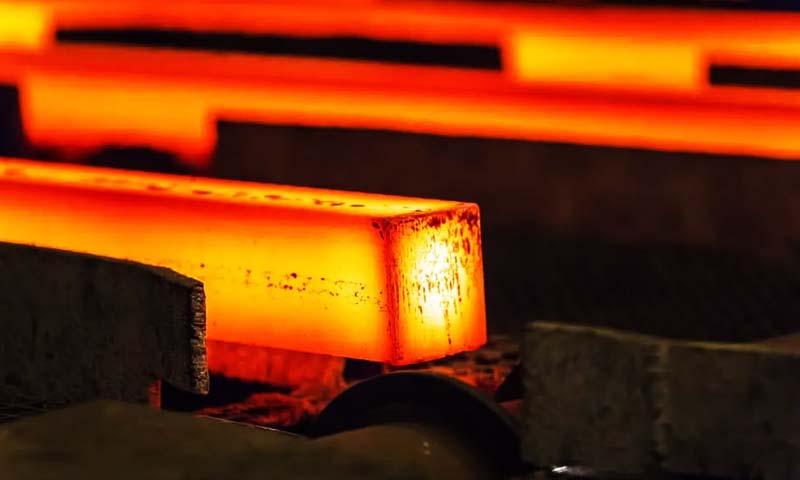
Annealing 430 stainless steel, typically at temperatures between 750-850°C followed by slow cooling, helps relieve internal stresses, improves ductility, and refines the grain structure.
Stress relieving, usually carried out at lower temperatures, also reduces residual stresses induced during manufacturing processes.
Limitations (non-hardenable by heat treatment):
Unlike some other steel types, 430 stainless steel is non-hardenable by conventional heat treatment methods.
Its ferritic structure does not undergo a phase transformation that would allow for significant hardening through heat treatment,
which is a key limitation in applications requiring high hardness through thermal processing.
7. Fabrication and Forming Characteristics
Cold forming (drawability, bend radius):
430 stainless steel has good cold-forming characteristics. It can be drawn into various shapes with a reasonable drawability.
When bending, the minimum bend radius depends on the thickness of the material.
For example, for a 1-mm-thick sheet, a minimum bend radius of approximately 2-3 mm is recommended to avoid cracking.

Hot working considerations:
During hot working, 430 stainless steel should be heated to the appropriate temperature range, typically between 900-1150°C.
However, careful control of the hot-working process is required to avoid issues such as grain growth, which can affect the mechanical properties of the final product.
Machinability and recommended tooling:
The machinability of 430 stainless steel is considered moderate. It is advisable to use high-speed steel (HSS) or carbide-tipped tools for machining.
Lubrication and proper cutting speeds are crucial to prevent tool wear and achieve a good surface finish.
Recommended cutting speeds for turning operations are around 50-80 m/min when using carbide tools.
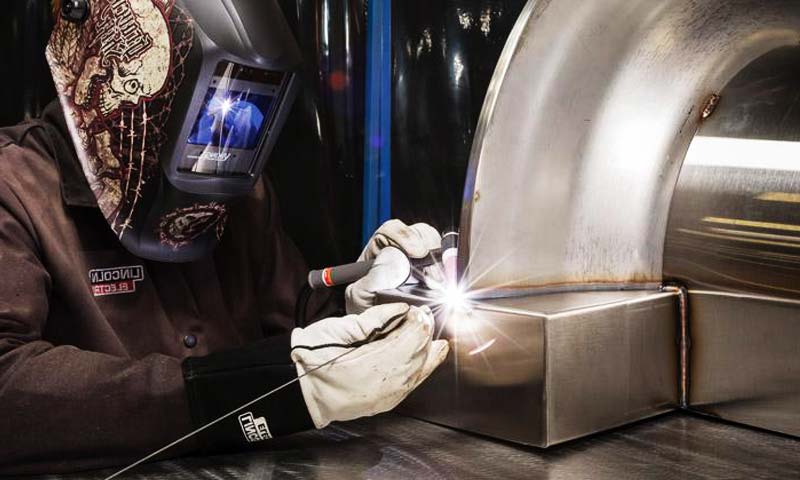
8. Weldability and Joining of 430 Stainless Steel
Joining 430 stainless steel requires careful attention to welding method, thermal control, and metallurgical stability to preserve corrosion resistance and mechanical integrity.
Fusion Welding Methods
- TIG (GTAW)
-
- Advantages: Precise heat input control, minimal dilution, excellent bead appearance.
- Applications: Thin‐gauge panels, decorative trim, where weld quality is critical.
- MIG (GMAW)
-
- Advantages: Higher deposition rates, faster cycle times, easier automation.
- Applications: Structural assemblies, moderate‐thickness sections.
- Spot Welding (Resistance Welding)
-
- Advantages: Rapid joining of sheet metal without filler; low heat input.
- Applications: Appliance bodies, automotive inner panels.
Filler Metals and Pre/Post‑Weld Treatments
Selecting a compatible filler and applying thermal treatments are essential to restore properties:
| Activity | Recommendation |
| Filler Metal | ER409L (ferritic) for matching structure, or ER308L (austenitic) for increased ductility. |
| Preheat | Optional—up to 150 °C to reduce thermal shock on thicker sections. |
| Interpass Control | Maintain below 150 °C to limit grain coarsening. |
| Post‑Weld Annealing | 750 – 850 °C, slow cooling to relieve stress and re‑passivate the surface. |
| Passivation | Nitric or citric acid bath to rebuild the chromium oxide layer. |
9. Surface Finishes and Aesthetics
Common Finishes
430 stainless steel comes in several standardized finishes, each delivering a distinct look and performance profile:

| Finish | Appearance | Typical Uses |
| 2B | Smooth, matte with light sheen | General‑purpose panels, kitchen liners |
| BA | Mirror‑like, high reflectivity | Decorative trim, architectural accents |
| No. 4 | Uniform satin grain (120–180 grit) | Handrails, food‑service surfaces |
| Brushed | Customizable grain direction & coarseness | Appliance facades, elevator doors |
Impact on Corrosion Resistance & Hygiene
A polished, uniform surface helps the steel’s passive chromium‑oxide film remain intact:
- Smoother finishes (2B, BA) limit crevices where moisture or contaminants can lodge, thereby reducing corrosion risk.
- Textured finishes (No. 4, brushed) offer aesthetic warmth but demand more frequent cleaning to prevent residue buildup.
In food‑processing and medical environments, practitioners favor 2B or BA because their low surface roughness simplifies sanitization and inspections, delivering both safety and compliance.
Cleaning & Maintenance of stainless steel
To preserve both appearance and performance, follow these guidelines:
Routine Cleaning
- Wipe surfaces with a soft cloth or sponge using warm water and mild, non‑chloride detergent.
- Rinse thoroughly to remove any soap residue.
Stain Removal
- For light spotting or fingerprints, apply a 50/50 mixture of water and white vinegar, then rinse.
- Avoid steel wool or metal‑scouring pads that can scratch and embed iron particles.
Preventing Damage
- Never use abrasive powders or bleach‑based cleaners—these attack the passive layer.
- Dry surfaces after cleaning to prevent watermarks and mineral deposits.
10. Key Applications of 430 Stainless Steel
430 stainless steel’s blend of cost‑effectiveness, formability, and moderate corrosion resistance makes it a popular choice across multiple sectors.

Architecture & Building
- Elevator interiors & doors
- Wall cladding & decorative panels
- Handrails & balustrades
- Exterior trim (e.g., soffits, fascia)
Automotive Industry
While ferritic grades face competition from aluminized steels in high‑temperature areas, 430 still finds use in:
- Exhaust heat shields (light‑duty applications)
- Decorative trim strips & bezels
- Emblem back‑plates and badges
- Interior trim components (e.g., door sills)
Consumer Appliances
| Appliance Type | Typical Parts |
| Ovens & ranges | Front panels, control knobs |
| Dishwashers | Tub linings, kick plates |
| Refrigerators | Door liners, handle housings |
| Range hoods | External shells, filters housings |
Food‑Processing & Hygiene‑Critical Equipment
- Work tables & shelving
- Conveyor belts & chutes
- Machine housings & guards
- Drip trays & splashbacks
Key advantage: When finished to 2B or BA, surfaces resist bacterial adhesion and simplify sanitization.
Other Industrial Uses
- Heat exchangers & HVAC components
- Electrical enclosures and panels
- Chemical handling tanks (for mild media)
- Fasteners and small hardware (nuts, bolts, clips)
11. Pros & Cons of 430 Stainless Steel
430 stainless steel is a widely utilized ferritic grade that provides a practical combination of corrosion resistance, formability, and affordability.
Advantages of 430 Stainless Steel
Cost-Effective
430 is a low-nickel alloy, making it more affordable than austenitic stainless steels such as 304 and 316. This cost advantage is particularly valuable in high-volume manufacturing.
Good Corrosion Resistance (in Mild Environments)
The chromium-rich composition forms a passive oxide layer that protects the material in non-aggressive settings such as indoor atmospheres and fresh water.
Attractive Surface Finishes
Available in various finishes—such as BA (bright annealed), 2B, No. 4, and brushed—430 offers excellent visual appeal for decorative and exposed applications.
Magnetic Properties
Its ferritic crystal structure gives it inherent magnetism, which is beneficial in appliances, sensors, and magnetic fixtures.
Good Cold Formability
430 can be bent, drawn, and stamped with relative ease, especially in thinner gauges. Its low work-hardening rate helps minimize springback during forming.
Moderate Thermal Expansion
Compared to austenitic grades, 430 has a lower coefficient of thermal expansion, which improves dimensional stability in fluctuating temperature environments.
Environmentally Friendly and Recyclable
Like all stainless steels, 430 is fully recyclable and contributes to circular economy initiatives in sustainable design.
Disadvantages of 430 Stainless Steel
Reduced Corrosion Resistance in Aggressive Environments
430 performs poorly in chloride-rich settings such as coastal areas, deicing salt exposure, or marine applications. It is prone to pitting and crevice corrosion under such conditions.
Limited Toughness at Low Temperatures
Ferritic stainless steels become brittle when exposed to sub-zero temperatures, making 430 unsuitable for cryogenic or cold-climate structural uses.
Non-Hardenable by Heat Treatment
As a ferritic grade, 430 cannot be hardened through heat treatment. This limits its usefulness in applications that require high surface hardness or wear resistance.
Moderate Weldability
While it can be welded by common methods like TIG, MIG, and spot welding, special care is needed to avoid sensitization and grain growth in the heat-affected zone, which may compromise corrosion resistance and mechanical integrity.
Lower Mechanical Strength
430 has lower tensile and yield strength compared to austenitic and duplex stainless steels, making it less suitable for heavy-load or high-impact applications.
Minimal Work Hardening Capability
Its limited ability to increase strength through plastic deformation restricts its use in applications where additional strength gain after forming is desirable.
12. Comparison with Other Stainless Grades
| Property / Grade | 430 (Ferritic) | 304 (Austenitic) | 316 (Austenitic) | 409 (Ferritic) | 430F (Ferritic, Free-Machining) |
| Microstructure | Ferritic | Austenitic | Austenitic | Ferritic | Ferritic |
| Magnetic | Yes | No | No | Yes | Yes |
| Corrosion Resistance | Moderate | Good | Excellent (esp. in chlorides) | Fair | Moderate |
| Chloride Resistance | Low | Moderate | High | Poor | Low |
| Tensile Strength (MPa) | 450–600 | 520–720 | 520–750 | 380–550 | 450–600 |
| Work Hardening | Minimal | High | High | Minimal | Minimal |
| Cold Formability | Good | Excellent | Good | Moderate | Fair |
Weldability |
Fair (risk of grain growth) | Excellent | Excellent | Fair | Poor (sulfur affects welds) |
| Machinability | Moderate | Moderate | Poor | Good | Excellent (with added sulfur) |
| Thermal Expansion (×10⁻⁶/°C) | ~10.4 | ~16.0 | ~16.5 | ~11.0 | ~10.4 |
| Typical Applications | Appliances, trims, cookware | Tanks, sinks, kitchenware | Marine, food processing | Automotive exhaust | Fasteners, turned parts |
| Cost (Relative) | Low | Moderate–High | High | Low | Moderate |
Summary:
- 304 vs. 430: 304 offers superior corrosion resistance and formability, but at a significantly higher cost. Use 430 where budget and magnetism are factors, and the environment is non-aggressive.
- 316 vs. 430: 316 is the choice for marine or chloride-rich conditions; 430 is unsuitable for such applications.
- 409 vs. 430: 409 is cheaper and used in automotive exhausts but has lower corrosion resistance than 430.
- 430F vs. 430: 430F adds sulfur for machinability, sacrificing weldability and ductility in return.
13. Standards & Certifications
Across regions and industries, 430 stainless steel conforms to a variety of national and international standards. Below is a summary of the most commonly referenced specifications:
| Standard System | Designation | Equivalent Name(s) | Scope & Notes |
| EN (Europe) | EN 1.4016 | X6Cr17 | Defines chemical composition (16 %Cr), mechanical properties, and delivery conditions. Widely used in construction and automotive applications. |
| ASTM (USA) | ASTM A240/A240M | UNS S43000 | Covers plate, sheet, and strip for pressure vessels and general applications. Specifies tensile, yield, and hardness limits. |
| JIS (Japan) | JIS G4305 | SUS430 | Japanese Industrial Standard for cold‑rolled ferritic stainless steel. Includes surface finish requirements (2B, No. 1). |
| GB/T (China) | GB/T 20878 | 06Cr17 | Chinese national standard mirroring EN 1.4016; used in architectural and appliance industries. |
| ISO | ISO 9443 | X6Cr17 | Specifies stainless steel wire; less common but relevant for fasteners and springs. |
14. Conclusion
430 stainless steel is a versatile material that offers a combination of good corrosion resistance, reasonable mechanical properties, and cost-effectiveness.
Its ferritic structure, primarily characterized by its chromium-rich composition, provides the basis for its performance in various applications.
From consumer goods and architecture to the automotive and electrical industries, 430 stainless steel has proven to be a reliable choice for a wide range of products and structures.
LangHe is the perfect choice for your manufacturing needs if you need high-quality stainless steel components.
FAQs
Is 430 stainless steel magnetic?
Yes. As a ferritic stainless steel, 430 is magnetic due to its body-centered cubic (BCC) crystal structure.
This makes it suitable for applications requiring magnetic response, such as refrigerator doors and induction-compatible cookware.
Can 430 stainless steel be welded?
Yes, but with limitations. 430 can be welded using methods like TIG, MIG, and spot welding.
However, special attention must be paid to avoid sensitization and grain growth in the heat-affected zone. Preheating and post-weld annealing are often recommended.
Is 430 stainless steel food safe?
Yes. 430 is commonly used in food-grade equipment and surfaces, such as countertops, cooking utensils, and kitchen appliances.
Its chromium content forms a passive oxide layer that helps resist staining and corrosion in food preparation environments.
Can 430 stainless steel rust?
While 430 is corrosion-resistant, it can rust under certain conditions, particularly in environments containing chlorides, acids, or excessive humidity.
Regular cleaning and maintenance help preserve its appearance and integrity.