1. Introduction
17-4 PH stainless steel (often specified as UNS S17400, AISI 630, or EN 1.4542) is one of the most widely used precipitation-hardening stainless steels in industry.
It delivers an attractive combination of high strength, good toughness, practical corrosion resistance and excellent manufacturability.
Because its mechanical condition is controlled by heat treatment rather than composition alone,
17-4 PH can be tailored across a range of strength/toughness tradeoffs to suit fasteners, shafts, valve components, aerospace fittings and many other engineered parts.
2. What is 17-4 PH Stainless Steel?
17-4 PH is a martensitic, precipitation-hardening stainless steel.
It is strengthened primarily by the formation of fine copper-rich precipitates produced during a controlled aging (precipitation hardening) step following solution treatment.
In the annealed (solutionized) state, it is relatively soft and readily machined; after aging it can reach tensile strengths similar to high-strength alloy steels while retaining much of the corrosion resistance of stainless grades.

Features
- High strength: peak tensile strength in the H900 range approaches ~1.3–1.4 GPa (190–200 ksi).
- Heat-treatable: properties tailored by aging (H900 → H1150 tempers) to balance strength, toughness and SCC resistance.
- Good corrosion resistance: better than typical martensitic steels; suitable for many industrial and mildly corrosive environments.
- Good manufacturability: machineable in solution-treated condition; weldable with appropriate procedures.
- Magnetic: martensitic microstructure is magnetic in most conditions.
- Wide supply forms: bars, forgings, plate, wire, powder (for additive and MIM), forgings.
3. Chemical Composition of 17-4 PH Stainless Steel
The properties of 17-4 PH stainless steel are directly tied to its carefully balanced chemical composition.
It is classified as a martensitic precipitation-hardening stainless steel, and each alloying element plays a distinct role in delivering strength, toughness, and corrosion resistance.

Standard Composition (Weight %)
| Element | Typical Range (%) | Function / Contribution |
| Iron (Fe) | Balance | Matrix element, provides structural base. |
| Chromium (Cr) | 15.0 – 17.5 | Forms passive oxide film for corrosion resistance; stabilizes martensite. |
| Nickel (Ni) | 3.0 – 5.0 | Enhances toughness and corrosion resistance; stabilizes austenite prior to transformation. |
| Copper (Cu) | 3.0 – 5.0 | Primary precipitation-hardening element; forms Cu-rich clusters during aging to increase strength. |
| Niobium + Tantalum (Nb + Ta) | 0.15 – 0.45 | Controls carbide precipitation, improves strength, prevents grain boundary sensitization. |
| Manganese (Mn) | ≤ 1.0 | Aids deoxidation and hot working, minor strength contributor. |
| Silicon (Si) | ≤ 1.0 | Improves oxidation resistance, acts as a deoxidizer during steelmaking. |
| Carbon (C) | ≤ 0.07 | Low carbon ensures weldability and reduces risk of sensitization. |
| Phosphorus (P) | ≤ 0.04 | Residual impurity; controlled to maintain toughness. |
| Sulfur (S) | ≤ 0.03 | Residual impurity; excessive sulfur reduces toughness but can aid machinability. |
4. Heat Treatment Technology of 17-4 PH Stainless Steel
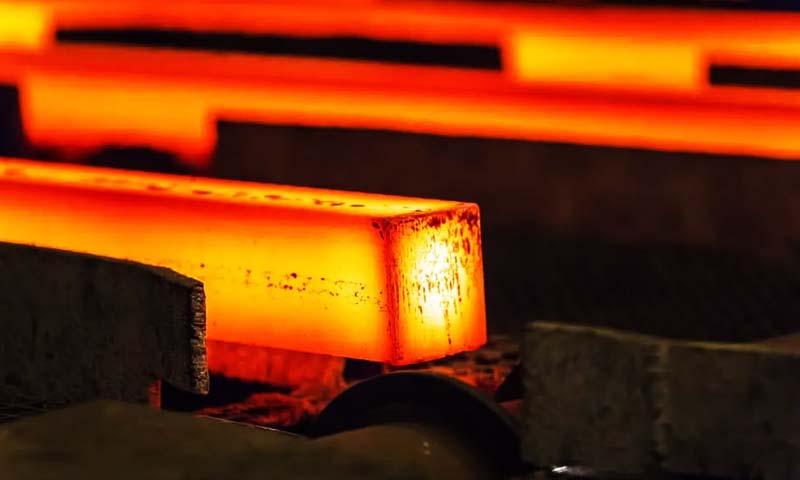
The exceptional strength–toughness–corrosion balance of 17-4 PH stainless steel comes from its unique heat treatment sequence, which combines solution annealing and precipitation hardening (aging).

Core Heat Treatment Process
Step 1: Solution Annealing
- Objective: Homogenize the microstructure by dissolving all copper and niobium in the austenite matrix; eliminate segregation from casting/forging.
- Parameters: Heat to 1,040–1,060°C (1,900–1,940°F), hold for 30–60 minutes (dependent on section thickness: 30 minutes for <25 mm, 60 minutes for >50 mm), then air cool or water quench to room temperature.
- Outcome: Austenite transforms to soft martensite (hardness: ~200 HB); copper remains in supersaturated solid solution—preparing the alloy for aging.
Step 2: Precipitation Hardening (Aging)
- Objective: Trigger controlled diffusion of copper atoms to form strength-inducing ε-Cu precipitates. Aging temperature determines precipitate size and, thus, performance:
-
- Low temperatures (480°C): Fine precipitates (5 nm) → max strength, low toughness.
- High temperatures (620°C): Coarse precipitates (20 nm) → lower strength, high toughness.
Standard Aging Temperatures (ASTM A564):
- H900: 482 °C for 1 h → Max strength (~1310–1380 MPa), hardness 40–45 HRC, but lower toughness.
- H1025: 552 °C for 4 h → Balanced strength (~1170 MPa) and toughness; widely used in aerospace.
- H1075: 579 °C for 4 h → Moderate strength (~1070 MPa), improved ductility.
- H1100: 593 °C for 4 h → Lower strength (~1000 MPa), higher toughness, good stress corrosion resistance.
- H1150 (2-step): 620 °C for 4 h + cool + 620 °C for 4 h → Lowest strength (~900 MPa), highest ductility and toughness, used in marine & nuclear.
5. Typical Mechanical Properties by Temper
The mechanical performance of 17-4 PH stainless steel is highly dependent on its aging condition (temper).

By selecting different heat-treatment temperatures, engineers can balance strength, toughness, ductility, and corrosion resistance to suit specific applications.
| Property | H900 | H1025 | H1075 | H1100 | H1150 (1-step) | H1150 (2-step) |
| Tensile Strength (MPa) | 1310–1380 | 1160–1200 | 1070–1120 | 1000–1060 | 900–960 | 860–920 |
| Yield Strength (MPa, 0.2% offset) | 1170–1275 | 1030–1100 | 965–1000 | 865–930 | 830–900 | 800–860 |
| Elongation (%) | 8–10 | 10–12 | 12–14 | 14–16 | 16–18 | 18–20 |
| Hardness (HRC) | 40–45 | 36–40 | 32–36 | 28–32 | 25–30 | 24–28 |
| Impact Toughness (Charpy V, J) | 20–30 | 40–60 | 60–80 | 80–100 | 90–120 | 100–140 |
6. Corrosion Resistance: Capabilities and Limitations
17-4 PH offers moderate corrosion resistance—superior to martensitic steels but inferior to austenitic or duplex grades. Its performance depends on environment, heat treatment, and surface finish.

Corrosion Mechanisms & Performance Data
- Pitting Resistance: PREN = 18–20 (calculated as %Cr + 3.3×%Mo + 16×%N)—lower than 316L (PREN 24–26) but higher than 410 (PREN 16–18).
In 5% NaCl salt spray testing (ASTM B117), 17-4 PH (passivated) resists red rust for 500–700 hours vs. 1,000+ hours for 316L. - General Corrosion: Performs well in freshwater, air, and mild chemicals (pH 4–10). In 10% sulfuric acid (H₂SO₄), corrosion rate is 0.1 mm/year (vs. 0.05 mm/year for 316L).
- Intergranular Corrosion (IGC): Low carbon content (<0.07%) and niobium stabilization prevent chromium carbide precipitation—passes ASTM A262 Practice E (IGC test) without cracking.
- Stress Corrosion Cracking (SCC): Resists SCC in freshwater and most chemicals but is susceptible in chloride-rich environments (>100 ppm Cl⁻) under tensile stress. H1150 temper (lower strength) is more SCC-resistant than H900.
Corrosion Mitigation Strategies
- Passivation: Immerse in 20–30% nitric acid (40–60°C, 30 minutes) to thicken the Cr₂O₃ layer—improves salt spray resistance by 30%.
- Electropolishing: Creates a smooth surface (Ra ≤0.8 μm) that reduces crevice corrosion—critical for medical and food applications.
- Coatings: For harsh environments (seawater), apply PTFE or ceramic coatings to extend service life by 2–3x.
7. Manufacturing Methods: Casting, Forging, Machining, Welding

Casting
- Investment Casting: Widely used for aerospace, pump, and valve components requiring near-net-shape geometry and fine surface finish (Ra 1.6–3.2 μm).
- Sand Casting: Applied for large parts, but requires subsequent machining due to lower dimensional accuracy (CT8–CT10 per ISO 8062).
- Key Considerations:
-
- Shrinkage allowance ~2.0% for 17-4 PH.
- Porosity and segregation risks must be mitigated with controlled solidification and hot isostatic pressing (HIP).
- Post-cast solution annealing is essential before precipitation hardening.
Forging
- Closed-Die Forging: Produces stronger grain flow and higher fatigue resistance. Ideal for shafts, landing gear, and structural parts.
- Open-Die Forging: Used for large billets, disks, or rings where directional strength is critical.
- Advantages:
-
- Tensile strength up to 1380 MPa in H900 temper is achievable with refined grain structure.
- Reduced risk of internal shrinkage compared to casting.
- Challenges: Higher tooling costs and limited design freedom compared to casting.
Machining
- Machinability: Comparable to 304 stainless steel in solution-treated condition, but becomes significantly harder after precipitation hardening (e.g., H900 temper hardness ~44 HRC).
- Recommendations:
-
- Use carbide tooling with rigid setups.
- Employ flood coolant to reduce work-hardening.
- Finish machining often done in solution-annealed state, followed by final heat treatment.
- Applications: Precision aerospace fittings, medical instruments, turbine components.
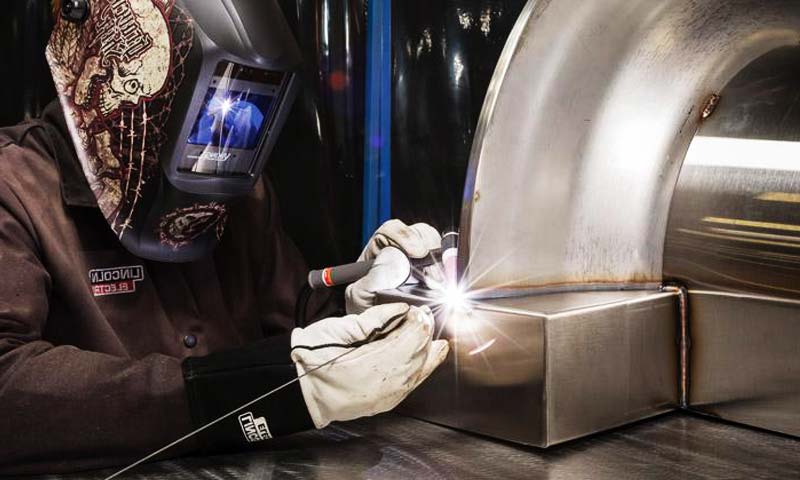
Welding
- Processes: GTAW (TIG), GMAW (MIG), and SMAW are feasible.
- Weldability: Good, but requires post-weld heat treatment (solution annealing + aging) to restore uniform precipitation hardening.
- Key Practices:
-
- Precipitation-hardened (aged) material should not be welded directly — it risks cracking and reduced mechanical properties.
- Filler metals: AWS A5.9 ER630 or equivalents designed for 17-4 PH.
- Performance: Welds can achieve near-parent strength after proper heat treatment, though toughness is sometimes slightly lower in weld zones.
8. Typical Applications of 17-4 PH Stainless Steel
17-4 PH stainless steel is widely chosen across demanding industries because it combines high strength, corrosion resistance, and excellent dimensional stability after heat treatment. Below are representative application areas:
Aerospace & Defense
- Landing gear components, actuator shafts, and turbine engine parts – benefit from high strength-to-weight ratio and resistance to stress corrosion cracking.
- Fasteners and fittings – H900 and H1025 tempers provide tensile strengths > 1,200 MPa, critical in load-bearing joints.
Oil & Gas / Energy
- Valve stems, pump shafts, compressor parts – 17-4 PH withstands both chloride-rich offshore environments and high-pressure operations.
- Downhole tools and drilling equipment – require hardness and wear resistance, often in H900–H1025 tempers.
- Power generation turbines – used in blades, discs, and housings for elevated temperature resistance (up to ~315 °C).
Chemical Processing & Marine
- Agitator shafts, impellers, mixers – leverage resistance to acidic/alkaline solutions.
- Marine hardware, propeller shafts, couplings – duplex alloys often compete here, but 17-4 PH offers excellent balance of corrosion resistance and machinability.
- Seawater desalination equipment – proven service life in chloride-rich brines.
Medical & Food Industry
- Surgical instruments, orthopedic implants – benefit from high hardness, wear resistance, and corrosion protection after passivation or electropolishing.
- Food processing equipment – uses include cutting blades, knives, and forming tools, where both strength and hygienic surfaces are critical.
Industrial & General Engineering
- Molds and dies for plastics injection – excellent dimensional stability after heat treatment ensures long service life.
- Bearings, gears, and spindles – H900 temper supports high wear resistance.
- High-performance springs and fasteners – combine fatigue resistance with corrosion protection.
9. Brands under Different International Standards
| Standard / Region | Designation / Grade | Notes |
| UNS (Unified Numbering System, USA) | S17400 | Base identifier used in North America |
| ASTM / AISI (USA) | 17-4 PH, Type 630 | ASTM A564, A693, A705 cover product forms |
| EN / DIN (Europe) | X5CrNiCuNb16-4 (1.4542) | Widely specified in European aerospace & industrial sectors |
| ISO | X5CrNiCuNb16-4 | Harmonized with EN 1.4542 |
| BS (UK) | 17-4PH / FV520B | FV520B often referenced in aerospace and defense |
| JIS (Japan) | SUS630 | Common in Japanese machinery and marine industries |
| Chinese GB/T | 0Cr17Ni4Cu4Nb | Equivalent composition; used in pumps, valves, and marine equipment |
10. Comparative Analysis: 17-4 PH vs. Competing Alloys
17-4 PH stainless steel competes with several alloy families depending on the design requirement—particularly strength, toughness, corrosion resistance, and cost.
Its unique ability to combine high mechanical strength with moderate-to-high corrosion resistance makes it a versatile choice.
| Property | 17-4 PH | 316L | 410 | 2205 Duplex | Inconel 718 |
| UNS | S17400 | S31603 | S41000 | S32205 | N07718 |
| Microstructure | Martensitic + precipitates | Austenitic | Martensitic | Austenite + ferrite | Nickel superalloy |
| Yield Strength (MPa) | 1000–1200 (H900) | 200–300 | 500–700 | 600–800 | 1030+ |
| Corrosion Resistance | Moderate–High | Excellent | Fair | Excellent, superior SCC | Outstanding, oxidation & creep resistant |
| Temperature Range (°C) | -40 to 315 (short-term to 370) | -196 to 870 | Up to 425 | -50 to 300 | -200 to 700+ |
| Cost (Relative) | Medium | Medium–High | Low | Medium–High | Very High |
| Key Use Cases | Aerospace, valves, pumps, shafts | Marine parts, chemical process equipment | Turbine blades, cutlery, wear parts | Offshore, seawater, chemical tanks | Jet engines, turbines, high-temp fasteners |
11. Challenges & Limitations
Despite its strengths, 17-4 PH has limitations that must be addressed in design and application:
High-Temperature Performance
- Limitation: Strength degrades rapidly above 300°C—at 500°C, H900 tensile strength drops to 500 MPa (57% reduction).
- Mitigation: For high-temperature applications (>300°C), use Inconel 718 (retains 90% strength at 600°C) or coat 17-4 PH with a heat-resistant ceramic layer.
Chloride Susceptibility
- Limitation: Susceptible to pitting and SCC in chloride-rich environments (>100 ppm Cl⁻) under tensile stress.
- Mitigation: Use H1150 temper (lower strength reduces stress); passivate regularly; avoid crevices in design.
Machining Hardened Tempers
- Limitation: H900 temper (HB 300–380) increases tool wear and machining costs.
- Mitigation: Machine in the solution-annealed state (HB 200), then age to final hardness; use CBN tools for critical features.
Cost
- Limitation: 17-4 PH costs 30–50% more than 304 stainless steel due to copper and niobium additions.
- Mitigation: Use 17-4 PH only for load-bearing components; combine with lower-cost alloys (e.g., 304) for non-critical parts.
12. Sustainability & Future Trends
17-4 PH is evolving to meet sustainability goals and emerging industry needs:
Sustainability Initiatives
- Recyclability: 17-4 PH is 100% recyclable, with no loss of properties—recycled 17-4 PH requires 40% less energy to produce than primary material (World Stainless Steel Association).
- Reduced Waste: Investment casting of 17-4 PH minimizes material waste (95–98% yield) vs. machining (70–80% yield).
- Long Service Life: In aerospace applications, 17-4 PH components last 20+ years—reducing replacement frequency and landfill waste.
Future Trends
- Additive Manufacturing (AM): 3D-printed 17-4 PH (via laser powder bed fusion, LPBF) produces complex geometries (e.g., lattice structures) with 15% higher fatigue resistance than cast parts—used in aerospace engine components.
- Nanoscale Precipitation: Advanced aging processes (e.g., isothermal aging) create smaller, more uniform Cu precipitates (2–5 nm)—increasing strength by 10–15% without reducing toughness.
- Hybrid Alloys: 17-4 PH reinforced with carbon nanotubes (CNTs) or ceramic particles—improves high-temperature strength by 20% (under development for next-generation turbine parts).
- Low-Temperature Aging: New temper cycles (400–450°C) reduce energy use by 30% while maintaining 90% of H900 strength—sustainable for high-volume EV components.
13. Conclusion
17-4 PH stainless steel is a flexible, high-performance alloy family that bridges the gap between conventional stainless steels and high-strength alloy steels.
Its capability to be tailored by heat treatment makes it an exceptional choice when designers need strength, reasonable corrosion resistance and manufacturability in the same material.
Proper selection of temper, careful fabrication (welding and machining practice), and appropriate surface treatments maximize service life.
For chloride-rich or very high-temperature environments, alternatives such as duplex stainless steels or nickel superalloys should be considered.
FAQs
Is 17-4 PH magnetic?
Yes, because it is a martensitic stainless steel, it is magnetic in most tempers.
Can 17-4 PH be hardened by cold work?
It work-hardens, but the intended strengthening mechanism is precipitation hardening (aging). For tight final dimensions, machine in solution-treated condition, then age.
What is the difference between 17-4 PH and 15-5 PH stainless steel?
Both are PH stainless steels, but 17-4 PH has higher chromium (15–17.5% vs. 14–15.5% for 15-5 PH) and lower nickel (3–5% vs. 3.5–5.5% for 15-5 PH).
17-4 PH offers higher strength (H900: 1,150 MPa vs. 15-5 PH H900: 1,050 MPa), while 15-5 PH has slightly better corrosion resistance (PREN 20 vs. 19) and formability.
Can 17-4 PH be used in seawater applications?
Limited—17-4 PH (PREN 18–20) is susceptible to pitting in seawater (35,000 ppm Cl⁻) after 500–700 hours (ASTM B117).
For long-term seawater use, choose 316L (PREN 24–26) or duplex 2205 (PREN 32–35).
If 17-4 PH is required, use H1150 temper + electropolishing + PTFE coating to extend service life to 2–3 years.
What is the maximum temperature 17-4 PH can withstand?
For continuous service, 17-4 PH is limited to 300°C (H900 temper) or 350°C (H1150 temper).
Above 300°C, Cu precipitates coarsen, reducing strength. For short-term exposure (1–2 hours), it can tolerate up to 450°C.
How does welding affect 17-4 PH’s properties?
Welding softens the heat-affected zone (HAZ) by dissolving Cu precipitates—HAZ tensile strength can drop by 30–40%.
To restore strength, perform post-weld solution annealing (1,050°C, 1 hour) + re-aging to the original temper. Use GTAW with ER630 filler metal to minimize cracking.
Is 17-4 PH suitable for medical implants?
Yes—H1150-tempered 17-4 PH is biocompatible (meets ISO 10993) and used in orthopedic implants (knees, hips) and surgical instruments.
It requires electropolishing (Ra ≤0.8 μm) to reduce bacterial adhesion and passivation to enhance corrosion resistance in bodily fluids.