1. Introduction
1.4469 stainless steel (EN designation: X2CrNiMoN22-5-3 ), commonly referred to by its UNS designation S32760 or trade names such as Zeron® 100, belongs to the family of super duplex stainless steels.
Engineered with a balanced austenite-ferrite microstructure, it offers a remarkable combination of high mechanical strength, superior corrosion resistance, and excellent wear properties.
These qualities make it indispensable in industries where harsh environments, such as high salinity, acidic media, or elevated temperatures, challenge material longevity and reliability.
This alloy has emerged as a go-to solution in critical sectors including oil & gas, marine engineering, chemical processing, and power generation.
Its ability to maintain performance under chloride-rich, acidic, or high-pressure environments underscores its utility in components such as subsea equipment, heat exchangers, and reactor vessels.
This article delivers an in-depth analysis of 1.4469’s evolution, chemical composition, microstructure, mechanical and physical properties, processing methods, and emerging applications.
Additionally, it explores the alloy’s comparative advantages, challenges, and future innovations, offering a comprehensive perspective for engineers, material scientists, and industrial decision-makers.
2. Historical Evolution and Standards
Development Timeline
The development of 1.4469 represents a culmination of decades of metallurgical innovation aimed at improving corrosion resistance, mechanical properties, and weldability.
Early duplex steels such as 2205 laid the foundation, but their limitations in aggressive environments, particularly those involving chlorides and sulfides, necessitated further innovation.
By increasing nitrogen levels (0.15–0.22%) and optimizing molybdenum and copper content, 1.4469 evolved as a third-generation super duplex stainless steel capable of withstanding extreme service conditions.

Standards and Certifications
1.4469 complies with several international standards that ensure its reliability in diverse applications:
- EN 10088-3: Stainless steels for general purposes.
- EN 10253-4: Pipe fittings for pressure purposes.
- ASTM A240: Plates, sheets, and strips for pressure vessels.
- ASTM A182: Forgings for high-temperature service.
- NACE MR0175/ISO 15156: Compliance for sour service environments.
3. Chemical Composition and Microstructure
The exceptional performance of 1.4469 stainless steel stems from its precisely engineered chemical composition and optimized duplex microstructure.
Designed for aggressive environments that challenge both corrosion resistance and mechanical durability, this alloy leverages a synergistic blend of elements to achieve its balance of strength, resilience, and processing stability.
Chemical Composition
Key Alloying Elements
At the heart of 1.4469’s superior properties lies a combination of carefully balanced alloying elements.
Each plays a critical role in determining the material’s performance in industrial applications:
| Element | Typical Content (%) | Primary Function |
|---|---|---|
| Chromium (Cr) | 24.0 – 26.0 | Forms passive oxide film, enhances corrosion and oxidation resistance |
| Nickel (Ni) | 5.0 – 8.0 | Stabilizes the austenitic phase, enhances ductility and toughness |
| Molybdenum (Mo) | 2.5 – 3.5 | Improves resistance to pitting, crevice corrosion, and aggressive acids |
| Carbon (C) | ≤ 0.03 | Maintains corrosion resistance by minimizing carbide formation |
| Nitrogen (N) | 0.15 – 0.20 | Increases strength and pitting resistance while stabilizing austenite |
| Manganese (Mn) | ≤ 2.0 | Aids in deoxidation and improves hot working properties |
| Silicon (Si) | ≤ 1.0 | Enhances oxidation resistance and acts as a deoxidizer |
| Phosphorus (P) | ≤ 0.035 | Should be minimized to avoid embrittlement |
| Sulfur (S) | ≤ 0.015 | Controlled to reduce susceptibility to hot cracking |
Microstructural Characteristics
Duplex Structure: Balanced Austenite and Ferrite
1.4469 stainless steel is fundamentally a duplex alloy, meaning it features a dual-phase microstructure consisting of roughly equal parts austenite and ferrite.

This duality is crucial—ferrite imparts strength and resistance to chloride stress corrosion cracking (SCC), while austenite offers improved toughness, ductility, and corrosion resistance.
- Austenite: Provides enhanced toughness and improved resistance to uniform corrosion.
- Ferrite: Confers high strength and mitigates the risk of localized corrosion and SCC.
The duplex structure is achieved through precise control of the nitrogen content, which acts as an austenite stabilizer while also boosting pitting resistance.
Phase Control and Sigma Phase Mitigation
A critical concern in duplex stainless steels is the formation of sigma (σ) phase, a brittle intermetallic compound that degrades both toughness and corrosion resistance.
Sigma phase formation typically occurs during prolonged exposure in the temperature range of 550–850°C.
1.4469 is designed to resist sigma phase formation through:
- Optimized alloying (e.g., balanced Cr, Mo, and Si levels)
- Strict thermal controls during solution annealing and cooling
- Rapid quenching to preserve phase balance and suppress deleterious precipitates
Heat Treatment Effects
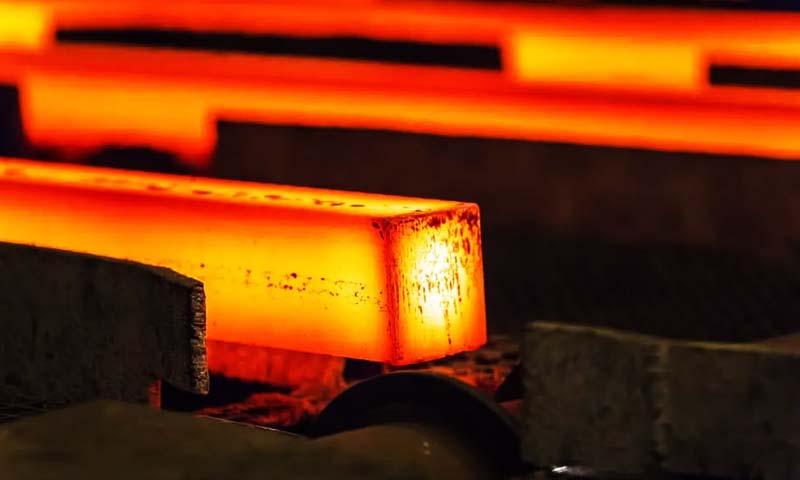
Solution annealing at 1050–1120°C followed by rapid water quenching is the standard heat treatment for 1.4469. This process:
- Dissolves precipitates
- Refines the grain structure (target ASTM grain size: 5–7)
- Ensures optimal mechanical performance and corrosion resistance
By avoiding slow cooling or incorrect annealing parameters, manufacturers prevent ferrite overgrowth or intermetallic formation, ensuring structural integrity even under cyclic thermal loads.
Microstructural Benchmarking
Compared to earlier duplex grades like 1.4462 (2205), 1.4469 exhibits:
- Finer grain size distribution
- Higher retained austenite content
- Improved phase balance stability
These improvements lead to increased mechanical strength (by ~10–15%) and superior corrosion performance, especially in environments with chloride concentrations exceeding 1000 ppm.
4. Physical and Mechanical Properties of 1.4469 Stainless Steel
The outstanding performance of 1.4469 stainless steel is not merely a result of its chemical formulation but also a direct consequence of its well-balanced physical and mechanical characteristics.
As a duplex-grade alloy, it delivers a synergistic combination of strength, toughness, corrosion resistance, and thermal stability, making it particularly well-suited for demanding structural and corrosive environments.

Mechanical Performance
| Property | Typical Value |
|---|---|
| Yield Strength (Rp0.2) | 480 – 650 MPa |
| Tensile Strength (Rm) | 700 – 850 MPa |
| Elongation (A5) | ≥ 25% |
| Hardness (HBW) | 220 – 260 |
| Charpy Impact Toughness (20°C) | ≥ 100 J |
Fatigue and Impact Performance
In fatigue-critical applications, 1.4469 offers excellent cyclic loading endurance.
Laboratory tests show fatigue strength exceeding 320 MPa at 10⁷ cycles in air and approximately 220 MPa in saline environments, outperforming 316L and approaching the levels of some super duplex steels.
Its impact resistance remains robust even at sub-zero temperatures, making it reliable for offshore, cryogenic, and arctic environments where conventional materials might fail.
Physical Properties
| Property | Typical Value |
|---|---|
| Density | ~7.80 g/cm³ |
| Thermal Conductivity (20°C) | ~14 W/m·K |
| Coefficient of Thermal Expansion (20–100°C) | ~13.5 × 10⁻⁶ /K |
| Specific Heat Capacity | ~500 J/kg·K |
| Electrical Resistivity (20°C) | ~0.85 μΩ·m |
Corrosion and Oxidation Resistance
Excellent Resistance in Aggressive Environments
1.4469 exhibits outstanding resistance to localized corrosion due to its high chromium, molybdenum, and nitrogen content.
The Pitting Resistance Equivalent Number (PREN)—a key measure of resistance to chloride pitting—typically falls within:
PREN = Cr + 3.3 × Mo + 16 × N
For 1.4469: PREN ≈ 36–39
This places 1.4469 well above standard austenitic grades (e.g., 316L with PREN ≈ 25–28), making it suitable for chloride-rich environments such as seawater, brines, and acidic media.
Stress Corrosion Cracking (SCC)
The duplex structure provides intrinsic resistance to SCC, a common failure mechanism in high-chloride and elevated temperature conditions.
Compared to 304L and 316L, which are prone to SCC above 50°C in chloride solutions,
1.4469 maintains structural reliability up to 70–80°C before SCC risks emerge—an important advantage for oil & gas and marine applications.
General Corrosion and Intergranular Attack
Thanks to its low carbon content and controlled heat treatment protocols, 1.4469 shows minimal risk of sensitization or intergranular corrosion, even after welding or forming operations.
In nitric and sulfuric acid solutions, it demonstrates passivity and corrosion rates under 0.05 mm/year, qualifying it for use in harsh chemical environments.
5. Processing and Fabrication Techniques of 1.4469 Stainless Steel
This section delves into the practical considerations and best practices for casting, forming, machining, welding, and post-processing of this high-performance material.
Casting and Forming
Casting Methods
Due to its balanced alloying and solidification behavior, 1.4469 adapts well to various casting techniques.
Investment casting is often used when precision and surface finish are critical, such as in pump components or valve bodies.

For larger structural parts, sand casting provides the necessary scalability and flexibility.
Modern foundries frequently employ simulation tools such as ProCAST or MAGMASOFT to optimize casting parameters,
ensuring uniform microstructure, minimizing segregation, and reducing defects such as shrinkage or porosity.
Preheating molds and controlling the cooling rate are critical steps to avoid sigma-phase formation and to achieve the desired duplex structure.
Forming Processes
Hot forming operations, typically conducted between 950–1150°C, allow for significant deformation without compromising structural integrity.
However, prolonged exposure beyond this range can increase the risk of intermetallic precipitation.
Cold forming is feasible but requires more force compared to austenitic grades due to higher yield strength.
Operators must account for increased springback and work hardening. To restore ductility and stress-relieve the material post-forming, intermediate annealing is recommended.
Quality Control in Forming
Consistent forming quality hinges on robust quality control practices, including:
- Ultrasonic testing to detect internal discontinuities.
- Dye penetrant inspection for surface defects.
- Microstructure validation using metallographic techniques.
Machining and Welding
Machining Considerations
CNC Machining 1.4469 presents challenges due to its duplex structure and tendency to work harden.
Its high strength and toughness can accelerate tool wear—up to 50% faster than standard austenitic grades like 304.

To optimize machining:
- Use carbide or ceramic inserts with negative rake angles.
- Apply generous coolant to dissipate heat and reduce tool degradation.
- Employ lower cutting speeds but higher feed rates to minimize surface hardening.
- Avoid dwell time, which increases tool engagement and leads to work hardening.
Tool life and surface finish benefit significantly from the use of high-pressure coolant systems and rigid clamping setups.
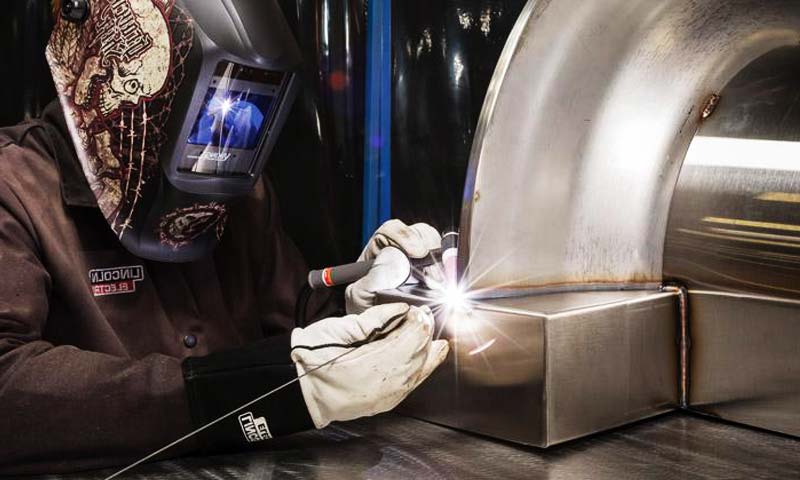
Welding Techniques
Welding 1.4469 demands precise control to maintain corrosion resistance and mechanical integrity. Recommended techniques include:
- TIG (GTAW) for thin sections and root passes, where weld quality is paramount.
- MIG (GMAW) for larger joints with higher deposition rates.
- SAW (Submerged Arc Welding) for thick sections in structural components.
To prevent carbide precipitation and sigma phase formation, heat input should be limited to below 1.5 kJ/mm, and interpass temperatures must be maintained under 150°C.
Preheating is generally unnecessary, but post-weld heat treatment (PWHT)—such as solution annealing—may be required for critical applications to restore duplex phase balance.
Filler materials like ER2209 or ER2553 are typically selected to ensure phase compatibility and avoid undermatching of corrosion resistance or mechanical strength.
Post-Processing: Surface Finishing and Passivation
Post-processing enhances not only the appearance but also the performance of 1.4469:
- Surface finishing techniques like pickling and grinding remove heat tint and oxides formed during welding or machining.
- Electropolishing achieves ultra-clean, passive surfaces—especially crucial for pharmaceutical and food-grade applications.
- Passivation using nitric or citric acid solutions enhances the chromium-rich oxide layer, boosting corrosion resistance.
However, in applications demanding ultra-clean surfaces, standard passivation may fall short in removing embedded iron particles (<5 μm), necessitating a final electropolishing step.
6. Industrial Applications of 1.4469 Stainless Steel
Chemical Processing and Petrochemicals
- Reactor linings
- Heat exchanger shells and tubes
- Agitators and mixers
- Process piping systems
Marine and Offshore Engineering
- Pump housings and impellers
- Seawater intake valves
- Ballast water systems
- Load-bearing structural components on ships and platforms
Oil and Gas Sector
- Wellhead flanges and connectors
- Manifolds
- Heat exchangers in refineries
- Pressure vessels in sour gas environments
General Industrial Machinery
- Gearbox components
- Hydraulic cylinders
- Wear plates and guides
- Pistons and seals under pressure

Medical and Food Processing Industries
- Surgical instruments and orthopedic implants
- High-purity pharmaceutical processing lines
- Food-grade tanks and mixing equipment
7. Advantages of 1.4469 Stainless Steel
1.4469 offers a multitude of advantages that justify its premium status:
- Superior Corrosion Resistance: Optimized alloying with high Cr, Ni, Mo, and precise N and Cu additions protects the material against pitting, crevice, and intergranular corrosion, even in aggressive environments.
- Robust Mechanical Properties: High tensile and yield strengths coupled with excellent elongation and impact toughness ensure durability under dynamic conditions.
- High-Temperature Stability: The alloy maintains oxidation resistance and mechanical integrity at elevated temperatures.
- Enhanced Weldability: Its stabilized composition minimizes carbide precipitation, which results in high-quality weld joints.
- Lifecycle Cost Efficiency: Although the initial material cost is higher, its longevity and reduced maintenance requirements lower the overall lifecycle cost.
- Versatile Fabrication: Exceptional formability supports various processing methods, accommodating complex, precision-engineered designs.
8. Challenges and Limitations
Despite its strengths, 1.4469 stainless steel faces some challenges:
- Corrosion Constraints: There is an increased risk of stress corrosion cracking (SCC) in chloride environments above 60°C and susceptibility under H₂S exposure in acidic conditions.
- Welding Sensitivities: Excessive heat input can promote carbide precipitation, reducing ductility by approximately 18%.
- Machining Difficulties: Its high work-hardening rate results in accelerated tool wear, complicating precision machining efforts.
- High-Temperature Limitations: Prolonged exposure (over 100 hours) within the 550–850°C range may trigger the formation of sigma-phase,
reducing impact toughness by up to 40% and limiting continuous service temperature to around 450°C. - Cost Factors: The expensive alloying elements, such as Ni, Mo, and Cu, can drive material costs roughly 35% higher than standard grades like 304, with price fluctuations influenced by global market conditions.
- Dissimilar Metal Joining Issues: When joined with carbon steels, galvanic corrosion risks increase, potentially tripling corrosion rates and reducing fatigue life by 30–45%.
- Surface Treatment Challenges: Conventional passivation methods sometimes fail to remove embedded iron particles (<5 μm),
requiring additional electropolishing for critical applications that demand ultra-high cleanliness.
9. Future Trends and Innovations of 1.4469 Stainless Steel
As industries evolve toward smarter, more sustainable, and highly resilient materials, the future of 1.4469 stainless steel is being shaped by several transformative trends.
Researchers and manufacturers are working in tandem to push the boundaries of performance, efficiency, and environmental responsibility, reinforcing 1.4469’s relevance in tomorrow’s engineering challenges.
Advanced Alloy Modifications
Emerging innovations in alloy development are centered on microalloying and precise control of nitrogen content.
By incorporating trace elements such as rare earth metals and vanadium, engineers aim to enhance grain refinement, corrosion resistance, and mechanical strength.
Recent studies suggest that yield strength can increase by up to 10%, while pitting resistance equivalent numbers (PREN) rise with strategic nitrogen augmentation.
Furthermore, the integration of controlled copper additions is being explored to improve resistance to sulfuric acid and other reducing agents, widening the scope of chemical processing applications.
Digital Manufacturing Integration
The digitization of metallurgical processes is revolutionizing how 1.4469 stainless steel is cast, formed, and heat-treated.
The adoption of digital twin simulations, real-time IoT sensor monitoring, and platforms like ProCAST allows engineers
to model phase transitions, optimize cooling curves, and minimize inclusions before physical production even begins.
These advancements are expected to:
- Increase casting yield rates by 20–30%,
- Reduce defect rates by up to 25%, and
- Enable adaptive process control for heat treatment and welding sequences.
Sustainable Production Techniques
With sustainability taking center stage in global metallurgy, efforts are being made to reduce the carbon footprint of stainless steel production. For 1.4469, manufacturers are implementing:
- Energy-efficient induction melting, which can cut energy consumption by up to 15%,
- Closed-loop recycling systems, enabling the reuse of alloy scrap without compromising chemical integrity, and
- Green passivation processes using citric acid-based formulations instead of nitric acid, reducing environmental hazards during surface finishing.
These initiatives not only align with ISO 14001 environmental management standards but also appeal to industries striving for carbon neutrality.
Enhanced Surface Engineering
To improve performance in wear-intensive and ultra-clean environments, researchers are developing next-generation surface treatments for 1.4469 stainless steel. Innovations include:
- Laser-induced nanostructuring, which reduces surface roughness and minimizes bacterial adhesion,
- Graphene-enhanced PVD (Physical Vapor Deposition) coatings, which lower friction coefficients by 60%, and
- Ion implantation technologies that increase surface hardness without compromising corrosion resistance.
These techniques significantly extend the service life of components in biomedical, marine, and food processing industries.
Hybrid and Additive Manufacturing Integration
The convergence of additive manufacturing (AM) with traditional metallurgy is unlocking new possibilities for 1.4469 stainless steel.
Processes like Selective Laser Melting (SLM), combined with Hot Isostatic Pressing (HIP) and solution annealing, are enabling the fabrication of intricate, high-integrity components with minimal porosity.
Recent case studies reveal:
- Residual stresses can be reduced from 450 MPa to under 80 MPa,
- Fatigue performance improves by over 30%, and
- Complex geometries such as lattice structures and conformal cooling channels are now manufacturable with precision.
Such capabilities are proving invaluable in high-performance sectors like aerospace tooling, medical implants, and energy equipment.
10. Comparative Analysis with Other Stainless Steel Grades
To fully appreciate the performance profile of 1.4469 stainless steel, it is essential to evaluate it alongside other commonly used stainless steel grades.
This comparative analysis highlights distinctions in corrosion resistance, mechanical strength, cost-efficiency, and application suitability.
| Property / Grade | 316L (1.4404) | 2205 (1.4462) | 1.4469 (S32760) | 2507 (S32750) |
|---|---|---|---|---|
| PREN (Pitting Resistance Equivalent Number) | ~25 | ~35–38 | >40 | >42 |
| Yield Strength (MPa) | ~240 | ~450 | ≥550 | ≥550 |
| Tensile Strength (MPa) | ~550 | ~620 | ≥750 | ≥800 |
| Elongation (%) | ≥40 | ≥25 | ≥25 | ≥25 |
| Maximum Service Temperature (°C) | 300 | 300 | 300 | 300 |
| Density (g/cm³) | 8.0 | 7.8 | 7.8 | 7.8 |
| Weldability | Excellent | Good | Moderate | Moderate |
| Stress Corrosion Cracking Resistance | Low | Moderate | High | High |
| Relative Cost | Low | Medium | High | Very High |
| Typical Applications | Food, architecture | Pressure vessels, tanks | Subsea, chemical reactors | Offshore platforms, seawater systems |
11. Conclusion
1.4469 stainless steel exemplifies the high-performance capabilities of modern metallurgy.
Combining outstanding corrosion resistance, mechanical durability, and fabrication flexibility has become a cornerstone in industries facing extreme service conditions.
While challenges such as SCC and cost persist, ongoing innovations in alloy design, digital processing, and sustainability continue to enhance its utility and affordability.
As global industries push the boundaries of performance and durability, materials like 1.4469 will remain at the forefront, engineered to endure and excel.
LangHe is the perfect choice for your manufacturing needs if you need high-quality stainless steel products.