编辑翻译
经过 Transposh - translation plugin for wordpress
失蜡铸造旁通阀制造商

黄铜分流阀精密铸造 & 加工 | 狼河

内容表 展示

分流阀是流体处理系统中的重要组件, 实现从一条路径到另一条路径的流量重定向.

这些阀门广泛应用于管道, 加热, 通风, 空调 (HVAC), 水处理, 和工业加工.

Among the various materials used for diverter valves, brass stands out as the preferred choice due to its excellent machinability, 耐腐蚀性, 抗菌特性, 和审美吸引力.

The manufacturing of high-quality brass diverter valves requires a combination of precision casting and advanced CNC machining.

失去蜡铸 (投资铸造) is the ideal method for producing the complex internal passages and intricate geometries of diverter valve bodies.

When combined with precision CNC machining, this process delivers valves with exceptional dimensional accuracy, 平滑的表面饰面, and reliable performance.

1. What Is a Brass Diverter Valve?

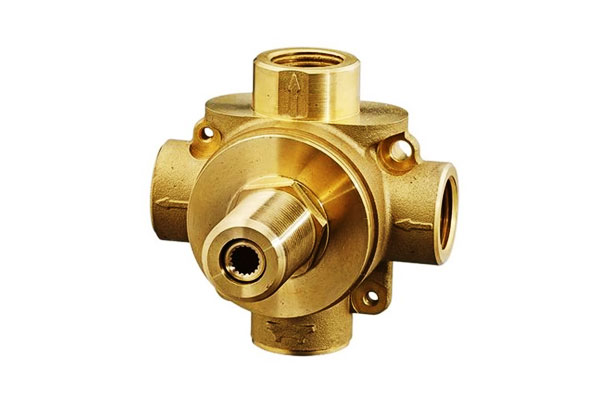
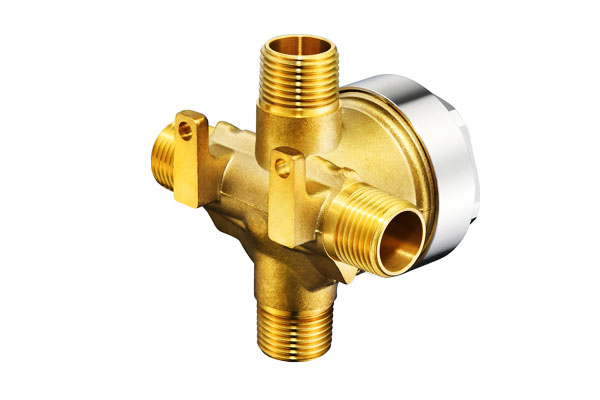
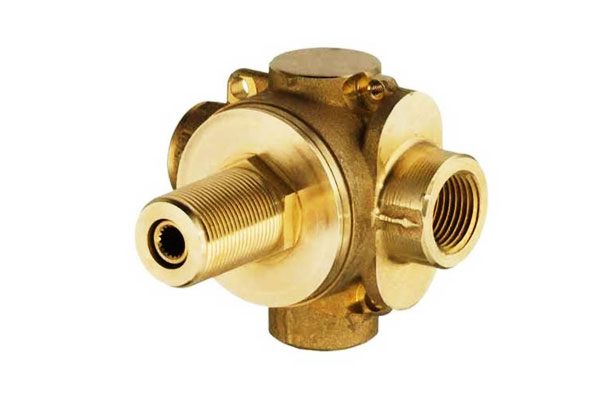
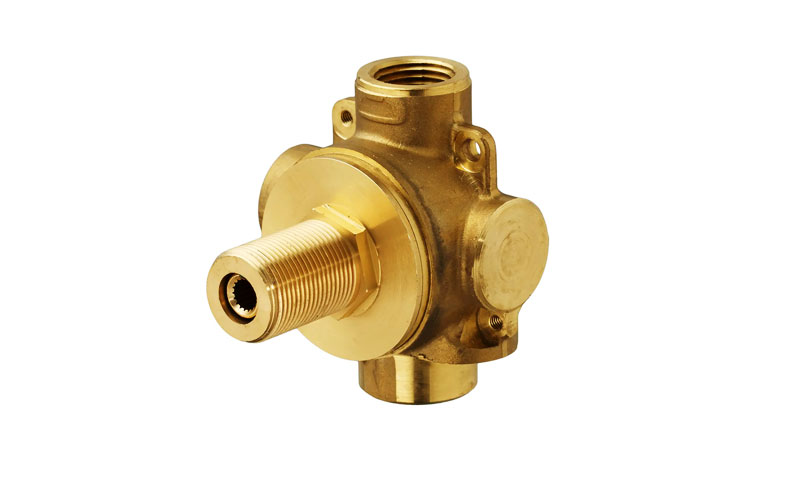
一个 brass diverter valve is a multi-port fluid-control device designed to redirect, 选择, or distribute fluid flow between different flow paths.

Unlike a conventional two-port shut-off valve, a diverter valve uses multiple ports and an internal movable element to determine which passages are connected at a given operating position.

The valve body is normally the pressure-containing component. It incorporates the inlet and outlet ports, internal flow passages, valve chamber, 密封接口, and connection features.

An internal element—commonly a ball, 插头, cartridge, or spindle-operated mechanism—changes the flow path when the valve is rotated or actuated.

A typical three-port diverter valve, 例如, may operate in two basic positions:

Position A: Inlet → Outlet A
Position B: Inlet → Outlet B

More sophisticated configurations can combine or isolate flow paths depending on the process requirements.

The performance of a brass diverter valve depends on more than its ability to switch flow.

The valve must maintain pressure integrity, controlled flow resistance, reliable shutoff, 维稳定性, and repeatable sealing throughout its intended service life.

Brass Diverter Valve

Types of Diverter Valves

类型 描述 典型的应用
3-Way Diverter Valve One inlet, two outlets (反之亦然). Shower systems, mixing valves, HVAC, 过程控制.
4-Way Diverter Valve Two inlets, two outlets. 供暖系统, heat pumps, reverse flow applications.
Rotary Diverter Valve A rotating element diverts flow between ports. Pneumatic conveying, powder handling, 工业处理.
Slide Diverter Valve A sliding plate redirects flow. Bulk material handling, dust collection.
Ball Diverter Valve A ball with multiple passages rotates to direct flow. 管道, 化学处理, gas distribution.

2. Common Brass Alloys for Diverter Valve Casting

选择正确的 黄铜 alloy is fundamental to the pressure integrity, 耐腐蚀性, 可加工性, 维稳定性, and service life of a diverter valve.

Brass is not a single material but a broad family of copper-based alloys with substantially different compositions and performance characteristics.

For a precision-cast diverter valve, alloy selection should consider more than mechanical strength.

The manufacturer must also evaluate casting behavior, internal pressure requirements, 流体化学, 抗脱锌性, machining requirements, 温度, 环境暴露, and regulatory restrictions on alloy constituents.

尤其, valves intended for potable water or other regulated fluid-contact applications may require low-lead or lead-free alloys specifically qualified for that service.

所以, the “best” brass alloy is application-dependent rather than universal.

Commonly Used Brass Alloys for Diverter Valve Casting

合金 (我们) 关键属性 Typical Valve Applications
C84400 Good castability and machinability; traditional leaded semi-red brass 铸造阀体, 管道配件, general fluid-control components
C85700 Leaded naval brass; good machinability and corrosion resistance Cast pressure-containing components, marine-oriented fittings
C87610 Copper-silicon alloy with good strength and corrosion resistance; low lead Water-service components and corrosion-resistant castings where specified
C87800 Silicon brass; 良好的铸造性, 力量, 耐腐蚀性, and low-lead characteristics Water-service valve bodies, 管道配件, 工业组件
C87850
Silicon brass with good machinability, 压力密封性, 和耐腐蚀性 阀体, 水龙头, water-meter cases, plumbing and marine components
C89833 Lead-free bismuth-containing alloy; good machinability and corrosion resistance Lead-free pressure-containing components, potable-water-oriented valve and plumbing applications where specified
C36000 Excellent free-machining characteristics Machined valve components, 茎, 配件, 适配器, 小精密零件

3. Brass Diverter Valve Lost Wax Casting Process

失蜡铸造工艺 for brass diverter valves is designed to convert a complex valve-body geometry into a near-net-shape metal casting with controlled dimensional consistency and sound structural integrity.

Lost Wax Casting Process

CAD Review and Tooling

The process begins with the valve drawing or 3D CAD model. Before tooling is produced, the geometry is reviewed for casting feasibility and production stability.

The manufacturer establishes the required shrinkage allowance, 加工余量, 墙壁过渡, 鱼片, 浇口位置, and casting orientation.

For a diverter valve, particular attention is given to the regions surrounding intersecting flow passages because sudden changes in section thickness can influence metal feeding and solidification.

The tooling is then manufactured to reproduce the required wax pattern geometry.

蜡模式产生

Molten wax is injected into the precision die to create the sacrificial pattern of the valve body.

Pattern quality determines the dimensional foundation of the casting. Injection temperature, 压力, 保持时间, 冷却, and die condition must be controlled to minimize flash, 失真, 填充不完全, and dimensional variation.

The completed wax pattern is inspected before it proceeds to assembly.

Wax Assembly and Gating

Individual wax patterns are connected to a central sprue system to form a casting tree.

在这个阶段, the gating system is established so that molten brass can fill the valve cavity in a controlled manner.

Gate position and runner dimensions influence filling time, 湍流, 热梯度, 和进食行为.

For complex diverter valves, gating is designed around the entire body geometry, rather than simply maximizing filling speed.

陶瓷外壳建筑

The wax tree is repeatedly dipped into ceramic slurry and coated with refractory stucco. Successive layers build a rigid ceramic shell around the pattern.

The shell must provide sufficient strength for dewaxing and metal pouring while reproducing the required surface detail.

The primary process controls are:

浆液粘度 + refractory particle size + layer thickness + 干燥条件 + 壳强度

Inconsistent shell preparation can lead to cracking, 尺寸变化, 表面质量差, or shell failure during pouring.

脱水和炮弹射击

The ceramic shell is heated to remove the wax pattern and create the negative cavity of the valve body.

脱水后, the shell is fired to remove residual organic material and develop the required refractory strength and thermal stability.

The resulting ceramic mold must be clean, 干燥, and structurally sound before molten brass is introduced.

Brass Melting and Alloy Control

The selected brass alloy is melted under controlled conditions.

The key objective is to ensure that the molten metal meets the specified chemical composition and cleanliness requirements 倒入之前.

This is particularly important for custom valves where material properties and regulatory requirements may depend on a specific alloy grade.

Process control typically includes:

  • Verified charge materials
  • Melt-temperature monitoring
  • 化学分析
  • Slag and oxide control
  • Heat identification and traceability

控制浇注

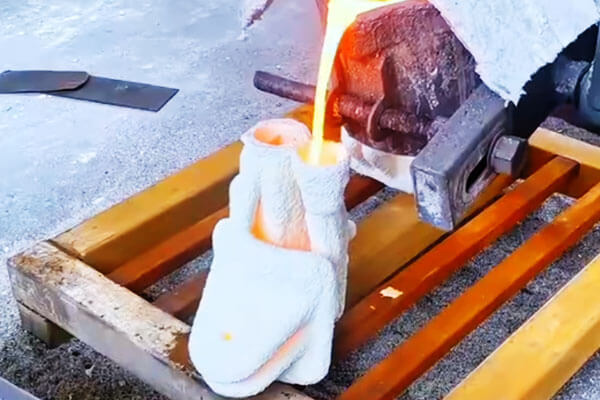
The preheated ceramic shell is filled with molten brass through the designed gating system.

Pouring temperature and filling rate must be matched to the alloy and valve geometry.

The metal must remain sufficiently fluid to fill thin sections and complex passages without excessive turbulence or premature solidification.

A well-controlled pouring operation seeks to achieve:

Complete filling + stable flow + minimum entrainment + controlled thermal conditions

Solidification and Feeding

填充后, the brass begins to solidify. Because the valve body may contain different wall thicknesses, 老板, and passage intersections, different areas can cool at different rates.

The casting design therefore has to support controlled solidification and adequate feeding of shrinking metal.

Poor solidification control can produce defects such as:

  • 收缩孔隙度
  • 缩孔
  • Gas-related discontinuities
  • 热裂

For complex valve bodies, casting simulation can be used to predict filling and solidification behavior and optimize the gating and feeding system before production.

昏死

Once the casting has cooled sufficiently, 陶瓷壳被机械去除.

振动, mechanical separation, or other suitable methods may be used depending on the component and production system.

Care must be taken during knockout because excessive mechanical force can damage thin sections, port features, or cast surfaces.

Gate and Riser Removal

The sprue, 跑步者, 大门, and risers are cut from the valve casting.

The cut locations are selected so that removal does not damage functional areas or leave excessive material that would complicate subsequent machining.

This stage converts the investment-cast tree into an individual valve-body casting.

Casting Finishing

The cleaned casting is subjected to grinding, 爆破, or other appropriate finishing operations to remove residual ceramic, 鳍, 闪光, and gate remnants.

The objective is to produce a clean and stable casting suitable for inspection and subsequent machining.

重要的是, finishing should not be used to conceal unacceptable casting discontinuities. Areas that will become pressure boundaries, 密封表面, or critical machining datums require particular attention.

4. CNC Machining of Brass Diverter Valve Castings

Lost wax casting establishes the main geometry of a brass diverter valve, but it normally does not provide the final accuracy required for critical interfaces.

数控加工 is therefore the bridge between a near-net-shape casting and a functional precision valve.

The machining process must not only achieve individual dimensions; it must maintain the geometric relationship between ports, 流道, 阀座, 密封表面, 茎, and actuator interfaces.

CNC Machining Brass Diverter Valve

A typical production sequence is:

Casting Inspection → Datum Establishment → Rough Machining → Bore/Port Machining → Thread Machining → Seat and Seal-Groove Machining → Actuator Interface Machining → Deburring → Dimensional Inspection

The exact sequence depends on valve architecture.

Machining the Valve Ports and Internal Bores

The inlet and outlet ports establish the valve’s connection with the external fluid system. 取决于阀门设计, these interfaces may use:

  • NPT or other tapered pipe threads
  • BSP or BSPP/BSPT threads
  • Metric or custom threads
  • Compression interfaces
  • Flanged connections
  • Brazing or specialized connection geometries

The port-machining operation must control both dimension and position.

A correctly machined thread can still create assembly problems if the port axis is incorrectly positioned relative to the valve body or adjacent ports.

For intersecting internal passages, machining may involve drilling, 无聊的, cross-drilling, or a combination of cast and machined features.

The transition between these passages should be examined carefully because excessive abruptness can increase pressure loss and turbulence.

In custom designs, casting can produce the majority of the flow architecture while CNC machining finishes the openings and functional interfaces.

Precision Machining of Valve Seats

The valve seat is among the most critical features of a diverter valve because it forms the interface that limits unwanted fluid leakage.

Seat performance depends on several characteristics working together:

同心 + Contact geometry + 表面饰面 + Flatness/Roundness + 物质兼容性

A valve seat that meets its nominal diameter but is not concentric with the valve element may produce uneven contact.

相似地, an excessively rough surface can interfere with sealing, while an incorrect surface geometry can increase operating torque.

The appropriate seat tolerance and surface finish should therefore be specified according to the particular valve design, sealing element, 压力等级, and leakage requirement.

Thread Machining

Threads are common on brass diverter valves because they provide compact and economical connections.

CNC machining may be used for both internal and external threads. Critical parameters include:

  • Major diameter
  • Minor diameter
  • Pitch
  • Thread profile
  • Effective diameter
  • Thread depth
  • 同心
  • 表面饰面

Thread gauges are often used for production verification, while dimensional inspection can confirm the underlying geometry.

Because brass is relatively machinable, it supports efficient thread production, but the cutting strategy still needs to be matched to the particular alloy.

Some lead-free brass alloys can behave differently from traditional free-machining grades and may require optimized cutting tools and parameters.

O-Ring and Seal-Groove Machining

Where elastomeric seals are used, the O-ring groove is a precision feature rather than a simple recess.

Its dimensions determine seal compression and therefore influence leakage performance. Incorrect groove width, 深度, corner geometry, or surface condition can cause:

  • Insufficient sealing
  • Excessive compression
  • Seal extrusion
  • Assembly difficulty
  • Premature seal wear

The machining process must consequently maintain the specified groove geometry while protecting the surrounding sealing surface.

5. Surface Finishing Options for Brass Diverter Valves

For custom valve components, surface finishing should be selected together with the alloy, 机加工工艺, 尺寸公差, and operating environment.

Not every finishing process is suitable for every surface.

尤其, 阀座, 线程, 密封接口, and wetted passages may require tightly controlled finishing conditions to avoid changing their functional dimensions.

机械抛光

Mechanical polishing uses progressively finer abrasive media to remove machining marks, minor surface irregularities, and casting-related surface imperfections from the brass surface.

Depending on the required appearance, the process can range from basic abrasive finishing to high-gloss polishing.

优点:

  • Produces a smooth and attractive brass surface
  • Improves visual appearance
  • Reduces visible machining and casting marks
  • Provides an effective substrate for subsequent plating
  • Can improve surface uniformity on external valve surfaces

镀镍

Nickel plating deposits a controlled nickel layer onto the prepared brass surface, typically through an electroplating process.

Proper pretreatment is essential to ensure good adhesion between the brass substrate and the coating.

优点:

  • 改善耐腐蚀性
  • Provides greater surface hardness than untreated brass
  • 提高耐磨性
  • Produces a uniform metallic appearance
  • Suitable for components exposed to moisture and handling
  • Can provide a base layer for decorative or functional finishing systems

镀铬

Chrome plating applies a chromium-based surface layer over a suitably prepared substrate, often over nickel plating.

The process produces a hard, bright surface with good resistance to wear and tarnishing.

优点:

  • Excellent decorative appearance
  • High surface hardness
  • 良好的耐磨性
  • Good resistance to tarnishing and atmospheric exposure
  • Suitable for exposed valve components and decorative plumbing hardware

镀镍

Electroless nickel plating deposits a nickel-phosphorus or related nickel alloy coating through an autocatalytic chemical reaction rather than relying on direct external electrical current.

This enables relatively uniform coating thickness across complex geometries.

优点:

  • More uniform coating thickness on complex surfaces
  • 良好的耐腐蚀性
  • 良好的耐磨性和耐磨性
  • Suitable for recessed and irregular geometries
  • Provides controlled surface protection with relatively predictable dimensional buildup
  • Useful for industrial valve components requiring both protection and dimensional consistency

Precision Machined Surface Finish

For functional surfaces such as valve seats, 孔, 线程, 和密封接口, the required finish is often produced directly through controlled CNC machining, fine turning, 无聊的, 磨削, or other precision operations rather than through a decorative coating.

优点:

  • Maintains precise dimensional control
  • Enables accurate sealing geometry
  • Supports controlled surface roughness
  • Avoids unnecessary coating buildup on critical interfaces
  • Provides predictable assembly and functional performance
  • Particularly suitable for valve seats, 孔, 线程, and seal-contact surfaces

6. Advantages of Lost Wax Casting for Brass Diverter Valves

Lost wax casting delivers unique advantages for diverter valve manufacturing that cannot be matched by alternative casting or forming methods.

Unmatched Dimensional Accuracy & 重复性

Investment casting achieves ±0.05–0.1 mm per 25 mm as-cast tolerance, with consistent repeatability across high production volumes.

This reduces machining stock, minimizes tolerance stack-up, and ensures interchangeable assembly.

Complex Internal Geometry & Flow Optimization

Lost wax can produce intricate internal port geometries, smooth flow transitions, and contoured passages that would be impossible with sand casting or uneconomical to machine.

Optimized internal flow paths reduce turbulence, 压降, and flow noise.

Superior As-Cast Surface Finish

The fine ceramic face coat produces Ra 1.6–3.2 μm as-cast surface finish, reducing machining time and improving sealing surface performance.

Smooth cast surfaces also reduce flow-induced erosion inside fluid passages.

Minimal Machining Stock & 物质效率

Near-net-shape casting requires only 0.8–1.5 mm of machining stock per side, compared to 3–6 mm for sand casting.

This reduces material waste by 40–60% and cuts machining time significantly.

合金灵活性 & Custom Formulation

Lost wax casting works with virtually any brass alloy, allowing custom alloy formulation to match specific corrosion, 力量, or regulatory requirements without major tooling changes.

Consistent Pressure Integrity & Leak Resistance

Single-piece cast bodies eliminate assembled joint leak paths. Controlled solidification minimizes internal porosity, ensuring pressure-tight performance that passes 1.5x working pressure leak testing.

7. Lost Wax Casting vs. Forged Brass Diverter Valves

Both casting and forging produce brass valve components, but they serve distinct design and performance scenarios.

Performance Dimension Lost Wax Cast Brass Valves Forged Brass Valves
维度的准确性 ±0.05 – ±0.1 mm/25 mm as-cast; tighter after machining ±0.02 – ±0.05 mm; very consistent
Internal Geometry Complexity Very high — complex ports, contoured passages, multi-port designs Limited — simple axial shapes only; deep internal features not feasible
压力 & 疲劳性抗性 Good for standard pressure; porosity-dependent 出色的; higher fatigue resistance and burst pressure
生产量适用性 500 - 50,000 PC/年 10,000 - 500,000+ PC/年
工具成本 & 交货时间 Moderate tooling cost; 4–6 week lead time 高工具成本; 6–10 week lead time
Total Unit Cost Medium-high for low volume; competitive at medium volume High at low volume; lowest at very high volume
Ideal Application Scenarios Complex multi-port bodies, contoured flow paths, 中等体积 Simple axial designs, 高压, high-cycle fatigue, very high volume

8. Applications of Brass Diverter Valves

Brass Diverter Valve

Plumbing and Water Distribution

Brass diverter valves are widely used in plumbing systems to redirect water between different outlets, 电路, or fixtures.

Their compact design, 耐腐蚀性, and good machinability make them suitable for both residential and commercial water-control equipment.

典型的应用包括:

  • Shower systems
  • Faucet assemblies
  • Water distribution equipment
  • Mixing and routing systems
  • Household plumbing equipment

HVAC and Heating Systems

Brass diverter valves are commonly used in HVAC and hydronic heating systems to control the direction of circulating water and other compatible fluids.

The valve can switch flow between heating circuits, bypass lines, or secondary loops.

典型的应用包括:

  • Radiator heating systems
  • Underfloor heating systems
  • HVAC circulation circuits
  • Heat pump systems
  • Boiler and heating equipment

灌溉系统

In irrigation equipment, brass diverter valves can be used to direct water between different branches or zones.

Their corrosion resistance and robust construction make them suitable for repeated flow switching in outdoor environments.

典型的应用包括:

  • Agricultural irrigation systems
  • Garden irrigation equipment
  • 洒水系统
  • Greenhouse irrigation
  • Water distribution manifolds

Water Treatment Equipment

Brass diverter valves can be integrated into compact water-treatment systems where different flow paths need to be selected or isolated.

Precision casting is particularly useful when the valve body requires customized internal passages.

典型的应用包括:

  • Water filtration systems
  • Water purification equipment
  • Softening systems
  • Pump and filtration assemblies
  • Water-treatment control units

Appliances and Residential Equipment

Compact brass diverter valves are also used in appliances where water or another compatible fluid must be redirected between different internal circuits.

典型的应用包括:

  • Coffee and beverage equipment
  • Washing appliances
  • 热水器
  • Cleaning equipment
  • Residential water-control devices

Industrial Fluid-Control Equipment

Industrial equipment may use brass diverter valves for routing water, 油, 空气, or other compatible fluids where the pressure, 温度, and chemical environment are within the material and valve design limits.

典型的应用包括:

  • Pump systems
  • Compressors and auxiliary equipment
  • Fluid-processing machinery
  • 工业冷却系统
  • Customized equipment assemblies

Commercial and Specialized Systems

Custom brass diverter valves are also suitable for equipment manufacturers that require a compact multi-port flow-control component designed around a specific assembly or fluid circuit.

典型的应用包括:

  • Commercial plumbing equipment
  • Water circulation systems
  • Equipment manifolds
  • OEM fluid-control assemblies
  • Custom machinery and process equipment

9. Why Choose LangHe Industry for Brass Diverter Valve Lost Wax Casting & 加工?

For custom brass diverter valves, selecting a manufacturer is not simply a matter of finding a supplier that can cast brass.

The final component depends on the coordination of casting engineering, 合金选择, 数控加工, 表面饰面, 维控制, and functional testing.

Langhe行业 approaches custom brass diverter valve production as an integrated manufacturing project, allowing the casting and machining stages to be developed together around the customer’s functional requirements.

能力 细节
材料 C84400, C85700, C87610, C87800, C87850, C89833, C36000.
铸造工艺 失去蜡铸 (投资铸造).
公差 ±0.1-0.3毫米 (CT5-CT7 per ISO 8062).
数控加工 CNC转动, 铣削, 钻孔, 窃听, 无聊的, 旋转, 线程.
质量 ISO 9001:2015 经认证; 100% 检查; CMM.
交货时间 6–12 weeks for tooling; 2–4 weeks for repeat orders.

10. 结论

A brass diverter valve is a compact component, but its manufacturing requirements are highly interconnected.

The valve body must contain pressure, provide accurate flow paths, accommodate the internal valve element, maintain sealing interfaces, and connect reliably with external piping or equipment.

For complex custom designs, lost wax casting provides an efficient way to establish the main valve-body geometry, including customized ports, 老板, transitions, and suitable internal architecture.

CNC machining then brings threads, 孔, 阀座, seal grooves, and actuator interfaces to the required precision.

Material selection is equally important. Different brass alloys offer different combinations of castability, 可加工性, 机械强度, 耐腐蚀性, and regulatory suitability.

The correct choice must therefore be based on the actual fluid and operating environment.

LangHe Industry combines brass precision casting and CNC machining to support customized diverter valve production from initial design review through finished-component inspection, helping OEM customers convert complex valve concepts into manufacturable and repeatable products.


常问问题

What is a brass diverter valve?

A brass diverter valve is a multi-port fluid-control device used to redirect or selectively distribute fluid between different flow paths.

Its internal valve element determines which ports are connected in each operating position.

Why is brass commonly used for diverter valves?

Brass provides a useful combination of corrosion resistance, 可加工性, 机械强度, 可铸性, 和成本效率.

These properties make it suitable for many water, HVAC, 管道, 器具, and industrial fluid-control applications.

Why use lost wax casting for a brass diverter valve?

Lost wax casting is particularly useful when the valve body contains complex geometry, multiple ports, 综合老板, or customized flow passages.

It produces a near-net-shape body that can subsequently be CNC machined.

Can brass diverter valves be used for potable water?

他们可以是, provided the complete valve construction meets the applicable requirements for potable-water service.

The brass alloy, lead content, wetted components, 制造过程, and required product compliance all need to be considered.

发表评论

您的邮箱地址不会被公开。 必填项已用 * 标注

滚动至顶部

获取即时报价

请填写您的信息,我们会及时与您联系.