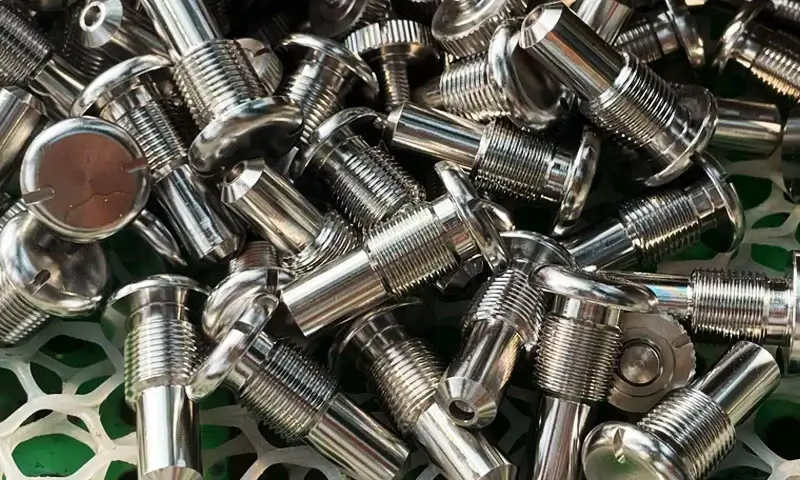
在所有不锈钢系列中, 奥氏体不锈钢 is the most extensively used and commercially significant category, accounting for more than half of global stainless steel production.
It is recognized for its exceptional corrosion resistance, 出色的可焊性, 出色的延展性, superior toughness, and remarkable performance in both high-temperature and cryogenic environments.
The unique properties of austenitic stainless steel originate from its special metallurgical structure.
Unlike ferritic or martensitic stainless steels, austenitic stainless steel maintains a 以面部为中心的立方体 (FCC) 晶体结构 在室温下.
This structure provides excellent plastic deformation capability and prevents brittle failure, making it suitable for applications requiring complex forming, 焊接, and reliable operation under severe conditions.
Common grades such as 304, 316, 321, 和 347 不锈钢 have become industry standards, while advanced grades including 904l, 254 我们, and other super austenitic stainless steels are engineered for highly corrosive environments.
1. What Is Austenitic Stainless Steel?
奥氏体 不锈钢 is the largest and most widely used family of stainless steels, characterized by a stable 以面部为中心的立方体 (FCC) 晶体结构, known metallurgically as 奥氏体 (γ-phase).
This unique microstructure is maintained at room temperature through the addition of austenite-stabilizing alloying elements, primarily 镍 (在), along with elements such as 锰 (Mn), 氮 (n), 和碳 (c).
Unlike pure iron, where austenite exists only at elevated temperatures, austenitic stainless steels are engineered through alloying to retain the austenitic phase over a wide temperature range, including ambient and cryogenic conditions.
This stable austenitic structure is the fundamental reason these materials exhibit their outstanding combination of corrosion resistance, 延性, 韧性, 可焊性, and fabrication capability.
期限 “austenitic” does not refer to a specific chemical composition but rather to the dominant metallurgical phase and crystal structure of the alloy.
In pure iron, the transformation from ferrite (α相, body-centered cubic structure) to austenite (γ-phase, FCC结构) occurs at approximately 912°C.
然而, the addition of nickel and other austenite-forming elements expands the stability range of the FCC phase, allowing austenite to remain stable at room temperature and even under extremely low-temperature service conditions.

Key defining features of austenitic stainless steel:
- Face‑centred cubic (FCC) 晶体结构—provides excellent ductility, 韧性, 和表现性.
- High chromium content (16‑26%)—provides corrosion resistance through a self‑healing passive oxide layer.
- High nickel content (6‑22%)—stabilises the austenitic structure, 改善耐腐蚀性, and enhances low‑temperature toughness.
- Non‑magnetic (退火状态)—unlike ferritic and martensitic stainless steels, austenitic grades are essentially non‑magnetic.
- 不能通过热处理硬化—strength can only be increased by cold working (工作硬化).
- 出色的可焊性—most grades are readily weldable, with low‑carbon grades (L grades) specifically designed to resist sensitisation.
2. Chemical Composition of Austenitic Stainless Steel
The performance of austenitic stainless steels is determined by their precise chemical composition.
The following table summarises the typical composition ranges for the most common elements and their functions.
| 元素 | 典型范围 (wt%) | 功能 |
| 铬 (Cr) | 16‑26 | Forms the passive chromium oxide (cr₂o₃) film that provides corrosion resistance. Increased Cr improves resistance to oxidising acids and high‑temperature oxidation. |
| 镍 (在) | 6‑22 | Stabilises the austenitic structure 在室温下; 改善耐腐蚀性 (especially in reducing acids); enhances low‑temperature toughness; reduces work‑hardening rate. |
| 钼 (莫) | 0‑7 | 改善对蚀刻和缝隙腐蚀的耐药性, especially in chloride‑containing environments; increases high‑temperature strength. |
| 锰 (Mn) | ≤2.0 | Deoxidiser; stabilises austenite in some grades (例如。, 200 系列); 提高热加工性. |
硅 (和) |
≤1.0 | Deoxidiser; 提高氧化抗性. |
| 碳 (c) | ≤0.08 (标准) <0.03 (L grades) | Strengthens the alloy but can reduce corrosion resistance by forming chromium carbides (sensitisation). 低碳等级 (304l, 316l) minimise sensitisation. |
| 氮 (n) | 0‑0.25 | 增强奥斯丁岩; 提高抗性能力; stabilises the austenitic structure. |
| 铜 (铜) | 0‑3 | 提高对还原酸的抵抗力 (特别是硫酸); enhances formability. |
| 钛 (的) / 铌 (NB) | ≤1.0 | Stabilisers—prevent sensitisation by forming carbides preferentially with carbon, leaving chromium in solution. |
Key Compositional Relationships
- Chromium equivalent vs. Nickel equivalent: The balance between ferrite‑stabilising elements (Cr, 莫, 和) and austenite‑stabilising elements (在, Mn, n, 铜) determines whether the microstructure is fully austenitic or contains some ferrite.
- 木头 (固定性等效数): An empirical formula used to compare the pitting resistance of stainless steels:
取=%cr + 3.3 × %Mo + 16 × %N
Higher PREN values indicate better resistance to pitting and crevice corrosion in chloride environments.
| 年级 | 木头 (大约) | 耐腐蚀性 |
| 304 | 19 | 良好 |
| 316 | 26 | 更好的 |
| 904l | 34‑38 | 出色的 |
| Superaustenitic (例如。, 6‑Mo alloys) | >40 | 例外 |
3. Major Types and Grades of Austenitic Stainless Steel
Austenitic stainless steels represent the largest and most widely used category of stainless steel, containing numerous grades developed to meet different requirements for corrosion resistance, 机械强度, 温度能力, 可焊性, and fabrication performance.
Standard Austenitic Stainless Steel Grades (300 系列)
这 300 系列 is the most recognized family of austenitic stainless steels.
These grades typically contain chromium and nickel as their primary alloying elements, providing an excellent balance of corrosion resistance, 机械性能, 可焊性, 和成本效率.
Common 300-Series Austenitic Stainless Steel Grades
| 年级 | 美国名称 | Approximate Composition | 关键特征 | 典型的应用 |
| 304 | S30400 | 18% Cr, 8% 在 | The most widely used austenitic stainless steel; 优异的耐腐蚀性, 形成性, 可焊性, and cost-performance balance | 食品加工设备, 厨房设备, 建筑组件, 汽车零部件, general industrial applications |
| 304l | S30403 | 18% Cr, 8% 在, low C ≤0.03% | Low-carbon version of 304; minimizes chromium carbide precipitation and improves corrosion resistance after welding | 焊接结构, 食品设备, 化学加工设备, 压力容器 |
| 316 | S31600 | 16–18%Cr, 10-14%有, 2–3%mo | Addition of molybdenum significantly improves resistance to chloride-induced pitting and crevice corrosion | 海洋设备, 化学处理系统, 药品设备, 医疗器械 |
316l |
S31603 | 16–18%Cr, 10-14%有, 2–3%mo, 低c | Low-carbon version of 316; superior weldability and resistance to intergranular corrosion | Pharmaceutical tanks, marine structures, welded piping systems, 离岸设备 |
| 321 | S32100 | 17–19% Cr, 9–12% Ni, 稳定 | Titanium stabilization prevents chromium carbide precipitation; maintains corrosion resistance after high-temperature exposure | 热交换器, aircraft exhaust systems, 炉子组件, high-temperature piping |
| 347 | S34700 | 17–19% Cr, 9–13% Ni, Nb stabilized | Niobium stabilization improves resistance to sensitization and enhances high-temperature creep strength | 航空航天组件, power generation equipment, high-temperature chemical processing systems |
309 |
S30900 | 22–24% Cr, 12–15% Ni | Higher chromium and nickel content provides improved oxidation resistance at elevated temperatures | 炉零件, combustion equipment, heat treatment fixtures, high-temperature vessels |
| 310 | S31000 | 24–26% Cr, 19–22% Ni | Excellent oxidation resistance and strength at very high temperatures | Furnace linings, radiant tubes, 热交换器, thermal processing equipment |
| 904l | N08904 | 20% Cr, 25% 在, 4–5% Mo, Cu addition | Superaustenitic grade with outstanding resistance to sulfuric acid and highly corrosive chemicals | 化学反应堆, sulfuric acid processing equipment, pharmaceutical systems |
High-Performance and Superaustenitic Stainless Steel Grades
Standard austenitic stainless steels may not provide sufficient performance in extremely aggressive environments such as concentrated acids, 海水, and high-chloride conditions.
For these applications, high-performance or superaustenitic stainless steels have been developed.
Representative Superaustenitic Grades
| 年级 | 美国名称 | Approximate Composition | 关键特征 | 典型的应用 |
| 254 我们 | S31254 | 20% Cr, 18% 在, 6% 莫, 0.2% n | Extremely high chloride resistance; PREN value above 40; 极好的凹痕和缝隙腐蚀性 | 海水系统, 离岸平台, 淡化植物, 化学加工设备 |
| Al-6xn | N08367 | 21% Cr, 24% 在, 6.3% 莫, 0.2% n | Outstanding resistance to chloride corrosion and acidic environments; 高机械强度 | 海洋工程, pulp and paper industry, 化学处理, 污染控制设备 |
| incoloy 825 | N08825 | 21% Cr, 42% 在, 3% 莫, 2% 铜 | Excellent resistance to reducing acids, 应力腐蚀破裂, 和高温环境 | Oil and gas equipment, 化学处理, 核应用 |
Cast Austenitic Stainless Steel Grades
Unlike wrought stainless steels, cast stainless steels are specifically designed for manufacturing through casting processes such as:
- 熔模铸造
- 沙子铸造
- 外壳成型
Common Cast Austenitic Stainless Steel Grades
| ASTM Cast Grade | 美国名称 | 等效 | 关键特征 | 典型的应用 |
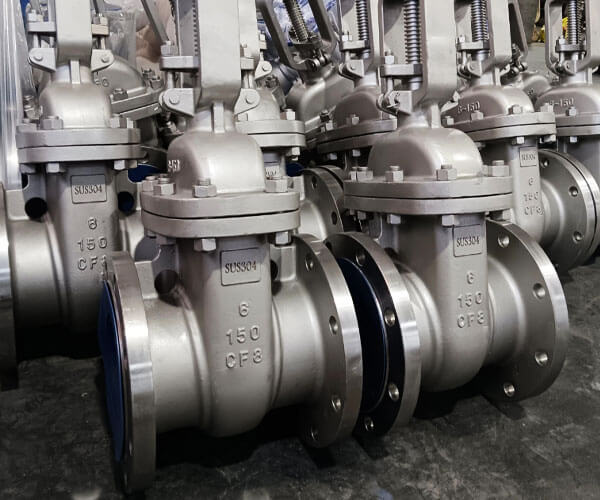
| CF-8 | J92600 | 304 | General-purpose cast austenitic stainless steel; excellent corrosion resistance and castability | 阀体, 泵外壳, 管配件, 工业组件 |
| CF-3 | J92500 | 304l | Low-carbon cast grade; excellent weldability and resistance to sensitization | Welded valve components, 化学设备, 压力容器 |
| CF-8M | J92900 | 316 | Molybdenum-containing cast alloy with improved chloride corrosion resistance | 海洋阀, chemical pumps, 药品设备 |
| CF-3M | J92800 | 316l | Low-carbon version of CF-8M; excellent weldability and corrosion resistance | Offshore equipment, 淡化系统, chemical processing castings |
| CN-7M | J95150 | 合金 20 | High resistance to sulfuric acid and aggressive chemical environments | Acid processing equipment, petrochemical components |
4. Key Properties of Austenitic Stainless Steel
Austenitic stainless steels are widely recognized for their excellent balance of corrosion resistance, 机械性能, fabrication capability, and service reliability.
These properties are primarily determined by their stable 以面部为中心的立方体 (FCC) 晶体结构, 高铬含量, and the presence of austenite-stabilizing elements such as nickel and nitrogen.

耐腐蚀性
Exceptional corrosion resistance is the most defining characteristic of austenitic stainless steel.
The protection comes from the formation of a thin, 稳定的, and self-healing 氧化铬 (cr₂o₃) 被动电影 on the material surface.
When chromium reacts with oxygen in the surrounding environment, it forms a protective oxide layer that prevents further oxidation and shields the underlying metal from corrosive attack.
Even when the surface is mechanically damaged, this passive film can rapidly regenerate in oxygen-containing environments.
The corrosion performance of austenitic stainless steel depends on alloy composition. Chromium provides the basic corrosion resistance, while nickel improves resistance to chemical environments and stabilizes the austenitic structure.
Molybdenum-containing grades, 例如 316 和316L, offer significantly improved resistance to chloride-induced pitting and crevice corrosion.
For more aggressive service conditions, advanced grades such as 904L, 254 我们, and AL-6XN are developed with higher levels of nickel, 钼, and nitrogen to withstand severe environments, 包括海水, strong acids, 和化学处理应用.
Mechanical Properties and Work Hardening Behavior
Austenitic stainless steels provide an excellent balance between strength and ductility.
在退火状态下, their strength is moderate compared with martensitic or duplex stainless steels, but their superior plasticity allows them to undergo significant deformation without cracking.
Typical austenitic stainless steels exhibit:
- 抗拉强度: approximately 500–750 MPa
- 产生强度: approximately 170–350 MPa
- 伸长: commonly above 40%
One of the most important mechanical characteristics of austenitic stainless steel is its strong work hardening capability.
During cold deformation, such as rolling, 绘画, 或形成, the density of dislocations within the FCC structure increases, resulting in higher strength and hardness.
This behavior provides several engineering advantages. Cold working can significantly improve the mechanical strength of components without additional heat treatment, making it possible to manufacture high-strength stainless steel wire, 弹簧, 条, and precision parts.
然而, strong work hardening also creates challenges during manufacturing.
The material requires higher forming forces, accelerates tool wear during machining, and may require intermediate annealing during severe forming operations to restore ductility.
Low-Temperature Toughness
Austenitic stainless steels possess outstanding toughness at extremely low temperatures due to their stable FCC crystal structure.
Unlike ferritic and martensitic stainless steels, they do not experience a sharp ductile-to-brittle transition temperature, allowing them to maintain excellent impact resistance even under cryogenic conditions.
Common grades such as 304L and 316L retain excellent toughness at temperatures approaching −196°C, making them ideal materials for applications involving liquefied gases and extreme cold environments.
This unique combination of low-temperature toughness and corrosion resistance makes austenitic stainless steels widely used in:
- LNG storage and transportation systems
- Cryogenic piping
- Liquid oxygen and nitrogen equipment
- Aerospace fuel systems
- Cold-region infrastructure
Few engineering materials provide comparable cryogenic reliability while also maintaining good weldability and corrosion resistance.
可焊性
Austenitic stainless steels are considered among the most weldable stainless steel materials because of their stable microstructure, 出色的延展性, and relatively low risk of welding-related cracking.
They can be fabricated using common welding methods, including TIG, 我, 激光焊接, 和电阻焊.
Most standard grades can be welded without preheating, and welded joints generally retain good mechanical properties and corrosion resistance.
A major consideration during welding is 致敏, which occurs when chromium carbide precipitates form at grain boundaries during exposure to temperatures around 450–850°C.
This process reduces chromium availability near the grain boundaries and may lead to intergranular corrosion.
To minimize this risk, 低碳等级,例如 304L and 316L 被广泛使用.
Their reduced carbon content limits carbide formation and ensures better corrosion resistance after welding, making them particularly suitable for pressure vessels, 管道系统, 药品设备, 和化学处理组件.
Formability and Fabrication Performance
The excellent formability of austenitic stainless steel is a direct result of its FCC crystal structure and high ductility.
Compared with many other engineering alloys, austenitic grades can undergo extensive plastic deformation while maintaining structural integrity.
They are suitable for manufacturing processes such as:
- 深图
- 冲压
- 弯曲
- 滚动形成
- Hydroforming
等级,例如 304 和 316 are widely used for complex-shaped components, including kitchen equipment, 医疗器械, 汽车零部件, 和工业住房.
Their high elongation allows manufacturers to produce thin-walled and intricate components with fewer risks of cracking.
然而, because these materials harden rapidly during deformation, complex forming operations may require optimized tooling, multiple forming stages, or intermediate annealing.
加工特征
Although austenitic stainless steels are highly suitable for forming and welding, they are generally more difficult to machine than carbon steels.
The main machining challenges are related to their toughness, 延性, and work hardening behavior.
During cutting, the surface layer can quickly become harder, increasing cutting forces and accelerating tool wear.
此外, their relatively low thermal conductivity causes more heat to remain concentrated in the cutting zone, which can reduce tool life.
To achieve efficient machining performance, manufacturers typically use:
- Proper cutting parameters
- Sharp carbide or coated tools
- Effective cooling systems
- Rigid machine setups
Free-machining grades such as 303 不锈钢 are sometimes selected when improved machinability is required, although they generally provide slightly lower corrosion resistance than standard 304 或者 316 等级.
Non-Magnetic Behavior (退火状况)
Austenitic stainless steels are generally non-magnetic in the annealed condition because their FCC austenitic structure does not exhibit ferromagnetic behavior.
This characteristic distinguishes them from ferritic and martensitic stainless steels, which are naturally magnetic due to their different crystal structures.
Common grades such as 304, 316, and 316L have very low magnetic permeability after solution annealing, making them suitable for applications where magnetic interference must be minimized, 包括:
- 医疗设备
- Laboratory instruments
- Precision electronic devices
- MRI-related environments
然而, cold working can partially transform austenite into deformation-induced martensite, causing some increase in magnetic response. The degree of magnetism depends on alloy composition, 镍含量, 氮含量, and the amount of mechanical deformation.
5. Limitations of Austenitic Stainless Steel
Although austenitic stainless steels are widely used because of their excellent corrosion resistance, 韧性, 可焊性, 和表现性, they also have several limitations that must be considered during material selection and component design.
Lower Yield Strength in the Annealed Condition
One of the primary limitations of conventional austenitic stainless steels is their relatively low yield strength in the annealed condition.
Common grades such as 304 和 316 不锈钢 typically have yield strengths lower than many ferritic, 马氏体, and duplex stainless steels.
This means they may require thicker sections or additional strengthening methods when used in load-bearing applications.
Unlike martensitic stainless steels, austenitic grades cannot be strengthened through conventional heat treatment. Their strength is mainly increased through:
- 冷工作
- Nitrogen alloying
- 实心溶液加强
Cold deformation can significantly improve strength, but it may reduce ductility and increase forming difficulty.
For applications requiring high strength-to-weight ratios, such as offshore structures or heavy mechanical components, duplex stainless steels or precipitation-hardening stainless steels may provide better performance.
Sensitization Risk During Thermal Exposure
Austenitic stainless steels with higher carbon content may experience 致敏 when exposed to temperatures typically between 450°C和850°C, especially during welding or long-term high-temperature service.
在此过程中:
- Carbon reacts with chromium to form chromium carbide precipitates at grain boundaries.
- Chromium-depleted areas develop near the grain boundaries.
- Local corrosion resistance decreases, potentially causing intergranular corrosion.
To minimize this risk, engineers commonly select:
- 低碳等级, such as 304L and 316L
- Stabilized grades, 例如 321 和 347
These grades are designed to maintain corrosion resistance after welding or thermal exposure.
Stress Corrosion Cracking in Chloride Environments
Although austenitic stainless steels provide excellent general corrosion resistance, they can be vulnerable to 应力腐蚀破裂 (SCC) 在某些条件下.
SCC typically occurs when three factors exist simultaneously:
- 拉伸应力
- Chloride-containing environment
- Elevated temperature
Common risk environments include:
- 海水系统
- Offshore equipment
- Chloride-containing chemical processes
- High-temperature industrial systems
Higher-alloy austenitic grades with increased nickel, 钼, 和氮含量, 例如 904l, 254 我们, and AL-6XN, provide improved resistance to chloride-induced corrosion.
然而, for extremely severe chloride environments, duplex or super duplex stainless steels may still be preferred.
Difficult Machining Performance
Austenitic stainless steels are generally more difficult to machine than carbon steels because of their unique mechanical behavior.
The main challenge is their strong 制成的趋势. 在加工期间, the deformed surface layer becomes harder, increasing cutting forces and accelerating tool wear.
Additional machining difficulties include:
- 低导热率, causing heat concentration in the cutting zone
- 高延展性, resulting in long and difficult-to-control chips
- Increased risk of poor surface finish
Efficient machining requires:
- Proper cutting parameters
- Sharp and wear-resistant tools
- Effective cooling and lubrication
- Rigid machine setups
Free-machining grades such as 303 不锈钢 can improve machining efficiency, although they generally sacrifice some corrosion resistance compared with standard 304.
更高的材料成本
Austenitic stainless steels are generally more expensive than ferritic or martensitic stainless steels because of their higher alloy content, especially nickel.
Nickel is essential for stabilizing the austenitic structure and improving toughness, but it significantly increases material cost.
Additional alloying elements such as molybdenum in 316 and super austenitic grades further increase the price.
然而, the higher initial cost is often balanced by:
- Longer service life
- Lower maintenance requirements
- Better corrosion resistance
- Reduced replacement frequency
For applications where corrosion failure would result in high downtime or safety risks, austenitic stainless steel often provides better overall economic value.
形成挑战
Austenitic stainless steels have excellent formability, but their strong work-hardening behavior can create challenges during complex forming operations.
与碳钢相比, they require:
- Higher forming forces
- More powerful equipment
- More careful process control
During bending and stamping, 春回 can occur because of their high elastic recovery. This may affect dimensional accuracy and require compensation during tool design.
For deep drawing and complex shaping processes, manufacturers may need to consider:
- Multi-stage forming operations
- 中级退火
- Optimized tooling geometry
尽管有这些挑战, austenitic stainless steels remain among the most formable stainless steel materials available.
6. Applications of Austenitic Stainless Steel
Due to its excellent combination of corrosion resistance, 韧性, 可焊性, and fabrication capability, austenitic stainless steel is used in almost every major industrial sector.
| 行业 | 应用领域 | 典型的成绩 | 关键要求 |
| 食物 & 饮料 | 坦克, 船只, 管道, 输送机, 刀具, 厨房设备. | 304, 316l | FDA‑compliant; 卫生; corrosion‑resistant; 易于清洁. |
| 医疗的 & 药物 | 手术器械, 植入物, WFI systems, 洁净室设备. | 316l, 304l | 生物相容性; sterilisable; non‑porous; corrosion‑resistant. |
| 化学处理 | 反应堆, 热交换器, 管道, 阀, 泵. | 316l, 904l, 合金 20 | Corrosion resistance to acids, 化学物质, 和高温. |
| 海军陆战队 & 离岸 | 海水管道, 泵, 热交换器, 离岸平台. | 316l, 254 我们, 双工 | Chloride pitting resistance; 耐海水腐蚀. |
| 建筑 & 建造 | 覆层, 屋顶, 扶手, 窗帘墙, structural sections. | 304, 316 | 美学; 耐腐蚀性; 耐用性; 长期使用寿命. |
发电 |
热交换器, 冷凝器管, 锅炉组件, 涡轮零件. | 304l, 316l, 310, 347 | High‑temperature strength; 氧化抗性; 蠕变阻力. |
汽车 |
排气系统, turbocharger components, 传感器, 修剪. | 304, 321, 310 | High‑temperature oxidation resistance; 耐腐蚀性; 形成性. |
| 航天 | 发动机组件, 排气系统, 结构部件, 紧固件. | 304, 321, 347 | High‑temperature strength; 耐腐蚀性; 韧性. |
| 低温 | LNG storage tanks, 低温管道, liquefied gas transport. | 304, 316 | Low‑temperature toughness (no DBTT). |
| 电子产品 | 住房, 连接器, 屏蔽, instrument components. | 304, 316l | Non‑magnetic; corrosion‑resistant; 形成性. |
| 油 & 气体 | 管道, 阀, 配件, 海底设备, 井口组件. | 316l, 904l, 254 我们 | 耐氯化物 SCC 性; 高力量; sour gas resistance. |
7. Austenitic Stainless Steel vs Other Stainless Steel Types
Stainless steels are classified into several major families according to their 微观结构, 合金成分, 机械性能, and heat treatment response.
Although all stainless steels rely on chromium to achieve corrosion resistance, differences in crystal structure and alloying elements result in significant variations in strength, 韧性, 腐蚀性能, 可焊性, 和应用适用性.
| 标准 | 奥氏体不锈钢 | 铁素体不锈钢 | 马氏体不锈钢 | 双工不锈钢 | 降水硬化 (ph) 不锈钢 |
| 晶体结构 | FCC (奥氏体) | BCC (铁矿) | BCT (马氏体) | 混合FCC + BCC | Martensitic or austenitic structure depending on grade |
| Typical Chromium Content | 16–26% | 10.5–30% | 11–18% | 21–26% | 14–17% |
| Typical Nickel Content | 6–22% | <1% | <2% | 4–7% | 3–8% |
| 钼含量 | 0–7% | 0–2% | 0–1% | 0–4% | 0–4% |
| Maximum Hardness | ≤217 HB | ≤250 HB | 到 600 HB (淬灭) | ≤300 HB | 到 500 HB |
| 屈服强度 (退火) | 170–280 MPa | 200–300 MPA | 250–450 MPA | 450–550 MPA | 550–1,100 MPa |
| 抗拉强度 | 485–650 MPA | 400–500 MPA | 700–1,000 MPA | 650–800 MPA | 1,000–1,300 MPa |
| 伸长 | 35–60% | 20–30% | 10–20% | 20–30% | 8–15% |
| 一般腐蚀性 | 出色的 | 良好 | 一般 | 出色的 | 好到好 |
| Chloride Stress Corrosion Cracking Resistance | 一般 | 良好 | 贫穷的 | 出色的 | 一般 |
| Low-Temperature Toughness | 出色的 | 贫穷的 (ductile-to-brittle transition) | 贫穷的 (ductile-to-brittle transition) | 中度到良好 | 一般 |
高温强度 |
出色的 (approximately 800–1100°C depending on grade) | 良好 (up to approximately 800°C) | 一般 (typically below 400°C) | Limited compared with austenitic grades | 一般 |
| 可焊性 | 出色的 | 良好 | 贫穷至中度 | 良好 | 良好 |
| 磁性行为 | 在退火状态下非磁性 | 磁的 | 磁的 | 弱磁性 | Generally magnetic |
| Heat Treatment Hardening | 不 (strengthened mainly by cold working) | 有限的 | 是的 | 不 | 是的 |
| 相对成本 | Higher due to nickel content | 降低 | 一般 | 更高 | 更高 |
| 典型的应用 | 化学设备, 食品加工, 海洋系统, 医疗器械, 建筑学 | 汽车排气系统, 电器, 建筑面板 | 刀具, 阀, 轴承, 耐磨部件 | 离岸平台, 海水系统, 化学处理 | 航空航天组件, 高强度紧固件, precision mechanical parts |
8. 结论
Austenitic stainless steels occupy a unique and irreplaceable position in the materials engineering landscape.
Their fully austenitic FCC crystal structure delivers a combination of excellent corrosion resistance, exceptional formability, outstanding cryogenic toughness and good high-temperature performance that no other stainless steel family can fully match.
From the ubiquitous 18/8 年级 304 to high-performance super-austenitic alloys, this class of materials provides calibrated solutions for every corrosive service severity level.
Understanding austenitic stainless steels means recognizing both their extraordinary versatility and their defined boundaries.
They excel in general corrosion, 低温, high-temperature and forming-intensive applications, but they are not the optimal choice for high-strength structural duty, severe chloride SCC environments or high-volume machined components where other stainless steel families may deliver better performance at lower cost.
常见问题解答
Why is austenitic stainless steel non‑magnetic?
The face‑centred cubic (FCC) structure of austenite is non‑ferromagnetic.
This is in contrast to ferritic and martensitic stainless steels, which have BCC structures and are magnetic.
Can austenitic stainless steel be hardened by heat treatment?
不. Austenitic stainless steels cannot be hardened by heat treatment. They are strengthened only by cold working (工作硬化).
This is because the FCC structure does not undergo a martensitic transformation on cooling.
What is sensitisation, and how is it prevented?
Sensitisation occurs when chromium carbides precipitate at grain boundaries at 450‑850°C, depleting chromium locally and causing intergranular corrosion.
It is prevented by using low‑carbon grades (304l, 316l), stabilised grades (321, 347), or rapid cooling after welding.
有什么区别 304 和304L?
304L has a lower carbon content (≤0.03% vs. ≤0.08% 304).
This reduces the risk of sensitisation during welding, making 304L suitable for welded structures requiring good corrosion resistance.
What is the PREN number?
木头 (固定性等效数) is an empirical formula used to predict the pitting resistance of stainless steels: 取=%cr + 3.3 × %Mo + 16 × %N.
Higher PREN values indicate better resistance to pitting and crevice corrosion in chloride environments.
Is austenitic stainless steel suitable for cryogenic applications?
是的. 奥氏体不锈钢 (尤其 304 和 316) maintain high toughness down to cryogenic temperatures (−269°C, liquid helium).
They do not exhibit a ductile‑to‑brittle transition, making them essential for LNG storage and cryogenic equipment.